

The digital landscape has transformed dramatically over the past decade, with cloud computing becoming the backbone of modern business operations. In this context, for organisations prioritising data protection, regulatory compliance, and digital sovereignty, european cloud hosting represents more than just a geographical preference. Rather, it embodies a strategic approach to managing sensitive information within a framework of robust privacy laws and stringent security standards. Indeed, it reflects a broader shift toward compliance-first infrastructure design. Moreover, as enterprises navigate increasingly complex regulatory requirements and geopolitical considerations, the decision of where to host data has never carried greater weight. Consequently, infrastructure choices are now closely tied to risk management and long-term business resilience. In addition, organisations are increasingly evaluating providers not only on performance, but also on legal jurisdiction and data governance.
Understanding the European Cloud Hosting Landscape
European cloud hosting refers to cloud infrastructure services delivered from data centres physically located within European Union member states or the broader European Economic Area. In particular, this geographical distinction carries significant implications for data governance, regulatory compliance, and operational control.
Moreover, the European cloud market has experienced substantial growth, yet regional European cloud providers face significant challenges in competing with global technology giants. However, despite this competitive pressure, demand for genuinely European solutions continues to rise. As a result, this growth is increasingly driven by data sovereignty concerns and regulatory requirements.
Market Dynamics and Regional Players
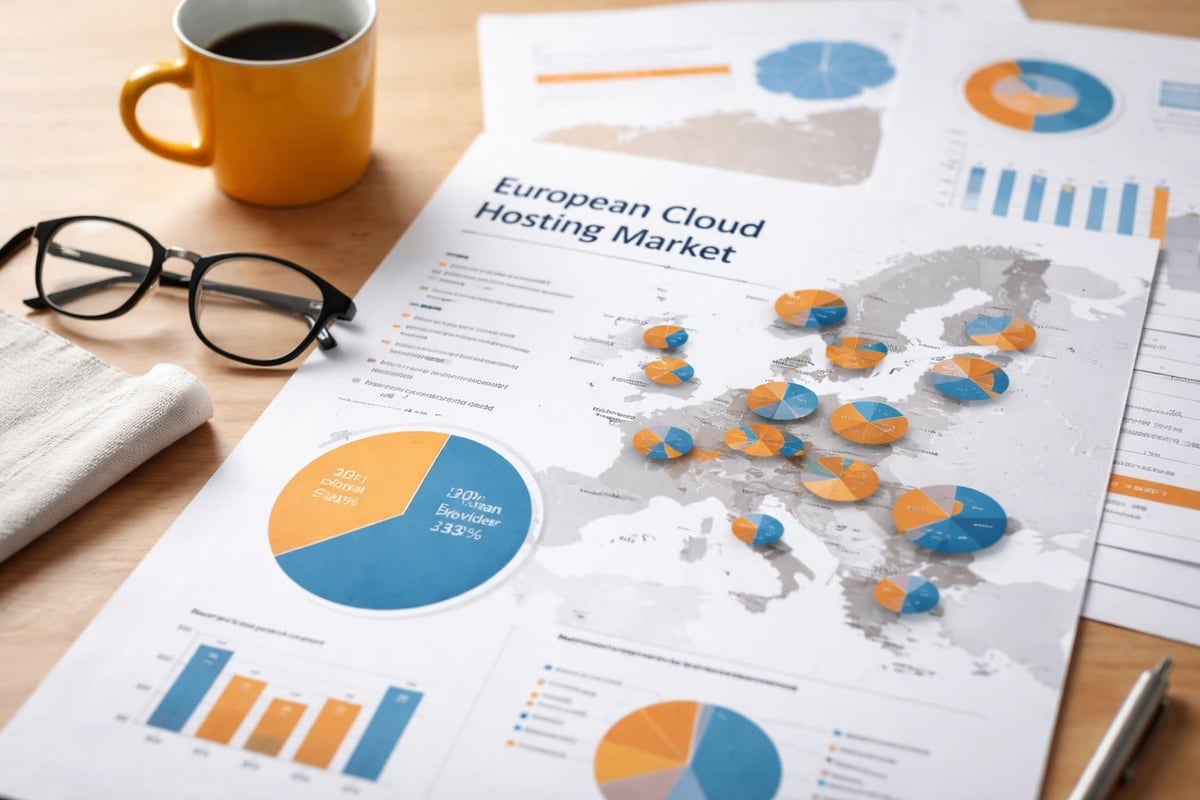
According to recent market analysis, European cloud providers maintain approximately 15% of their local market, with their share stabilising despite intense competition. This modest but resilient presence reflects both the challenges and opportunities within the sector.
Key characteristics of the European cloud market include:
- Strong regulatory frameworks governing data protection and privacy
- Growing emphasis on digital sovereignty and technological independence
- Increasing collaboration between regional providers to build competitive alternatives
- Rising demand from organisations requiring EU-based infrastructure
- Enhanced focus on sustainable, energy-efficient data centres
The conversation around technological independence has intensified significantly. Recently, European cloud CEOs have collectively called for genuine tech sovereignty ahead of forthcoming Cloud and AI Development Act legislation, highlighting concerns over market concentration and the need for local control.
GDPR Compliance and Data Protection Standards
The General Data Protection Regulation (GDPR) fundamentally reshaped how organisations approach data management. In particular, for businesses handling personal information belonging to EU residents, compliance isn’t optional, irrespective of where the company itself is based.
As a result, European cloud hosting providers offer inherent advantages when it comes to GDPR compliance. Specifically, by maintaining infrastructure exclusively within EU jurisdictions, these providers simplify the complex task of ensuring data residency requirements are met. In turn, this reduces regulatory risk and operational complexity for organisations. Moreover, it helps businesses maintain clearer oversight of where and how data is processed. Consequently, compliance becomes more streamlined and less resource-intensive.
Critical Compliance Considerations
| Compliance Aspect | European Hosting Advantage | Risk Mitigation |
|---|---|---|
| Data residency | Physical infrastructure within EU borders | Eliminates cross-border transfer complications |
| Privacy by design | Built into service architecture | Reduces compliance burden on customers |
| Data processor agreements | Streamlined under EU law | Simplified contractual relationships |
| Subject access requests | Faster response times | Direct access to local infrastructure |
| Breach notification | Aligned with EU timelines | Regulatory familiarity and expertise |
When personal data remains within European boundaries, as a result, organisations avoid the complexities associated with international data transfer mechanisms. In this case, Standard Contractual Clauses, adequacy decisions, and other transfer tools become unnecessary, since both the data controller and processor operate under the same regulatory framework. Consequently, compliance efforts are significantly reduced.
Similarly, the right to data portability, enshrined in GDPR, becomes more straightforward when working with European cloud hosting providers who understand these requirements intimately. In fact, they design systems with portability in mind, because they recognise that customers must retain control over their information. Moreover, this design philosophy ensures smoother migrations and greater interoperability between services. As a result, organisations benefit from increased flexibility and reduced vendor lock-in.
Digital Sovereignty and Geopolitical Considerations
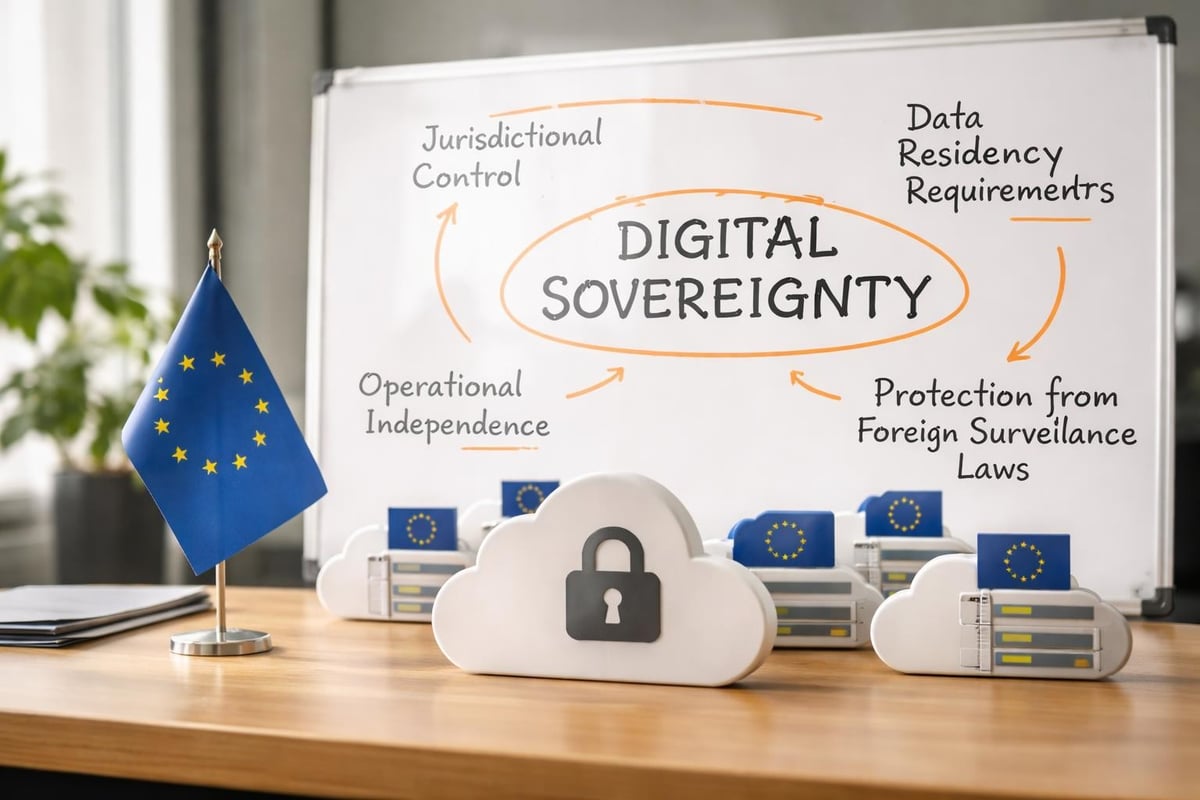
Digital sovereignty has emerged as a central concern for European governments and enterprises alike. The concept extends beyond mere data location to encompass control over digital infrastructure, freedom from foreign surveillance, and independence from external political pressures.
Europe is actively confronting its digital dependency problem through various initiatives aimed at establishing sovereign digital infrastructure. These efforts recognise that reliance on non-European providers creates vulnerabilities extending into economic security, national interests, and competitive positioning.
Key sovereignty drivers include:
- Legal jurisdiction: Data subject to EU law rather than foreign legal frameworks
- Extraterritorial legislation: Protection from laws like the US CLOUD Act
- Economic independence: Supporting European digital economy and innovation
- Strategic autonomy: Ensuring critical infrastructure remains under local control
- Technological capability: Building European expertise and innovation capacity
For businesses operating in sensitive sectors including healthcare, finance, government, and critical infrastructure, these considerations carry particular weight. The consequences of foreign access to sensitive data can include competitive disadvantage, regulatory violations, and compromised national security.
The Sovereignty Spectrum
Not all european cloud hosting solutions offer equal sovereignty guarantees. Some international providers have launched EU-specific offerings, such as AWS’s European Sovereign Cloud, designed to meet stringent regulatory requirements whilst maintaining ties to global infrastructure.
However, genuinely independent European providers offer a different value proposition entirely. These organisations operate under European ownership, employ EU-based personnel with appropriate security clearances, and maintain complete operational independence from non-EU jurisdictions.
Technical Performance and Infrastructure Quality
Geographic proximity between users and infrastructure directly impacts application performance. In particular, latency the delay between requesting and receiving data—decreases when distances are shorter. As a result, for European businesses serving European customers, hosting within the region delivers measurable performance benefits.
Moreover, modern European cloud hosting infrastructure rivals global competitors in technical sophistication. Indeed, leading providers operate multiple availability zones across diverse European locations, thereby ensuring redundancy and business continuity. In addition, this distributed architecture enhances fault tolerance and improves service reliability. Consequently, organisations benefit from both higher performance and stronger operational resilience.
Infrastructure Components
European data centres increasingly embrace sustainable practices, with many powered by renewable energy sources. This environmental commitment aligns with EU Green Deal objectives whilst delivering operational cost efficiencies through energy-optimised designs.
- Network architecture: High-speed interconnects between European data centres
- Storage systems: Enterprise-grade SSD and NVMe storage arrays
- Compute resources: Latest-generation processors with hardware security features
- Cooling systems: Energy-efficient designs reducing environmental impact
- Power infrastructure: Redundant systems with renewable energy integration
Performance testing consistently demonstrates that properly architected european cloud hosting solutions deliver latency advantages for European users. Applications requiring real-time interaction, including collaborative tools, video conferencing, and transaction processing, benefit particularly from regional infrastructure.
Security Frameworks and Certifications
Security represents a fundamental pillar of European cloud hosting. In particular, providers operating within EU jurisdictions typically pursue rigorous certification programmes demonstrating their security posture.
Moreover, common certifications include ISO 27001 for information security management, ISO 27017 for cloud security, and ISO 27018 for protecting personal data in cloud environments. As a result, these internationally recognised standards provide independent verification of security controls and operational practices. In addition, they help organisations assess provider trustworthiness and compliance readiness more effectively.
Essential security features include:
- End-to-end encryption for data in transit and at rest
- Multi-factor authentication and identity management
- Network segmentation and access controls
- Regular security audits and penetration testing
- Incident response capabilities and procedures
- Physical security measures at data centre facilities
European providers often implement additional controls reflecting EU regulatory expectations. Privacy-enhancing technologies, data minimisation practices, and transparent operational procedures form standard components of service delivery.
Sector-Specific Requirements and Use Cases
Different industries face unique regulatory and operational requirements influencing cloud hosting decisions. In particular, European cloud hosting addresses specific needs across multiple sectors. Moreover, it provides organisations with the flexibility to meet compliance obligations while maintaining operational efficiency. As a result, businesses can better align their infrastructure choices with industry-specific standards and regulations.
Healthcare and Medical Data
Healthcare organisations handling patient information must comply with national implementations of EU medical data regulations alongside GDPR. In particular, electronic health records, diagnostic imaging, and research data all require stringent protection measures.
Moreover, European hosting ensures patient data remains within appropriate jurisdictions, thereby simplifying compliance with national health information laws. As a result, medical institutions can maintain control over sensitive information whilst leveraging cloud scalability for research and patient care systems. In addition, this approach strengthens data governance and reduces regulatory risk.
Financial Services and Banking
Financial institutions operate under comprehensive regulatory frameworks including PSD2, MiFID II, and national banking regulations. In particular, these organisations require hosting solutions offering robust security, operational resilience, and regulatory alignment.
Moreover, transaction processing, customer databases, and risk management systems all demand infrastructure meeting exacting standards. As a result, European cloud hosting providers serving this sector typically hold additional certifications specific to financial services. In addition, this ensures greater trust, compliance assurance, and system reliability.
Government and Public Sector
Public sector organisations increasingly migrate to cloud infrastructure whilst maintaining security requirements appropriate to their responsibilities. Government data, citizen information, and critical services require hosting solutions offering complete sovereignty guarantees.
Many European nations mandate that government data remains within national borders under domestic legal jurisdiction. This creates natural demand for european cloud hosting from providers who can demonstrate appropriate security clearances and operational independence.
If you’re evaluating cloud solutions for your organisation, exploring comprehensive demonstrations can provide valuable insights into capabilities and security features. Taking advantage of a guided tour showing all-in-one cloud solutions including secure file storage, email, and password management can help assess whether specific platforms meet your requirements.

Cost Considerations and Total Ownership
Pricing models for european cloud hosting vary considerably across providers and service types. Whilst unit costs sometimes exceed those of hyperscale global providers, total cost of ownership calculations reveal a more nuanced picture.
| Cost Factor | European Provider Consideration | Long-term Impact |
|---|---|---|
| Compliance overhead | Reduced due to jurisdictional alignment | Lower ongoing compliance costs |
| Data transfer fees | Often lower for intra-European traffic | Predictable bandwidth expenses |
| Migration complexity | Simplified within EU regulatory framework | Reduced switching costs |
| Support costs | Local time zones and language support | Improved operational efficiency |
| Risk mitigation | Lower regulatory violation risk | Avoided penalty exposure |
Hidden costs associated with non-compliant hosting arrangements can dwarf apparent savings. Regulatory fines under GDPR can reach €20 million or 4% of global annual turnover, whichever is greater. Reputational damage following data breaches or compliance failures carries additional, often unquantifiable, costs.
European cloud hosting providers frequently offer more transparent pricing structures with fewer surprise charges. Understanding exactly where infrastructure resides and who has access to it enables more accurate budgeting and risk assessment.
Service Models and Deployment Options
European cloud hosting encompasses various service models addressing different technical requirements and operational preferences. Infrastructure as a Service (IaaS), Platform as a Service (PaaS), and Software as a Service (SaaS) all exist within European contexts.
IaaS offerings provide virtualised computing resources including servers, storage, and networking. Organisations maintain control over operating systems, applications, and configurations whilst the provider manages underlying hardware.
PaaS solutions abstract infrastructure management further, offering development platforms where organisations can build and deploy applications without managing servers directly. These environments include databases, middleware, and development tools.
SaaS applications deliver complete software solutions hosted entirely by the provider. Users access functionality through web browsers or dedicated clients without managing any infrastructure components.
Hybrid and multi-cloud architectures combine european cloud hosting with other resources according to specific requirements. Sensitive data might remain in EU-based private cloud environments whilst less critical workloads utilise public cloud resources for scalability.
Deployment Flexibility
- Public cloud: Shared infrastructure with resource pooling and economies of scale
- Private cloud: Dedicated resources providing enhanced control and isolation
- Hybrid cloud: Combining public and private environments strategically
- Multi-cloud: Distributing workloads across multiple providers
Choosing appropriate service and deployment models requires understanding organisational requirements, technical capabilities, and risk tolerance. Many businesses begin with simpler models before evolving toward more sophisticated architectures as their cloud maturity increases.
Migration Strategies and Implementation
Transitioning to European cloud hosting requires careful planning and execution. In particular, successful migrations follow structured approaches addressing technical, operational, and organisational dimensions.
Firstly, assessment forms the critical first phase. For example, organisations must inventory existing systems, understand dependencies, and identify constraints including compliance requirements, performance expectations, and integration points. As a result, this discovery process informs realistic migration planning and resource allocation. Moreover, it reduces the risk of unexpected issues during later migration stages.
Migration approach options:
- Rehosting (lift and shift): Moving applications unchanged to cloud infrastructure
- Replatforming: Making minimal changes to optimise for cloud environments
- Refactoring: Redesigning applications to exploit cloud-native capabilities
- Rebuilding: Reconstructing applications from scratch using cloud services
- Replacing: Adopting SaaS alternatives to existing applications
Timeline expectations vary dramatically based on approach complexity and organisational readiness. In particular, simple rehosting might complete within weeks, whilst comprehensive refactoring projects can extend across months or years. As a result, organisations must carefully align expectations with migration strategy.
Moreover, testing represents a non-negotiable migration phase. For example, validating that migrated systems function correctly, meet performance requirements, and maintain security postures prevents costly production issues. In addition, pilot migrations involving non-critical systems provide valuable learning before tackling mission-critical workloads. Consequently, organisations reduce risk and improve overall migration success rates.
Provider Selection Criteria
Choosing among european cloud hosting providers demands systematic evaluation across multiple dimensions. Technical capabilities, compliance credentials, financial stability, and cultural fit all warrant consideration.
Due diligence should examine provider ownership structures, operational independence, and data access policies. Truly sovereign solutions ensure that provider employees, facilities, and systems all reside within European jurisdictions without external control mechanisms.
Evaluation Framework
Technical assessment areas:
- Infrastructure specifications and performance benchmarks
- Geographic distribution of data centres and availability zones
- Network connectivity and peering arrangements
- Security controls and certification portfolios
- Backup and disaster recovery capabilities
Commercial considerations:
- Pricing transparency and predictability
- Contract terms and service level agreements
- Support availability and escalation procedures
- Financial health and business continuity
- Customer references and case studies
Reading independent assessments, such as guides to EU web hosting providers, can provide valuable perspectives on provider capabilities and market positioning. These reviews often highlight strengths and limitations across different use cases.
Understanding that reducing reliance on foreign tech infrastructure is crucial for European success helps frame provider selection as a strategic decision extending beyond immediate technical requirements.
Future Trends and Market Evolution
The european cloud hosting market continues evolving rapidly in response to regulatory developments, technological advances, and shifting geopolitical dynamics. Several trends appear poised to shape the coming years.
Edge computing represents one significant development, with processing capabilities moving closer to data sources. European providers are establishing edge locations across the continent, enabling low-latency processing for Internet of Things devices, autonomous systems, and real-time analytics.
Artificial intelligence and machine learning workloads are increasingly moving to cloud environments. European hosting providers are investing in GPU-accelerated infrastructure and specialised AI platforms whilst maintaining their sovereignty and compliance advantages.
Sustainability considerations are becoming central to infrastructure decisions. European cloud providers are pursuing aggressive renewable energy targets, implementing circular economy principles for hardware, and optimising cooling systems for energy efficiency.
Regulatory evolution continues shaping market dynamics. Proposed legislation including the Cloud and AI Development Act may create new frameworks supporting European digital sovereignty whilst ensuring interoperability and preventing market fragmentation.
The comprehensive statistics on cloud computing in Europe demonstrate robust growth trajectories and increasing adoption across business sizes and sectors. This expansion creates opportunities for European providers to capture market share and build competitive capabilities.
Collaborative initiatives among European providers aim to create credible alternatives to hyperscale platforms. These partnerships combine complementary capabilities, geographic coverage, and specialised expertise whilst maintaining sovereignty principles that individual providers might struggle to deliver alone.
European cloud hosting offers compelling advantages for organisations prioritising data protection, regulatory compliance, and digital sovereignty alongside technical performance and operational excellence. As regulatory frameworks evolve and geopolitical considerations intensify, choosing infrastructure aligned with European values and legal requirements represents sound strategic thinking. vBoxx delivers secure hosting and cloud solutions emphasising privacy, security, and sustainable practices, helping businesses build reliable digital infrastructure that meets stringent European standards whilst supporting long-term operational success.