Cloud services have fundamentally transformed how businesses operate, manage data, and deliver value to customers. Moreover, the shift from traditional on-premises infrastructure to cloud-based solutions represents one of the most significant technological transitions in recent decades. Furthermore, organisations of all sizes now leverage cloud computing to enhance agility, reduce costs, and scale operations efficiently. Nevertheless, understanding the nuances of cloud services remains essential for businesses seeking to maximise their technology investments whilst maintaining security and compliance.
Understanding Modern Cloud Infrastructure
Cloud services encompass a broad spectrum of computing resources delivered over the internet, ranging from basic storage solutions to complex computational platforms. Therefore, businesses today can access virtually unlimited computing power without the burden of maintaining physical hardware. In addition, the evolution of cloud computing has created three primary service models that cater to different organisational needs.
The Core Service Models
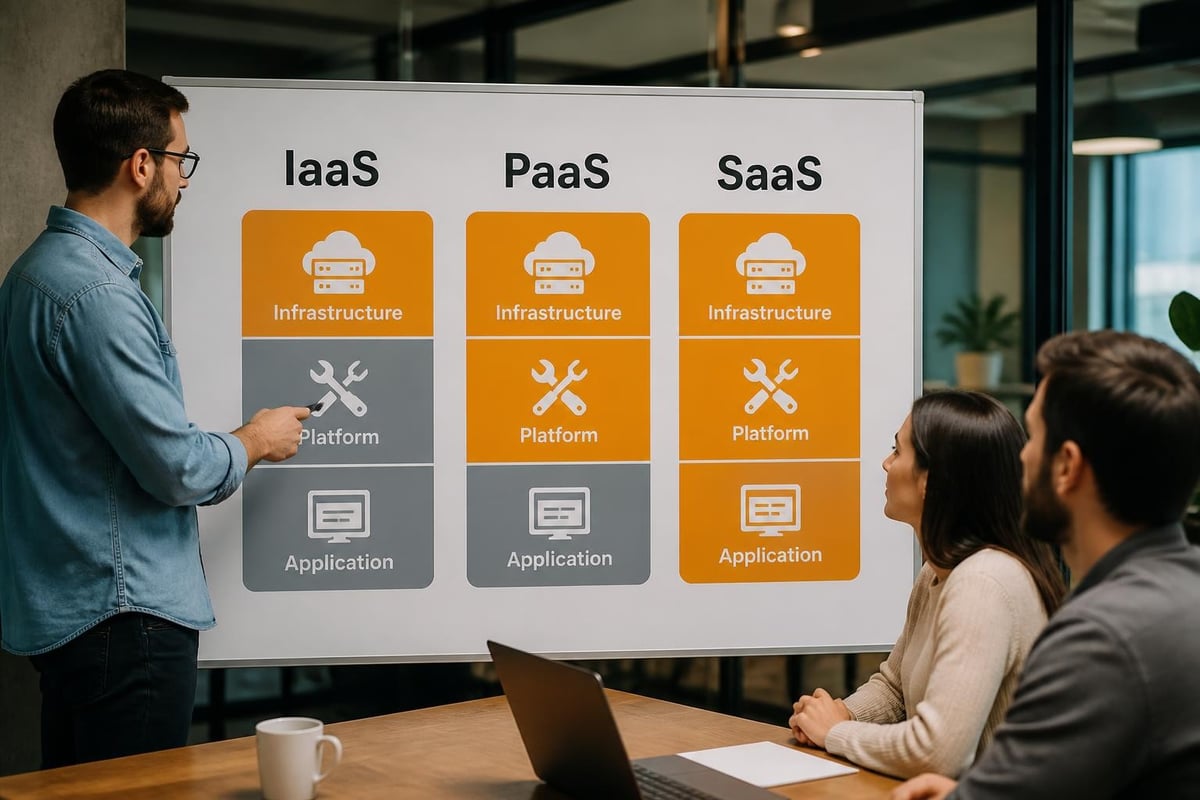
The infrastructure-as-a-service (IaaS) model provides fundamental computing resources including virtual servers, storage, and networking capabilities. Moreover, this approach allows organisations to rent IT infrastructure on a pay-as-you-go basis, eliminating substantial capital expenditure. Platform-as-a-service (PaaS) takes this further by offering complete development and deployment environments in the cloud. Finally, software-as-a-service (SaaS) delivers fully functional applications over the internet, requiring no local installation or maintenance.
Key benefits of cloud service models include:
- Scalability to accommodate fluctuating demands
- Reduced infrastructure management overhead
- Access to enterprise-grade tools without significant upfront costs
- Automatic software updates and security patches
- Geographic distribution for improved performance
Nevertheless, selecting the appropriate model requires careful consideration of business requirements, technical capabilities, and long-term strategic goals.
Security Considerations in Cloud Environments
Security remains paramount when adopting cloud services, particularly as organisations entrust sensitive data to external providers. Furthermore, the shared responsibility model defines clear boundaries between provider and customer security obligations. Therefore, businesses must understand their role in protecting data, managing access controls, and ensuring compliance with regulatory requirements.
Encryption serves as a fundamental security mechanism, protecting data both in transit and at rest. Moreover, robust authentication protocols, including multi-factor authentication, prevent unauthorised access to cloud resources. In addition, regular security audits and penetration testing help identify vulnerabilities before malicious actors can exploit them.
| Security Layer | Provider Responsibility | Customer Responsibility |
|---|---|---|
| Physical Infrastructure | Complete | None |
| Network Security | Shared | Shared |
| Access Management | Partial | Primary |
| Data Encryption | Tools Provided | Implementation |
| Application Security | None | Complete |
Nevertheless, understanding hybrid cloud architectures becomes crucial for organisations seeking to balance security requirements with operational flexibility. Furthermore, hybrid approaches allow businesses to keep sensitive data on-premises whilst leveraging public cloud services for less critical workloads.
The Rise of Hybrid and Multicloud Strategies
Organisations increasingly adopt hybrid and multicloud strategies to avoid vendor lock-in and optimise workload placement. Therefore, these approaches combine private cloud infrastructure with public cloud services, creating flexible environments tailored to specific business needs. Moreover, recent trends in cloud computing indicate that multicloud adoption will accelerate as businesses seek resilience and competitive advantages.
Implementing Effective Multicloud Governance
Successful multicloud implementations require robust governance frameworks that standardise policies across providers. Furthermore, cost management becomes increasingly complex when workloads span multiple platforms, necessitating sophisticated monitoring and optimisation tools. In addition, organisations must develop expertise across different cloud environments or partner with experienced consultancies.
Critical multicloud governance elements:
- Unified identity and access management across platforms
- Consistent security policies and compliance frameworks
- Centralised cost tracking and budget allocation
- Standardised deployment and monitoring procedures
- Cross-platform disaster recovery planning
Nevertheless, the benefits of multicloud strategies extend beyond risk mitigation. Therefore, businesses can select the best services from each provider, optimising performance whilst controlling costs. Moreover, competitive dynamics among major cloud providers continue to drive innovation and pricing improvements that benefit customers.
Artificial Intelligence and Cloud Services
Artificial intelligence represents one of the most transformative technologies reshaping cloud services. Furthermore, cloud platforms now offer AI and machine learning tools that were previously accessible only to large enterprises with substantial resources. Therefore, businesses of all sizes can leverage predictive analytics, natural language processing, and computer vision capabilities through cloud-based services.
The integration of AI into cloud infrastructure creates new challenges, particularly regarding computational capacity and energy consumption. Moreover, AI’s impact on cloud infrastructure highlights capacity constraints and the need for specialised hardware. In addition, organisations must balance the benefits of AI-powered services against their environmental footprint and operational costs.

Nevertheless, enterprise cloud strategy trends emphasise AI-optimised hybrid architectures that combine on-premises processing with cloud-based AI services. Furthermore, this approach allows businesses to maintain data sovereignty whilst accessing cutting-edge AI capabilities.
Sustainability and Green Cloud Computing
Environmental sustainability has emerged as a critical consideration in cloud service selection. Therefore, forward-thinking organisations now evaluate providers based on their renewable energy commitments and carbon reduction strategies. Moreover, green hosting practices not only reduce environmental impact but also align with corporate social responsibility goals and stakeholder expectations.
Cloud providers increasingly invest in renewable energy sources and implement advanced cooling technologies to minimise their carbon footprint. Furthermore, consolidated cloud infrastructure typically operates more efficiently than distributed on-premises systems, reducing overall energy consumption. In addition, virtualisation technologies maximise hardware utilisation, decreasing the number of physical servers required.
| Sustainability Metric | Traditional Infrastructure | Cloud Services |
|---|---|---|
| Energy Efficiency | Variable, often poor | Optimised, continuously improving |
| Hardware Utilisation | 10-30% average | 60-80% average |
| Renewable Energy | Depends on location | Increasingly standard |
| Carbon Footprint | Higher per workload | Lower per workload |
| E-waste Generation | Frequent hardware refresh | Shared resource model |
Nevertheless, businesses must conduct due diligence when evaluating environmental claims. Therefore, requesting detailed sustainability reports and certifications ensures providers genuinely commit to green practices rather than engaging in greenwashing.
Data Sovereignty and Compliance
Regulatory compliance presents significant challenges for organisations using cloud services, particularly those operating across multiple jurisdictions. Furthermore, data sovereignty requirements mandate that certain information remain within specific geographic boundaries. Therefore, businesses must carefully select cloud providers offering appropriate regional infrastructure and data residency guarantees.
The General Data Protection Regulation (GDPR) in Europe and similar frameworks worldwide impose strict requirements on data handling and privacy. Moreover, cloud services must implement technical and organisational measures to protect personal data and demonstrate compliance. In addition, regular audits and certifications provide assurance that providers maintain appropriate security standards.
Essential compliance considerations include:
- Geographic location of data centres and processing facilities
- Data transfer mechanisms between jurisdictions
- Provider certifications (ISO 27001, SOC 2, etc.)
- Contractual guarantees regarding data handling
- Audit rights and transparency provisions
Nevertheless, compliance extends beyond selecting the right provider. Therefore, organisations must implement proper data classification, access controls, and monitoring systems. Furthermore, understanding the relationship between cloud and server infrastructure helps businesses architect compliant solutions.

Performance Optimisation and Edge Computing
Performance optimisation remains crucial for organisations delivering time-sensitive services through cloud platforms. Therefore, edge computing has emerged as a complement to traditional cloud services, processing data closer to end-users and IoT devices. Moreover, this distributed architecture reduces latency whilst minimising bandwidth consumption for data-intensive applications.
The integration of edge and cloud computing creates hybrid architectures that balance processing location with operational requirements. Furthermore, high-performance computing and edge architectures demonstrate how organisations leverage distributed systems for demanding workloads. In addition, content delivery networks (CDNs) extend this concept, caching static content at edge locations to improve user experience.
Nevertheless, edge computing introduces complexity in management, security, and orchestration. Therefore, businesses must develop strategies for coordinating workloads across edge nodes and central cloud infrastructure. Moreover, automated deployment and monitoring tools become essential for maintaining consistent performance across distributed environments.
Migration Strategies and Best Practices
Successfully migrating to cloud services requires careful planning and execution to minimise disruption and maximise benefits. Furthermore, organisations must assess their existing infrastructure, applications, and workflows before selecting migration approaches. Therefore, a phased migration strategy often proves more manageable than attempting to move all systems simultaneously.
Common migration approaches include:
- Rehosting (Lift and Shift): Moving applications without modification
- Replatforming: Making minimal changes to optimise for cloud
- Refactoring: Redesigning applications to leverage cloud-native features
- Retiring: Decommissioning obsolete systems
- Retaining: Keeping certain workloads on-premises
Moreover, thorough testing in non-production environments helps identify issues before they impact business operations. In addition, establishing clear rollback procedures provides safety nets if unexpected problems arise during migration. Nevertheless, many organisations benefit from partnering with experienced consultancies that understand both technical and business aspects of cloud transitions.
For businesses seeking to explore cloud capabilities firsthand, a demonstration of all-in-one cloud solutions can provide valuable insights into how different services integrate to support business operations. Furthermore, such guided experiences help decision-makers understand practical applications rather than abstract concepts.
Cost Management and Optimisation
Financial management in cloud environments differs substantially from traditional IT budgeting. Therefore, the shift from capital expenditure to operational expenditure requires new approaches to cost tracking and optimisation. Moreover, the pay-as-you-go model offers flexibility but demands vigilant monitoring to prevent unexpected expenses.
Cloud cost optimisation encompasses multiple strategies, from rightsizing instances to leveraging reserved capacity and spot instances. Furthermore, automated shutdown of non-production environments during off-hours can yield significant savings. In addition, regular reviews of resource utilisation help identify orphaned resources and opportunities for consolidation.
| Cost Optimisation Strategy | Potential Savings | Implementation Complexity |
|---|---|---|
| Rightsizing Instances | 20-40% | Low |
| Reserved Capacity | 30-70% | Medium |
| Automated Scheduling | 15-25% | Low |
| Storage Tiering | 40-60% | Medium |
| Spot Instances | 50-90% | High |
Nevertheless, cost optimisation must balance financial goals with performance requirements and business objectives. Therefore, excessive cost-cutting that degrades user experience or compromises security ultimately proves counterproductive. Moreover, investing in monitoring and governance tools often pays for itself through improved visibility and control.
The Future Landscape of Cloud Computing
The evolution of cloud computing reveals technological and economic forces that continue shaping its development. Furthermore, emerging technologies including quantum computing, blockchain, and advanced AI will further transform cloud service offerings. Therefore, organisations must remain adaptable and continuously evaluate new capabilities against business requirements.
Industry-specific cloud platforms are gaining traction, offering specialised tools and compliance frameworks tailored to particular sectors. Moreover, these vertical solutions address unique challenges in healthcare, finance, manufacturing, and other industries. In addition, increased focus on privacy-preserving computation allows organisations to leverage cloud services whilst maintaining data confidentiality.
Nevertheless, the fundamental value proposition of cloud services remains consistent: delivering computing resources efficiently, securely, and sustainably. Therefore, businesses that embrace cloud technologies whilst maintaining appropriate governance and security controls position themselves for long-term success. Furthermore, as organisations seek alternatives to mainstream providers, the market continues diversifying with specialist offerings focused on privacy and security.
Cloud services have fundamentally reshaped business technology infrastructure, offering unprecedented flexibility, scalability, and efficiency. Moreover, success requires balancing innovation with security, compliance, and sustainability considerations. vBoxx provides secure hosting and cloud solutions designed for businesses prioritising privacy, performance, and environmental responsibility, offering comprehensive support from initial consultation through ongoing maintenance and optimisation of your cloud infrastructure.