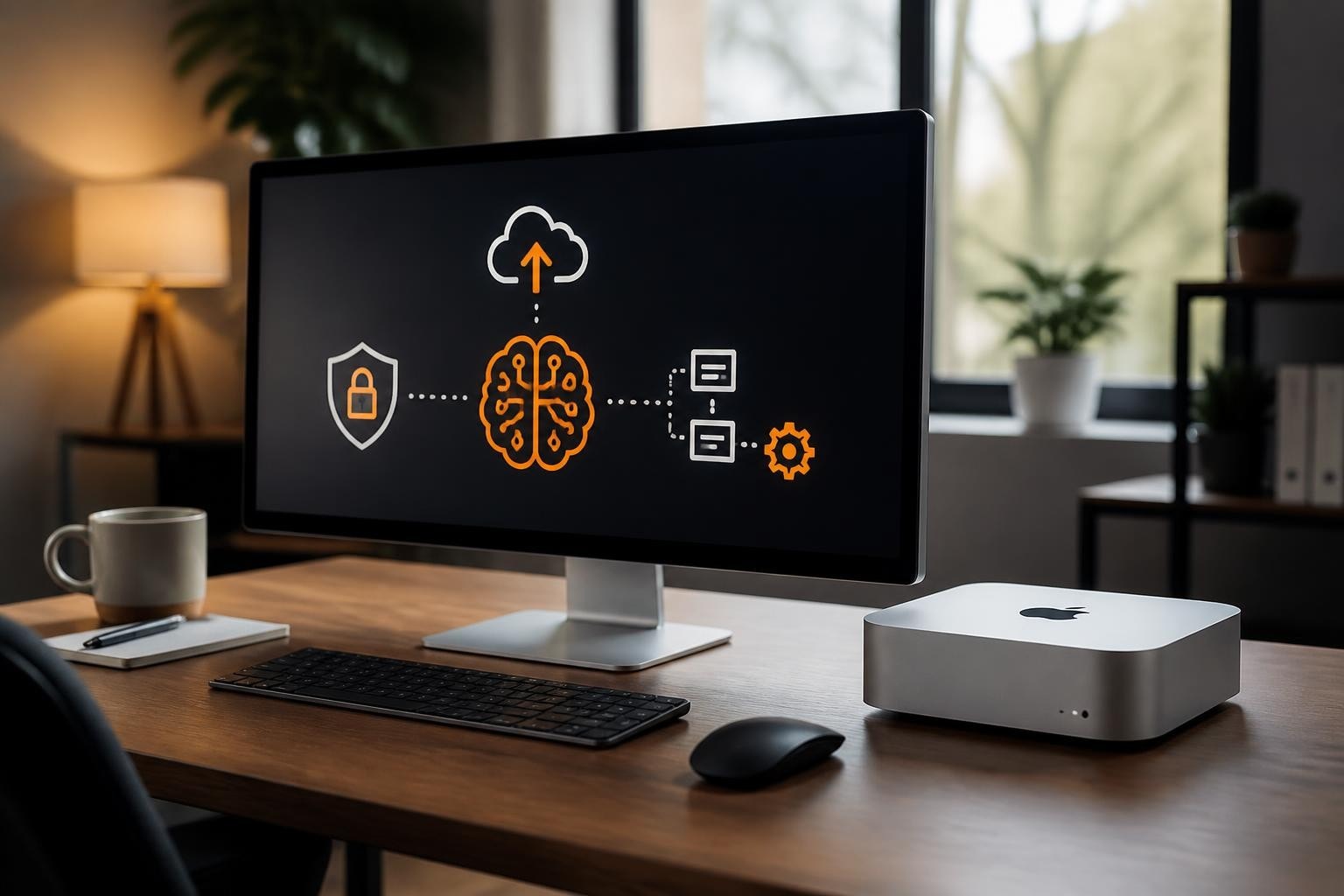

The convergence of artificial intelligence and compact computing has created unprecedented opportunities for businesses seeking to deploy AI assistants securely and efficiently. Using a mac mini for claude represents a strategic approach to establishing a dedicated AI workstation that operates continuously whilst maintaining enterprise-level security standards. This configuration enables organisations to harness Claude's capabilities without relying solely on cloud-based interactions, thereby reducing latency and enhancing data privacy. Furthermore, the Mac Mini's compact form factor and energy efficiency align perfectly with sustainable business practices, making it an ideal choice for companies committed to green technology initiatives.
Why Choose Mac Mini as a Claude Workstation
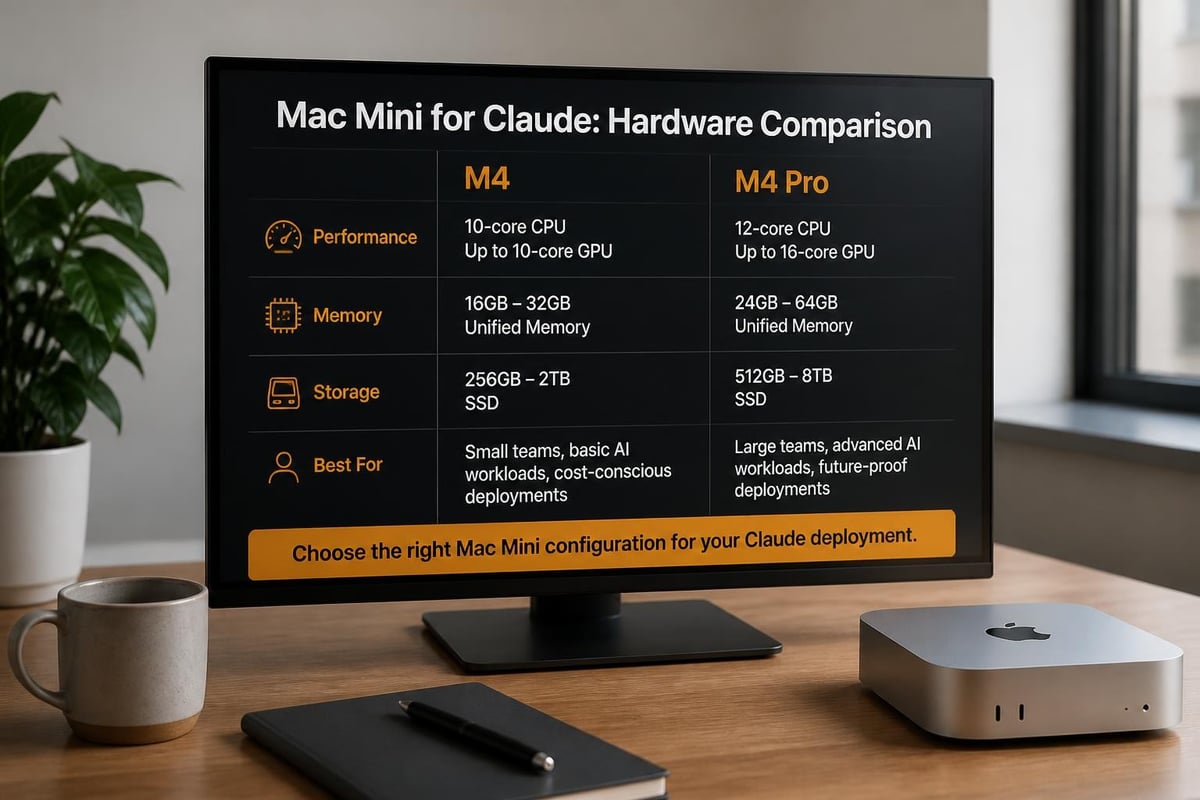
The Mac Mini's architecture provides a compelling foundation for running AI assistants like Claude. Moreover, its M-series chips deliver exceptional performance per watt, enabling businesses to operate AI workloads around the clock without excessive energy consumption. The latest M4 Pro configurations offer unified memory architectures that significantly accelerate machine learning tasks, making them particularly well-suited for AI applications.
Hardware Advantages for AI Workloads
Apple's silicon represents a paradigm shift in how organisations approach AI deployment. Nevertheless, selecting the appropriate configuration requires understanding the specific demands of Claude and similar language models.
Key specifications to consider include:
- Unified Memory: 32GB or 64GB for optimal performance with large context windows
- Neural Engine: 16-core dedicated AI processing capabilities
- Storage: Minimum 1TB SSD for model caching and conversation history
- Connectivity: Thunderbolt 4 ports for external GPU expansion if required
- Network: Gigabit Ethernet for stable, low-latency connections
In addition, the thermal design of the Mac Mini ensures sustained performance during extended AI operations. Therefore, businesses can rely on consistent response times even during peak usage periods. The capabilities of Mac Mini for AI workloads have been extensively documented, demonstrating impressive results across various use cases.
Cost-Effectiveness and Scalability
Deploying a mac mini for claude offers substantial financial advantages compared to cloud-only solutions. Furthermore, the upfront investment in dedicated hardware reduces ongoing API costs whilst providing greater control over data processing. Organisations handling sensitive information particularly benefit from this approach, as it enables on-premises processing without compromising security.
| Configuration | Memory | Storage | Estimated Cost | Best For |
|---|---|---|---|---|
| M4 Base | 16GB | 512GB | £599 | Light AI tasks, testing |
| M4 Pro | 32GB | 1TB | £1,399 | Standard business deployment |
| M4 Pro Max | 64GB | 2TB | £2,199 | Heavy AI workloads, multi-agent |
Moreover, the Mac Mini's longevity ensures that businesses receive extended value from their investment. Apple's commitment to long-term software support means organisations can expect five to seven years of reliable service from a single unit.
Setting Up Mac Mini for Continuous Claude Operation
Configuring a Mac Mini for Claude requires careful attention to both software and network infrastructure. Nevertheless, the process remains straightforward for IT teams familiar with macOS environments. The objective is creating a stable, secure environment where Claude can operate autonomously without interruption.
Initial System Configuration
Begin by ensuring macOS is updated to the latest version compatible with your AI deployment tools. In addition, disable sleep modes and configure energy settings to prevent system interruptions during extended operations.
Essential system configurations include:
- Energy Saver settings: Prevent sleep, disable Power Nap
- Network configuration: Static IP assignment for reliable connectivity
- Security settings: FileVault encryption, firewall activation
- User accounts: Dedicated service account for AI operations
- Backup systems: Time Machine or enterprise backup solution
Furthermore, establishing secure remote access protocols enables IT teams to monitor and maintain the system without physical presence. Therefore, implementing SSH with key-based authentication and VPN access becomes crucial for ongoing management.
Software Environment Setup
The software stack for running Claude on a Mac Mini encompasses several layers. Moreover, selecting appropriate tools ensures optimal performance whilst maintaining security standards. The comprehensive setup guide for AI agents provides detailed instructions for establishing a robust environment.
Installing Docker containers offers isolation and simplified deployment for AI applications. Nevertheless, native macOS applications may provide better integration with system resources. In addition, implementing monitoring tools ensures administrators can track resource usage and identify potential bottlenecks.
Security Considerations for Enterprise Deployment
Operating a mac mini for claude within enterprise environments demands stringent security measures. Furthermore, organisations must balance accessibility with data protection, ensuring AI operations don't compromise sensitive information. The security framework should encompass network isolation, data encryption, and access controls.

Network Isolation and Access Control
Implementing network segmentation creates a protective barrier around AI workstations. Therefore, placing the Mac Mini on a dedicated VLAN prevents unauthorised access whilst allowing necessary communication channels. Moreover, this approach aligns with zero-trust security principles increasingly adopted by forward-thinking organisations.
Network security measures include:
- Dedicated VLAN with strict firewall rules
- VPN-only access for remote management
- Intrusion detection and prevention systems
- Regular security audits and vulnerability assessments
- Network traffic monitoring and logging
In addition, implementing certificate-based authentication strengthens access controls beyond traditional password-based systems. Nevertheless, organisations must ensure backup access methods prevent lockouts during security incidents.
Data Privacy and Compliance
The secure cloud data storage practices emphasised by leading providers demonstrate the importance of data protection in AI deployments. Furthermore, organisations operating under GDPR, HIPAA, or similar regulations must ensure their mac mini for claude configuration maintains compliance standards.
Encrypting data at rest and in transit protects sensitive information processed by Claude. Moreover, implementing comprehensive logging enables organisations to demonstrate compliance during audits. Therefore, establishing clear data retention policies and automated purging mechanisms becomes essential for maintaining regulatory compliance.
| Security Layer | Implementation | Compliance Benefit |
|---|---|---|
| Encryption at Rest | FileVault 2 | GDPR, HIPAA compliant storage |
| Network Encryption | TLS 1.3, VPN | Secure data transmission |
| Access Logging | Centralised SIEM | Audit trail for compliance |
| Data Minimisation | Automated retention policies | Privacy regulation adherence |
Integration with Business Workflows
Successfully deploying a mac mini for claude requires thoughtful integration with existing business processes. Furthermore, the AI workstation should enhance productivity rather than creating additional complexity. Therefore, organisations must carefully map how Claude interactions fit within their operational frameworks.
API Integration and Automation
Connecting Claude to business systems enables powerful automation capabilities. Moreover, the Mac Mini serves as an ideal intermediary, processing requests and coordinating between various platforms. In addition, this architecture reduces latency compared to cloud-only approaches, particularly for organisations with substantial on-premises infrastructure.
Common integration patterns include:
- Email automation: Processing and responding to routine inquiries
- Document analysis: Extracting insights from business documents
- Customer support: Handling first-tier support requests
- Data processing: Transforming and enriching datasets
- Content generation: Creating reports, summaries, and communications
Nevertheless, implementing these integrations requires robust error handling and fallback mechanisms. Therefore, designing systems with graceful degradation ensures business continuity even during AI service interruptions.
Monitoring and Maintenance
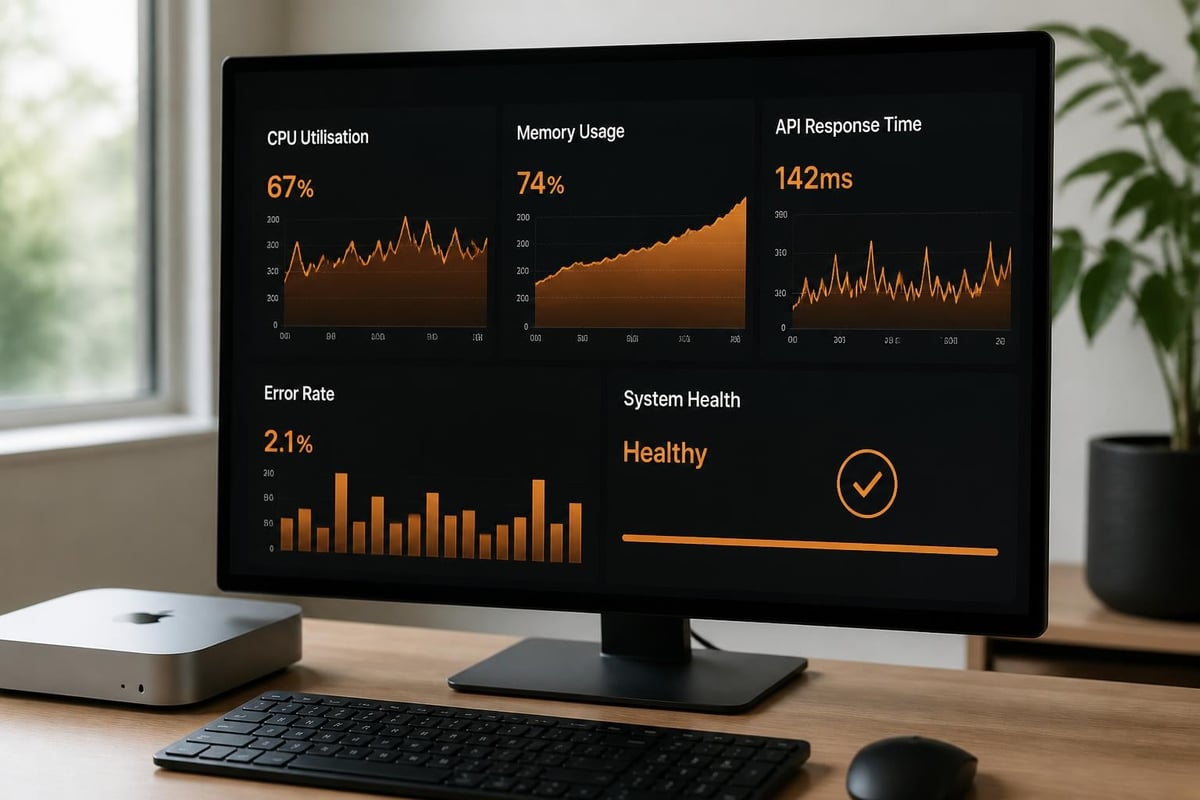
Ongoing monitoring ensures the mac mini for claude continues operating optimally. Furthermore, establishing baseline performance metrics enables IT teams to identify degradation before it impacts business operations. The recent demand surge for Mac Mini in AI applications underscores the importance of proactive maintenance strategies.
Implementing automated health checks provides early warning of potential issues. Moreover, scheduling regular maintenance windows for updates and optimisation prevents unexpected downtime. In addition, maintaining detailed documentation of configuration changes facilitates troubleshooting and knowledge transfer within IT teams.
Scaling Beyond Single-Unit Deployments
Organisations experiencing success with a single mac mini for claude often explore scaling options. Furthermore, horizontal scaling through multiple units provides redundancy and increased capacity. Nevertheless, this approach introduces coordination challenges requiring careful architectural planning.
Multi-Unit Orchestration
Deploying multiple Mac Mini units enables load balancing and fault tolerance. Moreover, organisations can segment workloads based on security requirements or departmental needs. Therefore, establishing a clear orchestration strategy becomes essential for maximising the benefits of multi-unit deployments.
Scaling considerations include:
- Load balancing across multiple units
- Session affinity for consistent user experiences
- Shared storage for conversation history and context
- Centralised monitoring and management
- Disaster recovery and failover procedures
In addition, implementing container orchestration platforms like Kubernetes adapts traditional cloud-native practices to on-premises AI infrastructure. Nevertheless, the relatively modest resource requirements of Mac Mini units often make simpler orchestration approaches more appropriate for small to medium deployments.
Hybrid Cloud Approaches
Combining on-premises mac mini for claude deployments with cloud resources offers flexibility and resilience. Furthermore, this hybrid approach enables organisations to leverage the strengths of both environments. Moreover, sensitive operations remain on-premises whilst less critical tasks utilise cloud capacity during peak periods.
The best Mac configurations for AI assistants guide organisations through optimising their hardware investments. In addition, understanding the trade-offs between local processing and cloud offloading helps businesses make informed architectural decisions.
| Deployment Model | Advantages | Considerations |
|---|---|---|
| Fully On-Premises | Maximum data control, lower latency | Higher upfront costs, limited scalability |
| Hybrid | Balanced approach, flexible capacity | Complexity, network dependency |
| Cloud-Augmented | Cost-effective scaling, minimal hardware | Data sovereignty concerns, ongoing costs |
Performance Optimisation Strategies
Maximising the performance of a mac mini for claude requires attention to both hardware and software optimisation. Furthermore, small adjustments often yield significant improvements in response times and throughput. Therefore, organisations should establish baseline metrics and continuously refine their configurations.
Memory and Storage Management
The unified memory architecture of Apple Silicon benefits AI workloads substantially. Moreover, ensuring adequate memory allocation prevents performance degradation during complex tasks. In addition, leveraging high-speed SSD storage for conversation caching reduces latency in multi-turn interactions.
Optimisation techniques include:
- Allocating sufficient swap space for memory-intensive operations
- Implementing intelligent caching strategies for frequently accessed data
- Monitoring memory pressure and adjusting workloads accordingly
- Utilising external Thunderbolt storage for archival purposes
- Regular maintenance including TRIM operations on SSDs
Nevertheless, organisations must balance performance optimisation with security requirements. Therefore, encrypted storage solutions may introduce slight performance overhead that remains acceptable for most business applications.
Network Performance Tuning
Network configuration significantly impacts the responsiveness of a mac mini for claude deployment. Furthermore, even minor latency reductions accumulate across thousands of daily interactions. The dedicated machine benefits for Claude highlight how optimised networking enhances overall user experience.
Implementing quality of service (QoS) rules prioritises AI traffic across corporate networks. Moreover, establishing dedicated network paths for AI workloads prevents interference from other business activities. In addition, monitoring network metrics helps identify bottlenecks before they impact user satisfaction.
Alternative Configurations and Comparisons
Whilst the mac mini for claude represents an excellent balance of performance and efficiency, organisations should consider alternatives based on specific requirements. Furthermore, understanding the broader landscape helps businesses make informed decisions aligned with their strategic objectives.
Mac Studio and Mac Pro Options
For organisations requiring maximum performance, Mac Studio and Mac Pro offer enhanced capabilities. Nevertheless, these systems command significantly higher price points and may exceed requirements for typical Claude deployments. Moreover, their increased power consumption and physical footprint must factor into deployment planning.
The external GPU support announcement demonstrates Apple's commitment to expanding Mac Mini capabilities. Therefore, organisations can enhance their existing investments rather than immediately upgrading to more expensive systems.
Cloud-Only Deployments
Some organisations may question whether dedicated hardware offers advantages over cloud-only approaches. Furthermore, the decision depends heavily on usage patterns, security requirements, and cost structures. Nevertheless, many businesses find hybrid approaches combining on-premises mac mini for claude units with cloud capacity provide optimal flexibility.
For businesses exploring comprehensive AI integration across their operations, understanding the full spectrum of tools and services becomes crucial. In addition, scheduling a demonstration of all-in-one solutions can provide valuable insights into how different approaches complement existing infrastructure.
Power Efficiency and Sustainability
The environmental impact of AI deployments increasingly influences purchasing decisions. Furthermore, the mac mini for claude configuration aligns with corporate sustainability goals through exceptional energy efficiency. Moreover, organisations committed to reducing their carbon footprint find Apple Silicon's performance-per-watt metrics particularly appealing.
Energy Consumption Analysis
Compared to traditional server infrastructure, Mac Mini units consume remarkably little power. Therefore, operating AI workstations continuously becomes financially viable even in regions with high electricity costs. In addition, the reduced cooling requirements further decrease overall environmental impact.
Energy efficiency benefits include:
- Typical power consumption of 5-15 watts during AI operations
- Reduced cooling infrastructure requirements
- Lower electricity costs over system lifetime
- Alignment with green business initiatives
- Improved sustainability reporting metrics
Nevertheless, organisations should implement power monitoring to track actual consumption patterns. Moreover, understanding usage profiles enables more accurate total cost of ownership calculations and supports data-driven infrastructure decisions.
Long-Term Environmental Impact
The longevity of Mac Mini systems reduces electronic waste compared to frequent hardware replacements. Furthermore, Apple's recycling programmes and sustainable manufacturing practices support responsible technology procurement. Therefore, choosing a mac mini for claude deployment contributes to broader environmental, social, and governance (ESG) objectives.
Deploying a mac mini for claude offers businesses a powerful combination of performance, security, and sustainability for AI integration. Furthermore, the configuration enables organisations to maintain control over sensitive data whilst leveraging cutting-edge AI capabilities. When organisations require secure hosting infrastructure to complement their AI deployments, vBoxx provides enterprise-grade cloud solutions with emphasis on privacy, security, and sustainable practices that align perfectly with modern business requirements.