

Businesses today require hosting infrastructure that can adapt to changing demands whilst maintaining security, performance, and cost efficiency. A cloud based hosting service provides exactly this flexibility by leveraging virtualised computing resources distributed across multiple physical servers. Furthermore, this approach eliminates many traditional hosting limitations, offering organisations the ability to scale resources dynamically, enhance reliability through redundancy, and access their applications from anywhere with internet connectivity. Moreover, the shift towards cloud-based solutions represents a fundamental transformation in how companies approach their digital infrastructure needs.
Understanding Cloud Based Hosting Architecture
A cloud based hosting service fundamentally differs from traditional hosting models by distributing resources across a network of interconnected virtual and physical servers. Rather than relying on a single server, cloud hosting creates a virtual environment that pools computational power, storage capacity, and bandwidth from multiple sources. Therefore, if one server experiences issues, others seamlessly compensate to maintain service continuity.
Core Components and Infrastructure
The foundation of cloud hosting rests upon several key technological elements working in harmony:
- Virtualisation technology that abstracts physical hardware into software-defined resources
- Load balancing systems that distribute traffic across multiple servers
- Redundant storage arrays ensuring data availability and protection
- Automated scaling mechanisms that adjust resources based on demand
- Network infrastructure connecting distributed data centres globally
Consequently, this architecture delivers resilience that traditional hosting cannot match. Nevertheless, the complexity requires robust management systems to orchestrate these components effectively.

Virtualisation and Resource Pooling
Virtualisation serves as the cornerstone technology enabling cloud hosting efficiency. Furthermore, it allows multiple virtual machines to operate independently on shared physical hardware, maximising utilisation whilst maintaining isolation between different customers' environments. The National Institute of Standards and Technology (NIST) identifies resource pooling as one of five essential characteristics of cloud computing.
In addition to computational resources, storage pooling creates vast data repositories accessible to all virtual instances. Therefore, organisations benefit from economies of scale, as providers can optimise hardware investments across thousands of customers rather than dedicating specific servers to individual clients.
Deployment Models for Cloud Based Hosting
Cloud based hosting services come in several deployment configurations, each addressing different security requirements, control preferences, and budget considerations. Moreover, understanding these models helps organisations select the approach that aligns with their operational needs and compliance obligations.
| Deployment Model | Control Level | Security | Cost Efficiency | Best For |
|---|---|---|---|---|
| Public Cloud | Low | Shared responsibility | Highest | Startups, web applications |
| Private Cloud | High | Dedicated | Moderate | Regulated industries |
| Hybrid Cloud | Medium | Customisable | Balanced | Enterprises with mixed workloads |
| Multi-Cloud | Variable | Complex | Depends on strategy | Large organisations avoiding vendor lock-in |
Public Cloud Infrastructure
Public cloud platforms represent the most accessible cloud based hosting service option. Providers maintain massive data centres serving thousands of customers who share underlying infrastructure whilst maintaining logical separation. Therefore, costs remain low because expenses distribute across a broad customer base.
Nevertheless, organisations must carefully evaluate data sovereignty requirements and compliance frameworks. Furthermore, whilst providers implement robust security measures, the shared nature means customers cannot physically control hardware.
Private and Hybrid Approaches
Private cloud deployments dedicate infrastructure to a single organisation, either hosted on-premises or by a provider in a isolated environment. Consequently, this model offers maximum control over security configurations, data location, and compliance adherence. In addition, hybrid models combine private cloud resources with public cloud capacity, enabling organisations to keep sensitive workloads isolated whilst leveraging public cloud scalability for less critical applications.
The flexibility of hybrid architectures makes them particularly attractive for businesses transitioning from traditional hosting. Moreover, they allow gradual migration strategies rather than requiring immediate wholesale changes to infrastructure.
Service Models and Delivery Options
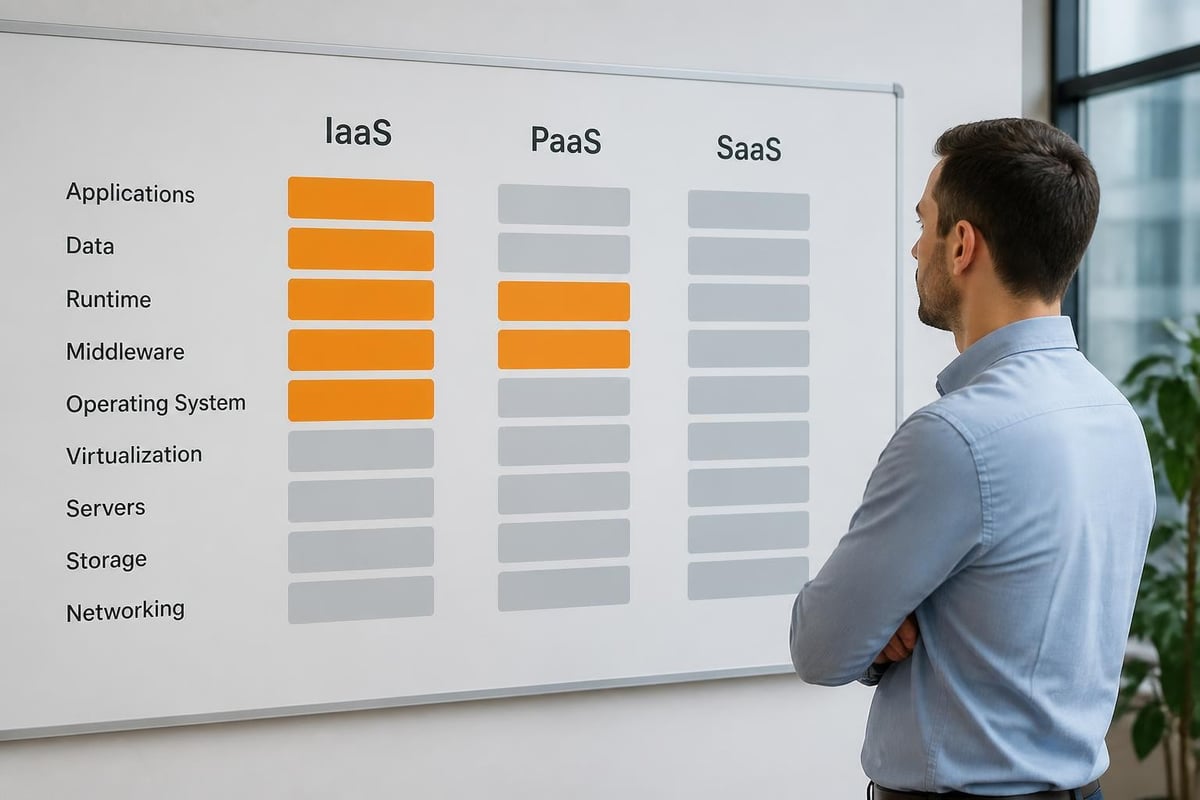
Cloud based hosting services encompass various delivery models that determine which infrastructure layers the provider manages versus what customers control. Furthermore, selecting the appropriate model impacts operational responsibilities, customisation capabilities, and overall costs.
Infrastructure as a Service (IaaS)
IaaS provides the foundational layer, delivering virtualised computing resources over the internet. Customers receive virtual machines, storage, and networking components but remain responsible for operating systems, middleware, and applications. Therefore, this model suits organisations requiring maximum flexibility and control over their hosting environment.
Key IaaS capabilities include:
- Self-service provisioning allowing instant resource deployment
- Elastic scaling to adjust capacity based on demand
- Pay-per-use billing eliminating capital expenditure
- API access for programmatic infrastructure management
Consequently, development teams gain agility whilst infrastructure specialists maintain granular control over configurations. Nevertheless, this model requires technical expertise to manage effectively.
Platform and Software Services
Platform as a Service (PaaS) abstracts infrastructure management, providing ready-to-use development environments. Furthermore, Software as a Service (SaaS) delivers complete applications through cloud infrastructure, requiring minimal customer administration. IBM’s overview of cloud hosting explains how these models enable different use cases from application development to end-user productivity tools.
In addition, many organisations adopt multiple service models simultaneously, selecting the approach that best fits each specific workload. Therefore, a comprehensive cloud strategy often incorporates elements across the entire service spectrum.
Performance and Scalability Benefits
A cloud based hosting service delivers performance advantages that traditional hosting struggles to match. Moreover, the distributed nature of cloud infrastructure enables sophisticated optimisation techniques that enhance application responsiveness and user experience.
Horizontal and Vertical Scaling
Cloud platforms support two primary scaling approaches. Vertical scaling adds more power to existing servers by increasing CPU, memory, or storage allocation. Horizontal scaling distributes workload across additional servers, creating parallel processing capacity. Furthermore, cloud environments can combine both methods simultaneously.
Automated scaling responds to traffic patterns without manual intervention:
- Scheduled scaling anticipates known demand increases during specific timeframes
- Dynamic scaling monitors metrics and adjusts resources based on real-time conditions
- Predictive scaling uses machine learning to forecast requirements before demand materialises
- Geographic scaling deploys resources closer to user populations
Therefore, applications maintain consistent performance during traffic spikes whilst avoiding overprovisioning during quiet periods. Nevertheless, effective scaling requires proper application architecture that supports distributed operation.
Global Content Delivery
Cloud based hosting services typically operate multiple data centres across geographic regions. Consequently, organisations can deploy applications closer to end users, reducing latency and improving responsiveness. In addition, content delivery networks (CDNs) cache static assets at edge locations worldwide.
The U.S. General Services Administration emphasises how this geographic distribution enhances both performance and resilience. Furthermore, regional deployments help organisations comply with data residency regulations requiring information storage within specific jurisdictions.
Security and Compliance Considerations
Security remains a paramount concern when evaluating any cloud based hosting service. Moreover, the shared responsibility model requires clear understanding of which security elements providers manage versus what customers must implement themselves.
| Security Layer | Provider Responsibility | Customer Responsibility |
|---|---|---|
| Physical Infrastructure | Data centre security, hardware | None |
| Network | Base network security, DDoS protection | Firewall rules, network segmentation |
| Virtualisation | Hypervisor security, isolation | None |
| Operating System | Patches (PaaS/SaaS only) | Configuration, hardening (IaaS) |
| Application | None | Code security, updates |
| Data | Encryption at rest | Access controls, encryption keys |
Data Protection Mechanisms
Cloud providers implement multiple security layers protecting infrastructure and customer data. Nevertheless, organisations must configure these tools properly and supplement them with application-level controls. Furthermore, encryption serves as a fundamental protection mechanism both during transmission and whilst stored.
Key security practices include:
- Identity and access management controlling who can access resources
- Network segmentation isolating different application tiers
- Security monitoring detecting anomalous activity patterns
- Regular backups ensuring recovery capabilities
- Compliance audits verifying adherence to regulatory requirements
In addition, organisations handling sensitive information should evaluate providers' certification credentials. Therefore, look for compliance with standards like ISO 27001, SOC 2, and industry-specific frameworks.
Privacy and Regulatory Compliance
Data privacy regulations increasingly influence cloud hosting decisions. Moreover, frameworks like GDPR impose strict requirements on how organisations process and store personal information. Consequently, selecting a cloud based hosting service requires verifying that providers can support compliance obligations.
Businesses should investigate where providers physically store data and whether they offer region-specific deployments. Furthermore, contractual agreements must clearly define data handling responsibilities, breach notification procedures, and audit rights. Those interested in understanding how cloud security applies to specific scenarios might explore insights shared in discussions about cloud and server infrastructure.

Cost Structure and Financial Benefits
The economic model of cloud based hosting services differs fundamentally from traditional infrastructure investments. Furthermore, this transformation affects both capital planning and operational budgeting processes.
Operational Expenditure Model
Cloud hosting converts infrastructure from capital expenditure requiring upfront investment into operational expenditure paid monthly based on consumption. Therefore, organisations avoid large hardware purchases, reduce depreciation concerns, and eliminate refresh cycles. In addition, this approach improves cash flow predictability and aligns costs directly with business activity.
Nevertheless, consumption-based pricing requires vigilant monitoring to prevent unexpected expenses. Moreover, unused resources continue generating charges unless actively terminated, making resource management essential for cost optimisation.
Hidden Costs and Optimisation
Whilst cloud hosting eliminates obvious infrastructure expenses, organisations should account for additional costs:
- Data transfer fees when moving information between regions or out of cloud networks
- Storage charges that accumulate based on volume and access patterns
- Premium support services providing faster response times
- Licensing costs for commercial software running on cloud infrastructure
- Training investments developing team cloud expertise
Consequently, total cost of ownership calculations must encompass these factors alongside basic compute and storage charges. Furthermore, implementing governance policies prevents resource sprawl that drives unnecessary spending.
Migration Strategies and Best Practices
Transitioning to a cloud based hosting service requires careful planning to minimise disruption and maximise benefits. Moreover, different applications suit different migration approaches depending on their architecture and business criticality.
Assessment and Planning Phase
Successful migrations begin with comprehensive inventory and analysis:
- Application cataloguing documenting all systems requiring migration
- Dependency mapping identifying interconnections between applications
- Performance baselining establishing current metrics for comparison
- Compliance review verifying regulatory requirements remain satisfied
- Cost modelling projecting cloud expenses versus existing infrastructure
Furthermore, organisations should prioritise applications based on migration complexity and business value. Therefore, starting with simpler, less critical systems builds team experience before tackling complex enterprise applications.
Execution Approaches
The NIST Cloud Computing Reference Architecture provides frameworks for understanding migration patterns. Moreover, several strategies offer different balances between speed and optimisation:
Rehosting lifts existing applications to cloud infrastructure with minimal changes, delivering quick migration but limited cloud-native benefits. Replatforming makes selective optimisations during migration, such as adopting managed database services. Refactoring redesigns applications to fully leverage cloud capabilities, requiring significant development effort but maximising long-term value.
In addition, hybrid approaches keep certain workloads on-premises whilst moving others to cloud environments. Nevertheless, this creates ongoing management complexity requiring robust integration between environments.
Selecting the Right Provider
Choosing a cloud based hosting service provider represents a strategic decision with long-term implications. Furthermore, evaluation criteria should extend beyond basic pricing to encompass reliability, security, support quality, and alignment with business objectives.
Evaluation Criteria
Key factors distinguishing providers include:
| Criterion | Considerations |
|---|---|
| Geographic Coverage | Data centre locations, regional availability |
| Service Breadth | Available services, integration capabilities |
| Performance Guarantees | SLA commitments, uptime history |
| Security Certifications | Compliance credentials, audit reports |
| Support Options | Response times, expertise access |
| Pricing Transparency | Cost calculator accuracy, billing granularity |
Moreover, organisations should assess provider financial stability and market position. Therefore, partnerships with established providers reduce risk of service discontinuation or acquisition disruptions. Resources like TechRadar’s cloud computing reviews offer comparative analysis helping narrow selection.
Partnership Considerations
Beyond technical capabilities, evaluate the provider relationship model. Furthermore, some organisations benefit from hands-on support helping design architectures and optimise deployments. Consequently, providers offering consultancy services alongside infrastructure deliver additional value, particularly for businesses new to cloud environments.
In addition, migration assistance programmes reduce transition friction. Therefore, seek providers offering tools, expertise, and potentially financial incentives supporting the migration journey. For comprehensive support, businesses might explore options like scheduling a demonstration of integrated cloud solutions that showcase storage, communication, and security capabilities working together.
Environmental Sustainability in Cloud Hosting
Modern cloud based hosting services increasingly emphasise environmental responsibility. Moreover, large-scale data centres achieve efficiency improvements impossible for individual organisation server rooms.
Energy Efficiency Advantages
Cloud providers invest heavily in power efficiency through advanced cooling systems, renewable energy procurement, and optimised hardware utilisation. Furthermore, virtualisation maximises server usage, reducing the total number of physical machines required. Consequently, migrating to cloud infrastructure often decreases an organisation's carbon footprint compared to maintaining on-premises data centres.
Nevertheless, not all providers demonstrate equal environmental commitment. Therefore, organisations prioritising sustainability should investigate renewable energy usage, carbon offset programmes, and published environmental impact reports. In addition, selecting providers with credible green hosting practices aligns IT infrastructure with broader corporate sustainability objectives.
Backup and Disaster Recovery
A robust cloud based hosting service incorporates comprehensive data protection capabilities. Moreover, cloud platforms enable disaster recovery strategies previously accessible only to large enterprises with multiple data centres.
Automated Backup Solutions
Cloud environments facilitate regular automated backups without requiring manual intervention or physical media management:
- Incremental backups capturing only changed data to optimise storage
- Point-in-time recovery enabling restoration to specific moments
- Geographic replication maintaining copies across multiple regions
- Retention policies automatically managing backup lifecycle
Furthermore, cloud-native backup tools integrate seamlessly with hosted applications, ensuring consistency and reducing complexity. Nevertheless, organisations should regularly test recovery procedures verifying that backups function correctly during actual restoration scenarios. Understanding backup strategies for cloud-based applications provides additional perspective on protecting critical business data.
Business Continuity Planning
Disaster recovery planning becomes more accessible through cloud infrastructure. Moreover, organisations can maintain warm or hot standby environments ready for immediate activation during primary site failures. Therefore, recovery time objectives (RTOs) and recovery point objectives (RPOs) improve dramatically compared to traditional backup approaches.
In addition, geographic distribution across multiple data centres protects against regional disasters affecting entire facilities. Consequently, cloud based hosting services deliver resilience levels that would require prohibitive investment in traditional infrastructure.
Future Trends and Emerging Capabilities
Cloud hosting continues evolving rapidly, with emerging technologies expanding capabilities and use cases. Furthermore, understanding these trends helps organisations plan infrastructure strategies accommodating future requirements.
Edge Computing Integration
Edge computing distributes processing closer to data sources and end users, complementing centralised cloud resources. Moreover, this hybrid approach reduces latency for time-sensitive applications whilst maintaining central management and coordination. Consequently, cloud providers increasingly offer edge services extending their platforms beyond traditional data centres.
Applications benefiting from edge integration include:
- Internet of Things deployments processing sensor data locally
- Content delivery caching media close to consumers
- Real-time analytics analysing data streams before cloud transmission
- Autonomous systems requiring immediate decision-making
- Privacy-sensitive processing keeping data within specific geographic boundaries
Furthermore, edge capabilities enable new application architectures impossible with purely centralised infrastructure. Nevertheless, managing distributed resources introduces complexity requiring sophisticated orchestration tools.
Artificial Intelligence and Automation
Cloud platforms increasingly incorporate artificial intelligence capabilities for infrastructure management and optimisation. Moreover, machine learning models predict resource requirements, detect security threats, and recommend cost optimisation opportunities. Therefore, cloud based hosting services become more autonomous, reducing manual administration whilst improving efficiency.
In addition, AI-powered tools help organisations analyse application performance, identify bottlenecks, and suggest architectural improvements. Consequently, cloud environments deliver not just infrastructure but intelligence assisting optimal utilisation.
Selecting and implementing the right cloud based hosting service requires careful evaluation of deployment models, service types, security requirements, and provider capabilities. Moreover, successful cloud adoption delivers scalability, resilience, and cost efficiency that transform how organisations operate their digital infrastructure. vBoxx provides secure cloud hosting solutions emphasising privacy, sustainability, and performance, offering businesses the infrastructure, expertise, and support needed to confidently embrace cloud technology whilst maintaining control over their critical data and applications.