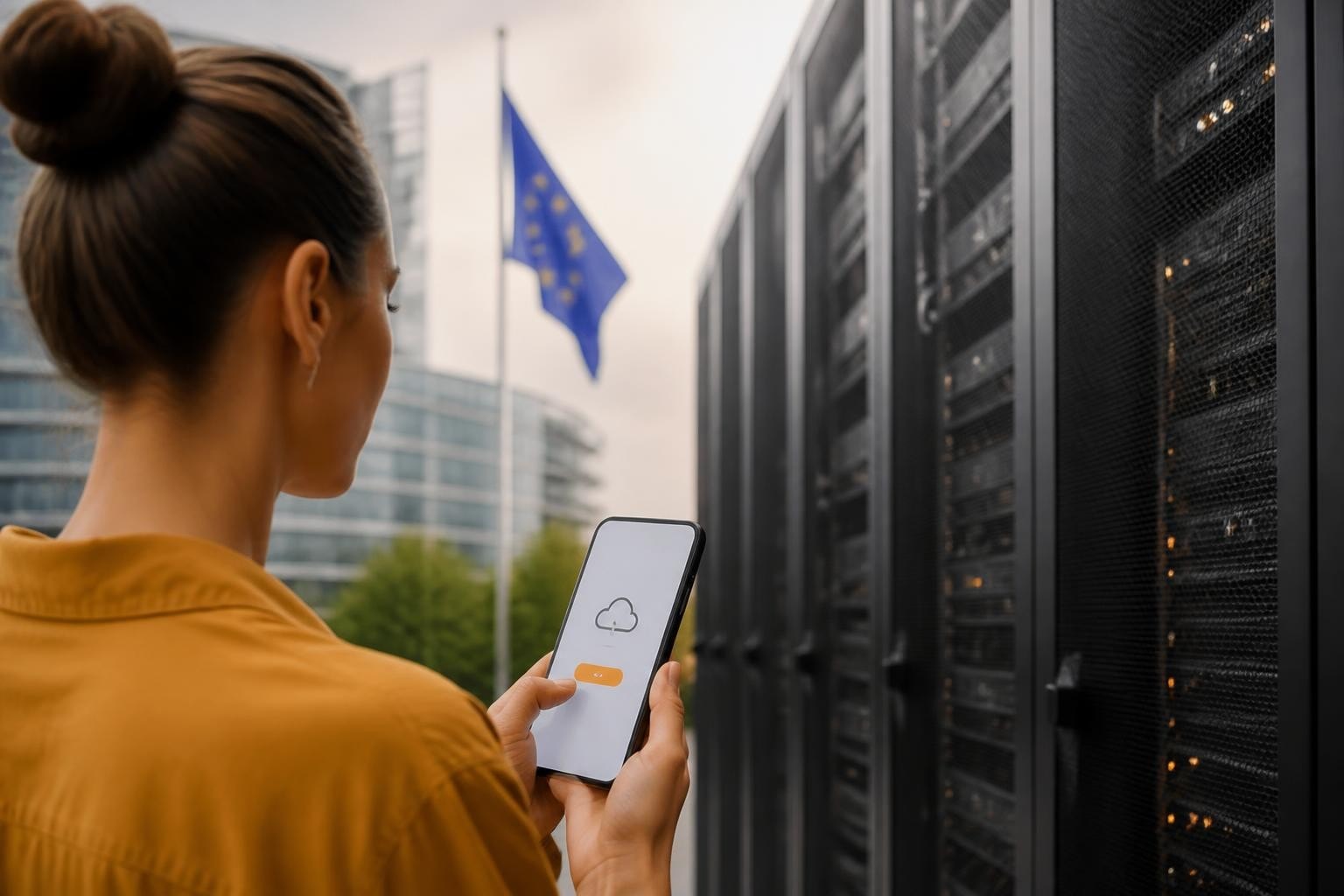

Businesses across Europe increasingly rely on cloud-based applications to streamline operations, enhance collaboration, and reduce infrastructure costs. Nevertheless, the transition to cloud computing introduces significant security considerations that organisations must address proactively. A secure cloud app represents more than just a software solution; it embodies a comprehensive approach to protecting sensitive business data, maintaining regulatory compliance, and ensuring operational continuity. Understanding the fundamental principles of cloud application security enables businesses to make informed decisions about their digital infrastructure whilst mitigating potential risks.
Understanding Cloud Application Security Fundamentals
A secure cloud app functions as a software platform delivered over the internet whilst implementing robust security measures to protect data confidentiality, integrity, and availability. Furthermore, these applications must balance accessibility with protection, allowing authorised users seamless access whilst preventing unauthorised intrusion.
The architecture of a secure cloud app typically incorporates multiple security layers that work in concert to defend against various threat vectors. These layers include encryption protocols, authentication mechanisms, access controls, and continuous monitoring systems. Moreover, the most effective solutions implement security at every stage of the application lifecycle, from development through deployment and ongoing maintenance.
Security responsibilities in cloud environments follow what experts describe as the shared responsibility model in cloud security. This framework delineates which security aspects the cloud provider manages and which remain the customer's responsibility. Therefore, understanding this division proves essential for organisations implementing cloud solutions.
Key Security Components
Every secure cloud app should incorporate specific security elements to ensure comprehensive protection:
- End-to-end encryption for data at rest and in transit
- Multi-factor authentication to verify user identities
- Role-based access control limiting permissions based on job functions
- Regular security audits and vulnerability assessments
- Automated backup systems ensuring data recovery capabilities
- Compliance certifications meeting industry-specific requirements

Evaluating Security Features in Cloud Applications
When selecting a secure cloud app for business operations, organisations must assess numerous security characteristics beyond basic password protection. In addition, the evaluation process should examine both technical capabilities and the provider's security practices.
Data encryption serves as the foundation of cloud security. A truly secure cloud app encrypts information using industry-standard protocols such as AES-256 encryption. Furthermore, encryption should apply not only to stored data but also to information transmitted between users and servers. This dual approach ensures protection against both data breaches and interception attempts.
Authentication mechanisms determine who can access your cloud resources. Modern secure cloud applications implement multi-factor authentication (MFA) requiring users to verify their identity through multiple methods. Nevertheless, authentication alone proves insufficient without proper authorization controls that specify which resources each user can access.
| Security Feature | Basic Implementation | Advanced Implementation | Business Impact |
|---|---|---|---|
| Encryption | TLS 1.2 in transit | AES-256 at rest and TLS 1.3 in transit | Comprehensive data protection |
| Authentication | Password only | MFA with biometric options | Reduced unauthorised access |
| Access Control | Basic user/admin roles | Granular RBAC with custom permissions | Precise security governance |
| Monitoring | Weekly log reviews | Real-time threat detection with AI | Immediate threat response |
| Backup | Manual weekly backups | Automated continuous backups | Enhanced data recovery |
Compliance and Certification Standards
Regulatory compliance represents a critical consideration for European businesses selecting cloud solutions. A secure cloud app must align with relevant regulations such as GDPR, which governs data protection and privacy throughout the European Union. Moreover, industry-specific requirements may apply depending on your sector.
Certifications provide independent verification of security practices. Look for cloud providers holding ISO 27001 certification for information security management, SOC 2 compliance for service organisation controls, and industry-specific certifications relevant to your business. Therefore, these credentials offer assurance that the provider follows established security frameworks.
Implementing Best Practices for Cloud Application Security
Deploying a secure cloud app requires more than simply choosing the right platform; it demands implementing cloud application security best practices throughout your organisation. Furthermore, security must be treated as an ongoing process rather than a one-time implementation.
Identity and access management (IAM) forms the cornerstone of cloud security implementation. Businesses should adopt the principle of least privilege, granting users only the minimum permissions necessary to perform their duties. In addition, regular reviews of access rights ensure that permissions remain appropriate as roles evolve.
Network security controls protect the pathways through which data flows. Implementing virtual private networks (VPNs), firewalls, and intrusion detection systems creates multiple barriers against potential attackers. Moreover, segmenting your network isolates sensitive resources from general access areas, limiting the potential impact of security breaches.
Operational Security Measures
- Conduct regular security training for all staff members
- Implement strong password policies with mandatory complexity requirements
- Enable automatic session timeouts for inactive users
- Maintain detailed audit logs of all system access and changes
- Establish incident response procedures for security events
- Schedule regular penetration testing and vulnerability assessments
Data classification helps organisations prioritise security efforts based on information sensitivity. Not all business data requires the same level of protection; therefore, categorising information enables more efficient resource allocation. Furthermore, classification supports compliance efforts by clearly identifying which data falls under regulatory requirements.

Addressing Common Cloud Security Challenges
Organisations implementing a secure cloud app frequently encounter specific challenges that require strategic solutions. Nevertheless, understanding these obstacles in advance enables proactive planning and mitigation strategies.
Data sovereignty concerns arise when businesses must ensure their information remains within specific geographical boundaries. European businesses particularly face this challenge given GDPR requirements about data transfers outside the EU. Consequently, selecting cloud providers with European data centres becomes essential for many organisations. vBoxx, for instance, operates within European infrastructure, addressing these sovereignty requirements whilst maintaining robust security standards.
Shadow IT represents another significant challenge where employees adopt unauthorised cloud applications without IT department approval. These unsanctioned tools create security gaps and compliance risks. Therefore, organisations should establish clear policies regarding approved applications whilst providing sanctioned alternatives that meet employee needs.
Managing Third-Party Integration Risks
Modern business operations typically require multiple applications working together through integrations and APIs. Each integration point represents a potential security vulnerability that requires careful management:
- Conduct security assessments of all third-party applications before integration
- Implement API security controls including authentication and rate limiting
- Monitor integration activity for unusual patterns or unauthorised access attempts
- Maintain an inventory of all active integrations and their permissions
- Regularly review and remove unnecessary integrations
Microsoft's guidance on securing data in cloud services emphasises the importance of choosing reliable providers and implementing comprehensive access controls. In addition, their recommendations highlight the need for continuous monitoring and regular security updates.
Securing Specific Cloud Application Types
Different categories of cloud applications present unique security considerations that businesses must address appropriately. Furthermore, understanding these distinctions helps organisations implement targeted security measures.
Cloud storage and file-sharing applications require particular attention to encryption and access controls. A secure cloud app in this category should encrypt files before upload, maintain encryption during storage, and only decrypt when authorised users download content. Moreover, sharing controls must allow granular permissions specifying who can view, edit, or share specific files.
Communication platforms including email, calendar, and video conferencing tools handle sensitive business communications requiring robust protection. These applications should implement end-to-end encryption for messages, secure calendar data against unauthorised viewing, and protect video conferences from intrusion. Nevertheless, usability must not suffer in pursuit of security; therefore, finding the right balance proves essential.
| Application Type | Primary Security Concerns | Essential Protections | Additional Considerations |
|---|---|---|---|
| Cloud Storage | Unauthorised access, data leakage | Encryption, access controls, sharing permissions | Version control, file recovery |
| Email/Communication | Message interception, phishing | End-to-end encryption, spam filtering, malware scanning | Archive policies, retention rules |
| Password Management | Credential theft, master password compromise | Zero-knowledge architecture, MFA, secure sharing | Emergency access, audit trails |
| Collaboration Tools | Document security, participant verification | Real-time encryption, participant authentication | Activity logging, watermarking |
Password management applications represent particularly sensitive secure cloud apps given their role in protecting access to other systems. These solutions should implement zero-knowledge architecture where the provider cannot access user passwords. Furthermore, they must include features for secure password sharing among team members whilst maintaining individual accountability.

Advanced Security Technologies and Features
Modern secure cloud apps increasingly incorporate advanced technologies that enhance protection beyond traditional security measures. In addition, these innovations help organisations stay ahead of evolving threats.
Artificial intelligence and machine learning enable predictive security capabilities that identify potential threats before they materialise. These systems analyse user behaviour patterns, network traffic, and access logs to detect anomalies indicating security incidents. Moreover, automated response systems can immediately isolate suspicious activity, preventing potential damage whilst alerting security teams.
Zero-trust architecture represents a fundamental shift in security philosophy, assuming no user or system should be automatically trusted regardless of location or network. Therefore, every access request requires verification, and permissions are granted on a just-in-time, just-enough basis. Implementing zero-trust identity protection significantly reduces the risk of unauthorised access.
Continuous Security Monitoring
Real-time monitoring forms an essential component of comprehensive cloud security strategies. A secure cloud app should provide:
- Live dashboards displaying current security status and alerts
- Automated threat detection using behavioural analysis and pattern recognition
- Immediate notifications for suspicious activities or policy violations
- Detailed audit trails recording all system access and modifications
- Integration capabilities with security information and event management (SIEM) systems
Vulnerability management requires ongoing attention rather than periodic assessments. Following application security best practices, organisations should implement continuous scanning for security weaknesses and apply patches promptly. Furthermore, regular penetration testing by security professionals helps identify vulnerabilities that automated tools might miss.
Building a Comprehensive Cloud Security Strategy
Developing an effective security strategy for cloud applications requires coordinating technical controls, organisational policies, and user education. Nevertheless, the effort invested in strategic planning yields significant returns through reduced risk and improved compliance.
Security governance establishes the framework within which cloud security operates. This includes defining roles and responsibilities, establishing security policies, and creating accountability mechanisms. Moreover, governance ensures that security initiatives align with broader business objectives rather than existing in isolation.
Risk assessment helps organisations identify their most critical assets and likely threats. By understanding which data and systems require the highest protection levels, businesses can allocate security resources efficiently. Therefore, conducting regular risk assessments enables adaptive security strategies that evolve with changing business needs.
Developing Security Policies
Comprehensive security policies provide clear guidance for employees and service providers:
- Acceptable use policies defining appropriate cloud application usage
- Data classification standards specifying handling requirements for different information types
- Access control policies governing permission assignment and review processes
- Incident response procedures outlining steps for addressing security events
- Vendor management policies establishing security requirements for third-party providers
The guidance provided by Eleven Technology on securing cloud infrastructure emphasises the importance of encryption, identity and access management, and continuous vulnerability scanning. In addition, their security checklist approach helps organisations ensure comprehensive coverage of critical security elements.
Enabling Secure Remote Work with Cloud Applications
The evolution of work patterns towards distributed teams amplifies the importance of a secure cloud app supporting remote operations. Furthermore, organisations must ensure that security measures do not impede productivity or employee satisfaction.
Endpoint security becomes crucial when employees access cloud applications from various devices and locations. Businesses should implement mobile device management (MDM) solutions that enforce security policies on employee devices, ensure automatic updates, and enable remote wipe capabilities for lost or stolen equipment. Moreover, requiring VPN connections for sensitive operations adds an additional security layer.
User education represents perhaps the most critical component of remote work security. Employees must understand security risks, recognise social engineering attempts, and follow established security procedures. Therefore, regular training sessions, simulated phishing exercises, and clear communication channels for reporting security concerns prove essential.
Training programmes should address specific scenarios relevant to cloud application usage, including recognising suspicious login attempts, handling sensitive data appropriately, and responding to potential security incidents. Nevertheless, training must be engaging and practical rather than merely theoretical to ensure effective knowledge retention.
For businesses seeking to implement comprehensive cloud solutions that prioritise security, exploring integrated platforms can provide significant advantages. A demonstration of all-in-one solutions allows organisations to evaluate how different security features work together within unified systems, ensuring cohesive protection across storage, communication, and access management functions.
Measuring and Improving Cloud Security Posture
Effective security management requires measuring current capabilities and identifying improvement opportunities. In addition, metrics provide objective evidence of security programme effectiveness for stakeholders and compliance auditors.
Security metrics should focus on both technical performance and business impact. Technical metrics might include the number of detected threats, average response time for security incidents, and percentage of systems with current security patches. Furthermore, business-oriented metrics could measure compliance status, user security awareness scores, and cost avoidance through prevented security incidents.
| Metric Category | Example Metrics | Target Thresholds | Review Frequency |
|---|---|---|---|
| Technical Performance | Threat detection rate, False positive percentage | >95% detection, <5% false positives | Weekly |
| Incident Response | Mean time to detect, Mean time to respond | <15 minutes detect, <1 hour respond | Monthly |
| Compliance | Policy compliance rate, Audit findings | 100% critical policies, Zero critical findings | Quarterly |
| User Behaviour | Security training completion, Phishing test success | 100% completion, <5% click rate | Monthly |
Continuous improvement processes ensure that security measures evolve alongside emerging threats and business changes. Regular security reviews should examine recent incidents, near-misses, and industry developments to identify enhancement opportunities. Moreover, incorporating feedback from users helps balance security requirements with practical usability needs.
Benchmarking against industry standards provides context for evaluating your security posture. Comparing your practices and metrics against recognised frameworks such as the CIS Controls or NIST Cybersecurity Framework reveals gaps and opportunities. Therefore, external validation through third-party assessments offers valuable perspective on your security effectiveness.
Implementing a secure cloud app requires careful consideration of technical capabilities, operational practices, and organisational policies to protect sensitive business data effectively. By understanding fundamental security principles, evaluating potential solutions thoroughly, and maintaining ongoing vigilance, organisations can leverage cloud technology whilst minimising risks. vBoxx provides European businesses with comprehensive cloud solutions emphasising privacy, security, and sustainability, offering the infrastructure and expertise needed to support secure digital operations across storage, communication, and access management requirements.