
The pace of digital transformation is accelerating, with the global cloud market expected to surpass £600 billion by 2026. Is your organisation prepared to thrive as a cloud based company in this dynamic environment?
This essential handbook is designed to equip leaders with a practical, step-by-step framework for launching, scaling, and securing a cloud based company. You will gain insights into cloud business models, learn how to navigate security and compliance, optimise your operations, and stay ahead of emerging trends.
Unlock proven strategies, expert guidance, and actionable steps to future-proof your cloud based company and lead confidently into 2026.
Understanding Cloud Based Companies: Models, Benefits, and Trends
The concept of a cloud based company has become central to digital transformation. In 2026, these organisations use cloud infrastructure for core operations, software delivery, and customer services. Unlike traditional IT setups, a cloud based company relies on virtualised resources, accessible from anywhere. Hybrid models blend on-premises and cloud, but a true cloud based company operates primarily online. Key terminology includes IaaS (Infrastructure as a Service), PaaS (Platform as a Service), SaaS (Software as a Service), and FaaS (Function as a Service). To understand the foundation of cloud storage, see How Cloud Storage Works for a detailed overview.

Defining Cloud Based Companies
A cloud based company is defined by its reliance on cloud-native technologies for delivering products or services. These firms use virtual servers, distributed storage, and APIs as core components. The main difference from traditional IT lies in the shift from physical hardware to scalable, on-demand resources.
Hybrid models mix local and cloud resources, but a cloud based company is distinct in its cloud-first approach. Essential terms include:
- IaaS: On-demand infrastructure
- PaaS: Platforms for app development
- SaaS: Software delivered online
- FaaS: Serverless functions
Understanding the basics of cloud storage and virtualisation is crucial for any cloud based company.
Business Models in the Cloud Era
The business model of a cloud based company often revolves around subscription or usage-based pricing. Subscription models charge customers a regular fee, while usage-based models bill according to consumption.
Cloud based companies serve both B2B and B2C markets, with vertical solutions tailored for specific industries. Examples include SaaS productivity tools, cloud storage providers, and industry-specific platforms. Each model offers flexibility, allowing a cloud based company to scale and adapt rapidly to market needs.
Key Benefits of Going Cloud-Based
A cloud based company enjoys several distinct advantages:
- Scalability: Instantly adjust resources to match demand
- Flexibility: Support remote work and global operations
- Cost efficiency: Shift from capital expenditure (CapEx) to operating expense (OpEx)
- Reach: Serve customers worldwide
According to a 2025 IDC report, 80 percent of new digital workloads will be cloud deployed. These benefits enable a cloud based company to innovate quickly and remain competitive.
Current and Emerging Trends
The landscape for a cloud based company is shaped by rapid innovation. Key trends include:
- Edge computing: Processing data closer to users for speed
- AI and automation: Enhancing efficiency and insights
- Industry-specific clouds: Custom solutions for regulated sectors
- Sustainability: Green cloud initiatives and eco-friendly data centres
Staying ahead of these trends helps a cloud based company remain relevant and future-proof.
Challenges to Consider
Operating as a cloud based company brings challenges alongside opportunities. Major concerns include:
- Data sovereignty: Navigating regulations for data storage
- Vendor lock-in: Risk of dependence on a single provider
- Skills gap: Shortage of experienced cloud professionals
Addressing these issues is vital for the long-term success of any cloud based company.
Planning and Launching Your Cloud Based Company: Step-by-Step
Launching a cloud based company in 2026 requires a blend of strategic foresight and practical execution. From identifying your market niche to ensuring ongoing improvement, each step is crucial to building a business that thrives in the digital age.

Step 1: Market Research and Opportunity Analysis
Begin your journey by thoroughly researching the market for your cloud based company. Identify industries and niches that are underserved or facing digital transformation pressures.
Analyse the competitive landscape to understand how major players like AWS, Azure, and niche providers position themselves. Investigate regulatory requirements, especially if you plan to serve industries with strict compliance standards.
Focus on trends such as remote work, data localisation, and sector-specific demands. This groundwork will help your cloud based company align its offerings to real-world needs and avoid costly missteps.
Step 2: Crafting Your Value Proposition
Defining your unique value proposition is essential for a successful cloud based company. Pinpoint what sets your solution apart, whether it is enhanced security, cost savings, or superior agility.
Connect with customer pain points by addressing concerns like data privacy, scalability, or integration challenges. Develop a minimum viable product (MVP) that showcases your core features and delivers early value.
Solicit feedback from potential clients to refine your offering. A well-crafted value proposition not only attracts customers but also guides your product roadmap as your cloud based company grows.
Step 3: Selecting the Right Cloud Infrastructure
Choosing the right infrastructure is a foundational decision for any cloud based company. Evaluate public, private, hybrid, and multi-cloud models based on factors such as scalability, performance, and data residency.
European businesses, for instance, often prioritise GDPR-compliant providers. Compare your options using criteria like cost, flexibility, and security.
Avoid the trap of vendor lock-in by considering multi-cloud or open-source approaches. For deeper insight, explore Cloud Provider Dependency Risks to inform your strategy and maintain operational freedom as your cloud based company evolves.
| Model | Pros | Cons |
|---|---|---|
| Public Cloud | Scalable, cost-effective | Less control |
| Private Cloud | Enhanced security, control | Higher cost |
| Hybrid | Flexibility, compliance | Complexity |
| Multi-Cloud | Redundancy, vendor independence | Integration challenges |
Step 4: Building a Cloud-Ready Team
Your cloud based company’s success depends on the expertise of your team. Recruit or upskill talent in roles such as cloud architects, DevOps engineers, and security experts.
Invest in training to keep your staff updated on evolving technologies and best practices. Consider partnerships with managed service providers to supplement skills and accelerate deployment.
A collaborative, cloud-savvy team can drive innovation and ensure your cloud based company adapts quickly to new challenges and opportunities.
Step 5: Legal, Compliance, and Data Protection
Navigating legal and compliance requirements is non-negotiable for every cloud based company. Stay informed about GDPR, NIS2, and other relevant data privacy laws that govern your target markets.
Draft robust service level agreements (SLAs) to clarify responsibilities and expectations with clients and partners. The 2025 Gartner report highlights that 65 percent of cloud failures stem from misconfigured access, so prioritise rigorous access management and regular audits.
Implementing proactive compliance measures builds trust and protects your cloud based company from costly fines.
Step 6: Go-to-Market Strategy
A well-defined go-to-market strategy is vital for your cloud based company to attract and retain customers. Decide whether to use subscription or usage-based pricing, based on your target audience’s preferences.
Explore channel partnerships and reseller programmes to expand your reach. Invest in digital marketing, thought leadership, and early customer acquisition campaigns.
Monitor initial feedback closely and adjust your approach to ensure your cloud based company meets evolving market needs.
Step 7: Measuring and Iterating
Continuous improvement underpins the long-term success of a cloud based company. Establish key performance indicators (KPIs) such as uptime, customer retention, and monthly recurring revenue (MRR).
Regularly gather customer feedback and analyse data to identify areas for enhancement. Embrace agile methodologies to iterate quickly and address emerging requirements.
By fostering a culture of measurement and adaptation, your cloud based company will remain competitive and resilient in a rapidly evolving landscape.
Security, Privacy, and Compliance in the Cloud
Cybersecurity is now central to every cloud based company. As digital threats evolve, so do the ways attackers target cloud environments. In 2026, understanding how to protect sensitive data and meet compliance requirements is not just a technical issue, but a business-critical one.
This section explores the risks, best practices, and regulatory landscape that shape security strategies for a cloud based company. Discover how to build trust and resilience from the ground up.

The Evolving Threat Landscape
The attack surface for a cloud based company has expanded in recent years. New cyber threats specifically target cloud infrastructure, ranging from sophisticated phishing schemes to vulnerabilities in virtual machines.
According to the 2025 ENISA report, 70% of breaches involve misconfigured cloud assets. Attackers exploit weak configurations, exposed APIs, and poorly secured credentials. For a cloud based company, failing to address these threats can lead to data leaks, reputational damage, and regulatory penalties.
Staying informed about the latest threats is essential. Threat intelligence feeds, regular security briefings, and proactive monitoring can help a cloud based company anticipate and mitigate risks before they escalate.
Essential Security Practices
A cloud based company must implement robust security measures to protect client data and maintain service integrity. Key practices include:
- Encrypting data both in transit and at rest
- Deploying strong identity and access management (IAM) controls
- Conducting regular security audits and penetration testing
Encryption is especially important when handling sensitive information. For detailed insights into the advantages of encrypted storage for privacy and compliance, see Encrypted Online Storage Benefits.
Automating security checks and using configuration management tools can further reduce human error. These steps help a cloud based company stay ahead of evolving threats.
Regulatory Compliance: A 2026 Perspective
For a cloud based company, compliance with regulations such as GDPR and NIS2 is non-negotiable. Cross-border data transfers, sector-specific rules, and privacy laws require careful navigation.
Data residency is a growing concern, especially for companies serving clients in multiple jurisdictions. Real-world compliance failures have resulted in hefty fines and public scrutiny. A cloud based company should prioritise clear documentation, regular compliance reviews, and legal consultation.
The regulatory landscape will continue to evolve. Staying proactive ensures a cloud based company remains compliant and competitive.
Building Trust with Clients and Partners
Trust is a cornerstone for any cloud based company. Clients demand transparency in data handling, incident response, and service reliability.
Earning trust involves:
- Publicly sharing security and privacy commitments
- Maintaining certifications like ISO 27001 and SOC 2
- Providing clear communication during incidents
A cloud based company that demonstrates accountability and openness will attract and retain more clients. Transparency builds long-term partnerships and strengthens market position.
Example: Secure Cloud Providers in Europe
European cloud providers set the standard for privacy and compliance. Many operate local data centres, ensuring data residency and adherence to strict EU regulations.
For a cloud based company, choosing partners with a strong focus on GDPR and NIS2 compliance is vital. These providers typically offer advanced security features and transparent reporting.
By aligning with reputable, privacy-first cloud partners, a cloud based company can assure clients of their commitment to security and regulatory excellence.
Optimising Cloud Operations: Cost, Performance, and Sustainability
Efficient cloud operations are critical for any cloud based company aiming to maintain a competitive edge. From managing costs to enhancing performance and embracing sustainability, operational excellence is the foundation for growth and resilience.
Cost Management in the Cloud
For a cloud based company, controlling operational expenses is a constant priority. Usage monitoring tools, such as AWS Cost Explorer or Azure Cost Management, provide real-time insights into resource consumption. Rightsizing resources prevents overprovisioning and helps align spending with actual demand.
Adopting a FinOps approach brings finance and tech teams together, fostering accountability and efficiency. According to Global cloud computing market growth projections, companies are investing in advanced cost optimisation to remain profitable as cloud adoption accelerates. Regularly reviewing service agreements and using automation to shut down idle resources further enhances cost efficiency.
Performance Optimisation
Delivering consistent performance is non-negotiable for a cloud based company. Auto-scaling allows systems to react instantly to traffic spikes, ensuring availability without waste. Load balancing distributes workloads evenly, minimising bottlenecks and latency.
Monitoring uptime, latency, and user experience is essential. For example, an e-commerce cloud based company improved checkout speeds by implementing auto-scaling and proactive monitoring. Performance tuning should be ongoing, using metrics and customer feedback to guide improvements.
Sustainability and Green Cloud Initiatives
Sustainability is now a core value for any forward-thinking cloud based company. Data centres account for a growing share of global electricity use, making energy efficiency vital. The 2025 EU Green Deal introduces stricter regulations for IT energy consumption, pushing providers to adopt greener practices.
Many cloud based company operators now select providers that use renewable-powered hosting and invest in carbon offset programmes. Choosing energy-efficient hardware and optimising workloads for less power use are also key strategies. Transparent sustainability reporting is increasingly expected by clients and regulators.
Vendor Management and Avoiding Lock-In
Vendor management is crucial to protect flexibility and control costs for a cloud based company. Multi-cloud and open-source solutions reduce reliance on a single provider, lowering the risk of vendor lock-in. When negotiating contracts, focus on exit clauses, data portability, and long-term pricing guarantees.
A recent case study found a cloud based company successfully migrated from proprietary to open-source cloud platforms, resulting in reduced costs and enhanced agility. Evaluate providers regularly to ensure your needs are being met and to retain leverage in negotiations.
Automation and AI in Cloud Operations
Automation is transforming how a cloud based company manages its infrastructure. Self-healing systems detect and resolve issues automatically, reducing downtime. Predictive analytics enable smarter resource allocation, anticipating demand before it impacts performance.
AI-driven security monitoring is now essential, helping to identify threats in real time and respond proactively. Automation also streamlines compliance reporting and routine maintenance, freeing up skilled staff for higher-value tasks. Embracing these technologies boosts efficiency and resilience.
vBoxx: Secure and Sustainable Cloud Solutions for European Businesses
For any cloud based company operating in Europe, vBoxx offers a comprehensive suite of secure hosting, cloud storage, and virtual servers. Privacy and compliance are prioritised, with GDPR and NIS2 adherence and European data residency.
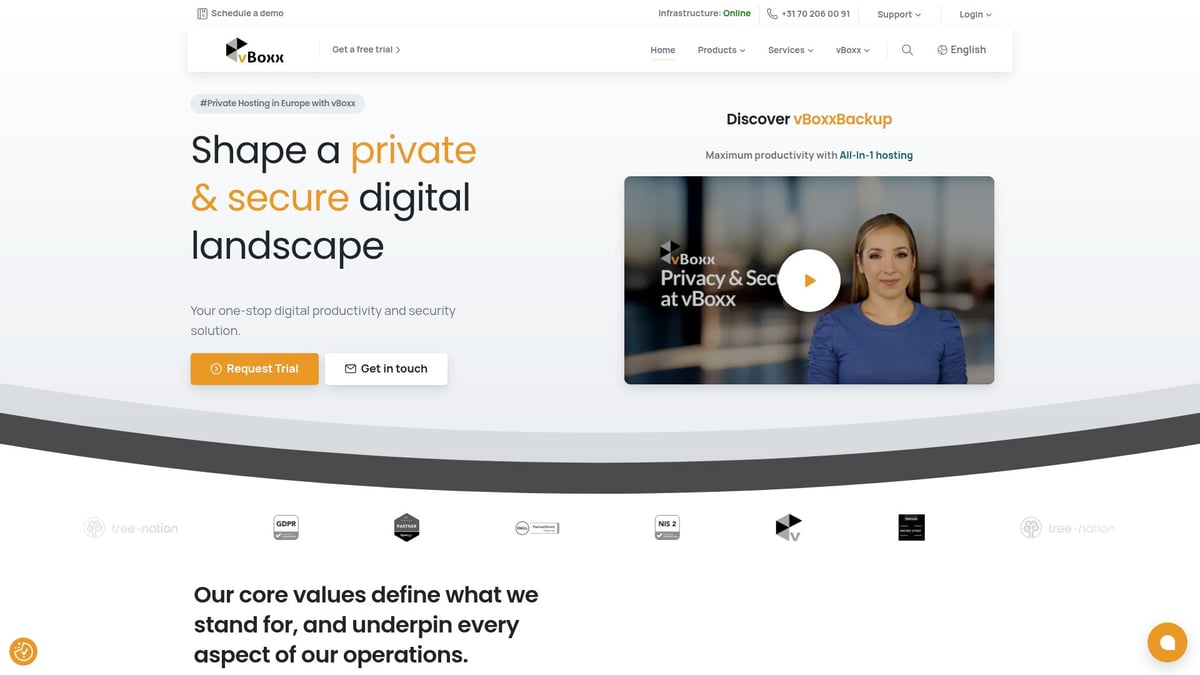
vBoxx stands out for its green hosting practices, supporting clients’ sustainability goals. Flexible, scalable solutions suit both SMBs and enterprises, while expert consultancy and personalised support ensure a smooth experience. Free trials and demos help businesses evaluate the right fit for their needs.
Future-Proofing Your Cloud Based Company: Innovation and Growth Strategies
Staying ahead in the cloud era requires constant innovation and a proactive approach to growth. Future-proofing your cloud based company is not just about adopting the latest technologies, but about building a resilient, adaptable organisation ready for rapid change.
Embracing Emerging Technologies
The pace of technological advancement is accelerating. For a cloud based company, embracing AI and machine learning is essential for delivering smarter, data-driven services. Edge computing enables real-time processing closer to where data is generated, reducing latency for applications like IoT and AR. Quantum computing, although still emerging, promises new levels of security and computational power. Staying informed on enterprise cloud security trends 2026 helps anticipate how these innovations will reshape the threat landscape and ensure your cloud based company remains secure and competitive.
Expanding Service Offerings
Diversifying your portfolio strengthens your cloud based company’s market position. Consider developing vertical cloud solutions tailored for regulated industries such as healthcare or finance. Integrating with IoT platforms, blockchain for secure transactions, or AR/VR for immersive customer experiences opens new revenue streams. By continuously refining and expanding your offerings, your cloud based company can address evolving client needs and achieve long-term growth.
- Industry-specific platforms
- IoT and smart device integration
- Blockchain-powered services
- AR/VR-enabled collaboration tools
Building Ecosystems and Partnerships
A thriving cloud based company does not operate in isolation. Building ecosystems through API-driven platforms fosters collaboration with developers and technology partners. Strategic alliances with hyperscalers, like AWS or Azure, and niche providers enhance your service capabilities and expand your reach. Participating in developer communities encourages innovation and helps your cloud based company stay at the forefront of industry trends.
Scaling Globally While Ensuring Local Compliance
Expanding internationally brings both opportunity and complexity. Your cloud based company must deploy services across multiple regions while adapting to local data localisation and privacy laws. Multi-region deployment strategies improve resilience and performance, but require close attention to regulatory requirements. Adopting cloud compliance best practices 2025 ensures your operations remain secure and fully compliant, protecting your brand and customer trust as you scale.
Talent Development and Organisational Agility
People are the backbone of every successful cloud based company. Prioritise continuous upskilling, with training in cloud certifications and emerging technologies. Foster a culture of innovation by encouraging experimentation and rewarding creative problem-solving. Organisational agility—quickly adapting to change—empowers your team to seize new opportunities and address challenges as they arise.
- Cloud computing certifications (AWS, Azure, Google Cloud)
- AI and machine learning courses
- Internal innovation programmes
Measuring Success and Adapting to Change
Adopting a data-driven approach is vital for any cloud based company. Track key metrics such as churn rate, Net Promoter Score (NPS), and the pace of your innovation pipeline. Regularly seek customer feedback and monitor market trends to inform your strategy. Being responsive to shifts in technology and customer expectations ensures your cloud based company stays relevant and primed for future growth.
| Metric | Why It Matters |
|---|---|
| Churn Rate | Customer retention health |
| NPS | Client satisfaction measure |
| Innovation Pipeline | Readiness for new markets |
The Road Ahead: Key Predictions for Cloud Based Companies in 2026
The future for every cloud based company is shaped by powerful forces: market expansion, regulatory change, evolving customer needs, and sustainability imperatives. As we look to 2026, leaders must anticipate these shifts and prepare to turn challenges into opportunities.
Cloud Market Outlook
By 2026, global spending on cloud services is expected to surge, with IDC and Statista forecasting continued double-digit growth. More businesses across every sector will adopt a cloud based company model, seeking agility and scalability. Industry-specific and regional cloud providers are gaining traction, offering tailored solutions that meet local compliance demands and niche requirements. This competitive landscape will drive innovation and force traditional vendors to adapt.
Regulatory and Security Landscape
Regulations governing data privacy and cybersecurity are tightening, especially across Europe and Asia. Anticipated updates to GDPR and new frameworks like NIS2 will impact every cloud based company, requiring proactive compliance. Evolving cyber threats, including more sophisticated phishing and ransomware attacks, make robust security essential. Leaders should regularly review resources such as Cybersecurity Tips for Businesses to stay ahead of emerging risks and safeguard customer trust.
Customer Expectations and Experience
Customers in 2026 will demand seamless, secure, and sustainable experiences from any cloud based company they work with. Transparency around data handling, privacy, and service reliability will be non-negotiable. Firms must invest in quality assurance standards, such as those detailed in the Quality assurance framework for cloud environments, to ensure consistent service delivery. Building trust through open communication and rapid incident response will set leading providers apart.
The Role of Sustainability
Environmental concerns are now central to every cloud based company strategy. New EU regulations will require detailed reporting of data centre energy use and carbon emissions. Innovations in green data centre technologies, such as renewable-powered cooling and energy-efficient hardware, are becoming competitive differentiators. Providers prioritising sustainability not only meet compliance but appeal to eco-conscious clients and investors.
Actionable Next Steps for Founders and Leaders
Founders should focus on continuous learning and organisational agility. Invest in team upskilling, keep pace with regulatory changes, and embed resilience into your cloud based company operations. Prioritise compliance, sustainability, and customer-centricity. By doing so, you will future-proof your business and position it for growth in a rapidly evolving digital landscape.
As you look towards building or scaling your cloud based company in 2026, taking the first step with the right partner is crucial. We’ve covered how security, compliance, and sustainability can set your business apart, but seeing these principles in action can make all the difference. If you’re ready to explore how a secure, high performance and environmentally responsible cloud solution can support your specific needs, I invite you to start a free trial. Experience firsthand how vBoxx can help you future proof your operations and give your business a competitive edge.