

The modern cloud server platform has fundamentally transformed how businesses deploy, manage, and scale their digital infrastructure. Furthermore, organisations across Europe are increasingly seeking cloud solutions that combine performance, security, and regulatory compliance. In 2026, the decision to adopt a cloud server platform represents more than a technical choice; it reflects strategic priorities around data sovereignty, operational efficiency, and sustainable growth. Therefore, understanding the core components, deployment models, and selection criteria becomes essential for any business planning its digital future.
Understanding the Cloud Server Platform Architecture
A cloud server platform provides virtualised computing resources over the internet, enabling businesses to provision servers, storage, and networking on demand. According to the NIST Special Publication 800-145, cloud computing is characterised by five essential features: on-demand self-service, broad network access, resource pooling, rapid elasticity, and measured service. Nevertheless, the practical implementation of these principles varies significantly across providers.
Core Infrastructure Components
The foundation of any cloud server platform rests on several interconnected layers:
- Compute resources that provide processing power through virtual machines or containers
- Storage systems offering block, file, and object storage options
- Network infrastructure enabling connectivity, load balancing, and traffic management
- Virtualisation layer abstracting physical hardware into software-defined resources
- Management plane providing APIs, dashboards, and automation tools
Moreover, modern platforms increasingly incorporate orchestration capabilities. The Kubernetes architecture demonstrates how container orchestration has become central to cloud-native deployments, with control plane components managing the desired state of applications whilst worker nodes execute the actual workloads.

Service Models and Deployment Options
Cloud server platforms typically offer three primary service models, each providing different levels of control and management responsibility:
| Service Model | Provider Manages | Customer Manages | Best For |
|---|---|---|---|
| Infrastructure as a Service (IaaS) | Hardware, virtualisation, storage, networking | Operating systems, middleware, applications, data | Custom configurations, legacy applications |
| Platform as a Service (PaaS) | Everything except applications and data | Applications, data | Rapid development, standardised deployments |
| Software as a Service (SaaS) | Entire stack | Configuration, user access | Ready-to-use business applications |
Furthermore, deployment models determine where and how infrastructure is hosted. Public clouds offer shared infrastructure with economies of scale, whilst private clouds provide dedicated resources for organisations with strict compliance requirements. Hybrid approaches combine both models, allowing businesses to keep sensitive workloads on-premises whilst leveraging public cloud for scalable capacity.
Security and Compliance Considerations
Security represents a paramount concern when evaluating any cloud server platform. In addition to technical safeguards, European businesses must navigate complex regulatory landscapes including GDPR, NIS2, and sector-specific requirements. The Cloud Security Alliance guidance provides comprehensive frameworks for implementing cloud security controls across identity management, encryption, network security, and incident response.
Data Sovereignty and Jurisdictional Control
The location of data centres significantly impacts legal obligations and risk exposure. Therefore, businesses handling sensitive information increasingly prioritise European infrastructure to maintain full GDPR compliance and avoid extraterritorial data access laws. Platforms operating ISO 27001-certified facilities in jurisdictions like the Netherlands offer stronger guarantees around data protection and operational security.
Key security considerations include:
- Encryption standards for data at rest and in transit (AES-256, TLS 1.3)
- Access controls implementing least-privilege principles and multi-factor authentication
- Audit capabilities providing detailed logging and compliance reporting
- Backup and recovery ensuring business continuity and disaster resilience
- Vulnerability management with regular patching and security assessments
Moreover, the shared responsibility model defines which security tasks belong to the platform provider versus the customer. In consequence, organisations must clearly understand their obligations for application security, identity management, and data classification regardless of deployment model.
Compliance Frameworks and Certifications
Professional cloud server platforms demonstrate compliance through independent audits and certifications. ISO 27001 certification verifies information security management systems, whilst SOC 2 reports provide detailed controls assurance. For businesses in regulated industries, additional certifications like HIPAA for healthcare or PCI DSS for payment processing may prove essential.
Compliance requirements extend beyond static certification to ongoing operational practices. Therefore, platforms should provide tools for data residency enforcement, automated compliance reporting, and configuration management aligned with regulatory standards. In addition, clear data processing agreements and subprocessor disclosures enable customers to fulfil their own accountability obligations.

Performance Optimisation and Scalability
The ability to scale resources dynamically represents a defining advantage of cloud server platforms. Nevertheless, achieving optimal performance requires careful architecture decisions around compute sizing, storage selection, and network design. Furthermore, understanding the performance characteristics of different instance types enables precise matching between workload requirements and infrastructure capabilities.
Compute and Storage Performance Factors
Modern cloud server platforms offer diverse compute options optimised for different workloads:
General-purpose instances balance CPU, memory, and networking for typical business applications. Compute-optimised instances provide higher processor performance for calculation-intensive tasks. Memory-optimised instances support large in-memory databases and analytics workloads. GPU-accelerated instances enable machine learning training and graphics rendering.
Storage performance depends on several variables including IOPS (input/output operations per second), throughput, and latency. Block storage typically delivers the lowest latency for database workloads, whilst object storage provides cost-effective capacity for archival and media files. Therefore, selecting appropriate storage tiers based on access patterns directly impacts both performance and cost efficiency.
| Storage Type | Typical IOPS | Use Cases | Performance Characteristics |
|---|---|---|---|
| NVMe SSD | 100,000+ | High-performance databases, analytics | Ultra-low latency, highest cost |
| Standard SSD | 10,000-50,000 | Production applications, web servers | Balanced performance and cost |
| HDD | 500-5,000 | Backups, archives, infrequent access | High capacity, lower cost |
Auto-Scaling and Load Distribution
Horizontal scaling adds or removes server instances based on demand, whilst vertical scaling adjusts the resources allocated to existing instances. In addition, auto-scaling policies automate these adjustments using metrics like CPU utilisation, memory consumption, or request queue depth. Nevertheless, applications must be designed to support stateless operation for horizontal scaling to function effectively.
Load balancers distribute incoming traffic across multiple server instances, improving both availability and performance. Furthermore, modern platforms offer application-layer load balancing with SSL termination, session persistence, and health checking. Geographic load balancing routes users to the nearest regional deployment, reducing latency and improving user experience.
Cost Management and Financial Operations
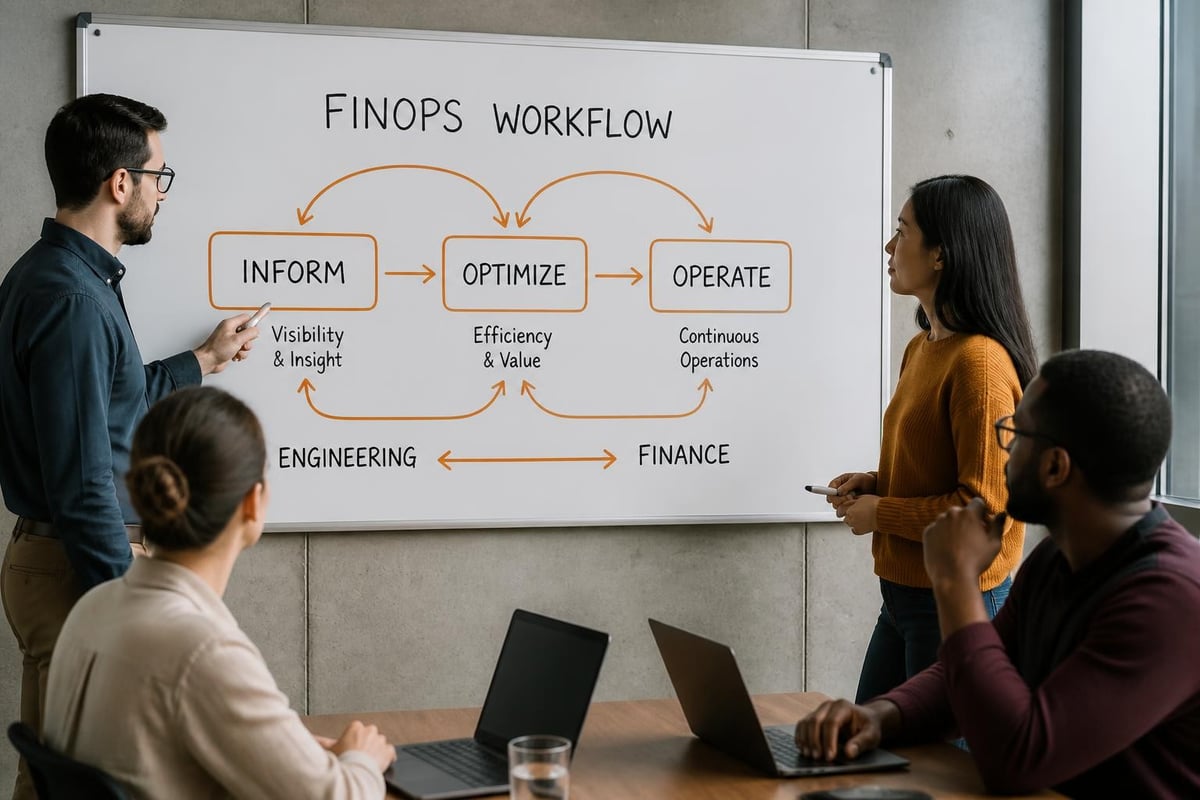
Cloud server platforms introduce consumption-based pricing that offers flexibility but requires new financial management approaches. The FinOps Foundation framework establishes principles for cloud financial management, emphasising collaboration between engineering, finance, and operations teams. Moreover, effective cost control combines technical optimisation with organisational processes and cultural change.
Pricing Models and Cost Drivers
Understanding pricing structures enables accurate forecasting and budget management. Therefore, businesses should analyse their specific usage patterns across compute, storage, networking, and additional services. On-demand pricing provides maximum flexibility with hourly or per-second billing, whilst reserved capacity commitments offer substantial discounts for predictable workloads.
Primary cost drivers include:
- Compute hours based on instance type and running time
- Storage capacity measured in gigabytes or terabytes per month
- Data transfer particularly egress traffic leaving the platform
- Additional services such as load balancing, backups, and monitoring
- Licensing for commercial operating systems or database engines
Furthermore, hidden costs emerge from inefficient resource utilisation. Oversized instances waste capacity, whilst idle resources during off-peak hours accumulate unnecessary charges. In consequence, continuous right-sizing and automated shutdown policies for non-production environments deliver measurable savings.
Cost Optimisation Strategies
Professional cost management extends beyond simple resource reduction to strategic allocation aligned with business value. Nevertheless, recent research demonstrates that automated cost optimisation tools can reduce cloud spending by 30-50% whilst maintaining performance requirements.
Effective optimisation techniques include:
- Reserved capacity for baseline workloads with predictable demand
- Spot instances for fault-tolerant batch processing and development environments
- Storage tiering moving infrequently accessed data to lower-cost tiers
- Resource scheduling shutting down non-production systems outside business hours
- Network optimisation minimising inter-region data transfer and egress costs
In addition, tagging strategies enable cost allocation across departments, projects, or customers. Therefore, implementing comprehensive tagging policies during initial deployment prevents subsequent remediation efforts and enables accurate chargeback or showback reporting.
Platform Ecosystem and Tooling Integration
The CNCF Cloud Native Landscape catalogues hundreds of open-source projects across categories like continuous integration, observability, service mesh, and security. Nevertheless, selecting appropriate tools requires alignment with organisational capabilities, existing technology investments, and long-term platform strategy. Furthermore, avoiding vendor lock-in whilst maintaining operational simplicity represents a constant balancing act.
Infrastructure as Code and Automation
Modern cloud server platforms support infrastructure as code (IaC) approaches that define infrastructure through declarative configuration files. Tools like Terraform, Ansible, and native platform APIs enable version-controlled, repeatable deployments. Moreover, IaC facilitates disaster recovery, multi-environment consistency, and audit compliance through documented infrastructure states.
Automation extends beyond initial provisioning to ongoing operations. Therefore, implementing CI/CD pipelines for infrastructure changes applies software development practices to platform management. In addition, automated testing validates configuration changes before production deployment, reducing human error and improving reliability.
Monitoring, Observability, and Incident Response
Comprehensive monitoring provides visibility into platform health, application performance, and security events. Nevertheless, observability goes beyond simple metrics collection to understanding system behaviour through logs, traces, and distributed tracing. Furthermore, effective observability enables rapid troubleshooting and capacity planning based on actual usage patterns.
Essential monitoring components include:
- Infrastructure metrics tracking CPU, memory, disk, and network utilisation
- Application performance monitoring measuring response times, error rates, and throughput
- Log aggregation centralising logs from distributed systems for analysis
- Alerting systems notifying operations teams of threshold violations or anomalies
- Dashboards visualising key performance indicators and business metrics
For businesses requiring secure password management across cloud infrastructure and applications, solutions like vBoxxVault provide GDPR-compliant credential storage with team sharing capabilities, ensuring that access credentials remain protected whilst enabling operational efficiency.
Application Design Patterns for Cloud Platforms
The Twelve-Factor App methodology establishes principles for building cloud-native applications that maximise portability and scalability. Moreover, these patterns ensure applications can leverage platform capabilities whilst remaining adaptable to changing requirements. Therefore, development teams should adopt these principles during initial design rather than attempting retroactive refactoring.
Microservices and Container-Based Architecture
Microservices decompose monolithic applications into independent, loosely coupled services that can be developed, deployed, and scaled independently. Nevertheless, this architectural style introduces operational complexity around service discovery, inter-service communication, and distributed data management. Furthermore, container technologies like Docker provide consistent packaging and runtime environments across development and production.
Container orchestration platforms manage deployment, scaling, and networking of containerised applications. In consequence, teams can focus on application logic whilst the platform handles infrastructure concerns. Additionally, service mesh technologies add sophisticated traffic management, security, and observability to microservices deployments.
Stateless Design and External State Management
Cloud-native applications treat server instances as ephemeral resources that can be created, destroyed, or replaced without data loss. Therefore, application state must reside in external services like databases, object storage, or distributed caches. In addition, session data should persist in shared storage rather than server memory, enabling seamless failover and horizontal scaling.
Database selection significantly impacts application architecture. Relational databases provide ACID guarantees and complex query capabilities, whilst NoSQL databases offer horizontal scalability and flexible schemas. Moreover, managed database services eliminate operational overhead for patching, backup, and replication whilst maintaining high availability.
Emerging Trends and Future Developments
Recent CNCF annual surveys reveal accelerating adoption of cloud-native technologies, with Kubernetes deployment reaching 96% amongst survey respondents. Furthermore, edge computing extends cloud server platforms to distributed locations closer to data sources and end users. Nevertheless, managing hybrid and edge deployments introduces new challenges around consistency, security, and network connectivity.
Artificial Intelligence and Machine Learning Integration
Cloud server platforms increasingly incorporate AI/ML capabilities as first-class services. Therefore, businesses can leverage pre-trained models, managed training infrastructure, and inference endpoints without maintaining specialised hardware. In addition, GPU and TPU instances enable cost-effective model training for organisations building custom AI applications.
Emerging platform capabilities include:
- Managed AI services for computer vision, natural language processing, and predictive analytics
- Model training infrastructure with distributed computing and automated hyperparameter tuning
- MLOps tools for versioning, deployment, and monitoring of machine learning models
- Edge inference deploying models to edge locations for low-latency predictions
- Federated learning training models across distributed datasets whilst preserving privacy
Sustainability and Green Computing Practices
Environmental impact considerations increasingly influence cloud server platform selection. Moreover, European data centres demonstrate leadership in renewable energy adoption, efficient cooling systems, and circular economy hardware practices. Therefore, organisations can reduce their carbon footprint by selecting providers with documented sustainability commitments and transparent environmental reporting.
Energy-efficient infrastructure design includes advanced cooling technologies, high-density server configurations, and renewable energy procurement. Furthermore, platform-level optimisations like workload scheduling during periods of high renewable availability contribute to overall sustainability. In consequence, businesses should evaluate providers based on Power Usage Effectiveness (PUE) metrics, renewable energy percentages, and carbon offset programmes.
Selecting the Right Cloud Server Platform
The platform selection process requires systematic evaluation across technical capabilities, commercial terms, and strategic alignment. Nevertheless, the decision extends beyond initial feature comparison to long-term partnership considerations including roadmap direction, support quality, and ecosystem vitality. Furthermore, pilot projects and proof-of-concept deployments provide valuable hands-on experience before committing to large-scale migration.
Evaluation Criteria and Decision Framework
Performance requirements define minimum compute, storage, and network specifications for target workloads. Compliance obligations determine acceptable data centre locations and required certifications. Budget constraints establish total cost of ownership thresholds including migration, operation, and exit costs. Integration needs assess compatibility with existing systems and development workflows.
| Evaluation Dimension | Key Questions | Priority Level |
|---|---|---|
| Technical capability | Does the platform support required instance types, storage options, and networking features? | Critical |
| Geographic coverage | Are data centres located in acceptable jurisdictions with appropriate latency? | Critical |
| Security and compliance | What certifications exist? How is data protected? Who has legal access? | Critical |
| Cost structure | What are total costs including compute, storage, transfer, and services? | High |
| Support and SLA | What uptime guarantees exist? How responsive is support? | High |
| Migration assistance | What tools and services facilitate migration from existing infrastructure? | Medium |
In addition, evaluating the provider's financial stability, customer references, and market position provides confidence in long-term viability. Therefore, businesses should request detailed technical documentation, security whitepapers, and compliance reports during the evaluation process.
Selecting and implementing a cloud server platform represents a strategic decision that impacts operational efficiency, security posture, and competitive agility for years to come. Therefore, European businesses require infrastructure partners that combine technical excellence with unwavering commitments to data sovereignty, regulatory compliance, and sustainable operations. vBoxx delivers precisely this combination through ISO 27001-certified data centres in the Netherlands, comprehensive cloud solutions spanning storage, communication, and security, and a European-first approach that prioritises GDPR compliance and protection from extraterritorial data access. Moreover, with expert consultancy, free migration services, and green hosting practices, vBoxx provides the foundation for businesses to confidently embrace cloud infrastructure whilst maintaining full control over their digital future.