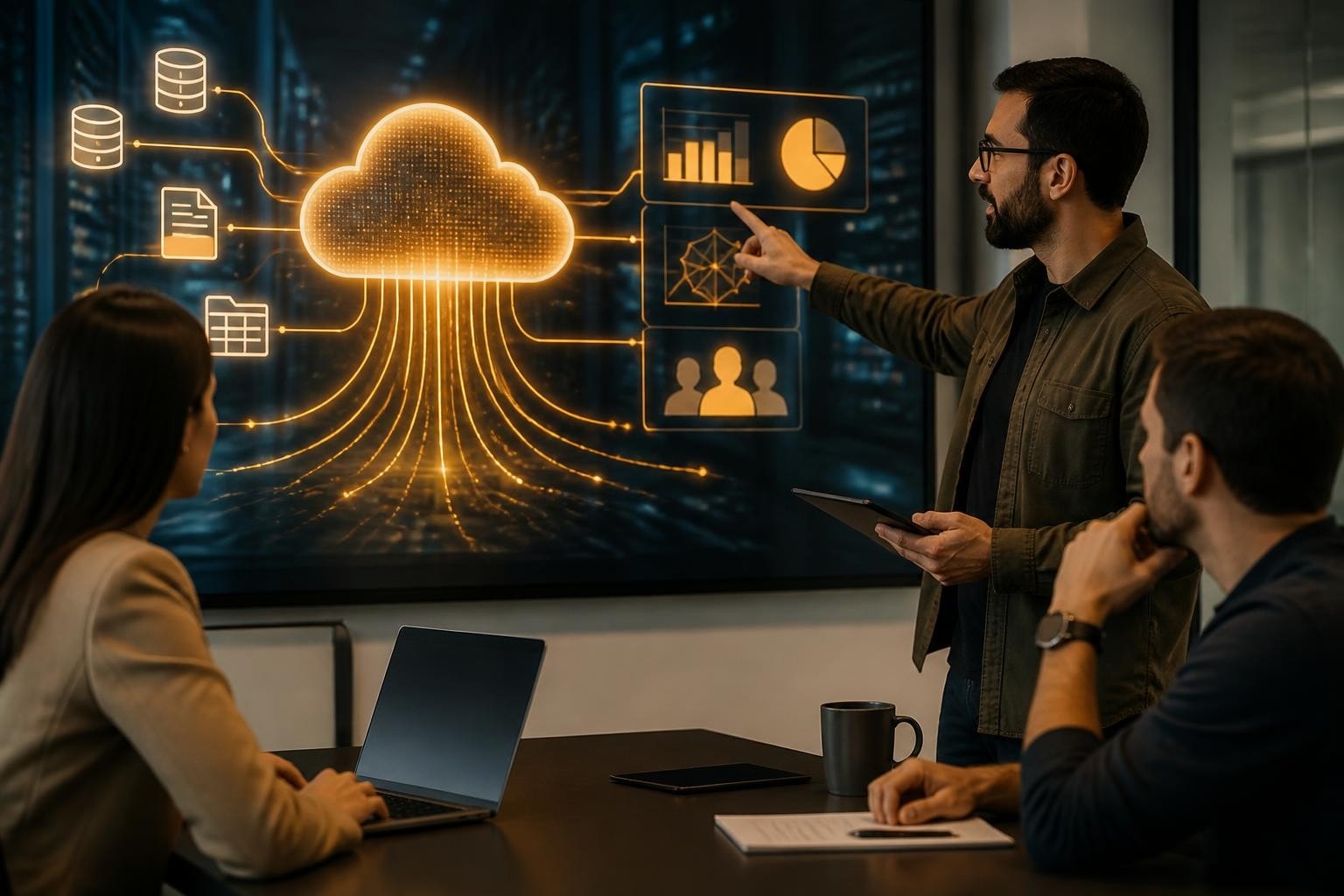
The digital economy depends entirely on specialized facilities that house the computing infrastructure powering everything from email to artificial intelligence. To define data centers properly, one must understand them as purpose-built facilities designed to house computer systems, networking equipment, storage devices, and associated components that process, store, and distribute vast amounts of data. These facilities combine physical infrastructure, environmental controls, security systems, and redundant power supplies to ensure continuous operation. Furthermore, as businesses increasingly migrate operations to the cloud, understanding what data centers are and how they function becomes essential for making informed technology decisions.
The Core Components That Define Data Centers
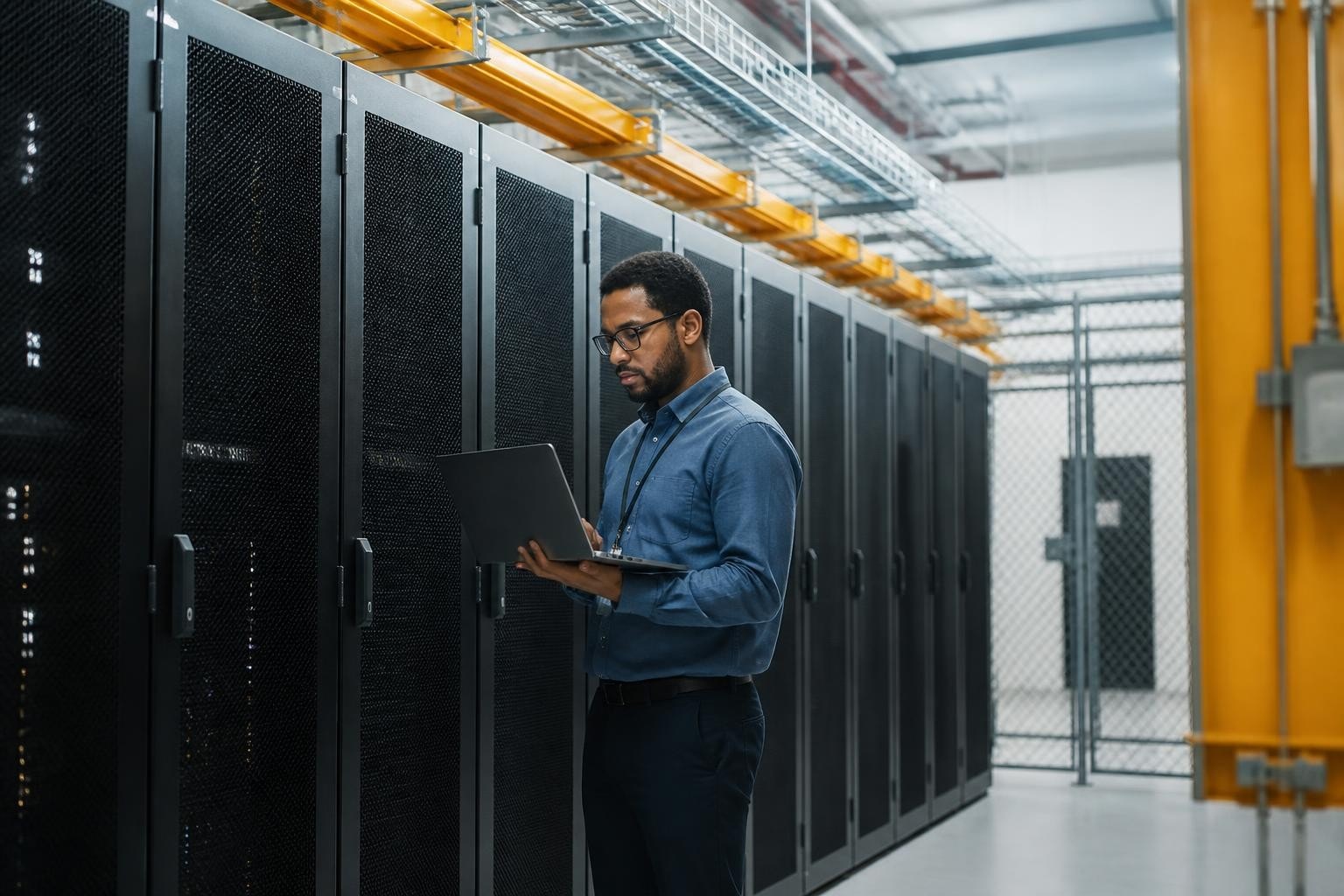
When we define data centers in technical terms, several fundamental components emerge as critical to their operation. The physical infrastructure forms the foundation, consisting of the building itself, raised floors for cable management, and specialized construction materials that provide fire resistance and structural integrity.
Power Systems and Redundancy
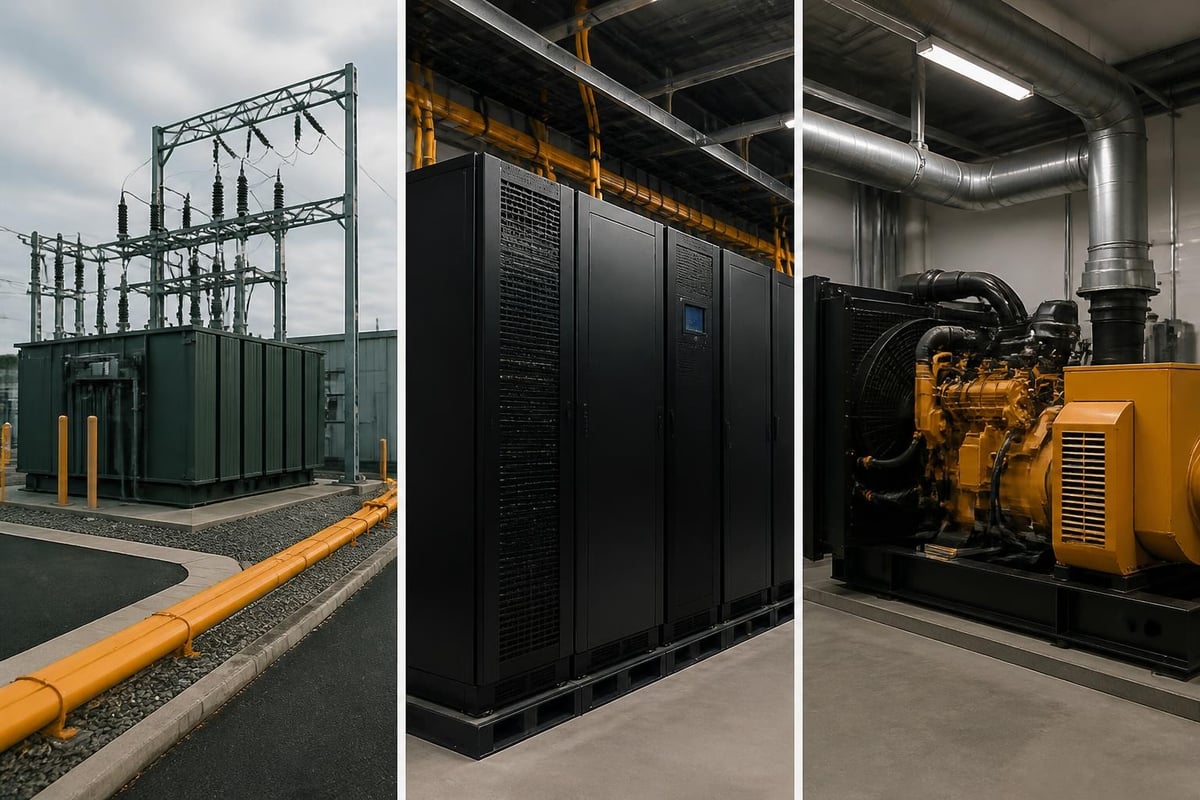
Data centers consume substantial electricity to run servers and cooling systems. Therefore, uninterruptible power supply (UPS) systems provide immediate backup power during outages, whilst diesel generators offer extended runtime for prolonged disruptions. Moreover, dual power feeds from separate utility substations ensure that a single grid failure cannot bring down operations.
The power delivery architecture is evolving rapidly, particularly for facilities supporting artificial intelligence workloads. Research on next-generation AI data center power delivery highlights how traditional systems are being redesigned to handle higher density computing loads whilst maintaining efficiency.
Critical power components include:
- UPS battery banks with 10-20 minute runtime
- N+1 or 2N redundant generator configurations
- Automatic transfer switches (ATS)
- Power distribution units (PDUs) at rack level
- Voltage regulation equipment
Cooling and Environmental Control
Servers generate tremendous heat during operation. Consequently, sophisticated cooling systems maintain optimal temperature and humidity levels to prevent equipment failure. Traditional computer room air conditioning (CRAC) units circulate chilled air through raised floors, whilst newer facilities employ hot aisle/cold aisle containment strategies to improve efficiency.
In addition, modern data centers increasingly adopt liquid cooling solutions for high-density computing environments. These systems circulate coolant directly to server components, removing heat more efficiently than air-based methods. Furthermore, free cooling techniques leverage outside air when ambient temperatures permit, reducing energy consumption significantly.
Different Types and Classifications
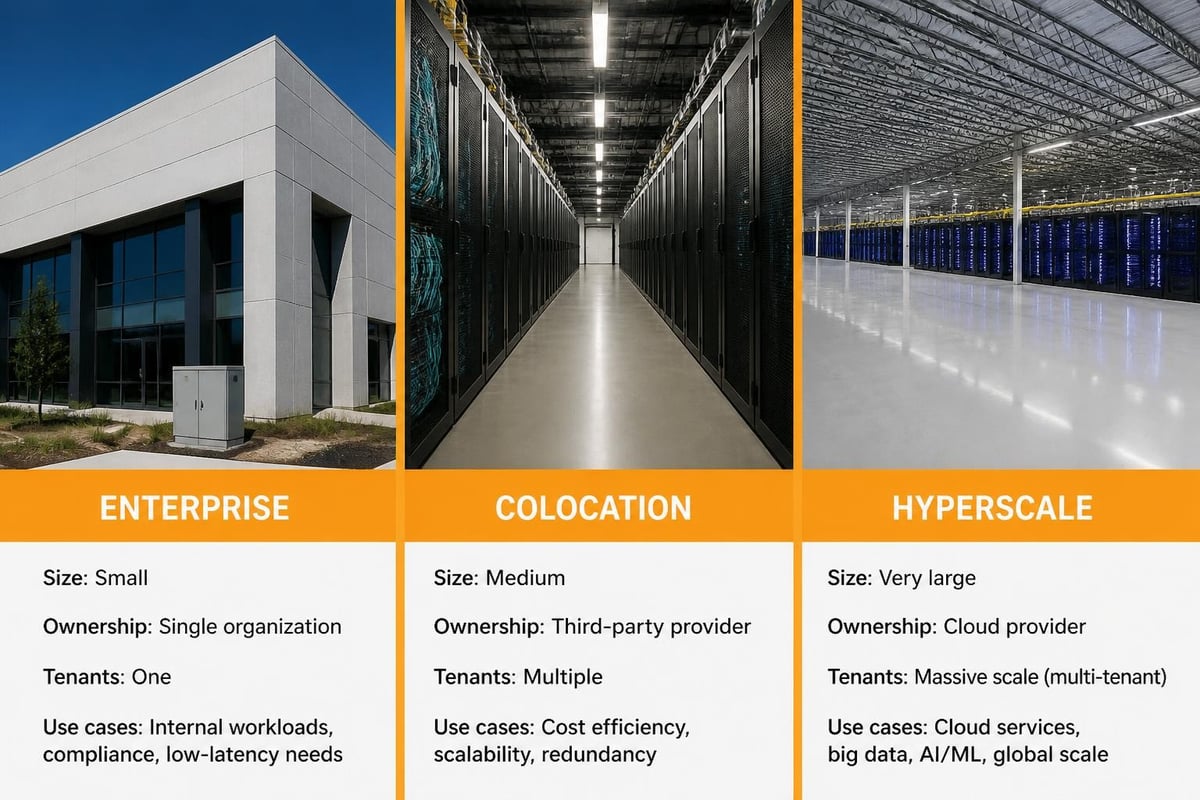
To fully define data centers, we must examine the various categories based on size, ownership, and purpose. The National League of Cities identifies three primary types: enterprise, colocation, and hyperscale facilities, each serving distinct market segments.
Enterprise Data Centers
Enterprise facilities are owned and operated by individual organizations to support their specific business needs. These on-premises installations provide complete control over infrastructure, security policies, and data governance. Nevertheless, they require substantial capital investment and ongoing operational expertise.
| Characteristic | Typical Range | Key Benefit |
|---|---|---|
| Size | 500-5,000 sq ft | Complete control |
| Power capacity | 100-500 kW | Custom configuration |
| Ownership | Single organization | Direct oversight |
| Flexibility | High for specific needs | Tailored security |
Colocation Facilities
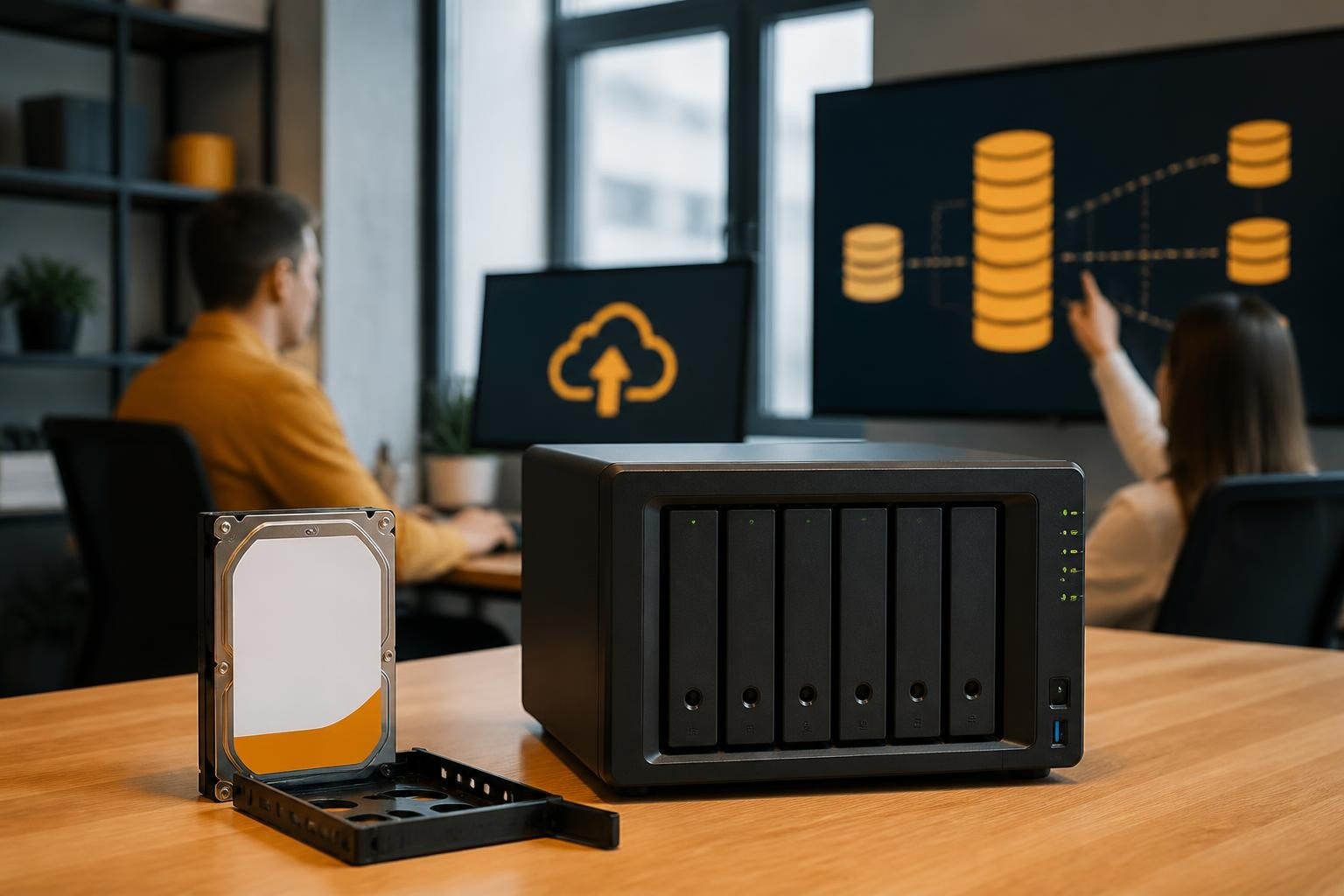
Colocation providers rent space, power, and cooling to multiple customers within shared facilities. Organizations install their own servers in leased cabinet or cage spaces, benefiting from professional-grade infrastructure without building their own facility. Therefore, colocation offers a middle ground between enterprise and cloud models.
Moreover, colocation data centers typically offer various service levels, from basic space and power to managed services that include monitoring, maintenance, and support. This flexibility makes them attractive for businesses requiring physical control over hardware whilst avoiding infrastructure management burdens.
Hyperscale and Cloud Data Centers
Hyperscale facilities operated by cloud providers like Amazon, Microsoft, and Google span hundreds of thousands of square feet and consume megawatts of power. These massive installations support multi-tenant cloud platforms serving thousands of customers simultaneously. Furthermore, they leverage economies of scale to deliver computing resources at lower costs than smaller facilities can achieve.
European providers such as vBoxx operate ISO 27001-certified data centers in the Netherlands, offering businesses GDPR-compliant hosting without the overhead of hyperscale infrastructure. Their vBoxxCloud platform provides secure cloud storage with eIDAS-compliant digital signing, demonstrating how specialized regional providers deliver enterprise-grade services from well-managed facilities.
Network Infrastructure and Connectivity
Network architecture forms the digital backbone when you define data centers comprehensively. Multiple redundant internet connections from diverse carriers ensure continuous connectivity even if one provider experiences outages. In addition, border gateway protocol (BGP) routing automatically redirects traffic around network failures.
Internal Network Design
Within the facility, structured cabling systems connect servers to network switches using fiber optic and copper cables. Top-of-rack switches aggregate connections from individual servers, linking to core switches that handle inter-rack communication and external connectivity. Therefore, a well-designed network hierarchy ensures low latency and high throughput.
Nevertheless, network design complexity increases with facility size. Leaf-spine architectures have become standard in modern facilities, providing consistent latency between any two endpoints and simplifying capacity expansion.
Key network elements include:
- Multiple carrier connections for redundancy
- Border routers with BGP failover
- Core and distribution layer switches
- Top-of-rack access switches
- Out-of-band management network
- Storage area networks (SAN) for data access
Security Measures and Access Control
Physical and digital security systems protect valuable equipment and sensitive data. When we define data centers from a security perspective, layered defence mechanisms emerge as essential. Perimeter fencing, security cameras, and 24/7 monitoring form the outer layer, whilst biometric access controls restrict entry to authorized personnel.
Furthermore, mantrap entries require authentication at multiple points before granting facility access. Security guards verify credentials, and visitor logs track everyone entering and exiting. Moreover, individual server cabinets often feature additional locks, ensuring that even authorized facility access doesn't grant universal equipment access.
Digital security measures complement physical controls. Firewalls filter network traffic, intrusion detection systems monitor for suspicious activity, and encryption protects data in transit and at rest. In addition, regular security audits and compliance certifications verify that facilities meet industry standards.
Many businesses now rely on call center outsourcing providers like Focus Services, which operate across multiple countries. These distributed operations depend on secure data center infrastructure to protect customer information during support interactions, demonstrating how facility security directly impacts business operations.
Tier Classifications and Reliability Standards
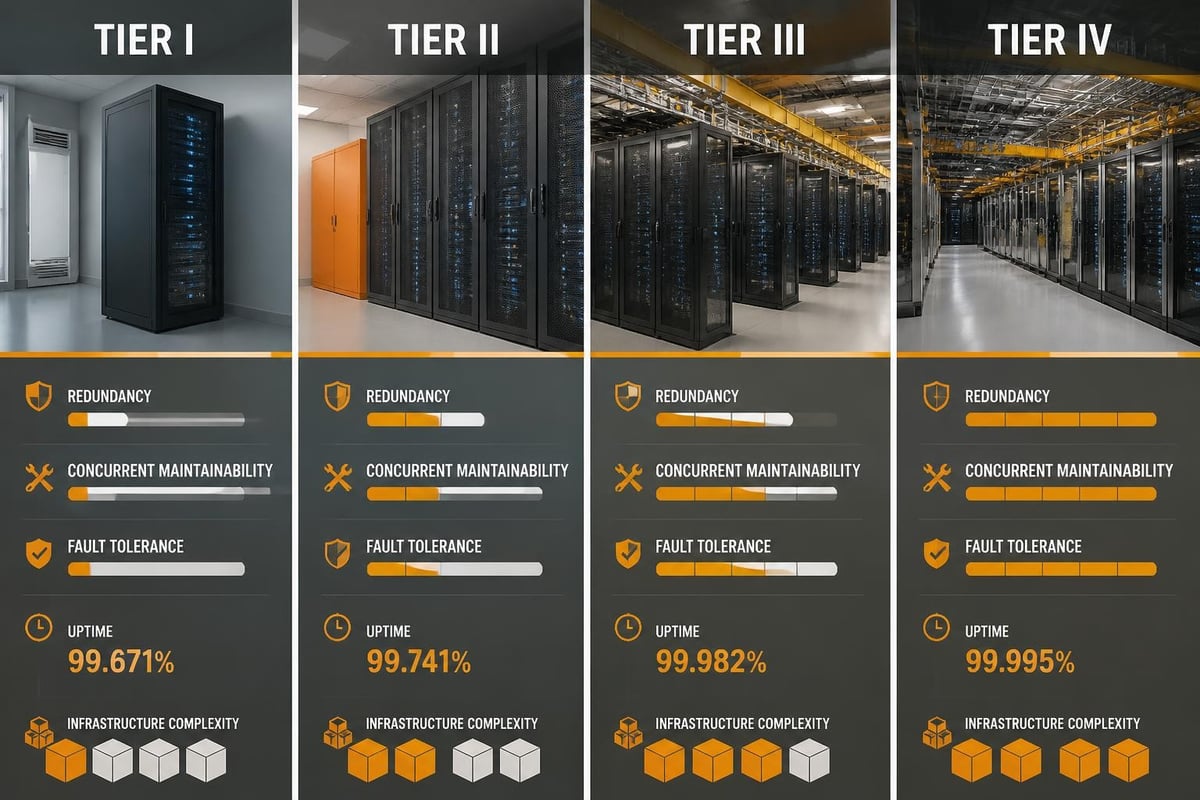
The Uptime Institute developed a tier classification system that has become the industry standard for defining data center reliability levels. This framework categorizes facilities from Tier I to Tier IV based on redundancy and fault tolerance.
| Tier Level | Availability | Redundancy | Annual Downtime |
|---|---|---|---|
| Tier I | 99.671% | None | 28.8 hours |
| Tier II | 99.741% | Partial (N+1) | 22.0 hours |
| Tier III | 99.982% | Concurrent maintainable | 1.6 hours |
| Tier IV | 99.995% | Fault tolerant (2N) | 0.4 hours |
Understanding Tier Requirements
Tier I facilities provide basic capacity with single paths for power and cooling distribution. These basic installations offer no redundancy, therefore maintenance requires shutdowns. Nevertheless, they suit non-critical applications where occasional downtime is acceptable.
Tier II adds redundant components (N+1) but maintains single distribution paths. Consequently, maintenance still causes disruptions, though component failures don't necessarily trigger outages. Moreover, planned maintenance windows can proceed with reduced risk.
Tier III facilities feature multiple distribution paths but only one active at any time. Concurrent maintainability allows all equipment to be removed or replaced without shutting down operations. Furthermore, these facilities include sufficient capacity to handle loads during maintenance activities.
Tier IV represents the highest reliability level with fully redundant systems (2N+1) and fault tolerance. Any single equipment failure or distribution path disruption occurs without impacting operations. Therefore, mission-critical applications requiring maximum uptime utilize Tier IV facilities.
Energy Efficiency and Sustainability Initiatives
Environmental impact has become a central consideration when organizations define data centers for new construction or evaluate existing facilities. Power usage effectiveness (PUE) measures total facility energy consumption divided by IT equipment energy consumption, with lower values indicating better efficiency.
Achieving Lower PUE Ratings
Legacy facilities often achieve PUE ratios around 2.0, meaning they consume twice as much total energy as their IT equipment alone requires. Modern efficient facilities reach PUE values below 1.2 through optimized cooling, efficient power distribution, and waste heat recovery. Furthermore, some advanced facilities approach the theoretical minimum of 1.0.
Moreover, renewable energy adoption has accelerated across the industry. Solar panels, wind power agreements, and renewable energy certificates help facilities reduce carbon footprints. In addition, waste heat recovery systems capture thermal energy for district heating or industrial processes.
Efficiency improvement strategies include:
- Hot aisle/cold aisle containment
- Variable speed cooling fans
- Free cooling when outdoor temperatures permit
- LED lighting with occupancy sensors
- Server virtualization to reduce physical equipment
- Energy-efficient power supplies and transformers
The 2026 Global Data Center Market Outlook from JLL highlights how sustainability concerns are reshaping investment decisions and facility design priorities. Nevertheless, balancing performance requirements with environmental goals remains challenging, particularly for high-density AI workloads.
Monitoring and Management Systems
Comprehensive monitoring enables proactive issue detection and rapid response when problems occur. When we define data centers operationally, data center infrastructure management (DCIM) software emerges as the central nervous system, tracking power consumption, temperature, humidity, and equipment status in real-time.
Real-Time Dashboards and Alerts
Temperature sensors throughout the facility feed data to central monitoring systems that alert operators when readings exceed thresholds. Therefore, potential cooling failures can be addressed before equipment damage occurs. Furthermore, power monitoring at rack level identifies unusual consumption patterns that might indicate failing components or security breaches.
In addition, automated systems can adjust cooling output based on actual thermal loads, reducing energy waste during low-utilization periods. Moreover, predictive analytics use historical data to forecast capacity needs and identify trends that might indicate impending failures.
Remote monitoring capabilities allow facility managers to oversee operations from anywhere, receiving alerts via mobile devices and accessing control systems through secure connections. Consequently, issues can be addressed quickly even outside normal business hours.
Compliance and Regulatory Considerations
Organizations must navigate complex regulatory requirements when selecting or operating data centers. Data protection regulations like GDPR impose strict requirements on how personal information is stored and processed. Therefore, facility location and operator jurisdiction significantly impact compliance obligations.
European Data Protection Standards
European facilities must comply with GDPR requirements for data residency, security controls, and breach notification. Furthermore, ISO 27001 certification demonstrates systematic information security management, whilst SOC 2 reports provide independent validation of security controls. Nevertheless, not all certifications carry equal weight across different regulatory frameworks.
The Netherlands has become a popular data center location partly due to political stability, reliable infrastructure, and alignment with EU data protection standards. Moreover, European providers outside US jurisdiction avoid complications from the US CLOUD Act, which allows American authorities to compel US-based companies to produce data regardless of storage location.
Businesses seeking compliance-friendly infrastructure should evaluate hosting solutions from European providers operating certified facilities within the EU, ensuring alignment with regional regulatory requirements.
Future Trends and Evolution
The infrastructure supporting digital services continues evolving rapidly. When we define data centers for the next decade, several emerging trends will reshape facility design and operation. Artificial intelligence workloads demand unprecedented computing density and power delivery capacity. Research examining water, energy, and community policy impacts reveals how rapid data center growth affects local infrastructure and communities.
Edge Computing Distribution
Edge data centers bring computing resources closer to end users, reducing latency for time-sensitive applications. These smaller facilities distribute workloads geographically, complementing centralized cloud infrastructure. Therefore, content delivery, IoT processing, and real-time applications increasingly leverage edge deployments.
Furthermore, liquid cooling adoption will accelerate as chip power densities increase beyond air cooling capabilities. Immersion cooling, where servers operate submerged in dielectric fluid, enables extreme density whilst consuming less energy than traditional methods. Moreover, these systems operate more quietly and require less physical space.
Emerging technologies shaping the future:
- Quantum computing requiring specialized environmental controls
- Photonic interconnects reducing network latency
- Advanced battery chemistries extending UPS runtime
- AI-driven infrastructure optimization
- Modular construction for rapid deployment
Nevertheless, challenges remain around power availability, water consumption for cooling, and community acceptance of large facilities. Balancing growth demands with environmental sustainability and social responsibility will define industry success over coming years.
Understanding how to define data centers provides essential context for businesses evaluating infrastructure options and digital transformation strategies. The facilities housing modern computing infrastructure combine sophisticated engineering, redundant systems, and comprehensive security to deliver reliable services supporting critical business operations. Whether your organization requires on-premises control, colocation flexibility, or cloud-based services, selecting infrastructure aligned with your compliance, performance, and budget requirements determines success. vBoxx operates ISO 27001-certified data centers in the Netherlands, delivering GDPR-compliant hosting, cloud storage, communication platforms, and managed services with the security and reliability European businesses demand.