

When businesses evaluate hosting solutions and web infrastructure, understanding how the world's largest search engine operates its own systems offers valuable insights. The google website server infrastructure represents one of the most sophisticated web-serving platforms ever built, handling billions of requests daily whilst maintaining exceptional performance and reliability. Furthermore, examining Google's approach to web serving technology provides context for the broader hosting landscape and helps businesses make informed decisions about their own infrastructure needs. Moreover, the architectural choices Google has made over decades have shaped industry standards and influenced how modern web servers operate worldwide.
Understanding Google's Web Server Infrastructure
The term "google website server" can refer to several components within Google's vast infrastructure. Nevertheless, at its core, Google Web Server (GWS) is the custom-built software that powers Google's front-end services, from search to various web applications. Therefore, unlike traditional web servers such as Apache or Nginx that businesses typically deploy, GWS is proprietary software optimised specifically for Google's unique requirements and traffic patterns.
Google's web infrastructure operates on a massive scale that most organisations never encounter. In addition to handling search queries, the google website server architecture supports Gmail, YouTube, Google Drive, and countless other services. Furthermore, this infrastructure spans hundreds of thousands of servers distributed across data centres worldwide, each carefully positioned to minimise latency and maximise redundancy.
The Architecture Behind Google's Web Serving
Google's approach to web serving differs fundamentally from traditional hosting models. Instead of relying on conventional server software, Google has built custom solutions from the ground up. Moreover, this vertical integration extends from the hardware level through to the application layer, creating an ecosystem optimised for performance and efficiency.
The google website server infrastructure employs several key architectural principles:
- Load balancing across multiple layers to distribute traffic efficiently
- Geographic distribution through strategically located data centres
- Content delivery optimisation using edge caching and intelligent routing
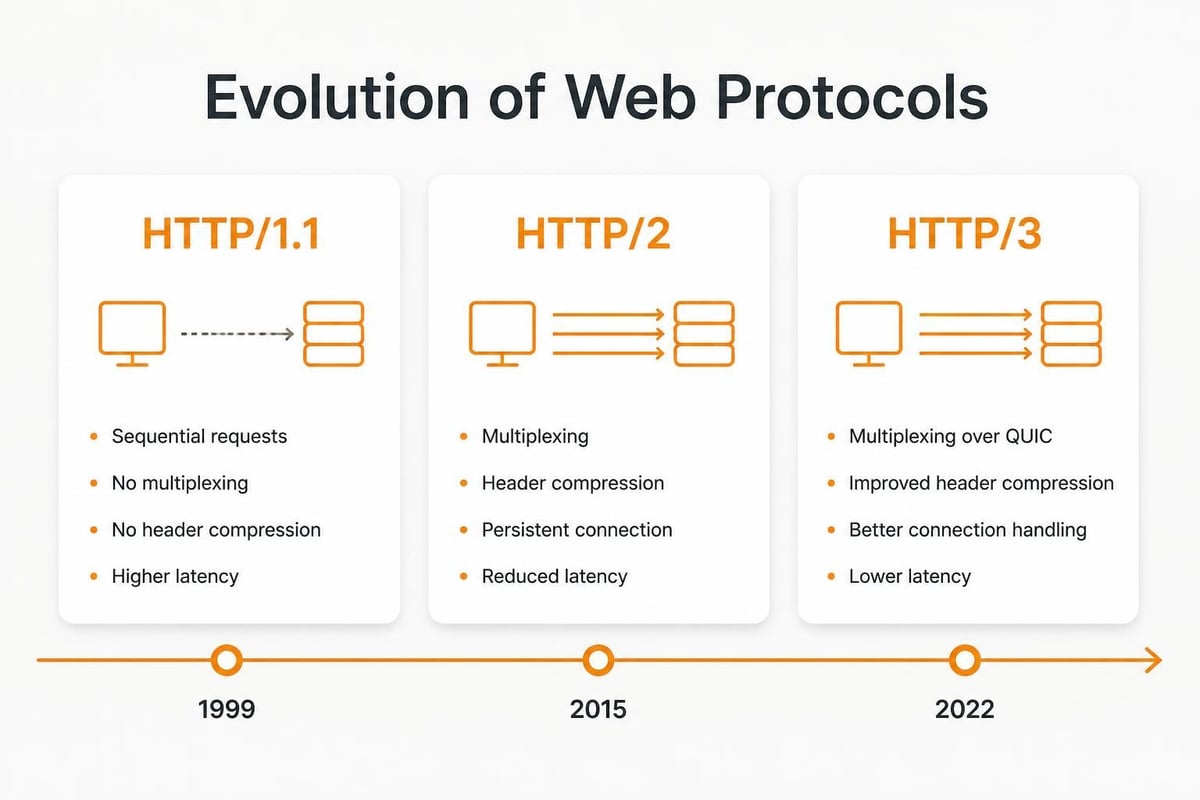
- Protocol innovation including early adoption of HTTP/2 and HTTP/3
- Custom hardware designed specifically for web-serving workloads
Nevertheless, the load balancer resource model Google employs demonstrates how large-scale web serving requires sophisticated traffic management. Therefore, frontend systems receive requests, backend systems process them, and multiple layers of caching reduce the load on origin servers.

Protocol Innovation and Performance Optimisation
Google has consistently pioneered new web protocols to improve performance. Furthermore, the company's development and deployment of QUIC, a transport protocol designed to reduce latency, exemplifies this innovation. In addition, QUIC addresses several limitations of traditional TCP-based connections, particularly for mobile users and those on unreliable networks.
The QUIC transport protocol fundamentally changes how the google website server communicates with clients. Moreover, by multiplexing multiple streams over a single connection and reducing handshake overhead, QUIC delivers faster page loads and better user experiences. Therefore, Google's early adoption of QUIC positioned the company at the forefront of modern web transport technology.
HTTP/3 and Modern Web Standards
Building upon QUIC, the HTTP/3 specification represents the latest evolution in web protocols. Nevertheless, Google's infrastructure was serving HTTP/3 traffic years before the standard's formal ratification. Furthermore, this early deployment provided real-world data that informed the final specification.
| Protocol | Transport | Key Benefits | Google Adoption |
|---|---|---|---|
| HTTP/1.1 | TCP | Simple, widely supported | Legacy support only |
| HTTP/2 | TCP | Multiplexing, header compression | Fully deployed |
| HTTP/3 | QUIC/UDP | Reduced latency, better mobile performance | Production default |
The performance gains from these protocol improvements are substantial. In addition, businesses evaluating their own hosting infrastructure should consider providers that support modern protocols. Moreover, whilst few organisations can match Google's scale, the principles of protocol optimisation apply universally.
Content Delivery and Edge Computing
The google website server infrastructure relies heavily on content distribution to reduce latency. Furthermore, Google's Cloud CDN demonstrates how edge caching significantly improves content delivery speed. Therefore, by serving content from locations geographically close to users, Google minimises the distance data must travel.
Edge computing extends beyond simple caching. Nevertheless, Google's infrastructure processes certain requests at the edge, reducing the need to query backend systems for every interaction. Moreover, this distributed processing model improves response times whilst simultaneously reducing load on centralised infrastructure.
Geographic Distribution Strategy
Google operates data centres and edge locations across six continents. In addition, this global footprint ensures that users worldwide experience consistent performance. Furthermore, the strategic placement of these facilities considers factors including:
- Proximity to major population centres
- Network connectivity and peering arrangements
- Power availability and reliability
- Regulatory compliance requirements
- Environmental sustainability considerations
Therefore, businesses selecting hosting providers should evaluate similar criteria. Moreover, European businesses particularly benefit from choosing providers with infrastructure in European data centres that ensure GDPR compliance and data sovereignty.
Security and Certificate Management
Security remains paramount for any web-serving infrastructure. Furthermore, Google's approach to certificate lifecycle management demonstrates the complexity of maintaining secure connections at scale. Nevertheless, automated certificate issuance, renewal, and revocation processes ensure that the google website server maintains encrypted connections without manual intervention.
Modern web security extends beyond simple HTTPS implementation. In addition, Google's infrastructure employs multiple security layers:
- Automated certificate management with rapid issuance and renewal
- DDoS protection at network and application layers
- Bot detection and mitigation to prevent abuse
- Zero-trust security models for internal service communication
- Continuous monitoring and threat detection across all systems
Moreover, businesses must implement similar security practices regardless of scale. Therefore, selecting hosting providers that prioritise security through ISO 27001 certification and comprehensive security measures protects both data and reputation.

Market Presence and Industry Impact
The Netcraft Web Server Survey has tracked web server market share for decades, providing insights into technology adoption trends. Nevertheless, Google Web Server's market presence differs from traditional web servers because it primarily serves Google's own properties rather than being available for third-party deployment. Furthermore, this exclusivity makes direct market share comparisons with Apache, Nginx, or IIS somewhat misleading.
However, Google's influence extends beyond its proprietary software. Moreover, the company's open-source contributions and protocol development work have shaped how web servers operate industry-wide. Therefore, technologies pioneered for the google website server infrastructure often find their way into mainstream web serving platforms.
Lessons for Business Infrastructure
Whilst few organisations operate at Google's scale, several principles from their infrastructure apply universally. In addition, businesses can implement these concepts regardless of size:
- Invest in modern protocols to improve performance and security
- Implement multi-layered security rather than relying on single solutions
- Choose geographically appropriate hosting to minimise latency
- Automate certificate management to reduce manual overhead
- Monitor performance continuously to identify issues proactively
Nevertheless, implementing these practices requires careful provider selection. Furthermore, European businesses particularly benefit from providers offering GDPR-compliant infrastructure that combines modern technology with regulatory compliance.
Comparing Google's Approach to European Alternatives
The google website server infrastructure operates under US jurisdiction, subject to regulations including the CLOUD Act. Therefore, European businesses handling sensitive data must carefully consider data sovereignty implications. Moreover, whilst Google offers region-specific deployments, the fundamental jurisdictional questions remain.
European businesses increasingly prioritise data sovereignty and privacy. In addition, providers operating exclusively within European jurisdiction offer advantages for GDPR compliance and data protection. Furthermore, solutions like vBoxxCloud demonstrate that European infrastructure can deliver enterprise-grade performance whilst maintaining strict privacy standards.
| Consideration | Global Hyperscale Providers | European Focused Providers |
|---|---|---|
| Data sovereignty | Multiple jurisdictions | European-only infrastructure |
| CLOUD Act exposure | Subject to US law | Outside US jurisdiction |
| GDPR compliance | Compliant but complex | Native GDPR alignment |
| Performance | Global edge network | Regional optimisation |
| Support | Tiered, often automated | Direct, personal assistance |
Nevertheless, the choice between global and regional providers depends on specific business requirements. Moreover, organisations must balance performance, compliance, cost, and support when selecting infrastructure partners.
Performance Optimisation Techniques
Google's infrastructure employs numerous optimisation techniques that businesses can adapt. Furthermore, understanding these methods helps organisations improve their own web serving performance. Therefore, key optimisation strategies include:
Caching and Content Delivery
Effective caching reduces server load and improves response times. In addition, the google website server infrastructure uses multiple caching layers:
- Browser caching through appropriate cache-control headers
- CDN edge caching for static resources
- Application-level caching for dynamic content
- Database query caching to reduce backend load
Moreover, implementing comprehensive caching strategies delivers immediate performance benefits. Nevertheless, cache invalidation remains challenging, requiring careful planning to ensure users receive updated content promptly.
Connection Management
Modern protocols handle connections more efficiently than their predecessors. Furthermore, HTTP/2 and HTTP/3 enable connection multiplexing, allowing multiple requests over single connections. Therefore, this reduces handshake overhead and improves page load times, particularly for resource-heavy applications.
In addition, connection pooling and keepalive mechanisms reduce the overhead of establishing new connections. Moreover, businesses implementing these techniques see measurable improvements in application responsiveness.
Monitoring and Reliability
The google website server infrastructure maintains exceptional uptime through comprehensive monitoring and rapid incident response. Furthermore, distributed monitoring systems continuously assess service health across all infrastructure components. Therefore, issues are detected and addressed before they impact users.
Reliability engineering principles Google employs include:
- Service level objectives (SLOs) defining acceptable performance thresholds
- Error budgets that balance innovation against stability
- Automated failover to healthy systems when problems occur
- Chaos engineering to test resilience under failure conditions
- Post-incident reviews that prevent recurrence of issues
Nevertheless, smaller organisations can implement scaled-down versions of these practices. Moreover, selecting hosting providers with strong uptime guarantees and transparent monitoring provides businesses with the reliability their operations require.
Infrastructure Scalability
Scalability distinguishes the google website server infrastructure from traditional hosting approaches. Furthermore, Google's systems automatically scale to handle traffic fluctuations without manual intervention. Therefore, whether serving ten requests per second or ten million, the infrastructure adjusts capacity dynamically.
Businesses evaluating hosting solutions should consider scalability requirements. In addition, cloud infrastructure enables organisations to scale resources based on demand. Moreover, this elasticity prevents both under-provisioning (which causes performance issues) and over-provisioning (which wastes budget).
Horizontal vs Vertical Scaling
Google's approach primarily uses horizontal scaling, adding more servers rather than upgrading existing ones. Nevertheless, this model provides better fault tolerance because no single server becomes a critical failure point. Furthermore, horizontal scaling aligns well with modern application architectures based on microservices and containerisation.
| Scaling Approach | Advantages | Disadvantages | Best For |
|---|---|---|---|
| Horizontal (scale out) | Better redundancy, unlimited growth | More complex, requires load balancing | Web applications, distributed systems |
| Vertical (scale up) | Simpler, no architectural changes | Hardware limits, single point of failure | Databases, legacy applications |
Therefore, businesses should design applications with horizontal scalability in mind. Moreover, selecting infrastructure that supports automated scaling ensures applications handle growth without manual intervention.
The Future of Web Serving Infrastructure
Web serving technology continues to evolve rapidly. Furthermore, emerging trends that the google website server infrastructure will likely incorporate include:
- Edge computing expansion bringing processing closer to users
- AI-driven optimisation for routing and resource allocation
- Quantum-resistant cryptography as quantum computing advances
- Enhanced privacy technologies including encrypted client hello
- Sustainability improvements reducing environmental impact
Nevertheless, these advancements build upon foundational principles that remain constant: performance, security, reliability, and scalability. Moreover, businesses investing in modern infrastructure position themselves to adopt new technologies as they mature.
In addition, the trend toward edge computing particularly benefits European businesses. Furthermore, processing data closer to users improves performance whilst simplifying compliance by keeping data within appropriate jurisdictions.
Understanding how major technology companies architect their web infrastructure provides valuable context for business hosting decisions. Nevertheless, most organisations benefit more from selecting specialised providers that offer modern infrastructure with personalised support and clear compliance frameworks. Furthermore, European businesses handling sensitive data should consider providers operating exclusively within European jurisdiction, offering GDPR compliance without the complexities of multinational data flows. Moreover, vBoxx delivers enterprise-grade hosting and cloud solutions from ISO 27001-certified data centres in the Netherlands, combining modern technology with European data sovereignty and dedicated support. Therefore, businesses seeking reliable, compliant infrastructure should explore how vBoxx's services align with their specific requirements.