

The promise of a server cloud free solution captures attention across businesses of every size, particularly when digital transformation demands more infrastructure but budgets remain constrained. Nevertheless, the reality behind "free" cloud servers proves considerably more nuanced than marketing materials suggest. Therefore, understanding what providers genuinely offer without cost, which limitations apply, and when free transitions to paid becomes essential for businesses seeking sustainable hosting strategies. Moreover, as we progress through 2026, the landscape of free cloud offerings continues evolving, with providers adjusting their always-free tiers whilst introducing new restrictions and qualification criteria that require careful examination.
Understanding the Free Cloud Server Landscape
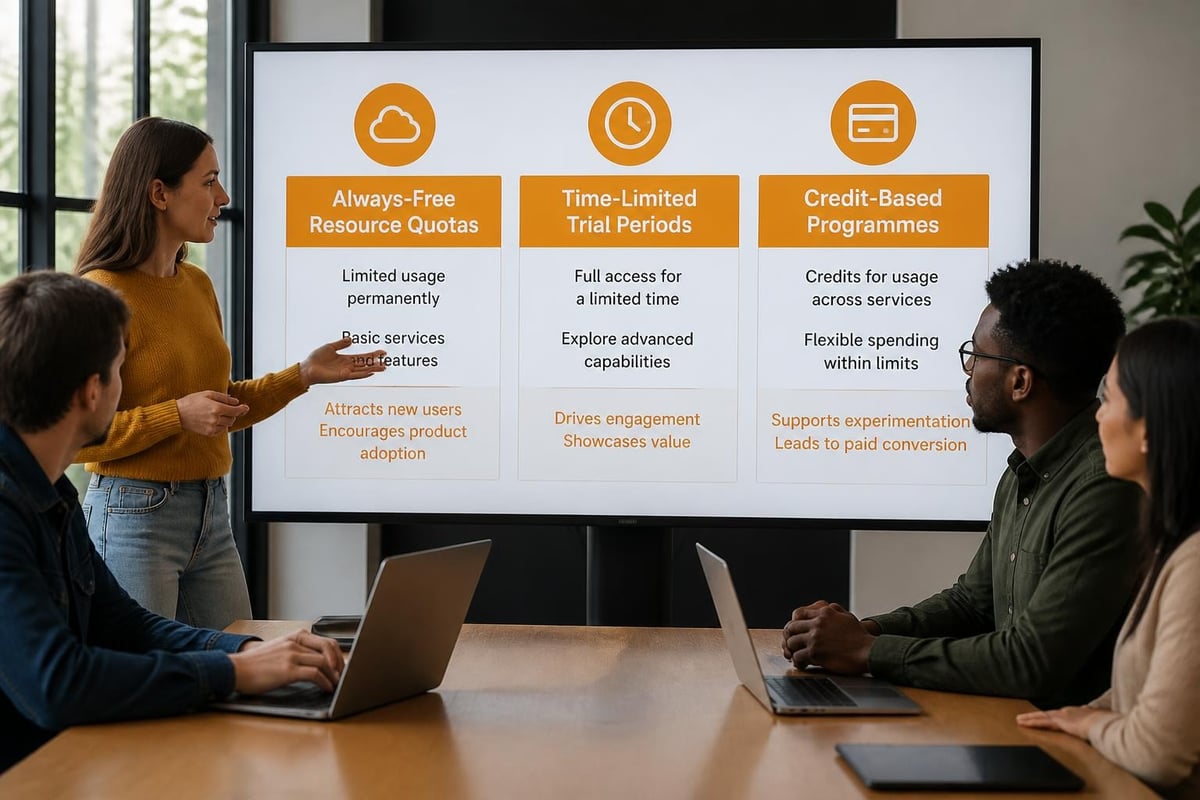
When businesses search for a server cloud free option, they encounter three distinct categories of offerings, each with fundamentally different characteristics and business implications. Furthermore, these categories often overlap in provider marketing, creating confusion about what remains genuinely cost-free over the long term.
Always-free tiers represent resources that providers commit to offering indefinitely without charges, typically including limited compute instances, storage volumes, and networking capabilities. Nevertheless, these resources come with strict usage quotas that rarely suffice for production workloads. In addition, providers reserve the right to modify or discontinue these offerings with notice, meaning today's free tier might not exist tomorrow.
Time-limited trials grant access to full-featured cloud infrastructure for a specific period, commonly 12 months, after which standard billing applies. Therefore, businesses testing workloads on trial accounts must plan migration strategies before expiration. Moreover, trial accounts frequently include credit amounts that, once exhausted, immediately trigger billing regardless of the time remaining.
Credit-based programmes provide monetary credits rather than specific resources, allowing businesses to consume various services until credits deplete. Consequently, usage patterns directly impact how long the "free" period lasts, with resource-intensive applications exhausting credits within weeks whilst lightweight workloads might stretch credits across months.
Major Provider Offerings Compared
| Provider | Always-Free Compute | Storage | Trial Period | Credits | Limitations |
|---|---|---|---|---|---|
| Oracle Cloud | 2 AMD Micro VMs + 4 ARM Ampere cores | 200GB block + 10GB object | 30 days | $300 | Geographic restrictions apply |
| Google Cloud | e2-micro instance (specific regions) | 30GB HDD + 5GB snapshot | 90 days | $300 | Limited to certain regions |
| AWS | 750 hours t2.micro/t3.micro monthly | 5GB S3 standard | 12 months | None | Expires after first year |
This comparison reveals that no single server cloud free offering suits every business scenario. Furthermore, the AWS Free Tier compute options demonstrate how trial-based resources differ fundamentally from always-free commitments, whilst Oracle's Always Free resources provide the most generous permanent allocation amongst major providers.
Technical Limitations of Free Cloud Servers
Beyond marketing promises, free cloud infrastructure carries technical constraints that significantly impact business operations. Therefore, organisations must evaluate whether these limitations align with their operational requirements before committing to free-tier architectures.
Performance and Resource Constraints
Free-tier virtual machines typically offer minimal CPU shares, often as low as 5-10% of a physical core with burstable performance. Consequently, applications requiring consistent compute power experience unpredictable slowdowns during peak usage. Moreover, memory allocations rarely exceed 1GB per instance, forcing businesses to architect applications with extreme resource efficiency.
Network bandwidth limitations further constrain free offerings, with providers imposing egress caps that, once exceeded, trigger per-gigabyte charges. In addition, free instances frequently operate on shared networking infrastructure, resulting in variable latency and throughput that prove unsuitable for latency-sensitive applications.
- CPU throttling during sustained load periods
- Memory constraints limiting concurrent processes
- IOPS restrictions affecting database performance
- Network egress charges after quota exhaustion
- No SLA guarantees for uptime or performance
Nevertheless, these constraints don't render free tiers useless. Furthermore, they serve specific use cases effectively when businesses understand and plan around the limitations.
Practical Use Cases for Free Cloud Infrastructure
Despite constraints, server cloud free options deliver genuine value for particular business scenarios. Therefore, identifying appropriate use cases enables organisations to leverage free resources effectively whilst avoiding frustration from mismatched expectations.
Development and Testing Environments
Free cloud servers excel as development sandboxes where performance variability and limited resources pose minimal business risk. Moreover, developers can provision multiple free-tier instances across providers, creating diverse testing environments without budget approval processes. In addition, automated CI/CD pipelines can leverage free compute for running test suites, particularly when test execution times remain flexible.
Staging environments for small applications similarly benefit from free tiers, provided teams accept that staging won't perfectly mirror production performance. Nevertheless, functional testing, integration verification, and user acceptance workflows proceed effectively on appropriately configured free instances.
Learning and Certification Preparation
IT professionals pursuing cloud certifications find free tiers invaluable for hands-on practice with real infrastructure. Furthermore, the ability to experiment without cost concerns accelerates learning, allowing practitioners to make mistakes, rebuild environments, and develop operational confidence. Therefore, businesses investing in team upskilling should encourage staff to maximise free-tier resources for training purposes.

Prototype and Proof-of-Concept Projects
Innovation initiatives often require rapid prototyping before securing budget approval. Consequently, free cloud infrastructure enables teams to demonstrate concept viability with functioning prototypes rather than theoretical proposals. Moreover, successful prototypes built on free tiers justify the business case for production infrastructure investment.
Startups in pre-revenue phases particularly benefit from server cloud free offerings, stretching limited capital by deferring infrastructure costs until customer validation occurs. Nevertheless, founders must plan migration paths to paid tiers as usage grows, avoiding architectural decisions that lock them into free-tier constraints.
Hidden Costs and Transition Points
The term "free" misleads when businesses fail to account for indirect costs and inevitable transition points where charges commence. Therefore, comprehensive cost planning must extend beyond the free tier itself to encompass associated services and growth scenarios.
Complementary Services That Trigger Charges
Even whilst running free-tier compute instances, businesses often require supporting services that carry costs from day one. Furthermore, these ancillary charges frequently exceed the savings from free servers, creating unexpected budget impacts.
Load balancers, managed databases, premium support plans, and advanced networking features typically exclude free tiers entirely. In addition, backup storage, logging services, and monitoring solutions impose per-gigabyte or per-metric charges that accumulate rapidly. Moreover, Google Cloud's sustained-use model demonstrates how free e2-micro instances still generate costs through associated networking and storage consumption.
Data Transfer and Egress Fees
Providers universally charge for data egress beyond minimal free quotas, with rates ranging from $0.08 to $0.12 per gigabyte across major platforms. Consequently, applications serving user-facing content or API responses quickly exceed free networking allowances, generating monthly bills despite running on free compute instances.
Inbound data transfer typically remains free, but cross-region traffic, inter-service communication, and internet egress all contribute to networking charges. Therefore, architectural decisions about service placement and content delivery significantly impact whether a nominally free infrastructure actually costs nothing.
European Data Sovereignty Considerations
Businesses operating under GDPR and European data protection regulations face additional complexity when evaluating server cloud free offerings. Furthermore, free-tier availability varies significantly by geographic region, with many providers restricting always-free resources to specific locations, often outside Europe.
Compliance and Data Residency
Free cloud instances frequently run in limited availability zones, which may not include European data centres. Consequently, organisations requiring data residency within EU borders cannot leverage certain free offerings without violating compliance commitments. Moreover, even when European regions support free tiers, businesses must verify that all associated services, including backups, logs, and snapshots, also remain within jurisdiction.
The US CLOUD Act presents particular concerns for European businesses, as it grants American authorities potential access to data held by US-based cloud providers regardless of physical storage location. Therefore, organisations with strict data sovereignty requirements should consider European providers that operate infrastructure exclusively within European legal jurisdiction. Nevertheless, free-tier options from European providers remain limited compared to American hyperscalers.
Building Sustainable Cloud Strategies
Relying exclusively on server cloud free resources creates operational fragility that conflicts with business continuity requirements. Therefore, mature cloud strategies incorporate free tiers as components within broader infrastructure approaches rather than foundational elements.
Hybrid Approaches and Provider Diversity
Smart businesses distribute workloads across multiple providers, leveraging free tiers for appropriate use cases whilst investing in paid infrastructure for production systems. Furthermore, this multi-cloud approach reduces vendor lock-in whilst maximising free resource utilisation across provider portfolios.
Effective hybrid strategies include:
- Development and testing on free cloud tiers
- Production workloads on paid, SLA-backed infrastructure
- Backup and disaster recovery across providers
- Geographic distribution for compliance and performance
- Regular evaluation of provider offerings and pricing
In addition, businesses should establish clear policies defining which workloads qualify for free-tier deployment versus paid infrastructure. Moreover, automated monitoring should alert teams when free resource consumption approaches quota limits, preventing unexpected service disruptions or cost overruns.
European Alternatives for Business-Critical Workloads
Whilst experimenting with hyperscaler free tiers, European businesses should evaluate regional providers for production infrastructure requiring compliance guarantees, predictable performance, and responsive support. Furthermore, providers operating within European legal frameworks offer advantages beyond mere geographic proximity, including alignment with GDPR principles by design and immunity from extraterritorial data access requests.
vBoxx, for instance, operates ISO 27001-certified infrastructure exclusively in Dutch data centres, positioning itself outside US CLOUD Act jurisdiction whilst providing the stability, support, and security that business-critical workloads demand. Nevertheless, such providers typically don't offer extensive free tiers, instead focusing on transparent pricing, predictable performance, and compliance-first architecture.
Migration Planning and Exit Strategies
Every business leveraging server cloud free resources requires documented migration plans for transitioning workloads when free tiers prove insufficient. Therefore, architectural decisions made during initial deployment should facilitate rather than obstruct eventual migration to paid infrastructure.
Avoiding Lock-In Patterns
Proprietary services, even when included in free tiers, create dependencies that complicate provider changes. Consequently, businesses should favour portable technologies including containerisation, infrastructure-as-code definitions, and cloud-agnostic storage abstractions. Moreover, regular testing of migration procedures validates that exit strategies remain viable as configurations evolve.
Migration readiness checklist:
- Document all external dependencies and API integrations
- Maintain infrastructure definitions in version control
- Test backup and restore procedures across providers
- Quantify data transfer costs for full migration
- Identify proprietary services requiring re-architecting
- Establish performance baselines for capacity planning
In addition, businesses should monitor provider announcements regarding free tier changes, as modifications to always-free offerings occasionally occur with limited notice periods. Furthermore, maintaining current knowledge of alternative provider programmes ensures options remain available when migration becomes necessary.
Security Implications of Free Infrastructure
Security responsibilities don't diminish because infrastructure costs nothing. Therefore, businesses deploying on server cloud free platforms must implement equivalent security controls to those applied on paid infrastructure, recognising that free tiers often exclude advanced security features.
Shared Responsibility and Free Tier Gaps
Cloud providers maintain responsibility for infrastructure security regardless of tier, but customer responsibilities for application security, access management, and data protection remain constant. Nevertheless, free tiers frequently exclude WAF services, advanced DDoS protection, and dedicated security monitoring that paid tiers include.
Consequently, businesses must supplement free infrastructure with third-party security tooling or accept elevated risk profiles for non-critical workloads. Moreover, compliance frameworks rarely make exceptions for free-tier deployments, meaning audit requirements apply equally to zero-cost infrastructure as to enterprise-grade platforms.
Access Control and Credential Management
Free cloud accounts require rigorous identity and access management despite their cost-free nature. Furthermore, compromised free-tier credentials enable attackers to provision resources within trial credit limits or exploit free instances for cryptocurrency mining and botnet participation. Therefore, multi-factor authentication, principle of least privilege, and regular credential rotation remain essential security practices.
Businesses should consider dedicated password management solutions that enforce security policies across both free and paid infrastructure access. vBoxxVault, for example, provides centralised credential storage with team sharing capabilities, ensuring that cloud access credentials receive appropriate protection regardless of the underlying infrastructure tier.

Performance Benchmarking and Realistic Expectations
Understanding actual performance characteristics of server cloud free offerings prevents disappointment and enables informed architectural decisions. Therefore, businesses should conduct benchmarking exercises before committing workloads to free infrastructure, establishing baseline measurements for comparison.
Compute Performance Variability
Free-tier instances demonstrate significant performance variability due to shared underlying hardware and CPU throttling policies. Moreover, burstable instance types accumulate CPU credits during idle periods, enabling brief performance bursts followed by extended throttling once credits exhaust. Consequently, applications with sustained compute requirements experience degraded performance that intermittent workloads avoid.
Benchmarking should measure both peak burst performance and sustained throttled performance across representative workload patterns. Furthermore, testing during different times of day reveals whether noisy neighbour effects from other free-tier users impact performance predictability. In addition, comparing performance across geographic regions identifies whether certain data centres exhibit better free-tier characteristics than others.
Long-Term Viability and Provider Strategy
Free cloud server offerings serve provider acquisition strategies rather than philanthropic missions. Therefore, businesses must recognise that free tiers exist to convert users into paying customers, with providers continuously optimising conversion funnels through tier adjustments and feature restrictions.
Provider Motivations and Tier Evolution
Hyperscalers invest in free tiers to capture developer mindshare, reduce friction during evaluation phases, and establish platform familiarity that influences future infrastructure decisions. Nevertheless, as cloud markets mature and customer acquisition costs rise, providers periodically reduce free-tier generosity or introduce new qualification requirements.
Historical analysis reveals that free tier specifications change over time, with some providers reducing resource quotas whilst others tighten geographic availability or impose additional verification requirements. Moreover, businesses building dependencies on specific free-tier characteristics assume risk that those characteristics persist indefinitely.
Evaluating Total Cost of Ownership
Comparing server cloud free options solely on resource specifications ignores operational costs including management overhead, learning curve investment, and integration complexity. Furthermore, businesses must account for staff time spent managing free-tier limitations, working around performance constraints, and eventually migrating to paid infrastructure.
Professional cloud platforms offering transparent pricing, predictable performance, and comprehensive support often deliver lower total cost of ownership despite lacking free tiers. Therefore, businesses should evaluate whether free infrastructure actually reduces overall costs or merely shifts expenses from infrastructure budget to operational labour.
Free cloud servers provide genuine value for specific use cases, particularly development, testing, and learning scenarios, but rarely prove sustainable for production business workloads requiring performance guarantees and compliance assurance. Moreover, understanding the distinctions between always-free resources, time-limited trials, and credit-based programmes enables businesses to leverage free tiers strategically whilst planning inevitable transitions to paid infrastructure. For European businesses prioritising data sovereignty, GDPR compliance, and predictable performance, exploring providers like vBoxx that operate exclusively within European jurisdiction delivers the reliability and regulatory alignment that business-critical workloads demand, complemented by transparent pricing and expert support that free tiers can never match.