

Website storage serves as the fundamental backbone of any online presence, determining not only how quickly your site loads but also how securely your data remains protected. In 2026, businesses face increasingly complex decisions about where and how to store their digital assets, from simple HTML files to extensive databases containing sensitive customer information. Understanding the nuances of website storage options, security requirements, and performance optimization strategies has become essential for organizations seeking to maintain competitive advantage whilst safeguarding their reputation and customer trust.
Understanding Website Storage Fundamentals
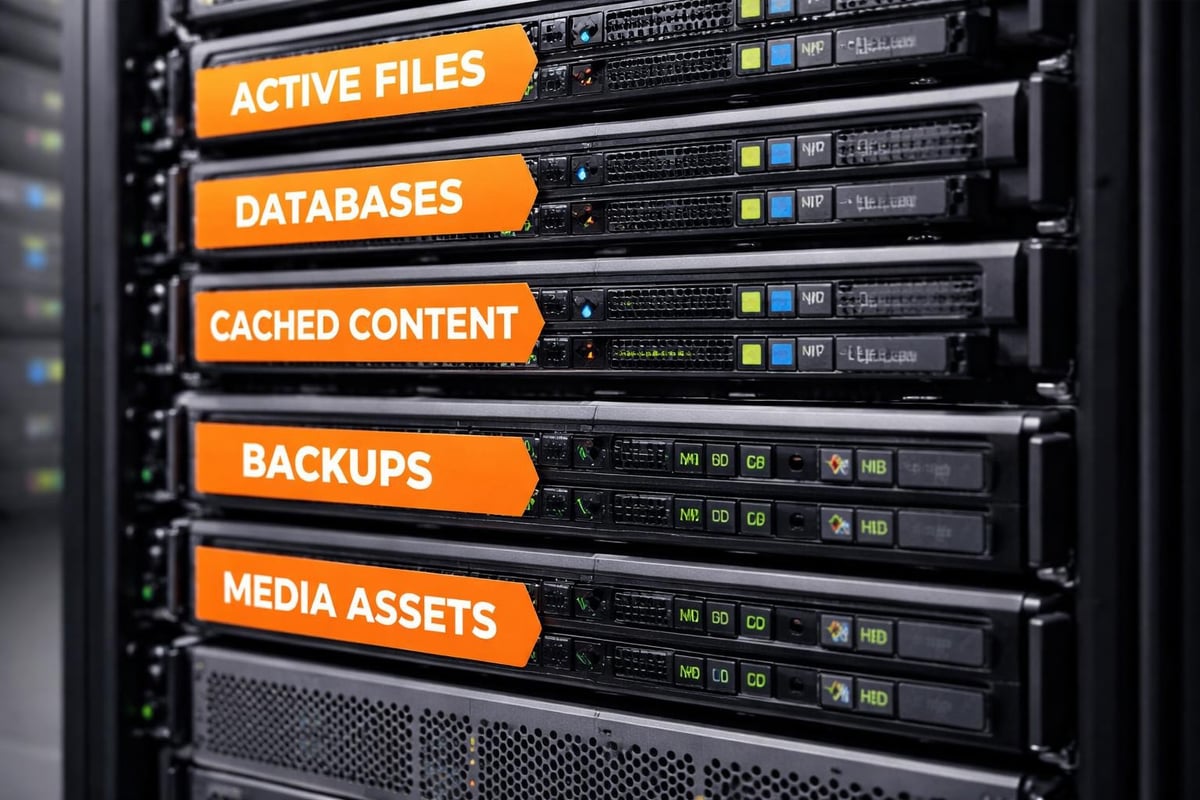
Website storage encompasses all the digital space required to house your website’s files, databases, media assets, and application data. At its core, this includes everything from basic HTML, CSS, and JavaScript files to complex database structures, user-generated content, and backup archives.
Modern websites typically require multiple storage layers working in concert. Your primary storage holds active website files and databases, whilst secondary storage manages backups, log files, and archived content. The relationship between these layers directly impacts your site’s performance, redundancy, and disaster recovery capabilities.
Types of Storage Solutions
Shared hosting storage represents the most economical entry point, where multiple websites share resources on a single server. This arrangement works well for smaller sites with modest traffic but introduces performance limitations as resources are distributed among numerous users.
Virtual Private Server (VPS) storage provides dedicated resources within a virtualized environment, offering greater control and predictable performance. This middle-ground solution suits growing businesses requiring more storage flexibility without the expense of dedicated infrastructure.
Dedicated server storage allocates entire physical machines to individual clients, delivering maximum performance and customization options. Organizations handling sensitive data or experiencing high traffic volumes often require this level of dedicated resources.
Cloud storage solutions distribute data across multiple servers and locations, providing exceptional scalability and redundancy. This modern approach allows businesses to expand storage capacity dynamically based on actual needs rather than fixed allocations.
Security Considerations for Website Storage
Protecting your website storage requires implementing multiple defensive layers addressing various threat vectors. Data breaches increasingly target storage systems, making robust security protocols non-negotiable for responsible businesses.
Encryption stands as your first line of defence, ensuring that even if unauthorized parties access your storage, the data remains unreadable. Implementing encryption strategies for data storage should cover both data at rest and data in transit between servers and end users.
Access Control and Authentication
Restricting who can access your storage systems dramatically reduces vulnerability surface area. Implement role-based access control (RBAC) that grants permissions based on job requirements rather than blanket administrative access.
- Multi-factor authentication for all administrative accounts
- Regular audit trails tracking access patterns and file modifications
- Automated alerts for suspicious access attempts or unusual data transfers
- Time-limited access credentials that expire after specific periods
- IP allowlist to restrict access from approved locations only
Following essential web security guidelines helps establish a comprehensive security framework that addresses vulnerabilities systematically.
Physical and Digital Security Measures
Consider both physical security of storage infrastructure and digital protection mechanisms. Data centres should maintain strict physical access controls, environmental monitoring, and redundant power supplies to prevent disruption.
| Security Layer | Purpose | Implementation Methods |
|---|---|---|
| Network Security | Prevent unauthorized access | Firewalls, intrusion detection, VPNs |
| Data Encryption | Protect stored information | AES-256 encryption, SSL/TLS certificates |
| Access Management | Control user permissions | RBAC, MFA, SSO integration |
| Backup Security | Ensure recovery capabilities | Encrypted backups, offsite storage, versioning |
| Monitoring | Detect threats early | Security information and event management (SIEM) |
Regular security assessments identify emerging vulnerabilities before they become exploited weaknesses. Schedule quarterly penetration testing and vulnerability scans to maintain defensive posture.
Optimizing Website Storage Performance
Performance optimization begins with understanding how users interact with your stored content. Analyzing access patterns reveals opportunities to restructure storage for faster delivery and reduced server load.
Content delivery networks (CDN) complement your primary website storage by caching static assets at edge locations closer to end users. This distributed approach reduces latency whilst decreasing bandwidth demands on origin servers. However, research on password exposure to third-party CDNs highlights the importance of encrypting sensitive data before it reaches any external service.
File Organization and Management
Implementing effective file storage practices creates immediate performance benefits and simplifies long-term maintenance. Establish clear naming conventions, logical folder hierarchies, and regular cleanup procedures to prevent storage bloat.
Compression techniques reduce file sizes without sacrificing quality, accelerating page load times whilst conserving storage capacity. Enable GZIP compression for text-based files and use modern image formats like WebP for visual content.
Lazy loading strategies defer loading non-critical resources until users need them, reducing initial page weight and improving perceived performance. This approach particularly benefits mobile users on limited connections.
Database optimization represents another critical performance lever. Regular index maintenance, query optimization, and table restructuring prevent performance degradation as data volumes grow.

Storage Capacity Planning and Scalability
Accurately forecasting storage requirements prevents both wasteful over-provisioning and disruptive capacity shortfalls. Begin by establishing baseline measurements of current storage consumption across all categories.
Growth Projection Methods
- Historical analysis examining past growth rates
- Business forecasting incorporating planned initiatives and campaigns
- Seasonal adjustment accounting for predictable usage patterns
- Buffer allocation adding headroom for unexpected spikes
- Regular review cycles updating projections quarterly
Cloud-based website storage offers particular advantages for scalability, allowing organizations to add capacity incrementally rather than purchasing fixed infrastructure. This pay-as-you-grow model aligns costs directly with actual usage whilst maintaining flexibility.
Monitor storage utilization continuously rather than reactively responding to capacity warnings. Establish automated alerts when usage crosses predetermined thresholds, providing adequate lead time for capacity expansion.
Backup and Disaster Recovery Strategies
Comprehensive backup strategies protect against data loss from hardware failures, cyberattacks, human errors, and natural disasters. Relying solely on primary website storage creates unacceptable risk for business continuity.
The 3-2-1 backup rule remains relevant: maintain three copies of data, on two different media types, with one copy stored offsite. This approach provides multiple recovery paths if primary storage becomes compromised.
Backup Frequency and Retention
| Content Type | Backup Frequency | Retention Period | Priority Level |
|---|---|---|---|
| Active databases | Continuous/hourly | 30 days rolling | Critical |
| Website files | Daily | 90 days | High |
| User uploads | Daily | 365 days | High |
| System configurations | Weekly | 180 days | Medium |
| Log files | Daily | 30 days | Medium |
Automated backup systems eliminate reliance on manual processes that introduce failure points. Schedule backups during low-traffic periods to minimize performance impact on production systems.
Regular restore testing validates that backups actually work when needed. Quarterly recovery drills identify procedural gaps and ensure team readiness for actual emergencies.

Privacy and Compliance Requirements
Data privacy regulations increasingly dictate how businesses handle website storage, with significant penalties for non-compliance. Understanding applicable legal frameworks protects both your organization and customers.
GDPR, CCPA, and sector-specific regulations impose strict requirements around data collection, storage, processing, and deletion. Implementing privacy best practices demonstrates commitment to responsible data stewardship whilst reducing legal exposure.
Data Residency and Sovereignty
Where you physically store data carries legal implications, particularly when serving customers across multiple jurisdictions. Some regulations require data remain within specific geographic boundaries or prohibit transfers to certain countries.
Cloud storage providers offering regional data centres enable compliance with residency requirements whilst maintaining performance benefits. Verify contractual guarantees about data location and ensure service-level agreements address compliance obligations.
Document your data storage policies comprehensively, including what information you collect, where it resides, how long you retain it, and who can access it. Transparency builds customer trust whilst demonstrating regulatory compliance.
Sustainable Storage Practices
Environmental considerations increasingly influence infrastructure decisions as organizations pursue sustainability goals. Website storage consumes significant energy for both active operations and cooling requirements.
Green hosting providers invest in renewable energy sources, energy-efficient hardware, and carbon offset programmes to minimize environmental impact. Evaluating providers based on sustainability credentials aligns digital operations with broader corporate responsibility objectives.
Optimizing storage efficiency delivers both environmental and financial benefits. Eliminate duplicate files, compress data effectively, and archive infrequently accessed content to reduce active storage footprints.
Energy-Efficient Storage Technologies
- Solid-state drives (SSDs) consuming less power than traditional spinning disks
- Storage tiering automatically moving data to appropriate performance levels
- Intelligent cooling systems adapting to actual thermal requirements
- Server virtualization maximizing hardware utilization rates
- Automated power management during low-demand periods
Choose providers transparent about their environmental practices and committed to continuous improvement. Sustainability reports, third-party certifications, and measurable reduction targets indicate genuine commitment beyond marketing claims.
Selecting the Right Storage Provider
Choosing appropriate storage partners significantly impacts performance, security, and long-term costs. Evaluating providers requires examining multiple dimensions beyond simple price comparisons.
Performance metrics including uptime guarantees, response times, and throughput capabilities establish baseline expectations. Request detailed SLA documentation and verify independently monitored statistics rather than relying solely on marketing claims.
Security certifications such as ISO 27001, SOC 2, and industry-specific standards demonstrate commitment to protective measures. The Canadian Centre for Cyber Security’s guidance provides valuable criteria for assessing provider security postures.
Support quality determines how quickly issues get resolved when problems inevitably arise. Test responsiveness during evaluation phases and verify support availability matches your operational requirements.
Provider Evaluation Checklist
- Review infrastructure redundancy and failover capabilities
- Examine backup policies and disaster recovery procedures
- Verify compliance certifications relevant to your industry
- Test customer support responsiveness and expertise
- Evaluate scalability options for future growth
- Compare total cost of ownership beyond initial pricing
- Assess geographic coverage for global operations
- Investigate sustainability practices and commitments
Migration support deserves particular attention when switching providers. Experienced partners facilitate seamless transitions whilst minimizing downtime and data loss risks.
Advanced Storage Technologies and Future Trends
Emerging technologies continue reshaping website storage capabilities and economics. Object storage systems provide massive scalability for unstructured data whilst simplifying management compared to traditional file systems.
Container-based storage solutions align with modern application architectures, providing portability across different infrastructure platforms. This flexibility enables hybrid and multi-cloud strategies that reduce vendor lock-in risks.
Edge computing pushes storage closer to data generation sources, reducing latency for globally distributed applications. This distributed model complements centralized storage whilst improving responsiveness for time-sensitive operations.
Artificial intelligence and machine learning increasingly optimize storage management automatically. Predictive analytics forecast capacity needs, intelligent tiering places data on appropriate storage media, and anomaly detection identifies security threats before they escalate.
Following Google Cloud’s best practices for modern storage implementations helps organizations leverage advanced capabilities whilst maintaining security and performance standards.
Understanding website storage fundamentals, implementing robust security measures, and planning for sustainable growth positions organizations to leverage digital infrastructure effectively. Whether you require basic hosting for a company website or sophisticated cloud infrastructure supporting complex applications, selecting the right storage solutions and partners determines your success. vBoxx delivers comprehensive secure hosting and cloud storage services built on privacy-focused, environmentally sustainable infrastructure, combining expert consultancy with reliable technical solutions to meet your specific requirements. Our team helps businesses navigate storage decisions, implement best practices, and maintain secure, high-performance digital operations that grow with your organization.