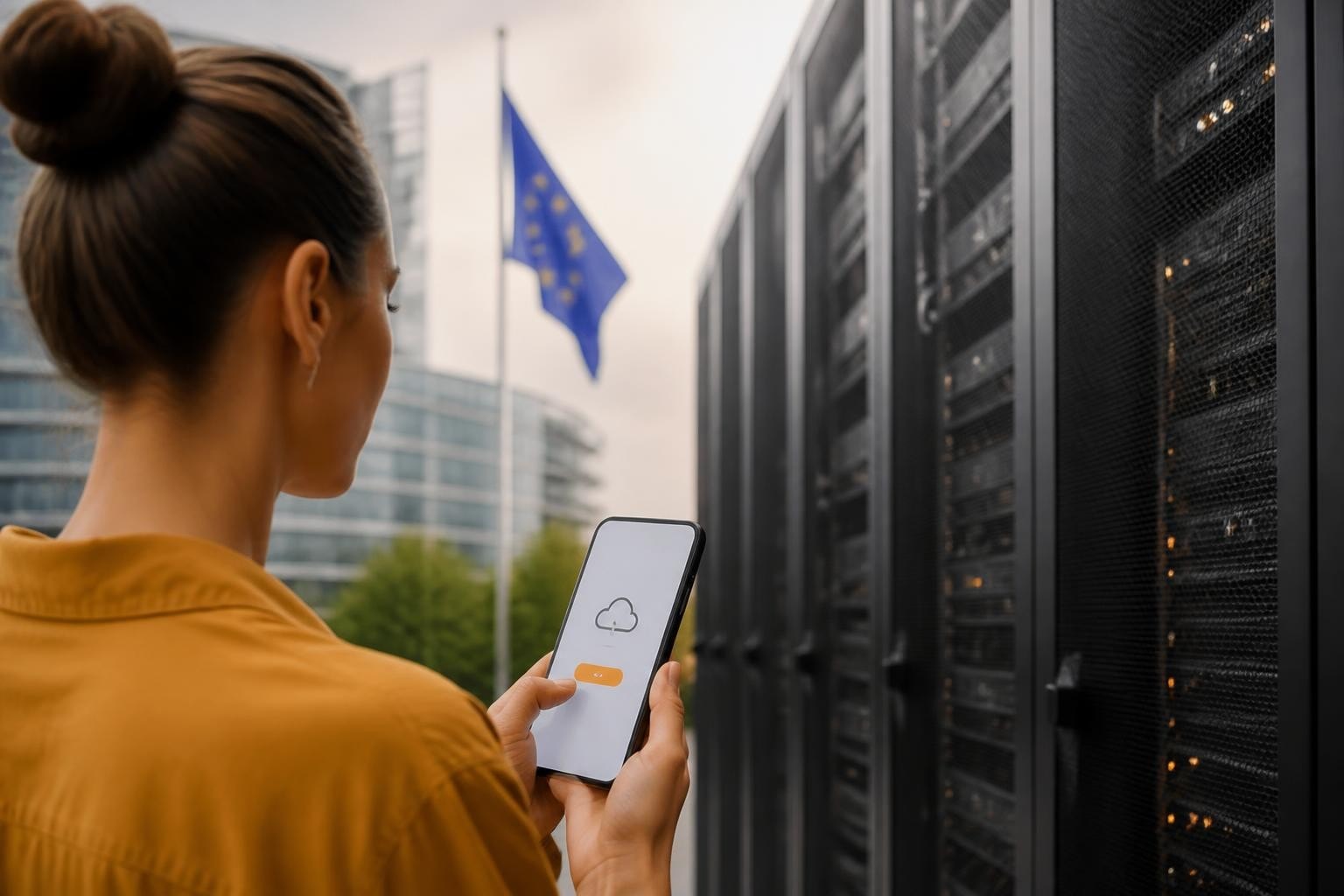

The digital landscape of 2026 presents unprecedented challenges for organisations managing sensitive information across borders. In particular, as cloud computing becomes increasingly central to business operations, the question of where data resides and who controls it has emerged as a critical concern for European enterprises. Moreover, European data sovereignty addresses these concerns by establishing frameworks that ensure data generated within the EU remains subject to European laws and regulations. As a result, this protects it from foreign surveillance and access requests that might conflict with European values and privacy standards.
Understanding European Data Sovereignty
European data sovereignty represents more than just a technical specification for data storage locations. It encompasses a comprehensive framework of legal, operational, and technological measures designed to ensure that data remains under the jurisdiction of European law.
The concept emerged from growing concerns about foreign governments’ access to European citizens’ and businesses’ data through extraterritorial legislation. The US CLOUD Act, for instance, grants American authorities the power to access data held by US companies regardless of where that information is physically stored. This creates significant compliance and security challenges for organisations using US-based cloud providers.
Core Principles of Data Sovereignty
Jurisdictional control forms the foundation of European data sovereignty. This principle ensures that data remains subject exclusively to European legal frameworks, protecting it from conflicting foreign legislation.
- Legal certainty about which courts have jurisdiction over data disputes
- Protection from extraterritorial data access requests
- Alignment with European fundamental rights and values
- Clear audit trails demonstrating compliance with EU regulations
Physical data location determines where information is actually stored and processed. Under sovereignty frameworks, this typically means data centres located within EU member states operated by entities under European legal control.

The Regulatory Framework Governing Data Sovereignty
European data sovereignty operates within a complex regulatory ecosystem. The layered framework includes multiple complementary regulations that work together to establish comprehensive protection.
GDPR as the Foundation
The General Data Protection Regulation remains the cornerstone of European data protection. In particular, it establishes strict requirements for how personal data must be handled, including provisions that limit international data transfers to jurisdictions offering adequate protection. Moreover, these rules ensure a consistent level of data protection across the EU. As a result, organisations must carefully manage cross-border data flows to remain compliant.
Key GDPR provisions relevant to sovereignty:
- Data transfer mechanisms requiring adequacy decisions or appropriate safeguards
- Data subject rights enabling individuals to control their information
- Privacy by design principles embedded in system architecture
- Mandatory breach notification within 72 hours
- Significant penalties for non-compliance reaching 4% of global turnover
The Data Act and AI Act
The Data Act, fully implemented in 2026, extends sovereignty principles beyond personal data to include industrial and commercial information. In particular, it establishes rights for data generation, access, and portability whilst imposing obligations on cloud service providers. Moreover, these provisions strengthen control over how data is used and shared. As a result, organisations must adapt their data strategies to meet these expanded requirements.
In addition, the AI Act introduces additional governance requirements for organisations developing or deploying artificial intelligence systems. Specifically, it places particular attention on the data used for training and operating these systems. Consequently, businesses must ensure transparency, accountability, and compliance in their AI-related data practices.
| Regulation | Primary Focus | Sovereignty Impact |
|---|---|---|
| GDPR | Personal data protection | Controls international transfers, establishes processing requirements |
| Data Act | Industrial data access | Prevents vendor lock-in, enables data portability |
| AI Act | Artificial intelligence governance | Regulates data used in AI systems, transparency requirements |
| NIS2 Directive | Cybersecurity resilience | Mandates security measures for critical infrastructure |
Challenges in Achieving True Data Sovereignty
Despite regulatory frameworks, European organisations face significant practical challenges when implementing data sovereignty measures. The dominance of US-based cloud providers creates dependencies that are difficult to unwind quickly.
The Hyperscaler Dilemma
Major cloud providers offer unprecedented scale, innovation, and cost advantages. In particular, their corporate structures and legal obligations create inherent conflicts with sovereignty requirements.
Moreover, many organisations have built entire technology stacks on these platforms, making migration complex and expensive. As a result, the technical debt accumulated through years of development on proprietary services creates substantial barriers to achieving sovereignty.
Common challenges include:
- Proprietary APIs that create vendor lock-in
- Specialised services without European alternatives
- Training and expertise concentrated in hyperscaler technologies
- Certification and compliance frameworks built around major providers
- Integration complexity when mixing sovereign and non-sovereign services
Sovereignty Washing Concerns
The growing demand for sovereign cloud services has led to concerning practices where providers make misleading sovereignty claims. CISPE introduced the Sovereign and Resilient Cloud Services Framework specifically to combat this “sovereignty washing” phenomenon.
Genuine European data sovereignty requires verifiable proof of operational independence from non-EU legal frameworks. Organisations must scrutinise providers’ corporate structures, ownership chains, and operational procedures to ensure authentic sovereignty.

Practical Implementation Strategies
Organisations committed to European data sovereignty must develop comprehensive strategies that address technical, operational, and contractual dimensions. In particular, this requires aligning infrastructure, processes, and legal frameworks with sovereignty objectives. Moreover, coordination across these areas ensures consistent implementation. As a result, organisations can achieve stronger compliance and long-term control over their data.
Selecting Sovereign Cloud Providers
The foundation of any sovereignty strategy lies in selecting appropriate service providers. European cloud providers offer alternatives that prioritise sovereignty whilst delivering modern cloud capabilities.
Evaluation criteria for sovereign providers:
- Corporate structure: Verify ownership and legal jurisdiction of the provider entity
- Data centre locations: Confirm physical infrastructure resides within the EU
- Operational access: Ensure support and maintenance teams operate under EU jurisdiction
- Encryption practices: Assess encryption implementations and key management procedures
- Certification compliance: Review ISO 27001, SOC 2, and sovereignty-specific certifications
- Contractual protections: Examine data processing agreements and jurisdiction clauses
Architectural Considerations
Technical architecture plays a crucial role in maintaining sovereignty. Organisations should implement defence-in-depth strategies that layer multiple protective measures.
Zero-knowledge encryption ensures that even the service provider cannot access data content. This provides protection even if legal pressure forces provider cooperation with foreign authorities.
Data residency controls must be implemented at the application level, not merely relied upon through provider assurances. Database configurations, object storage policies, and content delivery networks all require specific sovereignty settings.
Audit and monitoring systems should continuously verify that data remains within approved jurisdictions. Automated alerts can detect configuration drift that might compromise sovereignty requirements.
Sector-Specific Sovereignty Requirements
Different industries face unique challenges and obligations regarding European data sovereignty. In particular, regulatory frameworks impose varying standards based on the sensitivity and criticality of information. Moreover, these differences require tailored approaches across sectors. As a result, organisations must align their strategies with industry-specific compliance requirements.
Healthcare and Life Sciences
Medical data represents some of the most sensitive personal information. Beyond GDPR, healthcare organisations must comply with national medical privacy laws that often impose stricter requirements than baseline EU regulations.
Research institutions handling health data for clinical trials face additional complexity when collaborating internationally. The European Commission’s recommendations for research data governance emphasise sovereign services aligned with European data spaces.
Financial Services
Banks and financial institutions operate under strict data residency requirements imposed by national financial regulators. In particular, these often mandate that transaction data, customer records, and risk calculations remain within specific jurisdictions.
Moreover, the Digital Operational Resilience Act (DORA) further strengthens sovereignty requirements by imposing strict oversight of third-party ICT service providers, including cloud vendors. As a result, financial institutions must carefully assess and monitor their cloud partnerships to ensure ongoing compliance.
Public Sector and Critical Infrastructure
Government agencies and operators of essential services face the most stringent sovereignty requirements. The European Centre for Medium-Range Weather Forecasts demonstrates sovereignty in practice by operating forecasting systems on dedicated European infrastructure.
| Sector | Key Regulations | Specific Requirements |
|---|---|---|
| Healthcare | GDPR, Medical Device Regulation | Patient data isolation, audit trails, qualified electronic signatures |
| Financial | GDPR, DORA, PSD2 | Transaction data residency, regulatory reporting, operational resilience |
| Public Sector | GDPR, NIS2, national security laws | Complete sovereignty stack, restricted access, classified data handling |
| Manufacturing | GDPR, Data Act, Cyber Resilience Act | Industrial data protection, supply chain security, IoT device management |
Building a Sovereignty-Compliant Infrastructure
Organisations seeking to implement European data sovereignty must consider the entire technology stack, from physical infrastructure through application layers.
Infrastructure as Code for Sovereignty
Modern infrastructure management through code enables organisations to embed sovereignty requirements directly into deployment pipelines. Configuration templates can enforce data residency rules, encryption standards, and access controls automatically.
Version control of infrastructure code creates an auditable record of all changes to sovereignty-critical systems. This documentation proves essential during compliance audits and incident investigations.
Automated testing can verify that deployed infrastructure meets sovereignty requirements before production deployment. Policy-as-code frameworks enable continuous compliance verification.
Multi-Cloud and Hybrid Strategies
Many organisations adopt hybrid approaches that balance sovereignty requirements with practical business needs. This might involve keeping sensitive data in sovereign environments whilst using international services for non-sensitive workloads.
Data classification becomes critical in hybrid models. Clear taxonomy distinguishes which information requires sovereign protection and which can be processed through alternative means.
Workload portability ensures organisations aren’t permanently locked into any single approach. Containerisation and abstraction layers enable migration between environments as requirements evolve.
Business infrastructure design balancing European data sovereignty requirements with global operations through data classification, workload placement decisions, and encrypted connectivity between sovereign and non-sovereign environments
The Business Case for European Data Sovereignty
Beyond regulatory compliance, European data sovereignty offers tangible business advantages that justify investment in sovereign infrastructure.
Risk Mitigation
Legal risk reduction comes from eliminating exposure to conflicting jurisdictional requirements. Organisations operating entirely within European frameworks avoid scenarios where compliance with one jurisdiction’s laws necessitates violation of another’s.
Reputational protection increasingly matters as customers and partners scrutinise data handling practices. Demonstrating commitment to sovereignty builds trust with European stakeholders who value privacy and data protection.
Operational resilience improves when organisations aren’t vulnerable to geopolitical tensions affecting international service providers. Reducing reliance on foreign tech infrastructure strengthens Europe’s digital independence.
Competitive Advantage
Organisations that achieve genuine European data sovereignty differentiate themselves in procurement processes. Public sector tenders increasingly mandate sovereignty, and private enterprises follow similar patterns.
Customer acquisition benefits from sovereignty credentials, particularly when targeting regulated industries or privacy-conscious market segments. Clear sovereignty messaging resonates with decision-makers prioritising data protection.
Partnership opportunities expand as sovereignty-compliant organisations become preferred collaborators for others pursuing similar objectives. This creates network effects strengthening the European sovereign ecosystem.
Emerging Trends and Future Developments
The European data sovereignty landscape continues to evolve rapidly as technology, regulation, and geopolitics intersect in new ways.
Digital Patriotism and Sovereign Tech Stacks
Research into digital patriotism reveals how ideological motivations increasingly influence technology adoption decisions. European organisations deliberately choose European alternatives even when comparable functionality exists from non-European providers.
This movement extends beyond cloud infrastructure to encompass entire technology stacks. Open-source projects developed within European legal frameworks gain traction as organisations seek comprehensive sovereignty.
European Data Spaces
The European Commission’s data spaces initiative creates sector-specific frameworks for sovereign data sharing. These federated architectures enable collaboration whilst maintaining sovereignty principles.
Common European Data Spaces operate in domains including health, manufacturing, agriculture, finance, and mobility. Participation requires compliance with sovereignty standards, creating incentives for organisations to adopt appropriate infrastructure.
Technological Innovations
Confidential computing using hardware-based trusted execution environments provides new approaches to sovereignty. These technologies enable data processing whilst maintaining encryption, even from the infrastructure operator.
Federated learning allows organisations to collaborate on machine learning without sharing underlying data. This supports AI development whilst respecting sovereignty boundaries.
Quantum-resistant cryptography preparations ensure that sovereignty protections remain effective as computing capabilities evolve. Forward-thinking organisations begin transitioning to post-quantum algorithms today.
Practical Steps for Implementation
Organisations beginning their sovereignty journey should approach implementation systematically rather than attempting wholesale transformation overnight.
Assessment and Planning
Current state analysis identifies where sensitive data currently resides and which systems require sovereignty protections. Data mapping exercises reveal the scope of required changes.
Gap analysis compares current practices against sovereignty requirements, highlighting priority areas for remediation. This assessment should consider regulatory obligations, contractual commitments, and business risk tolerance.
Roadmap development sequences implementation activities based on risk, complexity, and resource availability. Quick wins that address high-risk areas build momentum for longer-term transformation.
Execution and Verification
Phased migration reduces risk compared to big-bang approaches. Starting with non-critical workloads allows teams to develop expertise before tackling mission-critical systems.
If you’re evaluating sovereign cloud solutions, understanding the practical implications through a guided demonstration of cloud storage, secure communications, and password management can clarify how sovereignty requirements translate into operational reality.
Continuous monitoring ensures ongoing compliance as infrastructure evolves. Automated tools should verify data location, encryption status, and access patterns against sovereignty policies.
Regular auditing by internal and external parties validates that controls operate effectively. Documentation of these audits demonstrates due diligence to regulators and customers.
Training and Culture
Staff education ensures everyone understands sovereignty requirements and their role in maintaining compliance. Technical teams need detailed implementation knowledge whilst business stakeholders require strategic context.
Process integration embeds sovereignty considerations into standard workflows for procurement, development, and operations. Checklists and approval gates prevent inadvertent sovereignty violations.
Vendor management procedures should assess suppliers’ sovereignty credentials before engagement and monitor compliance throughout relationships. Initiatives like EU-Data.org help identify GDPR-compliant alternatives to foreign providers.
Measuring Success and Continuous Improvement
Effective European data sovereignty programmes require metrics that demonstrate both compliance and business value.
Compliance Metrics
- Percentage of sensitive data residing in sovereign infrastructure
- Time to detect and remediate sovereignty violations
- Number of successful audits without significant findings
- Response time for data subject access requests
- Completion rate of staff sovereignty training
Business Metrics
- Customer acquisition in sovereignty-sensitive segments
- Successfully completed procurement processes requiring sovereignty
- Reduction in data breach incidents and associated costs
- Speed of new service deployment on sovereign infrastructure
- Cost efficiency of sovereign operations versus alternatives
Benchmarking against industry peers provides context for performance metrics. Industry associations and standards bodies increasingly publish sovereignty maturity frameworks enabling comparative assessment.
Continuous improvement cycles should incorporate lessons learned from incidents, audits, and operational experience. Regular review of sovereignty strategies ensures they adapt to evolving threats and requirements.
European data sovereignty represents both a compliance necessity and a strategic opportunity for organisations operating in today’s digital landscape. By understanding the regulatory framework, selecting appropriate providers, and implementing robust technical controls, businesses can protect sensitive information whilst building competitive advantages in privacy-conscious markets. vBoxx provides secure hosting and cloud solutions designed specifically for organisations prioritising data sovereignty, offering European-based infrastructure that aligns with GDPR requirements and supports sustainable, reliable digital operations. Discover how sovereign cloud services can protect your organisation’s data whilst maintaining the performance and flexibility modern business demands.