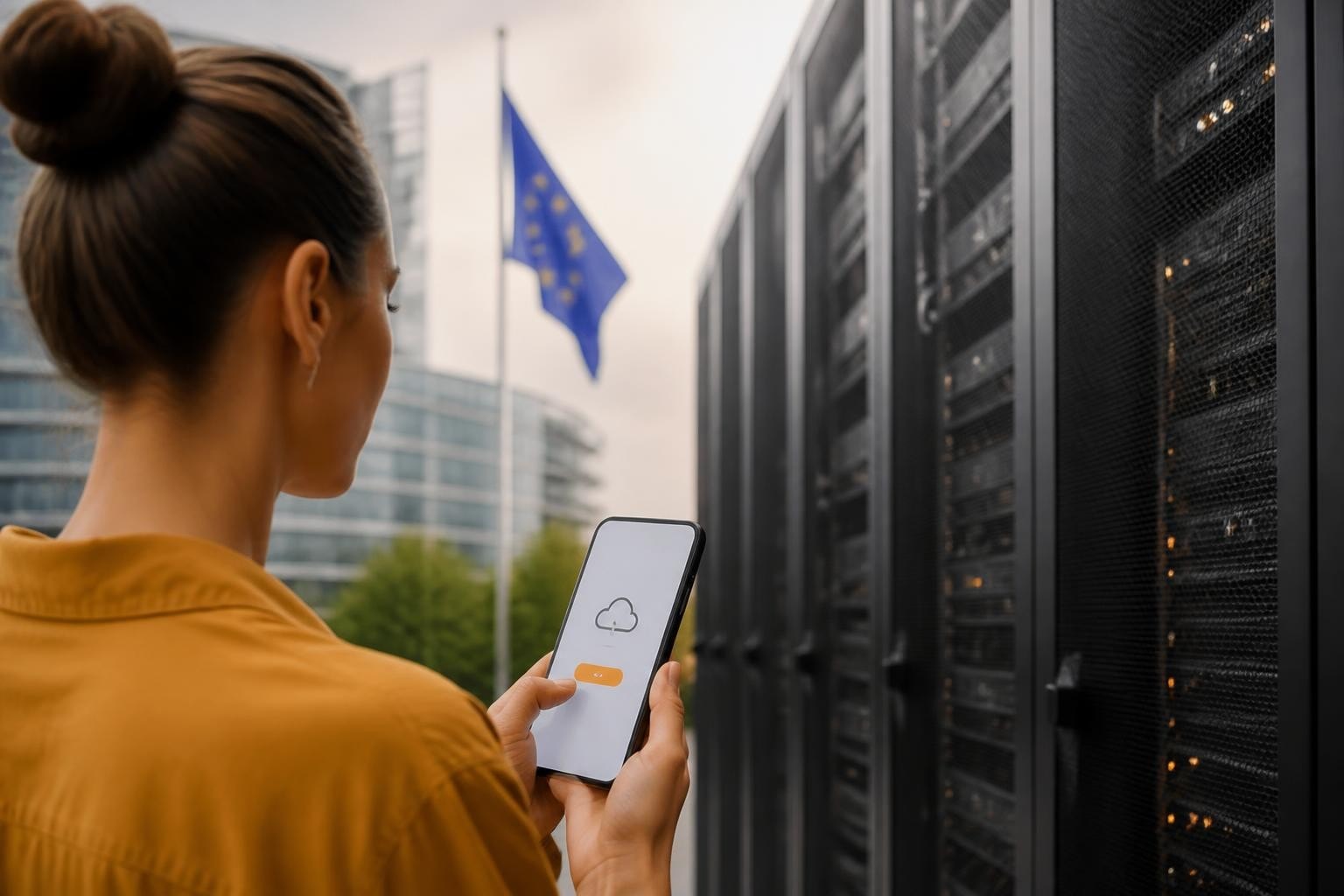

Data sovereignty and privacy regulations have fundamentally transformed how businesses select cloud storage solutions. In particular, for organisations operating within the European Union or serving European customers, choosing the best European cloud storage provider is no longer simply about features and pricing. Moreover, it requires careful evaluation of regulatory compliance, data residency, security certifications, and the geopolitical landscape surrounding data protection. As a result, this comprehensive guide examines the leading European cloud storage options available in 2026. Ultimately, it helps businesses make informed decisions that balance operational needs with stringent privacy requirements.
Understanding European Cloud Storage Requirements
European cloud storage differs significantly from global alternatives due to the continent’s robust data protection framework. In particular, the General Data Protection Regulation (GDPR) sets the foundation for how personal data must be handled, stored, and processed. Moreover, this framework ensures consistent privacy standards across all EU member states. As a result, organisations must carefully align their cloud storage practices with these legal requirements.
Businesses must consider several critical factors when evaluating providers:
- Data residency: Where physical servers and data centres are located
- Jurisdictional compliance: Which national and EU-level regulations apply
- Provider ownership: Whether the company is subject to non-EU legal obligations
- Encryption standards: Both in-transit and at-rest protection mechanisms
- Access controls: Who can access data and under what circumstances
The concept of the sovereign cloud has gained significant traction, particularly as data localization and EU cloud regulations continue to evolve. Organisations increasingly seek providers that can guarantee data remains within EU borders and under EU legal jurisdiction.

GDPR Compliance Beyond the Basics
Understanding GDPR compliance in cloud storage requires more than selecting a provider with EU data centres. The regulation imposes specific obligations on both data controllers and processors, creating shared responsibility for data protection.
Key compliance considerations include:
- Data processing agreements: Comprehensive contracts that define responsibilities
- Right to erasure: Ability to permanently delete data upon request
- Data portability: Mechanisms to export data in standard formats
- Breach notification: Systems to detect and report security incidents within 72 hours
- Privacy by design: Default configurations that maximise data protection
The European Data Protection Supervisor’s guidelines provide authoritative direction for institutions seeking compliant cloud services. These principles apply equally to private sector organisations pursuing best-in-class data protection.
Top European Cloud Storage Providers
Selecting the best European cloud storage solution requires comparing providers across multiple dimensions. In particular, the market offers diverse options, from established European companies to international providers with strong EU presence. Moreover, each provider differs in terms of security, compliance, pricing, and feature sets. As a result, organisations must conduct thorough evaluations to identify the most suitable solution for their needs.
Regional Leaders and Specialists
Several European cloud providers have built their entire value proposition around data sovereignty and regulatory compliance. In particular, these companies understand the nuances of operating under EU jurisdiction. Moreover, they often provide superior support for local requirements. As a result, organisations benefit from solutions that are better aligned with European legal and operational standards.
| Provider Type | Key Advantages | Typical Use Cases |
|---|---|---|
| EU-native providers | Complete data sovereignty, local support | Government, healthcare, legal sectors |
| EU-positioned multinationals | Advanced features, global reach | International businesses with EU operations |
| Specialist security providers | Enhanced encryption, zero-knowledge architecture | Finance, research, sensitive data |
When evaluating options, businesses should examine not just current compliance but also the provider’s commitment to evolving with regulatory changes. The comparison of European cloud providers offers valuable insights into how different services approach these challenges.

Security Features That Matter
The best European cloud storage solutions implement security measures that exceed minimum regulatory requirements. In particular, zero-knowledge encryption, where the provider cannot access customer data, represents the gold standard for privacy-conscious organisations. Moreover, this approach significantly reduces the risk of unauthorised data access. As a result, organisations gain stronger assurance that their sensitive information remains fully protected.
Essential security capabilities include:
- End-to-end encryption: Data encrypted on client devices before transmission
- Two-factor authentication: Multiple verification methods for account access
- Granular access controls: Permission systems that follow the principle of least privilege
- Audit logging: Comprehensive records of all data access and modifications
- Regular security assessments: Independent penetration testing and vulnerability analysis
Advanced providers offer dedicated security options such as hardware security modules (HSMs) for encryption key management and bring-your-own-key (BYOK) capabilities that ensure customers maintain ultimate control over their data protection mechanisms. In particular, these tools strengthen encryption governance and reduce reliance on provider-managed keys. Moreover, they enhance transparency and control for organisations handling sensitive data. As a result, businesses can better align their security practices with strict compliance and sovereignty requirements.
Performance and Pricing Considerations
While security and compliance form the foundation of best European cloud storage selection, operational factors significantly impact long-term satisfaction and total cost of ownership. In particular, these factors influence day-to-day usability and efficiency. Moreover, they affect how well the solution integrates into existing workflows. As a result, organisations must consider both technical and operational aspects when making their decision.
Storage Capacity and Scalability
European providers offer various pricing models adapted to different business needs:
- Per-user licensing: Fixed monthly fee per account, suitable for predictable teams
- Usage-based billing: Pay only for consumed storage and bandwidth
- Tiered plans: Packages with increasing capacity and features
- Enterprise agreements: Custom pricing for large organisations with specific requirements
Understanding cost structures helps prevent budget overruns. In particular, many providers charge separately for storage capacity, data transfer (egress fees), API requests, and additional features. As a result, reading the complete pricing documentation before commitment prevents unexpected charges.
The best cloud storage services reviewed highlight how pricing varies significantly between consumer-focused and business-oriented solutions, with enterprise features commanding premium prices.
Performance Metrics and SLAs
Service level agreements (SLAs) define the reliability and performance standards customers can expect. Top-tier European cloud storage providers typically guarantee:
| Metric | Industry Standard | Premium Tier |
|---|---|---|
| Uptime guarantee | 99.5% | 99.9% or higher |
| Data durability | 99.999999999% (11 nines) | 99.9999999999% (12 nines) |
| Support response time | Within 24 hours | Within 1-4 hours |
| Recovery time objective | 24-48 hours | Under 4 hours |
Geographic proximity of data centres affects performance significantly. In particular, organisations should select providers with infrastructure close to their primary user base. As a result, this helps minimise latency and improve user experience.
Integration and Workflow Compatibility
The best European cloud storage solutions integrate seamlessly with existing business tools and workflows. In particular, standalone storage that requires manual file transfers and separate access credentials creates friction. As a result, this reduces adoption and productivity. Moreover, seamless integration improves efficiency and encourages consistent usage across teams.
Platform Compatibility
Modern cloud storage must support diverse device ecosystems and operating systems:
- Desktop clients for Windows, macOS, and Linux
- Mobile applications for iOS and Android
- Web interfaces accessible from any browser
- Command-line tools for automation and scripting
- API access for custom integrations
Synchronisation capabilities determine how effectively teams can collaborate across devices. In particular, two-way sync ensures changes made on any device propagate automatically. Moreover, selective sync allows users to conserve local storage by choosing which folders to download. As a result, organisations can balance collaboration efficiency with device storage management.
Collaboration Features
Business-focused European cloud storage extends beyond simple file hosting to enable teamwork and project coordination. Essential collaboration capabilities include:
- Real-time co-editing: Multiple users modifying documents simultaneously
- Version history: Ability to review and restore previous file iterations
- Commenting and annotations: In-context discussions about specific content
- Sharing controls: Flexible permissions for internal and external collaborators
- Activity notifications: Updates when team members make changes
For organisations seeking comprehensive solutions, providers like vBoxx offer integrated approaches that combine cloud storage with secure communication tools. Businesses can explore these capabilities through a demonstration all-in-one session that covers file management, email security, and password storage.

Backup and Recovery Strategies
The distinction between cloud storage and cloud backup significantly impacts data protection strategies. While related, these services serve different purposes and require separate evaluation criteria.
Cloud Storage vs Cloud Backup
Cloud storage primarily facilitates file access and sharing, with synchronisation as its core function. In contrast, cloud backup focuses on creating secure, versioned copies of data for disaster recovery purposes. Moreover, this distinction highlights different priorities in data management strategies. As a result, organisations must choose solutions based on whether they prioritise accessibility or recovery.
Cloud Storage Characteristics:
- Active file access and modification
- Synchronisation across devices
- Collaboration and sharing features
- Immediate file availability
Cloud Backup Characteristics:
- Point-in-time snapshots
- Long-term retention policies
- Ransomware protection through immutable copies
- Comprehensive disaster recovery capabilities
The best cloud backup services emphasise different features than storage platforms, particularly around retention policies and recovery granularity. Organisations with critical data requirements typically implement both solutions as complementary layers of protection.
Implementing Effective Backup Policies
A robust backup strategy for European businesses incorporates multiple safeguards:
- 3-2-1 rule implementation: Three copies of data, on two different media types, with one copy off-site
- Automated scheduling: Regular backups without manual intervention
- Encryption verification: Ensuring backup data receives the same protection as production data
- Recovery testing: Periodic restoration drills to validate backup integrity
- Retention compliance: Keeping backups for periods required by industry regulations
European data protection regulations influence backup retention policies. Organisations must balance the need to preserve data for operational continuity against obligations to delete information when no longer necessary for its original purpose.
Migration and Vendor Lock-in Considerations
Selecting the best European cloud storage involves planning not just for implementation but also for potential future transitions. In particular, vendor lock-in occurs when migration costs or technical barriers make changing providers prohibitively difficult. Moreover, this can significantly limit organisational flexibility over time. As a result, businesses must carefully evaluate long-term exit strategies when choosing a provider.
Assessing Migration Complexity
Before committing to a cloud storage provider, businesses should evaluate:
- Data export capabilities and formats
- API compatibility with standard protocols
- Proprietary features that don’t transfer to other platforms
- Migration support and professional services availability
- Total cost and time estimates for potential future moves
Providers using open standards and offering comprehensive export tools reduce lock-in risks. Solutions built on proprietary technologies or uncommon file formats create dependencies that complicate transitions.
Data Portability Rights Under GDPR
European regulations provide customers with explicit rights regarding their data. In particular, the GDPR’s data portability provisions require providers to deliver personal data in structured, commonly used, machine-readable formats upon request.
Moreover, this regulatory protection offers significant leverage when negotiating cloud storage contracts. As a result, businesses should verify that providers support bulk data export and provide clear documentation of the process before storing substantial data volumes.
Industry-Specific Requirements
Different sectors face unique regulatory and operational requirements that influence cloud storage selection. In particular, the best European cloud storage for a healthcare provider differs substantially from the optimal solution for a manufacturing company. Moreover, these differences stem from varying compliance obligations, security needs, and data sensitivity levels. As a result, organisations must evaluate solutions based on their specific industry context.
Healthcare and Medical Data
Healthcare organisations must comply with both GDPR and sector-specific regulations governing patient data. Medical information qualifies as special category data under GDPR, requiring additional safeguards.
Requirements include:
- End-to-end encryption for patient records
- Audit trails documenting all data access
- Role-based access controls aligned with clinical workflows
- Data residency within specific jurisdictions
- Business associate agreements defining processor responsibilities
Financial Services and Banking
Financial institutions face stringent requirements from banking regulators in addition to data protection laws. Cloud storage solutions must support:
| Requirement | Implementation |
|---|---|
| Transaction records retention | Configurable retention policies with legal hold capabilities |
| Regulatory reporting | Audit log exports in formats accepted by supervisory authorities |
| Operational resilience | Redundancy and failover mechanisms ensuring continuous availability |
| Insider threat prevention | Advanced access monitoring and anomaly detection |
The challenges of GDPR compliance from a systems perspective highlight how traditional cloud architectures sometimes conflict with regulatory requirements, necessitating careful provider selection and configuration.
Public Sector and Government Use
Government entities and public bodies face additional scrutiny regarding cloud service selection. Guidelines for European institutions emphasise sovereignty concerns and the need for providers subject exclusively to EU jurisdiction.
Public sector considerations include:
- Transparency about subprocessors and supply chains
- Resistance to foreign surveillance laws
- Support for freedom of information requests
- Accessibility compliance for public-facing services
- Procurement procedures favouring EU-based providers
Green Hosting and Sustainability
Environmental impact increasingly influences technology purchasing decisions. In particular, the best European cloud storage providers recognise their responsibility to minimise carbon footprints and operate sustainably. Moreover, this includes optimising data centre efficiency and reducing energy consumption. As a result, organisations can align their storage choices with broader sustainability goals.
Data Centre Energy Efficiency
Cloud storage infrastructure consumes substantial electricity for both computation and cooling. Leading European providers invest in:
- Renewable energy sources powering data centres
- Advanced cooling technologies reducing energy consumption
- Hardware optimisation maximising storage density
- Carbon offset programmes addressing remaining emissions
- Transparent reporting of environmental metrics
The European Union’s commitment to climate neutrality by 2050 drives regulatory pressure for sustainable digital infrastructure. Businesses concerned with environmental, social, and governance (ESG) criteria should prioritise providers demonstrating measurable progress toward carbon neutrality.
Alignment with Corporate Sustainability Goals
Selecting green cloud storage supports broader organisational sustainability initiatives. When evaluating providers, request information about:
- Power Usage Effectiveness (PUE) ratings of data centres
- Percentage of renewable energy in the electricity mix
- Certifications such as ISO 14001 for environmental management
- Participation in industry sustainability initiatives
- Long-term commitments to emissions reduction
Organisations like vBoxx integrate sustainability into their service delivery, recognising that secure, private cloud infrastructure can also operate with minimal environmental impact.
Making Your Decision
Selecting the best European cloud storage requires balancing multiple factors specific to your organisation’s needs, risk tolerance, and regulatory obligations. In particular, no single provider excels across every dimension, making prioritisation essential. Moreover, this means organisations must carefully weigh trade-offs between security, cost, performance, and compliance. As a result, a structured evaluation approach is necessary to identify the most suitable solution.
Decision Framework
Create a weighted scoring system addressing your most critical requirements:
Must-have criteria (non-negotiable):
- GDPR compliance with EU data residency
- Security certifications relevant to your industry
- Acceptable pricing within budget constraints
- Core features supporting primary use cases
Important factors (significant weight):
- Provider stability and track record
- Quality of customer support
- Integration with existing tools
- Scalability for future growth
Desirable attributes (moderate consideration):
- Advanced collaboration features
- Mobile application quality
- Sustainability credentials
- Additional services beyond storage
The best cloud storage options for Europe provides comparative analysis helping businesses understand how different providers address regional requirements.
Trial Periods and Proof of Concept
Before committing to long-term contracts, leverage trial periods to validate that providers meet operational requirements. A structured proof of concept should test:
- Upload and download speeds from your locations
- Integration with your existing applications
- User experience across devices your team uses
- Support responsiveness and technical expertise
- Administrative controls and reporting capabilities
Document findings systematically, involving stakeholders from IT, compliance, and end-user departments. In particular, this collaborative evaluation reduces the risk of selecting a solution that satisfies technical requirements but fails to meet practical needs.
Moreover, choosing the best European cloud storage requires careful consideration of regulatory compliance, security capabilities, operational features, and long-term viability. As a result, European businesses benefit from providers that understand regional requirements and prioritise data sovereignty alongside performance and functionality. For example, whether your organisation requires GDPR compliance, industry-specific certifications, or sustainable infrastructure, the European cloud storage market offers solutions tailored to diverse needs. In addition, vBoxx delivers secure, privacy-focused cloud infrastructure with a commitment to both data protection and environmental sustainability, providing businesses with reliable digital foundations that meet the highest European standards.