

Infrastructure cloud services have fundamentally transformed how businesses manage their IT resources, shifting from capital-intensive hardware investments to flexible, on-demand computing environments. In particular, as organisations increasingly seek agility, cost efficiency, and scalability, understanding the nuances of cloud infrastructure becomes essential for making informed technology decisions. Moreover, this comprehensive guide explores the core components, deployment strategies, and critical considerations that define modern infrastructure cloud services. As a result, businesses can better navigate their transition to cloud-based environments.
Understanding Infrastructure Cloud Services Architecture
Infrastructure cloud services represent the foundational layer of cloud computing, delivering virtualised computing resources over the internet. The National Institute of Standards and Technology (NIST) defines this model as providing essential computing capabilities where consumers can provision processing, storage, networks, and other fundamental resources.
The architecture comprises several interconnected components that work seamlessly to deliver reliable service. Compute resources form the processing backbone, offering virtual machines with configurable CPU and memory allocations. Storage systems provide persistent data retention through block, file, and object storage mechanisms. Network infrastructure ensures connectivity between resources and end users through virtual networks, load balancers, and content delivery systems.

Modern infrastructure cloud services operate on a multi-layered approach that separates physical hardware from virtualised resources. In particular, hypervisor technology enables multiple virtual instances to run on single physical servers, maximising resource utilisation whilst maintaining isolation between workloads. Moreover, this abstraction layer provides the flexibility that distinguishes cloud services from traditional hosting environments. As a result, organisations gain greater efficiency and scalability in managing their IT resources.
Service Models and Delivery Mechanisms
Infrastructure as a Service (IaaS) stands as the primary delivery model for infrastructure cloud services. According to Infrastructure as a Service overview, this model provides the highest degree of control over computing resources, allowing businesses to manage operating systems, applications, and middleware whilst the provider handles physical infrastructure.
Three distinct service tiers characterise the infrastructure cloud services landscape:
- Public cloud infrastructure delivers resources through shared, multi-tenant environments
- Private cloud infrastructure provides dedicated resources within single-tenant architectures
- Hybrid cloud infrastructure combines both models for optimised workload placement
Each tier offers unique advantages depending on security requirements, compliance mandates, and performance needs. Public infrastructure delivers cost efficiency through resource sharing, whilst private deployments ensure maximum control and isolation. Hybrid approaches enable businesses to maintain sensitive workloads on-premises whilst leveraging public cloud scalability for variable demands.
The NIST Cloud Computing Reference Architecture outlines five essential characteristics: on-demand self-service, broad network access, resource pooling, rapid elasticity, and measured service. These attributes distinguish genuine infrastructure cloud services from traditional hosting arrangements.
Security and Compliance Considerations
Security remains paramount when evaluating infrastructure cloud services, particularly for organisations handling sensitive data or operating within regulated industries. In particular, the shared responsibility model defines clear boundaries between provider and customer security obligations. However, the exact division varies by service model. As a result, organisations must clearly understand their responsibilities to ensure comprehensive protection.
Data Protection and Privacy Frameworks
Infrastructure providers implement multiple security layers to protect customer data and ensure service integrity. Physical security controls safeguard data centre facilities through biometric access, surveillance systems, and environmental monitoring. Network security measures include firewalls, intrusion detection systems, and DDoS protection mechanisms. Encryption protects data both in transit and at rest, with customers typically managing their own encryption keys.
For businesses prioritising data sovereignty and privacy, understanding geographic data residency becomes crucial. Many infrastructure cloud services allow customers to specify which regions host their workloads, ensuring compliance with regulations like GDPR or industry-specific requirements.
| Security Layer | Provider Responsibility | Customer Responsibility |
|---|---|---|
| Physical Infrastructure | Data centre security, hardware maintenance | Not applicable |
| Network Infrastructure | Core network protection, isolation | Virtual network configuration |
| Virtualisation Platform | Hypervisor security, patch management | Not applicable |
| Operating System | Not applicable | OS patching, configuration |
| Application Layer | Not applicable | Application security, access controls |
| Data | Encryption at rest capabilities | Data classification, encryption keys |
Compliance certifications demonstrate a provider’s commitment to security standards. Infrastructure cloud services typically maintain certifications such as ISO 27001, SOC 2, and industry-specific accreditations. These third-party validations provide assurance that security controls meet recognised benchmarks.

Performance Optimisation and Resource Management
Effective utilisation of infrastructure cloud services requires strategic resource planning and ongoing optimisation. In particular, businesses must balance performance requirements against cost considerations whilst maintaining headroom for growth and unexpected demand spikes. Moreover, this balance ensures efficient resource allocation over time. As a result, organisations can optimise costs without compromising performance or scalability.
Capacity Planning Strategies
Right-sizing ensures virtual machines match actual workload requirements without over-provisioning. Regular analysis of CPU utilisation, memory consumption, and storage patterns reveals opportunities to adjust resource allocations. Many organisations discover they can reduce costs by 20-40% through systematic right-sizing exercises.
Auto-scaling policies automatically adjust resource capacity based on predefined metrics or schedules. This capability proves particularly valuable for applications experiencing variable traffic patterns, ensuring performance during peak periods whilst minimising costs during quiet intervals. Configuring appropriate scaling triggers requires understanding application behaviour and performance thresholds.
Storage optimisation presents significant cost-saving opportunities within infrastructure cloud services:
- Archive infrequently accessed data to lower-cost storage tiers
- Implement lifecycle policies for automated data migration
- Enable compression and deduplication where applicable
- Remove orphaned volumes and snapshots
- Utilise object storage for unstructured data
Network performance significantly impacts application responsiveness and user experience. Content delivery networks (CDN) cache static assets closer to end users, reducing latency and bandwidth consumption. Private connectivity options bypass the public internet for predictable, low-latency connections between on-premises environments and cloud infrastructure.
Migration Planning and Execution
Transitioning to infrastructure cloud services demands careful planning to minimise disruption and ensure successful outcomes. In particular, the migration journey involves assessment, planning, execution, and optimisation phases, each requiring specific expertise and tools. Moreover, a structured approach helps reduce risks during the transition. As a result, organisations can achieve smoother migrations and more predictable outcomes.
Assessment and Discovery
Comprehensive infrastructure assessment forms the foundation of successful cloud migration. Organisations must catalogue existing applications, dependencies, and performance characteristics to determine cloud suitability and optimal migration approaches.
Application dependency mapping identifies interconnections between systems, databases, and services. Understanding these relationships prevents service disruptions during migration and informs sequencing decisions. Automated discovery tools accelerate this process whilst ensuring accuracy.
Workload categorisation groups applications by migration complexity and priority:
- Rehost (lift-and-shift): Migrate with minimal changes
- Replatform: Make limited optimisations during migration
- Refactor: Redesign to leverage cloud-native capabilities
- Retain: Keep on-premises temporarily or permanently
- Retire: Decommission unnecessary systems
Performance baselines establish reference points for post-migration validation. Documenting current resource consumption, response times, and throughput metrics enables objective comparison and troubleshooting.
Execution and Validation
Migration execution methodologies range from “big bang” approaches that move entire environments simultaneously to phased migrations that incrementally transition workloads. Phased approaches reduce risk but extend timelines and may increase complexity managing hybrid environments.
Testing procedures verify functionality, performance, and security configurations before cutover. Comprehensive test plans should cover:
- Functional testing: Confirm all features operate correctly
- Performance testing: Validate response times meet requirements
- Security testing: Verify access controls and encryption
- Disaster recovery testing: Ensure backup and restore procedures work
- Integration testing: Confirm external system connectivity
Rollback procedures provide safety nets if critical issues emerge during cutover. Maintaining parallel environments temporarily enables quick reversion whilst minimising business impact. Clear rollback criteria and decision-making authority prevent prolonged outages.
For businesses seeking expert guidance through cloud migration, exploring services like vBoxx’s comprehensive cloud solutions can provide the technical support and infrastructure needed for smooth transitions.
Cost Management and Financial Optimisation
Infrastructure cloud services shift IT spending from capital expenditure to operational expenditure, fundamentally changing financial planning and budgeting approaches. In particular, whilst this transition offers flexibility, controlling cloud costs requires active management and governance. Moreover, without proper oversight, expenses can quickly escalate. As a result, organisations must implement strong cost management practices to maintain financial control.
Pricing Models and Cost Components
Understanding pricing structures enables accurate forecasting and optimisation. Infrastructure cloud services typically charge based on:
- Compute hours: Virtual machine runtime based on instance type
- Storage capacity: Per-gigabyte monthly charges varying by storage class
- Data transfer: Egress bandwidth, particularly to the internet
- Additional services: Load balancers, IP addresses, snapshots
Reserved capacity commitments deliver substantial discounts compared to on-demand pricing. Organisations with predictable baseline workloads can reduce costs by 30-70% through one or three-year reservations, though these commitments require accurate capacity forecasting.
Spot instances offer significant discounts for interruptible workloads, accessing unused provider capacity at reduced rates. Whilst these instances may terminate with short notice, they suit batch processing, data analysis, and fault-tolerant applications.
| Cost Optimisation Strategy | Potential Savings | Implementation Complexity |
|---|---|---|
| Right-sizing resources | 20-40% | Low |
| Reserved capacity | 30-70% | Medium |
| Spot instances | 50-90% | High |
| Storage tiering | 40-60% | Low |
| Auto-scaling policies | 15-35% | Medium |
| Resource scheduling | 20-50% | Low |
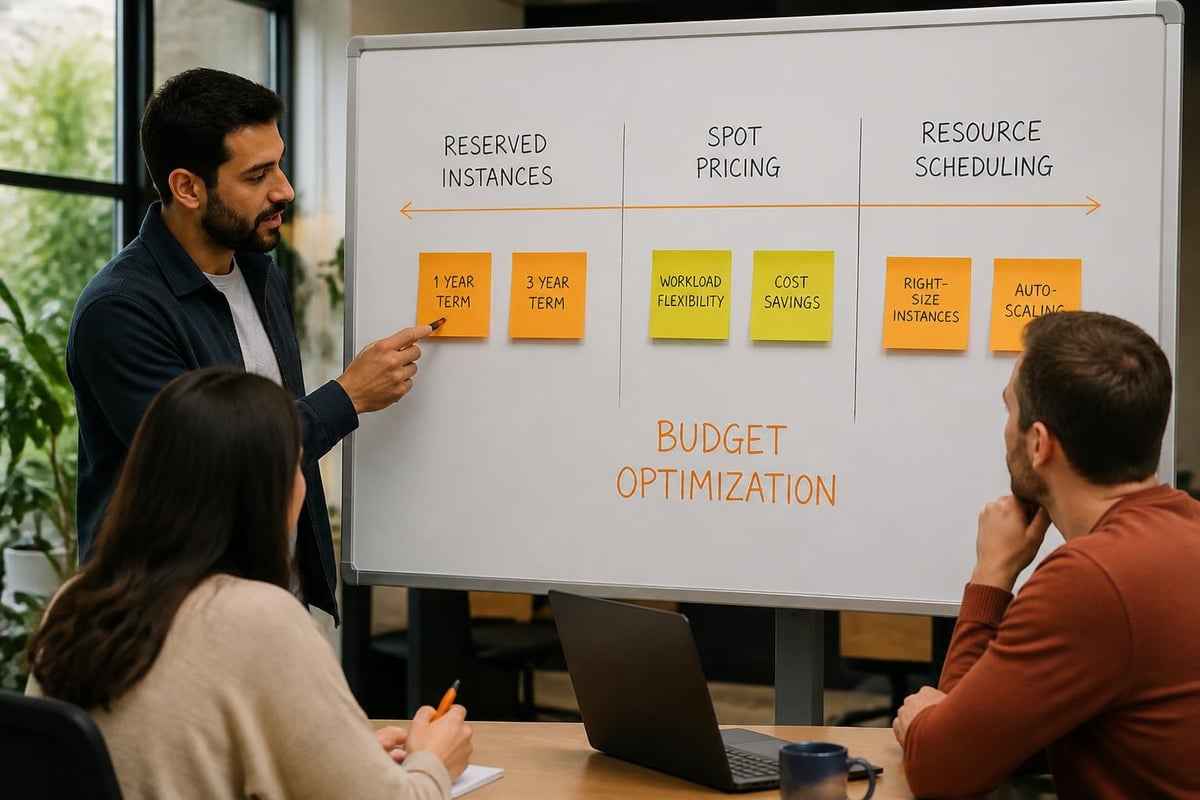
Tagging strategies enable cost allocation by department, project, or application. Consistent tagging policies provide visibility into spending patterns and support chargeback or showback models. Automated enforcement ensures tags apply to all resources.
Monitoring and Management Practices
Effective infrastructure cloud services management requires continuous monitoring, alerting, and performance analysis. In particular, proactive oversight prevents issues before they impact users. Moreover, it helps optimise resource utilisation and costs. As a result, organisations can maintain performance while improving efficiency.
Observability and Metrics
Comprehensive monitoring encompasses infrastructure metrics, application performance, and user experience indicators. Digital.gov’s infrastructure guidance emphasises the importance of managing information as a strategic resource, which includes robust monitoring frameworks.
Infrastructure metrics track resource health and utilisation:
- CPU and memory usage across virtual machines
- Disk I/O operations and latency
- Network throughput and packet loss
- Storage capacity and growth trends
Application performance monitoring (APM) provides visibility into application behaviour, identifying bottlenecks and performance degradation. Distributed tracing follows requests across microservices, revealing latency sources and dependency issues.
Log aggregation centralises data from distributed infrastructure components, enabling troubleshooting and security analysis. Structured logging with consistent formats facilitates automated analysis and alerting. Retention policies balance compliance requirements against storage costs.
Automation and Infrastructure as Code
Infrastructure as Code (IaC) defines infrastructure resources through version-controlled templates rather than manual configuration. This approach ensures consistency, enables rapid provisioning, and facilitates disaster recovery through reproducible deployments.
Benefits of IaC implementation within infrastructure cloud services include:
- Consistency: Identical configurations across environments
- Version control: Track changes and enable rollbacks
- Documentation: Templates serve as infrastructure documentation
- Testing: Validate changes before production deployment
- Speed: Automated provisioning reduces deployment time
Configuration management tools enforce desired state across infrastructure, automatically correcting drift and ensuring compliance with security policies. These systems continuously monitor configurations and remediate deviations without manual intervention.
Green Infrastructure and Sustainability
Environmental impact considerations increasingly influence infrastructure cloud services decisions. In particular, providers investing in renewable energy and efficient data centre designs offer businesses pathways to reduce their carbon footprint. Moreover, these initiatives help maintain performance and reliability. As a result, organisations can align their IT strategies with sustainability goals.
Energy Efficiency and Carbon Reduction
Modern data centres supporting infrastructure cloud services achieve Power Usage Effectiveness (PUE) ratios approaching 1.1, significantly more efficient than typical on-premises facilities averaging 1.8–2.0. In particular, this efficiency stems from optimised cooling systems, high-density computing, and advanced power distribution.
Moreover, renewable energy procurement allows providers to match electricity consumption with clean energy sources. As a result, many infrastructure cloud services now operate carbon-neutral or even carbon-negative data centres through renewable energy purchases and carbon offset programmes.
Businesses can contribute to sustainability goals by:
- Selecting providers with demonstrated environmental commitments
- Right-sizing resources to minimise unnecessary consumption
- Implementing auto-scaling to reduce idle resource waste
- Choosing regions powered by renewable energy
- Archiving data efficiently to reduce storage footprint
Regional selection impacts both performance and environmental outcomes. Choosing data centre locations powered by renewable energy aligns technical requirements with sustainability objectives, though latency and compliance considerations may constrain options.
Disaster Recovery and Business Continuity
Infrastructure cloud services enable robust disaster recovery capabilities previously accessible only to large enterprises. In particular, geographic distribution, automated backups, and rapid provisioning transform business continuity planning from complex, expensive undertakings to manageable operational processes. Moreover, this improves resilience and reduces recovery time during outages. As a result, organisations can maintain continuity more effectively and with lower operational complexity.
Objectives and Strategies
Recovery Time Objective (RTO) defines the maximum acceptable downtime following an incident. Recovery Point Objective (RPO) specifies the maximum acceptable data loss measured in time. These metrics guide disaster recovery architecture and investment decisions.
Four primary disaster recovery approaches serve different RTO and RPO requirements:
- Backup and restore: Lowest cost, highest recovery time
- Pilot light: Core systems ready, minimal resources running
- Warm standby: Scaled-down duplicate environment continuously running
- Multi-site active/active: Full duplicate environment serving production traffic
Geographic redundancy distributes workloads across multiple regions, protecting against localised failures. In particular, infrastructure cloud services facilitate multi-region architectures through global networks and data replication capabilities. However, cross-region data transfer incurs additional costs.
Moreover, testing procedures validate disaster recovery plans and familiarise teams with recovery processes. In addition, regular exercises identify gaps, verify automation, and ensure documentation accuracy. As a result, many organisations discover their recovery procedures don’t work as expected until testing reveals issues.
Emerging Trends and Future Developments
Infrastructure cloud services continue evolving rapidly, driven by technological advancement and changing business requirements. In particular, understanding emerging trends helps organisations future-proof their cloud strategies. Moreover, it enables them to capitalise on new capabilities as they arise. As a result, businesses can remain competitive in an increasingly dynamic digital landscape.
Edge Computing Integration
Edge computing extends infrastructure cloud services closer to data sources and end users, reducing latency and bandwidth consumption. In particular, this distributed approach suits IoT applications, real-time analytics, and content delivery scenarios where milliseconds matter.
Moreover, hybrid edge-cloud architectures process time-sensitive data locally whilst leveraging centralised cloud infrastructure for heavy computation and long-term storage. As a result, this tiered approach optimises cost and performance across diverse workload requirements.
Artificial Intelligence and Machine Learning
Specialised infrastructure supporting AI and ML workloads increasingly integrates with traditional infrastructure cloud services. In particular, GPU and TPU instances accelerate model training and inference, whilst managed services simplify deployment and scaling of machine learning applications. Moreover, this integration enables organisations to run advanced workloads more efficiently.
As a result, organisations can leverage these capabilities without substantial upfront investment in specialised hardware, democratising access to advanced computational resources. In addition, pay-per-use pricing aligns costs with actual utilisation. Consequently, this is particularly valuable during exploratory phases.
Container and Serverless Technologies
Container orchestration platforms provide abstraction layers above traditional infrastructure cloud services, enabling greater portability and operational efficiency. In particular, Kubernetes has emerged as the standard for container management, with major providers offering managed services that simplify cluster operations. Moreover, this standardisation improves consistency across environments.
In addition, serverless computing further abstracts infrastructure management, allowing developers to focus entirely on code whilst providers handle scaling, patching, and availability. As a result, this model suits event-driven architectures and microservices. However, it may not suit all application patterns.
Finally, staying informed through resources like Cloud Computing Authority helps organisations understand how these trends might impact their infrastructure strategies. Consequently, it enables them to determine when adoption makes business sense.
Vendor Selection and Evaluation Criteria
Choosing infrastructure cloud services providers requires systematic evaluation across multiple dimensions. In particular, no single provider excels in every area. As a result, clear prioritisation of requirements becomes essential for optimal selection.
Technical Capabilities Assessment
Service breadth determines whether a provider offers the complete range of infrastructure components needed for your applications. In particular, gaps necessitate multi-provider strategies. As a result, this increases operational complexity.
Moreover, performance characteristics vary significantly between providers and regions. For example, benchmarking network latency, storage IOPS, and compute performance against specific workload requirements prevents unexpected issues post-migration.
In addition, integration capabilities affect how easily infrastructure cloud services connect with existing systems and third-party tools. Consequently, APIs, automation support, and marketplace ecosystems influence operational efficiency and time-to-value.
Support quality impacts both planned initiatives and incident response. Evaluating support tiers, response times, and technical expertise available helps set realistic expectations and budget appropriately.
| Evaluation Criterion | Why It Matters | Assessment Method |
|---|---|---|
| Geographic coverage | Latency, compliance, redundancy | Review available regions |
| Security certifications | Compliance, risk management | Verify current certifications |
| Service level agreements | Availability guarantees | Compare uptime commitments |
| Pricing transparency | Cost predictability | Request detailed pricing |
| Migration support | Transition success | Evaluate tools and services |
Contract terms deserve careful attention, particularly regarding data portability, termination clauses, and price protection. Understanding exit costs and data retrieval processes prevents vendor lock-in concerns from hindering cloud adoption.
Understanding your specific needs allows for informed decisions. For businesses seeking transparency around their infrastructure options, resources like the vBoxx all-in-one demonstration can provide clarity on how different components work together within secure cloud environments.
Governance and Compliance Frameworks
Establishing governance frameworks ensures infrastructure cloud services usage aligns with organisational policies, regulatory requirements, and security standards. In particular, proactive governance prevents issues before they occur. Moreover, it enables agility and innovation. As a result, organisations can maintain control while still benefiting from cloud flexibility.
Policy Development and Enforcement
Access management policies define who can provision resources, modify configurations, and access data. In particular, role-based access control (RBAC) assigns permissions based on job functions, implementing least-privilege principles that minimise security risks.
Moreover, resource provisioning policies establish guardrails around what types of resources users can create and in which configurations. As a result, these controls prevent over-provisioning, ensure compliance with security standards, and manage costs.
In addition, data classification schemes categorise information by sensitivity, determining appropriate security controls and storage locations. Consequently, infrastructure cloud services deployment must respect these classifications, potentially requiring different security postures for different data types.
Finally, compliance monitoring tools continuously assess infrastructure configurations against regulatory and policy requirements. Furthermore, automated remediation corrects violations immediately whilst alerting administrators to patterns requiring attention.
Multi-Cloud and Hybrid Governance
Organisations leveraging multiple infrastructure cloud services providers face additional governance complexity. Centralised management platforms provide unified visibility and control across diverse environments, preventing governance gaps.
Standardising on common tools and processes across providers reduces operational burden and skills requirements. Where provider-specific capabilities offer substantial advantages, documenting exceptions and their rationale maintains governance oversight.
Infrastructure cloud services have become fundamental to modern business operations, offering unprecedented flexibility, scalability, and capability previously accessible only to the largest organisations. By understanding architecture options, security considerations, cost management strategies, and operational best practices outlined throughout this guide, businesses can maximise cloud investment value whilst minimising risks. vBoxx delivers secure, sustainable infrastructure cloud services backed by expert support, helping organisations navigate cloud adoption with confidence whilst maintaining the privacy, security, and environmental standards that define responsible technology stewardship.