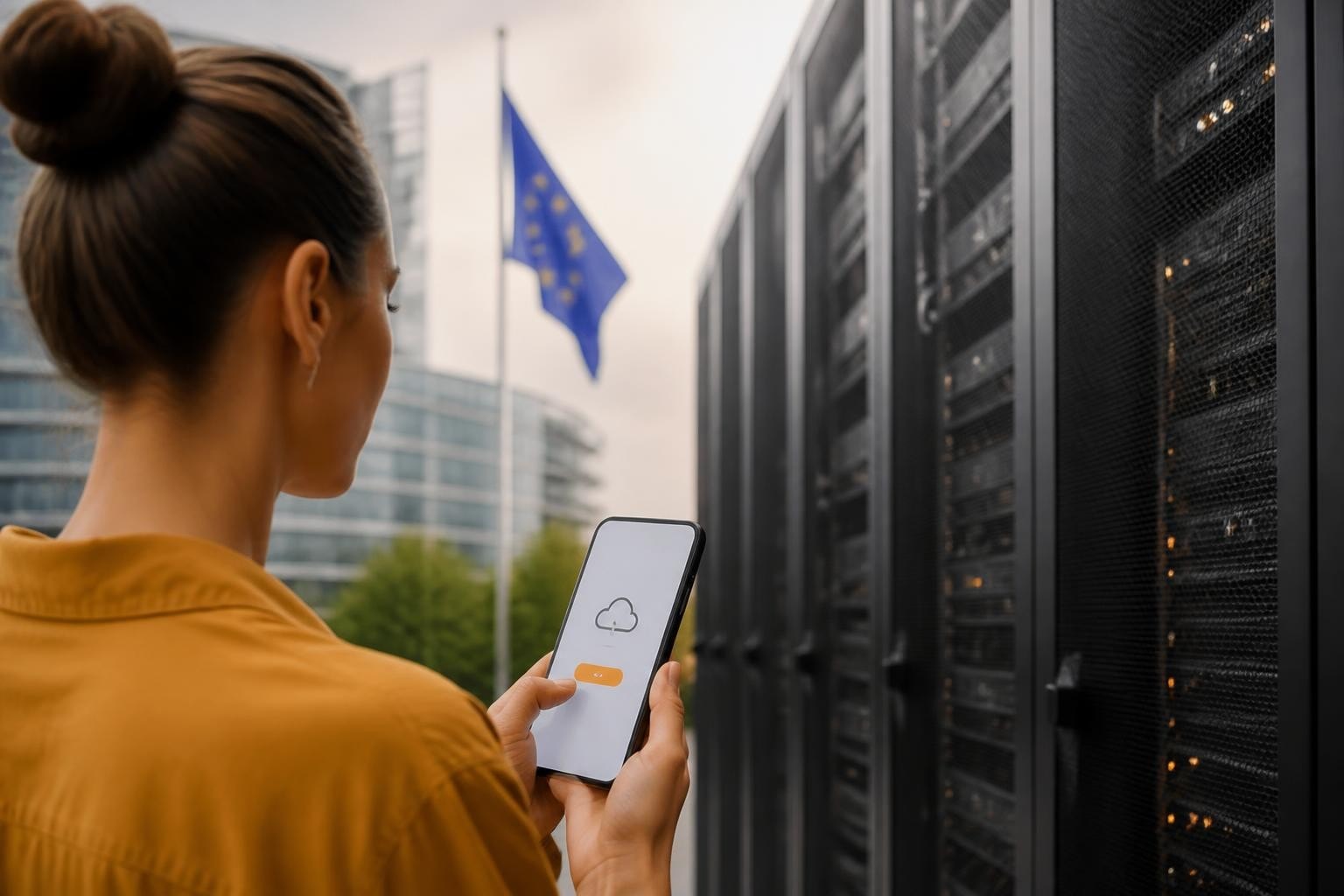

The digital transformation of European businesses has reached a critical juncture where data sovereignty and regulatory compliance intersect with cloud computing capabilities. As a result, as organisations migrate sensitive workloads to cloud infrastructure, questions about data control, jurisdiction, and operational autonomy have moved from technical considerations to boardroom priorities. In response, the European sovereign cloud concept addresses these concerns by providing cloud services that remain firmly within EU legal and geographical boundaries, thereby ensuring that European businesses maintain complete control over their digital assets while also meeting stringent regulatory requirements.
Understanding European Sovereign Cloud Architecture
A European sovereign cloud represents more than simply hosting data within European borders. Instead, it encompasses a comprehensive framework that guarantees data residency, operational independence, and immunity from extraterritorial legislation. Furthermore, these cloud environments operate under EU jurisdiction exclusively, thereby protecting organisations from foreign surveillance laws and ensuring compliance with European data protection standards.
Core Principles of Cloud Sovereignty
The foundation of sovereign cloud infrastructure rests on several critical pillars. Data residency ensures that all information remains physically stored within European territory. Operational control guarantees that EU entities manage the infrastructure without foreign intervention. Legal jurisdiction places the entire operation under European regulatory frameworks, preventing external access requests that conflict with EU law.
Major cloud providers have recognised this necessity. AWS’s European Sovereign Cloud demonstrates how hyperscale providers are adapting their infrastructure to meet these requirements, whilst Microsoft’s Sovereign Cloud offerings focus on helping regulated industries achieve compliance through dedicated regional infrastructure.

Technical Implementation Considerations
Implementing sovereign cloud infrastructure requires careful attention to network topology, encryption standards, and access controls. Organisations must verify that encryption keys remain under European control, that administrative access restricts to EU personnel, and that data transfer mechanisms prevent unauthorised replication outside designated regions.
| Sovereignty Aspect | Standard Cloud | European Sovereign Cloud |
|---|---|---|
| Data Location | Global regions | EU-only regions |
| Operational Control | Global teams | EU-based teams |
| Legal Jurisdiction | Multiple jurisdictions | EU law exclusively |
| Key Management | Centralised | EU-controlled |
| Support Access | Worldwide staff | EU personnel only |
The technical specifications extend beyond basic geographic restrictions. True sovereign solutions implement control-plane sovereignty, ensuring that management systems, monitoring tools, and orchestration platforms operate independently from non-EU infrastructure. Recent research on Sovereign 2.0 frameworks highlights how control-plane sovereignty becomes crucial during geopolitical disruptions.
Regulatory Compliance and Data Protection
European data protection regulations have established the most comprehensive privacy framework globally. In particular, the General Data Protection Regulation (GDPR) sets baseline requirements, while sector-specific regulations like NIS2 impose additional obligations on critical infrastructure providers. As a result, a European sovereign cloud naturally aligns with these regulatory expectations through its fundamental design principles.
GDPR Compliance Through Sovereign Architecture
GDPR Article 44 restricts data transfers outside the European Economic Area unless adequate safeguards exist. Consequently, sovereign cloud solutions eliminate this concern entirely by ensuring data never leaves EU jurisdiction. As a result, this approach simplifies compliance while also reducing legal risks associated with international data transfers.
Key GDPR benefits include:
- Elimination of cross-border transfer risks
- Simplified data subject rights management
- Reduced exposure to adequacy decision changes
- Enhanced data processor accountability
- Stronger legal grounds for processing
The TechRadar analysis of cloud sovereignty emphasises that true data control extends beyond geographic location to encompass operational independence from foreign legal obligations.
Industry-Specific Regulatory Requirements
Financial services, healthcare, and public sector organisations face heightened regulatory scrutiny. Accordingly, the European sovereign cloud model provides the foundation for meeting sector-specific requirements such as PSD2 for payment services, the Medical Device Regulation for health data, and national security classifications for government workloads.
Businesses seeking secure hosting and cloud solutions often prioritise providers that demonstrate clear compliance pathways and maintain infrastructure exclusively within European jurisdictions, ensuring that regulatory obligations remain manageable and transparent.
Market Developments and Provider Strategies
The sovereign cloud market has witnessed significant evolution as hyperscale providers, regional specialists, and European technology companies compete to meet growing demand. In this context, each provider category brings distinct advantages, reflecting different approaches to balancing global capabilities with local sovereignty requirements.
Hyperscale Adaptations
Oracle’s EU Sovereign Cloud exemplifies how global providers are creating dedicated sovereign regions. These implementations typically involve establishing independent legal entities within Europe, deploying isolated infrastructure, and ensuring that EU-based personnel exclusively manage operations.
AWS’s European Sovereign Cloud strategy demonstrates the technical complexity involved in separating sovereign regions from global cloud networks whilst maintaining service parity. The approach requires duplicating management systems, support structures, and service delivery mechanisms within sovereign boundaries.

Regional and Specialist Providers
European cloud providers possess inherent sovereignty advantages primarily due to their operational structure and legal domicile. Moreover, these organisations often emphasise their European ownership, governance structures, and freedom from extraterritorial legal obligations as key differentiators. As a result, they are frequently positioned as more aligned with strict EU compliance expectations. In addition, this positioning strengthens trust among regulated industries seeking greater data control and legal certainty.
Advantages of regional providers:
- Native compliance with EU regulations
- Absence of foreign legal conflicts
- European ownership and governance
- Localised support and expertise
- Alignment with European digital sovereignty goals
The European Commission’s digital sovereignty contracts reveal how public sector organisations are balancing technological capabilities with sovereignty requirements, sometimes accepting hyperscale providers under strict operational frameworks.
Operational Challenges and Mitigation Strategies
Implementing a European sovereign cloud introduces specific operational considerations that differ from standard cloud deployments. In particular, organisations must address service availability, cost structures, and feature parity while still maintaining sovereignty guarantees.
Service Limitations and Availability
Sovereign cloud regions typically offer reduced geographic distribution compared to global cloud networks. This concentration affects disaster recovery planning, latency optimisation, and availability zone redundancy. Organisations must carefully architect solutions to maintain resilience within sovereignty constraints.
| Challenge | Impact | Mitigation Strategy |
|---|---|---|
| Limited regions | Reduced geographic redundancy | Multi-availability zone architecture |
| Service availability | Delayed feature releases | Careful service selection and planning |
| Cost premiums | Higher operational expenses | Optimised resource utilisation |
| Vendor lock-in | Migration complexity | Standards-based implementations |
Recent developments like Azure Local for disconnected operations demonstrate how providers are addressing edge cases where organisations require complete isolation from internet connectivity whilst maintaining cloud-like capabilities.
Cost Considerations
European sovereign cloud services typically command premium pricing compared to standard cloud offerings. This is largely because it reflects the additional infrastructure investment, operational overhead, and limited economies of scale associated with maintaining isolated regional deployments. Furthermore, this pricing structure is influenced by the need for enhanced compliance controls and security measures. As a result, organisations are effectively paying for stronger guarantees around sovereignty, data protection, and regulatory alignment.
Cost optimisation approaches include:
- Rightsizing workloads for actual sovereignty requirements
- Implementing hybrid architectures for non-sensitive workloads
- Leveraging reserved capacity commitments
- Optimising data transfer and storage tiers
- Automating resource scaling and management
Understanding which workloads genuinely require sovereign protection is essential because it enables organisations to balance compliance requirements against budget constraints. In this regard, not all data necessitates sovereign cloud deployment, and strategic workload placement optimises both security and cost efficiency. As a result, organisations can better allocate resources while maintaining appropriate levels of data protection.
Verification and Trust Frameworks
The proliferation of sovereign cloud claims has created market confusion, as a result of which some providers promote sovereignty credentials that fail to meet rigorous standards. In response, industry frameworks and certification schemes help organisations distinguish genuine sovereign solutions from marketing rhetoric. Therefore, these standards play a critical role in improving transparency and trust in the market.
CISPE and Industry Standards
The Cloud Infrastructure Services Providers in Europe (CISPE) has developed verification frameworks addressing sovereignty requirements. The CISPE sovereign and resilient cloud services framework establishes criteria for authentic sovereign cloud services, combating what the industry terms “sovereignty washing.”

Critical verification criteria include:
- Demonstrated operational independence from non-EU entities
- Transparent ownership and governance structures
- Contractual guarantees regarding data location
- Evidence of EU-only personnel access
- Clear legal domicile within European jurisdiction
Organisations evaluating sovereign cloud providers should request detailed documentation regarding these aspects, including operational procedures, organisational charts showing reporting structures, and legal opinions confirming jurisdictional independence.
Due Diligence Processes
Thorough provider assessment extends beyond marketing materials to examine technical architecture, contractual terms, and operational practices. In particular, businesses should verify that service level agreements explicitly guarantee sovereignty requirements and that breach remedies provide meaningful recourse.
Moreover, for organisations transitioning from traditional infrastructure or evaluating alternatives to mainstream providers, understanding the distinction between marketed sovereignty and operational reality proves crucial. In this context, resources discussing secure alternatives to mainstream cloud services often highlight the importance of provider transparency regarding data handling and jurisdictional commitments.
Implementation Roadmap for Organisations
Migrating to a European sovereign cloud requires methodical planning encompassing technical preparation, organisational readiness, and compliance validation. In practical terms, successful implementations follow structured approaches that minimise disruption. Furthermore, they ensure sovereignty objectives are achieved. As a result, organisations can transition more smoothly while maintaining regulatory compliance and operational continuity.
Assessment and Planning Phase
Initial assessment steps:
- Classify workloads by sensitivity and regulatory requirements
- Identify dependencies and integration points
- Evaluate current compliance gaps
- Document sovereignty requirements
- Assess provider capabilities against needs
This foundation enables organisations to develop realistic migration timelines, budget projections, and success criteria. Understanding which systems truly require sovereign deployment prevents over-investment in unnecessary controls whilst ensuring critical workloads receive appropriate protection.
Migration Execution
Migration approaches vary based on application architecture, data volumes, and business continuity requirements. Phased migrations reduce risk by validating processes with non-critical systems before addressing core business applications.
| Migration Approach | Best Suited For | Key Advantages |
|---|---|---|
| Lift and shift | Infrastructure-centric workloads | Speed, simplicity |
| Re-platforming | Applications requiring optimisation | Improved efficiency |
| Refactoring | Cloud-native transformation | Maximum capability utilisation |
| Hybrid deployment | Gradual transition requirements | Risk mitigation |
Technical teams must address encryption key migration, identity management integration, network connectivity, and backup strategies. Solutions like Synology backup integration with cloud storage demonstrate how organisations can maintain local control whilst leveraging cloud capabilities for resilience.
Post-Migration Validation
Confirming sovereignty compliance after migration requires systematic verification. In this context, organisations should conduct regular audits confirming that data remains within designated regions, that access controls function correctly, and that operational procedures align with sovereignty requirements. Furthermore, these audits help ensure ongoing adherence to regulatory expectations. As a result, organisations can maintain continuous assurance of compliance and data integrity.
Ongoing validation activities include:
- Quarterly sovereignty compliance audits
- Access log reviews confirming EU-only personnel
- Data residency verification through provider reports
- Penetration testing from sovereignty perspective
- Incident response plan testing
For businesses exploring comprehensive cloud solutions, scheduling a demonstration of all-in-one secure cloud services provides insights into how integrated platforms address sovereignty whilst maintaining functionality and usability.
Future Trajectory and Strategic Considerations
The European sovereign cloud landscape continues evolving as regulatory frameworks mature, technological capabilities advance, and geopolitical considerations influence digital policy. In this context, organisations must anticipate these developments when making long-term infrastructure decisions. As a result, they can better align their strategies with future regulatory and technological shifts.
Emerging Technologies and Sovereignty
Edge computing, artificial intelligence, and quantum encryption present new sovereignty challenges and opportunities. The DMind-3 sovereign Edge-Local-Cloud AI system exemplifies how emerging architectures address sovereignty requirements whilst enabling advanced capabilities like low-latency AI processing.
European initiatives around quantum technologies, secure communication networks, and autonomous cloud infrastructure aim to reduce technological dependence on non-EU providers. These developments may fundamentally reshape the sovereign cloud market over the coming decade.
Strategic Positioning
Businesses investing in sovereign cloud infrastructure should consider flexibility to adapt as standards evolve. In particular, avoiding proprietary lock-in through standards-based implementations, maintaining documentation of sovereignty requirements, and regularly reassessing provider capabilities ensures organisations can pivot as market conditions change.
Moreover, the tension between global technological innovation and regional sovereignty requirements will persist. In this context, organisations that successfully navigate this balance through thoughtful architecture, careful provider selection, and ongoing compliance validation will maintain competitive advantages whilst meeting regulatory obligations.
Ultimately, European sovereign cloud solutions provide businesses with the tools to meet stringent data protection requirements whilst maintaining operational efficiency and technological capability. As regulatory frameworks tighten further, and data sovereignty becomes increasingly critical, selecting infrastructure that guarantees European jurisdiction, operational independence, and transparent compliance becomes essential. In this regard, vBoxx delivers secure hosting and cloud solutions designed with privacy and European data sovereignty at their core, offering businesses the peace of mind that their digital infrastructure remains firmly under their control and within European legal frameworks.