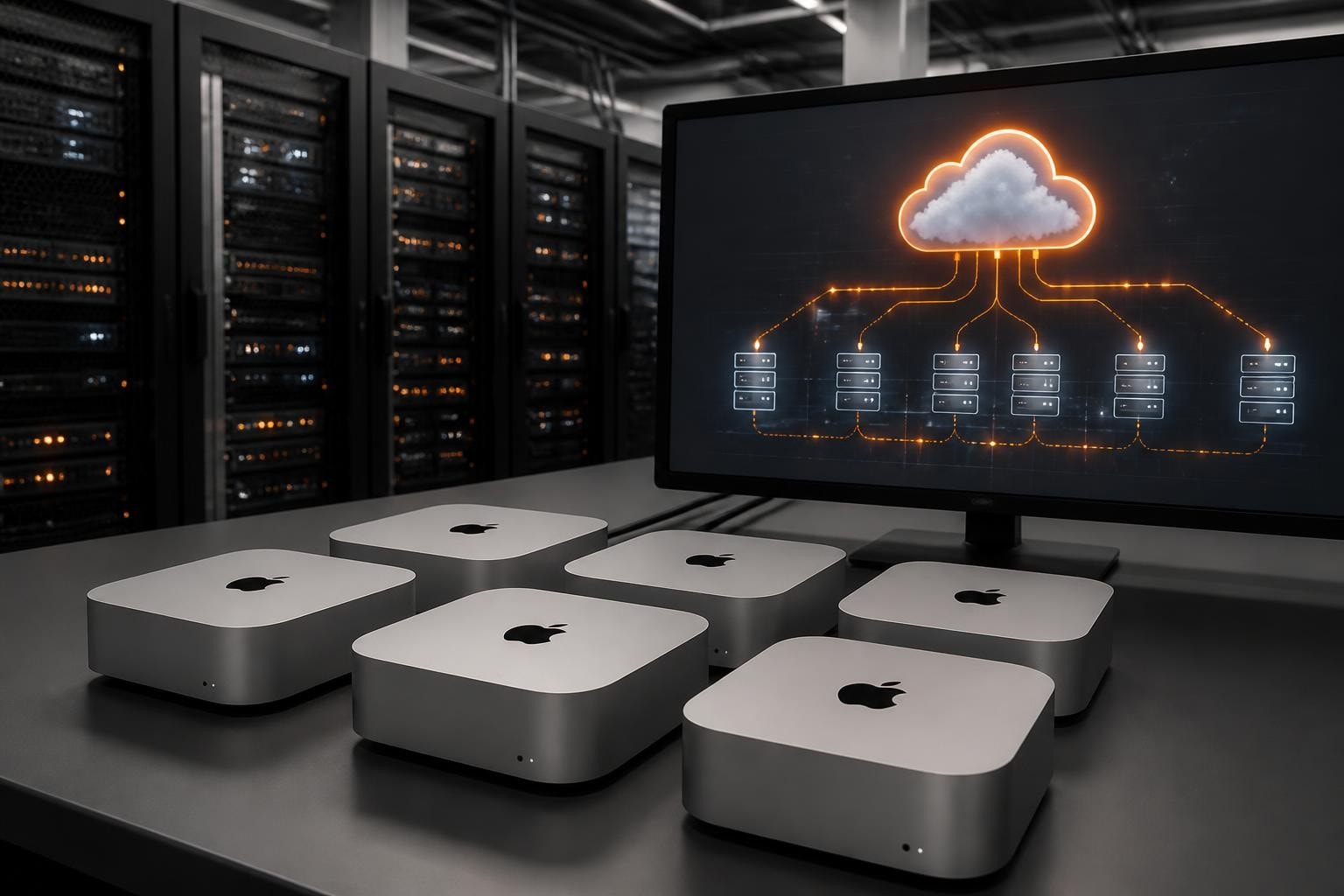

Building a high-performance rendering infrastructure doesn't necessarily require massive server rooms or expensive workstation clusters. Furthermore, the evolution of compact computing has made it possible to create powerful rendering systems using consumer-grade hardware. A mac mini render farm represents a practical, cost-effective solution for businesses and creative professionals who need scalable rendering capabilities without the traditional overhead of enterprise-level hardware. Moreover, this approach combines the reliability of Apple's ecosystem with the flexibility of distributed computing, making it an increasingly popular choice for visual effects studios, architectural firms, and content creators.
Understanding Render Farm Architecture
A render farm fundamentally operates as a distributed computing system where multiple machines work simultaneously on different aspects of rendering tasks. Therefore, the architecture must support efficient task distribution, resource management, and result compilation. In addition, the system requires robust networking infrastructure to ensure seamless communication between nodes and minimal latency during data transfer.
Core Components of a Mac Mini Render Farm
Building a functional mac mini render farm requires careful consideration of several essential components. Firstly, the compute nodes themselves consist of multiple Mac mini units, each serving as an independent processing unit. Secondly, a reliable network infrastructure connects these units, typically using gigabit or 10-gigabit Ethernet for optimal throughput.
Essential infrastructure elements include:
- High-speed network switches capable of handling concurrent data streams
- Centralized storage systems for project files and render outputs
- Queue management software to distribute rendering tasks
- Monitoring tools to track performance and identify bottlenecks
- Redundant power supplies to prevent render interruptions
Nevertheless, the physical setup demands attention to thermal management. Consequently, proper ventilation and cooling systems become critical when operating multiple Mac minis in close proximity, as heat accumulation can throttle performance and reduce hardware longevity.
Network Architecture Considerations
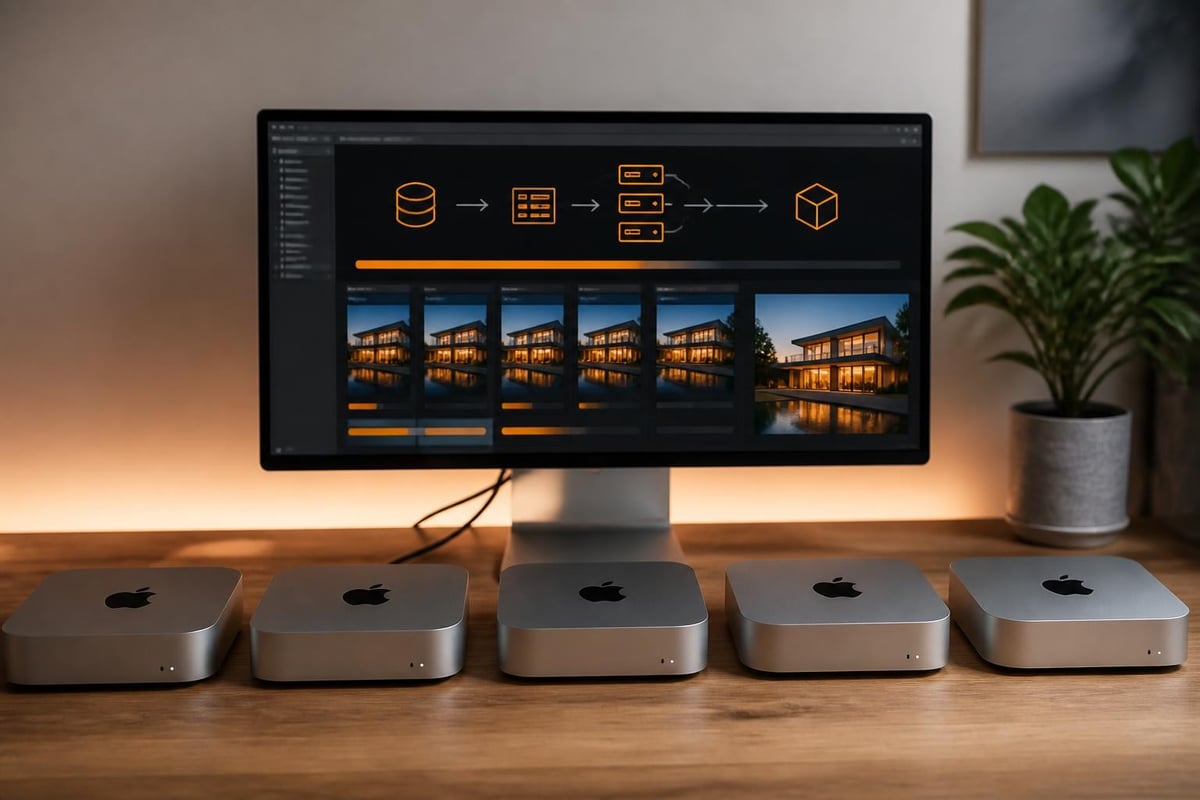
The networking layer represents the backbone of any successful mac mini render farm implementation. Moreover, choosing between traditional wired connections and modern alternatives significantly impacts overall performance. Therefore, most professional setups utilize dedicated network switches with sufficient bandwidth to prevent congestion during peak rendering operations.
| Network Type | Bandwidth | Latency | Best Use Case |
|---|---|---|---|
| Gigabit Ethernet | 1 Gbps | Low | Small farms (5-10 nodes) |
| 10-Gigabit Ethernet | 10 Gbps | Very Low | Medium to large farms |
| Thunderbolt Network | 40 Gbps | Minimal | High-performance clusters |
| Wi-Fi 6E | Up to 9.6 Gbps | Variable | Mobile or flexible setups |
Furthermore, implementing network segmentation can improve security and performance by isolating render traffic from other network operations. This approach prevents rendering workloads from interfering with regular business operations, particularly in environments where the render farm shares infrastructure with other systems.
Hardware Selection and Optimization
Choosing the appropriate Mac mini specifications directly influences the efficiency and cost-effectiveness of your rendering infrastructure. Additionally, understanding the relationship between hardware components and rendering performance helps optimize investment decisions. The latest Mac mini models featuring Apple silicon processors offer exceptional performance-per-watt ratios, making them particularly attractive for large-scale deployments.
Processor and Memory Specifications
Modern Mac mini units equipped with M-series chips provide remarkable computational power in a compact form factor. Nevertheless, selecting between different chip configurations requires analyzing specific rendering workloads. In addition, memory capacity plays a crucial role in handling complex scenes and high-resolution textures.
Key specification considerations:
- Processor cores: More cores enable better parallel processing for CPU-based rendering
- GPU capabilities: Essential for GPU-accelerated renderers like Redshift or Octane
- Unified memory: Higher capacity supports larger scene files and textures
- Storage speed: NVMe drives reduce project loading times significantly
- Thermal design: Adequate cooling maintains sustained performance
Moreover, the Mac mini clusters approach allows for incremental scaling, enabling businesses to start small and expand capacity as demand grows. Therefore, this modularity provides financial flexibility compared to investing in single, expensive workstations.
Storage Infrastructure Planning
Centralized storage represents a critical component of a mac mini render farm, as all nodes require access to source files and must write completed frames to shared locations. Furthermore, storage performance directly affects rendering efficiency, particularly during the initial scene loading phase and final output writing.
| Storage Type | Speed | Capacity | Reliability | Cost |
|---|---|---|---|---|
| NAS (Network Attached Storage) | Moderate | High | Good | Moderate |
| SAN (Storage Area Network) | Very High | Very High | Excellent | High |
| Cloud Storage | Variable | Unlimited | Excellent | Usage-based |
| Direct Attached Storage | High | Moderate | Good | Low |
Additionally, implementing redundancy through RAID configurations or cloud backup solutions protects valuable project data from hardware failures. Consequently, many organizations combine local high-speed storage for active projects with cloud archival for completed work.
Software Configuration and Management
Establishing an efficient mac mini render farm extends beyond hardware assembly to encompass comprehensive software configuration. Therefore, selecting appropriate rendering management software, operating system optimization, and workflow automation tools becomes essential for maximizing productivity. Moreover, proper software setup ensures reliable operation and minimizes downtime.
Render Queue Management Systems
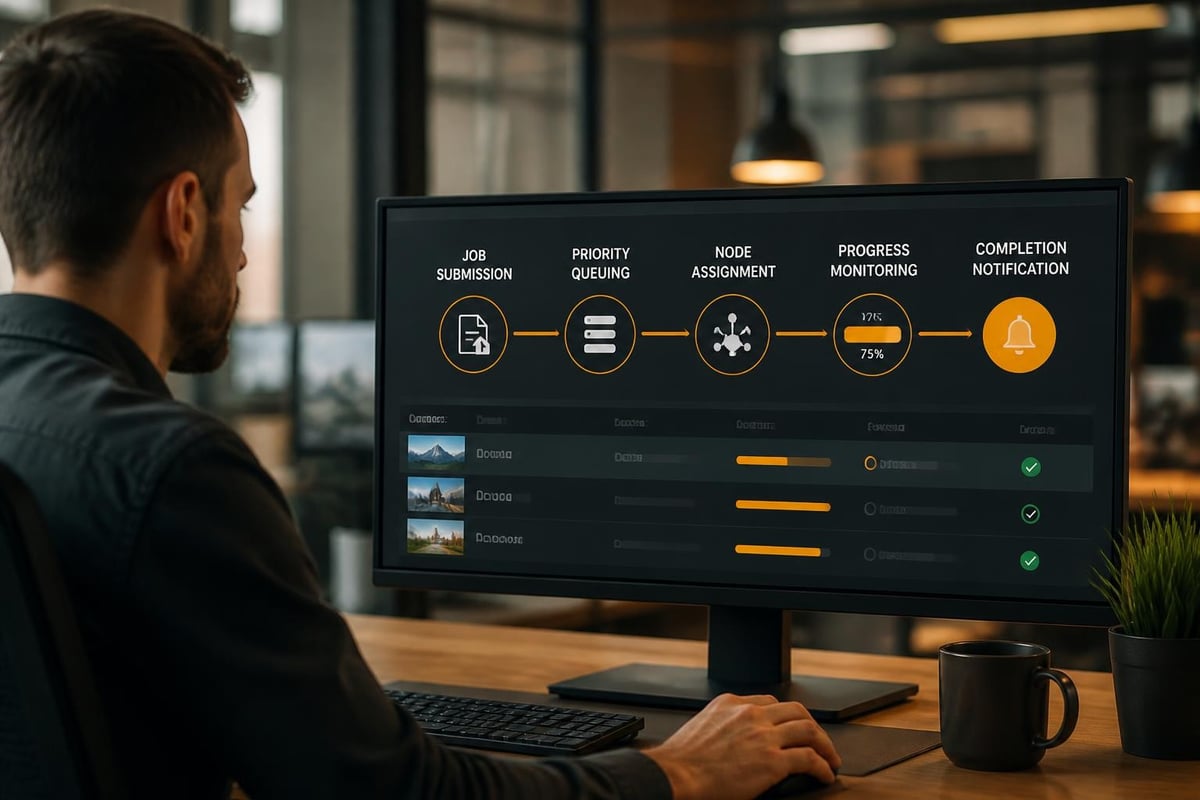
Effective task distribution requires specialized software capable of managing render jobs across multiple nodes. Furthermore, these systems handle job prioritization, resource allocation, and failure recovery automatically. In addition, modern render managers provide web-based interfaces for remote monitoring and control.
Popular render management solutions include:
- Deadline by Thinkbox
- Royal Render
- Qube by PipelineFX
- Tractor by Pixar
- Custom scripts using Python or shell
Nevertheless, configuration complexity varies significantly between solutions. Therefore, smaller operations might benefit from simpler systems, while larger studios require enterprise-grade management platforms with advanced scheduling capabilities.
Operating System Optimization
Maximizing performance from each Mac mini node requires careful operating system configuration. Consequently, disabling unnecessary services, optimizing energy settings, and configuring automatic updates appropriately ensures consistent rendering performance. Moreover, standardizing configurations across all nodes simplifies maintenance and troubleshooting.
Essential optimization steps:
- Disable automatic sleep and screensavers
- Configure energy settings for maximum performance
- Schedule system updates during non-peak hours
- Minimize background processes and applications
- Implement remote management tools for centralized control
Additionally, implementing proper security measures protects the rendering infrastructure from unauthorized access whilst maintaining operational efficiency. Furthermore, regular maintenance schedules prevent performance degradation over time.
Cost Analysis and Return on Investment
Understanding the financial implications of building a mac mini render farm helps organizations make informed investment decisions. Therefore, analyzing both initial capital expenditure and ongoing operational costs provides clarity regarding total cost of ownership. Moreover, comparing in-house rendering infrastructure against cloud-based alternatives reveals the break-even point for different usage patterns.
Initial Investment Breakdown
The upfront costs for establishing a mac mini render farm encompass hardware, networking equipment, software licenses, and physical infrastructure. Furthermore, scaling factors significantly influence per-node costs, as bulk purchasing and shared resources reduce marginal expenses.
| Component | Small Farm (5 nodes) | Medium Farm (20 nodes) | Large Farm (50 nodes) |
|---|---|---|---|
| Mac mini units | £4,000 | £16,000 | £40,000 |
| Network equipment | £500 | £1,500 | £4,000 |
| Storage infrastructure | £1,200 | £4,000 | £12,000 |
| Software licenses | £800 | £2,400 | £5,000 |
| Physical infrastructure | £300 | £1,000 | £3,000 |
| Total | £6,800 | £24,900 | £64,000 |
Nevertheless, these figures represent baseline estimates, and actual costs vary based on specific hardware configurations, software choices, and infrastructure requirements. Additionally, businesses must consider ongoing expenses including electricity, cooling, maintenance, and software subscription renewals.
Operational Cost Considerations
Beyond initial capital investment, running a mac mini render farm incurs recurring expenses that affect long-term viability. Consequently, calculating operational costs helps determine whether maintaining an in-house render farm makes financial sense compared to alternative solutions. Moreover, energy efficiency becomes increasingly important as farm size grows.
Monthly operational expenses typically include:
- Electricity consumption (approximately £50-100 per node annually)
- Network bandwidth and internet connectivity
- Software maintenance and subscription renewals
- Hardware replacement and upgrade reserves
- Physical space rental or allocation costs
Furthermore, comparing these costs against commercial render farm services reveals the threshold where in-house infrastructure becomes economically advantageous. Therefore, organizations with consistent, high-volume rendering needs typically achieve better return on investment through dedicated infrastructure.
Security and Data Protection Strategies
Implementing robust security measures protects valuable intellectual property and ensures business continuity within a mac mini render farm environment. Additionally, comprehensive data protection strategies prevent costly losses from hardware failures, security breaches, or accidental deletions. Moreover, regulatory compliance requirements in certain industries mandate specific security controls and audit capabilities.
Access Control and Authentication
Restricting access to rendering infrastructure prevents unauthorized usage and protects sensitive project data. Therefore, implementing multi-layered authentication mechanisms ensures only authorized personnel can submit jobs or access rendered output. In addition, role-based access control enables granular permission management across different team members.
Security implementation best practices:
- Configure VPN access for remote render submissions
- Implement user authentication for render management interfaces
- Encrypt network traffic between nodes and storage
- Regular security audits and vulnerability assessments
- Physical security measures for server room access
Nevertheless, security measures must balance protection requirements with operational convenience. Consequently, overly restrictive policies can hinder productivity, whilst insufficient controls expose organizations to risks.
Backup and Disaster Recovery
Protecting completed render work and source files requires comprehensive backup strategies. Furthermore, implementing automated backup systems ensures consistent data protection without relying on manual processes. Moreover, testing recovery procedures regularly validates backup effectiveness and identifies potential issues before actual emergencies occur.
| Backup Strategy | Recovery Time | Data Loss Risk | Cost | Complexity |
|---|---|---|---|---|
| Local RAID | Minutes | Low | Moderate | Low |
| Network backup | Hours | Very Low | Moderate | Medium |
| Cloud backup | Variable | Minimal | Usage-based | Low |
| Hybrid approach | Minutes-Hours | Minimal | Higher | Medium |
Additionally, maintaining geographically separated backup copies protects against localized disasters such as fire, flooding, or theft. Therefore, many organizations combine on-site backup for quick recovery with off-site or cloud backup for disaster protection.

Integration with Cloud Infrastructure
Modern rendering workflows increasingly benefit from hybrid approaches that combine local mac mini render farm resources with cloud-based services. Furthermore, this flexibility enables organizations to handle peak workloads without maintaining excess capacity during normal operations. Moreover, cloud integration provides geographic distribution capabilities and enhanced redundancy.
Hybrid Rendering Approaches
Combining on-premises Mac mini rendering nodes with cloud services creates a flexible infrastructure that adapts to varying workload demands. Consequently, organizations can maintain consistent baseline capacity whilst accessing additional resources during tight deadlines or exceptionally large projects. Additionally, this approach optimizes cost efficiency by matching resource expenditure to actual needs.
Nevertheless, implementing hybrid workflows requires careful planning regarding data transfer, security, and management. Therefore, selecting cloud providers with appropriate service offerings and compatible infrastructure becomes essential. Services like research frameworks for cloud render farm selection help organizations evaluate options systematically.
Advantages of hybrid rendering include:
- Scalable capacity without additional hardware investment
- Geographic redundancy for business continuity
- Access to specialized hardware unavailable locally
- Reduced maintenance burden for overflow capacity
- Flexible cost structure matching usage patterns
Moreover, businesses requiring professional cloud infrastructure for hosting rendering assets and completed projects can benefit from consulting with experienced providers. For instance, exploring vBoxx’s cloud solutions through their demonstration programme offers insights into how secure cloud infrastructure integrates with rendering workflows.
Cloud Provider Selection Criteria
Choosing appropriate cloud services for hybrid rendering requires evaluating multiple factors beyond simple pricing comparisons. Furthermore, technical compatibility with existing workflows, geographic proximity affecting latency, and data sovereignty considerations all influence provider selection. Additionally, understanding service level agreements and support capabilities prevents unexpected limitations during critical projects.
| Evaluation Criteria | Importance | Considerations |
|---|---|---|
| Compute specifications | High | CPU/GPU options, Mac compatibility |
| Storage performance | High | IOPS, throughput, latency |
| Network bandwidth | Medium | Upload/download speeds, costs |
| Geographic location | Medium | Latency, data sovereignty |
| Security features | High | Encryption, compliance certifications |
| Pricing structure | High | Compute, storage, egress costs |
Therefore, conducting pilot tests with shortlisted providers validates performance expectations before committing to long-term contracts. In addition, monitoring actual costs during test periods reveals hidden expenses that might not appear in published pricing.
Performance Monitoring and Optimization
Maintaining optimal performance from a mac mini render farm requires continuous monitoring and periodic optimization. Consequently, implementing comprehensive monitoring solutions provides visibility into system health, resource utilization, and potential bottlenecks. Moreover, proactive performance management prevents minor issues from escalating into significant problems affecting project deadlines.
Monitoring Tools and Metrics
Tracking key performance indicators across rendering infrastructure enables data-driven optimization decisions. Furthermore, automated alerting systems notify administrators of abnormal conditions before they impact productivity. Additionally, historical performance data helps identify trends and plan capacity expansions.
Critical metrics to monitor include:
- CPU and GPU utilization per node
- Memory consumption and swap usage
- Network throughput and packet loss
- Storage I/O performance and capacity
- Render completion times and failure rates
- Temperature readings and thermal throttling events
Nevertheless, collecting excessive metrics without analysis provides little value. Therefore, focusing on actionable indicators that directly correlate with rendering performance and system health proves most beneficial.
Troubleshooting Common Issues
Despite careful planning and configuration, mac mini render farm operations occasionally encounter problems requiring systematic troubleshooting. Furthermore, understanding common failure modes and their solutions minimizes downtime and maintains productivity. Moreover, documenting resolution procedures creates knowledge bases that accelerate future problem-solving.
Typical challenges include:
- Network connectivity interruptions between nodes
- Storage capacity exhaustion mid-render
- Software license conflicts or expiration
- Thermal throttling under sustained loads
- Node failures requiring replacement or repair
Additionally, establishing clear escalation procedures ensures complex issues receive appropriate technical expertise quickly. Therefore, maintaining relationships with hardware vendors and software providers facilitates rapid resolution when internal expertise proves insufficient.
Environmental Considerations and Sustainability
Operating a mac mini render farm generates environmental impact through energy consumption and electronic waste. Consequently, implementing sustainable practices reduces operational costs whilst supporting corporate environmental responsibility goals. Moreover, increasingly stringent regulations and customer expectations make environmental considerations business imperatives rather than optional enhancements.
Energy Efficiency Strategies
Minimizing power consumption directly reduces both operational expenses and environmental footprint. Furthermore, Apple's focus on energy efficiency with Apple silicon processors makes Mac minis particularly suitable for environmentally conscious organizations. Additionally, strategic infrastructure decisions amplify these inherent efficiency advantages.
Energy optimization approaches include:
- Utilizing high-efficiency power supplies and distribution
- Implementing intelligent cooling systems with variable speed fans
- Scheduling non-urgent renders during off-peak electricity hours
- Configuring automatic node sleep during idle periods
- Selecting green energy providers for facility power
Nevertheless, balancing energy efficiency with performance requirements prevents counterproductive optimizations. Therefore, monitoring actual energy consumption whilst maintaining rendering throughput ensures modifications deliver genuine benefits.
Hardware Lifecycle Management
Responsible technology stewardship extends beyond operational efficiency to encompass end-of-life considerations. Furthermore, establishing clear policies for hardware retirement, refurbishment, and recycling prevents electronic waste whilst potentially recovering residual value. Moreover, planning upgrade cycles maintains performance competitiveness without premature disposal of functional equipment.
| Lifecycle Stage | Duration | Considerations |
|---|---|---|
| Initial deployment | Year 1 | Warranty coverage, performance validation |
| Prime operation | Years 2-3 | Peak performance, full utilization |
| Mature operation | Years 4-5 | Reduced performance, increased maintenance |
| Retirement planning | Year 5+ | Replacement budgeting, data migration |
Additionally, repurposing older Mac mini units for less demanding tasks extends useful life and delays disposal. Therefore, retired render nodes might serve development environments, testing systems, or administrative workstations before final decommissioning.
Scaling Strategies for Growing Demands
Planning for future expansion ensures rendering infrastructure adapts to evolving business requirements without costly replacements. Furthermore, modular architecture inherent in mac mini render farm designs facilitates incremental growth matching budget availability and demand patterns. Moreover, understanding scaling implications across different infrastructure components prevents bottlenecks that limit expansion effectiveness.
Vertical vs. Horizontal Scaling
Expanding rendering capacity occurs through two primary approaches: upgrading existing nodes (vertical scaling) or adding additional nodes (horizontal scaling). Consequently, each strategy offers distinct advantages depending on specific circumstances and constraints. Additionally, hybrid approaches combining both methods often provide optimal results.
Vertical scaling advantages:
- Reduced network complexity with fewer nodes
- Lower management overhead
- Decreased physical space requirements
- Simplified licensing for per-node software
Horizontal scaling advantages:
- Better redundancy through distributed resources
- Incremental investment matching budget constraints
- Improved parallel processing efficiency
- Easier maintenance without total shutdown
Nevertheless, practical limitations eventually constrain vertical scaling, as hardware specifications reach technological or economic ceilings. Therefore, most successful render farms employ primarily horizontal scaling with periodic vertical refreshes as technology advances.
Capacity Planning Methodologies
Forecasting future rendering requirements enables proactive infrastructure expansion before capacity constraints impact productivity. Furthermore, analyzing historical usage patterns, project pipelines, and business growth projections informs capacity planning decisions. Moreover, maintaining modest surplus capacity accommodates unexpected demand spikes without emergency expansions.
Effective capacity planning involves:
- Tracking render hour consumption trends over time
- Identifying seasonal or project-based demand patterns
- Evaluating upcoming projects requiring additional capacity
- Calculating growth rates and projecting future needs
- Budgeting expansion expenses across fiscal periods
Additionally, establishing trigger points for expansion initiatives prevents reactive decision-making during crises. Therefore, defining specific utilization thresholds that initiate procurement processes ensures timely capacity availability.
Building and maintaining a mac mini render farm delivers powerful, scalable rendering capabilities whilst offering cost advantages over traditional enterprise solutions. The combination of efficient hardware, thoughtful infrastructure design, and comprehensive management practices creates rendering systems that serve creative and technical professionals effectively. For organizations seeking robust cloud infrastructure to complement their rendering workflows, vBoxx provides secure, sustainable hosting solutions that align with modern business requirements for performance, reliability, and environmental responsibility.