

The digital transformation landscape continues to evolve rapidly, with organisations increasingly relying on robust, scalable infrastructure to power their operations. Furthermore, selecting the right platforms for cloud computing has become a critical decision that impacts security, performance, cost efficiency, and long-term business agility. Therefore, understanding the nuances between different providers, service models, and deployment strategies is essential for making informed choices that align with your organisational requirements and compliance obligations.
Understanding Cloud Computing Service Models
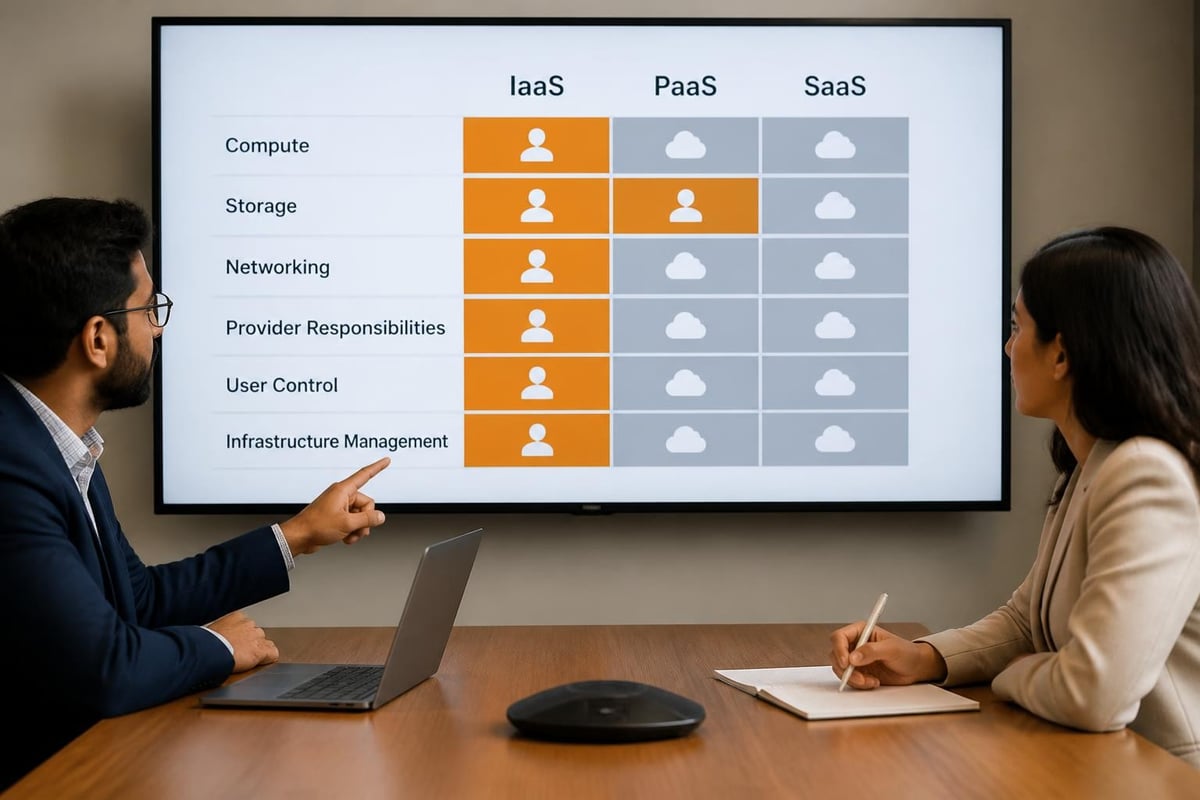
Platforms for cloud computing typically deliver services through three primary models, each catering to different business needs and technical requirements. Moreover, these models determine the level of control, responsibility, and flexibility organisations retain over their infrastructure and applications.
Infrastructure as a Service (IaaS) provides virtualised computing resources over the internet, including servers, storage, and networking capabilities. Consequently, organisations maintain control over operating systems, applications, and data whilst the provider manages the underlying physical infrastructure. This model offers maximum flexibility for businesses requiring customised environments.
Platform as a Service (PaaS) delivers a complete development and deployment environment in the cloud, eliminating the complexity of building and maintaining infrastructure. Nevertheless, developers can focus on creating applications whilst the platform handles runtime, middleware, and operating systems. This approach accelerates development cycles significantly.
Software as a Service (SaaS) provides fully managed applications accessible through web browsers, removing the burden of installation, maintenance, and updates. In addition, this model offers the fastest deployment and lowest technical overhead, making it ideal for standardised business applications.
Deployment Models and Their Strategic Implications
Beyond service models, platforms for cloud computing offer various deployment options that affect security, compliance, and cost structures. Therefore, organisations must evaluate which approach best serves their specific requirements.
| Deployment Model | Key Characteristics | Best Suited For |
|---|---|---|
| Public Cloud | Multi-tenant, shared infrastructure, pay-as-you-go pricing | Scalable workloads, development environments, non-sensitive data |
| Private Cloud | Dedicated infrastructure, enhanced security, greater control | Regulated industries, sensitive data, compliance requirements |
| Hybrid Cloud | Combination of public and private, workload portability | Businesses balancing security with scalability needs |
| Multi-Cloud | Multiple providers, avoiding vendor lock-in, optimised costs | Large enterprises seeking resilience and flexibility |
Furthermore, hybrid and multi-cloud strategies have gained considerable traction as organisations seek to optimise workload placement based on performance, cost, and regulatory requirements. This approach, however, introduces complexity in management and integration.
Leading Platforms for Cloud Computing in 2026
The cloud computing market remains dominated by several major providers, each offering distinct advantages and specialisations. Nevertheless, the landscape continues to evolve with new entrants and regional players gaining market share.
Amazon Web Services (AWS)
AWS maintains its position as the market leader, offering the most comprehensive service portfolio spanning compute, storage, databases, analytics, and artificial intelligence. Moreover, AWS provides unparalleled global infrastructure with availability zones across multiple continents. The platform excels in providing granular control and extensive configuration options, though this flexibility can increase complexity for smaller organisations.
Key strengths include:
- Extensive service catalogue with over 200 fully featured services
- Mature ecosystem with robust third-party integration
- Advanced security features and compliance certifications
- Comprehensive documentation and learning resources
Microsoft Azure
Azure has established itself as the preferred choice for organisations heavily invested in Microsoft technologies. Furthermore, its seamless integration with Windows Server, Active Directory, and Office 365 creates a cohesive ecosystem. The platform particularly excels in hybrid cloud deployments, offering tools like Azure Arc for managing resources across environments.
Azure's enterprise focus manifests through strong governance capabilities, regulatory compliance support, and sophisticated identity management. Therefore, organisations with existing Microsoft licensing agreements often find significant value in Azure's offerings.
Google Cloud Platform (GCP)
Google Cloud Platform distinguishes itself through superior data analytics, machine learning capabilities, and containerisation expertise. In addition, GCP's competitive pricing models and sustained-use discounts appeal to cost-conscious organisations. The platform's Kubernetes heritage provides exceptional container orchestration capabilities.
Nevertheless, GCP's relatively smaller market share translates to a less extensive third-party ecosystem compared to AWS and Azure. However, its technical innovation and performance metrics make it attractive for data-intensive workloads and modern application architectures.

Security and Privacy Considerations
When evaluating platforms for cloud computing, security architecture and privacy protections should rank among the highest priorities. Moreover, the shared responsibility model defines clear boundaries between provider and customer obligations, though these boundaries vary across service models.
Essential Security Features
Robust cloud platforms incorporate multiple security layers, including network isolation, encryption at rest and in transit, identity and access management, and continuous monitoring capabilities. Furthermore, compliance certifications such as ISO 27001, SOC 2, and GDPR attestations provide independent verification of security practices.
Critical security components include:
- Identity and Access Management (IAM) controlling who can access resources and what actions they can perform
- Encryption mechanisms protecting data both during transmission and storage
- Network security including firewalls, intrusion detection, and DDoS protection
- Compliance frameworks ensuring adherence to industry regulations
- Audit logging providing comprehensive activity tracking for forensic analysis
Nevertheless, organisations must implement their own security controls beyond platform defaults. Therefore, adopting a defence-in-depth strategy combining provider features with additional safeguards creates the most robust security posture.
For businesses prioritising privacy and security in their cloud infrastructure, exploring comprehensive solutions that emphasise these values proves beneficial. In addition, platforms offering transparent security practices and European data residency align well with stringent privacy requirements.
Data Sovereignty and Regulatory Compliance
Data location increasingly affects cloud platform selection, particularly for organisations subject to regulations like GDPR, HIPAA, or financial services requirements. Furthermore, platforms for cloud computing now offer regional data centres and contractual guarantees regarding data residency and access.
Understanding where data resides physically, who maintains legal access rights, and how cross-border data transfers occur remains crucial. Therefore, organisations should thoroughly review service agreements and data processing addendums before committing to a platform.
Performance and Scalability Factors
Modern platforms for cloud computing provide unprecedented scalability, though implementation approaches and performance characteristics vary significantly. Moreover, understanding these differences helps organisations optimise both cost and performance outcomes.
Compute Performance
Processing power delivery mechanisms range from traditional virtual machines to containerised applications and serverless functions. Consequently, selecting the appropriate compute model depends on workload characteristics, scaling patterns, and cost sensitivity.
Virtual machines offer familiar environments with predictable performance, whilst containers provide greater density and faster startup times. In addition, serverless computing eliminates infrastructure management entirely, charging only for actual execution time.
Storage Options
Cloud storage solutions vary dramatically in performance, durability, and cost profiles. Furthermore, platforms typically offer multiple storage tiers optimised for different access patterns.
| Storage Type | Performance | Cost | Best Use Case |
|---|---|---|---|
| Block Storage | High IOPS, low latency | Higher | Databases, transaction systems |
| Object Storage | Moderate, highly scalable | Lower | Archives, backups, media files |
| File Storage | Shared access, medium performance | Moderate | Collaborative applications, content management |
| Archive Storage | Slow retrieval, ultra-durable | Lowest | Long-term retention, compliance |
Nevertheless, organisations should carefully analyse access patterns and retention requirements before selecting storage classes. Therefore, implementing lifecycle policies that automatically transition data between tiers optimises costs without sacrificing availability.

Cost Management and Optimisation Strategies
Platforms for cloud computing operate on consumption-based pricing models that offer flexibility but require active management to prevent cost overruns. Moreover, understanding pricing structures and implementing governance controls proves essential for budget predictability.
Pricing Models and Billing Structures
Cloud providers offer multiple pricing options including on-demand, reserved instances, spot instances, and savings plans. Furthermore, each model presents different trade-offs between flexibility, commitment, and cost savings.
On-demand pricing provides maximum flexibility with no commitments, charging for resources consumed per hour or second. However, this convenience comes at premium rates compared to committed usage.
Reserved capacity delivers substantial discounts (typically 30-70%) in exchange for one- or three-year commitments. Therefore, organisations with predictable baseline workloads should leverage reservations for core infrastructure.
Spot or preemptible instances offer deep discounts for interruptible workloads, making them ideal for batch processing, testing, and fault-tolerant applications. Nevertheless, workloads must tolerate sudden termination when capacity becomes constrained.
Cost Optimisation Best Practices
Effective cost management requires continuous monitoring, rightsizing, and automation. In addition, organisations should implement tagging strategies for resource attribution and establish budget alerts to prevent surprises.
- Regular resource audits identifying and eliminating unused or underutilised resources
- Rightsizing instances matching compute capacity to actual workload requirements
- Implementing auto-scaling adjusting resources dynamically based on demand
- Leveraging storage lifecycle policies automatically transitioning data to appropriate tiers
- Monitoring and alerting establishing thresholds for anomalous spending patterns
Furthermore, Infrastructure as a Service providers increasingly offer native cost management tools that provide visibility and optimisation recommendations. Therefore, organisations should actively utilise these capabilities as part of ongoing financial governance.
Sustainability and Green Cloud Computing
Environmental considerations increasingly influence platform selection decisions as organisations commit to carbon reduction targets. Moreover, platforms for cloud computing vary significantly in their environmental impact and sustainability commitments.
Energy Efficiency and Renewable Energy
Leading cloud providers have made substantial investments in renewable energy procurement and energy-efficient data centre designs. Furthermore, consolidating workloads onto shared infrastructure typically reduces overall carbon footprint compared to on-premises data centres.
Nevertheless, transparency regarding energy sources, power usage effectiveness (PUE), and carbon intensity varies between providers. Therefore, organisations with strong sustainability commitments should evaluate environmental credentials alongside technical and financial factors.
Key sustainability metrics include:
- Percentage of renewable energy powering data centres
- Power Usage Effectiveness (PUE) ratios
- Carbon offset programmes and net-zero commitments
- Water usage efficiency in cooling systems
- Hardware recycling and circular economy practices
In addition, selecting providers committed to green hosting practices aligns technical infrastructure with corporate environmental responsibility goals. Consequently, businesses can simultaneously optimise operational efficiency and environmental impact.
Integration and Migration Considerations
Transitioning to platforms for cloud computing requires careful planning, particularly when migrating existing applications and data. Moreover, integration with current systems and workflows significantly affects implementation success and business continuity.
Migration Strategies
Organisations typically adopt one of several migration approaches depending on application architecture, timeline constraints, and risk tolerance. Furthermore, understanding cloud platform technologies helps inform appropriate migration strategies.
Rehosting (lift-and-shift) moves applications to cloud infrastructure with minimal modifications, offering quick migration but limited cloud-native benefits. Nevertheless, this approach provides immediate cost savings and establishes cloud presence.
Replatforming makes selective optimisations during migration, leveraging managed services without complete redesign. Therefore, organisations balance migration speed with incremental improvements.
Refactoring completely redesigns applications to maximise cloud-native capabilities, delivering greatest long-term benefits but requiring significant investment. Consequently, this approach suits strategic applications warranting substantial enhancement.
Integration Patterns
Successful cloud adoption depends on seamless integration with existing systems, databases, and business processes. In addition, platforms must support standard protocols, APIs, and middleware for connecting disparate systems.
Modern platforms for cloud computing provide extensive integration capabilities including message queues, event buses, API gateways, and data synchronisation tools. Furthermore, hybrid connectivity options like VPNs and dedicated circuits enable secure communication between cloud and on-premises environments.
Vendor Selection Framework
Choosing among platforms for cloud computing requires systematic evaluation against organisational requirements, constraints, and strategic objectives. Moreover, establishing clear selection criteria prevents reactive decisions driven solely by pricing or marketing claims.
Evaluation Criteria
Technical capabilities should match current and anticipated workload requirements, including compute performance, storage options, networking features, and specialised services like machine learning or IoT platforms. Furthermore, assessing platform maturity, reliability track records, and service-level agreements provides confidence in operational stability.
Security and compliance alignment with industry regulations and organisational policies remains non-negotiable for most businesses. Therefore, verify certifications, review security architectures, and understand data residency options thoroughly.
Cost structures must align with budget constraints and financial planning processes. Nevertheless, focus on total cost of ownership rather than headline pricing, including migration costs, ongoing management overhead, and potential egress charges.
Support and expertise availability affects implementation success and ongoing operations. In addition, evaluating documentation quality, community resources, and professional service options helps ensure adequate support throughout the cloud journey.
For organisations seeking hands-on guidance when evaluating cloud platforms and their specific use cases, scheduling a demonstration all-in-one session can provide valuable insights into how different solutions address security, storage, and communication requirements.
Building Internal Cloud Capabilities
Beyond platform selection, organisations must develop internal expertise for effectively managing cloud infrastructure. Furthermore, investing in training, certifications, and knowledge transfer ensures teams can leverage platform capabilities fully.
Establishing cloud centres of excellence, defining governance frameworks, and implementing standardised architectures accelerates adoption whilst maintaining control. Therefore, treating cloud adoption as an organisational transformation rather than purely technical migration increases success likelihood.
Future Trends in Cloud Platforms
Platforms for cloud computing continue evolving rapidly, with several emerging trends reshaping the industry landscape. Moreover, understanding these developments helps organisations make forward-looking decisions that remain relevant as technology advances.
Edge Computing Integration
The proliferation of IoT devices and latency-sensitive applications drives edge computing adoption, bringing computation closer to data sources. Furthermore, major platforms now offer edge services that extend cloud capabilities to distributed locations whilst maintaining centralised management.
This hybrid approach combines edge processing for real-time requirements with cloud aggregation for analytics and long-term storage. Consequently, organisations can optimise both performance and cost across distributed architectures.
Artificial Intelligence and Machine Learning
AI and ML capabilities have transitioned from specialised services to foundational platform features. In addition, platforms increasingly embed intelligence into core services for automated optimisation, security threat detection, and operational insights.
Nevertheless, accessibility improvements through no-code and low-code tools democratise AI capabilities beyond data science teams. Therefore, broader business users can leverage machine learning for decision support and process automation.
Sustainability Focus
Environmental considerations will increasingly influence platform selection and operational practices. Furthermore, regulatory requirements and stakeholder expectations drive greater transparency around carbon emissions and energy consumption.
Platforms investing in renewable energy, efficient cooling technologies, and carbon accounting tools position themselves favourably for organisations prioritising sustainability. Moreover, comparing cloud providers increasingly includes environmental credentials alongside traditional technical and financial metrics.
Selecting appropriate platforms for cloud computing requires balancing technical capabilities, security requirements, cost constraints, and strategic objectives whilst considering sustainability impacts. Furthermore, successful cloud adoption depends on thorough evaluation, careful planning, and ongoing optimisation. vBoxx delivers secure, sustainable cloud solutions tailored to businesses prioritising privacy, performance, and environmental responsibility, offering comprehensive hosting services, consultancy, and migration support to help organisations confidently navigate their cloud journey.