
As we move into 2026, IT infrastructure decisions have become more complex and critical than ever for businesses adapting to rapid digital transformation. The ongoing debate around cloud and server solutions is at the heart of this challenge, with organisations seeking the best balance of performance, security, and cost-efficiency. Choosing the right infrastructure raises important questions about scalability, regulatory compliance, disaster recovery, and environmental impact. This article delivers a comprehensive, unbiased comparison of cloud, on-premises, and hybrid server solutions, helping you make informed choices. We will explore definitions, advantages and disadvantages, cost analysis, security, compliance, disaster recovery, scalability, sustainability, and future trends.
Understanding Cloud and Server Solutions in 2026
Selecting the right cloud and server infrastructure is crucial for businesses navigating the digital landscape in 2026. Organisations face a broad spectrum of choices, from cloud to on-premises servers and hybrid models. Understanding the features, benefits, and trends in each option is essential for making informed IT decisions.
Defining Cloud Solutions
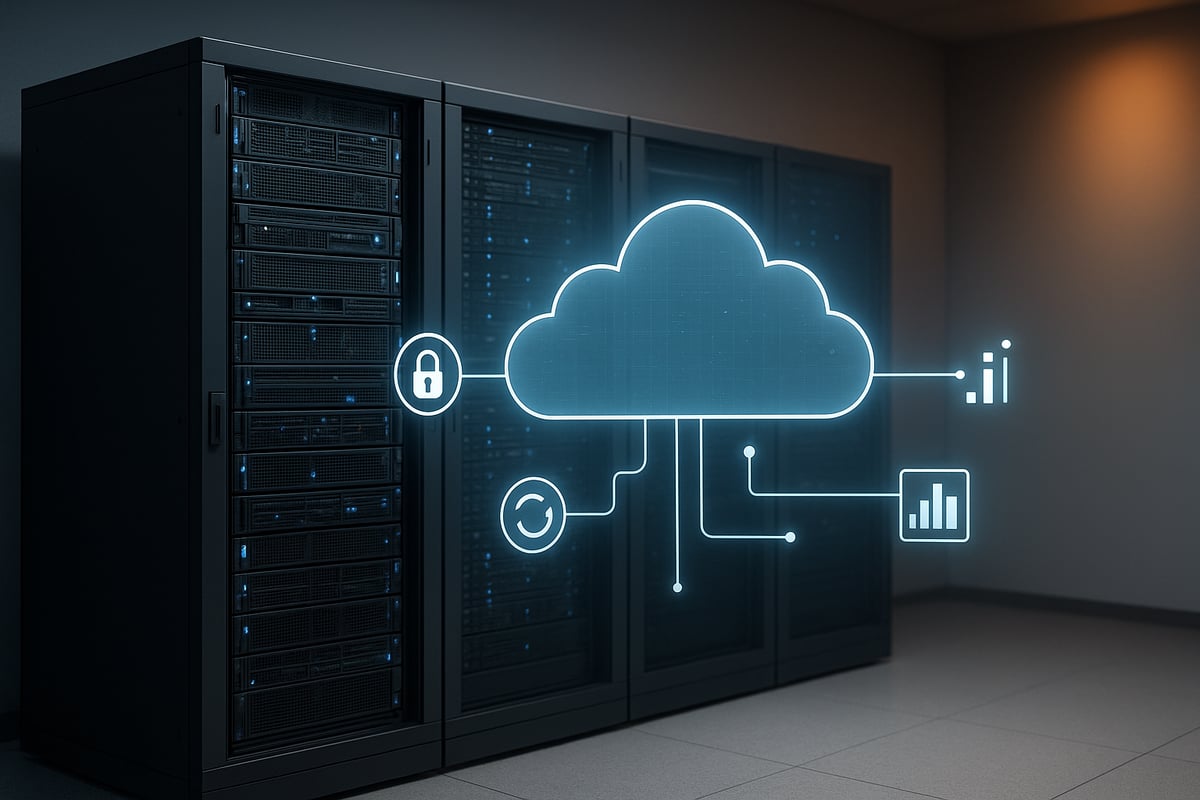
Cloud solutions refer to computing services delivered over the internet, enabling businesses to access resources without maintaining physical hardware on-site. There are three main models: public cloud (shared infrastructure, e.g., AWS, Microsoft Azure, Google Cloud), private cloud (dedicated environments for one organisation), and hybrid cloud (a mix of both).
Key features include remote access, enabling employees to work from anywhere, and rapid scalability, allowing businesses to adjust resources based on demand. Managed infrastructure reduces the burden of in-house IT maintenance, as providers handle updates and security.
Adoption rates for cloud and server solutions are climbing. According to recent industry analysis, Gartner predicts that by 2026, 75% of organisations will use some form of cloud. European providers are also gaining traction as companies prioritise data sovereignty and compliance. For those seeking a deeper understanding, the Cloud server hosting overview offers further insights into these evolving models and their practical business benefits.
Defining On-Premises Servers
On-premises servers are traditional infrastructure housed within a company’s physical premises. This model involves purchasing, installing, and maintaining hardware locally, granting organisations full control over their data and systems. Key features include dedicated resources, granular customisation, and the ability to tailor security configurations to specific requirements.
Market trends reveal a gradual decline in new on-premises deployments. However, on-premises solutions remain relevant in industries with strict regulatory demands or where data sensitivity is paramount. For example, small and medium-sized enterprises (SMEs) handling confidential client data may choose on-premises servers to ensure compliance with local laws and internal policies.
Despite the rise of cloud and server alternatives, on-premises infrastructure continues to serve businesses with stable workloads and unique operational needs. The ability to operate independently from external networks can be especially valuable for manufacturing plants or organisations in remote areas.
Hybrid Models Explained
Hybrid models combine elements of both cloud and server infrastructure, offering flexibility for organisations with diverse requirements. This approach allows critical applications or sensitive data to remain on-premises while leveraging the cloud’s scalability and cost-efficiency for less sensitive workloads.
Typical use cases include sectors like healthcare and finance, where strict compliance standards dictate that certain information must remain local, yet the business still benefits from cloud agility. Hybrid models empower organisations to optimise performance, manage costs, and address regulatory challenges simultaneously.
The adoption of hybrid cloud and server solutions is accelerating. Industry statistics forecast that by 2026, 60% of medium-to-large enterprises will implement hybrid strategies. This model enables businesses to adapt swiftly to changing demands without compromising on security or control, making it a compelling choice for forward-thinking organisations.
Pros and Cons: Cloud vs. On-Premises Servers
Choosing the right digital infrastructure is a pivotal decision for any organisation. The debate between cloud and server options remains at the heart of IT planning. Understanding the full range of advantages and disadvantages for each approach is essential for businesses seeking the best fit for their needs in 2026.
Advantages of Cloud Solutions
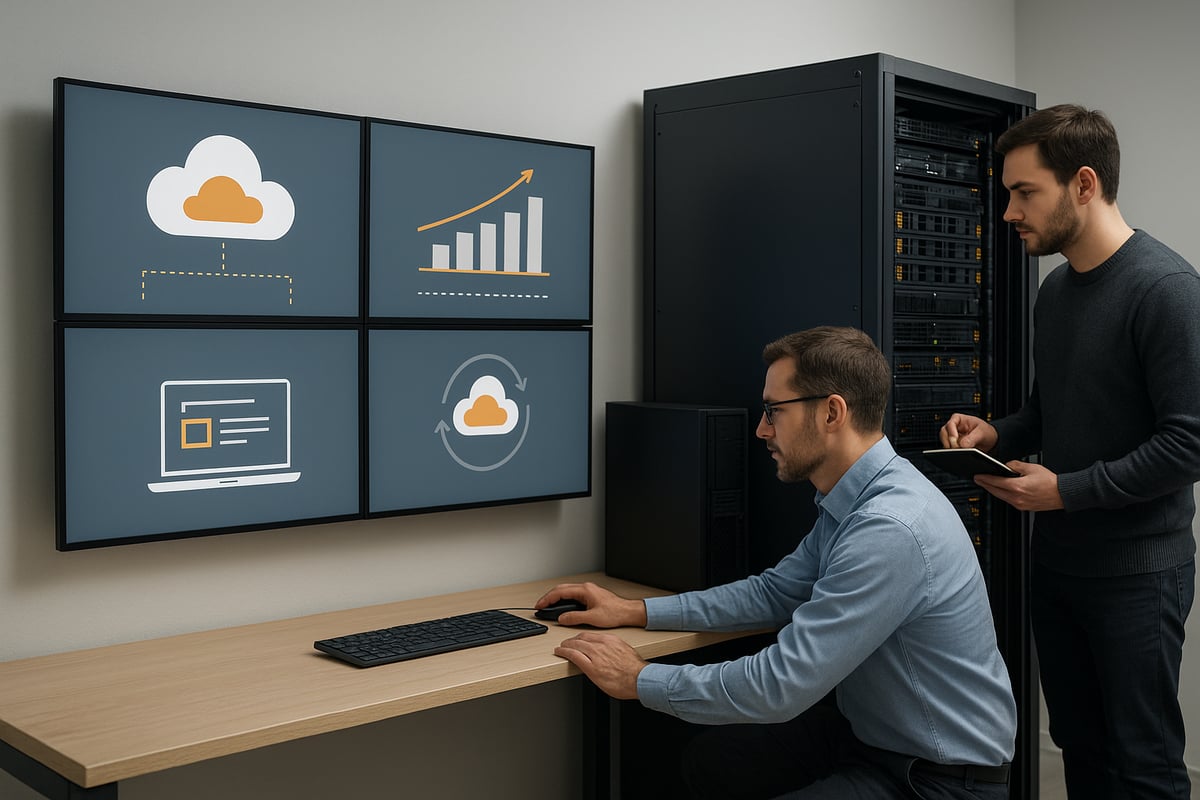
Cloud and server strategies offer distinct benefits, with cloud solutions excelling in flexibility and efficiency. The most notable advantage is the reduction in upfront capital expenditure. Rather than purchasing expensive hardware, organisations can start with minimal investment, paying only for the resources they use.
Scalability is a defining feature of cloud and server models in the digital era. Businesses can rapidly adjust computing power and storage, supporting fluctuating workloads or sudden growth. This is particularly valuable for industries with seasonal demands, such as retail.
Remote access is another critical benefit. Teams can work from anywhere, accessing data and applications securely via the internet. Automated maintenance, software updates, and security patches are managed by providers, reducing the IT burden on internal teams.
Disaster recovery capabilities are robust, as cloud data is often replicated across multiple locations. For a deeper understanding of these benefits and considerations, see this Cloud storage vs on-premises servers considerations guide.
Disadvantages of Cloud Solutions
While cloud and server architectures bring many strengths, there are also challenges to consider. Ongoing subscription costs can accumulate over time, sometimes leading to higher-than-expected expenses for businesses with complex or unpredictable usage patterns.
Dependence on reliable internet connectivity is a key limitation. If a network outage occurs, access to essential applications and data may be disrupted, potentially impacting business continuity. This is especially critical for organisations operating in regions with unstable internet infrastructure.
Data sovereignty and regulatory compliance can pose serious concerns. Storing sensitive information in the cloud may create challenges in meeting GDPR or industry-specific requirements, as data can be held in multiple jurisdictions.
Vendor lock-in is another risk. Migrating from one cloud provider to another can be complex and costly, limiting long-term flexibility. For example, an unexpected outage at a provider could prevent access to core business systems, highlighting the importance of robust contingency planning.
Advantages of On-Premises Servers
For some businesses, on-premises cloud and server solutions provide unmatched control and customisation. Organisations retain full authority over their hardware, data, and security policies. This level of oversight is particularly attractive to sectors handling sensitive data or requiring bespoke performance configurations.
Customisable security frameworks allow companies to implement specific measures tailored to their unique risk profiles. Internal operations can continue even during internet disruptions, as local networks do not rely on external connectivity.
Stable workloads make on-premises investments potentially more cost-effective over the long term. Organisations can avoid recurring fees, with costs largely limited to periodic upgrades and maintenance. For instance, a manufacturing facility operating within a closed network may rely on dedicated servers to ensure uninterrupted production.
Disadvantages of On-Premises Servers
Despite their benefits, on-premises cloud and server deployments come with significant drawbacks. The initial investment is substantial, covering physical hardware, installation, and infrastructure upgrades. This can be a barrier for small or rapidly growing organisations.
Ongoing maintenance and staffing requirements are considerable. IT teams must handle updates, security patches, and troubleshooting, which can divert resources from strategic initiatives. Scalability is limited, as expanding capacity often demands further capital outlay and lengthy procurement processes.
There is also a heightened risk of data loss due to local disasters, such as fire or theft. Without robust offsite backups and disaster recovery protocols, downtime can severely impact operations. For example, a small business may experience prolonged outages if a hardware failure occurs and replacement parts are not readily available.
Cost Analysis: Total Cost of Ownership and Budgeting
Choosing between cloud and server solutions is a critical financial decision for businesses in 2026. The right approach can affect not only your immediate spending but also your long-term IT strategy and flexibility.
Initial Investment vs. Ongoing Costs
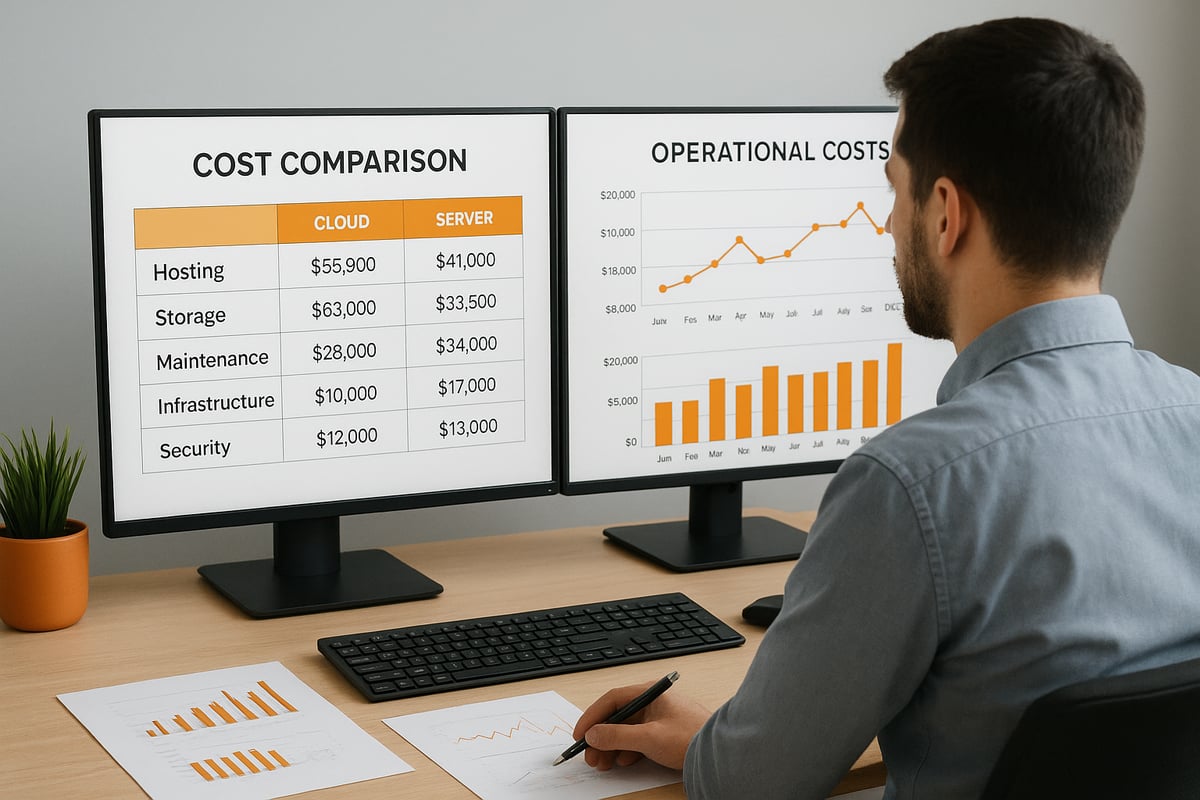
When considering cloud and server options, the initial financial outlay is often a key concern. Traditional on-premises servers require significant capital expenditure. This includes purchasing hardware, networking equipment, and software licences. These costs are typically depreciated over several years.
In contrast, cloud solutions operate on a subscription or pay-as-you-go basis. This model reduces upfront investment, allowing businesses to allocate resources more flexibly. Hybrid models blend both approaches, with some workloads managed on-site and others in the cloud.
Here’s a quick comparison for a 100-user company over five years:
| Cost Factor | Cloud | On-Premises | Hybrid |
|---|---|---|---|
| Upfront Cost | Low/None | High | Moderate |
| Ongoing Cost | Subscription | Maintenance | Mixed |
| Scalability | Easy | Hardware Limits | Flexible |
For a deeper dive into the financial trade-offs, see this cloud vs on-premises cost comparison 2025.
Hidden and Variable Costs
The cloud and server debate extends far beyond visible expenses. Cloud services can introduce hidden costs such as data egress fees, premium support charges, and risks of overprovisioning. These variables can catch businesses off guard, quickly inflating the regular bill.
On-premises solutions also carry unpredictable expenses. Hardware failures may require urgent replacements, and energy consumption can rise with increased use. Physical security and compliance measures add further complexity and cost.
According to industry research, 40% of businesses underestimate cloud costs due to these hidden factors. When evaluating cloud and server options, it is crucial to account for all potential financial risks, not just the headline prices.
Budget Planning and Predictability
Effective budgeting is essential for any IT strategy. With cloud and server solutions, predicting expenses can differ significantly. Cloud platforms often allow for easier monthly forecasting, yet sudden usage spikes or unplanned services can lead to cost overruns. Businesses migrating to cloud sometimes experience 'bill shock' when they underestimate demand or forget about additional features.
On-premises servers, meanwhile, offer predictable costs after the initial investment. However, budget spikes can occur during hardware upgrades or unexpected repairs. The cloud and server approach you choose should match your budgetary needs and risk tolerance.
A balanced financial plan will weigh predictable ongoing costs against flexibility and future growth. By regularly reviewing expenses, companies can avoid surprises and ensure their cloud and server investments remain aligned with business goals.
Security, Privacy, and Compliance
Navigating the landscape of security, privacy, and compliance is a top concern when evaluating cloud and server solutions. As digital threats intensify and regulations evolve, businesses must pay close attention to how each infrastructure choice addresses these challenges. The right approach to security can make a significant difference in resilience and trust for any organisation relying on cloud and server infrastructure.

Security in the Cloud
Cloud and server platforms rely on a shared responsibility model. Cloud providers manage the physical security of data centres, network infrastructure, and core systems, while clients must secure their applications, data, and access controls. Leading providers implement advanced security protocols, including end-to-end encryption, continuous vulnerability scanning, and automated patch management.
Cloud environments benefit from regular security updates and proactive monitoring. Many providers meet international standards such as ISO 27001, giving businesses confidence in regulatory compliance. For a deeper dive into encryption practices, see the Encrypted cloud service benefits. Physical security in cloud data centres is robust, with strict access controls and surveillance. For example, a company hosting sensitive client data in the cloud can rely on these measures and certified compliance to meet industry requirements.
Security in On-Premises Servers
On-premises cloud and server solutions grant organisations full control over security policies, data access, and hardware configuration. This autonomy allows for highly customised defences tailored to unique business needs. However, it also means that the entire burden of patching, monitoring, and incident response rests on internal teams.
The risk of human error is higher in self-managed environments. Outdated security measures or missed updates can expose vulnerabilities. For instance, an SME relying on on-premises servers may experience a breach if critical patches are neglected. Although on-premises solutions offer the advantage of direct oversight, they require dedicated resources and ongoing vigilance to match the security posture found in cloud alternatives.
Compliance and Data Sovereignty
Compliance with regulations is a decisive factor in the cloud and server debate. Cloud platforms often span multiple jurisdictions, which can complicate adherence to laws like GDPR and NIS2. Data residency and cross-border transfers become critical considerations, especially for organisations operating in regulated sectors.
On-premises deployments simplify compliance by keeping sensitive data within controlled environments. This makes it easier to demonstrate data locality during audits. Hybrid approaches offer flexibility, allowing businesses to store confidential records on-site while leveraging the cloud for less sensitive workloads. Notably, 65% of EU businesses cite compliance as the primary driver in their infrastructure choices for cloud and server solutions.
Privacy Concerns
Privacy remains a significant concern in both cloud and server deployments. Cloud solutions can introduce risks related to multi-tenancy and cross-border data movement. Businesses must scrutinise their provider’s privacy policies and understand how data is segregated and protected in shared environments.
On-premises options provide direct control over data privacy, but internal threats and misconfigurations can still pose risks. A financial services firm, for example, may choose on-premises deployment to ensure all client data remains within EU borders, thus meeting regulatory expectations. Carefully weighing privacy implications is essential for any organisation considering cloud and server strategies.
| Aspect | Cloud Security | On-Premises Security |
|---|---|---|
| Responsibility | Shared (provider and client) | Organisation only |
| Updates | Automated and frequent | Manual, depends on staff |
| Physical Sec. | Professional data centres | Varies by facility |
| Compliance | Provider-certified, complex | Direct, easier locality |
| Privacy | Multi-tenancy, cross-border risk | Direct control, internal risk |
Disaster Recovery, Business Continuity, and Reliability
In the era of rapid digital transformation, disaster recovery and business continuity have become critical pillars for organisations navigating cloud and server decisions. The right approach can be the deciding factor between minimal downtime and major operational losses. As threats and disruptions grow more complex, understanding the strengths and limitations of each strategy is essential.
Cloud-Based Disaster Recovery
Cloud-based disaster recovery offers robust protection through distributed backups across multiple geographic regions. Automated failover systems ensure that, if one data centre goes offline, workloads can shift seamlessly to another location. This minimises downtime and maintains essential services for both customers and staff.
Many providers offer Disaster Recovery as a Service (DRaaS), enabling businesses to restore operations quickly after an incident. These solutions are easily scalable, making them suitable for organisations with fluctuating needs or remote teams. For example, a retail business using cloud and server resources can recover from a ransomware attack within minutes, thanks to automated cloud failover and secure online backups.
Security is also a priority, with encrypted data storage and continuous monitoring. If you want to understand more about secure storage options that support disaster recovery in a cloud and server setup, consult this Online storage and encryption guide.
On-Premises Disaster Recovery
On-premises disaster recovery requires a hands-on approach. Businesses must plan manual backup routines, arrange for secure offsite storage, and conduct regular testing. While this model grants more direct control over data and processes, it also introduces higher complexity and resource demands.
Physical risks remain significant. Local disasters, such as fires or floods, can devastate infrastructure if backups are not stored offsite. For instance, a company relying solely on on-premises systems may face extended downtime after a server room flood, resulting in lost revenue and damaged reputation.
Despite these challenges, some organisations prefer the control and customisation that on-premises disaster recovery provides. However, as cloud and server strategies evolve, many are reconsidering the balance between autonomy and resilience.
Business Continuity Considerations
Ensuring business continuity means maintaining operations during unexpected events. Cloud solutions offer built-in redundancy and high availability agreements, which help maintain uptime even in the face of hardware failures or cyberattacks. This is especially relevant as cloud and server models converge in hybrid deployments.
On-premises systems, by contrast, depend heavily on internal resources and proactive planning. Without robust strategies, businesses risk significant disruptions. The statistics are telling: 93% of organisations using cloud-based disaster recovery survive major disasters, while only 20% relying exclusively on on-premises approaches manage to recover.
As cloud and server choices become more intertwined, companies must weigh the benefits of each model. Prioritising a well-structured disaster recovery plan is essential for safeguarding reputation, data, and long-term viability.
Scalability, Flexibility, and Performance
In 2026, the need for adaptable digital infrastructure is greater than ever. As organisations weigh their cloud and server options, scalability, flexibility, and performance emerge as critical decision points. Each model presents unique strengths and limitations, shaping how businesses respond to rapid change and demanding workloads.
Scalability in the Cloud
Cloud and server environments offer contrasting approaches to scalability. The cloud is renowned for its instant resource allocation. Organisations can expand or contract their computing power in real time, responding quickly to business needs.
- Rapid scaling enables companies to handle unpredictable or seasonal workloads.
- No need for upfront hardware investment, reducing barriers to growth.
- Automatic provisioning simplifies IT management for dynamic operations.
A common scenario involves an e-commerce retailer preparing for a surge in online traffic during Black Friday. With cloud and server solutions, the company can scale up resources instantly, ensuring seamless customer experiences without overcommitting to permanent infrastructure.
Scalability in On-Premises Servers
On-premises setups manage scalability differently. Businesses using traditional cloud and server models must plan for hardware upgrades, which can involve significant lead times and investment.
- Physical upgrades are needed to increase capacity.
- Best suited for stable, predictable workloads with minimal fluctuation.
- Lead times for procurement and installation may slow response to sudden demand.
For example, a university planning to accommodate a growing number of students might need to expand its server room over the summer. Unlike cloud and server cloud models, on-premises solutions require careful forecasting and budget allocation to avoid bottlenecks during peak periods.
Flexibility and Customisation
Flexibility is a defining feature when comparing cloud and server options. Public cloud platforms offer a vast array of services, APIs, and integrations, enabling organisations to build tailored solutions with minimal effort.
- Wide range of tools for automation, analytics, and development.
- Easy integration with third-party applications and services.
- Customisable virtual environments support diverse business needs.
On-premises environments, however, allow for full hardware and software customisation, which can be critical for organisations with unique performance or security requirements. Hybrid approaches combine these benefits, letting businesses keep sensitive data on-site while leveraging the cloud for scalable workloads. For those seeking secure, adaptable solutions, vBoxxCloud secure hosting solutions exemplify how cloud and server models can work together to meet evolving demands.
Performance Considerations
Performance remains a key differentiator between cloud and server architectures. Cloud-based systems depend on robust internet connectivity and the underlying hardware provided by the vendor. On-premises solutions, in contrast, offer direct control over performance, often delivering lower latency and faster access within local networks.
| Feature | Cloud | On-Premises |
|---|---|---|
| Latency | Depends on network | Local, low latency |
| Customisation | Limited by vendor | Full control |
| Maintenance | Provider managed | In-house team |
A media company engaged in high-performance video editing may prefer an on-premises setup to guarantee smooth, uninterrupted workflows. However, cloud and server solutions can complement each other, providing a balance between performance, accessibility, and cost-efficiency.
Environmental Impact and Sustainability
As sustainability becomes a top concern for modern IT, organisations must evaluate the environmental impact of their cloud and server choices. The push for greener operations is shaping how businesses approach digital infrastructure, with efficiency and carbon reduction now critical decision factors.
Cloud Solutions and Green Hosting
Cloud and server solutions have evolved significantly, with major cloud providers investing heavily in renewable energy and advanced cooling systems to minimise environmental impact. Thanks to economies of scale, shared cloud infrastructure uses resources more efficiently, resulting in a lower carbon footprint per user. According to recent cloud adoption statistics 2025–2026, the vast majority of enterprises now leverage cloud and server platforms, driving further innovation in green hosting.
A key advantage of cloud and server models is the ability to centralise data processing in purpose-built facilities. These large-scale data centres can be up to 80% more energy efficient than traditional server rooms, as they optimise power usage and integrate renewable energy sources. For businesses seeking to reduce their environmental impact, selecting a cloud and server provider with green certifications is an effective strategy.
| Feature | Cloud Solutions | Traditional Servers |
|---|---|---|
| Renewable energy usage | High | Low/Variable |
| Energy efficiency | Up to 80% more | Standard |
| Carbon footprint | Lower per user | Higher per user |
On-Premises Environmental Concerns
Despite the advances in cloud and server efficiency, on-premises infrastructure still presents notable environmental challenges. Maintaining a dedicated server room often requires significant power for both hardware and cooling, leading to higher energy consumption per user compared to centralised cloud and server environments.
Small and medium-sized businesses may find it difficult to implement advanced sustainability measures at scale. For example, an office server room with legacy hardware and basic cooling systems can contribute disproportionately to an organisation’s overall carbon footprint. In such cases, the environmental advantage clearly favours cloud and server solutions that are optimised for efficiency and sustainability.
Sustainable Hybrid Approaches
A growing number of organisations are adopting hybrid approaches to balance the benefits of cloud and server solutions. By running scalable workloads in the cloud and retaining essential on-premises infrastructure, companies can optimise both performance and sustainability. This model allows sensitive applications to remain local while leveraging the energy efficiency of cloud and server providers for less critical tasks.
For example, migrating legacy applications to a green-certified cloud and server platform can dramatically reduce energy usage without sacrificing control. Partnering with providers that prioritise renewable energy further enhances the environmental profile of a hybrid IT strategy. Ultimately, choosing the right mix enables businesses to future-proof their infrastructure while meeting sustainability goals.
Future Trends and How to Choose the Right Solution
Navigating the future of cloud and server decisions requires a clear understanding of emerging trends and practical frameworks. As technology evolves, organisations must remain agile to stay ahead. This section explores what is next for cloud and server, offering actionable guidance for businesses planning their digital infrastructure in 2026.
Emerging Trends for 2026
Several key trends are shaping the future of cloud and server strategies. Edge computing is gaining traction, allowing businesses to process data closer to its source, which reduces latency and enhances real-time capabilities. AI-driven infrastructure management is also transforming operations, enabling predictive maintenance and optimisation.
Hybrid and multi-cloud strategies are expanding rapidly, giving organisations flexibility to match workloads with the most suitable environments. According to recent US cloud computing market analysis 2025–2033, the sector is set for significant growth, highlighting the relevance of these approaches. Additionally, regulatory pressures around data privacy and sustainability are pushing companies to reassess their cloud and server models.
These trends underscore the need for a flexible, forward-thinking approach to infrastructure, ensuring your cloud and server investments remain resilient.
Decision-Making Framework
Choosing the right cloud and server solution is not a one-size-fits-all decision. Start by assessing your organisation’s size, industry, compliance requirements, and growth ambitions. Consider cost, security, scalability, and environmental impact.
A practical framework involves:
- Identifying core business applications and their requirements
- Evaluating compliance and data sovereignty needs
- Comparing total cost of ownership across cloud and server models
- Consulting with IT experts and testing platforms through pilot projects
Using a decision matrix can help visualise the best fit for your business. This structured approach ensures your cloud and server strategy aligns with both current and future needs.
Real-World Scenarios and Recommendations
Different industries face unique challenges when selecting cloud and server solutions. For example, financial firms may prioritise on-premises infrastructure to meet strict data residency laws, while e-commerce businesses benefit from the scalability of the cloud during peak periods.
Case studies show that hybrid models are increasingly popular in healthcare, where sensitive data remains local and non-critical workloads move to the cloud. Regardless of sector, regularly reviewing and updating your IT strategy is crucial, as cloud and server technologies evolve.
By considering these scenarios and embracing a proactive mindset, organisations can confidently adapt their cloud and server choices for long-term success.
Choosing between cloud and on premises servers for your business in 2026 isn’t just about technology—it’s about finding a solution that matches your needs for security, performance, and sustainability. We’ve explored the pros and cons, cost factors, compliance, and the importance of a reliable, green infrastructure. If you’re ready to see how these options could work for your unique requirements, why not experience it firsthand? You can get a clearer picture of what suits your business best by starting with a hands on approach. Start a free trial and discover the difference for yourself.