
As organisations increasingly migrate their operations to cloud environments, the importance of robust cloud information security measures has never been more critical. Furthermore, with cyber threats evolving in sophistication and regulatory requirements becoming more stringent, businesses must adopt comprehensive security strategies that protect sensitive data whilst maintaining operational efficiency. Therefore, understanding the fundamental principles and best practices of cloud information security is essential for any organisation leveraging cloud technologies in 2026.
Understanding the Shared Responsibility Model
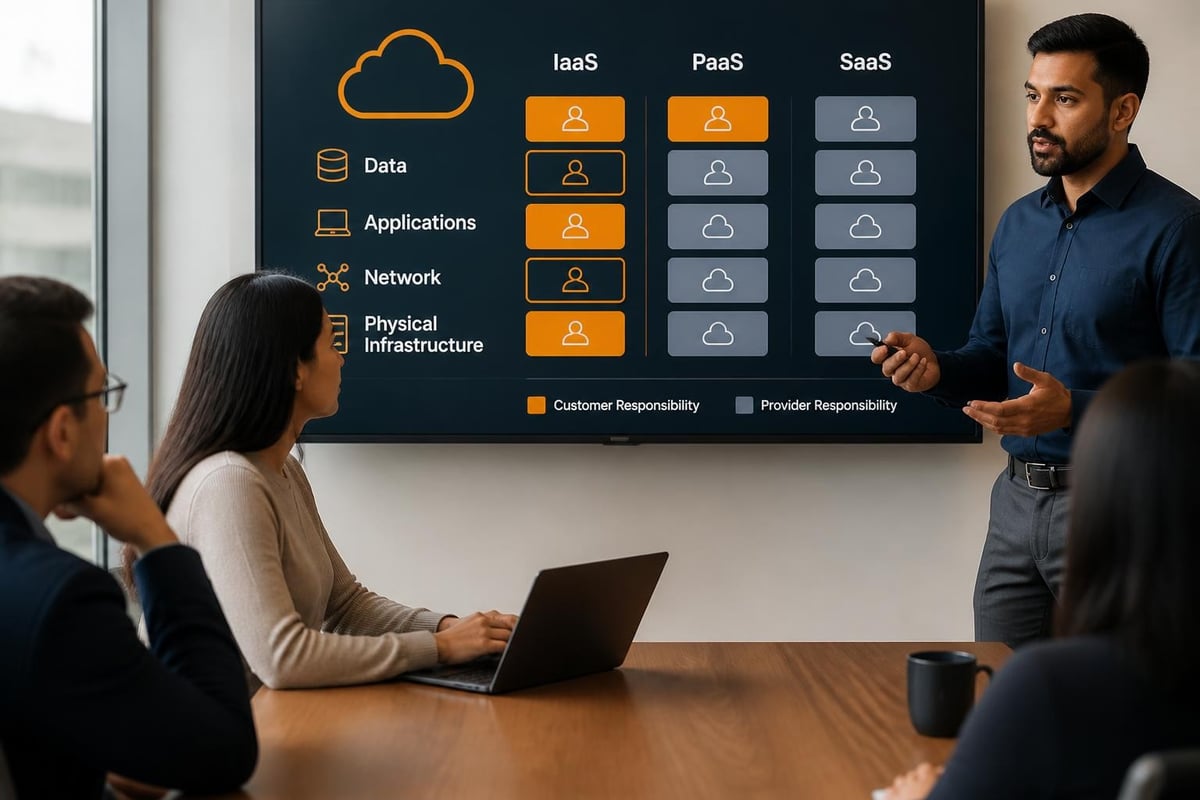
Cloud information security begins with a clear understanding of the shared responsibility model that governs cloud computing environments. In this framework, cloud service providers manage the security of the underlying infrastructure, whilst customers remain responsible for securing their data, applications, and access controls. Moreover, this division of responsibilities varies depending on the service model employed, whether Infrastructure as a Service (IaaS), Platform as a Service (PaaS), or Software as a Service (SaaS).
Defining Security Boundaries
The security boundaries between provider and customer responsibilities must be clearly delineated to prevent gaps in protection. Nevertheless, many organisations struggle to identify precisely where their security obligations begin and end. Therefore, it is crucial to thoroughly review service level agreements and security documentation provided by cloud vendors.
| Responsibility Area | Provider | Customer |
|---|---|---|
| Physical Security | ✓ | – |
| Network Infrastructure | ✓ | Partial |
| Application Security | – | ✓ |
| Data Encryption | Partial | ✓ |
| Access Management | – | ✓ |
In addition, organisations must recognise that whilst providers secure the cloud infrastructure, the configuration and management of security controls within that environment remain the customer's domain. Consequently, misconfigurations represent one of the most significant vulnerabilities in cloud deployments.
Implementing Strong Identity and Access Management
Identity and access management (IAM) forms the cornerstone of effective cloud information security strategies. Furthermore, implementing robust authentication and authorisation mechanisms ensures that only verified users can access sensitive resources. Therefore, organisations must deploy multi-factor authentication (MFA) across all user accounts, particularly for administrative access.
Zero-Trust Architecture Principles
The zero-trust security model operates on the principle that no user or device should be trusted by default, regardless of their location or network. Moreover, this approach requires continuous verification of user identity and device security posture before granting access to resources. In addition, implementing zero-trust identity protection has become essential for modern cloud environments.
Key elements of zero-trust IAM include:
- Least privilege access: Grant users only the minimum permissions necessary to perform their duties
- Continuous authentication: Regularly verify user identity throughout sessions, not just at login
- Contextual access controls: Consider factors such as device health, location, and time when granting access
- Privileged access management: Implement additional controls for administrative accounts with elevated permissions
- Regular access reviews: Periodically audit and revoke unnecessary permissions
Nevertheless, implementing zero-trust principles requires careful planning and phased rollout to avoid disrupting business operations. Therefore, organisations should begin with critical systems and gradually extend coverage across their entire cloud estate.
Data Protection and Encryption Strategies
Protecting data throughout its lifecycle represents a fundamental aspect of cloud information security. Furthermore, encryption serves as the primary mechanism for safeguarding information both at rest and in transit. Therefore, organisations must implement comprehensive encryption strategies that cover all data states.
Encryption Best Practices
Data encryption should be applied at multiple layers within cloud environments. Moreover, organisations must maintain control over encryption keys to ensure data sovereignty and compliance with regulatory requirements. In addition, securing data in cloud services requires understanding different encryption methodologies and their appropriate applications.
Encryption at Rest:
- Enable default encryption for all storage services
- Use customer-managed encryption keys where regulatory compliance demands
- Implement database-level encryption for sensitive information
- Apply file-level encryption for highly confidential documents
Encryption in Transit:
- Enforce TLS 1.3 or higher for all network communications
- Implement VPN tunnels for site-to-site connectivity
- Use secure API gateways with certificate-based authentication
- Deploy end-to-end encryption for sensitive data transfers
Furthermore, organisations should consider implementing encrypted online storage solutions that provide additional layers of protection beyond standard cloud encryption. Nevertheless, encryption alone does not constitute complete data protection; therefore, it must be combined with robust access controls and monitoring capabilities.

Continuous Monitoring and Threat Detection
Effective cloud information security demands continuous visibility into system activities and potential security threats. Furthermore, modern cloud environments generate vast amounts of log data that must be collected, analysed, and acted upon in real-time. Therefore, implementing comprehensive monitoring solutions is essential for detecting and responding to security incidents promptly.
Security Information and Event Management
Security Information and Event Management (SIEM) systems aggregate logs from diverse cloud services, applications, and network devices into a centralised platform. Moreover, these systems apply advanced analytics and machine learning to identify suspicious patterns and potential security breaches. In addition, detecting and responding to cloud security breaches requires proactive monitoring strategies.
| Monitoring Capability | Purpose | Implementation Priority |
|---|---|---|
| User Activity Monitoring | Detect anomalous user behaviour | High |
| Network Traffic Analysis | Identify unusual data flows | High |
| Configuration Monitoring | Alert on security misconfigurations | Critical |
| Vulnerability Scanning | Discover system weaknesses | High |
| Compliance Monitoring | Ensure regulatory adherence | Medium |
Nevertheless, effective monitoring extends beyond simply collecting logs. Therefore, organisations must establish clear incident response procedures, define alert thresholds, and maintain trained security personnel capable of investigating and remediating threats.
Compliance and Regulatory Considerations
Cloud information security strategies must align with applicable regulatory requirements and industry standards. Furthermore, organisations operating in multiple jurisdictions face complex compliance obligations that vary by region and sector. Therefore, understanding and implementing appropriate controls to meet these requirements is crucial for avoiding penalties and maintaining customer trust.
Key Regulatory Frameworks
Several regulatory frameworks directly impact cloud information security practices in 2026. Moreover, compliance with these regulations often requires specific technical controls and documentation processes. In addition, organisations must stay informed about evolving requirements and adjust their security posture accordingly.
Major compliance frameworks include:
- GDPR: European data protection regulation requiring strict controls over personal data
- NIS2 Directive: Enhanced network and information security requirements across the EU
- ISO 27001: International standard for information security management systems
- SOC 2: Framework for managing customer data based on trust service criteria
- PCI DSS: Security standards for organisations handling payment card information
Furthermore, understanding NIS2 and cybersecurity regulations has become increasingly important for organisations operating within the European Union. Nevertheless, achieving compliance is not a one-time effort; therefore, organisations must implement continuous monitoring and regular audits to maintain their compliance status.
Security Architecture and Design Principles
Building secure cloud environments requires applying fundamental security architecture principles during the design phase. Furthermore, incorporating security considerations from the outset proves more effective and cost-efficient than retrofitting controls later. Therefore, organisations should adopt security-by-design approaches when architecting cloud solutions.
Network Segmentation and Isolation
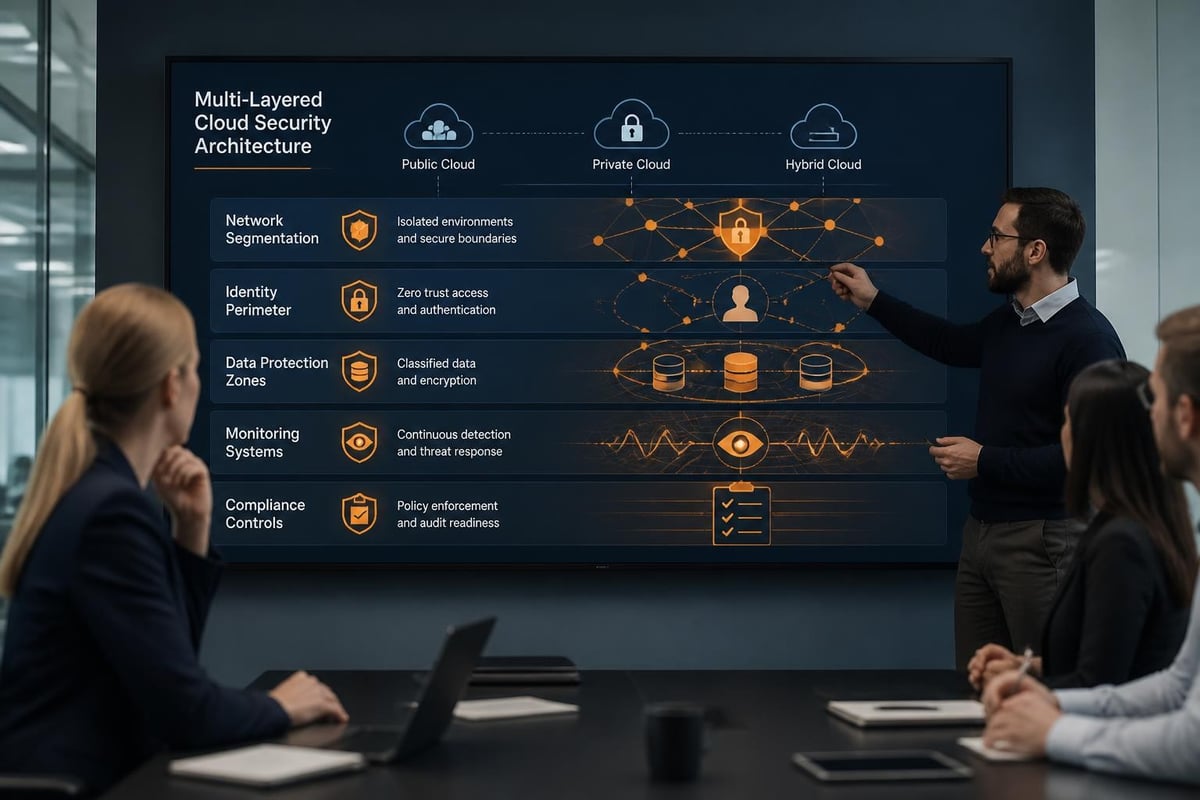
Proper network segmentation limits the potential impact of security breaches by containing threats within isolated network zones. Moreover, implementing virtual private clouds (VPCs) with carefully configured subnets and security groups creates strong boundaries between different application tiers. In addition, cloud security best practices emphasise the importance of network isolation.
Network security controls include:
- Configure separate subnets for web, application, and database tiers
- Implement network access control lists (NACLs) to filter traffic at subnet boundaries
- Deploy web application firewalls (WAF) to protect internet-facing applications
- Use private endpoints for accessing cloud services without internet exposure
- Establish bastion hosts for secure administrative access
Nevertheless, network segmentation must be balanced with operational requirements. Therefore, security architects should design network topologies that provide both strong isolation and efficient communication between authorised services.
Backup and Disaster Recovery Planning
Comprehensive cloud information security strategies must include robust backup and disaster recovery capabilities. Furthermore, data loss can result from various causes including cyberattacks, accidental deletion, or system failures. Therefore, implementing reliable backup solutions ensures business continuity and minimises potential data loss.
Backup Strategy Components
Effective backup strategies follow the 3-2-1 rule: maintain three copies of data, on two different media types, with one copy stored offsite. Moreover, cloud environments enable automated backup processes that can be configured to meet specific recovery point objectives (RPO) and recovery time objectives (RTO). In addition, regular testing of backup restoration procedures verifies that recovery processes function correctly when needed.
| Backup Type | Frequency | Retention Period | Use Case |
|---|---|---|---|
| Full Backup | Weekly | 90 days | Complete system recovery |
| Incremental | Daily | 30 days | Recent data restoration |
| Transaction Logs | Continuous | 7 days | Point-in-time recovery |
| Snapshots | Hourly | 24 hours | Quick rollback |
Nevertheless, backups themselves require protection through encryption and access controls. Therefore, organisations should implement immutable backups that cannot be modified or deleted by ransomware or malicious actors.
Vendor Security Assessment
Selecting secure cloud service providers represents a critical decision in establishing strong cloud information security. Furthermore, organisations must conduct thorough security assessments of potential vendors before entrusting them with sensitive data. Therefore, developing a structured vendor evaluation process ensures that chosen providers meet minimum security requirements.
Security Evaluation Criteria
When assessing cloud vendors, organisations should examine multiple dimensions of security capability. Moreover, requesting detailed documentation, conducting on-site assessments where possible, and reviewing third-party audit reports provide comprehensive insights into vendor security posture. In addition, Google Cloud’s security best practices demonstrate the level of transparency organisations should expect from providers.
Key evaluation areas include:
- Certifications and compliance: Verify relevant industry certifications and regulatory compliance
- Data residency: Confirm data storage locations align with legal requirements
- Incident response: Review the provider's security incident history and response capabilities
- Service level agreements: Examine uptime guarantees and security commitments
- Data portability: Ensure data can be exported if switching providers becomes necessary
Furthermore, organisations may benefit from demonstrations of security capabilities. For instance, scheduling a comprehensive demo can provide valuable insights into how cloud solutions handle security, encryption, and access management in practice.
Security Automation and Infrastructure as Code
Modern cloud information security increasingly relies on automation to maintain consistent security controls across dynamic environments. Furthermore, Infrastructure as Code (IaC) enables organisations to define and deploy security configurations programmatically, reducing human error and ensuring standardisation. Therefore, adopting DevSecOps practices that integrate security into development and deployment pipelines has become essential.
Automated Security Controls
Automation accelerates security operations whilst improving accuracy and consistency. Moreover, automated systems can respond to threats faster than manual processes, often neutralising attacks before they cause significant damage. In addition, security practices in Infrastructure as Code have evolved to include automated scanning and validation.
Automation opportunities include:
- Automated compliance checking during deployment processes
- Security configuration scanning for policy violations
- Automated patch management for operating systems and applications
- Threat detection and automated response workflows
- Regular security assessment and vulnerability scanning
Nevertheless, automation requires careful implementation to avoid unintended consequences. Therefore, organisations should thoroughly test automated security controls in non-production environments before deploying them to critical systems.
Security Training and Awareness
Human factors remain a significant vulnerability in cloud information security despite technical controls. Furthermore, employees who lack security awareness may inadvertently create security risks through poor password practices, phishing susceptibility, or misconfigurations. Therefore, investing in comprehensive security training programmes is essential for building a strong security culture.
Building Security-Aware Teams
Effective security training extends beyond annual compliance courses. Moreover, organisations should implement continuous education programmes that address evolving threats and new security technologies. In addition, role-specific training ensures that technical staff, managers, and general users receive appropriate guidance.
Training programme elements:
- Phishing simulation: Regular testing to identify susceptible users and provide targeted education
- Secure coding practices: Training developers on common vulnerabilities and secure development techniques
- Configuration management: Teaching administrators to apply security best practices when configuring cloud services
- Incident reporting: Ensuring all staff understand how to report suspected security incidents
- Password hygiene: Promoting strong, unique passwords and password manager usage
Furthermore, cloud security guidance from the Cloud Security Alliance emphasises the importance of organisational awareness. Nevertheless, training alone is insufficient; therefore, organisations must combine education with technical controls that prevent common mistakes.
Emerging Threats and Future Considerations
The landscape of cloud information security continues to evolve as new threats emerge and attack techniques become more sophisticated. Furthermore, organisations must remain vigilant and adapt their security strategies to address emerging risks. Therefore, staying informed about threat trends and proactively strengthening defences is crucial for maintaining robust security posture.
Multi-Cloud Security Challenges
Many organisations now operate across multiple cloud platforms, introducing additional complexity to security management. Moreover, each cloud provider implements security controls differently, requiring organisations to develop platform-specific expertise. In addition, addressing hidden gaps in cloud security across multi-cloud environments demands comprehensive visibility and unified security policies.
Multi-cloud security considerations:
- Implement centralised identity management across all cloud platforms
- Establish consistent security policies that translate to platform-specific controls
- Deploy cloud security posture management (CSPM) tools for unified visibility
- Maintain inventories of resources across all cloud environments
- Standardise incident response procedures regardless of platform
Nevertheless, the complexity of multi-cloud security should not deter organisations from leveraging multiple providers. Therefore, investing in appropriate tools and expertise enables organisations to benefit from multi-cloud strategies whilst maintaining strong security.
Furthermore, understanding cloud data security risks helps organisations anticipate potential vulnerabilities before they are exploited. Moreover, emerging technologies such as artificial intelligence and quantum computing will introduce both new security capabilities and novel threats that require ongoing attention.
Implementing robust cloud information security requires a comprehensive approach that addresses technical controls, organisational processes, and human factors. Moreover, as cloud environments continue to evolve, maintaining strong security posture demands continuous adaptation and improvement. vBoxx specialises in delivering secure cloud solutions that incorporate industry-leading security practices, encrypted storage, and privacy-focused architecture to protect your critical business data. Whether you need secure hosting, backup solutions, or consultancy on strengthening your cloud security, vBoxx provides the expertise and infrastructure to safeguard your digital assets whilst supporting sustainable and reliable operations.