
By 2026, cloud disk technology is set to handle over 80% of all personal and business storage needs worldwide, transforming how we access and protect our digital lives. The pace of innovation is astonishing, with smarter features and stronger security shaping the future of cloud storage.
This essential handbook is designed to demystify the cloud disk landscape. Whether you are a home user or manage IT for a business, you will find clear guidance to choose, secure, and get the most from your cloud disk solution.
Inside, you will discover the basics, the latest trends for 2026, and how leading providers like vBoxxCloud, Synology Drive, and open-source platforms fit into your needs. We cover practical setup steps, security best practices, and what the future holds, empowering you to make smart storage decisions.
Understanding Cloud Disks: The Foundation for 2026
The concept of a cloud disk is transforming how individuals and businesses manage data. By 2026, cloud disk solutions will be inseparable from everyday digital routines and critical business operations. Understanding their foundations will help you select the right technology for your needs, whether you are a home user or an enterprise.
What is a Cloud Disk?
A cloud disk is a virtualised storage space hosted on remote servers. Unlike traditional storage such as HDDs, SSDs, or external drives, a cloud disk is not tied to a physical device you own. Instead, it leverages the internet to provide secure, scalable, and accessible storage for your files, applications, and backups.
Virtualisation allows you to access your cloud disk from any location and device, making file sharing and collaboration seamless. With a cloud disk, you can scale storage as your needs grow, avoid hardware limitations, and share files with colleagues or family in real time.
Common use cases include data backup, secure file sharing, and supporting remote work environments. For a deeper dive into the underlying technology, see How Cloud Storage Works, which explains the principles powering modern cloud disk solutions.
Evolution of Cloud Disk Technology
Cloud disk technology has advanced rapidly over the past decade. Early cloud storage offered basic file hosting and sync, but today’s cloud disk solutions integrate artificial intelligence for smarter file management and automation for routine tasks.
Key milestones include the adoption of hybrid cloud models, where local and cloud resources combine for flexibility. The rollout of 5G and edge computing has made cloud disk performance faster and more reliable, supporting real-time access even for large files.
According to Gartner and Statista, cloud disk adoption grew steadily from 2023 to 2025, driven by increasing demand for compliance, data sovereignty, and business continuity. Organisations now require robust solutions to meet regulatory requirements and secure sensitive information.
Types of Cloud Disks
There are several types of cloud disk solutions available in 2026:
| Type | Example Providers | Use Case |
|---|---|---|
| Public Cloud | vBoxxCloud, Google Drive, Dropbox | General file storage |
| Private Cloud | Synology Drive, Nextcloud, ownCloud | Secure, in-house control |
| Hybrid Cloud | vBoxxCloud Hybrid, OpenCloud | Mix of public/private |
Cloud disks can also be classified by storage architecture:
- Object storage: Ideal for large-scale, unstructured data.
- Block storage: Best for databases and transactional workloads.
- File storage: Suitable for collaborative document editing.
Proprietary platforms like vBoxxCloud and Synology Drive offer managed solutions, while open-source options such as Nextcloud, ownCloud, and OpenCloud provide customisability and can be hosted on EU infrastructure for enhanced privacy.
Key Features to Expect in 2026
Modern solutions in 2026 offer advanced capabilities:
- End-to-end encryption and zero-knowledge security, keeping your data private.
- AI-powered search and file management, making it easy to find information quickly.
- Real-time synchronisation across multiple devices, ensuring you always have the latest version.
- Automated backup and disaster recovery features to safeguard against data loss.
- Sustainability initiatives such as green data centres and energy-efficient hosting, reflecting growing environmental responsibility.
These features ensure that a cloud disk is not just secure but also efficient and future-proof.
Cloud Disk Use Cases in 2026
The versatility of cloud disk technology supports a wide range of scenarios:
- Remote and hybrid workforces rely on cloud disk for seamless collaboration across borders.
- Data-intensive sectors like healthcare, media, and finance benefit from secure, scalable storage.
- Compliance-driven organisations such as legal firms and government agencies use cloud disk to meet strict regulatory standards.
- Individuals use cloud disk for personal digital archiving, smart home integration, and managing family documents.
- Edge devices and IoT networks depend on cloud disk for efficient data collection, processing, and sharing.
With its robust capabilities and broad applicability, the cloud disk will remain a cornerstone of digital infrastructure in 2026.
How to Choose the Right Cloud Disk Solution
Selecting the best cloud disk solution is a critical decision for both individuals and organisations in 2026. With a wide array of options available, understanding your needs and the features on offer will help you make an informed choice. Let us explore each key consideration to guide your decision.

Assessing Your Storage Needs
The first step in choosing a cloud disk is to assess your storage requirements. Consider the size and type of files you need to store, such as documents, media, or databases. Personal users may need less capacity, while businesses often require scalable solutions to accommodate growth.
Think about how frequently you access your data and whether you need instant availability across devices. Regulatory requirements, such as GDPR or NIS2, may also affect your choice, especially if data sovereignty is important. Finally, conduct a cost-benefit analysis to ensure your selected choice meets your current and future needs efficiently.
Comparing Proprietary vs Open-Source Solutions
When selecting a cloud disk, you will encounter both proprietary platforms like Google Drive and Synology Drive, and open-source alternatives such as Nextcloud, ownCloud, or OpenCloud. Proprietary solutions typically offer streamlined experiences and robust support, but may lead to vendor lock-in and limited customisation.
Open-source platforms provide greater flexibility, transparency, and community-driven improvements. They are ideal for businesses seeking control over security and integration. EU organisations are increasingly adopting open-source cloud disk solutions for compliance and privacy. If you want to understand the transition from closed to open platforms, the article on From Microsoft to Open Source offers practical insights.
Security and Privacy Considerations
Security is paramount when selecting a cloud disk. Look for solutions offering end-to-end encryption, both at rest and in transit. Data residency matters, especially for EU clients who must adhere to strict privacy laws. Ensure your provider supports strong user authentication, such as multi-factor authentication and granular access controls.
Check for compliance with international standards like ISO 27001 and review audit trails for transparency. Learning from past security breaches in the landscape helps inform your strategy and reduces risk.
Integration and Compatibility
Your cloud disk should seamlessly fit into your existing workflows. Evaluate compatibility with desktop, mobile, and third-party applications. API access allows for custom integrations and workflow automation, making your storage truly versatile.
Collaboration features, such as document editing and version control, are essential for teams. Integration with tools like email, CRM, and project management platforms can further enhance productivity. For instance, Synology Drive enables smooth integration in hybrid environments, blending local and cloud access.
Pricing Models and Cost Optimisation
Understanding pricing is vital for adoption. You will find options such as subscription-based, pay-as-you-go, and perpetual licences. Compare the costs for personal versus business use, and watch for free tiers, trial periods, and hidden fees.
Storage tiers and overage charges can impact your long-term investment. For small and medium-sized enterprises, evaluating return on investment is crucial. Use comparison tables to clarify which cloud disk model offers the best value for your needs.
| Model | Upfront Cost | Ongoing Cost | Scalability | Free Tier |
|---|---|---|---|---|
| Subscription | Low | Medium | High | Yes |
| Pay-as-you-go | None | Variable | High | Sometimes |
| Perpetual Licence | High | Low | Limited | No |
vBoxx: Secure and Flexible Cloud Disk Solutions
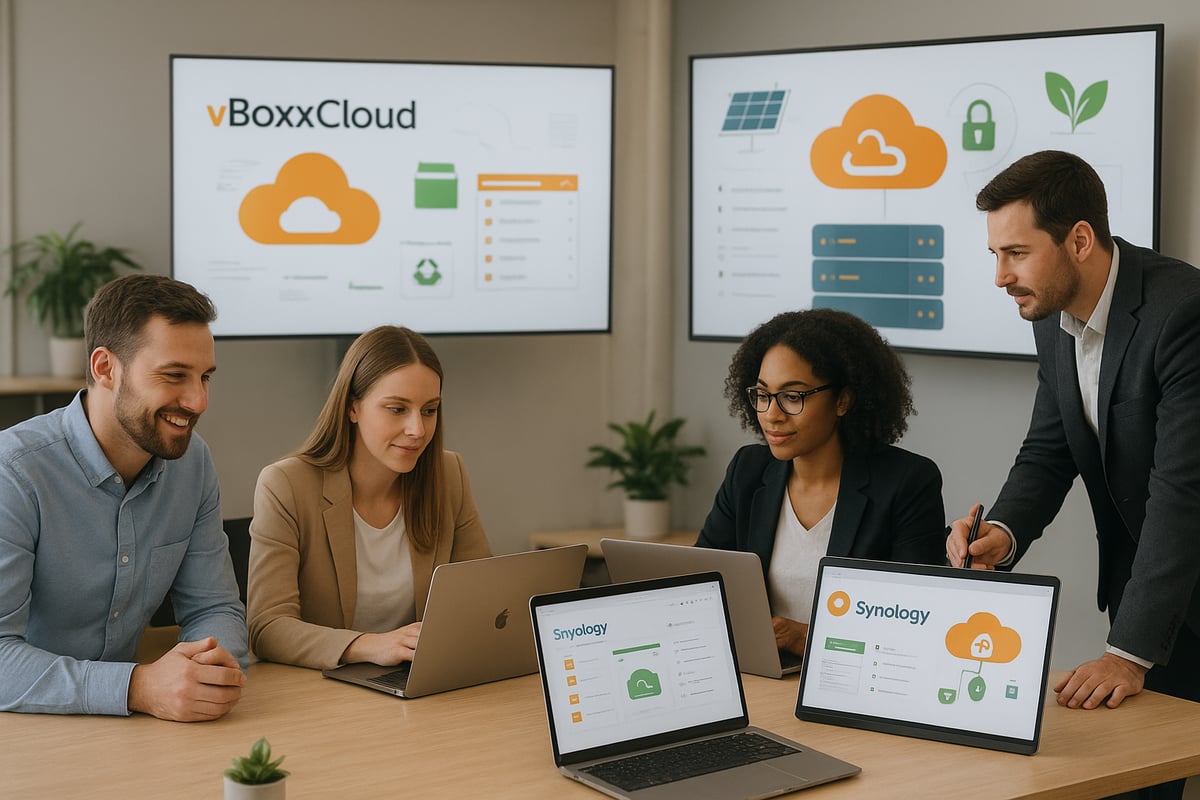
vBoxx delivers secure, flexible cloud disk options tailored for EU clients. vBoxxCloud and Synology Drive provide robust, compliant storage with advanced privacy controls. For those preferring open-source, vBoxx also hosts Nextcloud, ownCloud, and OpenCloud on its own infrastructure, ensuring full GDPR and NIS2 compliance.
Whether you are a small business, enterprise, or public sector entity, vBoxx offers customisable solutions, green hosting, and expert consultancy. Free trials allow you to test and tailor your cloud disk deployment with confidence.
Setting Up and Managing Your Cloud Disk: Step-by-Step Guide
Setting up a cloud disk is a strategic process that ensures your data is secure, accessible, and optimised for both individual and business needs. Whether you prefer vBoxxCloud, Synology Drive, or open-source platforms like Nextcloud, ownCloud, or OpenCloud, following clear steps makes all the difference. This guide will walk you through each stage, empowering you to get the most from your cloud disk solution.
Step 1: Selecting and Registering Your Cloud Disk Provider
Choosing the right cloud disk provider is the foundation for secure and effective storage. Consider security, compliance (such as GDPR and NIS2), support quality, and whether you need a hosted or open-source solution.
Registering is straightforward with vBoxxCloud or Synology Drive, requiring only basic details and a secure password. For open-source options, choose a provider that offers hosted Nextcloud, ownCloud, or OpenCloud on EU infrastructure to ensure data sovereignty.
Verification and onboarding usually involve confirming your email and setting up two-factor authentication. Once registered, you can immediately start configuring your cloud disk environment.
Step 2: Configuring Storage and User Access
Once your cloud disk account is active, allocate storage quotas based on user or group needs. Define user roles to control who can view, edit, or share files. For businesses, grouping users by department or project streamlines management.
Implementing multi-factor authentication is essential for protecting sensitive data. Role-based access, as seen in Synology Drive, allows fine-tuned permissions, ensuring each user only accesses the data they require.
Regularly review permissions to adapt as your team grows or changes. Well-structured access management is key to maximising your cloud disk’s security and efficiency.
Step 3: Migrating Data to the Cloud Disk</h3>
Preparing your files is the first step before migration. Clean up, organise, and remove redundant data to ensure a smooth transition. Use automated migration tools offered by your cloud disk provider to minimise manual effort.
For those moving from on-premise NAS systems, select a provider that supports seamless migrations, such as vBoxxCloud. This reduces downtime and protects data integrity.
After migration, verify that all files are accessible and intact. Establish a backup routine to safeguard your new cloud disk environment from the outset.
Step 4: Integrating with Existing Workflows
A cloud disk should fit naturally into your daily operations. Sync files across devices, automate backups, and enable real-time collaboration. Integration with productivity suites like Microsoft 365 or Google Workspace enhances workflow efficiency.
For businesses using Synology Drive or open-source solutions, Synology Drive Cloud Integration offers streamlined compatibility with desktop, mobile, and third-party applications. This ensures your cloud disk becomes a seamless part of your digital ecosystem.
Set up versioning and collaboration features to prevent data loss and support team productivity. Custom workflows can further automate routine tasks.
Step 5: Ongoing Management and Monitoring
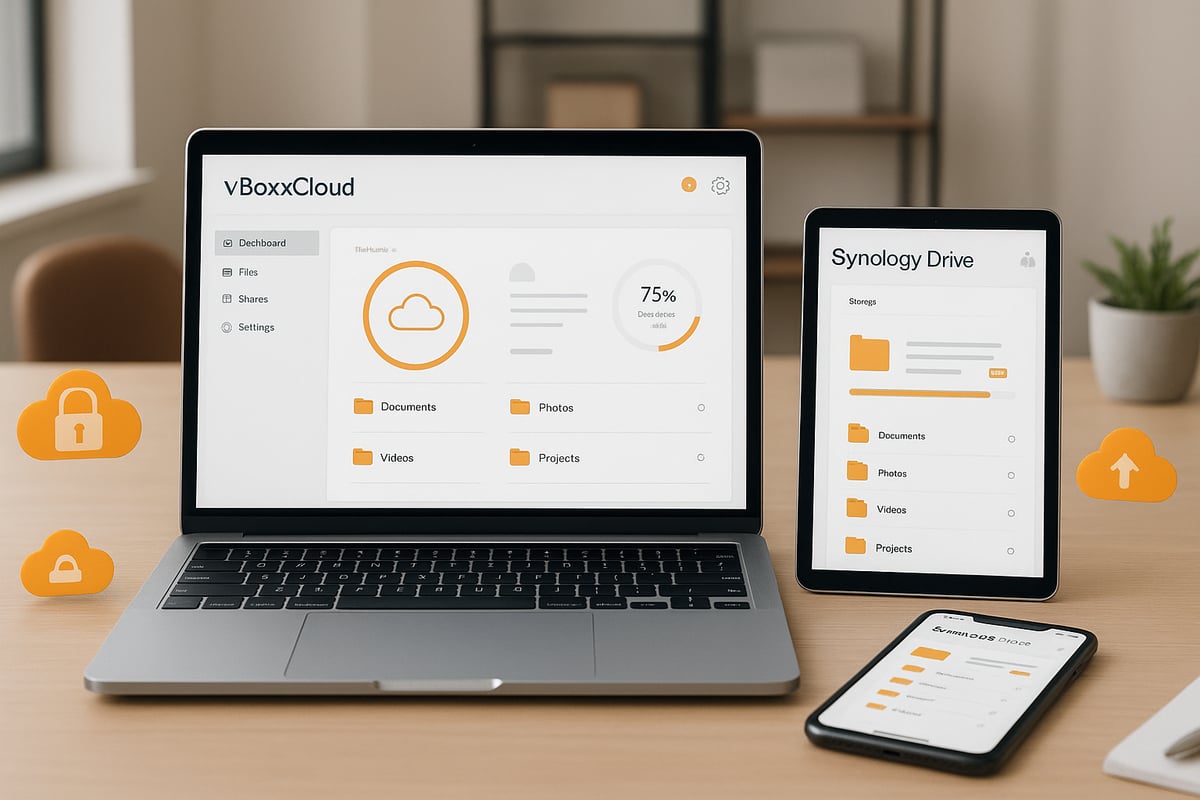
Effective management keeps your cloud disk running smoothly. Monitor storage usage and performance metrics regularly. Use built-in dashboards to spot trends or unusual patterns.
Schedule regular security audits and compliance checks, especially if handling sensitive or regulated data. Implement storage optimisation policies, such as archiving seldom-used files.
Automated alerts for suspicious activity or nearing storage limits help you respond proactively. Ongoing monitoring preserves both data integrity and operational efficiency.
Troubleshooting Common Issues
Despite best efforts, issues may arise. Common problems include connectivity errors, sync failures, or permission conflicts. Most cloud disk providers offer detailed support resources and responsive help desks.
For accidental deletions or ransomware attacks, rapid recovery features in vBoxxCloud or advanced backup in Synology Drive minimise data loss. Open-source platforms on vBoxx infrastructure also support robust disaster recovery.
Keep a checklist for troubleshooting steps and ensure users know how to access support. A proactive approach ensures your cloud disk remains reliable and secure.
<h2>Cloud Disk Security Best Practices for 2026
Securing your cloud disk is essential in 2026, as cyber threats and data regulations continue to evolve. Whether you use vBoxxCloud, Synology Drive, or open-source platforms like Nextcloud, ownCloud, or OpenCloud, implementing robust security practices ensures your data remains protected, compliant, and accessible only to authorised users.

Data Encryption and Zero-Trust Security
Encryption is at the heart of cloud disk protection. In 2026, all leading solutions, including vBoxxCloud and Synology Drive, offer encryption both at rest and in transit. This ensures that even if data is intercepted, it cannot be read without the proper keys.
Zero-trust security models are becoming standard. Every access request is verified, regardless of where it originates. Many organisations deploy hardware security modules (HSMs) to manage encryption keys securely. Open-source platforms like Nextcloud and ownCloud, hosted on vBoxx infrastructure, provide end-to-end encryption for privacy-focused clients. For a deeper dive into evolving protections, explore the Cloud security best practices for 2026.
User Access Management and Authentication
Effective access management is critical for any cloud disk. Assigning role-based or attribute-based permissions limits who can view or modify sensitive files. Multi-factor authentication (MFA) is now widely adopted, reducing the risk of unauthorised access.
Single sign-on (SSO) features streamline user experience while maintaining strong security controls. Platforms like Synology Drive and vBoxxCloud support advanced user management, making it easier for businesses to enforce security policies. Open-source options such as Nextcloud also offer granular access controls for EU clients with specific compliance needs.
Backup and Disaster Recovery Strategies
Automated backups are non-negotiable for any cloud disk in 2026. Scheduling regular, versioned backups protects against data loss from accidental deletion, ransomware, or hardware failure. Geo-redundant storage ensures a copy of your data exists in a separate location.
Recovery time objectives (RTO) and recovery point objectives (RPO) should be defined to meet your business requirements. vBoxxCloud and Synology Drive offer built-in backup and disaster recovery features, while open-source platforms can be configured for offsite replication. This approach guarantees business continuity and rapid restoration if incidents occur.
Compliance and Regulatory Considerations
Staying compliant with regulations like GDPR and NIS2 is essential for all cloud disk users in Europe. Data residency, sovereignty, and audit trails are top priorities. Providers such as vBoxxCloud and Synology Drive are designed for EU compliance, offering detailed audit logs and data processing agreements.
Certifications like ISO 27001 and SOC 2 demonstrate a provider’s commitment to security. For more information on meeting these standards, consult our ISO 27001 Security Guide. Open-source solutions hosted by vBoxx can also be tailored to strict regulatory requirements, ensuring your cloud disk aligns with industry best practices.
Monitoring, Alerts, and Incident Response
Continuous monitoring is vital for detecting threats in real time. Cloud disk providers now offer automated alerts for unusual activity, such as unauthorised access attempts or data exfiltration. Setting up escalation workflows allows rapid response to incidents.
Incident response plans should be tested regularly. vBoxxCloud and Synology Drive include tools for monitoring usage and performance, while open-source platforms can integrate with external security solutions. These measures help organisations respond swiftly, minimising potential damage and downtime.
Educating Users and Building Security Culture
Technology alone cannot secure a cloud disk. Regular user training, phishing simulations, and enforced password policies are necessary to build a strong security culture. Organisations should encourage user accountability and provide clear reporting channels for suspicious activity.
Large enterprises often implement ongoing security awareness programmes, but SMEs and public sector bodies also benefit from these practices. By empowering users, businesses ensure that their cloud disk remains a secure foundation for collaboration and growth.
The Future of Cloud Disks: Trends and Innovations for 2026 and Beyond</h2>
The
cloud disk landscape in 2026 is transforming at an unprecedented pace. From AI-driven automation to green data centres, today’s innovations are reshaping how individuals and organisations manage, secure, and collaborate on their digital assets. Staying ahead means understanding these pivotal trends and knowing how to select the right cloud disk for your evolving needs. For a deeper dive into emerging directions, see the Future trends in cloud storage.
AI and Automation in Cloud Storage
AI is now integral to cloud disk technology, enabling smarter file management and faster searches. By 2026, cloud disk platforms like vBoxxCloud and Synology Drive will leverage machine learning for automated tagging, deduplication, and predictive storage allocation.
These advancements reduce manual effort and help users find files instantly, even in massive data sets. Automated workflows streamline backup and compliance, freeing IT teams to focus on strategic initiatives. Open-source solutions, such as Nextcloud, are also embracing AI features, making intelligent automation accessible for businesses seeking flexible cloud disk deployments.
Edge Computing and Cloud Disk Integration
Edge computing is revolutionising how cloud disk solutions handle data, especially for real-time applications and IoT devices. With edge-enabled cloud disk integration, processing occurs closer to the data source, improving speed and privacy.
Industries such as manufacturing and healthcare benefit from reduced latency and increased control over sensitive information. Hybrid edge-cloud models, supported by providers like vBoxxCloud, allow seamless sync between on-premise and remote environments. This trend ensures cloud disk storage remains robust, responsive, and secure for distributed teams.
Sustainability and Green Cloud Disks</h3>
Sustainability is now a core requirement for any cloud disk provider. By 2026, energy-efficient data centres and carbon-neutral initiatives will be standard. vBoxxCloud leads with green hosting, using renewable energy and advanced cooling to minimise environmental impact.
Cloud disk adoption is increasingly influenced by green certifications and transparent sustainability metrics. For organisations focused on ESG goals, choosing a provider committed to eco-friendly practices is vital. Open-source platforms hosted on sustainable infrastructure, such as ownCloud and OpenCloud, further support responsible digital transformation.
Evolving Compliance and Data Sovereignty
Regulatory demands are shaping the future of cloud disk solutions. New EU and global regulations require strict data localisation and privacy by design. Cloud disk providers must support data residency, audit logs, and certifications like ISO 27001.
vBoxxCloud and Synology Drive enable GDPR and NIS2 compliance, ensuring data is processed securely within the EU. Open-source deployments, managed on compliant infrastructure, offer additional transparency and control. Organisations should prioritise cloud disk options that adapt quickly to regulatory changes and provide clear compliance roadmaps.
Collaboration and Productivity Enhancements
Cloud disk technology is redefining digital collaboration. Real-time co-authoring, integrated chat, and workflow automation are now essential features. vBoxxCloud and Synology Drive offer seamless integration with productivity suites, enhancing teamwork without sacrificing security.
Nextcloud Hub and similar open-source platforms provide advanced collaboration tools, including version control and mobile access. These capabilities empower remote and hybrid teams to work efficiently, regardless of location. For an overview of top solutions, explore the Best cloud storage services of 2026.
The Rise of Decentralised and Open-Source Cloud Disks</h3>
Decentr
alised and open-source cloud disk models are gaining traction. Federated storage, powered by platforms like Nextcloud, ownCloud, and OpenCloud, promotes interoperability and data sovereignty. Community-driven innovation ensures rapid adoption of new standards and security enhancements.
Multiparty authorisation and attribute-based encryption are emerging to strengthen access control, especially in complex cloud disk environments. These developments position open-source solutions as a compelling choice for organisations prioritising transparency, flexibility, and control over their digital assets.
Now that you have a clear picture of cloud disk technology and what to look for in 2026, you might be ready to put this knowledge into action for your own business or personal use. Choosing the right provider is all about balancing security, compliance, and sustainability—values that vBoxx prioritises in every solution. If you want to experience secure, green, and flexible cloud storage tailored to your needs, there’s no better way than trying it yourself. You can explore all the features we’ve discussed first-hand—simply start a free trial and see how vBoxx can support your digital future.