Cloud hosting is transforming at an unprecedented pace, increasingly positioning it as a cornerstone for businesses pursuing digital growth in 2026. As organisations demand greater reliability, security, and scalability, selecting the right cloud hosting service can therefore make a significant difference in performance, compliance, and cost control.
In this expert review, we take a closer look at the top six cloud hosting service picks for 2026. Along the way, you’ll discover their standout features, pricing, and key benefits, enabling you to confidently choose the solution that best fits your business needs.
What to Look for in a Cloud Hosting Service in 2026
Selecting the right cloud hosting service in 2026 is more critical than ever. Given that the digital landscape is evolving rapidly, businesses are demanding robust, secure, and flexible solutions to stay ahead. Therefore, to make an informed decision, you need to carefully evaluate several core factors and understand the latest trends that are shaping the market.
Key Criteria for Evaluation
When comparing cloud hosting service providers, it is crucial to first assess them against clear benchmarks. To help guide your decision, here are the critical areas to focus on:
- Performance: First and foremost, look for providers that guarantee at least 99.9% uptime, offer rapid server speeds, and maintain a global server infrastructure. By doing so, your applications remain accessible and responsive to users worldwide.
- Security and Compliance: Next, choose a cloud hosting service that meets GDPR, ISO 27001, and NIS2 requirements. In addition, advanced threat detection, encryption, and regular security audits are vital, especially for businesses handling sensitive data.
- Scalability and Flexibility: Furthermore, your cloud hosting service should offer auto-scaling resources, custom configurations, and multi-cloud support. This ensures your infrastructure can grow alongside your business needs, allowing you to handle peaks in demand without manual intervention.
- Support and Management: Equally important, 24/7 customer support is non-negotiable. Moreover, decide whether you need managed or unmanaged hosting, and also check if the provider offers migration assistance to make transitions smoother.
- Pricing Transparency: Additionally, transparent cost structures, free trials, and money-back guarantees help you manage budgets effectively and test services risk-free.
- Sustainability: Notably, eco-friendly data centres and green hosting practices are becoming standard expectations. Therefore, opt for providers investing in renewable energy and sustainable operations.
- Integration and Compatibility: Finally, the best cloud hosting service will support popular platforms, APIs, and third-party tools, which in turn enables seamless integration into your existing workflows.
Overall, by evaluating each cloud hosting service with these factors in mind, you can narrow down your options and ensure that your choice aligns with your operational, compliance, and sustainability goals. For a more detailed analysis, see the Cloud Server Hosting Guide.
Trends Shaping Cloud Hosting in 2026
The cloud hosting service landscape is being transformed by several influential trends. Understanding these developments will help you future-proof your infrastructure.
- AI-Powered Management: Automation and artificial intelligence are streamlining resource allocation, threat detection, and performance optimisation. As a result, providers are integrating AI tools to simplify both management and scaling, making operations more efficient.
- Data Privacy and Regional Hosting: With increasing regulatory demands, businesses are prioritising data sovereignty. Consequently, they are selecting providers that offer regional hosting and compliance options, ensuring that sensitive information remains secure.
- Hybrid and Multi-Cloud Solutions: The demand for flexibility has led to a surge in hybrid and multi-cloud deployments. By leveraging multiple platforms, companies can combine their strengths, optimising both performance and cost.
- Enhanced Backup and Disaster Recovery: Advanced backup, rapid disaster recovery, and business continuity features are now standard in any reputable cloud hosting service. This ensures that organisations remain protected against data loss and downtime.
- Market Shift Among SMEs and Enterprises: There is a clear migration from traditional hosting to cloud solutions, particularly among SMEs and larger organisations seeking agility, security, and cost efficiency. As a result, cloud adoption continues to accelerate across industries.
Ultimately, a future-ready cloud hosting service not only addresses current needs but also adapts to emerging business challenges. By keeping these trends in mind, you can position your business for long-term growth and resilience.
Top 6 Cloud Hosting Service Picks for 2026
Selecting the right cloud hosting service in 2026 is crucial for achieving top-tier performance, robust security, and operational efficiency. Each provider offers unique strengths, tailored for different business needs and compliance requirements. Below, we present an expert review of the six best cloud hosting service options for 2026, so you can confidently choose the ideal solution for your organisation.
vBoxx – Secure European Cloud Hosting for Privacy & Sustainability
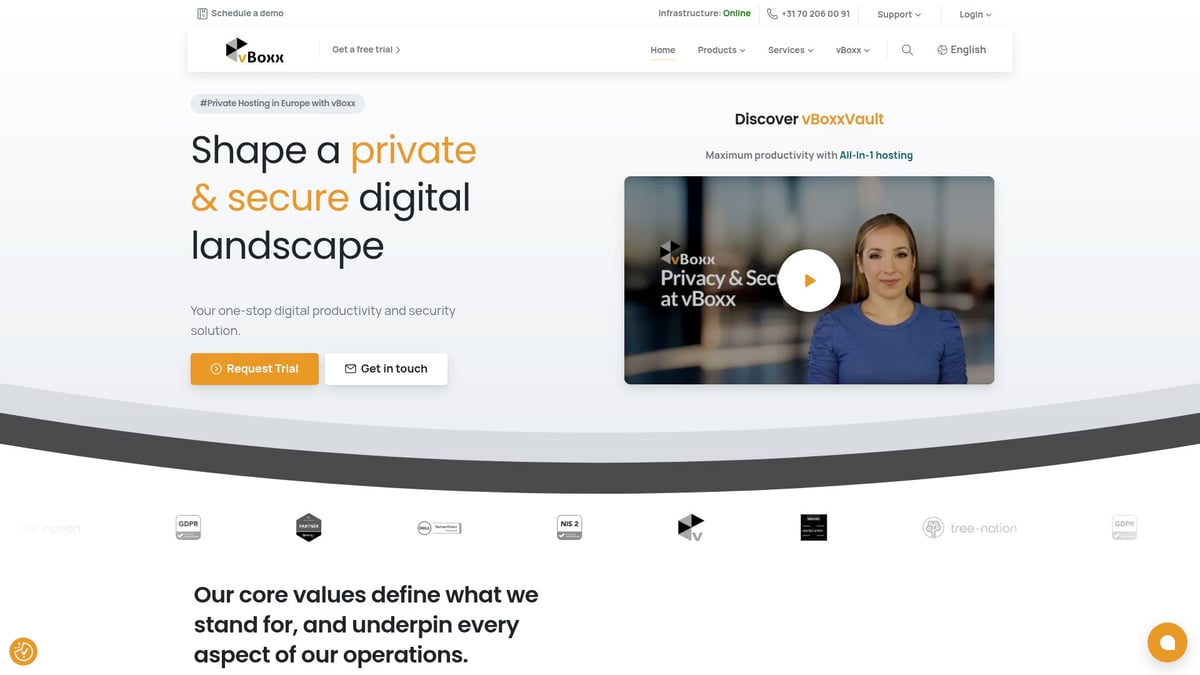
vBoxx is a leading European cloud hosting service known for its commitment to privacy, compliance, and environmental responsibility. Businesses seeking a secure cloud hosting service that prioritises data protection and sustainability will find vBoxx a compelling choice.
Core Features:
- European data residency with strict GDPR, ISO 27001, and NIS2 compliance.
- Green hosting practices and eco-friendly data centres.
- Advanced encryption and robust security protocols.
- Scalable infrastructure supporting storage, backup, and email.
Pricing: Custom quotes tailored to your organisation’s needs. Free trials available for select cloud hosting service offerings.
Unique Benefits: vBoxx stands out by offering all-in-one productivity tools, including encrypted storage and backup. Their consultancy approach ensures each cloud hosting service is optimised for privacy and compliance, making them ideal for regulated sectors.
Target Audience: SMBs, enterprises, IT agencies, and organisations with high privacy or security demands.
Pros:
- European data protection standards.
- Personalised consultancy and support.
- Eco-friendly operations and strong technology partnerships.
Cons:
- Custom pricing may require a consultation.
- Infrastructure is limited to European data centres.
Example: Healthcare and legal firms trust vBoxx for GDPR-compliant storage and backup. For deeper insight into secure storage, see their Encrypted Online Storage Insights.
Hostinger – Affordable, Scalable Cloud Hosting
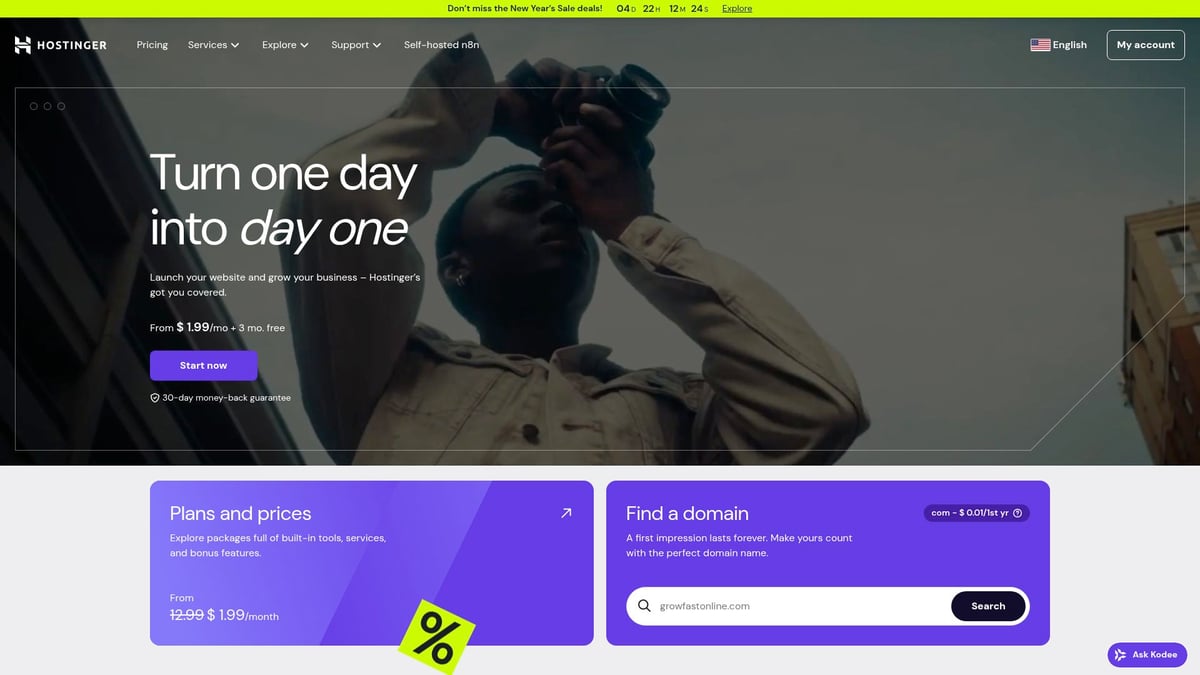
Hostinger delivers a cloud hosting service that balances affordability, scalability, and ease of use, making it a popular choice for growing businesses and digital agencies.
Core Features:
- 99.9% uptime guarantee and 200GB NVMe storage per plan.
- Unlimited bandwidth and global data centre presence.
- Managed WordPress hosting and integrated AI tools.
- Daily and on-demand backups for peace of mind.
Pricing: Entry-level plans start at $7.59/month and include three months free. A 30-day money-back guarantee lets you trial the cloud hosting service risk-free.
Unique Benefits: Hostinger’s cloud hosting service is eCommerce-ready, with zero transaction fees and a free domain and SSL for new customers. The intuitive setup process is ideal for non-technical users.
Target Audience: Startups, SMEs, budget-conscious businesses, and digital agencies seeking reliable cloud hosting service performance without breaking the bank.
Pros:
- Excellent value for the features offered.
- Easy onboarding and setup.
- Generous resources at entry-level pricing.
Cons:
- Limited advanced customisation options.
- Entry-level plans may not include premium support.
Example: Growing eCommerce sites use Hostinger’s cloud hosting service to expand globally, leveraging managed WordPress and seamless scaling.
SiteGround – High-Performance Cloud Hosting for Enterprises
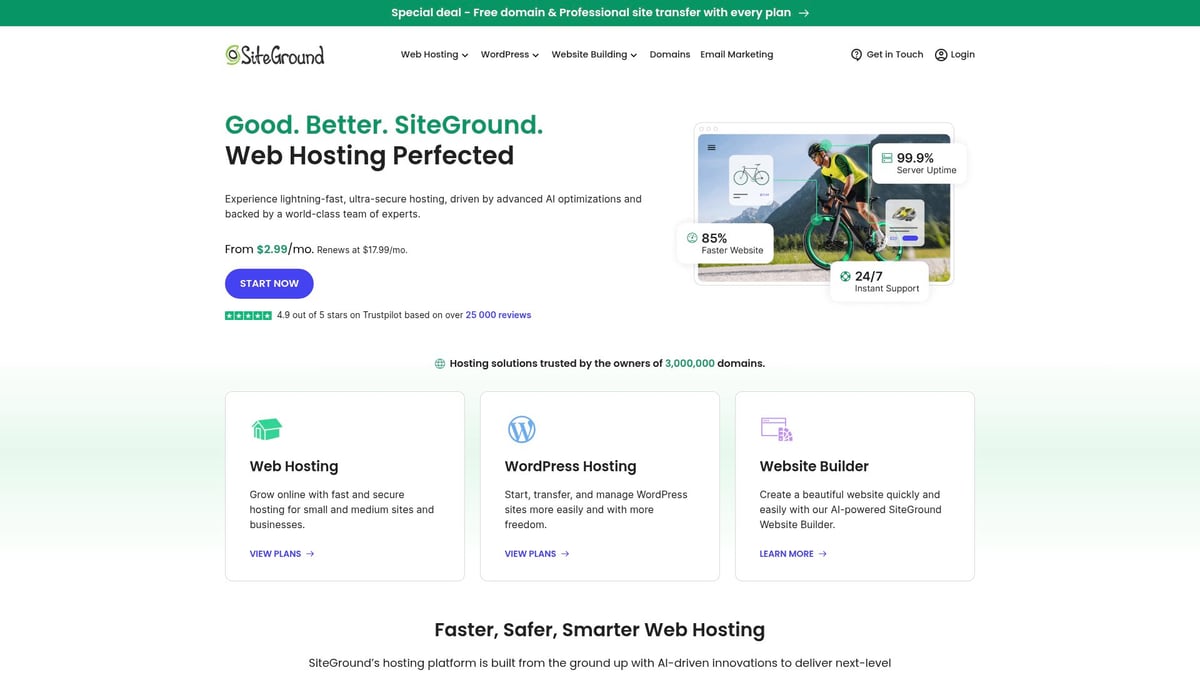
SiteGround is a premium cloud hosting service designed for agencies, developers, and enterprises that require dedicated resources and advanced management tools.
Core Features:
- Customisable cloud hosting service plans with 4 CPU cores, 8GB RAM, 40GB SSD, and 5TB data transfer.
- Auto-scaling, DevOps management, and white-label reselling for agencies.
- Reliable 99.9% uptime and high-speed infrastructure.
Pricing: Plans start at $100/month with a 14-day money-back guarantee, reflecting the enterprise-grade cloud hosting service features offered.
Unique Benefits: SiteGround’s cloud hosting service delivers automatic scaling and dedicated resources, making it suitable for high-traffic websites and agencies managing multiple clients.
Target Audience: Agencies, developers, and enterprises needing robust, flexible cloud hosting service solutions.
Pros:
- Exceptional speed and uptime.
- Flexible resource allocation.
- Strong customer support and reseller tools.
Cons:
- Higher entry price point.
- May be excessive for smaller websites.
Example: Digital agencies use SiteGround’s cloud hosting service white-label features to manage multiple client sites seamlessly.
ScalaHosting – Secure Cloud Hosting with SPanel
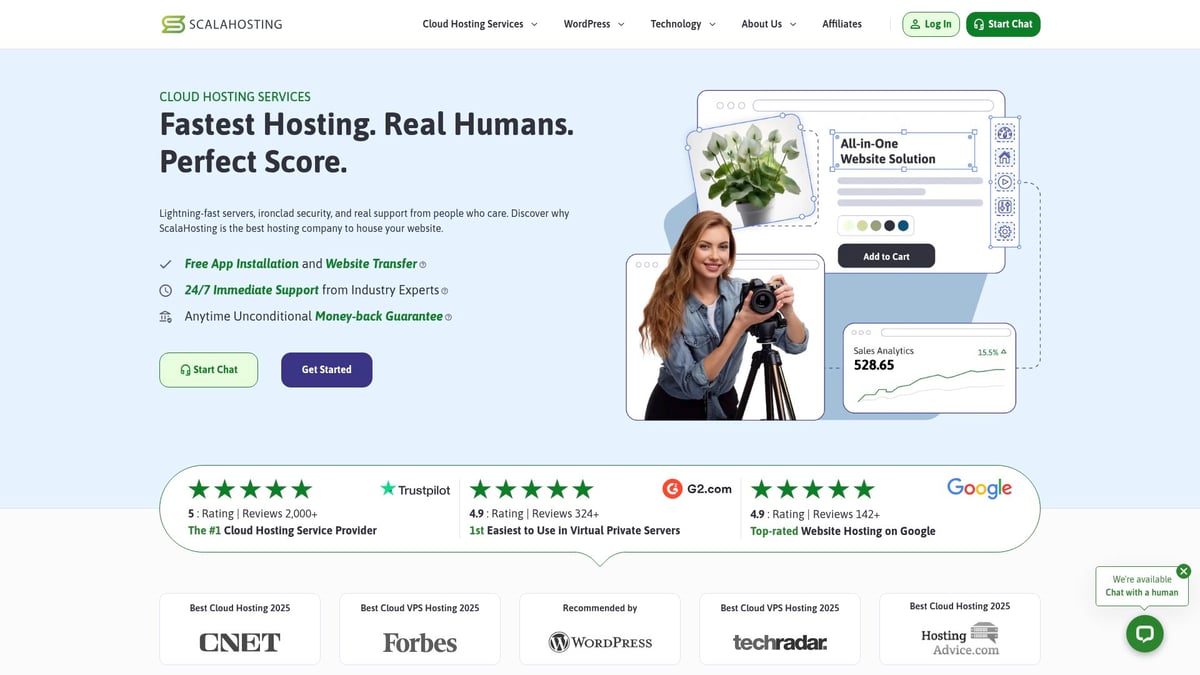
ScalaHosting provides a cloud hosting service that combines security, ease of use, and innovative management tools, making it ideal for SMEs and non-technical users.
Core Features:
- 99.9% uptime and free migration to their cloud hosting service.
- SPanel control panel as a user-friendly cPanel alternative.
- SShield cybersecurity suite with real-time threat monitoring.
- Automated daily backups and one-click WordPress installation.
Pricing: Cloud hosting service plans start at $22.46/month. New users benefit from a money-back guarantee.
Unique Benefits: ScalaHosting’s SPanel simplifies cloud hosting service management, while SShield ensures robust security. Free migration and automated backups remove technical headaches.
Target Audience: SMBs, non-technical users, and businesses upgrading from shared hosting to managed VPS-level cloud hosting service.
Pros:
- Simple control panel interface.
- Strong, real-time security features.
- Free migration assistance.
Cons:
- Fewer advanced options for power users.
- SPanel may have a learning curve for some.
Example: SMEs transition from shared hosting to ScalaHosting’s secure cloud hosting service, benefiting from managed performance and easy management.
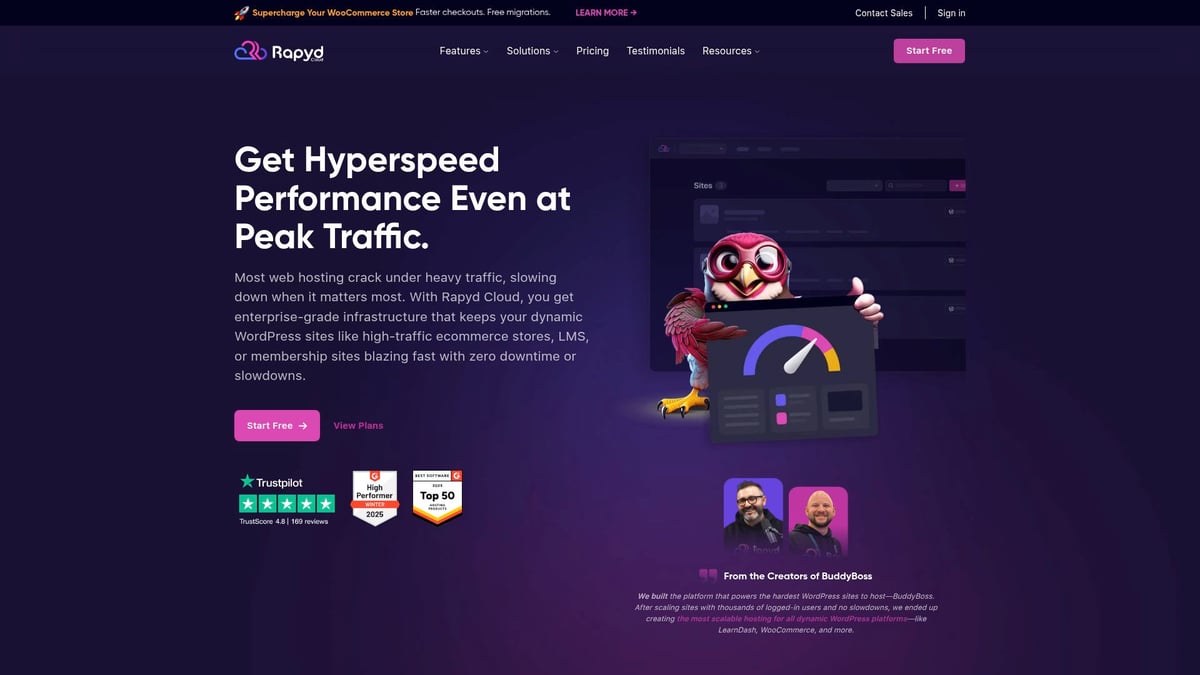
Rapyd.cloud – Global Speed and CDN Integration
Rapyd.cloud offers a cloud hosting service focused on global content delivery, speed, and integrated security, making it perfect for SaaS platforms and international businesses.
Core Features:
- High-performance architecture with built-in global CDN.
- Real-time threat detection and automated daily backups.
- Intuitive control panel and 24/7 customer support.
Pricing: Cloud hosting service plans start at $29.00/month, providing scalable resources for growing businesses.
Unique Benefits: Rapyd.cloud’s cloud hosting service ensures seamless content delivery worldwide, making it ideal for websites with international audiences and content-heavy platforms.
Target Audience: International businesses, SaaS platforms, and content-driven sites seeking a fast, reliable cloud hosting service.
Pros:
- Exceptional global speed.
- Strong security protocols.
- Simple setup and management.
Cons:
- Limited advanced customisation for expert users.
- Newer brand in the cloud hosting service market.
Example: SaaS companies leverage Rapyd.cloud’s cloud hosting service and CDN to deliver rapid content to customers around the globe.
HostGator – User-Friendly Cloud Hosting for Growing Sites
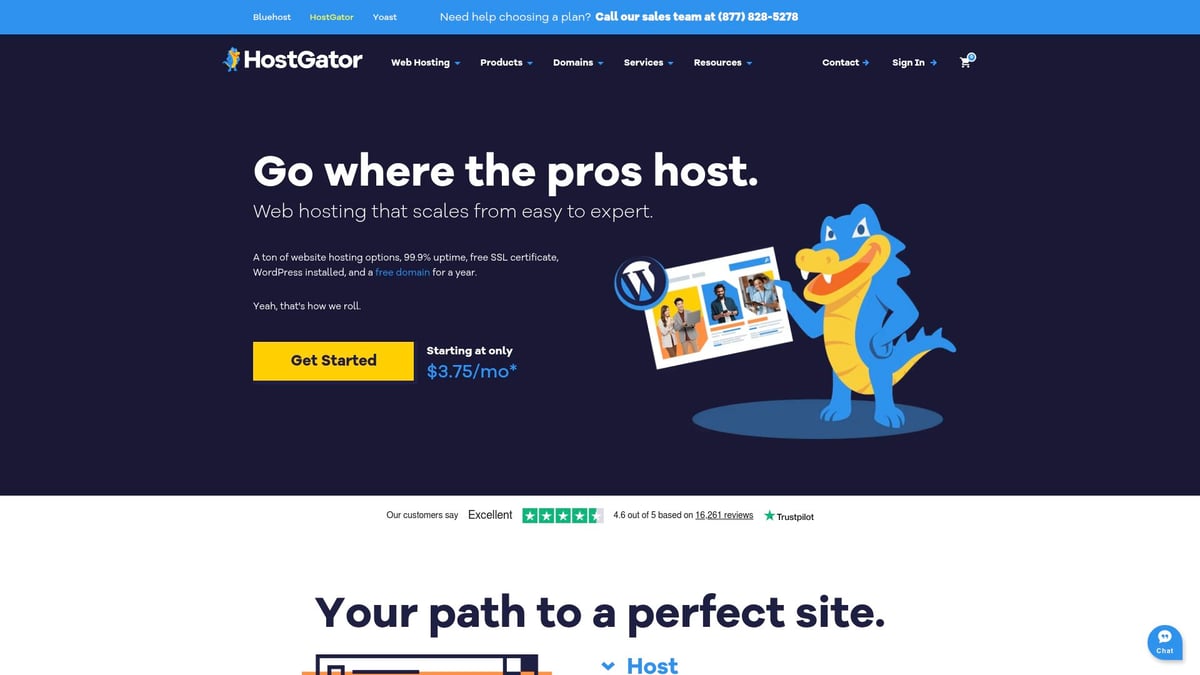
HostGator is a user-friendly cloud hosting service designed for bloggers, small businesses, and websites anticipating growth and traffic spikes.
Core Features:
- 99.9% uptime, 2GB RAM, and 2 core CPU per cloud hosting service plan.
- Automatic failover for uninterrupted service.
- WordPress updates and a real-time performance dashboard.
Pricing: HostGator’s cloud hosting service plans are competitively priced, with exact rates varying by region and plan.
Unique Benefits: The intuitive dashboard makes cloud hosting service management simple, while automatic failover ensures maximum uptime during traffic surges.
Target Audience: Bloggers, small businesses, and content creators expecting seasonal or unpredictable traffic.
Pros:
- Easy-to-use management tools.
- Reliable uptime and failover support.
- Scalable resources on demand.
Cons:
- Fewer advanced features than some competitors.
- Some plans may have resource limits.
Example: Content creators and small businesses rely on HostGator’s cloud hosting service to handle sudden spikes in website traffic smoothly.
Cloud Hosting Comparison Table: Features & Pricing at a Glance
Selecting the right cloud hosting service can be challenging with so many options on the market. To simplify your decision, we have created a comprehensive comparison table, allowing you to evaluate essential features, pricing, compliance, and support at a glance. This overview is designed to help you quickly identify the cloud hosting service best suited to your business goals and regulatory needs.
| Provider | Entry Pricing | Uptime | Data Residency | Compliance | Key Features | Free Trial / Guarantee | Target Use Case | Unique Selling Point |
|---|---|---|---|---|---|---|---|---|
| vBoxx | Custom | 99.9%+ | Europe | GDPR, ISO 27001, NIS2 | Green hosting, strong encryption | Free trials (select) | Regulated industries, SMBs | Privacy, sustainability focus |
| Hostinger | $7.59/mo | 99.9% | Global | GDPR | NVMe storage, AI tools, eCommerce | 30-day money-back | Startups, SMEs, agencies | Affordable, feature-rich |
| SiteGround | $100/mo | 99.9%+ | Global | GDPR, ISO 27001 | Auto-scaling, white-label, DevOps | 14-day money-back | Agencies, enterprises | Customisable, white-label |
| ScalaHosting | $22.46/mo | 99.9% | US/EU | GDPR | SPanel, SShield, daily backups | Money-back (new users) | SMBs, non-technical, managed VPS | User-friendly, robust security |
| Rapyd.cloud | $29.00/mo | 99.9% | Global | GDPR | Global CDN, real-time threat detect | – | SaaS, global content sites | CDN integration, global speed |
| HostGator | Varies | 99.9% | US | GDPR | Failover, WP updates, dashboard | – | Bloggers, SMBs, growth sites | Simple management, scalable |
The table above summarises each cloud hosting service by core features, entry-level pricing, compliance, and use case. You can see at a glance which providers offer free trials, money-back guarantees, and migration assistance for a risk-free start. Notice the differences in data residency, from European-only hosting with vBoxx to global infrastructure from Hostinger and Rapyd.cloud.
When choosing a cloud hosting service, consider not only technical strengths but also long-term strategic risks. For further insights into Cloud Provider Dependency Risks, explore how reliance on a single provider can affect your business’s flexibility and resilience.
How to Choose the Right Cloud Hosting Provider for Your Business
Selecting the best cloud hosting service for your business is a strategic decision that directly impacts performance, compliance, and costs. To begin with, clearly define your business needs. For example, consider your website traffic levels, compliance requirements, data residency preferences, and overall budget. Since each cloud hosting service offers unique strengths, aligning these factors early helps establish a strong foundation.
Next, evaluate provider strengths by reviewing performance benchmarks, security certifications, customer support quality, and scalability options. In particular, assess whether the cloud hosting service complies with standards such as GDPR, ISO 27001, or NIS2—especially if your organisation operates in regulated sectors. For additional clarity, detailed regulatory guidance can be found in NIS2 Compliance Guides.
Looking ahead, consider your future growth trajectory. Will the cloud hosting service scale seamlessly as your business expands? Ideally, it should offer flexible upgrade paths, auto-scaling resources, and options for adding services or transitioning to hybrid environments. Moreover, if you anticipate evolving requirements or movement between public and private clouds, reviewing cloud repatriation trends in 2026 can help you understand long-term implications.
Equally important, integration with existing platforms should not be overlooked. Make sure your chosen cloud hosting service supports your preferred tools, APIs, and workflows. As a result, strong compatibility reduces operational friction and helps your team remain productive.
Finally, sustainability and compliance are becoming increasingly important considerations. In many cases, green data centres, transparent energy policies, and adherence to local regulations can be decisive factors. Therefore, prioritise these features when they align with your business values or client expectations.
Use the checklist below to guide your decision:
| Decision Factor | Questions to Ask |
|---|---|
| Traffic & Resources | What are my current and projected traffic levels? |
| Compliance | Do I need GDPR, NIS2, or sector-specific certifications? |
| Data Residency | Where must my data be physically stored? |
| Budget | How much can I invest monthly or annually? |
| Performance | Do I need low latency, high uptime, or global reach? |
| Integration | Does it support my platforms and tools? |
| Sustainability | Are eco-friendly practices a priority? |
| Migration & Trials | Is there a free trial or migration support? |
Trial periods and migration assistance can significantly reduce risk when moving to a new cloud hosting service. For this reason, it’s wise to take full advantage of these offerings to test performance, reliability, and support before committing to a long-term agreement.
Ultimately, the right cloud hosting service should align with both your immediate requirements and your future ambitions. By following a structured, step-by-step approach, you can make a well-informed decision that supports long-term business growth and operational resilience.
In conclusion, choosing the right cloud hosting partner is a critical decision for any organisation aiming to thrive in the digital landscape of 2026. Throughout this guide, we’ve covered the essential criteria—from security and compliance to sustainable, high-performance infrastructure—so you can confidently assess your options. If you’re ready to take the next step, there’s no risk in exploring further. You can experience first-hand how a secure, privacy-focused, and sustainable cloud solution can benefit your organisation. Simply start a free trial and discover how vBoxx supports your business needs.