

The digital transformation of business operations has accelerated dramatically in recent years, with organisations of all sizes seeking flexible, scalable infrastructure solutions. Cloud hosting has emerged as the cornerstone technology enabling this shift, fundamentally changing how businesses deploy applications, store data, and serve their customers. Furthermore, as traditional on-premises infrastructure becomes increasingly costly and complex to maintain, understanding the capabilities and strategic advantages of cloud-based solutions has become essential for decision-makers across industries.
Understanding Cloud Hosting Architecture
Cloud hosting represents a sophisticated approach to delivering computing resources over the internet, drawing from pooled infrastructure rather than relying on single physical servers. Unlike traditional hosting models where websites or applications reside on dedicated hardware, cloud environments distribute workloads across multiple interconnected servers working in concert.
This distributed architecture provides inherent redundancy and resilience. Moreover, the NIST Cloud Computing Reference Architecture establishes a comprehensive framework that defines how cloud components interact, from physical infrastructure through to service delivery mechanisms.
Core Characteristics That Define Cloud Solutions
The defining features of cloud hosting distinguish it from conventional infrastructure approaches:
- On-demand self-service: Provisioning computing capabilities automatically without human intervention
- Broad network access: Resources accessible via standard mechanisms across diverse client platforms
- Resource pooling: Provider’s computing resources serve multiple consumers through multi-tenant models
- Rapid elasticity: Capabilities scale outward and inward commensurate with demand
- Measured service: Systems automatically control and optimise resource utilisation through metering
Nevertheless, these characteristics create a fundamentally different operational paradigm. Therefore, businesses transitioning from traditional infrastructure must reconsider their approaches to capacity planning, security architecture, and cost management.
Service Models and Deployment Strategies
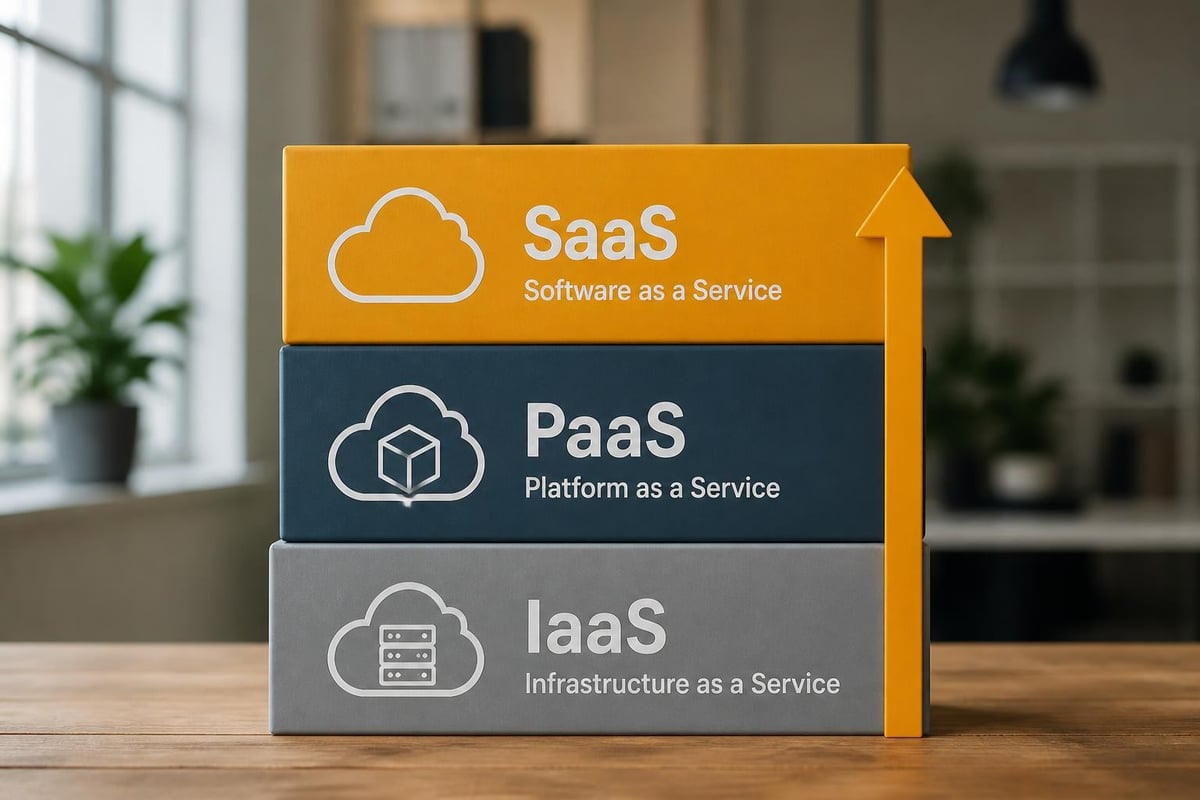
Cloud hosting encompasses several distinct service models, each addressing different organisational requirements and technical capabilities. Furthermore, understanding these models enables businesses to select appropriate solutions aligned with their operational objectives.
Infrastructure, Platform, and Software Layers
| Service Model | Provider Manages | Customer Manages | Ideal Use Cases |
|---|---|---|---|
| Infrastructure as a Service (IaaS) | Servers, storage, networking, virtualisation | Operating systems, middleware, runtime, applications, data | Custom applications, development environments, disaster recovery |
| Platform as a Service (PaaS) | Everything in IaaS plus operating systems, middleware, runtime | Applications and data | Application development, API deployment, business analytics |
| Software as a Service (SaaS) | Entire stack from infrastructure through applications | Configuration and user data | Email, collaboration tools, CRM systems |
The standards and deployment models outlined by authoritative bodies provide essential guidance for organisations evaluating these options. In addition, hybrid approaches combining multiple service models have gained prominence as businesses seek optimal balance between control and convenience.
Deployment Models for Different Requirements
Beyond service models, cloud hosting offers various deployment configurations:
- Public clouds deliver services over the internet to multiple organisations, maximising cost efficiency through shared infrastructure
- Private clouds provide dedicated environments for single organisations, offering enhanced control and customisation
- Hybrid clouds combine public and private elements, enabling workload portability and flexible data placement
- Community clouds serve specific groups with shared concerns, such as regulatory compliance requirements
Moreover, European businesses increasingly prioritise data sovereignty, favouring providers with infrastructure located within jurisdictional boundaries. Therefore, selecting deployment models involves balancing technical requirements against regulatory and compliance considerations.
Technical Advantages Driving Adoption
The migration towards cloud-based infrastructure reflects tangible operational and strategic benefits that traditional hosting struggles to match. Furthermore, these advantages compound over time as organisations develop cloud-native practices and expertise.
Scalability and Performance Optimisation
Cloud hosting excels at accommodating fluctuating demand patterns. Nevertheless, effective scaling requires thoughtful architecture:
- Vertical scaling increases resources (CPU, RAM, storage) within existing instances
- Horizontal scaling adds additional instances to distribute load
- Auto-scaling adjusts capacity automatically based on predefined metrics and policies
In addition, geographical distribution of resources enables organisations to position applications closer to end users, reducing latency and improving response times. This global reach would require substantial capital investment in traditional infrastructure models.
Cost Efficiency Through Flexible Consumption
Traditional infrastructure demands significant upfront capital expenditure for hardware that may remain underutilised during normal operations yet proves insufficient during peak periods. Conversely, cloud hosting shifts costs to operational expenditure with consumption-based pricing.
The financial benefits extend beyond pricing models:
- Elimination of hardware refresh cycles and associated capital costs
- Reduction in physical data centre space, power, and cooling requirements
- Decreased staffing requirements for infrastructure maintenance
- Faster provisioning enabling quicker time-to-market for new initiatives
Therefore, organisations can redirect resources from infrastructure management towards strategic initiatives that differentiate their businesses.

Security Considerations and Privacy Frameworks
Security represents both a primary concern and significant advantage in cloud environments. Furthermore, the shared responsibility model requires clear understanding of which security elements fall under provider versus customer purview.
Implementing Robust Security Architectures
Comprehensive cloud security encompasses multiple defensive layers:
- Identity and access management controlling who can access resources and what actions they can perform
- Data encryption protecting information both in transit and at rest
- Network security isolating workloads and controlling traffic flows between components
- Threat detection monitoring for suspicious activities and potential security incidents
- Compliance frameworks ensuring adherence to regulatory requirements
Moreover, European businesses benefit from stringent data protection regulations that cloud providers must satisfy. The General Data Protection Regulation establishes rigorous standards for data handling, processor agreements, and breach notification procedures.
Privacy by Design in Cloud Operations
Privacy considerations extend beyond mere compliance to encompass fundamental architectural decisions. In addition, organisations seeking comprehensive cloud computing guidance discover that privacy requirements influence vendor selection, data architecture, and operational procedures.
European-focused providers often emphasise data residency guarantees, ensuring information remains within specific jurisdictions. Furthermore, transparency regarding subprocessor relationships and data access protocols enables organisations to conduct thorough privacy impact assessments.
Migration Strategies and Implementation Planning
Transitioning to cloud infrastructure demands careful planning and phased execution. Nevertheless, organisations that invest time in preparation realise smoother migrations and faster returns on investment.
Assessment and Workload Prioritisation
Successful cloud adoption begins with comprehensive inventory and evaluation:
- Application dependencies mapping interconnections between systems and data sources
- Performance requirements documenting resource consumption patterns and response time expectations
- Compliance constraints identifying regulatory or contractual limitations on data placement
- Technical compatibility assessing whether applications require refactoring for cloud environments
Therefore, migration roadmaps typically prioritise workloads offering quick wins whilst building expertise for more complex transitions. In addition, pilot projects validate approaches before broader deployment.
Execution Approaches and Risk Mitigation
| Migration Strategy | Description | Benefits | Considerations |
|---|---|---|---|
| Rehost (Lift and Shift) | Move applications without modification | Fastest migration, minimal code changes | May not optimise cloud capabilities |
| Replatform | Minor optimisations without core changes | Some cloud benefits, limited refactoring | Requires testing and validation |
| Refactor | Redesign applications for cloud-native architecture | Maximum cloud advantage, improved performance | Highest effort and timeline |
| Retain | Keep certain workloads on-premises | Addresses compliance or technical constraints | Requires hybrid connectivity |
Moreover, phased approaches reduce risk by limiting simultaneous changes. Furthermore, maintaining parallel environments during transitions provides fallback options should issues emerge.
For organisations seeking guided implementation, exploring options like a demonstration of integrated cloud solutions can clarify capabilities and migration pathways specific to business requirements.
Performance Monitoring and Continuous Optimisation
Cloud environments demand ongoing attention to maintain optimal performance and cost efficiency. Nevertheless, the tools and metrics available in cloud platforms enable unprecedented visibility into infrastructure behaviour.
Key Performance Indicators and Metrics
Effective monitoring encompasses multiple dimensions:
- Resource utilisation tracking CPU, memory, storage, and network consumption
- Application performance measuring response times, throughput, and error rates
- Availability metrics documenting uptime and service reliability
- Cost allocation attributing expenses to specific projects, departments, or customers
In addition, establishing baselines enables detection of anomalous behaviour that might indicate security incidents or performance degradation. Therefore, investing in comprehensive observability pays dividends through faster problem resolution and capacity planning accuracy.
Optimisation Strategies for Efficiency
Cloud cost optimisation represents an ongoing discipline rather than one-time activity:
- Right-sizing instances matching resource allocations to actual requirements
- Reserved capacity committing to longer terms for predictable workloads
- Storage tiering moving infrequently accessed data to lower-cost storage classes
- Scheduled scaling reducing capacity during known low-demand periods
- Workload placement selecting appropriate regions and availability zones
Moreover, automation plays crucial roles in maintaining optimised configurations as business requirements evolve. Furthermore, regular reviews prevent configuration drift and ensure continued alignment with organisational objectives.

Emerging Trends Shaping Cloud Infrastructure
The cloud landscape continues evolving rapidly, with several developments poised to significantly impact how organisations leverage hosted infrastructure. Furthermore, staying informed about these trends enables proactive planning and competitive advantage.
Edge Computing and Distributed Architectures
Traditional cloud models centralise processing in regional data centres, but edge computing pushes computation closer to data sources and end users. Nevertheless, this doesn’t replace centralised cloud but rather extends it:
- Reduced latency for time-sensitive applications requiring rapid response
- Bandwidth optimisation processing data locally rather than transmitting to central locations
- Enhanced privacy keeping sensitive information closer to collection points
- Improved resilience maintaining functionality despite connectivity disruptions
In addition, the InterCloud federation concepts demonstrate how distributed cloud environments can collaborate to scale services and maintain quality targets under varying conditions.
Sustainability and Green Cloud Practices
Environmental considerations increasingly influence infrastructure decisions. Therefore, cloud providers emphasise renewable energy usage, efficient cooling systems, and carbon-neutral operations. Moreover, European businesses benefit from providers prioritising sustainability alongside performance and security.
The consolidation inherent in cloud models delivers environmental advantages through improved resource utilisation compared to dispersed on-premises infrastructure. Furthermore, transparency regarding energy sources and carbon footprints enables organisations to align technology choices with corporate sustainability commitments.
Artificial Intelligence Integration
Cloud platforms increasingly embed artificial intelligence and machine learning capabilities, democratising access to advanced analytics:
- Automated resource management using predictive algorithms for capacity planning
- Enhanced security through behavioural analysis and threat detection
- Intelligent monitoring identifying performance issues before they impact users
- Development acceleration with pre-trained models and simplified deployment
Nevertheless, these capabilities raise additional considerations around data governance, model transparency, and ethical AI usage that organisations must address.
Regulatory Compliance and Industry Standards
Operating in regulated industries or handling sensitive data introduces specific requirements that cloud environments must satisfy. Furthermore, comprehensive cloud computing standards provide frameworks for evaluating provider capabilities and implementing appropriate controls.
European Regulatory Landscape
Several regulations particularly impact European businesses utilising cloud infrastructure:
- GDPR governing personal data processing and cross-border transfers
- NIS2 Directive establishing cybersecurity requirements for essential services
- Digital Operational Resilience Act (DORA) addressing ICT risk management in financial services
- Industry-specific regulations such as healthcare data protection or financial record retention
Moreover, vendor selection processes must evaluate compliance certifications, audit reports, and contractual commitments regarding regulatory adherence. In addition, understanding the shared responsibility model clarifies which compliance obligations remain with the customer versus transfer to the provider.
Audit, Certification, and Assurance
Third-party certifications provide independent validation of security and operational practices:
| Certification | Focus Area | Relevance |
|---|---|---|
| ISO 27001 | Information security management | Comprehensive security framework |
| SOC 2 Type II | Security, availability, confidentiality | Operational controls validation |
| ISO 27017 | Cloud-specific security controls | Cloud service provider practices |
| ISO 27018 | Personal data protection in cloud | Privacy controls for cloud environments |
Therefore, organisations handling sensitive information should prioritise providers maintaining relevant certifications and demonstrating commitment to continuous compliance.
Disaster Recovery and Business Continuity
Cloud infrastructure provides powerful capabilities for protecting against data loss and maintaining operations during disruptions. Nevertheless, effective disaster recovery requires deliberate planning and regular testing.
Recovery Time and Point Objectives
Defining acceptable recovery parameters guides infrastructure design:
- Recovery Time Objective (RTO) specifies maximum acceptable downtime
- Recovery Point Objective (RPO) determines acceptable data loss measured in time
- Business impact analysis identifies critical systems and dependencies
Furthermore, cloud platforms enable sophisticated replication strategies that would prove prohibitively expensive in traditional environments. In addition, geographical distribution across multiple data centres provides resilience against regional outages.
Backup Strategies and Testing Protocols
Comprehensive backup approaches combine multiple techniques:
- Continuous replication for critical systems requiring minimal RPO
- Scheduled snapshots capturing point-in-time states at regular intervals
- Archival storage retaining long-term records in cost-effective tiers
- Cross-region replication protecting against regional failures
Moreover, untested backups provide false confidence. Therefore, regular recovery drills validate that procedures work as expected and personnel understand their roles during incidents. Furthermore, documenting lessons learned from tests improves preparedness for actual events.
Cloud hosting has fundamentally transformed how businesses approach infrastructure, offering scalability, security, and cost efficiency that traditional models struggle to match. Moreover, as technology continues evolving, organisations that embrace cloud capabilities position themselves for agility and innovation in an increasingly competitive landscape. vBoxx combines European data sovereignty with comprehensive cloud solutions, from secure storage and communication platforms to virtual servers and backup services, all underpinned by green hosting practices and privacy-first principles. Therefore, whether you’re planning an initial cloud migration or optimising existing infrastructure, exploring how vBoxx’s tailored approach aligns with your business requirements represents a valuable next step.