

The digital transformation of modern business hinges on understanding the role of a cloud provider in cloud computing. Furthermore, as organisations migrate their operations to the cloud, selecting the right provider becomes a strategic decision that impacts security, performance, cost efficiency, and long-term scalability. Therefore, this guide explores the essential considerations for businesses evaluating cloud providers, examining service models, deployment options, security frameworks, and the critical factors that determine success in cloud adoption.
Understanding Cloud Providers and Their Core Functions
A cloud provider in cloud computing serves as the foundation for delivering on-demand computing resources over the internet. Moreover, these providers maintain vast infrastructure networks comprising servers, storage systems, networking equipment, and software platforms that customers can access without owning physical hardware. The NIST definition of cloud computing establishes five essential characteristics that define legitimate cloud services: on-demand self-service, broad network access, resource pooling, rapid elasticity, and measured service.
Service Model Classifications
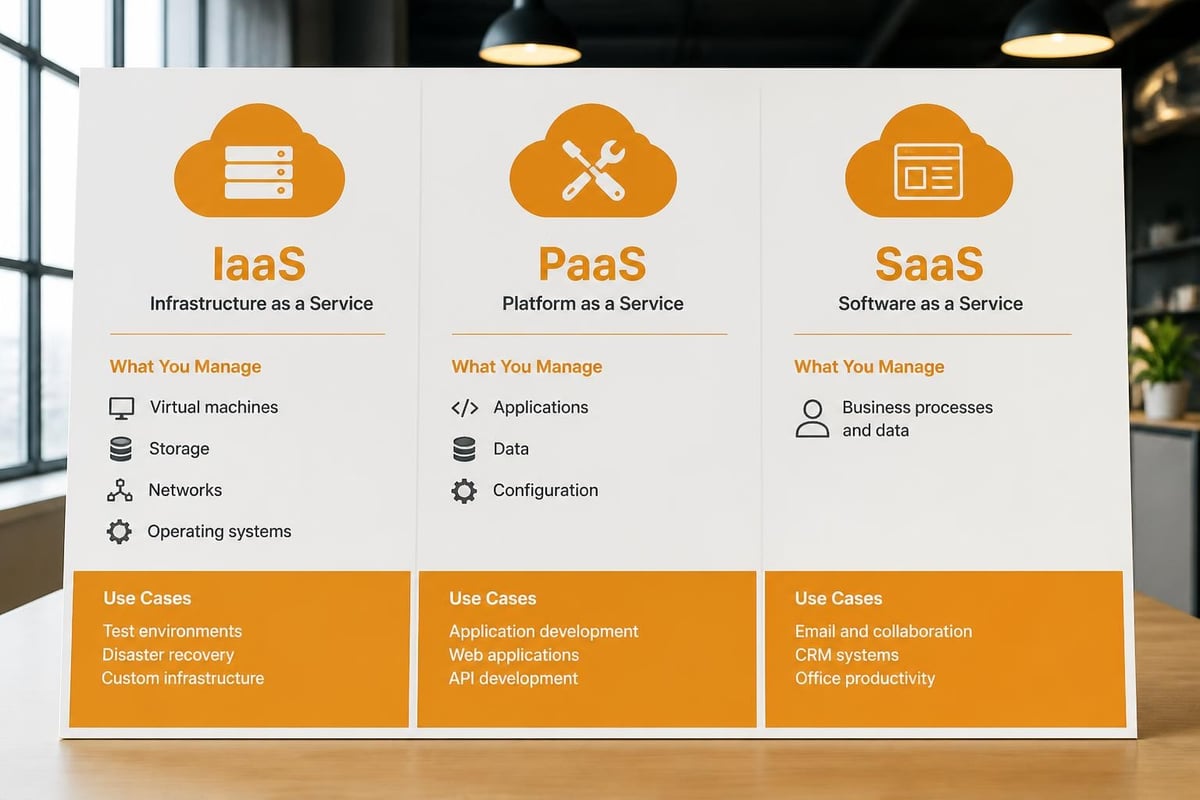
Cloud providers typically offer three primary service models, each addressing different operational needs:
Infrastructure as a Service (IaaS)
- Virtual machines and computing resources
- Storage and networking capabilities
- Operating system control and flexibility
- Maximum customisation potential
Platform as a Service (PaaS)
- Development frameworks and tools
- Database management systems
- Middleware and runtime environments
- Reduced infrastructure management
Software as a Service (SaaS)
- Ready-to-use applications
- Automatic updates and maintenance
- Subscription-based pricing models
- Minimal technical overhead
Nevertheless, many modern cloud providers blur these distinctions by offering hybrid solutions that combine elements from multiple service models. Therefore, businesses must carefully assess which combination aligns with their technical capabilities and operational requirements.
Deployment Models and Their Strategic Implications
Choosing a cloud provider in cloud computing requires understanding different deployment models. In addition, each model presents unique advantages regarding control, security, cost, and scalability. The NIST Cloud Computing Reference Architecture provides detailed guidance on how these models function within broader cloud ecosystems.
| Deployment Model | Best For | Control Level | Cost Structure |
|---|---|---|---|
| Public Cloud | Startups, variable workloads | Shared infrastructure | Pay-per-use |
| Private Cloud | Regulated industries, sensitive data | Exclusive control | Higher initial investment |
| Hybrid Cloud | Enterprises with diverse needs | Balanced approach | Mixed pricing |
| Community Cloud | Industry consortiums | Shared governance | Cost-distributed |
Public cloud deployments offer the greatest scalability and lowest initial costs. Furthermore, they eliminate capital expenditure on hardware whilst providing access to cutting-edge technologies. However, organisations handling sensitive data may require private cloud deployments that offer enhanced control and security.
Hybrid Cloud Strategies
Hybrid cloud configurations represent the fastest-growing deployment model. Moreover, they enable businesses to maintain sensitive workloads on private infrastructure whilst leveraging public cloud resources for less critical operations. This approach optimises both security and cost-efficiency, although it introduces complexity in management and integration.
Key Evaluation Criteria for Cloud Providers
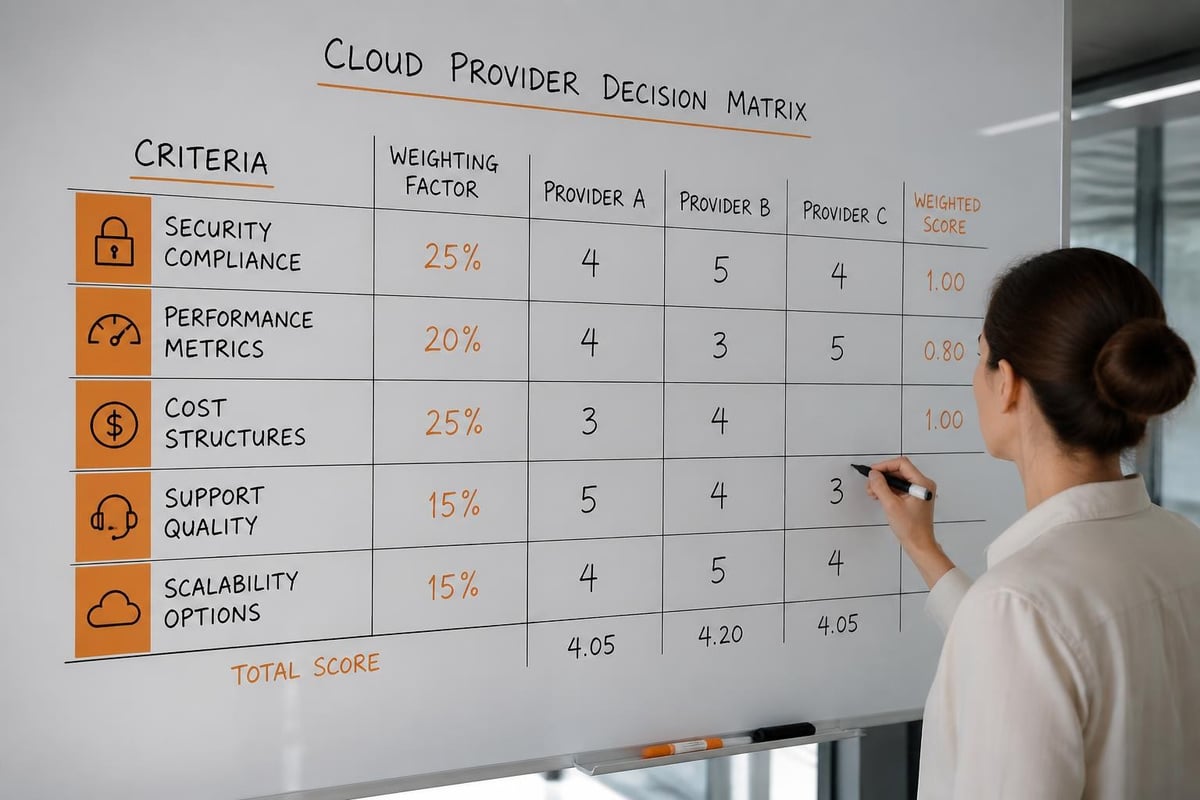
Selecting the optimal cloud provider in cloud computing demands rigorous evaluation across multiple dimensions. Therefore, organisations must develop comprehensive assessment frameworks that examine both technical capabilities and business alignment.
Security and Compliance Frameworks
Security remains paramount when evaluating cloud providers. In addition, businesses must verify that providers implement robust security measures including:
- Data encryption at rest and in transit
- Identity and access management systems
- Network security controls and firewalls
- Compliance certifications relevant to your industry
- Data residency options for regulatory requirements
European businesses particularly benefit from providers offering data centres within EU jurisdictions. Furthermore, compliance with GDPR and other European data protection regulations becomes significantly easier when data remains within regional boundaries. For instance, vBoxx maintains infrastructure specifically designed for European businesses, ensuring data sovereignty whilst delivering comprehensive cloud solutions through secure hosting environments.
Performance and Reliability Metrics
Performance considerations extend beyond raw computing power. Nevertheless, businesses should examine:
- Service Level Agreements (SLAs) guaranteeing uptime percentages
- Network latency and data transfer speeds
- Geographic distribution of data centres
- Redundancy measures preventing single points of failure
- Disaster recovery capabilities and backup procedures
Research comparing major cloud computing providers demonstrates significant variations in performance characteristics. Therefore, organisations should conduct proof-of-concept testing before committing to long-term contracts.
Cost Structures and Financial Considerations
Understanding the pricing models of a cloud provider in cloud computing prevents budget overruns and ensures economic viability. Moreover, cloud costs can escalate rapidly without proper governance and monitoring frameworks.
Common Pricing Components
Cloud providers typically charge for multiple resource categories:
- Compute resources: CPU hours, virtual machine instances
- Storage capacity: Data volume, access frequency
- Network traffic: Data transfer, bandwidth consumption
- Additional services: Databases, analytics, machine learning tools
- Support tiers: Technical assistance levels
Furthermore, economic analyses of cloud providers reveal that total cost of ownership calculations must include hidden expenses such as data egress fees, API calls, and premium support charges. Therefore, businesses should request detailed pricing breakdowns and model their expected usage patterns before selecting a provider.
Cost Optimisation Strategies
Implementing cost controls requires proactive management:
- Right-sizing resources to match actual demand
- Utilising reserved instances for predictable workloads
- Implementing auto-scaling policies
- Monitoring and eliminating unused resources
- Leveraging spot instances for flexible workloads
Nevertheless, the cheapest cloud provider in cloud computing may not deliver the best value. In addition, factors such as technical support quality, service reliability, and feature completeness often justify premium pricing structures.
Technical Integration and Migration Considerations
Transitioning to a cloud provider in cloud computing involves significant technical planning. Therefore, organisations must address integration challenges, data migration strategies, and potential compatibility issues.
Migration Pathway Options
| Migration Strategy | Complexity | Timeframe | Risk Level |
|---|---|---|---|
| Lift and Shift | Low | Weeks | Moderate |
| Re-platforming | Medium | Months | Balanced |
| Re-architecting | High | Quarters | Lower long-term |
| Hybrid Approach | Variable | Phased | Managed |
The lift-and-shift approach moves existing applications with minimal modification. Furthermore, this strategy enables rapid migration but may not leverage cloud-native advantages. Conversely, re-architecting applications specifically for cloud environments maximises performance and cost efficiency, although it requires greater investment and expertise.
API and Integration Capabilities
Modern businesses operate across multiple platforms and services. Moreover, a cloud provider in cloud computing must offer robust integration capabilities including:
- RESTful APIs for programmatic access
- SDK support for popular programming languages
- Pre-built connectors for common applications
- Data synchronisation tools
- Identity federation options
Nevertheless, vendor lock-in remains a legitimate concern. Therefore, organisations should prioritise providers supporting open standards and portable technologies that facilitate future migrations if requirements change.
Support Services and Professional Assistance
Technical support quality distinguishes exceptional cloud providers from adequate ones. In addition, businesses must evaluate the support infrastructure available when issues arise.
Support Tier Analysis
Premium support packages typically include:
- 24/7 availability across multiple channels
- Dedicated account management for enterprise clients
- Faster response times for critical incidents
- Proactive monitoring and recommendations
- Consultation services for architecture design
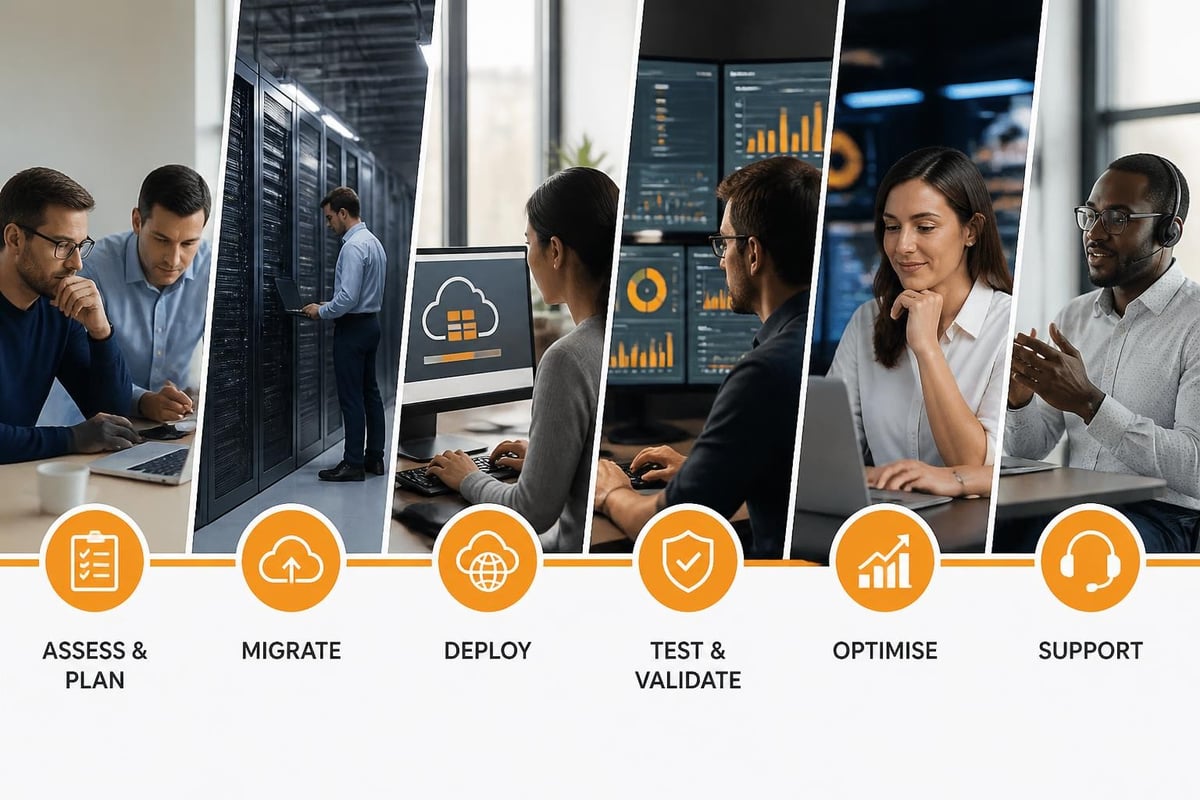
Furthermore, many organisations benefit from professional services including migration assistance, ongoing optimisation, and training programmes. The best cloud computing services consistently demonstrate strong support infrastructures that help customers maximise their cloud investments.
Emerging Trends and Future Considerations
The landscape of cloud providers continues evolving rapidly. Moreover, organisations must consider emerging trends when selecting long-term partners in cloud computing infrastructure.
Sustainability and Green Computing
Environmental considerations increasingly influence provider selection. Therefore, businesses should evaluate:
- Renewable energy commitments
- Carbon neutrality targets
- Energy-efficient data centre designs
- Transparent sustainability reporting
- Circular economy initiatives for hardware
European providers particularly emphasise sustainable operations, with many achieving carbon-neutral certifications and utilising renewable energy sources. Furthermore, regulatory pressures and consumer expectations make environmental responsibility a competitive differentiator rather than optional enhancement.
Edge Computing Integration
Edge computing represents a significant architectural shift. Nevertheless, leading cloud providers now offer edge capabilities that process data closer to end-users, reducing latency and bandwidth consumption. This hybrid approach combines centralised cloud resources with distributed edge nodes, creating more responsive applications.
Artificial Intelligence and Machine Learning
AI and ML capabilities have become standard offerings from major cloud providers. In addition, these services enable businesses to implement sophisticated analytics, automation, and predictive modelling without building complex infrastructure. However, organisations must evaluate the accessibility, cost, and integration of these advanced features when comparing providers.
Regulatory Compliance and Data Governance
A cloud provider in cloud computing must demonstrate robust compliance with applicable regulations. Furthermore, different industries face varying regulatory requirements that influence provider selection.
Industry-Specific Requirements
| Sector | Key Regulations | Compliance Priorities |
|---|---|---|
| Healthcare | HIPAA, GDPR | Patient data protection |
| Finance | PSD2, MiFID II | Transaction security |
| Government | National standards | Data sovereignty |
| General Business | GDPR, NIS2 | Privacy, security |
Moreover, European businesses must navigate an evolving regulatory landscape that increasingly emphasises data protection and digital sovereignty. Therefore, selecting providers with EU-based infrastructure and demonstrated compliance expertise simplifies regulatory adherence.
Data Residency and Sovereignty
Data location carries legal implications. Nevertheless, businesses handling European citizen data should verify that providers offer:
- Data centre locations within appropriate jurisdictions
- Guarantees preventing unauthorised data transfers
- Clear contractual terms regarding data ownership
- Transparent data handling policies
- Regular compliance audits and certifications
Furthermore, the comparative analysis of cloud vendors highlights performance variations across geographic regions, demonstrating that proximity between users and data centres significantly impacts application responsiveness.
Vendor Lock-in and Exit Strategies
Committing to a cloud provider in cloud computing creates dependencies that complicate future transitions. Therefore, organisations should develop exit strategies before signing contracts.
Mitigating Lock-in Risks
Businesses can reduce vendor dependency through several approaches:
- Containerisation enabling portable application deployment
- Multi-cloud architectures distributing workloads across providers
- Standard protocols avoiding proprietary technologies
- Data portability ensuring accessible export formats
- Documented processes facilitating knowledge transfer
In addition, contractual agreements should explicitly address termination procedures, data retrieval timelines, and transition assistance obligations. Nevertheless, complete vendor independence remains challenging given the deep integration that cloud services enable.
Making the Final Decision
Selecting the right cloud provider in cloud computing requires synthesising technical, financial, and strategic considerations. Moreover, businesses should establish weighted evaluation criteria reflecting their unique priorities and constraints.
Decision-Making Framework
- Define requirements across functional and non-functional dimensions
- Shortlist candidates meeting baseline criteria
- Conduct pilots testing real workloads
- Evaluate total costs including hidden expenses
- Assess strategic alignment with long-term business goals
Furthermore, organisations might benefit from scheduling demonstrations to understand specific platform capabilities. For instance, exploring cloud storage and collaboration tools through guided demonstrations helps clarify whether particular solutions match operational workflows.
The complexity of modern cloud ecosystems means that no single provider excels across all dimensions. Therefore, businesses must determine which factors carry greatest importance for their specific circumstances. Security-focused organisations may prioritise compliance certifications and data residency, whilst rapidly growing startups might emphasise scalability and developer-friendly tools.
Ultimately, choosing a cloud provider in cloud computing represents a strategic partnership rather than a simple vendor transaction. The right provider becomes an enabler of digital transformation, supporting innovation whilst maintaining security and operational excellence across your infrastructure.
Selecting the optimal cloud provider in cloud computing requires careful evaluation of service models, security frameworks, cost structures, and strategic alignment with your business objectives. Furthermore, European businesses benefit significantly from providers emphasising data sovereignty, regulatory compliance, and sustainable operations. vBoxx delivers precisely this combination through secure hosting and cloud solutions designed specifically for European organisations, offering comprehensive services from cloud storage and communication platforms to virtual servers and professional consultancy. Therefore, whether you're beginning your cloud journey or optimising existing infrastructure, vBoxx provides the expertise and infrastructure to support your digital transformation whilst maintaining the privacy, security, and sustainability your business demands.