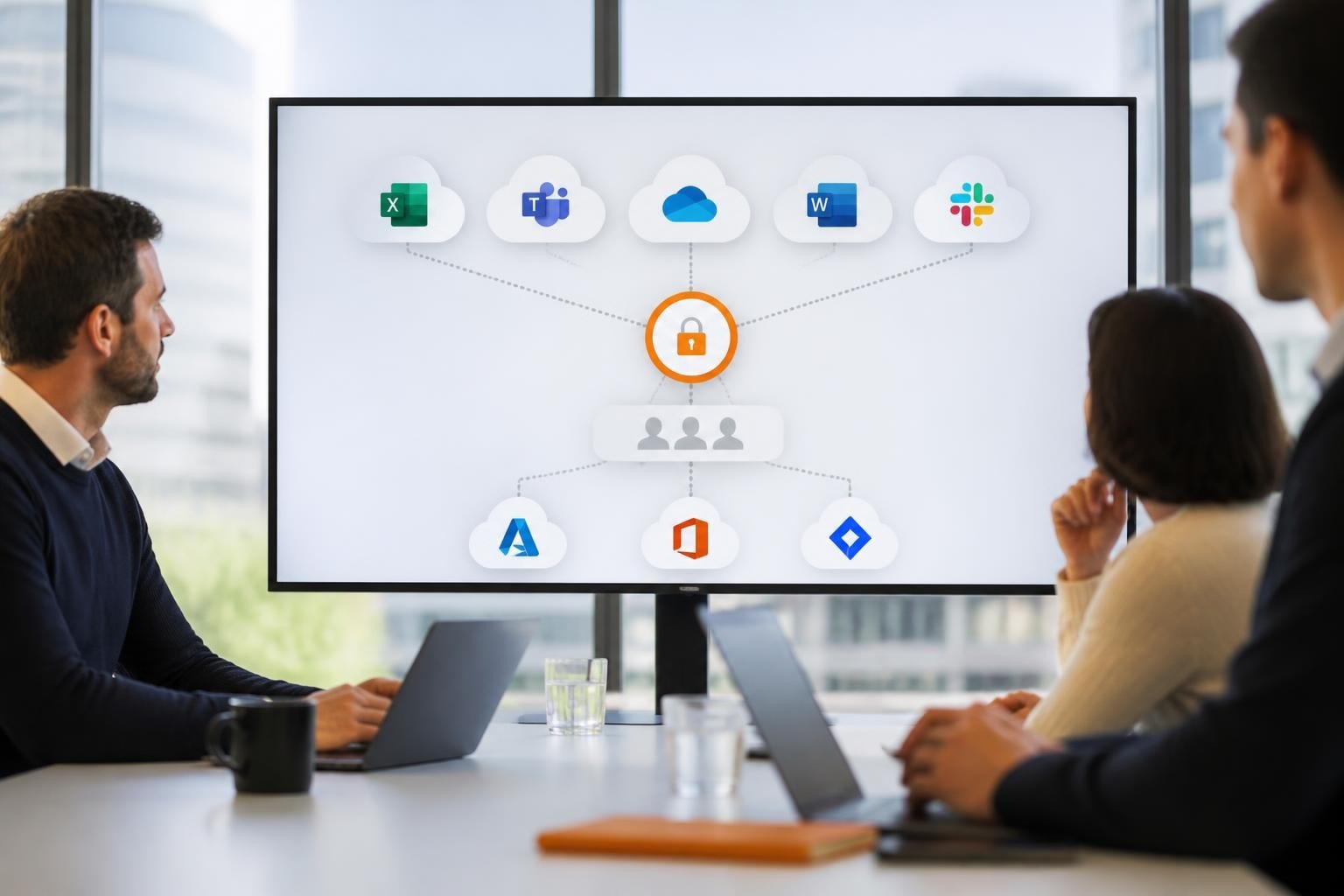

Cloud computing has fundamentally transformed how businesses operate, store data, and deploy applications in 2026. Understanding the technical details about cloud computing is essential for organisations seeking to modernise their infrastructure whilst maintaining security, compliance, and cost efficiency. This comprehensive guide explores the architectural components, service models, security considerations, and practical implementation strategies that underpin modern cloud deployments, with particular emphasis on European data sovereignty and GDPR compliance requirements.
Understanding Cloud Computing Architecture
The foundation of cloud computing rests on a well-defined architectural framework that separates concerns and enables scalability. The NIST Cloud Computing Reference Architecture identifies five key actors: cloud consumers, cloud providers, cloud carriers, cloud auditors, and cloud brokers. Furthermore, this architectural model provides a common language for discussing cloud components and their interactions.
Essential Components and Layers
Cloud infrastructure comprises multiple abstraction layers that work together to deliver services. At the foundation, physical infrastructure includes servers, storage systems, and networking equipment housed in data centres. Above this sits the virtualisation layer, which abstracts physical resources into logical units that can be dynamically allocated.
The key architectural layers include:
- Infrastructure layer: Physical and virtualised compute, storage, and network resources
- Platform layer: Middleware, runtime environments, databases, and development tools
- Application layer: Software services delivered over the internet
- Management layer: Orchestration, monitoring, provisioning, and governance tools
Moreover, understanding these layers helps businesses make informed decisions about which services to consume and which to manage internally. The abstraction between layers enables providers to optimise infrastructure whilst consumers focus on business applications.
Service Models and Deployment Strategies
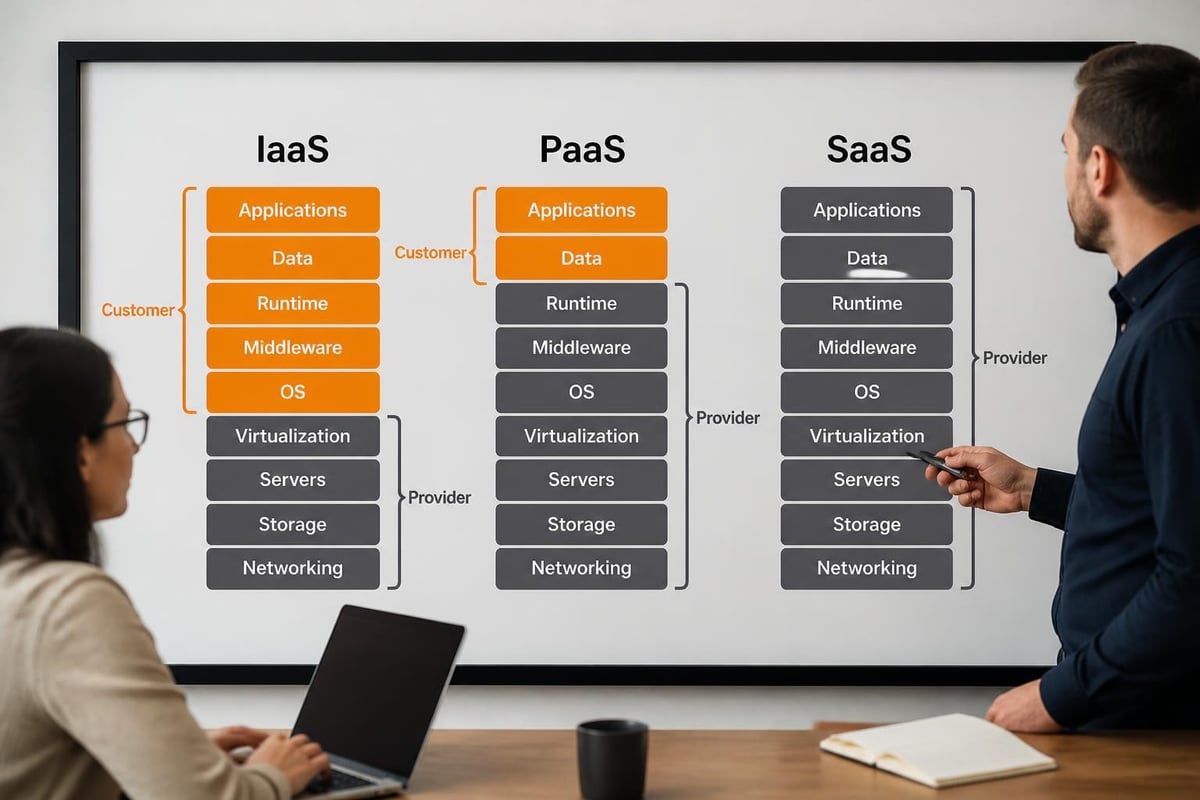
Details about cloud computing encompass three primary service models, each offering different levels of control and management responsibility. Nevertheless, selecting the appropriate model requires careful analysis of business requirements, technical capabilities, and compliance obligations.
Infrastructure as a Service (IaaS)
IaaS provides virtualised computing resources over the internet, giving organisations maximum control over operating systems, storage, and deployed applications. This model suits businesses requiring custom configurations whilst avoiding capital expenditure on physical hardware. Therefore, IaaS remains popular for development environments, testing platforms, and workloads with variable demand.
European businesses increasingly prioritise data sovereignty and compliance, making the location of IaaS infrastructure critical. Furthermore, providers operating within the EU offer protection from extraterritorial data access requests under regulations like the US CLOUD Act.
Platform as a Service (PaaS)
PaaS delivers a complete development and deployment environment in the cloud, including infrastructure, middleware, development tools, and database management systems. Developers can build, test, and deploy applications without managing underlying infrastructure complexity. In addition, PaaS accelerates time-to-market by providing pre-configured environments and automated scaling.
| Service Model | Provider Manages | Customer Manages | Best For |
|---|---|---|---|
| IaaS | Hardware, virtualisation, network | OS, middleware, runtime, data, applications | Custom infrastructure, migration, flexibility |
| PaaS | Hardware, OS, middleware, runtime | Applications, data | Development teams, rapid deployment |
| SaaS | Everything except user data | Configuration, user access, data | Standard business applications |
Software as a Service (SaaS)
SaaS delivers fully managed applications over the internet, eliminating installation, maintenance, and infrastructure concerns. Users access applications through web browsers or APIs, whilst providers handle updates, security patches, and availability. Consequently, SaaS has become the dominant model for business applications including communication, collaboration, and productivity tools.
Nevertheless, selecting SaaS providers requires scrutiny of data processing locations and compliance certifications. European alternatives to mainstream SaaS platforms offer GDPR-native architectures and data residency guarantees. For instance, organisations seeking secure communication platforms can benefit from solutions hosted entirely within EU infrastructure, ensuring compliance and data protection.
Cloud-Native Technologies and Containers
The evolution of cloud computing has introduced cloud-native architectures that maximise the benefits of cloud environments. According to the CNCF Annual Survey 2024, container adoption continues to grow, with Kubernetes becoming the de facto orchestration standard. Furthermore, microservices architectures enable teams to develop, deploy, and scale application components independently.
Containerisation Benefits
Containers package application code with dependencies, creating portable units that run consistently across environments. This approach offers several advantages:
- Environment consistency: Identical behaviour in development, testing, and production
- Resource efficiency: Containers share the host OS kernel, reducing overhead
- Rapid deployment: Start times measured in seconds rather than minutes
- Scalability: Orchestration platforms automatically scale containers based on demand
- Isolation: Applications run in separate namespaces, improving security
Moreover, container registries and image scanning tools integrate security into the development pipeline, identifying vulnerabilities before deployment. Therefore, organisations can maintain agility whilst adhering to security policies and compliance requirements.
Serverless Computing Models
Serverless computing represents another evolution in cloud architecture, abstracting server management entirely. Developers write functions that execute in response to events, with the cloud provider handling infrastructure provisioning, scaling, and availability. IBM's serverless overview explains how this model eliminates idle resource costs and simplifies operations.
Nevertheless, serverless introduces considerations around cold starts, vendor lock-in, and monitoring complexity. Organisations must evaluate whether event-driven architectures align with their application requirements and operational capabilities.
Security and Compliance Considerations
Security remains paramount when evaluating details about cloud computing implementations. The Cloud Security Alliance guidance provides comprehensive frameworks for securing cloud environments, addressing identity management, data protection, and incident response.
Data Protection and Encryption
Encryption protects data both in transit and at rest, forming a fundamental security control. Modern cloud platforms implement AES-256 encryption as standard, with key management systems controlling access. In addition, end-to-end encryption ensures data remains protected throughout its lifecycle.
Critical security measures include:
- Zero-knowledge encryption for sensitive data
- TLS 1.3 for data in transit
- Hardware security modules (HSMs) for key storage
- Regular security audits and penetration testing
- Multi-factor authentication (MFA) for user access
Furthermore, European businesses must consider regulations including GDPR, the Data Governance Act, and sector-specific requirements. The EU's practical guide to the Data Governance Act clarifies obligations for data sharing and processing, particularly relevant for cloud-based data platforms.

Compliance Certifications and Standards
Certifications provide independent verification of security controls and operational practices. ISO 27001 certification demonstrates an organisation's information security management system meets international standards. Therefore, businesses should verify that cloud providers maintain current certifications for facilities processing their data.
| Certification | Focus Area | Relevance |
|---|---|---|
| ISO 27001 | Information security management | Global standard, essential baseline |
| SOC 2 Type II | Security, availability, confidentiality | Operational controls over time |
| GDPR compliance | EU data protection | Mandatory for EU data processing |
| NEN 7510 | Healthcare information security | Dutch healthcare standard |
Additionally, organisations in regulated industries must ensure cloud providers support specific compliance requirements. Furthermore, maintaining compliance audit trails and documentation becomes simplified when providers offer built-in reporting and logging capabilities.
Edge Computing and Hybrid Architectures
The distinction between edge and cloud computing continues to evolve, with hybrid models combining both approaches. According to IEEE's survey on the edge-cloud continuum, organisations increasingly deploy workloads across distributed locations based on latency, bandwidth, and data residency requirements.
Edge Computing Use Cases
Edge computing processes data closer to its source, reducing latency and bandwidth consumption. This approach suits applications requiring real-time responses or operating in locations with limited connectivity. Consequently, edge deployments have become essential for industrial IoT, autonomous vehicles, and retail analytics.
Nevertheless, edge computing introduces operational complexity, requiring orchestration across distributed locations. Hybrid cloud management platforms provide unified control planes for workloads spanning edge devices, private data centres, and public cloud regions.
Cost Optimisation and Financial Management
Understanding the financial aspects represents crucial details about cloud computing that organisations often underestimate. Cloud economics differ fundamentally from traditional capital expenditure models, shifting costs to operational expenditure with consumption-based pricing. EY's cloud cost optimisation guide outlines strategies for controlling spend whilst maintaining performance.
FinOps Best Practices
Financial Operations (FinOps) brings together finance, technology, and business teams to manage cloud costs effectively. This collaborative approach implements governance without sacrificing agility or innovation.
Key optimisation strategies include:
- Resource tagging: Label resources with cost centres, projects, and environments for accurate allocation
- Rightsizing: Match instance types and sizes to actual workload requirements
- Reserved capacity: Commit to longer terms for predictable workloads, reducing costs by 30-50%
- Auto-scaling: Automatically adjust capacity based on demand, eliminating over-provisioning
- Storage tiering: Move infrequently accessed data to lower-cost storage classes
- Spot instances: Use spare capacity for fault-tolerant workloads at significant discounts
Moreover, implementing cost anomaly detection alerts teams to unexpected spending increases, enabling rapid investigation and remediation. Therefore, organisations should establish regular cost review processes and budgets aligned with business objectives.
Total Cost of Ownership Analysis
Comparing cloud costs to on-premises infrastructure requires comprehensive TCO analysis. Beyond obvious infrastructure costs, consider licensing, facilities, power, cooling, network connectivity, and personnel. Furthermore, factor in opportunity costs associated with capital tied up in depreciating hardware versus investment in core business activities.

Data Sovereignty and European Cloud Infrastructure
For European organisations, data sovereignty has become a defining factor when evaluating cloud providers. Details about cloud computing infrastructure location directly impact regulatory compliance, data protection, and business risk. The extraterritorial reach of foreign legislation, particularly the US CLOUD Act, creates potential conflicts with GDPR requirements.
European Cloud Advantages
Choosing cloud providers with infrastructure located exclusively within the EU offers several benefits. First, data remains subject to European legal frameworks and privacy protections. Second, regulatory authorities can audit facilities and verify compliance with local requirements. Third, organisations avoid conflicts between competing legal obligations from different jurisdictions.
Additionally, European data centres often implement stringent physical security measures, environmental controls, and redundancy architectures. Furthermore, proximity to users reduces latency for applications serving European markets, improving user experience and performance.
Green Hosting and Sustainability
Environmental considerations increasingly influence infrastructure decisions, with businesses seeking to reduce their carbon footprint. Green hosting practices include renewable energy procurement, efficient cooling systems, and hardware lifecycle management. Moreover, European providers often achieve superior power usage effectiveness (PUE) ratings compared to global averages.
Cloud computing inherently offers efficiency advantages through resource consolidation and higher utilisation rates. Nevertheless, organisations should verify providers' sustainability commitments and request transparency regarding energy sources and environmental impact.
Migration Strategies and Implementation
Successfully transitioning to cloud infrastructure requires careful planning and execution. Details about cloud computing migration encompass assessment, planning, execution, and optimisation phases, each with distinct challenges and considerations.
Migration Approaches
Organisations can choose from several migration strategies based on application characteristics, business requirements, and risk tolerance:
- Rehosting (lift-and-shift): Move applications to cloud infrastructure with minimal changes, fastest but least optimised
- Replatforming: Make selective optimisations during migration, balancing speed and cloud-native benefits
- Refactoring: Redesign applications to leverage cloud-native features, highest effort but maximum benefits
- Repurchasing: Replace existing applications with SaaS alternatives, eliminating infrastructure management
- Retiring: Decommission applications no longer needed, reducing technical debt
- Retaining: Keep certain workloads on-premises due to regulatory, technical, or business constraints
Furthermore, experienced providers offer migration services that minimise disruption and accelerate transitions. In addition, comprehensive planning identifies dependencies, establishes rollback procedures, and defines success criteria before beginning migrations.
Testing and Validation
Rigorous testing ensures migrated workloads function correctly and meet performance requirements. Therefore, establish test environments mirroring production configurations, execute comprehensive test scenarios, and validate integrations with dependent systems. Moreover, performance benchmarking compares cloud-based systems against baseline measurements, identifying optimisation opportunities.
Backup and Disaster Recovery
Robust backup and recovery capabilities form essential details about cloud computing infrastructure that protect against data loss, ransomware, and operational disruptions. Nevertheless, cloud-based data requires deliberate protection strategies, as providers typically ensure infrastructure availability but not data recovery.
Backup Architecture
Implementing the 3-2-1 backup rule in cloud environments means maintaining three copies of data, stored on two different media types, with one copy off-site. Cloud-to-cloud backup specifically protects SaaS data, addressing retention gaps and accidental deletion. Organisations using platforms like Microsoft 365 or Google Workspace should implement dedicated backup solutions to maintain independent copies outside the primary service provider.
Additionally, backup strategies must address retention periods, recovery time objectives (RTO), and recovery point objectives (RPO). Furthermore, regular recovery testing validates that backups function correctly and meet defined objectives.
Understanding the technical and operational details about cloud computing empowers organisations to make informed infrastructure decisions that balance performance, security, cost, and compliance. As a European provider operating ISO 27001-certified data centres in the Netherlands, vBoxx delivers GDPR-compliant cloud solutions that prioritise data sovereignty, security, and sustainability. Whether you need secure storage, communication platforms, or managed infrastructure, vBoxx offers comprehensive services backed by expert support and free migration assistance to help your organisation leverage cloud computing whilst maintaining control over your digital assets.