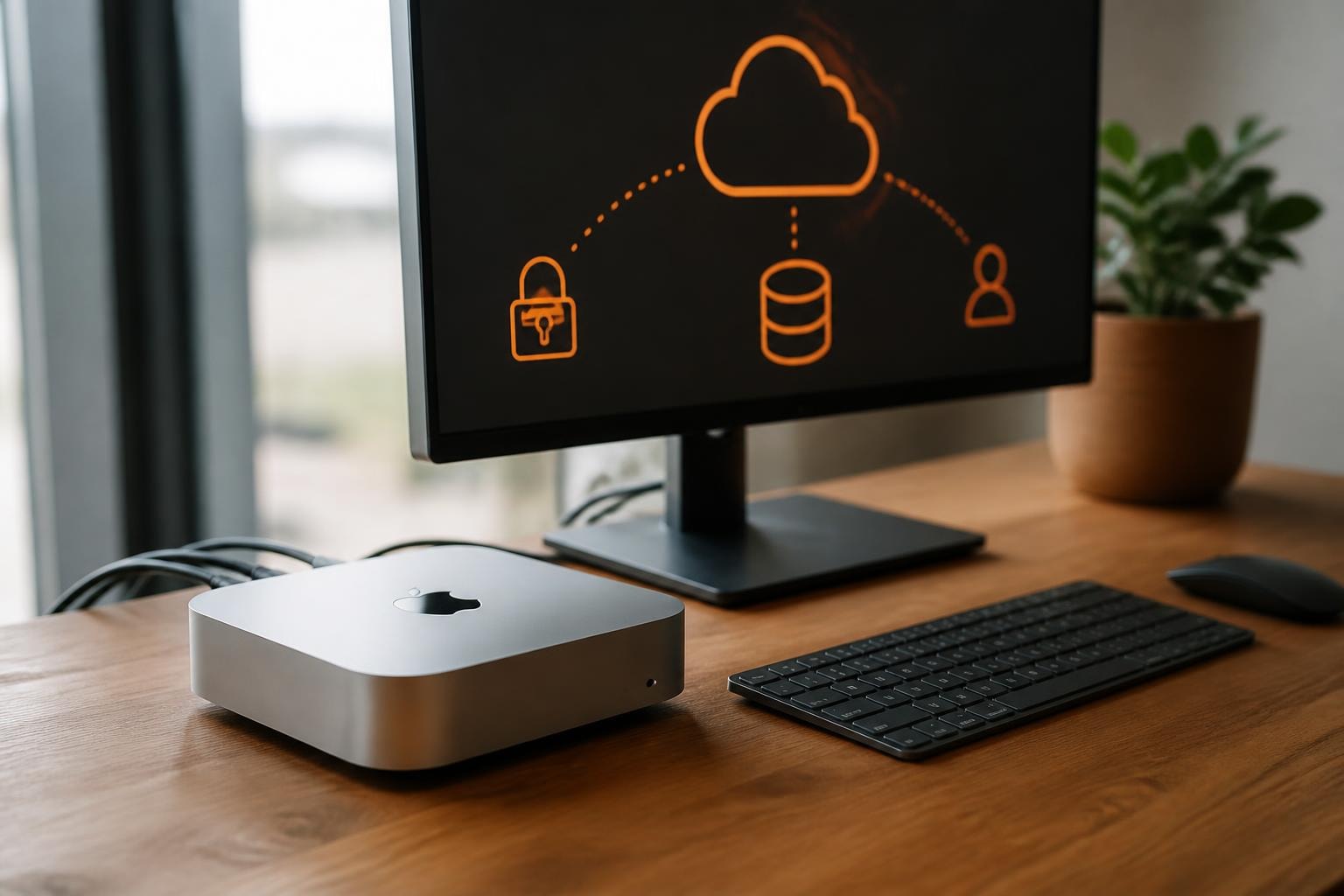

The landscape of business hosting has evolved dramatically, and organisations seeking reliable, compact server solutions are increasingly turning to Apple’s hardware. In particular, Mac mini hosting offers a unique proposition for businesses requiring macOS-specific environments, development platforms, or seamless integration with Apple’s ecosystem. Whether you’re running iOS app development pipelines, managing creative workflows, or deploying specialised macOS applications, understanding the nuances of hosting infrastructure built around Mac mini devices can fundamentally transform your operational capabilities. As a result, businesses can improve efficiency, flexibility, and compatibility within Apple-focused workflows.
Understanding Mac Mini Hosting Infrastructure
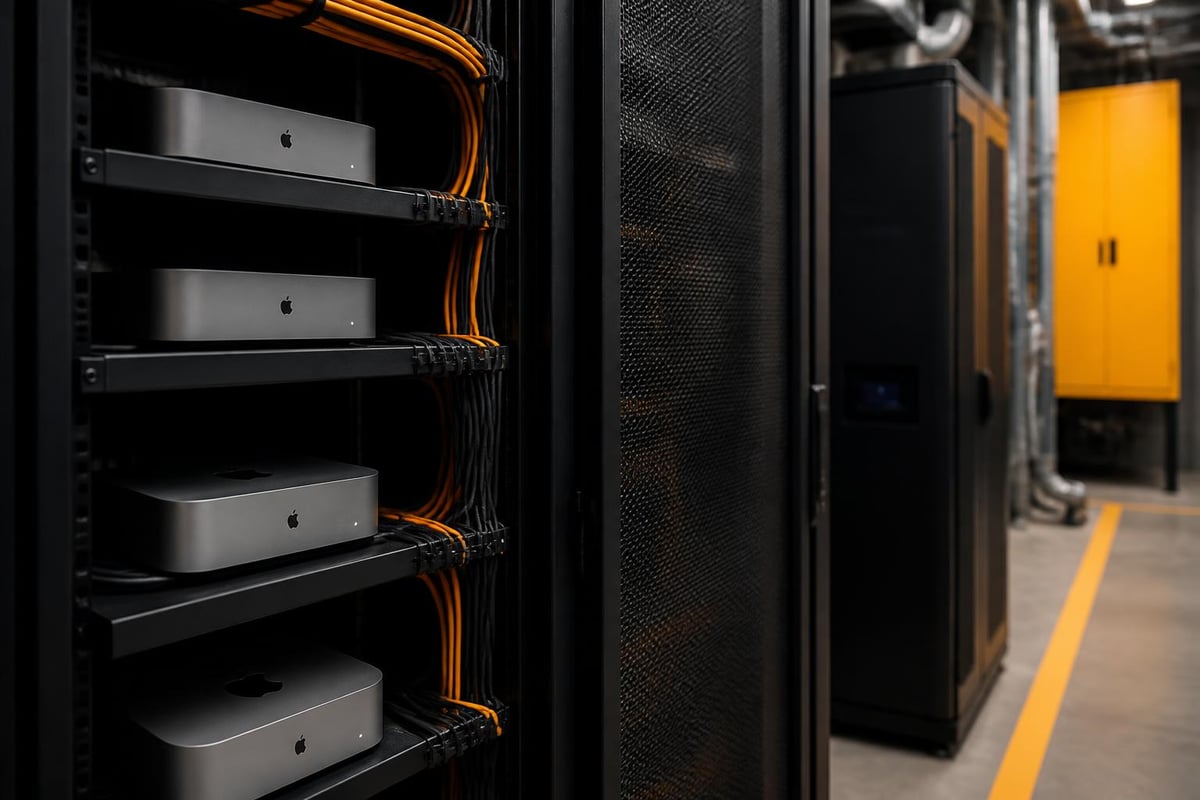
Mac mini hosting represents a specialised hosting solution where physical Mac mini computers are deployed in professional data centre environments. In particular, unlike traditional server architectures, this approach leverages Apple’s compact desktop hardware to create powerful hosting nodes that maintain full macOS compatibility whilst delivering enterprise-grade reliability.
Furthermore, the core advantage lies in accessing genuine Apple hardware remotely. As a result, businesses can run native macOS applications, develop and test iOS apps, or utilise Apple-specific software without maintaining physical hardware on-premises. This becomes especially valuable when regulatory requirements or specific software dependencies demand authentic Apple environments rather than virtualised alternatives.
Key Components of Mac Mini Server Deployments
Professional mac mini hosting configurations typically include several critical elements that distinguish them from consumer setups:
- Redundant power supplies ensuring continuous operation during electrical fluctuations
- Enterprise networking equipment with multiple gigabit connections and failover capabilities
- Climate-controlled environments maintaining optimal temperature ranges for sustained performance
- Physical security measures including biometric access controls and surveillance systems
- Remote management infrastructure allowing complete administrative access without physical presence
Data centre providers optimise these components specifically for Mac mini hardware, addressing Apple’s unique thermal and connectivity requirements. The M-series processors have further enhanced efficiency, reducing power consumption whilst dramatically improving processing capabilities compared to previous Intel-based generations.
Performance Advantages for Specific Workloads
The performance profile of Mac mini hosting differs substantially from traditional server architectures, offering distinct advantages for particular use cases. In particular, Apple’s M2 and M2 Pro processors deliver exceptional single-threaded performance, making them ideal for tasks that don’t scale linearly across multiple cores.
Furthermore, for continuous integration and continuous deployment (CI/CD) pipelines targeting iOS, iPadOS, or macOS platforms, Mac mini servers provide the only legitimate hosting solution. As a result, Apple’s licensing terms explicitly require iOS builds to occur on genuine Apple hardware, making virtualised alternatives technically viable but legally problematic.
Benchmark Comparisons Across Common Tasks
| Workload Type | Mac Mini M2 | Traditional x86 Server | Performance Delta |
|---|---|---|---|
| iOS App Compilation | 3.2 minutes | Not applicable | Native only |
| Video Transcoding (H.265) | 8.7 minutes | 12.4 minutes | 42% faster |
| Database Queries (PostgreSQL) | 847 req/sec | 923 req/sec | 8% slower |
| Web Server Throughput | 4,200 req/sec | 4,800 req/sec | 12% slower |
These metrics demonstrate that Mac mini hosting excels in Apple-specific workflows whilst remaining competitive for general-purpose tasks. In particular, the unified memory architecture in M-series chips particularly benefits applications requiring rapid data transfer between CPU and GPU components.
Furthermore, creative agencies frequently leverage this infrastructure for remote editing workstations. For example, editors access Final Cut Pro or Logic Pro installations remotely through Screen Sharing, maintaining full performance whilst eliminating the need for expensive workstations at every desk. As a result, this approach significantly reduces capital expenditure whilst centralising data management and backup procedures.
Security Considerations and Compliance
Security architecture for Mac mini hosting requires careful consideration of both physical and digital protection layers. In particular, Apple’s hardware includes several security features that, when properly configured, create robust defence mechanisms against contemporary threats.
Furthermore, the Secure Enclave processor provides hardware-level encryption for sensitive credentials and cryptographic operations. In addition, FileVault encryption protects data at rest, ensuring that even physical hardware theft doesn’t compromise stored information. As a result, these features integrate seamlessly with enterprise identity management systems through Apple Business Manager.
Implementing Defence in Depth Strategies
Effective security implementations combine multiple protective layers:
- Network isolation through VLAN segmentation separating management and production traffic
- Firewall policies restricting inbound connections to explicitly authorised services only
- Authentication hardening requiring certificate-based SSH access rather than password authentication
- Regular patch management applying security updates within defined maintenance windows
- Comprehensive logging capturing all access attempts for compliance and forensic analysis
Privacy regulations like GDPR demand strict data handling protocols. Mac mini hosting providers must demonstrate appropriate technical and organisational measures protecting personal data. This includes encryption in transit and at rest, regular penetration testing, and documented incident response procedures.
For organisations in healthcare or finance sectors, compliance requirements extend beyond standard practices. HIPAA and PCI-DSS mandate specific controls around access logging, encryption standards, and audit trails. Apple’s platform provides native tools supporting these requirements, but proper configuration remains the organisation’s responsibility.

Cost Analysis and ROI Calculations
Financial planning for Mac mini hosting requires evaluating both direct costs and operational efficiency gains. In particular, initial hardware investment represents only one component of total cost of ownership (TCO), with ongoing operational expenses significantly impacting long-term budgets.
Furthermore, a typical hosted Mac mini configuration includes monthly fees covering hardware, bandwidth, power, cooling, and physical security. In addition, premium providers often offer tiered pricing based on technical specifications and service level agreements.
Comparing Deployment Models
| Cost Factor | Managed Hosting | Colocation | On-Premises |
|---|---|---|---|
| Initial Hardware | £0 (included) | £800-£1,400 | £800-£1,400 |
| Monthly Service | £79-£149 | £45-£95 | £0 |
| Power & Cooling | Included | Included | £15-£25 |
| Network Bandwidth | 1-10TB included | £35-£75 | £40-£120 |
| Maintenance Labour | Included | Self-managed | Self-managed |
| Total 3-Year TCO | £2,844-£5,364 | £3,920-£5,420 | £2,340-£5,020 |
These calculations demonstrate that managed hosting often provides superior value when factoring in operational overhead. In particular, organisations lacking dedicated infrastructure teams particularly benefit from transferring hardware management responsibilities to specialised providers.
Furthermore, return on investment extends beyond direct cost comparisons. For example, developer productivity improvements from reduced build times can justify premium hosting arrangements. As a result, if a development team saves 30 minutes daily through faster compilation, the annual value, assuming £50 per hour labour costs, exceeds £6,500 for a single developer.
Virtualisation and Container Technologies
Modern mac mini hosting deployments increasingly leverage virtualisation capabilities to maximise hardware utilisation. Apple’s Virtualization framework enables running multiple macOS instances on a single physical machine, subject to licensing constraints.
Containerisation through Docker provides another efficiency layer. Whilst Docker on macOS historically suffered performance limitations, Apple Silicon improvements have substantially narrowed the gap with Linux-native implementations. Development teams can now run containerised workflows efficiently on Mac mini infrastructure.
Practical Virtualisation Strategies
Organisations typically implement virtualisation for several strategic purposes:
- Development environment isolation preventing dependency conflicts between projects
- Testing across macOS versions validating compatibility without multiple physical machines
- Resource optimisation running multiple low-utilisation services on shared hardware
- Rapid provisioning deploying new environments through automated templates
Apple’s licensing permits running two additional macOS virtual machines per physical Mac mini. As a result, this restriction necessitates careful planning for organisations requiring extensive virtualised environments. In some cases, workflows benefit more from container-based isolation, which does not face the same licensing constraints.
Furthermore, the M-series architecture’s unified memory system creates interesting performance characteristics for virtualised workloads. In particular, memory allocated to virtual machines is not physically segregated, allowing dynamic resource allocation based on current demands. Consequently, this flexibility improves overall system efficiency compared to traditional architectures requiring static memory assignments.
Remote Management and Automation
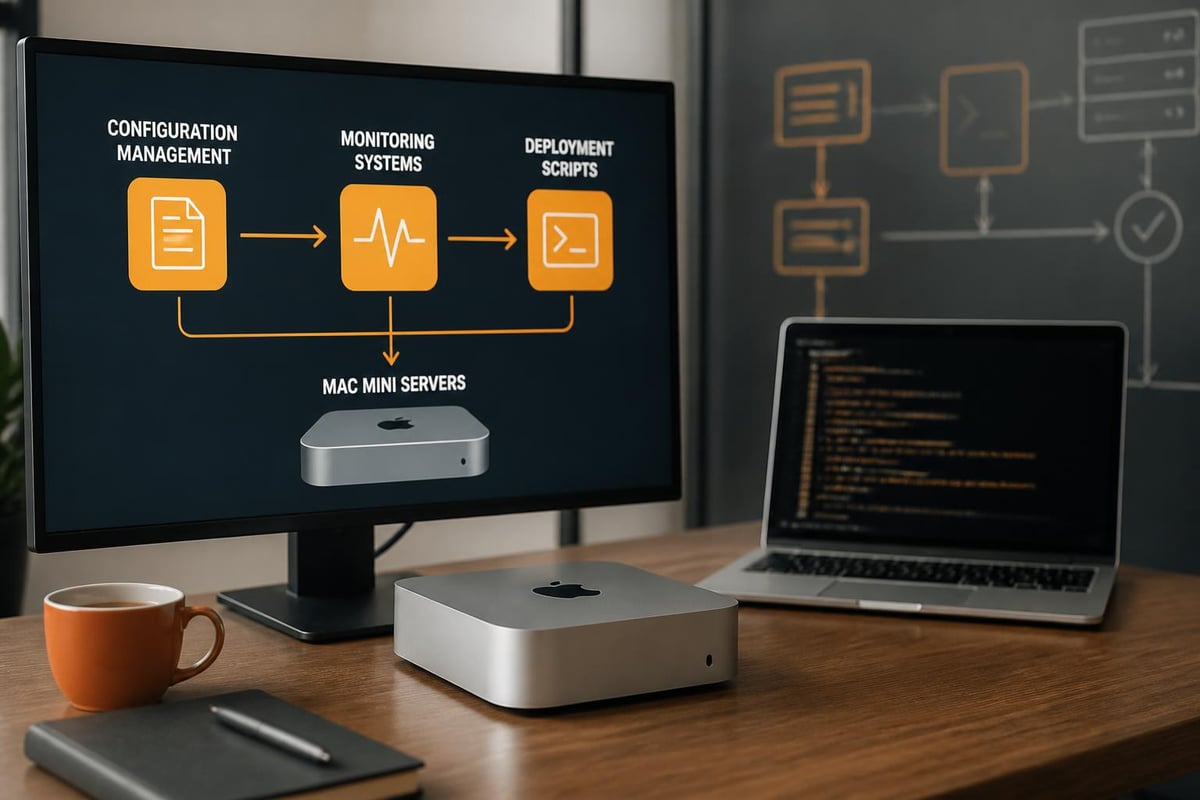
Efficient Mac mini hosting operations depend on robust remote administration capabilities. In particular, unlike traditional server platforms with extensive command-line management tools, macOS requires adapting workflows to Apple’s ecosystem whilst maintaining automation and reproducibility.
Furthermore, Apple Remote Desktop provides graphical interface access, which is especially valuable for applications lacking headless operation modes. However, command-line tools through SSH offer superior automation potential for repetitive tasks. As a result, combining both approaches creates flexible management strategies that accommodate diverse operational requirements.
Essential Management Tools and Scripts
- Homebrew for package management and software installation automation
- Ansible or Chef for configuration management across multiple instances
- LaunchDaemons for service management and scheduled task execution
- Jamf Pro for comprehensive Apple device management at enterprise scale
- Monitoring solutions like Prometheus or Nagios for performance tracking
Automation reduces operational overhead whilst improving consistency. Configuration management tools ensure all Mac mini instances maintain identical software versions and security policies. This standardisation simplifies troubleshooting and reduces configuration drift over time.
For businesses requiring sophisticated automation, platforms like RankPill demonstrate how cloud-based services can leverage reliable infrastructure to deliver consistent results. Similarly, development teams using FreelanceDEV to source talent benefit from standardised hosting environments that freelance developers can access remotely without complex onboarding procedures.
Green Hosting and Environmental Impact
Sustainability considerations increasingly influence infrastructure decisions. In particular, Mac mini hosting presents favourable environmental characteristics compared to traditional server deployments, especially when selecting providers committed to renewable energy.
Furthermore, Apple’s M-series processors consume significantly less power than equivalent Intel-based systems. For example, a Mac mini M2 typically draws 15–25 watts under normal operation, compared to 65–150 watts for traditional servers with comparable performance. As a result, this efficiency translates directly to reduced electricity consumption and lower carbon emissions.
In addition, organisations emphasising environmental responsibility should evaluate hosting providers’ energy policies. For instance, facilities powered by renewable sources effectively eliminate operational carbon footprints, while efficient cooling systems reduce total energy consumption beyond the servers themselves.
Moreover, the compact form factor contributes to sustainability through improved data centre density. Consequently, more compute capacity per rack unit means fewer facilities are required for equivalent workload handling, reducing construction materials, land use, and supporting infrastructure.
Selecting the Right Hosting Provider
Choosing an appropriate mac mini hosting provider requires evaluating multiple factors beyond pricing. Service quality, support responsiveness, and infrastructure reliability fundamentally impact operational success.
Key evaluation criteria include:
- Geographic location affecting latency and data sovereignty compliance
- Network connectivity including bandwidth allocation and peering relationships
- Backup and disaster recovery capabilities with defined recovery time objectives
- Technical support availability including response times and expertise depth
- Scalability options allowing infrastructure growth without migration disruption
Provider reputation matters significantly in managed hosting relationships. Established providers with extensive Apple infrastructure experience typically deliver superior outcomes compared to generalist hosting companies offering Mac mini services as ancillary products.
Service level agreements should clearly define uptime guarantees, maintenance windows, and compensation for outages. Standard SLAs promise 99.9% uptime, translating to approximately 43 minutes of acceptable downtime monthly. Premium tiers may offer 99.99% guarantees with proportionally higher costs.
Questions for Provider Evaluation
When assessing potential hosting partners, organisations should request detailed information:
- What hardware generations are available? Older Intel-based models cost less but offer inferior performance and efficiency.
- How are backups managed? Automated backup systems with off-site replication protect against data loss.
- What monitoring systems are implemented? Proactive monitoring identifies issues before they impact operations.
- Can custom configurations be accommodated? Specific software requirements may necessitate non-standard setups.
- What migration support is provided? Transitioning existing workloads requires technical expertise and planning.
For businesses new to Apple infrastructure, exploring comprehensive solutions through a demonstration all-in-one session can clarify how managed services integrate with broader cloud strategies. Understanding the full service spectrum helps organisations make informed decisions aligned with long-term objectives.
Integration with Existing Infrastructure
Mac mini hosting rarely operates in isolation. In particular, most organisations require integration between Apple infrastructure and existing Windows or Linux environments. As a result, planning these connections carefully prevents operational friction and maximises investment value.
Furthermore, network architecture should facilitate secure communication between platforms whilst maintaining appropriate isolation. For example, VPN tunnels or dedicated interconnects enable private connectivity to on-premises resources. In addition, cloud-based services benefit from direct connections to major cloud providers, reducing latency and improving reliability.
Common Integration Patterns
Hybrid development environments leverage Mac mini hosting for iOS-specific builds whilst maintaining primary CI/CD pipelines on Linux infrastructure. Build triggers from Git repositories initiate macOS compilation jobs remotely, with artefacts transferred back to central artifact repositories.
Centralised authentication through Active Directory or LDAP directory services ensures consistent access control across platforms. macOS supports directory binding, allowing existing credentials to authenticate Mac mini access without maintaining separate user databases.
Storage integration connects Mac mini instances to network-attached storage systems or cloud object storage. This approach centralises data management whilst providing high-performance access from macOS environments. Time Machine backups can target network storage, protecting against data loss without local storage overhead.
Monitoring consolidation brings Mac mini metrics into existing observability platforms. SNMP, API integrations, or agent-based collectors forward performance data to centralised monitoring dashboards, providing unified visibility across heterogeneous infrastructure.
Optimising Performance at Scale
Organisations running multiple Mac mini instances benefit from optimisation strategies that improve efficiency across their entire deployment. Performance tuning addresses both individual system configuration and fleet-wide orchestration.
Memory allocation deserves particular attention on M-series systems. Unified memory architecture means GPU and CPU share the same physical RAM. Applications with significant graphics processing requirements benefit from higher memory configurations, even if CPU-only workloads would function adequately with lower specifications.
Storage performance impacts application responsiveness significantly. Mac mini models offer various internal storage options, but external Thunderbolt storage provides expandability without hardware replacement. High-performance NVMe drives over Thunderbolt 4 deliver excellent throughput for data-intensive applications.
Network optimisation ensures bandwidth doesn’t constrain operations. Providers offering 10 Gigabit Ethernet connections substantially improve performance for workflows involving large file transfers or high-volume API operations. Content delivery networks can further reduce latency for globally distributed users.
Performance Monitoring Metrics
| Metric Category | Key Indicators | Target Ranges |
|---|---|---|
| CPU Utilisation | Average load, peak load | 40-70% average |
| Memory Pressure | Swap usage, page faults | <10% swap activity |
| Storage I/O | Read/write IOPS, latency | <5ms average latency |
| Network Traffic | Bandwidth usage, packet loss | <1% packet loss |
| Application Response | Request latency, error rates | <200ms P95 latency |
Regular performance analysis identifies optimisation opportunities before they impact user experience. Trending metrics over time reveals capacity constraints requiring hardware upgrades or architectural changes.
Mac mini hosting delivers compelling advantages for organisations requiring macOS environments, from iOS development to creative workflows. The combination of Apple’s efficient hardware, professional data centre infrastructure, and specialised management creates powerful solutions for businesses that might otherwise struggle with on-premises Apple infrastructure. When evaluating hosting options, consider how providers align with your security requirements, sustainability goals, and operational expertise. vBoxx specialises in secure hosting solutions emphasising privacy, performance, and environmental responsibility, offering the expertise and infrastructure necessary to deploy and manage Mac mini hosting environments that support your business objectives effectively.