
As we move into 2026, data privacy, compliance, and control are now vital priorities for organisations of every size. High-profile breaches and evolving regulations have prompted a fresh look at how data is stored and managed.
This guide to private cloud storage solutions will empower your business to navigate security, scalability, and compliance demands with confidence. Discover what sets private cloud storage apart, explore its advantages over other models, and gain step-by-step insights for successful adoption. Ready to strengthen your data strategy? Let us show you how.
Understanding Private Cloud Storage: Definition and Core Concepts
As organisations generate and manage more sensitive data than ever, understanding the core of private cloud storage solutions is crucial. These solutions offer dedicated environments that address evolving demands for security, compliance, and operational control.

What is Private Cloud Storage?
Private cloud storage solutions refer to cloud environments designed and operated exclusively for a single organisation. Unlike public clouds, which share infrastructure among multiple users, private solutions offer dedicated resources, enhancing security and control.
There are two main deployment models: on-premises private clouds, managed within an organisation’s own data centre, and hosted private clouds, operated by third-party providers but kept separate from public cloud infrastructure. Both models cater to enterprises and regulated sectors, such as finance and healthcare, where data privacy and regulatory compliance are paramount.
Use cases often include storing sensitive customer data, ensuring business continuity, and meeting strict legal obligations. By isolating resources, private cloud storage solutions provide tailored performance and governance.
Key Components and Architecture
The architecture of private cloud storage solutions is built on several foundational elements. These include storage hardware, virtualisation technologies, management software, and robust networking infrastructure.
A critical component is the hypervisor, which enables multiple virtual storage environments on shared physical hardware. Software-defined storage further enhances flexibility, allowing organisations to allocate and manage resources dynamically. Integration with existing IT systems, such as identity management and backup platforms, ensures operational continuity.
Scalability is inherent to private cloud storage solutions, with organisations able to expand capacity as business needs grow. Customisation options allow precise alignment with specific security protocols, compliance mandates, and workflow requirements.
Private vs Public vs Hybrid Cloud: A Comparative Overview
Choosing between private, public, and hybrid cloud models depends on an organisation’s needs for security, cost efficiency, and flexibility. Private cloud storage solutions deliver the highest level of control, ideal for sectors with strict compliance demands.
| Feature | Private Cloud | Public Cloud | Hybrid Cloud |
|---|---|---|---|
| Security | Highest | Moderate | Variable |
| Cost | Predictable | Often lower | Mixed |
| Control | Full | Limited | Shared |
| Flexibility | Customisable | Standardised | High |
For example, financial institutions frequently adopt private clouds for regulatory assurance. According to industry reports, adoption of private cloud storage solutions continues to rise in sectors prioritising data sovereignty. For further insights, see this file storage services comparison.
Benefits of Private Cloud Storage in 2026
Adopting private cloud storage solutions in 2026 offers several strategic advantages:
- Enhanced data privacy and compliance with evolving regulations like GDPR and NIS2.
- Superior customisation and control over storage policies and access.
- Improved security posture for managing sensitive or mission-critical data.
- Consistent performance and predictable costs regardless of workload fluctuations.
- Support for edge computing and AI-driven workloads to meet modern operational demands.
These benefits position private cloud storage solutions as a future-ready choice for organisations seeking resilience, efficiency, and compliance in an increasingly complex digital landscape.
Key Features and Innovations in Private Cloud Storage Solutions for 2026
Private cloud storage solutions in 2026 are defined by rapid advancements across security, performance, integration, intelligent management, and sustainability. As organisations face complex data challenges, these features set new standards for control, resilience, and compliance.

Security and Compliance Enhancements
Security remains the cornerstone of private cloud storage solutions. In 2026, advanced encryption methods protect data at rest and in transit, ensuring only authorised access. Zero-trust architecture and robust identity management systems further reduce the risk of breaches. Providers increasingly achieve ISO 27001, GDPR, and NIS2 compliance, supporting regulated industries.
Comprehensive audit trails and real-time monitoring help organisations detect suspicious activities quickly. For a deeper understanding of encryption’s vital role, see these Encrypted cloud storage services. These innovations collectively make private cloud storage solutions a preferred choice for businesses prioritising data protection.
Performance, Scalability, and Reliability
Modern private cloud storage solutions deliver consistent high performance through optimised storage protocols that ensure low latency and high throughput. Auto-scaling capabilities enable seamless adaptation to fluctuating workloads, while redundancy and failover systems protect against service interruptions.
High-availability clusters are now standard, supporting mission-critical operations with minimal downtime. These features allow organisations to maintain predictable performance, a key advantage of private cloud storage solutions over public or hybrid models. This reliability supports business continuity and operational excellence.
Integration and Interoperability
Seamless integration is essential for private cloud storage solutions in 2026. Solutions now offer native compatibility with existing IT environments, including Active Directory and LDAP, making user management straightforward. APIs and SDKs enable custom development, supporting unique business needs.
Multi-cloud and hybrid deployment support ensures flexibility, while compatibility with leading business applications maximises productivity. These integration features allow private cloud storage solutions to fit effortlessly into diverse IT landscapes, reducing migration complexity and future-proofing investments.
AI, Automation, and Advanced Management Tools
Intelligent management tools have become a hallmark of private cloud storage solutions. AI-driven data management automates classification, tiering, and placement, optimising storage costs and performance. Automated backup, archiving, and lifecycle management reduce manual intervention.
Predictive analytics enhance capacity planning, while self-healing infrastructure minimises downtime by detecting and resolving issues automatically. These capabilities empower organisations to manage their private cloud storage solutions efficiently, freeing IT teams to focus on strategic initiatives rather than routine maintenance.
Green and Sustainable Cloud Storage Practices
Sustainability is now a core criterion for private cloud storage solutions. Providers deploy energy-efficient hardware and advanced cooling systems, reducing overall power consumption. Many data centres operate with carbon-neutral or renewable energy sources and hold environmental certifications.
Reporting tools help organisations track and improve their carbon footprint. For example, energy use per terabyte stored is declining steadily as technology advances. These green innovations ensure private cloud storage solutions support both business growth and environmental responsibility.
Leading Private Cloud Storage Solutions for 2026: Providers and Platforms
Selecting the right private cloud storage solutions is crucial for organisations aiming to secure sensitive data and maintain compliance in 2026. The market now offers a diverse range of providers and platforms, each specialising in security, scalability, and sector-specific needs.
Major Enterprise Solutions
Global leaders in private cloud storage solutions, such as Dell EMC, NetApp, and Hewlett Packard Enterprise (HPE), continue to innovate for large-scale deployments. These providers are known for robust security, automated management, and hybrid cloud compatibility. Dell Technologies, for instance, has integrated its private cloud storage solutions with Azure Local, offering automated lifecycle management and scalable hybrid infrastructure. This approach is particularly valuable for financial and healthcare institutions that demand high availability, compliance, and performance. For more on Dell’s advancements, see Dell Technologies enhances private cloud with Azure Local.
Open-Source and Customisable Platforms
Open-source private cloud storage solutions, such as Nextcloud and ownCloud, are gaining traction among SMEs and educational institutions. These platforms deliver flexibility, transparency, and cost-effectiveness, allowing organisations to tailor features to their unique requirements. Community-driven support and a rich ecosystem of plugins enhance integration and scalability. With private cloud storage solutions like these, businesses can maintain full control over their data and adapt rapidly to evolving compliance demands.
Industry-Specific Solutions
Certain sectors, including healthcare, legal, and finance, require private cloud storage solutions designed for strict regulatory environments. Providers offer tailored platforms with industry-specific certifications and compliance features, such as encrypted patient data management or legal document archiving. For example, healthcare organisations increasingly rely on private cloud storage solutions to securely handle electronic health records, ensuring GDPR and NIS2 adherence while enabling seamless collaboration between authorised professionals.
Edge and On-Premises Storage Innovations
Edge computing is transforming private cloud storage solutions by supporting real-time data processing close to the source. On-premises appliances, equipped with advanced management software, deliver high-speed access and rapid failover for mission-critical workloads. Manufacturing firms use this approach to process sensor data on the factory floor, reducing latency and improving operational efficiency. These private cloud storage solutions are essential for industries where downtime is not an option.
European and Data Residency-Focused Providers
The demand for private cloud storage solutions that guarantee EU data residency and compliance is surging among European organisations. Providers specialising in sovereign cloud infrastructure address GDPR and local regulatory requirements, ensuring data remains within specific jurisdictions. European SMEs, in particular, value these solutions for peace of mind and simplified audit processes. This focus on locality and compliance sets these private cloud storage solutions apart in a global market.
vBoxx: Secure, Compliant Private Cloud Storage in Europe
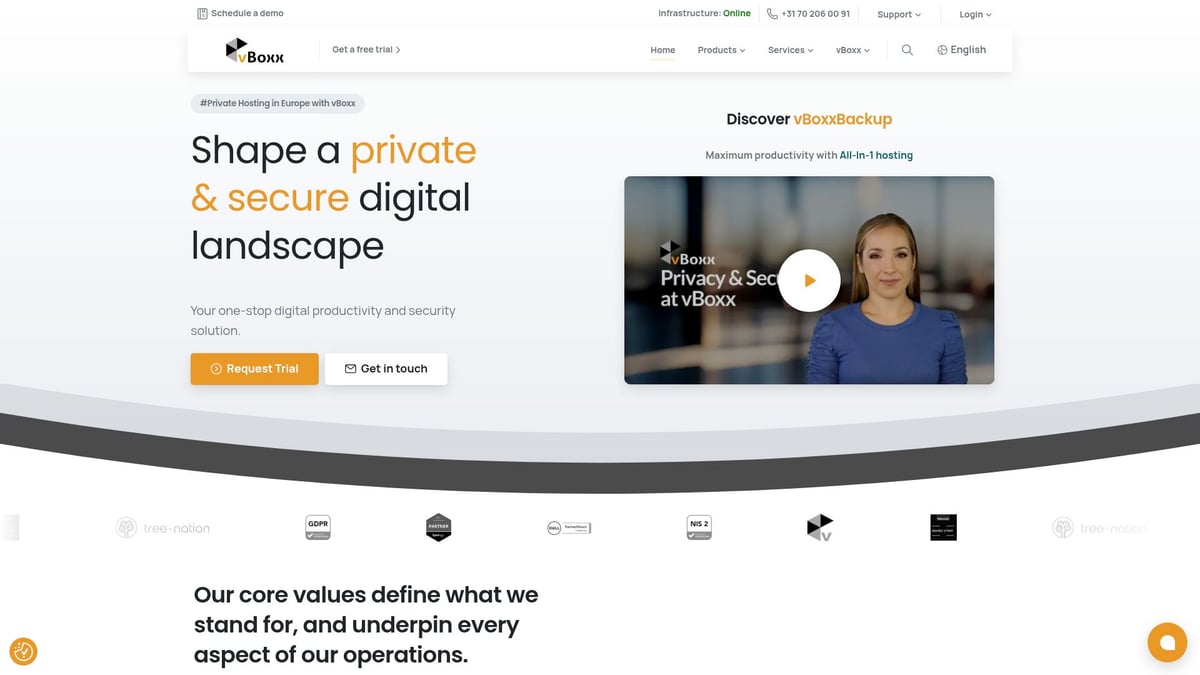
vBoxx stands out among private cloud storage solutions by offering strict European data residency, GDPR, and NIS2 compliance. The company delivers secure hosting, backup, and open-source platform expertise (Nextcloud, ownCloud), making it ideal for SMEs and regulated sectors. vBoxx features ISO 27001 certification, green hosting practices, and personalised consultancy, ensuring seamless migration and integration. Free trials and tailored support further distinguish vBoxx as a leading choice for private cloud storage solutions in 2026.
Step-by-Step Guide: How to Implement a Private Cloud Storage Solution in 2026
Implementing private cloud storage solutions in 2026 requires a structured approach. Each phase ensures your organisation achieves security, compliance, and performance goals. Follow this step-by-step guide to maximise value and minimise risk.

Assessing Organisational Needs and Readiness
Begin by evaluating your current environment. Identify what data types you must store, from sensitive customer records to operational documents. Review compliance obligations such as GDPR or NIS2 that may apply to your sector.
Examine your existing IT infrastructure, including hardware, connectivity, and in-house expertise. Are your teams prepared for the technical demands of private cloud storage solutions? Develop a checklist covering security requirements, scalability targets, and performance expectations.
Setting clear objectives at this stage ensures alignment across stakeholders. For example, a financial services firm might prioritise regulatory compliance, while a manufacturer could focus on edge data processing. Document your findings to guide the next steps.
Selecting the Right Private Cloud Solution
Choosing the best private cloud storage solutions involves comparing key criteria. Security, compliance, scalability, cost, and support should top your list. Decide whether a hosted or on-premises model aligns better with your business needs.
Assess integration capabilities with your current IT systems, including identity management and business applications. Consult industry benchmarks to evaluate provider performance and reliability. Vendor comparisons help clarify differences in support, certifications, and customisation options.
Consider future growth and interoperability. Engaging with solution consultants or using trial environments can provide hands-on insight before making a commitment. This ensures the private cloud storage solutions selected are fit for both present and future demands.
Planning and Designing the Architecture
Designing robust private cloud storage solutions requires careful planning. Define your architecture, taking into account storage hardware, virtualisation layers, and networking components. Select technologies that support your performance and scalability goals.
Prioritise redundancy and disaster recovery. Incorporate backup strategies and failover mechanisms to prevent data loss. Ensure your design allows for simple integration with existing infrastructure and can adapt to evolving needs.
Interoperability is essential for future-proofing. Reference architecture diagrams can help visualise system components and data flows. This planning phase ensures your private cloud storage solutions are efficient, resilient, and adaptable.
Deployment and Migration Strategies
A successful migration to private cloud storage solutions starts with a detailed plan. Map out each step, from initial data transfer to final validation. Use migration tools to automate and streamline processes where possible.
Test systems before going live to minimise downtime and avoid data loss. Engage stakeholders and IT teams early, providing clear communication and roles throughout the migration. Consider a phased approach for large-scale deployments to reduce risk.
Consultancy services can provide expertise for complex migrations. Regular reviews during deployment ensure objectives are met and issues are addressed promptly. This careful approach guarantees a smooth transition to your new private cloud storage solutions.
Ensuring Security, Compliance, and Ongoing Management
Implementing robust security and compliance controls is critical. Use strong access controls, encryption for data at rest and in transit, and continuous monitoring. Establish audit trails and compliance reporting to meet regulatory standards.
Stay informed about evolving security threats and best practices. For practical insights on encryption and secure storage, refer to Online storage and encryption insights. Schedule regular updates, patches, and reviews to keep systems secure.
Develop a compliance checklist for frameworks such as GDPR and NIS2. Proactive management ensures your private cloud storage solutions remain resilient, compliant, and trustworthy in the face of emerging risks.
Training, Support, and Continuous Optimisation
User training is essential for effective adoption of private cloud storage solutions. Provide clear documentation, hands-on workshops, and ongoing guidance to all users.
Establish support channels and escalation paths for technical issues. Monitor performance metrics to identify optimisation opportunities, such as storage usage patterns and system responsiveness.
Plan for future upgrades and scaling as your organisation grows. Continuous improvement and feedback loops help maximise the return on investment from your private cloud storage solutions, ensuring long-term value and operational excellence.
Private Cloud Storage Trends and Future Outlook for 2026 and Beyond
As we look towards 2026, private cloud storage solutions are evolving rapidly to meet the demands of a data-driven world. Several key trends are shaping how organisations approach security, compliance, sustainability, and innovation in their cloud strategies.
AI and Automation in Data Management
Artificial intelligence is becoming a cornerstone of private cloud storage solutions. AI-driven tools now automate data classification, tiering, and security functions, reducing manual intervention for IT teams. Predictive analytics help organisations optimise storage usage and anticipate future needs, making resource allocation more efficient.
These advancements mean businesses can manage vast datasets with minimal effort. For example, intelligent algorithms can automatically move seldom-used data to lower-cost storage tiers, ensuring performance for critical workloads. This shift not only saves time but also supports compliance by applying retention policies consistently across the environment.
Evolving Security Threats and Defence Mechanisms
Security remains a top concern as cyber threats become more sophisticated. In 2026, private cloud storage solutions are adopting zero-trust models and adaptive security frameworks. Real-time threat detection and automated response capabilities are essential for defending against ransomware and insider threats.
Identity-first security and misconfiguration risks are leading concerns, according to the Top 5 cloud security trends of 2026. Providers are integrating robust monitoring tools and automated patch management to close security gaps quickly. These measures ensure sensitive data remains protected, even as attack vectors evolve.
Regulations, Data Sovereignty, and Compliance
Regulatory pressure is driving adoption of private cloud storage solutions, particularly in regions with strict data residency laws. Organisations are prioritising providers that offer compliance with frameworks like GDPR and NIS2. Data sovereignty is now a critical requirement, especially for industries handling personal or sensitive information.
Spending on sovereign cloud infrastructure in Europe is projected to triple from 2025 to 2027, reflecting a shift towards localised, compliant storage options (Sovereign cloud infrastructure spending in Europe). This trend underscores the importance of selecting solutions that guarantee regulatory compliance and transparent data handling practices.
Sustainability and Green Cloud Initiatives
Sustainability is shaping the future of private cloud storage solutions. Providers are investing in energy-efficient hardware, renewable energy sources, and carbon-neutral data centres. These efforts are not only environmentally responsible but also help organisations meet their own corporate social responsibility targets.
Environmental certifications and transparent reporting are becoming standard. For instance, many data centres are now measuring and reducing energy use per terabyte stored. As green initiatives gain momentum, businesses benefit from reduced operational costs and enhanced reputation.
The Role of Edge Computing and IoT
Edge computing is transforming the way private cloud storage solutions support distributed operations. By processing data closer to where it is generated, organisations achieve real-time analytics and faster decision-making. This approach is particularly valuable for industries such as manufacturing, logistics, and smart cities.
Integrating private cloud with IoT devices enables seamless data flow and secure management of vast sensor networks. As edge and cloud technologies converge, businesses can unlock new efficiencies and gain a competitive advantage, all while maintaining control over sensitive data.
As you consider the future of your organisation’s data strategy, it’s clear that control, security, and sustainability are more important than ever. We’ve explored how private cloud storage offers real advantages for compliance, performance, and customisation—especially for businesses operating under strict regulations or seeking a greener digital footprint. If you’re ready to experience these benefits first hand and see how a secure, European-based solution could work for you, why not start a free trial? It’s an easy way to explore vBoxx’s private cloud storage and discover how it fits your unique needs.