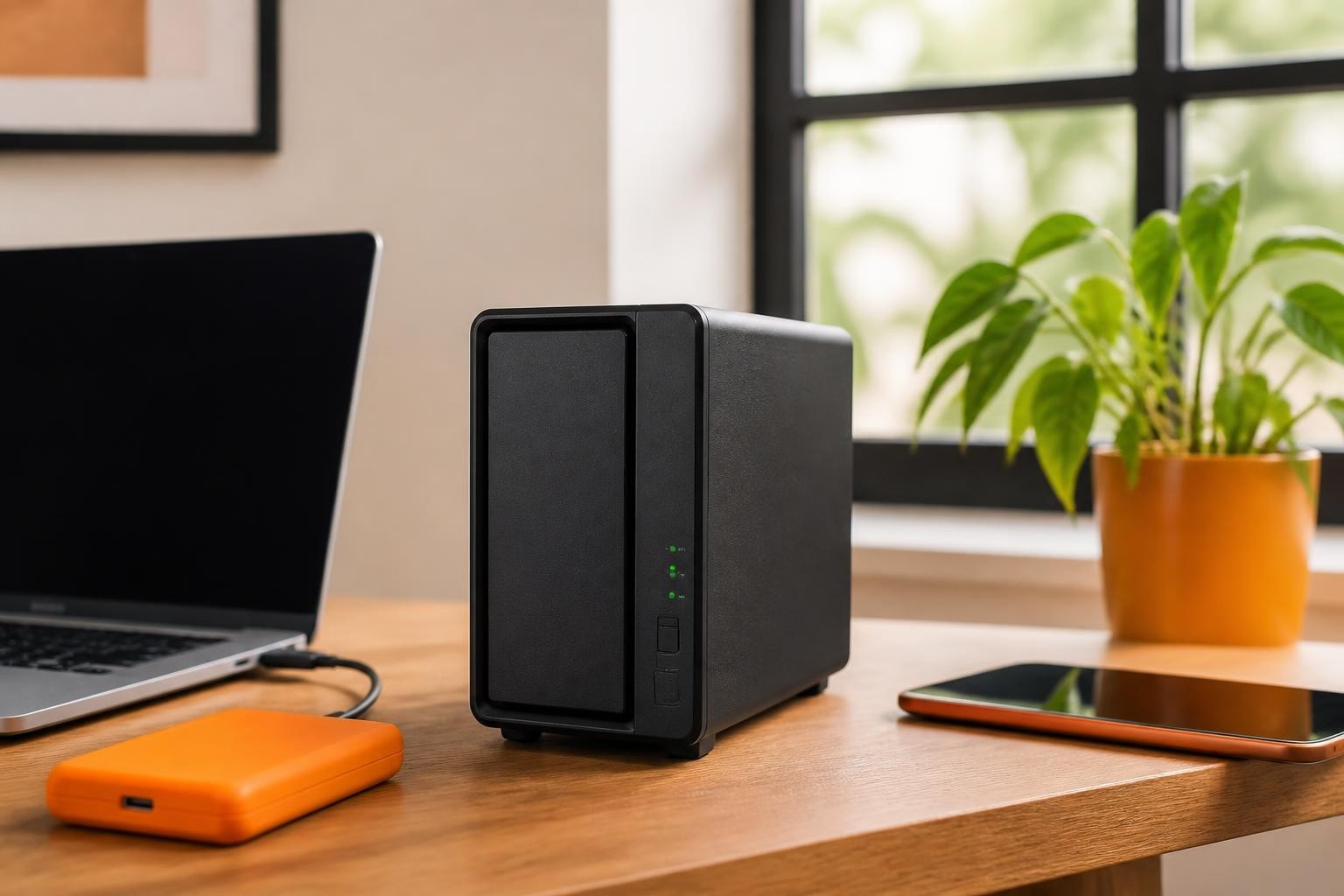

The RS3621xs+ represents a significant milestone in enterprise storage technology, offering businesses a robust platform for managing critical data infrastructure. In particular, as organisations increasingly rely on secure, scalable storage solutions, understanding the capabilities of enterprise-grade network-attached storage systems becomes essential for IT decision-makers. Furthermore, this helps organisations optimise infrastructure while maintaining stringent security standards. As a result, businesses can make more informed choices around performance, scalability, and data protection.
Understanding the RS3621xs+ Architecture
The RS3621xs+ stands as Synology’s flagship rackmount solution, engineered specifically for businesses requiring exceptional performance and reliability. In particular, this 12-bay storage system combines enterprise-grade components with sophisticated software capabilities. Furthermore, it creates a strong foundation for modern data management strategies. As a result, organisations can support demanding workloads with greater stability, scalability, and efficiency.
Hardware Specifications and Performance Capabilities
At its core, the system utilises an Intel Xeon D-1527 quad-core processor operating at 2.2 GHz, delivering computational power necessary for demanding workloads. In particular, the base configuration includes 8GB of ECC DDR4 memory, expandable to 64GB, ensuring data integrity during intensive operations. Furthermore, this expandable memory architecture supports growing enterprise requirements. As a result, organisations can maintain both performance and reliability under heavy workloads.
Key hardware features include:
- Dual 10GbE network ports for high-speed connectivity
- Four Gigabit Ethernet ports for network redundancy
- Hot-swappable drive bays supporting both HDD and SSD configurations
- Redundant power supplies ensuring continuous operation
- PCIe expansion slots for enhanced functionality
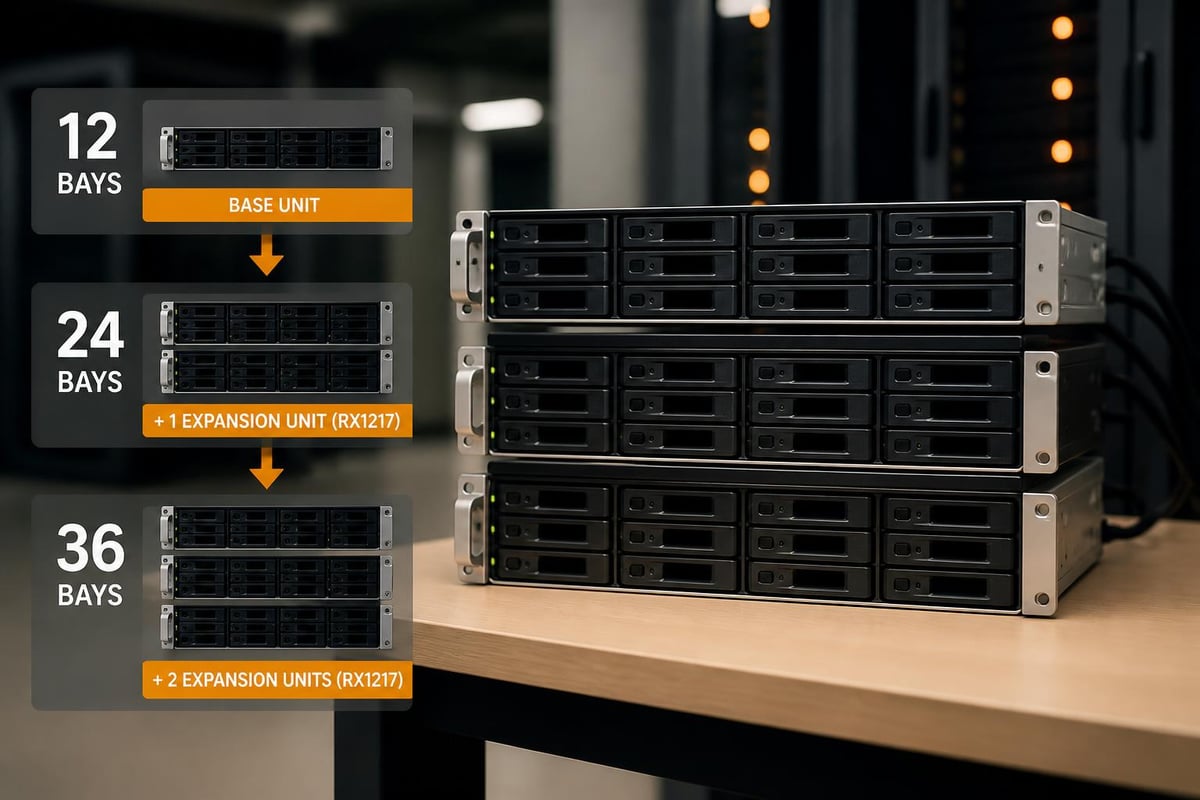
Storage capacity scales impressively through integration with expansion units. In particular, when paired with appropriate expansion chassis, the RS3621xs+ accommodates up to 36 drives. Furthermore, this provides organisations with substantial room for growth without requiring complete infrastructure replacement. As a result, businesses can scale storage efficiently while controlling long-term capital expenditure.
Network Performance and Connectivity Options
Network performance distinguishes the RS3621xs+ from consumer-grade solutions. In particular, the dual 10GbE ports enable aggregate throughput exceeding 2,000 MB/s, whilst the additional Gigabit Ethernet ports facilitate network segmentation and failover protection. Furthermore, this connectivity architecture supports link aggregation, allowing multiple network interfaces to function as a single high-bandwidth connection. As a result, organisations can achieve greater bandwidth efficiency and network resilience.
According to the official Synology specifications, sequential read speeds reach approximately 2,352 MB/s, with write speeds achieving 1,311 MB/s under optimal conditions. In particular, these performance metrics enable organisations to handle multiple concurrent workflows without experiencing bottlenecks. Moreover, this ensures smooth operation in demanding enterprise environments. Consequently, businesses benefit from high-throughput performance and improved workload handling capabilities.
Storage Management and Data Protection
Enterprise storage demands sophisticated management tools, and the RS3621xs+ delivers through Synology’s DiskStation Manager (DSM) operating system. In particular, this software platform provides comprehensive control over storage resources whilst maintaining an accessible interface for administrators. Furthermore, it centralises system management and monitoring in a unified environment. As a result, organisations can streamline administration while maintaining full visibility and control over their infrastructure.
RAID Configuration and Data Redundancy
The system supports multiple RAID configurations, each offering distinct advantages for specific use cases:
| RAID Level | Minimum Drives | Fault Tolerance | Capacity Efficiency | Ideal For |
|---|---|---|---|---|
| RAID 0 | 2 | None | 100% | Maximum performance, non-critical data |
| RAID 1 | 2 | 1 drive | 50% | Critical data, simple redundancy |
| RAID 5 | 3 | 1 drive | 67-94% | Balanced performance and protection |
| RAID 6 | 4 | 2 drives | 50-88% | Enhanced protection, larger arrays |
| RAID 10 | 4 | 1 drive per mirror | 50% | High performance with redundancy |
Beyond traditional RAID, Synology offers Hybrid RAID (SHR), which optimises storage efficiency across mixed drive sizes whilst maintaining data protection. In particular, this flexibility proves especially valuable for organisations with evolving storage requirements. Furthermore, it simplifies capacity expansion and reduces unused storage space. As a result, businesses can achieve more efficient storage utilisation while maintaining reliable data protection.
Snapshot Technology and Point-in-Time Recovery
Snapshot replication represents a critical feature for businesses prioritising data protection. In particular, the RS3621xs+ supports comprehensive snapshot capabilities, allowing administrators to capture the system state at specific moments without impacting performance. Furthermore, these snapshots consume minimal storage space initially, growing only as data changes over time. As a result, organisations can maintain efficient and low-overhead data protection.
Recovery from snapshots occurs rapidly, enabling businesses to restore entire volumes or individual files within minutes rather than hours. In particular, this capability proves invaluable when addressing ransomware incidents, accidental deletions, or configuration errors. Moreover, it significantly reduces downtime and operational disruption. Consequently, businesses benefit from faster recovery and stronger resilience against data loss events.
Business Continuity and Disaster Recovery
Enterprise storage solutions must address continuity requirements comprehensively. In particular, the RS3621xs+ incorporates multiple features ensuring business operations continue despite hardware failures, natural disasters, or cyber incidents. Furthermore, these built-in resilience mechanisms help minimise downtime and data loss. As a result, organisations can maintain operational stability even under adverse conditions.
High Availability Clustering
Enterprise storage solutions must address continuity requirements comprehensively. In particular, the RS3621xs+ incorporates multiple features ensuring business operations continue despite hardware failures, natural disasters, or cyber incidents. Furthermore, these built-in resilience mechanisms help minimise downtime and data loss. As a result, organisations can maintain operational stability even under adverse conditions.
Implementation considerations include:
- Network configuration ensuring both units connect to identical network segments
- Shared storage through expansion units accessible by both systems
- Heartbeat monitoring detecting failures and triggering failover procedures
- Data synchronisation maintaining consistency between primary and secondary units
- Regular failover testing validating recovery procedures function correctly
Replication Strategies for Off-Site Protection
Remote replication protects against site-level disasters by maintaining data copies at geographically separated locations. In particular, the RS3621xs+ supports both scheduled and real-time replication, with administrators choosing approaches that match their recovery point objectives. Furthermore, this flexibility allows organisations to tailor protection strategies based on business criticality. As a result, businesses can ensure stronger disaster recovery and improved data resilience across locations.
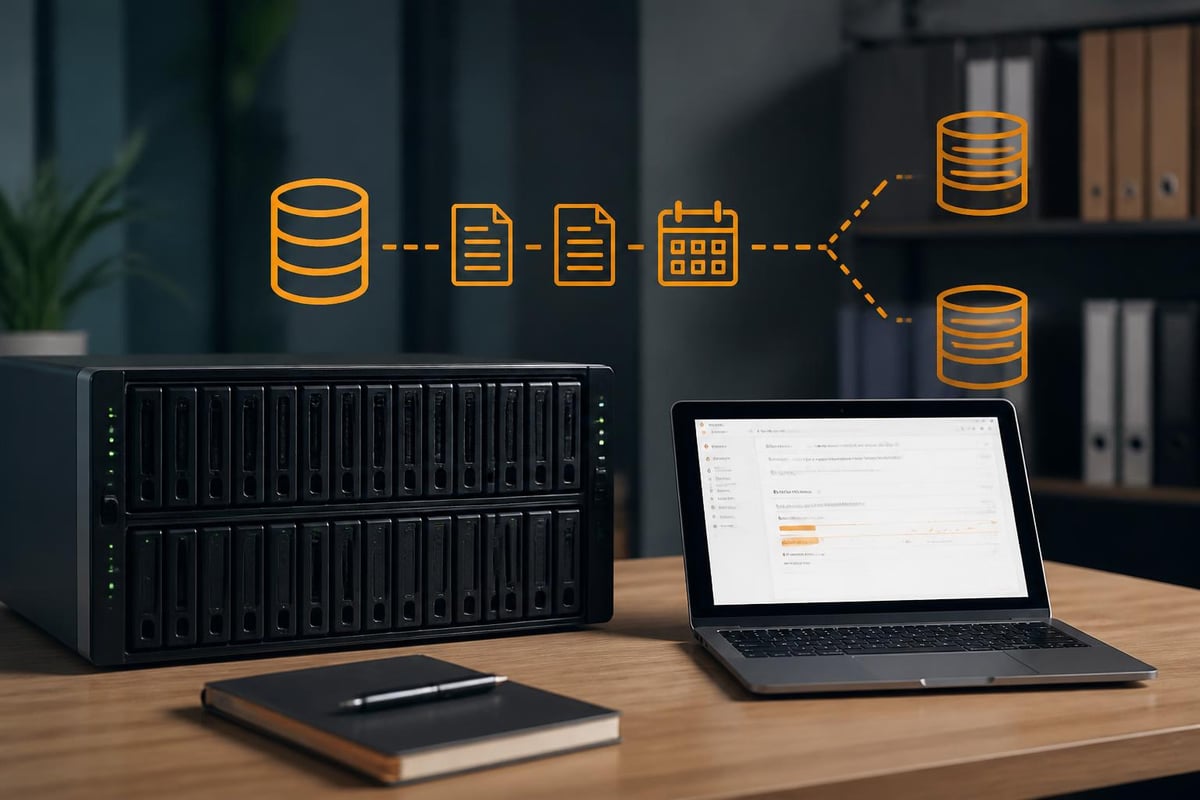
Bandwidth efficiency improves through block-level incremental replication, transmitting only changed data rather than complete files. In particular, compression and deduplication further reduce network utilisation. Furthermore, this makes remote replication practical even over moderate internet connections. As a result, organisations can maintain efficient offsite backups without excessive bandwidth demands.
Security Features for Enterprise Environments
Security considerations permeate every aspect of enterprise storage deployment. In particular, the RS3621xs+ addresses these concerns through multiple layers of protection, from physical hardware to application-level controls. Furthermore, this layered approach strengthens overall system resilience against diverse threats. As a result, organisations can better safeguard critical data across all operational levels.
Access Control and Authentication Mechanisms
Granular access control ensures users interact only with authorised resources. In particular, the system integrates with existing directory services including Active Directory and LDAP, enabling centralised user management across infrastructure components. Furthermore, multi-factor authentication adds protection against credential compromise, requiring additional verification beyond passwords. As a result, organisations can significantly reduce the risk of unauthorised access and strengthen overall identity security.
Comprehensive security measures include:
- AES 256-bit encryption for data at rest
- TLS/SSL encryption for data in transit
- IP blocking and automatic account protection
- Security advisories and automated updates
- Comprehensive audit logging of system activities
File-level permissions provide precise control over resource access, whilst share-level restrictions limit network visibility. In particular, these layered controls enable organisations to implement least-privilege principles effectively. Furthermore, this reduces exposure to internal threats and accidental data misuse. As a result, businesses can maintain tighter security and more controlled access to sensitive resources.
Encryption and Compliance Requirements
Many organisations face regulatory requirements mandating data encryption. The RS3621xs+ supports encrypted shared folders, protecting sensitive information without requiring full-volume encryption. This approach allows organisations to apply encryption selectively, balancing security requirements against performance considerations.
Businesses prioritising privacy can explore secure cloud infrastructure combining enterprise storage with complementary security services, creating comprehensive protection frameworks aligned with regulatory standards.
Virtualisation and Application Integration
Modern enterprises rely heavily on virtualised infrastructure, and the RS3621xs+ serves as both a virtualisation host and storage backend. In particular, this versatility reduces hardware requirements whilst maintaining performance standards. Furthermore, it allows organisations to consolidate workloads more efficiently. As a result, businesses can lower infrastructure complexity while preserving performance and scalability.
VMware and Hyper-V Integration
The detailed technical specifications confirm compatibility with major virtualisation platforms. When configured as shared storage for VMware vSphere or Microsoft Hyper-V, the system delivers consistent performance through optimised protocols including iSCSI, NFS, and SMB.
Virtual machine storage benefits from features specifically designed for virtualised environments:
- VAAI/ODX integration reducing server CPU utilisation during storage operations
- Thin provisioning allocating storage space dynamically as requirements grow
- LUN snapshots enabling rapid VM backup without agent installation
- Storage I/O control prioritising critical workloads during contention
Container Deployment and Docker Support
Container technology gains prominence as organisations modernise application architectures. In particular, the RS3621xs+ functions as a Docker host, running containerised applications directly on the storage system. Furthermore, this capability enables businesses to deploy applications without dedicating separate server infrastructure. As a result, organisations can improve resource efficiency while simplifying infrastructure management.

Popular applications available through the Synology package centre include content management systems, customer relationship management tools, and collaboration platforms. These containerised services leverage the system’s processing power and storage capacity whilst maintaining isolation from core storage functions.
Scalability Planning and Capacity Management
Effective storage planning balances immediate requirements against future growth projections. The RS3621xs+ architecture accommodates expansion through multiple pathways, enabling organisations to scale incrementally rather than requiring forklift upgrades.
Expansion Unit Integration
The system supports up to two RX1217 or RX1217sas expansion units, each adding 12 additional drive bays. This modular approach allows capacity increases without service interruption, as expansion units connect whilst the primary system remains operational.
| Configuration | Total Bays | Maximum Raw Capacity (18TB drives) | Typical Use Case |
|---|---|---|---|
| Base unit only | 12 | 216TB | Small to medium deployments |
| One expansion | 24 | 432TB | Growing organisations |
| Two expansions | 36 | 648TB | Enterprise deployments |
Capacity planning should account for RAID overhead, snapshot storage, and growth projections spanning 3-5 years. Conservative estimates suggest provisioning 30-40% additional capacity beyond immediate requirements, providing buffer for unexpected growth.
SSD Cache Implementation
Strategic SSD deployment dramatically improves performance for specific workloads. The RS3621xs+ supports both read and write caching configurations, with administrators selecting approaches matching their performance characteristics.
Read-only caching proves effective for frequently accessed data exhibiting little change, such as reference databases or shared documentation. Read-write caching benefits transactional workloads where both read and write operations require acceleration, though this configuration demands additional SSDs for redundancy.
Backup and Recovery Strategies
Comprehensive backup strategies protect against data loss scenarios ranging from hardware failures to malicious encryption. The RS3621xs+ functions both as a backup target and source, facilitating multi-tiered protection approaches.
3-2-1 Backup Methodology
Industry best practices recommend maintaining three data copies across two different media types, with one copy stored off-site. The RS3621xs+ supports this methodology through integrated backup applications and replication capabilities.
Implementation typically involves:
- Production data residing on the primary system
- Local snapshots providing rapid recovery options
- Replicated copies on secondary RS3621xs+ systems
- Cloud storage integration for off-site protection
- Periodic tape archival for long-term retention
Cloud Integration and Hybrid Strategies
Native cloud integration enables the RS3621xs+ to synchronise data with major cloud providers whilst maintaining local performance. Businesses seeking to understand comprehensive cloud integration approaches might benefit from a demonstration of secure cloud solutions showcasing how enterprise storage integrates with cloud services.
Hybrid backup strategies balance cost efficiency against recovery speed requirements. Frequently accessed data remains on local high-performance storage, whilst archival information migrates to cost-effective cloud tiers. Automated lifecycle policies manage this distribution, reducing administrative overhead whilst optimising storage expenditure.
Performance Optimisation Techniques
Maximising RS3621xs+ performance requires understanding how configuration choices influence system behaviour. Strategic optimisation addresses network design, storage configuration, and workload distribution.
Network Design Considerations
Network architecture significantly impacts storage performance. Dedicated storage networks isolate storage traffic from general business communications, preventing congestion during peak utilisation periods. VLAN segmentation further refines traffic management, enabling administrators to prioritise storage protocols over less time-sensitive communications.
Optimal network configuration includes:
- Dedicated 10GbE switches for storage traffic
- Jumbo frame enablement reducing protocol overhead
- Link aggregation distributing traffic across multiple interfaces
- Quality of Service (QoS) prioritising storage protocols
- Redundant network paths eliminating single points of failure
Storage Tier Optimisation
Tiered storage strategies place data on appropriate media matching access patterns. Frequently accessed data benefits from SSD placement, whilst archival information resides on cost-effective high-capacity drives. The RS3621xs+ supports automated tiering through DSM, analysing access patterns and migrating data between tiers without administrative intervention.
Monitoring and Maintenance Procedures
Proactive monitoring identifies potential issues before they impact operations. The RS3621xs+ incorporates comprehensive monitoring capabilities, tracking everything from component temperatures to network utilisation patterns.
Health Monitoring and Alerting
SMART monitoring continuously assesses drive health, identifying potential failures before data loss occurs. Administrators configure alert thresholds matching their organisation’s risk tolerance, receiving notifications through email, SMS, or integration with existing monitoring platforms.
Regular maintenance procedures include:
- Monthly drive health report reviews
- Quarterly firmware update assessments
- Semi-annual disaster recovery testing
- Annual hardware inspection and cleaning
- Continuous log analysis for anomaly detection
Environmental monitoring tracks operating conditions including temperature and humidity levels. The hardware specifications indicate optimal operating temperatures between 5°C and 40°C, with proper ventilation ensuring components remain within safe ranges.
Total Cost of Ownership Analysis
Investment decisions require understanding both acquisition costs and ongoing operational expenses. The RS3621xs+ presents competitive total cost of ownership when organisations evaluate the complete economic picture.
Initial Investment Considerations
Base system costs represent only one component of total expenditure. Complete deployment budgets encompass:
| Cost Category | Typical Range | Notes |
|---|---|---|
| Base unit | £6,000-£8,000 | Varies by region and vendor |
| Storage drives | £3,000-£12,000 | Depends on capacity and performance tier |
| Network infrastructure | £1,000-£5,000 | Switches, cables, transceivers |
| Expansion units | £2,500-£3,500 each | As growth requires |
| Software licences | £500-£2,000 | Optional advanced packages |
Operational Cost Factors
Ongoing expenses influence long-term economic viability. Power consumption averages approximately 147W during typical operations, translating to modest electricity costs compared to equivalent server-based solutions. Cooling requirements remain reasonable, with standard datacentre environmental controls proving adequate.
Maintenance costs stay predictable through Synology’s support programmes, with organisations selecting coverage levels matching their risk profiles. Extended warranty options provide peace of mind for mission-critical deployments where rapid hardware replacement proves essential.
Deployment Scenarios and Use Cases
The RS3621xs+ addresses diverse business requirements across multiple industries. Understanding common deployment patterns helps organisations evaluate fit for their specific circumstances.
Media Production and Content Libraries
Creative organisations generate substantial data volumes requiring both capacity and performance. The RS3621xs+ handles 4K video editing workflows, providing sufficient throughput for multiple concurrent editors whilst maintaining extensive archival libraries. Snapshot capabilities protect against accidental deletions during collaborative editing processes.
Healthcare and Regulatory Compliance
Medical imaging systems generate enormous file sizes whilst facing strict retention requirements. The RS3621xs+ accommodates DICOM standards, providing secure storage meeting HIPAA and GDPR requirements. Encryption capabilities protect patient data, whilst comprehensive audit logging supports compliance demonstrations.
Financial Services and Transaction Processing
Financial institutions demand both performance and reliability. The RS3621xs+ serves as a database backend, delivering low-latency storage for transaction systems whilst maintaining complete data protection through high availability configurations and comprehensive replication.
Migration Strategies and Implementation
Transitioning to the RS3621xs+ from existing infrastructure requires careful planning minimising disruption whilst ensuring data integrity throughout the process.
Pre-Migration Assessment
Successful migrations begin with comprehensive current-state analysis. Organisations should inventory existing storage utilisation, performance requirements, and application dependencies before proceeding. This assessment identifies potential challenges early, enabling proactive mitigation.
Critical assessment areas include:
- Current capacity utilisation and growth trends
- Application performance requirements and SLAs
- Network bandwidth availability and constraints
- Backup window requirements and recovery objectives
- User access patterns and peak utilisation periods
Phased Implementation Approach
Large-scale migrations benefit from incremental approaches rather than wholesale transitions. Initial phases might involve non-critical workloads, validating configurations and procedures before migrating business-critical systems. This methodology reduces risk whilst building operational familiarity with the new platform.
The RS3621xs+ delivers enterprise-grade storage capabilities addressing modern business requirements for performance, scalability, and comprehensive data protection. Organisations seeking to implement secure, reliable storage infrastructure benefit from platforms combining robust hardware with sophisticated management capabilities. vBoxx provides secure hosting and cloud solutions complementing enterprise storage deployments, offering expertise in privacy-focused infrastructure aligned with sustainable practices and regulatory compliance requirements, ensuring your digital infrastructure remains both powerful and responsible.