
Selecting a secure cloud provider has become one of the most critical decisions businesses face in 2026. In particular, with data breaches costing organisations millions in damages and reputational harm, the stakes have never been higher. At the same time, the cloud computing landscape offers tremendous opportunities for scalability, collaboration, and cost efficiency, but these benefits must be balanced against robust security measures. Therefore, understanding what makes a provider truly secure requires examining multiple factors, from encryption protocols to compliance certifications, physical infrastructure to incident response capabilities. In this context, this comprehensive guide explores the essential criteria businesses should evaluate when choosing a cloud partner that safeguards their digital assets.
Understanding the Shared Responsibility Model
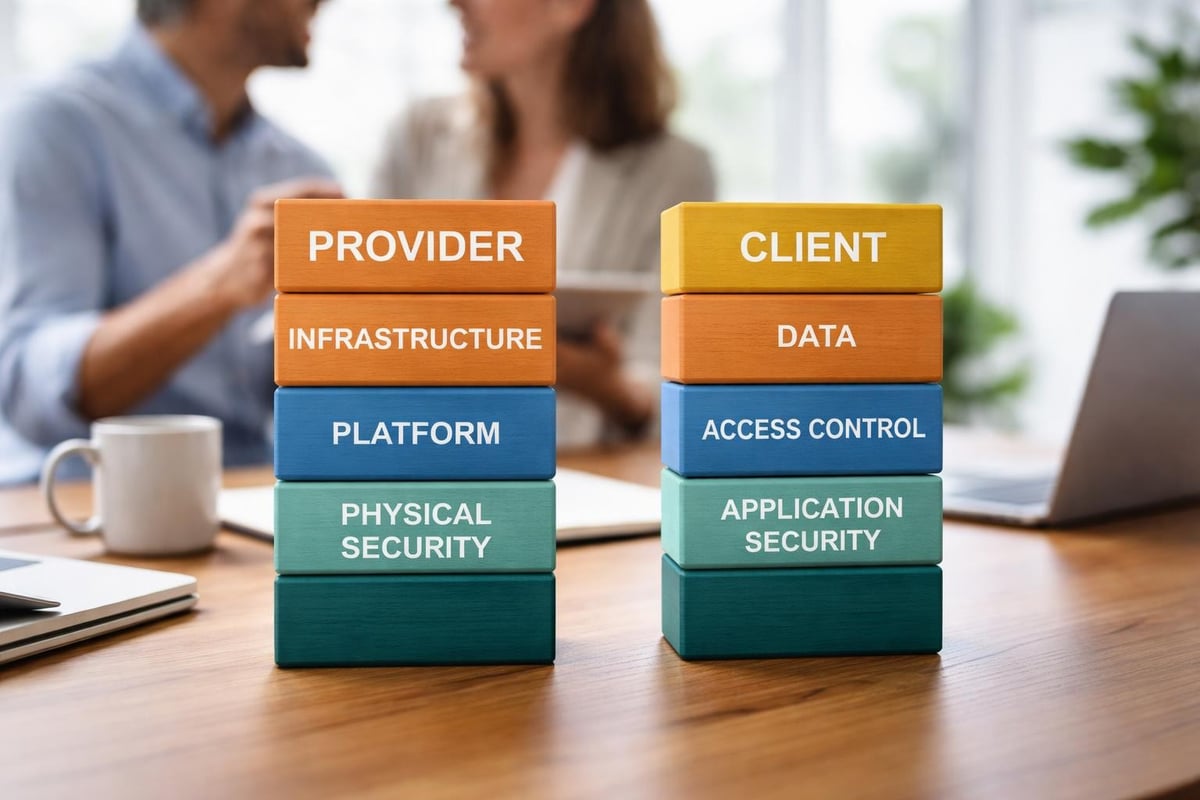
When partnering with a secure cloud provider, organisations must recognise that cloud security operates under a shared responsibility framework. In particular, this model delineates which security aspects the provider manages and which remain the client’s obligation.
Specifically, the provider typically handles infrastructure security, including physical data centres, network architecture, and hypervisor protection. Moreover, they implement foundational controls such as firewalls, DDoS mitigation, and hardware redundancy. As a result, these measures create the secure environment within which client applications operate. In this way, the underlying infrastructure is continuously protected and maintained at scale.
Clients, however, retain responsibility for several critical areas:
- Identity and access management for their users
- Data encryption and key management
- Application-level security configurations
- Compliance with industry-specific regulations
- Security monitoring and incident response for their workloads
Understanding modern cloud security best practices helps businesses appreciate this division of responsibilities. A truly secure cloud provider will clearly document their responsibilities and provide robust tools that enable clients to fulfil theirs effectively.
Evaluating Provider Security Controls
The technical controls a provider implements directly impact your data security posture. Request detailed information about their security architecture during the evaluation process.
Infrastructure security should include multiple layers of protection. Physical data centres require stringent access controls, surveillance systems, and environmental monitoring. Network segmentation isolates customer workloads, preventing lateral movement during potential breaches. Intrusion detection systems monitor traffic patterns for anomalous behaviour.
Encryption capabilities deserve particular scrutiny. Data should be encrypted both at rest and in transit using industry-standard algorithms. The provider should support customer-managed encryption keys, allowing you to maintain ultimate control over data access. Transport Layer Security (TLS) 1.3 should be the minimum standard for data transmission.
| Security Layer | Essential Features | Questions to Ask |
|---|---|---|
| Physical | Biometric access, 24/7 surveillance, redundant power | How many security zones protect the data centre? |
| Network | Firewalls, DDoS protection, segmentation | What traffic monitoring systems detect anomalies? |
| Data | AES-256 encryption, customer-managed keys | Can I bring my own encryption keys? |
| Application | Web application firewalls, API security | How are vulnerabilities identified and patched? |
Compliance Certifications and Regulatory Adherence
A secure cloud provider demonstrates its commitment through third-party audits and compliance certifications. These validations provide independent verification of security controls and operational practices.
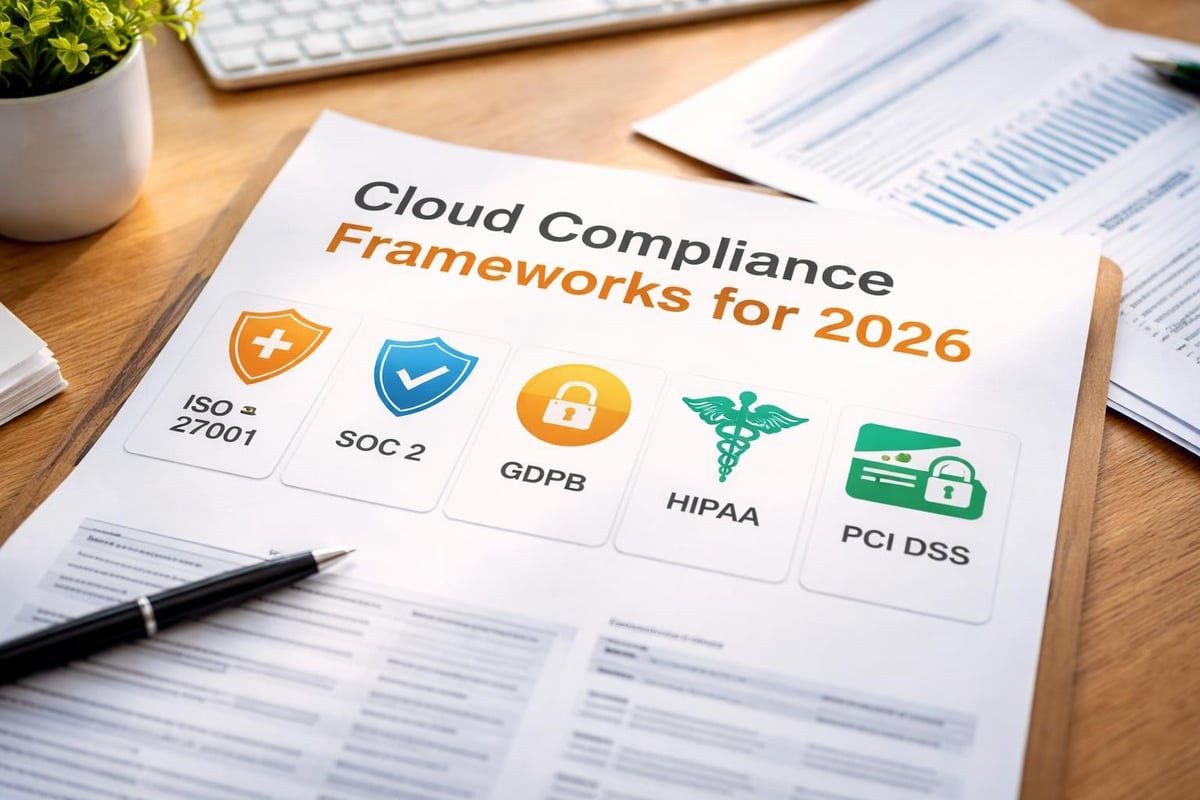
ISO/IEC 27001 represents the international standard for information security management systems. This certification indicates the provider has implemented comprehensive controls across people, processes, and technology. Annual audits ensure ongoing compliance.
SOC 2 Type II reports evaluate controls related to security, availability, processing integrity, confidentiality, and privacy. Unlike Type I reports that assess control design, Type II examines operational effectiveness over time, typically six to twelve months.
Understanding cloud compliance requirements becomes essential when operating in regulated industries. Healthcare organisations require HIPAA compliance, financial services need PCI DSS certification, and businesses handling European data must address GDPR mandates.
Industry-Specific Standards
Beyond general certifications, evaluate whether providers hold credentials relevant to your sector:
- Healthcare: HIPAA compliance, HITECH Act adherence
- Finance: PCI DSS Level 1, FedRAMP authorisation for government work
- European operations: GDPR compliance, EU-US Data Privacy Framework
- Defence contractors: ITAR compliance, DoD Impact Levels
Request current certification documents rather than relying on marketing claims. Verify certificates with issuing bodies directly. A provider’s willingness to share detailed compliance documentation signals transparency and confidence in their security posture.
Data Sovereignty and Geographic Considerations
Where your data physically resides carries significant legal and operational implications. Data sovereignty laws in many jurisdictions require that certain information remains within national borders or specific geographic regions.
A secure cloud provider offers multiple data centre locations with transparent policies about data storage and processing. They should clearly disclose which countries host their facilities and provide contractual guarantees about data residency.
Cross-border data transfers present particular challenges in 2026. Following the invalidation of previous frameworks, new agreements govern transatlantic data flows. Providers must demonstrate compliance with current regulations and implement appropriate safeguards such as Standard Contractual Clauses.
Consider these geographic factors:
- Proximity to users for performance optimisation
- Regulatory requirements mandating local data storage
- Political stability and legal frameworks in hosting countries
- Redundancy across multiple regions for disaster recovery
- Bandwidth costs and latency implications
For businesses exploring various storage options, examining different file storage services reveals how location choices impact both security and performance. The right provider balances regulatory compliance with operational efficiency.
Incident Response and Business Continuity
Security incidents will occur. Therefore, what distinguishes a secure cloud provider is their preparation and response capabilities. In this context, during your evaluation, examine their incident management framework closely. Moreover, this helps ensure that response times, escalation procedures, and communication protocols meet your organisation’s risk tolerance. As a result, businesses can better assess whether a provider is capable of handling real-world security events effectively.
Incident Detection and Response
Advanced providers implement 24/7 security operations centres staffed with dedicated analysts. They employ security information and event management (SIEM) systems that correlate events across infrastructure, identifying potential threats in real-time.
Response procedures should include:
- Defined escalation paths for different incident severities
- Communication protocols outlining how and when customers receive notifications
- Forensic capabilities to investigate breaches thoroughly
- Remediation processes that address root causes, not just symptoms
Request detailed information about the provider’s mean time to detect (MTTD) and mean time to respond (MTTR) metrics. Industry leaders typically detect incidents within minutes and initiate response procedures within an hour.
Business Continuity Planning
Beyond incident response, evaluate disaster recovery and business continuity arrangements. A secure cloud provider maintains geographically distributed backups and implements redundancy at multiple levels.
| Continuity Measure | Standard Practice | Critical Questions |
|---|---|---|
| Backup Frequency | Continuous or hourly | How often are backups verified? |
| Recovery Time Objective | 1-4 hours | What guarantees support your RTO? |
| Recovery Point Objective | Minutes to 1 hour | What data loss is acceptable? |
| Geographic Redundancy | Multiple regions | How far apart are backup locations? |
Transparency and Security Documentation
Providers confident in their security measures operate transparently. They publish detailed security documentation, participate in bug bounty programmes, and maintain open communication channels with customers.
Security whitepapers should explain architectural decisions, encryption implementations, and access control mechanisms. These documents enable your security team to assess whether the provider’s approach aligns with your requirements.
Vulnerability management programmes demonstrate ongoing security commitment. Following best practices for securing data in cloud services means proactively identifying and addressing weaknesses. Ask about patch management timelines and how zero-day vulnerabilities are handled.
Third-party penetration testing provides additional validation. Annual or bi-annual tests conducted by independent security firms identify vulnerabilities before malicious actors exploit them. Request executive summaries of recent penetration test results.
Access Control and Identity Management
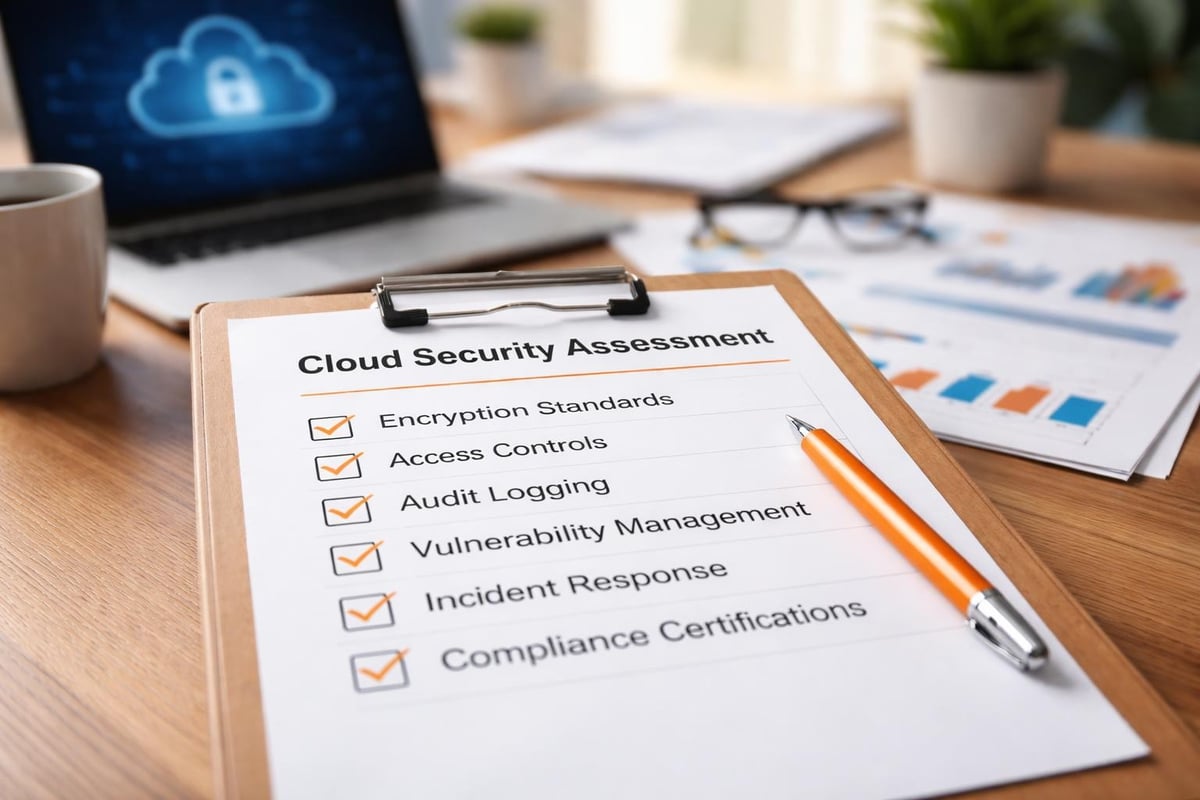
Robust identity and access management (IAM) forms the cornerstone of cloud security. In particular, a secure cloud provider offers granular controls that enable organisations to implement the principle of least privilege across their environment.
Moreover, multi-factor authentication (MFA) should be mandatory, not optional. For example, the provider should support various MFA methods including authenticator applications, hardware tokens, and biometric verification. In addition, single sign-on (SSO) integration streamlines access whilst maintaining security. As a result, organisations achieve both stronger protection and improved user experience.
Furthermore, role-based access control (RBAC) allows administrators to assign permissions based on job functions rather than individuals. Consequently, as employees change roles, their access automatically adjusts. In contrast, attribute-based access control (ABAC) provides even finer granularity, considering factors like location, time, and device security posture. Therefore, organisations gain more adaptive and context-aware security enforcement.
Privileged Access Management
Administrative accounts represent the highest-value targets for attackers. The provider should implement strict controls around privileged access:
- Just-in-time access provisioning that grants elevated permissions only when needed
- Session recording for administrative activities
- Breakglass procedures for emergency access
- Regular access reviews and recertification
Monitoring and logging every access attempt creates an audit trail for compliance and forensic purposes. The provider should retain logs for sufficient periods and make them easily accessible to customers.
Encryption and Key Management
Data encryption provides the last line of defence if other controls fail. However, encryption’s effectiveness depends entirely on proper key management. A secure cloud provider implements sophisticated encryption and key handling practices.
At-rest encryption protects stored data using AES-256 or equivalent algorithms. The provider should encrypt all storage media by default, including databases, file storage, and backups. Transparent encryption operates without performance penalties or application modifications.
In-transit encryption safeguards data moving between locations. TLS 1.3 should protect all communications, including management interfaces, API calls, and data transfers. The provider should support perfect forward secrecy, ensuring past communications remain protected even if current keys are compromised.
Key management separates competent providers from exceptional ones. Options should include:
- Provider-managed keys: Simplest approach, provider handles all key operations
- Customer-managed keys: Greater control, customers manage keys using provider tools
- Customer-supplied keys: Maximum control, customers generate and store keys externally
- Hardware security modules (HSMs): FIPS 140-2 Level 3 certified devices for key generation and storage
Understanding essential cloud security practices helps organisations determine which key management approach suits their risk tolerance and compliance requirements.
Network Security and Traffic Management
Network architecture determines how effectively a provider isolates customer workloads and protects against various attack vectors. In particular, sophisticated network security goes beyond basic firewalls.
Firstly, virtual private clouds (VPCs) create isolated network environments for each customer. Within these environments, customers define subnets, routing tables, and network gateways. As a result, this logical isolation prevents unauthorised access between different customer environments.
Moreover, DDoS protection should operate at multiple layers. For example, volumetric attacks target network bandwidth, protocol attacks exploit server resources, and application-layer attacks aim to exhaust specific services. Therefore, the provider should automatically detect and mitigate attacks without customer intervention.
In addition, web application firewalls (WAFs) protect internet-facing applications from common exploits such as SQL injection, cross-site scripting, and CSRF attacks. Furthermore, modern WAFs use machine learning to identify anomalous patterns and zero-day threats. Consequently, organisations benefit from more adaptive and proactive application security.
Traffic Inspection and Analysis
Deep packet inspection examines traffic content, not just headers. In particular, this capability identifies malware, data exfiltration attempts, and policy violations. However, inspection must respect privacy requirements and comply with relevant regulations. As a result, providers must carefully balance security visibility with data protection obligations.
Moreover, network flow logs capture metadata about traffic patterns without inspecting content. For example, these logs prove invaluable for troubleshooting, capacity planning, and security analysis. Therefore, the provider should retain flow logs for reasonable periods and make them accessible through standard interfaces. In addition, this improves operational transparency and supports long-term forensic investigations.
Vendor Lock-In and Data Portability
Whilst not strictly a security concern, the ability to migrate away from a provider impacts your long-term risk posture. A secure cloud provider facilitates data portability rather than creating artificial barriers to exit.
Standard APIs enable integration with third-party tools and services. Proprietary interfaces create dependencies that complicate migration. The provider should support industry-standard protocols for data access and management.
Data export capabilities should allow complete extraction of your information in standard formats. Regular export tests verify these processes work correctly and provide recovery time estimates. Some organisations maintain hybrid architectures, keeping critical data synchronized with on-premises systems.
Exploring multi-cloud strategies reveals how businesses balance vendor relationships whilst maintaining flexibility. However, multi-cloud approaches introduce complexity that requires sophisticated management tools and clear security policies across platforms.
Financial Stability and Long-Term Viability
Security investments mean nothing if the provider disappears. Assess the company’s financial health, market position, and growth trajectory. Established providers with diverse customer bases demonstrate stability, whilst startups might offer innovation but carry higher risk.
Review financial statements if publicly available. Consider factors such as:
- Years in operation and track record
- Customer retention rates and growth
- Investment in research and development
- Geographic diversification and regulatory compliance
- Acquisition history and integration success
Financial stability enables ongoing security investment. Providers cutting costs often reduce security spending first, increasing risk for customers. Partnership with a financially sound organisation ensures continued support and innovation.
Support and Customer Success
Technical support quality directly impacts security effectiveness. When incidents occur, rapid expert assistance becomes critical. Evaluate support offerings during the selection process.
Response times should align with your business requirements. Premium support tiers typically offer 24/7 availability with response times measured in minutes for critical issues. Verify whether support includes security expertise or only general technical assistance.
For those new to cloud services, a guided demonstration of comprehensive cloud solutions can illuminate how different services integrate and what support mechanisms are available. Understanding the full ecosystem helps organisations make informed decisions about providers and service levels.
Customer success programmes help organisations maximise security investments. These programmes might include:
- Regular security reviews and recommendations
- Workshops on security best practices
- Early access to new security features
- Dedicated technical account management
Privacy Policies and Data Handling
Beyond technical security, examine how providers handle data from a privacy perspective. In particular, their policies determine what they can do with your information and under what circumstances they might disclose it.
Firstly, data usage policies should clearly state that the provider will not access, use, or monetise customer data. However, some providers analyse metadata for service improvement, whilst others maintain strict separation. Therefore, it is essential to understand exactly what rights the provider claims over your data.
Moreover, transparency reports indicate how often providers receive legal demands for data and how they respond. In addition, regular publication of these reports demonstrates a commitment to protecting customer privacy against government overreach. As a result, organisations gain greater visibility into how their data may be accessed or disclosed in practice.
Understanding comprehensive cloud security standards including GDPR requirements helps organisations evaluate whether provider policies meet regulatory obligations. Privacy and security work hand in hand to protect sensitive information.
Environmental Sustainability Considerations
In 2026, environmental responsibility has moved from optional to essential. A secure cloud provider also considers ecological impact, implementing sustainable practices across their infrastructure.
Renewable energy commitments reduce carbon footprints. Leading providers power data centres with solar, wind, and hydroelectric sources. Some purchase renewable energy certificates to offset consumption, whilst others invest directly in generation capacity.
Energy efficiency measures extend server lifespan and reduce waste. Techniques include:
- Advanced cooling systems using outside air or liquid cooling
- High-efficiency power supplies and distribution
- Server utilisation optimisation through virtualisation
- Hardware recycling and responsible disposal programmes
Green hosting practices align with corporate sustainability goals whilst demonstrating forward-thinking management. Providers serious about environmental responsibility typically publish annual sustainability reports with specific metrics and improvement targets. For the latest developments in sustainable cloud infrastructure, organisations can follow industry news and updates to stay informed about emerging practices.
Performance and Reliability Metrics
Security without availability provides little value. A secure cloud provider maintains high uptime whilst implementing robust security controls. Review service level agreements (SLAs) and historical performance data.
Uptime guarantees typically range from 99.9% to 99.99%, representing roughly 43 minutes to 4.3 minutes of monthly downtime respectively. Understand what compensation the SLA provides and what exclusions apply. Scheduled maintenance often doesn’t count against SLA commitments.
Performance monitoring should be transparent. Providers should publish real-time status dashboards showing system health across regions and services. Historical incident reports demonstrate how effectively they handle outages and communicate with customers.
| Metric | Industry Standard | Premium Tier |
|---|---|---|
| Uptime SLA | 99.9% | 99.99% |
| Support Response | 1 hour | 15 minutes |
| Backup Frequency | Daily | Continuous |
| Geographic Redundancy | 2 regions | 3+ regions |
Making Your Decision
Selecting a secure cloud provider requires balancing multiple factors against your specific requirements. Create a weighted scoring matrix evaluating candidates across security, compliance, performance, cost, and support dimensions.
Proof of concept deployments provide hands-on experience before committing. Test critical workloads in production-like environments, evaluating both technical capabilities and operational procedures. Involve your security team throughout the process.
Reference checks offer insights beyond marketing materials. Speak with current customers in similar industries or with comparable requirements. Ask about their experiences during incidents, support quality, and unexpected challenges.
Remember that the cheapest option rarely proves the most secure. Whilst cost matters, underinvestment in security typically proves far more expensive when breaches occur. Following seven best practices for securing cloud services helps organisations prioritise essential security investments over superficial cost savings.
Ongoing Relationship Management
Selecting a provider marks the beginning, not the end, of your security journey. Therefore, organisations should establish processes for continuous evaluation and improvement of their cloud security posture.
In particular, regular security reviews should assess whether the provider maintains promised security levels. Moreover, annual audits verify controls remain effective as your usage evolves. Additionally, reviewing compliance certifications ensures they remain current and aligned with regulatory expectations.
Furthermore, organisations should participate in provider security programmes and advisory boards. In this context, these forums provide early warning of potential issues and help influence product roadmaps. As a result, active engagement strengthens the partnership and improves overall outcomes.
At the same time, organisations must monitor emerging threats and adjust security controls accordingly. After all, the threat landscape evolves constantly, requiring adaptive defences. Consequently, a quality provider partners with customers to address new challenges collaboratively.
Finally, staying informed about provider changes through official communications, industry analysis, and peer networks is essential. For example, mergers, acquisitions, or leadership changes can impact service quality and security priorities. Therefore, maintaining contingency plans ensures preparedness should migration become necessary.
Choosing a secure cloud provider demands thorough evaluation across technical capabilities, compliance credentials, operational practices, and business stability. The right partner protects your data whilst enabling innovation and growth. vBoxx delivers comprehensive secure hosting and cloud solutions with an unwavering focus on privacy, security, and sustainability. Our certified infrastructure, transparent practices, and dedicated support team ensure your digital assets remain protected whilst you focus on your core business objectives.