Businesses today require reliable, secure methods for sharing large files with clients, partners, and team members. In particular, while WeTransfer has become a household name for quick file transfers, its limitations in security, storage capacity, and business-grade features often leave organisations searching for more robust solutions. As a result, finding the right WeTransfer alternative means evaluating factors such as encryption standards, compliance requirements, file size limits, and integration capabilities that align with your specific business needs. Therefore, this comprehensive guide explores the landscape of professional file-sharing services, thereby helping you identify platforms that deliver superior security, enhanced functionality, and greater value for your organisation.
Why Businesses Seek a WeTransfer Alternative
WeTransfer’s simplicity appeals to casual users, however, businesses frequently encounter constraints that hinder productivity and compromise security. In particular, the free tier restricts transfers to 2GB, whilst the paid version extends this limit to 200GB per transfer. Nevertheless, these quotas often prove insufficient for industries handling video production, architectural renders, or large design portfolios.
Moreover, security concerns represent another significant driver. Specifically, WeTransfer encrypts files during transfer, but the platform lacks end-to-end encryption, meaning that files remain accessible during storage on its servers. As a result, for organisations subject to GDPR, HIPAA, or other regulatory frameworks, this vulnerability creates unacceptable compliance risks. Consequently, many businesses are increasingly seeking more secure, enterprise-grade alternatives.

Limited Business Integration
Professional workflows demand seamless integration with existing tools and platforms. However, WeTransfer operates primarily as a standalone service, offering minimal connectivity with project management systems, customer relationship management tools, or collaborative workspaces. As a result, this isolation forces employees to switch between multiple applications, thereby disrupting workflow efficiency.
In addition, branding customisation options remain basic even on paid plans. Consequently, businesses seeking to maintain consistent brand identity across client communications require more sophisticated white-labelling capabilities than WeTransfer provides.
Essential Features in a Professional File-Sharing Platform
When evaluating a wetransfer alternative, prioritise platforms that address specific business requirements rather than settling for consumer-focused solutions. The following characteristics distinguish professional-grade services from basic transfer tools.
Security and compliance capabilities:
- End-to-end encryption protecting files throughout the entire transfer lifecycle
- Two-factor authentication and single sign-on integration
- Compliance certifications for relevant industry standards
- Detailed audit logs tracking all file access and download activity
- Customisable password protection and expiration dates
Storage and capacity considerations:
- Generous or unlimited file size allowances per transfer
- Cloud storage integration for persistent file hosting
- Versioning systems maintaining previous file iterations
- Automated backup protocols preventing data loss
Collaboration and workflow tools:
- Real-time collaboration features enabling simultaneous editing
- Comment threads and annotation capabilities
- Approval workflows streamlining review processes
- Integration with productivity suites and project management platforms
Leading Business-Focused File Transfer Solutions
The market offers numerous alternatives, each targeting different business segments with varying feature sets and pricing models. Several comprehensive comparisons highlight platforms that excel in specific areas, from security-focused providers to collaboration-centric solutions.
Enterprise-Grade Platforms
| Platform Type | File Size Limit | Security Level | Best For |
|---|---|---|---|
| Self-Hosted Solutions | Unlimited | Highest (Full Control) | Regulated Industries |
| Cloud Storage Services | 5TB+ | High | Cross-Team Collaboration |
| Dedicated Transfer Tools | 100GB – 1TB | Medium-High | Large Media Files |
| Integrated Workspace Platforms | Varies | Medium | Existing Ecosystem Users |
Self-hosted platforms provide maximum control over data sovereignty, allowing organisations to maintain files within their own infrastructure. This approach suits financial institutions, healthcare providers, and government agencies requiring absolute data control. However, self-hosting demands technical expertise for setup, maintenance, and security updates.
Cloud storage providers like Sync.com, pCloud, and Tresorit combine file transfer capabilities with persistent storage solutions. These platforms typically include desktop synchronisation clients, mobile applications, and web interfaces, creating unified ecosystems for file management. Modern alternatives focus heavily on security features that protect sensitive business data throughout the transfer process.
Specialised Transfer Services
Dedicated file transfer platforms concentrate exclusively on moving large files efficiently. For example, services such as FileWhopper, Filemail, and SendAnywhere optimise transfer speeds whilst incorporating business-friendly features like recipient verification and transfer tracking.
In general, these specialised tools often outperform general-purpose platforms for specific use cases. Specifically, video production companies benefit from services supporting 100GB+ transfers without compression, while marketing agencies value platforms offering branded transfer pages that reinforce professional image.
Moreover, for businesses operating within the e-commerce sector, reliable file sharing becomes crucial when coordinating with fulfilment partners. In this context, companies like Ecom Automation Prep require efficient methods to receive product images, packaging designs, and inventory specifications from their merchant clients, thereby making secure transfer solutions essential infrastructure.
Security Considerations for Business File Sharing
In today’s landscape, data breaches cost businesses an average of £3.5 million per incident in 2026, thereby making security the paramount consideration when selecting a WeTransfer alternative. As a result, understanding different security implementations helps organisations choose platforms that match their risk tolerance and compliance obligations. Moreover, this awareness enables more informed decision-making, particularly for businesses handling sensitive or regulated data.
Encryption Standards and Protocols
End-to-end encryption, in particular, ensures only intended recipients can decrypt transferred files. Specifically, this approach encrypts data on the sender’s device, transmits it in encrypted form, and only allows decryption on the recipient’s device using their private key. Furthermore, zero-knowledge encryption takes this further, ensuring even the service provider cannot access file contents.
In contrast, basic transfer services typically employ transport layer security, whereby files are encrypted during transmission but stored in accessible form on servers. As a result, this creates vulnerability windows during upload processing and storage periods. Consequently, the overall security posture is significantly weaker compared to end-to-end encrypted solutions.
Advanced security features to prioritise:
- Client-side encryption before files leave your network
- Configurable retention policies automatically deleting transferred files
- Geographic storage controls specifying data centre locations
- Advanced threat protection scanning files for malware
- Watermarking capabilities for confidential documents

Compliance and Regulatory Requirements
Organisations handling personal data, health records, or financial information must ensure chosen platforms maintain relevant certifications. GDPR compliance requires demonstrable data protection measures, including the right to deletion and data portability. HIPAA regulations demand specific safeguards for protected health information, whilst financial services may require SOC 2 Type II certification.
Detailed evaluations of file transfer services increasingly emphasise compliance features as businesses recognise regulatory adherence as non-negotiable. Request certification documentation from potential providers and verify their commitment to maintaining standards through regular audits.
Cost Analysis and Value Propositions
Pricing structures for file-sharing platforms vary dramatically, from freemium models to enterprise contracts. Understanding the total cost of ownership requires looking beyond headline subscription fees to consider storage limits, bandwidth restrictions, and user licensing.
| Pricing Model | Typical Range (Monthly) | Included Features | Limitations |
|---|---|---|---|
| Freemium | £0 | Basic transfers, limited storage | File size caps, branding restrictions |
| Professional | £10-30 | Enhanced limits, branding | User count restrictions |
| Business | £30-100 | Team features, integrations | Advanced features extra |
| Enterprise | Custom | Unlimited users, priority support | Minimum commitments required |
Free tiers work adequately for occasional personal use but prove impractical for consistent business operations. Professional plans typically accommodate small teams and freelancers, whilst business tiers introduce administrative controls, usage analytics, and team management features.
Calculate projected usage including average file sizes, transfer frequency, and user count. Services charging per-gigabyte transferred may prove economical for infrequent large transfers but expensive for constant high-volume operations. Conversely, unlimited plans benefit organisations with consistent heavy usage despite higher base costs.
Integration Capabilities and Workflow Efficiency
Modern businesses operate within complex technology ecosystems where isolated tools create friction and reduce productivity. In this context, a capable WeTransfer alternative integrates smoothly with existing systems, thereby enabling automated workflows that eliminate manual file handling. Moreover, such integration improves efficiency and reduces the likelihood of human error. As a result, organisations can streamline operations and enhance overall productivity.
Platform Connectivity
Leading file transfer services offer APIs, thereby enabling custom integrations and pre-built connectors for popular business applications. For instance, integration with Slack facilitates instant file sharing within team channels, while connections to project management platforms like Asana or Monday.com enable automatic attachment of deliverables to relevant tasks.
In addition, cloud storage integration proves particularly valuable, as it allows users to transfer files directly from Dropbox, Google Drive, or OneDrive without downloading and re-uploading. As a result, this capability saves time while conserving bandwidth and local storage.
Furthermore, for e-commerce operations, integration extends to order management systems and fulfilment platforms. In this context, merchants collaborating with communities such as Talk Shop, where Shopify professionals exchange strategies and insights, benefit from file transfer solutions that connect seamlessly with their existing Shopify infrastructure, thereby enabling efficient sharing of product assets and marketing materials.
Automation and Workflow Optimisation
Advanced platforms support workflow automation through features like automatic file routing based on metadata, scheduled transfers executing at predetermined times, and notification systems alerting stakeholders when files arrive or require action.
Automation capabilities enhancing productivity:
- Rules-based file organisation sorting incoming transfers into designated folders
- Approval workflows routing files through review chains automatically
- Integration with digital signature platforms expediting contract execution
- Automated archival transferring old files to long-term storage
- Batch processing handling multiple transfers simultaneously
User Experience and Adoption Considerations
The most secure, feature-rich platform fails if employees resist adoption due to complexity or poor user experience. Evaluate potential solutions from the end-user perspective, considering both technical capabilities and practical usability.
Interface Design and Accessibility
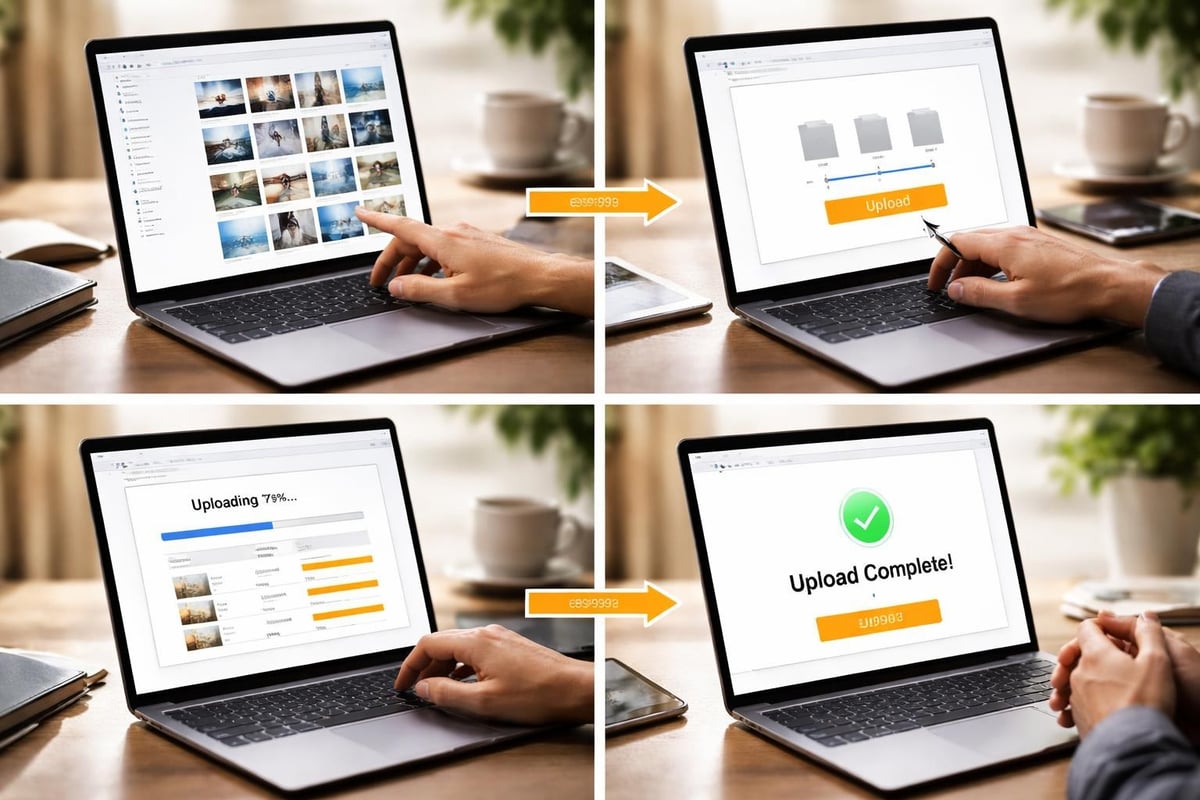
Intuitive interfaces, in general, reduce training requirements and support errors. For this reason, it is important to look for platforms offering drag-and-drop upload, clear progress indicators, and straightforward recipient management. Moreover, mobile applications should provide full functionality, rather than merely stripped-down versions of desktop interfaces.
In addition, accessibility features ensure compliance with disability discrimination legislation whilst also expanding usability for all employees. Specifically, screen reader compatibility, keyboard navigation, and adjustable text sizing represent baseline requirements for inclusive platforms. As a result, organisations can improve both compliance and overall user experience.
Support and Training Resources
Comprehensive documentation, video tutorials, and responsive customer support accelerate deployment and resolve issues quickly. Enterprise plans typically include dedicated account managers and priority support channels, whilst lower tiers rely on knowledge bases and community forums.
Consider provider responsiveness when evaluating options. Test support channels during trial periods by submitting questions and noting response times and solution quality. Recent analyses of file transfer platforms increasingly factor customer service quality into overall rankings, recognising that technical features mean little without adequate support.
Privacy-Focused Solutions for Sensitive Data
Certain industries handle exceptionally sensitive information requiring maximum privacy protection. Legal firms exchanging privileged communications, healthcare organisations transferring patient records, and defence contractors sharing classified materials need platforms prioritising privacy above convenience.
Zero-knowledge architecture represents the gold standard, ensuring service providers possess no technical means to access transferred content. Switzerland-based providers often cite strong privacy laws as additional safeguards, whilst some organisations opt for private cloud deployments maintaining complete control.
For businesses seeking comprehensive secure cloud infrastructure beyond file transfer, exploring integrated solutions proves beneficial. Platforms combining secure file sharing with encrypted email, password management, and collaborative workspaces create unified security frameworks. Services like vBoxxCloud, which forms part of a broader secure cloud ecosystem, demonstrate how integrated approaches simplify security management whilst maintaining stringent protection standards.
Evaluating Transfer Speed and Performance
Transfer velocity directly impacts productivity, particularly for creative industries regularly sharing multi-gigabyte files. Network infrastructure, server distribution, and optimisation technologies all influence actual transfer speeds experienced by users.
Technical Performance Factors
Geographically distributed server networks reduce latency by positioning infrastructure closer to users. Content delivery networks accelerate downloads through intelligent routing and caching. Some platforms employ peer-to-peer technology, enabling direct sender-to-recipient transfers that bypass central servers entirely.
Performance optimisation features:
- Automatic compression reducing file sizes without quality loss
- Resume capability allowing interrupted transfers to continue
- Bandwidth throttling preventing network congestion
- Parallel uploads splitting large files across multiple connections
- Background transfer enabling work continuation during uploads
Performance comparisons across platforms reveal significant variation in real-world speeds despite similar advertised capabilities. Consider conducting timed tests during evaluation periods using representative file types and sizes.
Reliability and Uptime Guarantees
Service reliability matters as much as raw speed. Review provider service level agreements noting guaranteed uptime percentages and compensation policies for outages. Enterprise agreements typically guarantee 99.9% availability with financial credits for downtime exceeding thresholds.
Redundancy measures protecting against data loss include geographic replication storing files across multiple data centres and automated backup systems maintaining recovery points. Question providers about disaster recovery procedures and mean time to recovery metrics.
Making the Selection Decision
Choosing the optimal wetransfer alternative requires balancing multiple factors against specific organisational requirements. Create a weighted scorecard reflecting your priorities, then systematically evaluate candidates against these criteria.
Structured Evaluation Process
Step 1: Define requirements
Document must-have features, nice-to-have capabilities, and deal-breakers. Involve stakeholders from IT, legal, and primary user departments ensuring comprehensive requirement capture.
Step 2: Shortlist candidates
Research platforms matching core requirements. Comprehensive rankings of file transfer tools provide starting points for identifying candidates worthy of deeper investigation.
Step 3: Conduct trials
Most platforms offer free trials or freemium tiers enabling hands-on evaluation. Test with realistic workflows, file types, and user scenarios reflecting actual usage patterns.
Step 4: Assess total cost
Calculate first-year and three-year costs including subscriptions, implementation, training, and potential integration development. Factor productivity gains from improved workflows against hard costs.
Step 5: Verify security claims
Request security documentation, certification proofs, and references from similar organisations. Conduct or commission security audits for platforms handling highly sensitive data.
Sustainable and Green Hosting Practices
Environmental responsibility increasingly influences technology procurement decisions as organisations commit to carbon neutrality targets. Data centres consume enormous energy, making provider sustainability practices material considerations.
Progressive platforms power infrastructure with renewable energy, employ energy-efficient cooling systems, and offset remaining emissions through verified carbon credit programmes. Some publish detailed sustainability reports documenting environmental impact and improvement initiatives.
When evaluating providers, enquire about data centre energy sources, power usage effectiveness ratings, and corporate sustainability commitments. Choosing environmentally responsible partners aligns file transfer decisions with broader corporate responsibility objectives whilst supporting industry transformation toward sustainable practices.
Future-Proofing Your File Transfer Infrastructure
Technology evolution continues accelerating, making adaptability crucial when selecting long-term infrastructure partners. Consider provider roadmaps, development velocity, and architectural flexibility ensuring chosen solutions accommodate emerging needs.
Platforms built on modern cloud-native architectures scale more easily and incorporate new features faster than legacy systems. API-first designs enable integration with future tools regardless of vendor. Regular feature updates signal active development, whilst stagnant platforms risk obsolescence.
Evaluate provider financial stability and market position. Established players offer continuity assurance, whilst innovative startups may deliver cutting-edge capabilities with higher risk. Balance these factors against your organisation’s risk tolerance and change management capabilities.
Selecting the right file transfer solution requires careful consideration of security, performance, integration, and cost factors that align with your specific business requirements. The platforms discussed here represent just a sample of available alternatives, each offering distinct advantages for different organisational contexts. Whether you prioritise maximum security, seamless collaboration, or sustainable infrastructure, superior options to WeTransfer exist that deliver enhanced functionality whilst protecting sensitive business data. vBoxx provides secure cloud solutions emphasising privacy, sustainability, and business-grade reliability, offering comprehensive infrastructure for organisations seeking integrated secure hosting and file management capabilities. Explore how professional-grade cloud services can transform your file-sharing workflows whilst maintaining the stringent security standards your business demands.