Businesses across Europe increasingly face security challenges that traditional CCTV systems cannot adequately address. Furthermore, the demand for intelligent surveillance solutions has driven innovation in network video recording technology. Synology DVA represents a significant advancement in this field, combining network-attached storage capabilities with deep learning analytics to deliver sophisticated threat detection and monitoring. Moreover, these devices process video footage using neural networks, enabling automated recognition of people, vehicles, and anomalous behaviours without constant human supervision. Consequently, organisations can deploy smarter security infrastructure whilst reducing operational overhead and improving response times to genuine incidents.
Understanding Synology DVA Technology
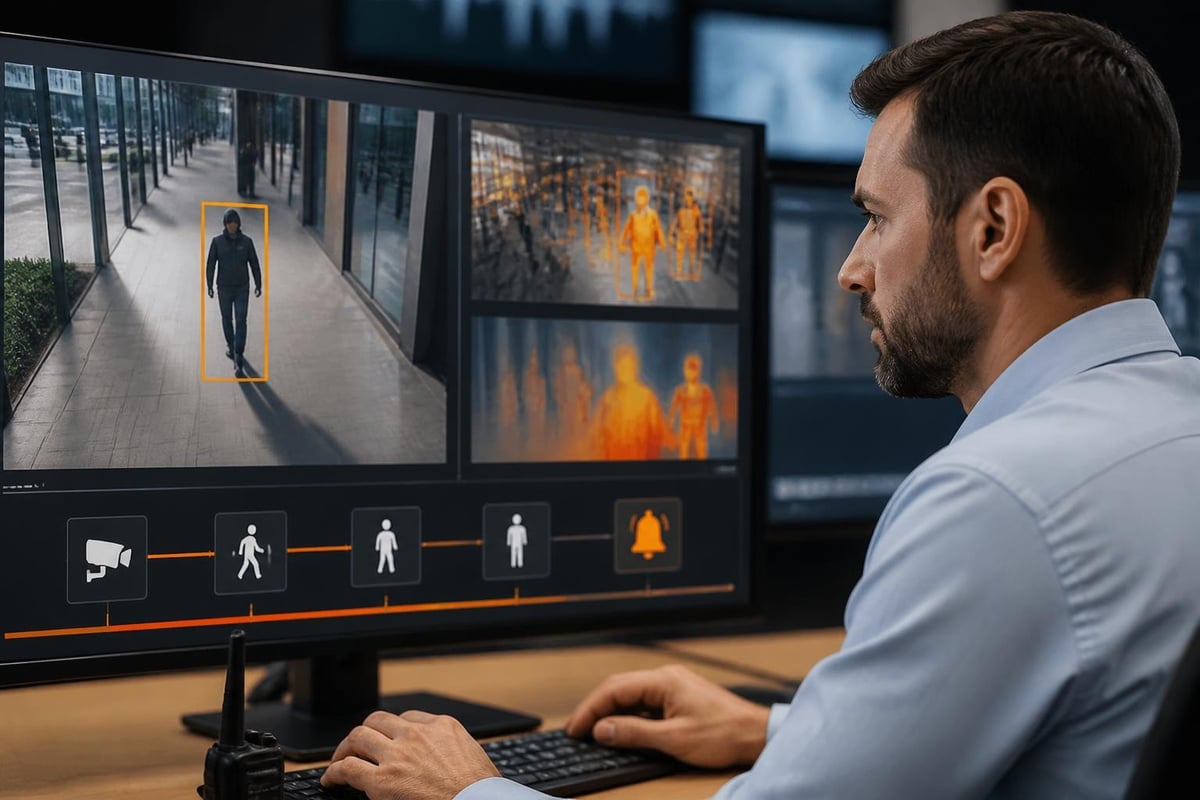
The Synology DVA series consists of purpose-built Network Video Recorders (NVRs) that leverage deep learning algorithms for advanced video surveillance. Unlike conventional recording devices, these systems analyse footage in real-time, applying artificial intelligence to distinguish between routine activities and potential security threats.
Deep Learning Architecture
At the core of Synology DVA functionality lies a sophisticated neural network trained on millions of images. Therefore, the system can recognise patterns, objects, and behaviours with remarkable accuracy. The processing occurs directly on the device, ensuring low latency and maintaining data privacy by avoiding cloud dependencies.
- Convolutional neural networks for image recognition
- Object classification algorithms for vehicles and people
- Behaviour analysis models for detecting unusual patterns
- Face detection capabilities without external processing
Nevertheless, the effectiveness of these algorithms depends on proper configuration and camera positioning. Furthermore, administrators must calibrate detection zones and sensitivity settings to minimise false alerts whilst maintaining comprehensive coverage.
Hardware Specifications and Models
Synology offers several DVA models tailored to different deployment scales. In addition, each variant provides specific channel capacities and processing capabilities. The DVA1622 supports up to 16 camera channels with dual-core processing, whilst higher-tier models accommodate larger installations with enhanced computational resources.
| Model | Camera Channels | Processor | Memory | Storage Bays |
|---|---|---|---|---|
| DVA1622 | 16 | Dual-core 2.0GHz | 4GB | 6 |
| DVA3221 | 32 | Quad-core 2.2GHz | 8GB | 8 |
| DVA3219 | 32 | Quad-core 1.7GHz | 4GB | 4 |
Therefore, organisations must assess their camera requirements, storage needs, and budget constraints when selecting appropriate hardware. Moreover, scalability considerations become crucial for businesses anticipating expansion or additional monitoring locations.
Deep Video Analytics Capabilities
The term "synology dva" encompasses both the hardware devices and the Deep Video Analytics software integrated within Surveillance Station. Consequently, understanding the analytical features enables administrators to maximise security value whilst avoiding unnecessary complexity.
Detection Types and Scenarios
Deep Video Analytics excels at identifying specific events within video streams. Furthermore, the system supports multiple detection types that can be configured independently or combined for comprehensive monitoring:
- Intrusion detection identifies unauthorised entry into restricted zones
- Loitering detection flags individuals remaining in areas beyond defined thresholds
- Missing object alerts notify when items disappear from monitored locations
- Unattended object warnings detect abandoned packages or belongings
- Crowd detection monitors gathering sizes for capacity management
In addition, each detection type allows customisation of sensitivity, time parameters, and target characteristics. Nevertheless, achieving optimal performance requires careful tuning based on environmental conditions and specific security objectives.
People and Vehicle Recognition
Synology DVA distinguishes between human subjects and vehicles with impressive precision. Moreover, this differentiation reduces false alarms triggered by animals, weather conditions, or environmental changes. The system can count individuals entering or exiting premises, monitor traffic flow, and identify specific vehicle types.
- Pedestrian tracking across multiple camera views
- Vehicle classification (car, van, lorry, motorcycle)
- Directional movement analysis
- Dwelling time calculations
- Unauthorised parking detection
Therefore, retail environments benefit from footfall analytics, whilst industrial sites gain insights into vehicle movements and delivery patterns. Furthermore, this data supports operational optimisation beyond pure security applications.
Implementation and Configuration
Deploying Synology DVA effectively requires strategic planning and methodical execution. In addition, organisations must consider network infrastructure, camera placement, and integration with existing security protocols.
Camera Compatibility and Integration
Synology DVA works with ONVIF-compliant IP cameras and Synology's proprietary camera range. Nevertheless, verifying compatibility before procurement prevents integration difficulties. The Surveillance Station specifications detail supported protocols and maximum camera limits for each configuration.
Furthermore, camera resolution directly impacts analytical accuracy. Higher-resolution streams provide better detail for face detection and object classification, yet consume more storage and processing resources. Therefore, balancing quality requirements with infrastructure capabilities remains essential.
Setting Up Detection Tasks
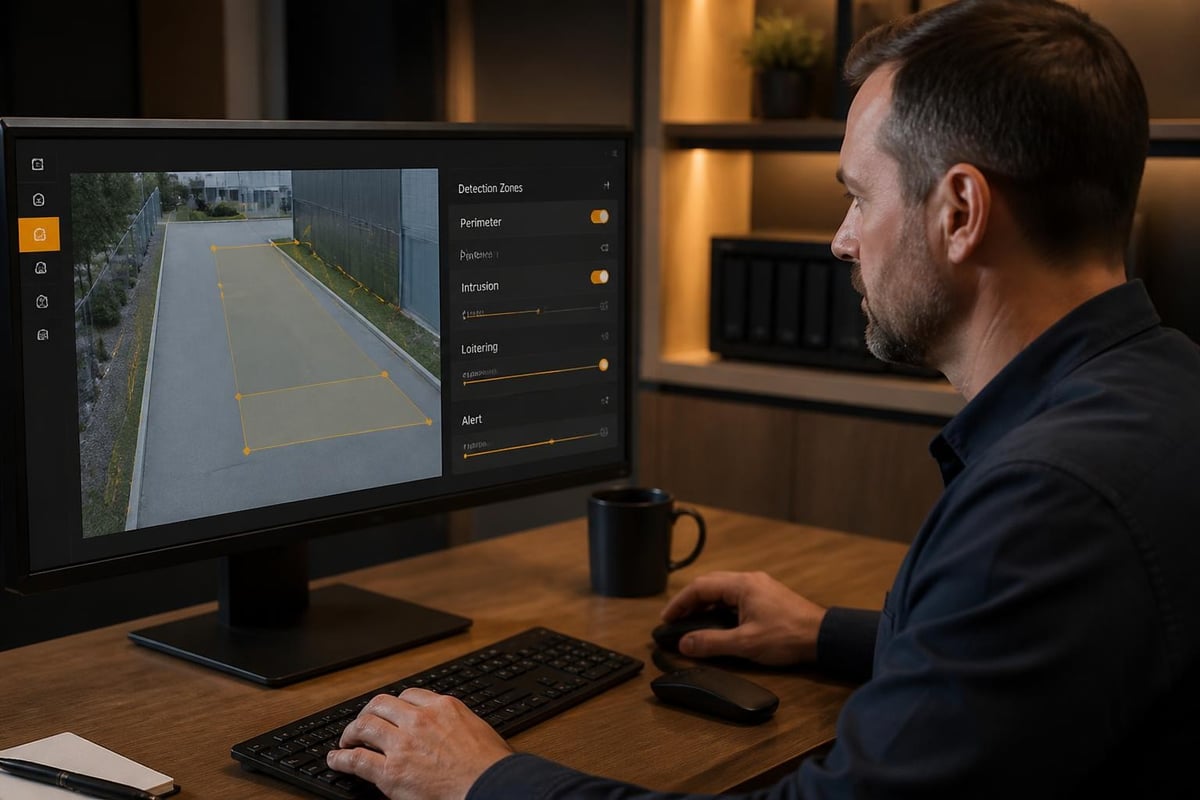
Configuring Deep Video Analytics involves creating specific tasks within Surveillance Station. Moreover, administrators define detection zones by drawing polygons over camera views, specifying which areas require monitoring. In addition, each zone receives customised parameters for sensitivity, object size, and trigger conditions.
The process follows this sequence:
- Access Surveillance Station and navigate to analytics settings
- Select cameras for DVA activation
- Define detection zones using the visual editor
- Choose detection types (intrusion, loitering, missing object)
- Configure alert actions (notifications, recording, email)
- Test configurations with real-world scenarios
- Refine settings based on false positive rates
Therefore, iterative testing proves crucial for achieving reliable performance. Furthermore, seasonal changes in lighting and environmental conditions may necessitate periodic adjustments.
Comparing DVA with Traditional Analytics
Understanding how Synology DVA differs from conventional motion detection clarifies its advantages. Moreover, comparing DVA with Live View Analytics reveals distinct use cases and performance characteristics.
| Feature | DVA (Deep Learning) | LVA (Traditional) |
|---|---|---|
| Processing Method | Neural networks | Pixel change detection |
| Accuracy | High precision | Moderate precision |
| False Positives | Low | Higher |
| Processing Power | GPU recommended | Standard CPU |
| Setup Complexity | Moderate | Simple |
| Object Classification | Advanced | Basic |
Consequently, businesses with sophisticated security requirements benefit significantly from DVA capabilities, whilst smaller deployments might find LVA sufficient for basic monitoring needs. Nevertheless, the declining cost of processing power makes DVA increasingly accessible across organisation sizes.
Business Applications and Use Cases
Synology DVA serves diverse industries with varying security and operational requirements. Furthermore, the flexibility of detection parameters enables customisation for specific scenarios beyond traditional surveillance.
Retail and Commercial Spaces
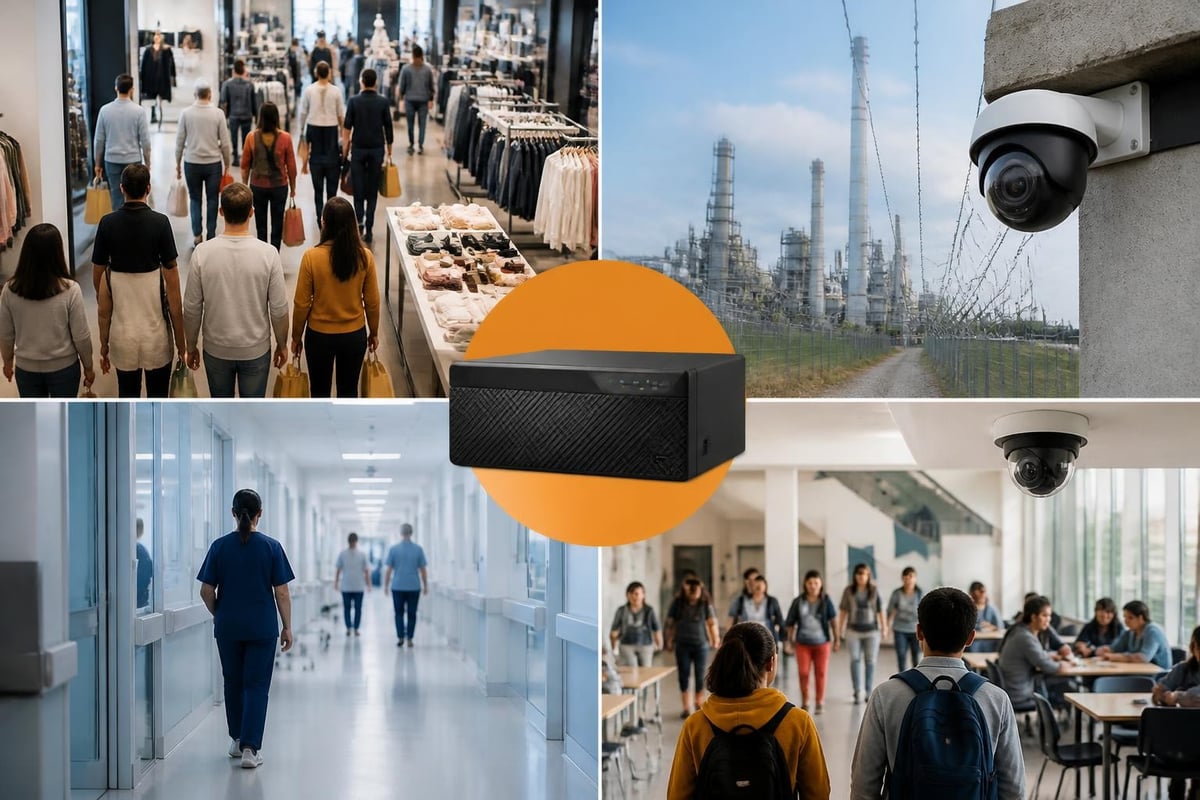
Retail environments leverage Synology DVA for both security and business intelligence. In addition, the technology monitors customer behaviour, tracks queue lengths, and identifies peak traffic periods. Therefore, management gains actionable insights for staffing optimisation and loss prevention.
Moreover, intrusion detection protects premises during closed hours, whilst loitering alerts identify potential shoplifting attempts. Furthermore, integration with point-of-sale systems creates comprehensive audit trails for transaction verification.
Industrial and Manufacturing Facilities
Manufacturing sites face unique security challenges involving large perimeters, restricted zones, and vehicle movements. Consequently, Synology DVA provides perimeter protection, unauthorised access prevention, and safety compliance monitoring.
- Detecting personnel in hazardous zones
- Monitoring loading bay activities
- Tracking contractor access to sensitive areas
- Verifying proper safety equipment usage
- Recording incident evidence automatically
Therefore, the system contributes to both security objectives and occupational safety programmes. In addition, recorded analytics support accident investigations and process improvement initiatives.
Healthcare and Educational Institutions
Hospitals, clinics, and schools require discrete yet effective monitoring that respects privacy whilst ensuring safety. Nevertheless, Synology DVA enables targeted surveillance in corridors, entrances, and car parks without intrusive coverage of private spaces.
Furthermore, crowd detection assists with managing visitor flow during emergencies, whilst missing object alerts protect valuable equipment. Moreover, educational institutions benefit from after-hours monitoring that triggers alerts only when genuine security concerns arise.
Integration with Broader Security Infrastructure
Synology DVA functions most effectively when integrated within comprehensive security ecosystems. Moreover, organisations should consider how surveillance data connects with access control, alarm systems, and incident response protocols.
Network and Storage Considerations
Video surveillance generates substantial data volumes requiring robust network infrastructure and adequate storage capacity. Furthermore, Synology DVA devices support various RAID configurations for redundancy and performance optimisation. Therefore, IT teams must provision sufficient bandwidth and implement quality-of-service policies preventing camera traffic from congesting business networks.
In addition, retention requirements vary by jurisdiction and industry. Consequently, organisations must calculate storage needs based on camera count, resolution settings, frame rates, and regulatory obligations. Moreover, efficient compression codecs reduce storage consumption without compromising analytical accuracy.
For businesses seeking comprehensive cloud infrastructure alongside physical surveillance systems, exploring integrated solutions that combine security with data management proves beneficial. Nevertheless, maintaining separation between surveillance networks and general business systems enhances security and simplifies compliance management.
Alert Management and Response Workflows
Effective surveillance depends on appropriate alert handling procedures. Furthermore, Synology DVA supports multiple notification methods including email, SMS, and push notifications to mobile devices. Therefore, security teams can respond promptly to genuine incidents whilst filtering routine events.
Moreover, integrating DVA alerts with incident management platforms creates documented audit trails and ensures proper escalation procedures. In addition, scheduled reports provide management with security metrics and trend analysis for strategic planning.
Privacy and Compliance Considerations
Deploying intelligent surveillance systems requires careful attention to privacy regulations and data protection obligations. Furthermore, organisations operating within the European Union must ensure GDPR compliance when processing biometric data and personally identifiable information.
Data Protection Best Practices
Synology DVA processes video data locally, reducing reliance on cloud services and minimising data transfer risks. Nevertheless, organisations must implement appropriate technical and organisational measures protecting recorded footage from unauthorised access.
- Encrypting stored video files
- Implementing role-based access controls
- Maintaining detailed audit logs
- Establishing retention and deletion policies
- Conducting privacy impact assessments
Therefore, security administrators should configure user permissions restricting DVA access to authorised personnel only. In addition, regular reviews of system logs identify potential security breaches or policy violations.
Balancing Security and Privacy
Effective surveillance respects individual privacy whilst protecting organisational assets. Consequently, businesses should deploy cameras and configure detection zones avoiding unnecessary coverage of private areas. Moreover, transparent policies informing employees and visitors about monitoring practices build trust and ensure legal compliance.
Furthermore, face detection capabilities must be deployed judiciously, considering proportionality and necessity principles. Therefore, organisations should document legitimate interests justifying biometric processing and provide appropriate subject access mechanisms.
Performance Optimisation and Maintenance
Maintaining optimal Synology DVA performance requires ongoing attention to system health, storage management, and configuration refinement. Moreover, proactive maintenance prevents degradation that could compromise security effectiveness.
Regular System Updates
Synology regularly releases firmware updates addressing security vulnerabilities, adding features, and improving analytical accuracy. Therefore, administrators should establish update schedules balancing security requirements with operational stability. In addition, testing updates in non-production environments before deployment minimises disruption risks.
Furthermore, camera firmware updates may enhance compatibility with DVA features or improve image quality. Nevertheless, verifying update impacts on existing configurations prevents unexpected behaviour changes.
Monitoring System Resources
DVA processing consumes computational resources proportional to camera count and detection complexity. Consequently, monitoring CPU utilisation, memory consumption, and storage capacity prevents performance bottlenecks. Moreover, establishing baseline metrics enables early identification of anomalous resource usage indicating configuration issues or hardware limitations.
- CPU usage during peak detection periods
- Memory availability and allocation patterns
- Network bandwidth utilisation per camera
- Storage consumption rates and projections
- False positive rates by detection type
Therefore, regular performance reviews identify optimisation opportunities and inform capacity planning decisions. In addition, upgrading hardware becomes necessary when expansion exceeds current system capabilities.
Advanced Features and Future Capabilities
Synology continues developing DVA functionality with enhanced analytical capabilities and improved accuracy. Furthermore, understanding roadmap directions helps organisations plan long-term surveillance investments aligned with emerging technologies.
Face Recognition Extensions
Whilst current DVA models focus on detection rather than identification, face recognition capabilities exist within Surveillance Station. Moreover, these features enable access control integration and VIP recognition scenarios. Nevertheless, deploying facial recognition requires careful consideration of privacy implications and regulatory compliance.
Furthermore, training custom recognition databases demands significant setup effort and ongoing maintenance. Therefore, organisations should evaluate whether specific identification requirements justify implementation complexity.
Integration with Third-Party Systems
Synology provides APIs enabling DVA integration with external security platforms, building management systems, and business intelligence tools. Consequently, organisations can create unified dashboards combining surveillance analytics with operational data. Moreover, webhook support triggers automated responses based on detection events, enabling sophisticated workflow automation.
In addition, exporting analytical data to business intelligence platforms reveals patterns and trends supporting strategic decision-making beyond immediate security applications. Therefore, treating surveillance systems as data sources rather than isolated tools maximises organisational value.
Synology DVA represents a significant advancement in intelligent surveillance technology, combining robust hardware with sophisticated deep learning analytics for comprehensive security coverage. By leveraging AI-powered detection capabilities, businesses can enhance threat identification, reduce false alarms, and gain operational insights beyond traditional monitoring. Whether you're deploying new surveillance infrastructure or upgrading existing systems, consider how vBoxx can support your broader security and infrastructure requirements with secure hosting, cloud solutions, and expert consultancy services tailored to European businesses prioritising privacy and reliability.