Cyber attacks are escalating at an alarming rate, with over half a million websites compromised in 2024 alone. In 2026, hosting security is no longer optional as threats become more sophisticated and target every layer of your digital presence.
Failing to prioritise hosting security exposes your business to data loss, downtime, and severe reputational harm. The consequences can be costly, affecting both your customers and your bottom line.
This guide reveals seven vital hosting security tips designed to protect your website and business. Discover proven strategies for data protection, access control, vulnerability management, and advanced backup with trusted solutions like Sophos and vBoxx.
Why Hosting Security Matters in 2026
As cyber threats escalate in scale and sophistication, hosting security has become a non-negotiable priority for every website owner. In 2026, both the volume and complexity of attacks are rising, regulatory scrutiny is tightening, and the consequences of a breach have never been more severe. Understanding why hosting security matters is crucial for protecting your digital assets, customer trust, and business continuity.
The Evolving Threat Landscape
The digital landscape in 2026 is marked by a surge in sophisticated cyber attacks targeting hosting environments. Automated bots, ransomware, and supply chain breaches are now commonplace. According to recent cybersecurity statistics for 2025, over 87 percent of exploits bypass basic defences. This highlights the urgent need for robust hosting security. With new regulations such as GDPR and NIS2, liability for breaches has increased, making compliance and proactive defence essential.
Impact of Security Breaches
Security breaches can have devastating effects. Downtime disrupts business operations, data loss undermines trust, and financial penalties can be crippling. In 2024 alone, a Sucuri report found over 500,000 websites were hacked, demonstrating the real-world impact of poor hosting security. Reputational damage is often irreversible, with customers quickly losing faith in brands that fail to protect their information.
Customer Trust and Business Continuity
Robust hosting security safeguards your brand’s reputation and underpins customer loyalty. When incidents occur, the cost of recovery goes beyond immediate financial loss. Operational disruptions, legal liabilities, and customer churn can set businesses back years. For organisations relying on continuous uptime, even a brief interruption can result in significant long-term consequences.
Hosting Provider vs. Site Owner Responsibilities
Many assume that hosting providers handle all aspects of hosting security. In reality, providers secure their infrastructure, but website owners are responsible for application-level protection, access controls, and data management. Relying solely on “secure hosting” marketing claims is risky. Understanding where your responsibilities begin ensures you do not leave critical vulnerabilities unaddressed.
The Role of Compliance and Data Residency
Choosing a hosting provider aligned with regional compliance requirements is now more important than ever. For European businesses, GDPR compliance and data residency are top concerns. Hosting security must include measures that guarantee data is stored and processed according to local laws, minimising legal risks and maintaining customer confidence.
Key Security Trends for 2026
Emerging trends such as virtual patching, AI-driven threat detection, and zero trust models are reshaping hosting security in 2026. Integrated backup and disaster recovery are becoming standard, offering businesses a safety net against ransomware and other catastrophic events. Sophos firewalls, anti-virus, and anti-ransomware solutions, available through providers like vBoxx, add critical layers of protection.
Example: Lessons from Recent Incidents
Recent case studies reveal that application-layer security solutions, such as those highlighted by Patchstack, are essential for stopping threats missed by standard hosting defences. Rapid response tools and proactive monitoring can mean the difference between a minor incident and a major breach. The lesson is clear: investing in comprehensive hosting security is no longer optional, but a fundamental part of digital resilience.
The Foundations of Secure Hosting
Building a resilient online presence starts with understanding the foundations of hosting security. Website owners must demand robust protection from their providers while taking proactive steps at every layer. Let us explore the essential components that form the backbone of hosting security in 2026.

Core Security Features to Demand from Your Host
Effective hosting security begins with baseline features every provider should offer. Look for:
- SSL certificates to encrypt data in transit
- Automated, regular backups with easy restoration
- DDoS protection and traffic filtering
- Web Application Firewalls (WAF) and intrusion detection
- 24/7 network monitoring and rapid incident response
- Malware scanning and removal tools
Sophos firewalls, anti-virus, and anti-ransomware solutions, integrated by providers like vBoxx, add critical layers to these defences. Insist on these essentials to minimise risks from the outset.
Evaluating Your Hosting Provider’s Security Claims
Do not accept marketing claims at face value. Instead, ask providers about their update schedules, patching practices, and incident transparency. Independent audits and certifications such as ISO 27001 signal a mature approach to hosting security. For a deeper understanding, see our ISO 27001 business security guide.
Check for GDPR compliance and evidence of regular security reviews. This scrutiny is vital for both regulatory alignment and peace of mind.
The Importance of Access Controls
Granular access control is fundamental to hosting security. Multi-factor authentication (MFA) should be enforced on control panels and admin interfaces. Apply the principle of least privilege for all user accounts, granting only the minimum access necessary.
Regularly audit permissions and disable unused accounts promptly. These practices reduce the risk of unauthorised access and credential compromise.
Example: Comparing Hosting Providers’ Security Layers
Not all hosting security solutions are created equal. Consider the following simplified comparison from Patchstack’s 2025 study:
| Provider | WAF | Backups | Sophos Firewall | Anti-Ransomware | 24/7 Monitoring |
|---|---|---|---|---|---|
| Provider A | Yes | Yes | No | No | Yes |
| Provider B | Yes | Yes | Yes | Yes | Yes |
| Industry Avg. | Yes | Yes | No | Partial | Yes |
Providers combining WAF, advanced firewalls, and dedicated anti-ransomware like vBoxx demonstrate a stronger commitment to hosting security.
The Limitations of “Out-of-the-Box” Security
Default settings rarely provide adequate hosting security. Many platforms ship with open ports and weak configurations, which attackers exploit. Proactive configuration and ongoing vigilance are required.
Continuous monitoring and regular updates are essential. Out-of-the-box solutions must be customised and maintained for true resilience.
Role of Application-Level Security
Infrastructure defences are only part of the hosting security equation. Application-level protection, such as virtual patching, is vital for platforms like WordPress or Nextcloud. These tools address vulnerabilities before official patches are released, reducing exposure windows.
Sophos anti-virus and anti-malware scanning further strengthen this layer. Hosting security must be multi-dimensional, spanning both server and application.
Example: SSL Implementation and SEO Benefits
Forcing HTTPS across your site not only ensures hosting security but also boosts search rankings. Modern browsers display a padlock icon as a trust signal, reassuring visitors.
Google penalises sites lacking HTTPS, which can impact visibility. Automated SSL certificate renewal and health monitoring tools simplify management, supporting both security and business growth.
7 Essential Hosting Security Tips for 2026
In 2026, hosting security is not just a technical requirement, but a business imperative. With cyber threats evolving rapidly, every website owner must adopt a comprehensive approach to safeguarding their digital assets. The following seven tips provide actionable steps to strengthen your hosting security and protect against the most pressing risks facing organisations today.

1. Back Up Data Regularly and Test Restores
Reliable backups are the backbone of hosting security. Data loss can result from cyberattacks, hardware failures, or even accidental deletions. Without robust backups, recovery may be impossible.
- Schedule automated backups daily or weekly for your website, databases, and email.
- Store copies in secure, geographically separate locations, such as encrypted cloud platforms or offsite facilities.
- Test your restoration process regularly. A backup is only as good as your ability to restore it quickly and accurately.
- Use solutions that support versioning and offer ransomware protection, ensuring you can revert to clean data if needed.
- Retain multiple backup copies and review your backup policies at least quarterly.
For example, Hostinger offers intuitive backup and restoration features, making it easier to recover from incidents. Remember, 60% of businesses that lose critical data shut down within six months. Integrated backup products from vBoxx provide automated, secure, and versioned backups, giving you peace of mind. Effective hosting security always starts with a solid backup strategy.
2. Enforce Strong Authentication and Access Controls
Authentication is a cornerstone of hosting security. Weak or reused credentials are a common entry point for attackers. Implementing robust access controls is essential.
- Enable multi-factor authentication (MFA) on all hosting, FTP/SFTP, and admin accounts.
- Require complex, unique passwords for every account, updating them regularly.
- Restrict access by IP address and user role, granting only necessary permissions.
- Disable unused accounts immediately to reduce your attack surface.
- Employ password managers for secure credential storage.
A breach caused by a weak admin password on a WordPress site can compromise not only the site, but potentially the entire server. Human error remains a leading cause of hosting security breaches. According to Credential theft surged 160 percent in 2025, this trend is accelerating, making strong authentication more critical than ever. Audit user permissions monthly to prevent privilege creep and ensure only authorised users have access.
3. Keep Software, Plugins, and Servers Updated
Outdated software is a significant vulnerability in hosting security. Attackers frequently exploit unpatched systems to gain access or inject malware.
- Enable automatic updates for your CMS, plugins, server OS, and control panels.
- Monitor for zero-day vulnerabilities and apply patches as soon as they are released.
- Remove unused applications and obsolete scripts to minimise your attack surface.
- Use staging environments to test updates before deploying them to production.
Patchstack’s research revealed that 87.8% of exploits bypassed outdated hosting defences. Another study found that 52% of hacked sites were running out-of-date software. Subscribe to security advisories relevant to your technology stack to stay ahead. Sophos anti-virus and anti-ransomware solutions, integrated with vBoxx hosting, provide an additional layer of hosting security by detecting threats missed by traditional defences.
4. Secure Data Transmission with SSL/TLS and SFTP
Protecting data in transit is a critical aspect of hosting security. Unencrypted transmissions can be intercepted, leading to data breaches and loss of trust.
- Install SSL/TLS certificates on all domains and subdomains.
- Force HTTPS connections to safeguard user data and enhance SEO rankings.
- Use SFTP or SCP for file transfers, which encrypt both credentials and data.
- Regularly audit and renew certificates to avoid expiry or misconfiguration.
The padlock icon in browsers signals to visitors that their connection is secure. Google now penalises non-HTTPS sites in search rankings, making SSL implementation vital for both security and visibility. Automated tools can monitor SSL health, alerting you to potential issues before they impact your users. Hosting security is incomplete without encrypted communication channels.
5. Deploy Web Application Firewalls and Anti-Malware Tools
Modern threats often target the application layer, bypassing traditional network defences. Strengthening hosting security requires both proactive and reactive measures.
- Activate web application firewalls (WAFs) to block common attacks like SQL injection and cross-site scripting (XSS).
- Use anti-malware tools to scan for and remove malicious code from your website and server.
- Advanced solutions, such as virtual patching, offer rapid mitigation for newly discovered vulnerabilities.
Patchstack’s RapidMitigate system successfully blocked all tested attacks in recent evaluations. With 30,000 websites hacked daily in 2024, regular scans and log reviews are essential. Sophos firewalls, available through vBoxx, combine real-time scanning, behaviour analysis, and threat isolation to deliver multi-layered hosting security. Schedule scans and analyse WAF logs for suspicious activity to maintain a robust defence.
6. Monitor Hosting Environment and Respond to Threats
Continuous monitoring is fundamental to effective hosting security. Early detection can significantly reduce the impact of an incident.
- Enable 24/7 network and server monitoring for unusual activity or performance issues.
- Set up alerts for failed logins, unexpected file changes, and bandwidth spikes.
- Review access logs and incident reports regularly to identify trends or potential breaches.
- Develop and rehearse an incident response plan so your team can act swiftly in a crisis.
For example, Hostinger’s infrastructure status page provides transparency for users, showing real-time health updates. Research shows that early detection can reduce the impact of breaches by up to 70%. Monitoring tools that integrate with your CMS and hosting platform streamline the process, helping you maintain optimal hosting security.
7. Restrict and Audit User Privileges
Mismanaged user privileges are a common vulnerability in hosting security. Overly broad access increases the risk of both internal and external threats.
- Apply the principle of least privilege to all accounts, granting only necessary permissions.
- Audit user roles and permissions regularly, removing access that is no longer required.
- Require justification for elevated privileges and log all changes to user permissions.
- Where possible, automate privilege expiration to prevent lingering, unnecessary access.
A data breach traced to excessive permissions on a shared server highlights the dangers of neglecting this aspect of hosting security. Privilege misuse is a leading cause of insider threats. Regular reviews and automated controls reduce risk and help ensure compliance with industry standards. Hosting security is strongest when access is tightly controlled and continuously monitored.
The Role of Integrated Security Solutions and Backups
In 2026, hosting security demands more than just isolated tools or reactive measures. As cyberattacks grow in sophistication, businesses must adopt integrated security solutions that combine multiple layers of defence. This approach is essential for protecting data, maintaining uptime, and ensuring compliance in today’s volatile landscape.
The Value of Multi-Layered Security
Multi-layered hosting security is no longer optional. Combining firewalls, anti-virus, anti-ransomware, and robust backup creates a resilient shield against evolving threats. Each layer addresses specific vulnerabilities, reducing the chance of a single point of failure.
Recent advancements in cybercrime, such as the AI-driven surge in cyberthreats, highlight the importance of this approach. Automated attacks now occur at unprecedented speed, making layered protection critical for every business.
Example: Sophos Products and Advanced Threat Protection
Sophos products exemplify what integrated hosting security should deliver. Their firewalls filter malicious traffic before it reaches your network, while anti-virus and anti-ransomware solutions actively scan for and block threats. Real-time scanning, behavioural analysis, and threat isolation provide proactive defence.
When combined with vBoxx’s secure hosting, these tools offer peace of mind. Businesses benefit from continuous monitoring and rapid response to suspicious activity, ensuring threats are contained before causing damage.
Backup as a Last Line of Defence
No hosting security strategy is complete without automated, versioned backups. Backups act as the ultimate safety net, especially in the face of ransomware. If attackers manage to bypass other defences, a recent backup enables swift data recovery and minimises downtime.
A real-world case study shows how robust backup solutions enabled a company to recover after a ransomware attack, restoring operations with minimal loss. Regular, offsite backups are essential for business continuity and compliance.
Selecting the Right Security and Backup Tools
Choosing effective hosting security and backup tools requires careful evaluation. Look for automation features, easy restoration processes, and strong compliance support. Tools should integrate seamlessly with your hosting platform and provide regular reports on backup integrity.
Regular testing ensures backups are not only available but also reliable when needed. Consider solutions that offer versioning, ransomware detection, and compatibility with your compliance needs.
Security Integration with Hosting Providers
Many hosting providers now bundle security tools, but not all solutions are created equal. Prioritise certified, reputable options that offer comprehensive hosting security, such as SSL certificates, advanced firewalls, and threat detection.
Integration should be seamless, enabling easy management from a single dashboard. vBoxx’s secure hosting offers these benefits, supporting privacy, compliance, and efficient incident response.
Example: Virtual Patching and Application-Level Defences
Virtual patching is a key component of modern hosting security. It delivers rapid, targeted updates for emerging vulnerabilities, protecting applications before vendor patches are available. Application-level firewalls and threat monitoring add another barrier, especially for popular platforms like WordPress.
This approach ensures that even if infrastructure defences are bypassed, application-level controls will still protect sensitive data and maintain service availability.
Proactive vs. Reactive Security Posture
The future of hosting security lies in prevention, not just response. A proactive stance involves continuous monitoring, automated threat mitigation, and regular backup testing. By shifting focus from incident response to ongoing prevention, businesses dramatically reduce risk and build trust with their customers.
In summary, integrated security solutions and reliable backups are the foundation of robust hosting security in 2026. Businesses that invest in these protections are far better equipped to withstand the challenges of today’s threat landscape.
Secure Hosting and Backup Solutions from vBoxx
Businesses seeking robust hosting security can rely on vBoxx for a comprehensive suite of solutions. Every service is designed with privacy, compliance, and performance in mind.
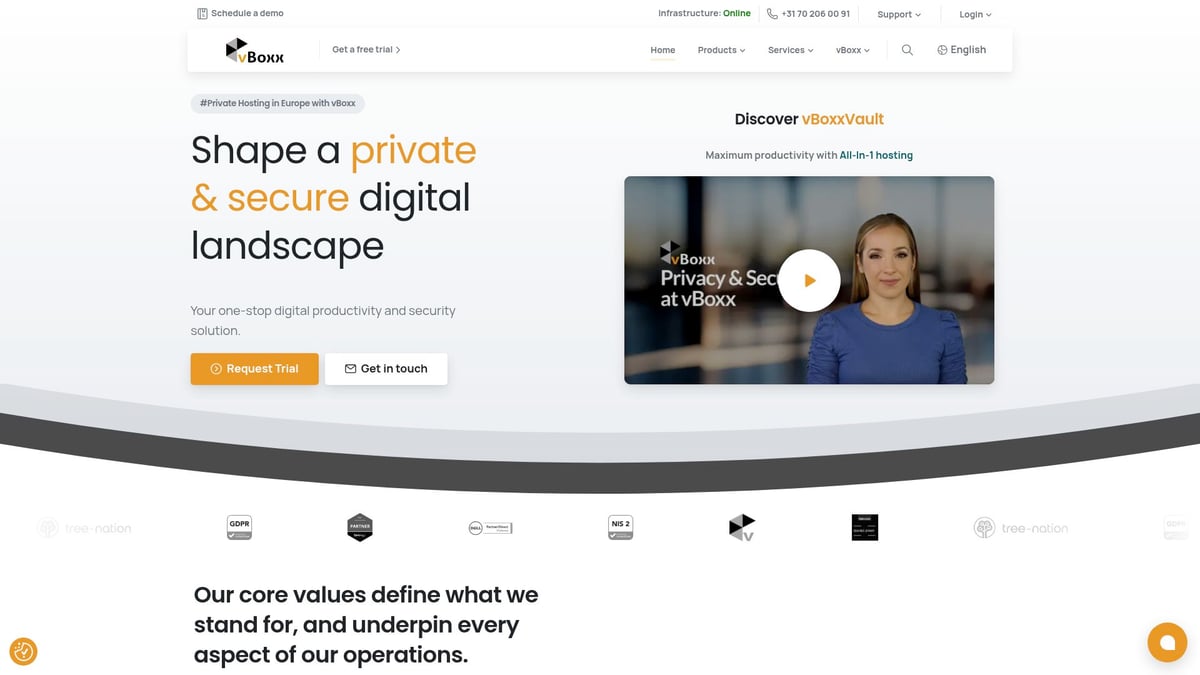
vBoxx protects your digital assets using SSL certificates, automated daily backups, advanced anti-virus, and the powerful Sophos firewall. Anti-ransomware protection is built in, giving your organisation the resilience it needs against evolving threats.
All data is hosted exclusively in Europe, supporting GDPR and NIS2 requirements. For organisations concerned about compliance and sovereignty, this is crucial. Learn more about European cloud independence importance and how it strengthens hosting security.
vBoxx also offers secure cloud storage, email protection, and expert consultancy for smooth migration. Eco-conscious clients benefit from green hosting practices, ensuring sustainability alongside security.
Now that you’re equipped with the latest hosting security tips for 2026, it’s time to put your knowledge into action and see how these strategies can safeguard your business. At vBoxx, we’re dedicated to helping you build a secure, resilient digital infrastructure—whether you need robust backups, seamless cloud storage, or expert advice on compliance and green hosting. If you’d like to explore how our solutions can address your unique security needs, you can see everything in action and ask questions directly. Why not schedule a demo and discover exactly how we keep your data protected?