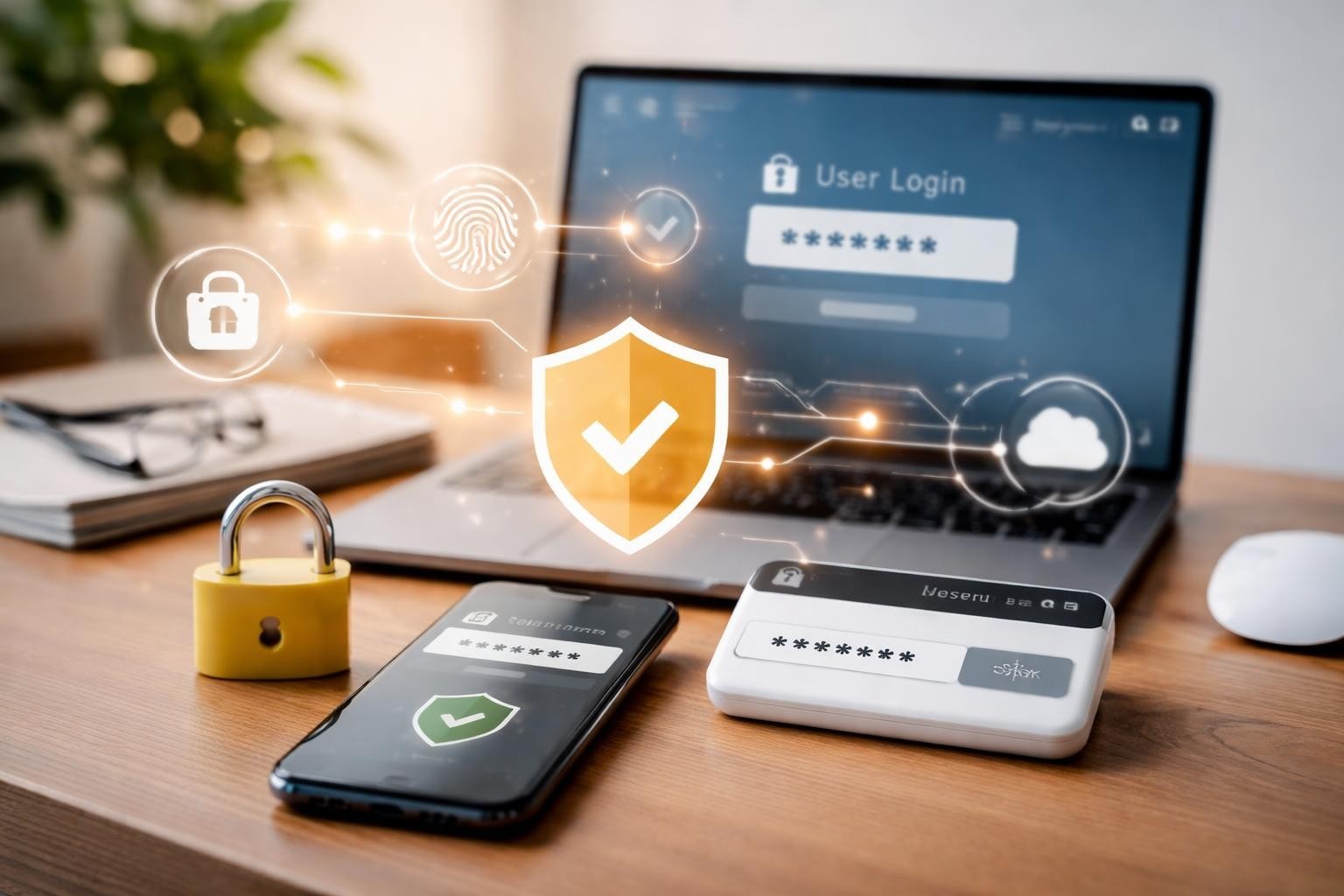

Password breaches continue to be a leading cause of data compromises in businesses worldwide, with weak or stolen credentials accounting for over 80% of security incidents. Therefore, implementing robust password security best practices is no longer optional for organisations seeking to protect sensitive data, maintain customer trust, and comply with regulatory requirements. Moreover, as cyber threats evolve in sophistication, understanding and applying comprehensive password security measures becomes fundamental not only to organisational defence but also to sustaining long-term operational resilience. Consequently, prioritising strong authentication strategies helps mitigate risks while supporting overall cybersecurity posture.
Understanding the Modern Password Threat Landscape
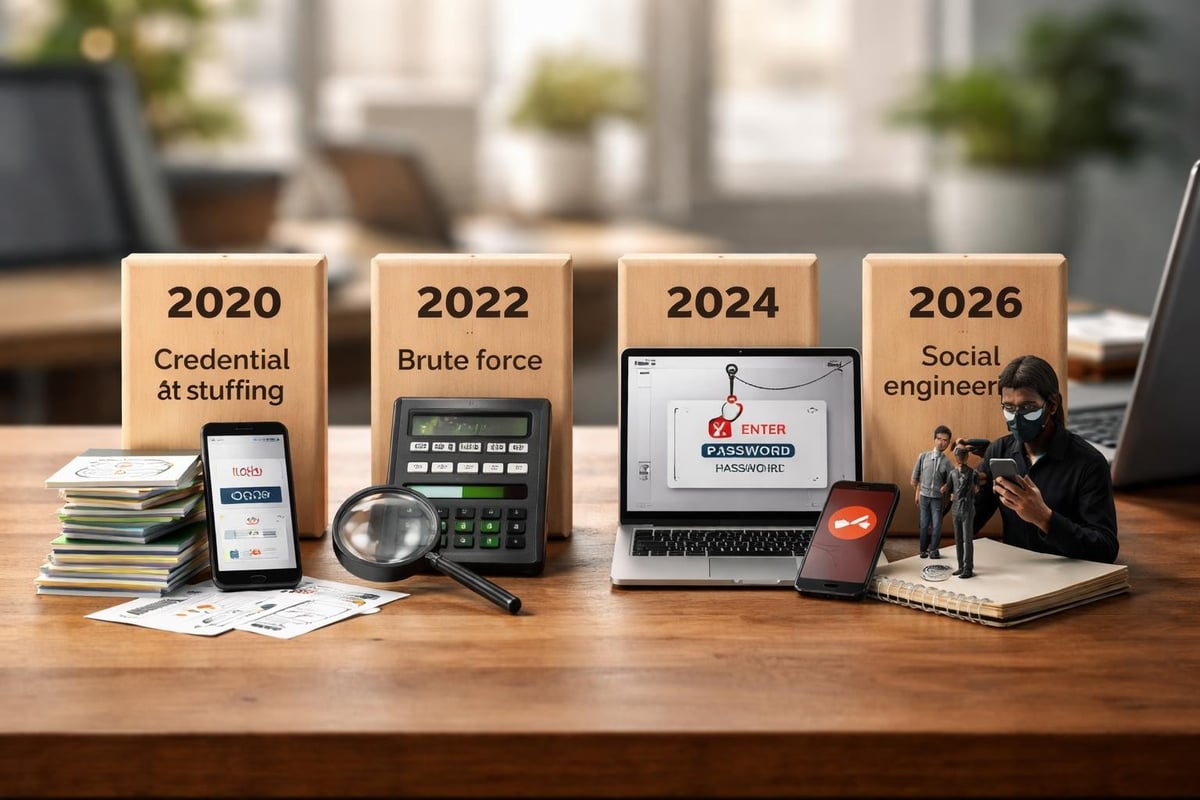
The digital security environment has transformed dramatically over recent years, as attackers deploy increasingly sophisticated methods to compromise credentials. For instance, brute force attacks, credential stuffing, and phishing campaigns target businesses of all sizes, thereby exploiting weak password habits that, unfortunately, remain surprisingly common across organisations. Consequently, understanding these threats and implementing proactive security measures is essential for protecting sensitive data and maintaining overall cybersecurity resilience.
Common password vulnerabilities include:
- Using identical passwords across multiple systems and platforms
- Incorporating predictable patterns such as sequential numbers or keyboard walks
- Failing to update default passwords on systems and devices
- Storing credentials in plain text documents or spreadsheets
- Sharing passwords amongst team members through insecure channels
According to the Cybersecurity and Infrastructure Security Agency (CISA), businesses must prioritize password strength as a foundational security control. The financial and reputational damage from a single breach can be catastrophic for organisations, particularly small and medium-sized enterprises lacking extensive security resources.
Creating Unbreakable Password Foundations
Strong password creation forms the cornerstone of effective credential security. In particular, length consistently proves more valuable than complexity, and therefore, modern password security best practices recommend passphrases of at least 16 characters, rather than shorter combinations of symbols and numbers. Furthermore, using memorable yet unique passphrases helps users maintain security without compromising usability.
The Passphrase Advantage
Passphrases combine multiple unrelated words to create memorable yet secure credentials. Instead of struggling to remember “P@ssw0rd123!”, a passphrase like “coffee-bicycle-mountain-purple” offers superior security whilst remaining easier to recall. This approach aligns with current National Institute of Standards and Technology (NIST) guidance favouring longer credentials over complex character requirements.
Benefits of passphrase implementation:
- Enhanced resistance to brute force attacks due to increased entropy
- Improved user compliance through easier memorisation
- Reduced likelihood of insecure password recording practices
- Better protection against dictionary attacks when using unrelated words
Character Composition Strategies
Whilst length takes precedence, incorporating diverse character types strengthens password resilience. Mixing uppercase and lowercase letters, numbers, and special symbols increases the computational effort required for successful attacks. However, avoid predictable substitutions like replacing “o” with “0” or “a” with “@”, as these patterns are well-known to attackers.
| Password Type | Example | Estimated Crack Time | Security Rating |
|---|---|---|---|
| Simple Password | password123 | Less than 1 second | Very Weak |
| Complex Short | P@ssword! | Minutes to hours | |
| Standard Passphrase | coffee-bicycle-mountain | Several years | Strong |
| Enhanced Passphrase | Coffee17!Bicycle#Mountain92 | Centuries | Very Strong |
Implementing Password Uniqueness Across Platforms
Using distinct passwords for every account and system represents a critical password security best practice that many organisations struggle to enforce. When employees reuse credentials, a breach at one service immediately compromises all other accounts sharing those credentials.
The challenge lies in managing numerous unique passwords without resorting to insecure storage methods. This is where password management solutions become invaluable for businesses. A centralised password vault enables teams to maintain unique, complex credentials for every system whilst accessing them through a single master password.
For businesses seeking comprehensive security solutions, vBoxx offers vBoxxVault during their all-in-one demonstration, providing secure password storage alongside cloud and email security guidance. This integrated approach ensures that password security best practices align with broader organisational security strategies.
Avoiding Predictable Patterns
Recent research highlighted by IT Pro warns against using AI to generate passwords, noting that machine learning models can create predictable patterns vulnerable to sophisticated attacks. Instead, rely on proven random generation methods built into reputable password managers.
Patterns to avoid entirely:
- Sequential characters (abc123, qwerty)
- Personal information (names, birthdates, addresses)
- Common words with simple substitutions
- Keyboard patterns and adjacent keys
- Previously breached passwords from any source
Leveraging Password Management Technology
Modern password managers have evolved into essential business tools, offering far more than simple credential storage. These platforms generate cryptographically secure random passwords, automatically fill credentials, synchronise across devices, and alert users to compromised passwords discovered in data breaches.
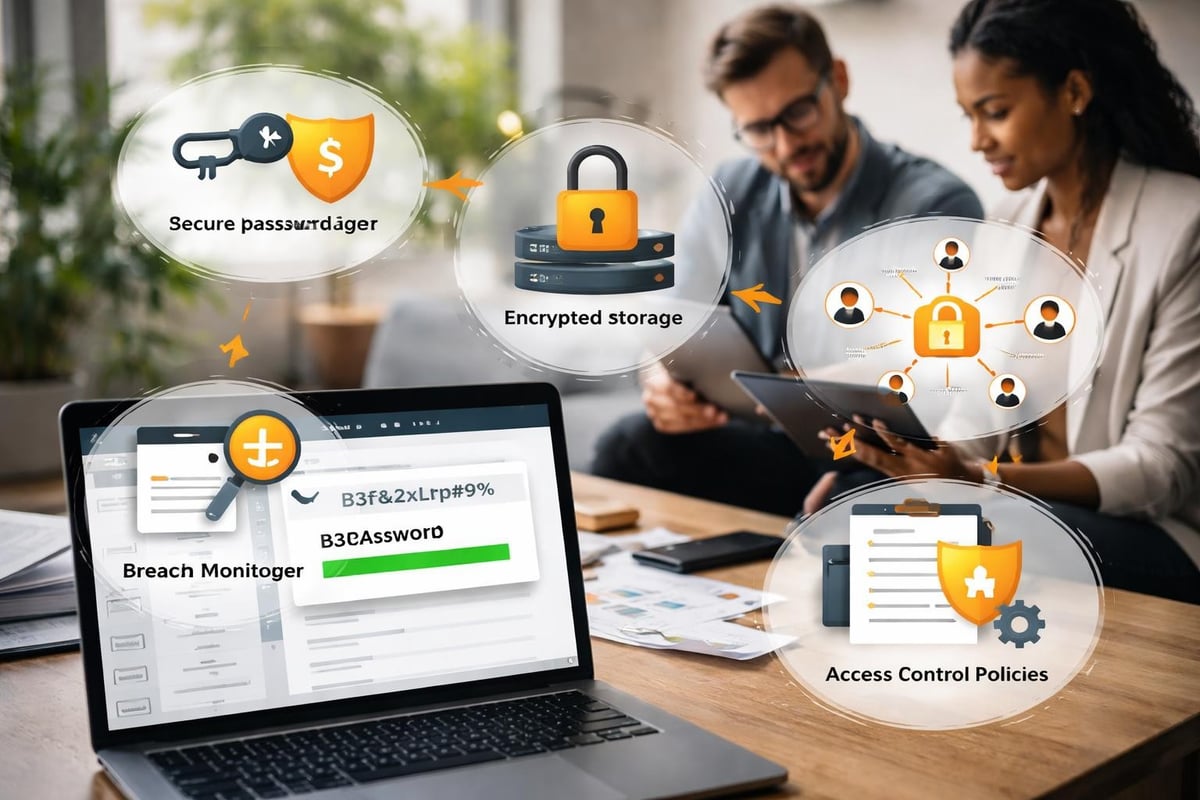
When evaluating password management solutions, businesses should prioritise platforms offering enterprise features such as team sharing, role-based access controls, and comprehensive audit logs. These capabilities ensure that password security best practices extend beyond individual users to encompass entire organisational workflows.
Critical Password Manager Features
| Feature | Business Value | Implementation Priority |
|---|---|---|
| End-to-end encryption | Ensures zero-knowledge architecture | Critical |
| Multi-device sync | Maintains accessibility across platforms | High |
| Secure sharing | Enables team collaboration | High |
| Breach monitoring | Provides proactive security alerts | Medium |
| Emergency access | Maintains business continuity | Medium |
| Compliance reporting | Supports audit requirements | Low to Medium |
The encryption standards employed by password managers ensure that even if the service provider experiences a breach, stored credentials remain protected through robust cryptographic methods. This architecture aligns with the security-focused approach that secure cloud data storage providers emphasise across their infrastructure.
Strengthening Authentication Through Layered Security
Password security best practices extend beyond credential strength to encompass multi-layered authentication approaches. Two-factor authentication (2FA) adds a crucial verification step that dramatically reduces unauthorised access risks, even when passwords become compromised.
Understanding how two-factor authentication works empowers businesses to deploy appropriate authentication methods across their systems. Authentication factors fall into three categories: something you know (password), something you have (phone or security key), and something you are (biometric data).
Authentication Method Comparison
Time-based one-time passwords (TOTP):
- Generated by authenticator apps on mobile devices
- Work offline without cellular connectivity
- Offer strong security with excellent usability balance
- Recommended for most business applications
Hardware security keys:
- Physical devices providing phishing-resistant authentication
- Ideal for high-privilege accounts and sensitive systems
- More expensive but offer maximum security assurance
- Require physical possession, preventing remote compromise
SMS-based codes:
- Widely accessible but vulnerable to SIM swapping attacks
- Better than no second factor but inferior to app-based methods
- Suitable for low-risk systems when other options prove unavailable
- Should be avoided for critical business systems
Establishing Organisational Password Policies
Effective password security best practices require formal policies that establish clear expectations and provide guidance for all team members. These policies should balance security requirements with practical usability to ensure consistent compliance across the organisation.
San Diego State University’s password protection guidelines offer a solid framework that businesses can adapt to their specific needs. Key policy elements include minimum password requirements, change frequencies, and prohibited practices.
Policy Components for Business Implementation
Mandatory requirements:
- Minimum password length of 16 characters for standard accounts
- Minimum 20 characters for administrative and privileged access
- Unique passwords for every system and service
- Immediate change requirements following suspected compromise
- Prohibition of password sharing amongst team members
Recommended practices:
- Regular security awareness training covering current threats
- Provision of approved password management tools
- Clear procedures for secure password resets
- Documentation of password policy exceptions and justifications
- Periodic reviews of policy effectiveness and necessary updates
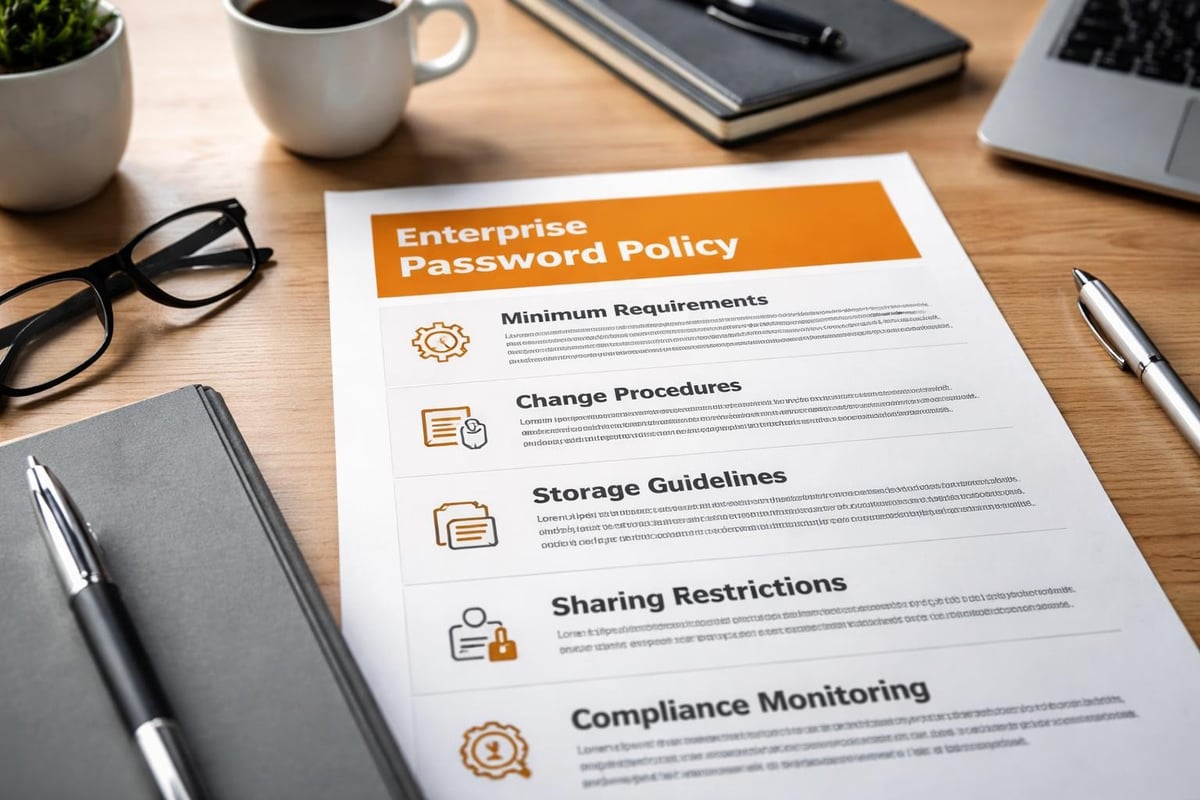
Password change frequency continues to generate debate in security circles. Modern guidance from Virgin Media O2’s security recommendations suggests that mandatory periodic changes often reduce security by encouraging predictable patterns. Instead, focus on immediate changes when breaches occur and maintaining strong, unique credentials throughout their lifecycle.
Managing Privileged Access and Administrative Credentials
Administrative accounts require heightened password security measures due to their extensive system access and potential impact if compromised. Applying password security best practices to privileged accounts involves additional controls beyond standard user requirements.
Enhanced controls for administrative access:
- Separate administrative credentials from standard user accounts
- Implement just-in-time access provisioning when possible
- Require hardware-based multi-factor authentication
- Enforce shorter session timeouts and re-authentication
- Maintain comprehensive audit logs of privileged activities
Administrative password rotation should occur following any personnel changes affecting individuals with elevated access. This practice ensures that former employees or contractors cannot retain access to critical systems through previously shared credentials.
Service Account Security
Service accounts and system-to-system authentication present unique challenges, as these credentials typically cannot use interactive authentication methods. Generate cryptographically random passwords of maximum supported length for these accounts, store them securely in privileged access management systems, and rotate them regularly through automated processes.
Monitoring and Responding to Credential Compromises
Even with robust password security best practices in place, credentials may still become compromised through third-party breaches, sophisticated phishing attacks, or other vectors. Therefore, establishing monitoring mechanisms and response procedures ensures rapid detection as well as mitigation of credential-related incidents.
For example, breach monitoring services continuously scan compromised credential databases, thereby alerting organisations when employee credentials appear in leaked data sets. In addition, many password managers include this functionality, while dedicated services provide more comprehensive coverage across the entire organisation. Consequently, these measures help reduce the risk of account takeover and enhance overall cybersecurity resilience.
Incident response procedures should include:
- Immediate password resets for confirmed compromised accounts
- Analysis of affected systems to identify potential unauthorised access
- Review of authentication logs for suspicious activities
- Assessment of whether broader password changes are warranted
- Communication with affected users about security incidents
- Documentation of incidents for compliance and learning purposes
Regular security awareness training helps employees recognise phishing attempts and other social engineering tactics targeting their credentials. This human element remains crucial, as technical controls alone cannot prevent all password compromises.
Integrating Password Security with Broader Infrastructure
Password security best practices achieve maximum effectiveness when integrated with comprehensive security strategies encompassing all aspects of business infrastructure. Cloud services, email systems, file storage, and other platforms all require coordinated credential management approaches.
Organisations leveraging cloud infrastructure should ensure their providers maintain robust security standards throughout their platforms. Working with security-focused providers who understand the critical importance of credential protection helps ensure that password policies extend consistently across hosted and on-premises systems.
Single sign-on (SSO) implementations can reduce password proliferation whilst maintaining security, provided the identity provider itself employs rigorous password security measures. However, SSO creates a single point of failure, making the master account credentials absolutely critical to protect through maximum security controls.
| Security Layer | Implementation Approach | Business Impact |
|---|---|---|
| Password Policy | Enforce minimum standards organisation-wide | Foundation for all credential security |
| Password Manager | Deploy enterprise solution with sharing | Enables unique passwords practically |
| Multi-Factor Auth | Require 2FA for all systems | Prevents 80%+ of credential attacks |
| Breach Monitoring | Implement continuous credential scanning | Enables proactive compromise response |
| Security Training | Quarterly awareness sessions | Reduces human vulnerability factors |
Implementing comprehensive password security best practices protects business data, maintains customer trust, and establishes the foundation for broader cybersecurity initiatives. These measures require ongoing attention and refinement as threats evolve and technologies advance. vBoxx provides secure cloud infrastructure designed with privacy and security as foundational principles, supporting businesses in maintaining robust credential security across their digital operations. Our hosting solutions, secure email platforms, and comprehensive security guidance help organisations implement and maintain effective password security as part of their overall security posture.