

The digital workplace has fundamentally transformed how organisations store, access, and collaborate on business-critical information. As a result, a cloud sharing platform now serves as the backbone of modern enterprise collaboration, enabling teams to work seamlessly across geographical boundaries while still maintaining security and compliance standards. Furthermore, as businesses navigate the complexities of hybrid work models and distributed teams, selecting the right infrastructure for file sharing and collaboration has become a strategic imperative rather than merely a technical decision.
Understanding Cloud Sharing Platform Architecture
Modern cloud sharing platforms operate on sophisticated infrastructure designed to balance accessibility with security. In particular, these systems utilise distributed storage networks that replicate data across multiple geographical locations, thereby ensuring redundancy and high availability. As a result, this architectural approach allows organisations to maintain business continuity even if localised infrastructure failures or network disruptions occur.
Furthermore, the technical foundation of a cloud sharing platform encompasses several critical components. For example, storage nodes handle the physical retention of data, while metadata services track file versions, permissions, and access patterns. In addition, authentication layers verify user identities before granting access, and encryption services protect data both in transit as well as at rest. Consequently, these combined mechanisms ensure that cloud sharing platforms remain both reliable and secure.
Key Architectural Elements
A robust cloud sharing platform integrates multiple technical layers:
- Data replication mechanisms that maintain synchronised copies across distributed servers
- Version control systems tracking every modification and enabling rollback capabilities
- Access control frameworks managing user permissions and sharing policies
- Encryption protocols securing data throughout its lifecycle
- API interfaces enabling integration with third-party applications and workflows
Performance optimisation represents another crucial architectural consideration. Edge caching reduces latency by storing frequently accessed files closer to end users, whilst intelligent routing directs requests to the nearest available server. These technical enhancements ensure that file access remains swift regardless of user location or network conditions.

Security Frameworks in Cloud File Sharing
<p>Security concerns dominate discussions around cloud adoption, and rightfully so. Organisations entrusting sensitive business data to external platforms must ensure comprehensive protection against unauthorised access, data breaches, and compliance violations. A well-designed cloud sharing platform implements multiple security layers, each addressing specific threat vectors.
Encryption serves as the first line of defence. End-to-end encryption ensures that data remains protected throughout its journey from source to destination, with only authorised parties possessing the decryption keys. Research into secure cloud sharing solutions demonstrates innovative approaches to eliminating traditional key management challenges whilst maintaining robust security standards.
| Security Feature | Purpose | Implementation Method |
|---|---|---|
| Authentication | Verify user identity | Multi-factor authentication, SSO integration |
| Authorisation | Control access rights | Role-based permissions, conditional access |
| Encryption | Protect data confidentiality | AES-256 encryption, TLS protocols |
| Audit Logging | Track access patterns | Detailed activity logs, compliance reports |
| Data Loss Prevention | Prevent unauthorised sharing | Content scanning, policy enforcement |
Compliance and Regulatory Considerations
Businesses operating in regulated industries face additional security requirements. Healthcare organisations must comply with patient data protection regulations, whilst financial services firms navigate stringent data sovereignty requirements. A suitable cloud sharing platform provides compliance frameworks addressing these sector-specific mandates.
Data residency controls allow organisations to specify geographical locations for data storage, ensuring compliance with local regulations. Retention policies automate the lifecycle management of files, deleting or archiving data according to legal requirements. Comprehensive audit trails document every access event, providing the evidence needed for regulatory audits and forensic investigations.
<p>When evaluating providers in the secure cloud storage market, businesses should prioritise those demonstrating transparent security practices and maintaining relevant certifications. Regular security assessments, penetration testing, and vulnerability disclosure programmes indicate a commitment to ongoing security improvement.
Collaboration Features Driving Business Productivity
Beyond basic file storage, modern cloud sharing platforms deliver sophisticated collaboration tools that transform how teams work together. Real-time co-authoring enables multiple users to edit documents simultaneously, with changes synchronising instantly across all connected devices. This capability eliminates version conflicts and reduces the communication overhead associated with traditional file exchange methods.
Cloud collaboration extends beyond document editing to encompass integrated communication tools, project management features, and workflow automation. Comments and annotations allow team members to provide feedback directly within documents, creating contextual discussions that remain attached to relevant content. Notification systems alert users to changes, mentions, and approaching deadlines, ensuring critical updates never go unnoticed.
Workflow Integration and Automation
<p>The true power of a cloud sharing platform emerges when it integrates seamlessly with existing business applications. API connections enable automated workflows that trigger actions based on specific events. When a contract receives approval, automated processes might notify legal teams, update customer relationship management systems, and archive the final version in designated repositories.
- Document creation initiates within preferred applications
- Automatic upload transfers files to the cloud sharing platform
- Permission assignment applies predefined sharing policies
- Notification dispatch alerts relevant stakeholders
- Version tracking maintains complete audit history
- Archive management moves completed files to long-term storage
Third-party application marketplaces expand platform capabilities through pre-built integrations. Businesses can connect their cloud sharing platform with accounting software, project management tools, customer support systems, and countless other applications without extensive custom development.

Selecting the Right Cloud Sharing Platform
Choosing an appropriate cloud sharing platform requires careful evaluation of business requirements against available solutions. Storage capacity represents the most obvious consideration, but organisations must also assess bandwidth limitations, user licensing models, and support provisions. A thorough needs assessment examines current usage patterns whilst accounting for future growth projections.
Performance requirements vary significantly across different use ca
ses. Design teams working with large media files need platforms optimised for high-speed transfers and preview generation. Legal departments prioritise granular permission controls and comprehensive audit capabilities. Sales teams require mobile accessibility and offline synchronisation for client presentations in locations with limited connectivity.
Evaluation Criteria for Enterprise Adoption
Technical capabilities form only part of the selection equation. Vendor stability, support quality, and pricing transparency significantly impact long-term satisfaction. Businesses should examine provider track records, customer testimonials, and service level agreements before committing to multi-year contracts.
- Total cost of ownership including licensing, storage, and support
fees
- Migration pathways from existing systems and data portability guarantees
- Scalability provisions accommodating business growth without platform changes
- Geographic presence ensuring low-latency access for distributed teams
- Sustainability practices aligning with corporate environmental commitments
Understanding different file-hosting service models helps businesses match platform characteristics to organisational needs. Consumer-oriented services prioritise ease of use and generous free tiers but may lack enterprise-grade security features. Business-focused platforms provide advanced administrative controls, compliance certifications, and dedicated support channels at premium price points.
For organisations seeking expert guidance through the selection process, scheduling a comprehensive platform demonstration can clarify how specific features address business challenges. A demonstration of all-in-one solutions provides hands-on experience with cloud storage, secure communication tools, and password management capabilities within integrated environments.
Implementation and Change Management Strategies
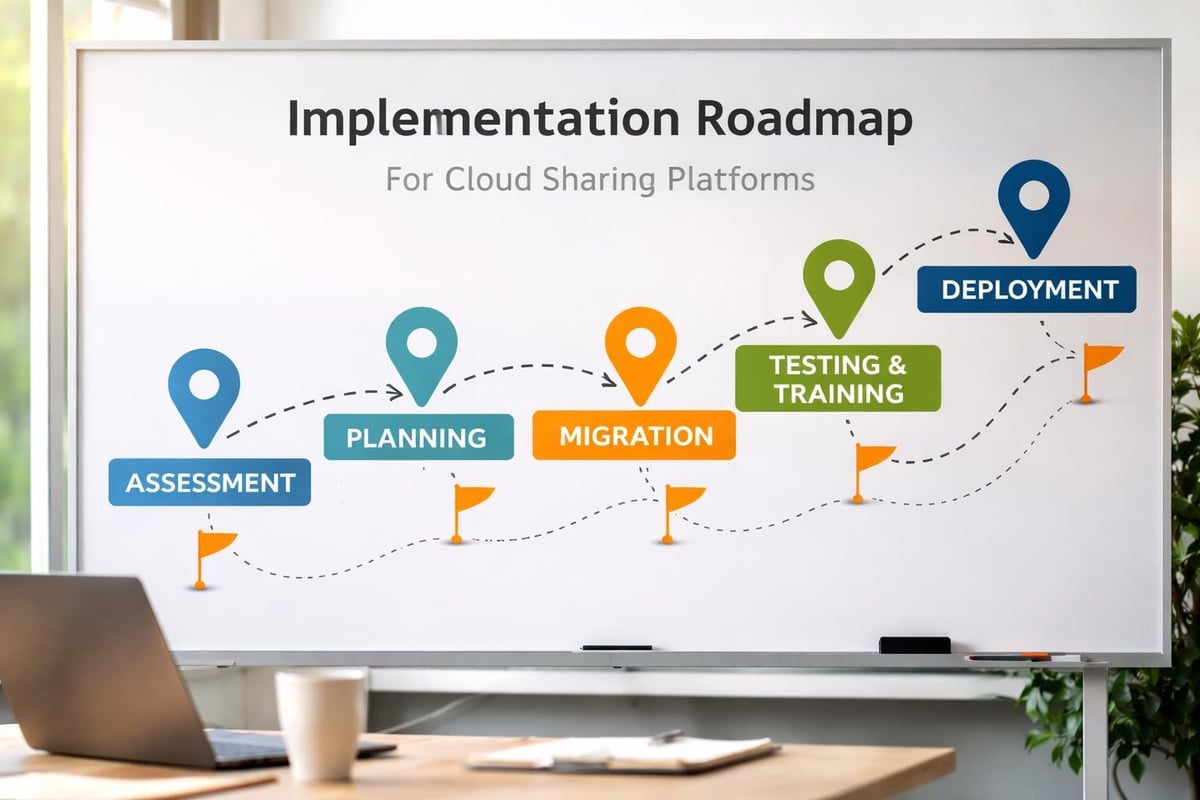
Successfully deploying a cloud sharing platform extends beyond technical configuration. Organisational change management determines whether employees embrace new tools or continue relying on familiar but inefficient alternatives. A structured implementation approach addresses technical, procedural, and cultural aspects of platform adoption.
Pilot programmes allow businesses to test platforms with limited user groups before full deploym
ent. These controlled trials reveal integration challenges, identify training needs, and demonstrate value to stakeholders. Success stories from pilot participants become powerful advocates during wider rollout phases.
Migration Planning and Data Transfer
Moving existing content to a new cloud sharing platform demands meticulous planning. Data mapping exercises catalogue current file locations, permission structures, and sharing relationships. Migration strategies balance speed against accuracy, often employing phased approaches that transfer content in logical groupings rather than wholesale moves.
| Migration Phase | Activities | Success Metrics |
|---|---|---|
| Assessment | Inventory existing files, identify sensitive data | Complete data catalogue |
| Preparation | Clean obsolete files, standardise naming conventions | Reduced data volume |
| Transfer | Migrate content batches, verify integrity | Zero data loss |
| Validation | Test permissions, confirm accessibility | User acceptance |
| Optimisation | Configure workflows, enable integrations | Productivity improvements |
Training programmes must address varying technical proficiency levels across user populations. Video tutorials, quick reference guides, and hands-on workshops cater to different learning preferences. Designating departmental champions creates local support resources who can answer common questions without involving central IT teams.
Advanced Features Shaping Future Capabilities
Innovation continues reshaping cloud sharing platform capabilities. Artificial intelligence increasingly powers intelligent features that anticipate user needs and automate routine tasks. Smart filing suggestions analyse document content and automatically propose appropriate folders and tags. Optical character recognition extracts text from images and scanned documents, making previously unsearchable content discoverable through standard search queries.
Contextual recommendations surface relevant files based on current activities. When scheduling client meetings, platforms might automatically suggest recent proposals, previous correspondence, and relevant contract documents. These predictive features reduce time spent searching for information and minimise the risk of overlooking critical details.
Emerging Technologies and Platform Evolution
Blockchain integration offers promising applications for audit trails and version verification. Immutable ledgers record every file modification, creating tamper-proof histories that satisfy stringent compliance requirements. Distributed storage networks enhance privacy and resilience by fragmenting encrypted data across multiple independent nodes.
Mobile-first design reflects changing work patterns as employees increasingly access business information through smartphones and tablets. Progressive web applications deliver native app experiences without requiring separate installations, whilst offline modes enable productivity during connectivity gaps. Biometric authentication leverages fingerprint and facial recognition for secure access without password complexity.
Platform providers increasingly emphasise environmental sustainability in their infrastructure operations. Renewable energy sources power data centres, whilst sophisticated cooling systems minimise electricity consumption. Carbon offset programmes and transparent environmental reporting allow businesses to select providers aligned with corporate sustainability commitments.
Managing Costs and Optimising Value
Cloud sharing platform costs extend beyond obvious subscription fees. Bandwidth charges accumulate when teams frequently transfer large files, whilst overage penalties apply when storage consumption exceeds plan allowances. A comprehensive cost analysis examines total expenditure including training, integration development, and ongoing administrative overhead.
Right-sizing storage allocations prevents overpaying for unused capacity. Regular audits identify obsolete files consuming valuable space, whilst lifecycle policies automatically archive or delete content meeting defined criteria. Compression technologies reduce storage requirements without sacrificing file quality, particularly effective for image and video content.
Tiered Storage Strategies
Implementing tiered storage optimises costs by matching storage classes to access patterns. Frequently accessed files reside on high-performance storage with premium pricing, whilst archived content moves to economical cold storage tiers. Automated policies transition files between tiers based on access frequency and age, balancing cost efficiency against retrieval speed.</p>
Negotiating enterprise agreements often yields significant savings compared to standard published
rates. Volume commitments and multi-year contracts typically unlock discounted pricing, whilst bundled services combining storage with complementary offerings provide better value than purchasing components separately. However, businesses must carefully evaluate lock-in risks and ensure contract terms include adequate flexibility for changing requirements.
Disaster Recovery and Business Continuity
A reliable cloud sharing platform forms a crucial component of comprehensive business continuity strategies. Geographical redundancy ensures data survives localised disasters, with synchronised copies maintained across multiple regions. Recovery time objectives and recovery point objectives define acceptable downtime and data loss thresholds, guiding platform configuration decisions.</p>
Backup strategies complement cloud storage rather than replaci
ng it. Independent backup systems protect against accidental deletions, ransomware attacks, and platform failures. Testing recovery procedures validates that backup systems function correctly and restoration processes meet business requirements. Many organisations maintain hybrid approaches combining cloud primary storage with on-premises backup infrastructure.
Version history capabilities allow organisations to recover from data corruption or unauthorised modifications. Configurable retention periods determine how long previous versions remain accessible, balancing storage costs against recovery needs. Ransomware protection features detect suspicious activity patterns and prevent mass file encryption by malicious actors.
Integration with Enterprise Systems
Modern businesses operate complex technology ecosystems encompassing customer relationship management platforms, enterprise resource planning systems, communication tools, and countless specialised applications. A cloud sharing platform must integrate seamlessly within this environment rather than functioning as an isolated silo.
Single sign-on integration eliminates multiple authentication steps, allowing users to access cloud storage using existing corporate credentials. Directory synchronisation automatically provisions accounts when employees join organisations and revokes access upon departure. These integrations reduce administrative burden whilst strengthening security through centralised identity management.
Data flows between systems eliminate manual file transfers and reduce error risks. When sales representatives close deals, integrated workflows might automatically create client folders, populate them with contract templates, and grant appropriate team members access. Marketing campaigns benefit from automated asset distribution, ensuring brand consistency whilst accelerating campaign launches.
Implementing the right cloud sharing platform transforms business operations by enabling secure collaboration, streamlining workflows, and supporting distributed teams. As organisations evaluate solutions, prioritising security, scalability, and integration capabilities ensures long-term success. vBoxx delivers enterprise-grade cloud infrastructure emphasising privacy, security, and environmental sustainability, providing businesses with reliable digital foundations for growth. Our comprehensive suite of secure hosting and cloud solutions supports your journey towards efficient, protected, and sustainable collaboration.