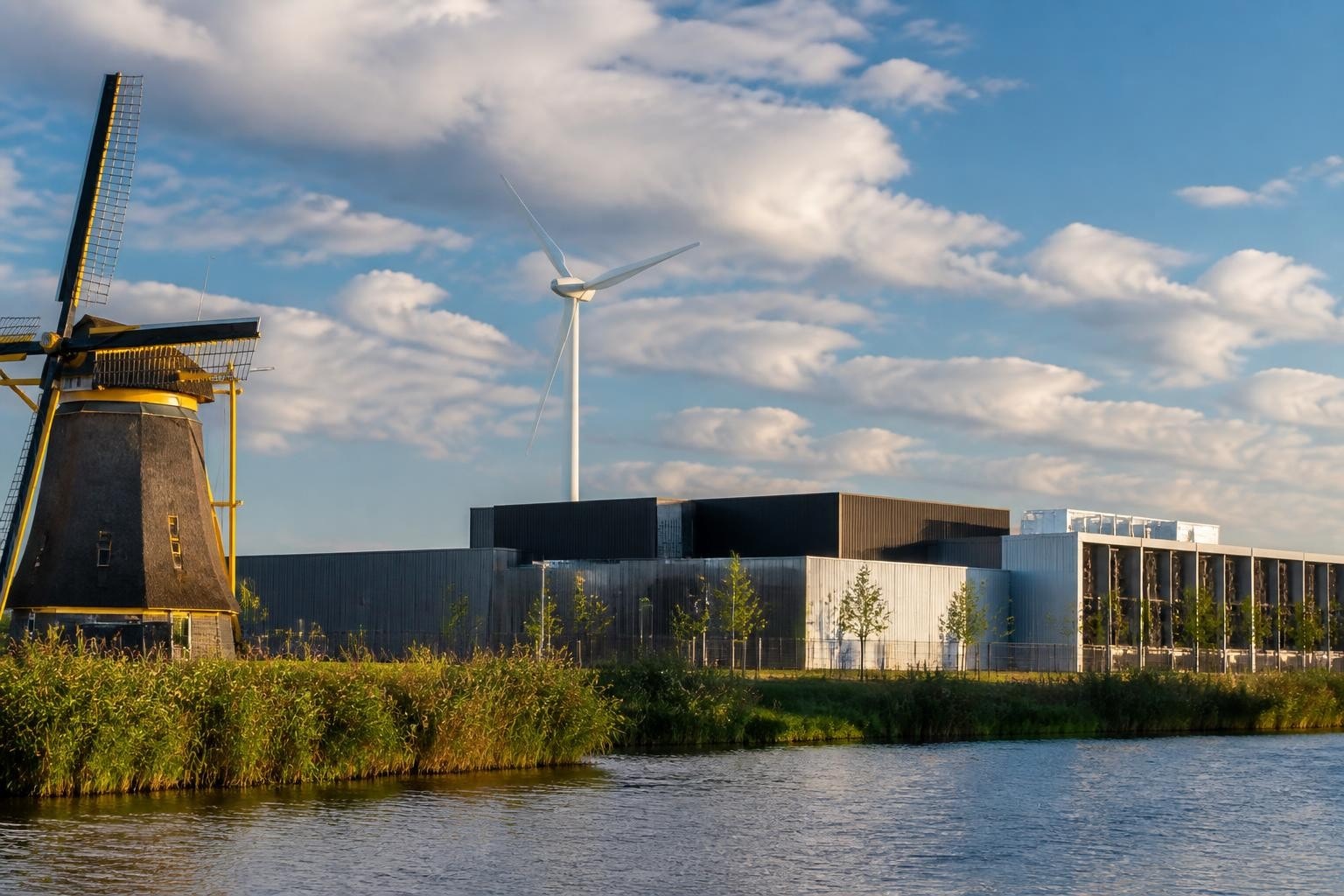

The Netherlands has established itself as a premier European destination for businesses seeking reliable, secure, and sustainable hosting solutions. Moreover, the country's strategic location, robust digital infrastructure, and stringent privacy regulations make it an ideal choice for organisations requiring dependable cloud services. Furthermore, the Dutch commitment to renewable energy and innovative data centre technologies positions Netherlands hosting as a forward-thinking option for companies prioritising both performance and environmental responsibility.
Why Netherlands Hosting Stands Out in Europe
The Netherlands occupies a unique position in the European hosting landscape, therefore attracting businesses from across the continent and beyond. Its geographical location serves as a natural gateway between the United Kingdom and continental Europe, consequently providing excellent connectivity to major markets. Additionally, the country boasts some of the world's fastest internet speeds and most advanced telecommunications infrastructure.
The Dutch approach to digital services emphasises transparency and user rights. Nevertheless, this commitment extends far beyond mere regulatory compliance. Dutch data centres have experienced remarkable growth, with the industry evolving significantly over the past decade whilst maintaining strict environmental and operational standards. Moreover, the Netherlands consistently ranks among the top countries globally for internet freedom and digital rights protection.
Infrastructure Excellence
Netherlands hosting benefits from world-class infrastructure investments. Furthermore, the country hosts numerous Tier III and Tier IV data centres, ensuring maximum uptime and reliability for business-critical applications. The Netherlands data center market continues expanding, with over 129 data centres operating and 17 new facilities underway as of May 2026.

| Infrastructure Feature | Netherlands Advantage | Business Benefit |
|---|---|---|
| Network Connectivity | Multiple tier-1 carriers | Low latency across Europe |
| Power Reliability | 99.995% uptime guarantee | Minimal service interruption |
| Internet Speed | Average 120+ Mbps | Fast data transfer |
| Renewable Energy | 73% green power usage | Sustainable operations |
Privacy and Data Protection Standards
The Netherlands implements some of Europe's strictest data protection regulations. Therefore, businesses hosting their infrastructure in Dutch facilities benefit from comprehensive legal frameworks that safeguard customer information. Furthermore, the country's interpretation and enforcement of GDPR regulations often exceed minimum requirements, providing additional peace of mind for organisations handling sensitive data.
Dutch hosting providers must adhere to rigorous security standards. Moreover, the Netherlands maintains robust cybersecurity legislation that holds service providers accountable for maintaining secure environments. In addition, the country's legal system provides strong protections against unwarranted data access requests, making Netherlands hosting particularly attractive for businesses concerned about data sovereignty.
Compliance Advantages
Netherlands hosting simplifies compliance for businesses operating across European markets. Consequently, organisations can more easily meet regulatory requirements for multiple jurisdictions from a single hosting location. Additionally, the predictable legal environment reduces compliance risks and associated costs.
- GDPR alignment: Full compliance with European data protection standards
- Industry certifications: ISO 27001, SOC 2, and other recognised frameworks
- Data residency: Clear jurisdiction for legal and regulatory purposes
- Audit transparency: Straightforward compliance verification processes
- Privacy by design: Cultural commitment to data protection principles
Performance and Network Advantages
The strategic positioning of Netherlands hosting infrastructure delivers measurable performance benefits. Furthermore, the country's central European location minimises latency for users across the continent. Web server technologies in the Netherlands reflect modern standards, with Nginx and Apache dominating the landscape as of June 2026, ensuring compatibility with contemporary applications.
Network performance remains consistently excellent due to the Netherlands' role as a major internet exchange point. Moreover, Amsterdam Internet Exchange (AMS-IX) ranks among the world's largest internet exchanges, therefore providing exceptional peering opportunities. Consequently, businesses benefit from faster content delivery and improved user experiences across European markets.
Technical Specifications
Netherlands hosting providers offer diverse technical configurations to match varying business requirements. Nevertheless, the emphasis remains on delivering enterprise-grade solutions regardless of organisation size. In addition, Dutch providers typically include advanced features as standard rather than premium additions.
- Virtual server options: Flexible resource allocation with scalable configurations
- Dedicated server solutions: Full hardware control for demanding workloads
- Cloud storage platforms: Redundant, geographically distributed data storage
- Backup infrastructure: Automated, encrypted backup solutions with multiple retention policies
- Network security: DDoS protection, firewalls, and intrusion detection systems

Sustainability and Green Hosting Practices
Environmental responsibility distinguishes Netherlands hosting from alternatives in many regions. Therefore, businesses selecting Dutch providers align themselves with sustainability goals whilst maintaining technical excellence. Furthermore, the Dutch data center industry has committed to ambitious climate targets, with facilities increasingly powered by renewable energy sources.
The Netherlands government actively supports green hosting initiatives through favourable policies and incentives. Moreover, Dutch data centres pioneered numerous energy-efficient cooling technologies now adopted worldwide. Additionally, the country's compact geography and advanced district heating systems enable innovative heat reuse programmes that further reduce environmental impact.
Environmental Metrics
| Sustainability Measure | Netherlands Standard | Industry Average |
|---|---|---|
| Renewable Energy Use | 73% | 28% |
| PUE (Power Usage Effectiveness) | 1.3 | 1.6 |
| Water Usage | Minimal/None | Moderate |
| Heat Reuse | 35% of facilities | 8% of facilities |
Businesses seeking Netherlands hosting solutions should evaluate providers based on documented environmental commitments. Nevertheless, genuine sustainability requires more than marketing claims. In addition, transparent reporting about energy sources, cooling methods, and carbon offset programmes indicates serious environmental stewardship.
Market Growth and Business Opportunities
The Netherlands web hosting service market continues experiencing steady growth, with projections indicating sustained expansion through 2031. Furthermore, this growth reflects increasing business confidence in Dutch digital infrastructure. Moreover, domain registration statistics demonstrate the expanding digital economy, with steady increases in both registrations and hosting revenue as of March 2026.
Netherlands hosting providers serve diverse market segments. Consequently, businesses ranging from startups to enterprises find suitable solutions within the Dutch ecosystem. Additionally, the competitive market environment drives continuous innovation and service improvements.
Service Categories
- Shared hosting: Cost-effective solutions for smaller websites and applications
- Cloud platforms: Scalable infrastructure with pay-as-you-grow pricing models
- Managed services: Full administrative support for technical operations
- Colocation: Physical space for customer-owned equipment in professional facilities
- Hybrid solutions: Combining on-premises and cloud resources for optimal flexibility

Selecting the Right Netherlands Hosting Provider
Choosing an appropriate Netherlands hosting partner requires careful evaluation of multiple factors. Therefore, businesses should develop comprehensive selection criteria before beginning their search. Furthermore, understanding specific requirements helps narrow options to providers genuinely capable of meeting organisational needs.
Security credentials warrant particular attention when evaluating Netherlands hosting options. Moreover, providers should demonstrate concrete security measures rather than vague assurances. In addition, businesses should verify certifications through independent sources rather than relying solely on provider claims.
Evaluation Framework
- Technical capabilities: Confirm infrastructure matches current and projected requirements
- Security measures: Verify certifications, protocols, and incident response procedures
- Support quality: Test responsiveness and expertise before committing
- Pricing transparency: Ensure clear understanding of all costs and billing practices
- Migration assistance: Assess available support for transitioning existing infrastructure
Businesses requiring comprehensive solutions might consider providers offering integrated platforms. For instance, organisations seeking unified management of cloud storage, communication tools, and security features could benefit from exploring platforms like vBoxxCloud, which consolidates multiple business functions whilst maintaining the privacy and security advantages associated with Netherlands hosting.
Network Architecture and Redundancy
Netherlands hosting infrastructure emphasises redundancy at multiple levels. Therefore, businesses benefit from fault-tolerant systems that maintain operations despite component failures. Furthermore, Dutch providers typically implement n+1 or 2n redundancy for critical systems, ensuring continuous availability.
Network architecture in Dutch data centres reflects best practices developed over decades of operation. Moreover, multiple carrier connections prevent single points of failure in external connectivity. Additionally, internal network designs incorporate redundant switches, routers, and cabling to maintain service continuity.
Redundancy Components
| System | Redundancy Level | Failover Time |
|---|---|---|
| Power Supply | 2N (dual) | Instantaneous |
| Cooling Systems | N+1 | Under 30 seconds |
| Network Connections | Multiple carriers | Under 60 seconds |
| Storage Arrays | RAID 10 minimum | Transparent |
| Physical Security | Layered systems | Continuous |
Nevertheless, redundancy alone cannot guarantee perfect uptime. In addition, regular testing of failover systems ensures they function correctly during actual incidents. Furthermore, transparent reporting about historical uptime provides realistic expectations about service reliability.
Support and Service Level Agreements
Quality Netherlands hosting requires exceptional technical support. Therefore, businesses should prioritise providers offering comprehensive assistance rather than minimal help desk services. Moreover, market research indicates that service quality increasingly differentiates providers as technical capabilities converge.
Service level agreements define expectations and remedies for service issues. Consequently, businesses must thoroughly review SLA terms before committing to Netherlands hosting contracts. Additionally, understanding monitoring procedures, incident response protocols, and compensation structures prevents misunderstandings during critical situations.
Support Expectations
- Availability: 24/7/365 access to knowledgeable technical staff
- Response times: Clear commitments for different severity levels
- Communication channels: Multiple contact methods including phone, email, and chat
- Escalation procedures: Defined processes for unresolved issues
- Documentation: Comprehensive knowledge bases and technical guides
Furthermore, proactive monitoring and alerting demonstrate provider commitment to preventing issues rather than merely reacting to problems. Nevertheless, even excellent monitoring cannot prevent all incidents, therefore responsive support remains essential.
Cost Considerations and Value Assessment
Netherlands hosting pricing reflects the premium infrastructure and services Dutch providers deliver. Therefore, businesses should evaluate total cost of ownership rather than focusing solely on monthly fees. Moreover, hidden costs for bandwidth overages, backup storage, or technical support can significantly impact overall expenses.
Value assessment requires comparing features, performance, and support across providers. Consequently, the cheapest option rarely delivers optimal results for business-critical applications. Additionally, Netherlands hosting costs often prove competitive when factoring in reliability, security, and compliance benefits that reduce other business expenses.
Pricing Factors
- Resource allocation: CPU cores, RAM, storage capacity, and network bandwidth
- Management level: Self-managed versus fully managed service tiers
- Security features: Advanced protections beyond basic firewall functionality
- Backup provisions: Frequency, retention periods, and recovery options
- Contract terms: Monthly flexibility versus annual commitments with discounts
Furthermore, transparent pricing structures simplify budgeting and cost control. Nevertheless, businesses should anticipate some variability in monthly costs based on actual resource consumption. In addition, understanding billing cycles and payment terms prevents cash flow surprises.
Netherlands hosting offers European businesses a compelling combination of performance, security, and sustainability that few alternatives can match. Moreover, the country's robust infrastructure, strict privacy protections, and commitment to environmental responsibility create an ideal foundation for business-critical applications. Whether you require virtual servers, cloud storage, or comprehensive managed solutions, vBoxx delivers secure, sustainable Netherlands hosting backed by expert support and transparent service commitments that align with your business objectives.