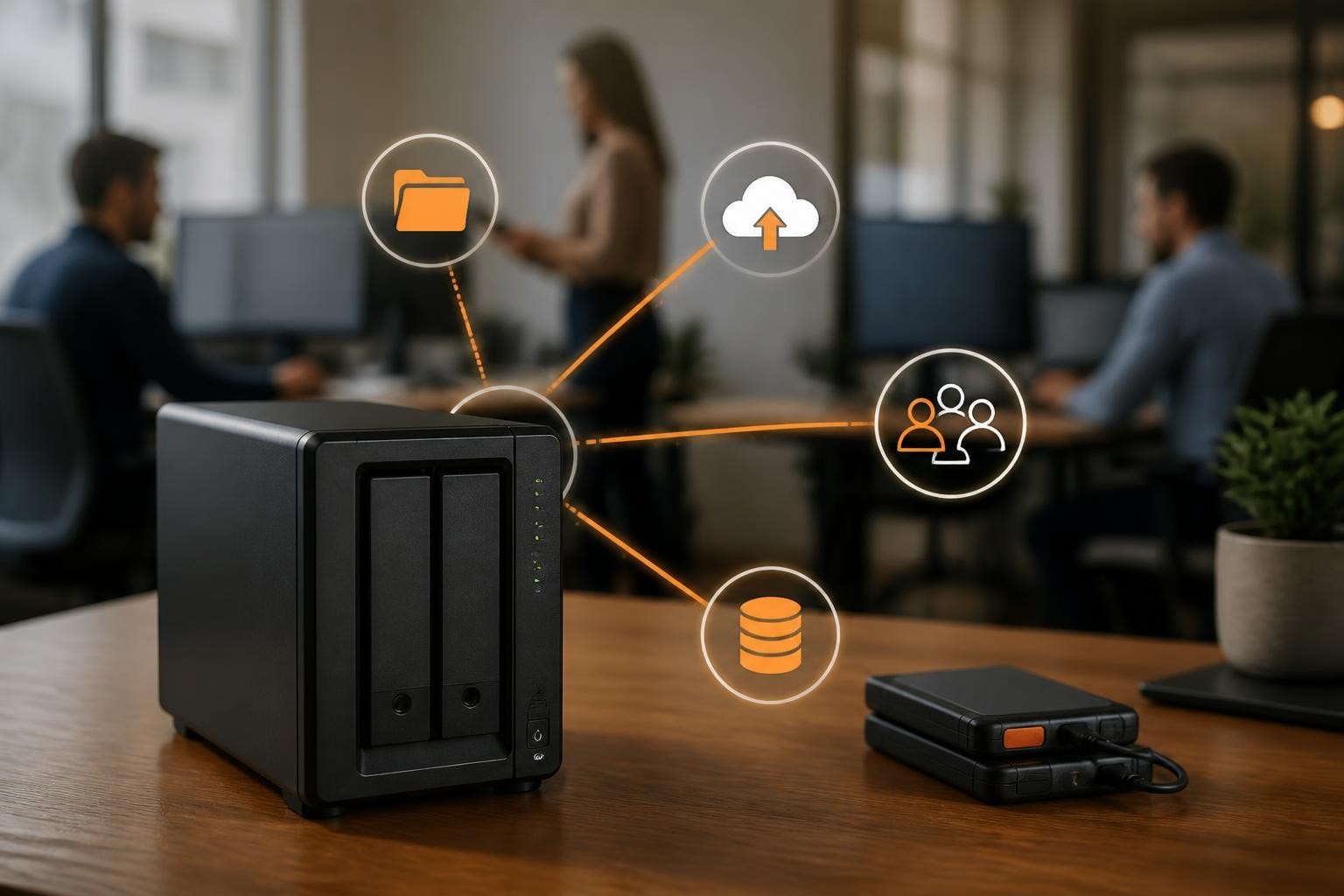
As organisations increasingly adopt flexible IT infrastructures, the demand for robust hybrid cloud security solutions continues to escalate. Businesses today operate across multiple environments, combining on-premises systems with public cloud services to achieve optimal performance and cost efficiency. Nevertheless, this distributed architecture introduces complex security challenges that require sophisticated protection strategies. Furthermore, with cyber threats evolving rapidly and regulatory requirements tightening across European markets, organisations must implement comprehensive security frameworks that safeguard sensitive data regardless of its location. Therefore, understanding the fundamental principles and practical implementation of hybrid cloud security solutions becomes essential for any business seeking to maintain competitive advantage whilst protecting critical assets.
Understanding the Hybrid Cloud Security Landscape
The hybrid cloud model presents unique security considerations that differ significantly from traditional infrastructure approaches. Organisations must protect data as it moves between private data centres, public cloud platforms, and edge locations. Moreover, each environment operates under different security paradigms and management tools, creating potential gaps in visibility and control.
Understanding what hybrid cloud computing entails provides the foundation for developing appropriate security measures. In addition, security teams must address inconsistent policy enforcement, fragmented identity management, and varying compliance requirements across diverse platforms.
Key Security Challenges in Hybrid Environments
Hybrid cloud architectures introduce several critical security obstacles that organisations must overcome:
- Data sovereignty and regulatory compliance across multiple jurisdictions
- Inconsistent security policies between on-premises and cloud systems
- Limited visibility into traffic flows and user activities
- Complex identity and access management spanning multiple platforms
- API vulnerabilities connecting different environments
- Shadow IT deployments bypassing security controls
Furthermore, the dynamic nature of cloud resources creates additional complications. Workloads migrate between environments, applications scale automatically, and infrastructure changes occur continuously. Consequently, traditional perimeter-based security models prove insufficient for protecting these fluid architectures.

Essential Components of Effective Hybrid Cloud Security Solutions
Implementing comprehensive protection requires multiple integrated security layers working in concert. Therefore, organisations must deploy solutions addressing infrastructure, data, applications, and user access simultaneously.
Zero Trust Architecture
The zero trust model represents a fundamental shift from traditional security approaches. Rather than assuming trust based on network location, zero trust requires continuous verification of every access request. Moreover, this framework proves particularly effective in hybrid environments where the network perimeter becomes meaningless.
Implementing zero trust in hybrid cloud security solutions involves several critical elements:
- Verify every user and device attempting to access resources
- Apply least privilege access granting only necessary permissions
- Inspect and log all traffic regardless of origin
- Assume breach scenarios and limit lateral movement
- Continuously monitor and validate trust throughout sessions
Research has demonstrated that organisations managing security in hybrid cloud ecosystems benefit significantly from zero trust frameworks combined with robust encryption strategies. In addition, this approach addresses the challenge of securing resources distributed across multiple environments without creating user friction.
Identity and Access Management
Unified identity management forms the cornerstone of hybrid cloud security solutions. Organisations require seamless authentication and authorisation mechanisms that function consistently across all environments. Furthermore, multi-tenant identity and access management frameworks enable organisations to maintain security whilst supporting diverse user groups and resource types.
| IAM Component | Function | Hybrid Cloud Benefit |
|---|---|---|
| Single Sign-On | Centralised authentication | Reduces credential sprawl |
| Multi-Factor Authentication | Enhanced verification | Protects against credential theft |
| Role-Based Access Control | Permission management | Ensures consistent policies |
| Privileged Access Management | Admin account security | Limits high-risk access |
| Identity Federation | Cross-platform integration | Enables seamless cloud connectivity |
Nevertheless, implementing effective IAM requires careful planning to avoid creating single points of failure or introducing excessive complexity that frustrates legitimate users.
Data Protection and Encryption
Protecting data represents perhaps the most critical aspect of hybrid cloud security solutions. Sensitive information must remain secure both at rest and in transit, regardless of its location. Therefore, organisations should implement comprehensive encryption strategies covering all data states.
Encryption strategies for hybrid environments include:
- End-to-end encryption for data transmission between environments
- At-rest encryption for stored data using hardware or software methods
- Key management systems providing centralised control
- Tokenisation for sensitive data elements
- Format-preserving encryption maintaining data utility
For organisations handling large datasets, protecting big data analytics in hybrid clouds presents unique challenges requiring specialised encryption approaches that balance security with performance requirements. Furthermore, businesses should explore encrypted cloud service options that provide robust protection without compromising usability.
Network Security and Segmentation
Securing network communications across hybrid cloud security solutions demands sophisticated approaches to traffic management and inspection. Traditional network security tools often struggle with the dynamic nature of cloud environments and encrypted traffic volumes.
Unified Security Policy Management
Managing security policies across heterogeneous environments creates significant administrative overhead without proper tools. Organisations benefit from platforms that provide centralised policy definition and enforcement. Moreover, comprehensive hybrid cloud security platforms enable security teams to maintain consistent protection whilst adapting to infrastructure changes automatically.
Effective policy management encompasses several critical capabilities:
- Automated policy discovery identifying existing rules across platforms
- Centralised policy authoring creating consistent security standards
- Real-time compliance checking validating configurations continuously
- Automated remediation correcting policy violations
- Audit trails and reporting demonstrating compliance
In addition, security teams require complete network visibility to understand traffic flows and identify potential threats. Tools providing visibility across hybrid and multi-cloud environments enable organisations to detect anomalies and enforce security policies effectively.

Micro-segmentation and Zero Trust Networking
Micro-segmentation extends zero trust principles to network traffic by creating granular security zones around individual workloads. Furthermore, this approach limits the blast radius of potential breaches by preventing lateral movement between compromised and secure resources.
Implementing micro-segmentation requires organisations to:
- Map application dependencies and communication patterns
- Define security policies based on workload requirements
- Deploy enforcement points at appropriate network locations
- Monitor traffic continuously for policy violations
- Adjust segmentation as applications evolve
Nevertheless, micro-segmentation can introduce complexity if not implemented thoughtfully. Therefore, organisations should start with critical applications before expanding coverage across their entire hybrid infrastructure.
Threat Detection and Response
Hybrid cloud security solutions must include robust capabilities for identifying and responding to security incidents across all environments. Moreover, the distributed nature of hybrid architectures requires security operations centres to aggregate telemetry from multiple sources and correlate events effectively.
Security Information and Event Management
Modern SIEM platforms designed for hybrid environments collect logs and security events from on-premises systems, public clouds, SaaS applications, and network devices. Furthermore, advanced analytics and machine learning algorithms help identify patterns indicating potential threats.
Critical SIEM capabilities include:
- Log aggregation from diverse sources
- Real-time correlation of security events
- Behavioural analytics detecting anomalies
- Automated threat intelligence integration
- Incident workflow management
- Compliance reporting and documentation
In addition, hybrid AI approaches in cybersecurity balance centralised analytics with decentralised control, enhancing resilience and reducing dependency on single platforms. Therefore, organisations should evaluate SIEM solutions offering both cloud-based scalability and on-premises control where required.
Container and Workload Security
As organisations increasingly deploy containerised applications across hybrid environments, securing these ephemeral workloads becomes essential. Container security differs from traditional approaches due to the short-lived nature of instances and the shared kernel architecture.
| Security Layer | Traditional VMs | Containers | Hybrid Cloud Consideration |
|---|---|---|---|
| Image Security | Template scanning | Registry scanning | Cross-environment image management |
| Runtime Protection | Host-based agents | Container-aware tools | Consistent policies across platforms |
| Network Security | Virtual firewalls | Service mesh | Unified network policies |
| Secrets Management | Config files | Orchestrator secrets | Centralised vault integration |
Furthermore, real-time visibility and containment across hybrid environments enables security teams to protect containerised workloads effectively whilst maintaining the agility that containers provide.
Compliance and Governance
Regulatory compliance represents a significant driver for hybrid cloud security solutions, particularly within European markets. Organisations must demonstrate adherence to GDPR, NIS2 Directive, and industry-specific regulations whilst operating across multiple jurisdictions.
Automated Compliance Monitoring
Manual compliance checking proves impractical in dynamic hybrid environments where infrastructure changes continuously. Therefore, organisations require automated tools that assess configurations against regulatory requirements and industry frameworks.
Effective compliance automation includes:
- Policy-as-code implementations defining requirements programmatically
- Continuous compliance scanning identifying violations immediately
- Automated remediation workflows correcting non-compliant configurations
- Audit trail generation documenting all changes and access
- Compliance reporting dashboards demonstrating adherence to stakeholders
Moreover, organisations should establish clear data classification schemes determining where different information types may reside. In addition, understanding the specific requirements of various regulations helps organisations architect hybrid cloud security solutions that maintain compliance efficiently.
Data Residency and Sovereignty
European organisations face stringent requirements regarding where data may be stored and processed. Consequently, hybrid cloud security solutions must enforce geographic boundaries whilst maintaining operational flexibility.
Data residency controls include:
- Geographic restrictions on cloud resource deployment
- Encryption key storage within specified jurisdictions
- Data transfer monitoring and approval workflows
- Local processing requirements for sensitive information
- Regular audits of data location and movement
Nevertheless, balancing compliance requirements with operational efficiency requires careful planning. Therefore, organisations should evaluate cloud providers offering European data centre locations and transparent data handling practices.

Implementing Hybrid Cloud Security Solutions
Successfully deploying comprehensive security across hybrid environments requires methodical planning and execution. Furthermore, organisations should adopt phased approaches that deliver incremental improvements rather than attempting wholesale transformations.
Assessment and Planning
Before implementing new hybrid cloud security solutions, organisations must understand their current security posture and identify gaps. Moreover, this assessment phase establishes baselines for measuring improvement and prioritising investments.
Assessment activities include:
- Inventorying all assets across hybrid environments
- Mapping data flows between systems and locations
- Identifying existing security controls and their coverage
- Evaluating compliance requirements and current adherence
- Assessing security team skills and resource availability
- Benchmarking against industry standards and best practices
In addition, organisations should engage stakeholders from IT operations, development, compliance, and business units to ensure security initiatives align with organisational objectives. For businesses seeking expert guidance, scheduling a demonstration of all-in-one solutions can provide valuable insights into integrated security approaches.
Phased Implementation Strategy
Deploying hybrid cloud security solutions across complex environments benefits from structured implementation phases:
| Phase | Focus Areas | Success Metrics |
|---|---|---|
| Foundation | Identity management, basic encryption | Authentication consolidation rate |
| Visibility | Logging, monitoring, SIEM deployment | Coverage percentage, detection time |
| Protection | Network security, segmentation, DLP | Policy enforcement rate, incident reduction |
| Automation | Orchestration, auto-remediation, compliance | Manual intervention reduction |
| Optimisation | Advanced analytics, threat hunting | Mean time to detect and respond |
Furthermore, organisations should establish security champions within different teams who can advocate for secure practices and provide feedback on security tool effectiveness. Therefore, security becomes integrated into organisational culture rather than remaining an isolated function.
Continuous Improvement and Adaptation
Hybrid cloud security solutions require ongoing refinement as threats evolve and business requirements change. Moreover, organisations should establish metrics for measuring security effectiveness and identifying areas requiring enhancement.
Continuous improvement practices include:
- Regular security assessments and penetration testing
- Threat modelling exercises for new applications
- Security architecture reviews for infrastructure changes
- Tabletop exercises testing incident response procedures
- Performance reviews of security tools and processes
- Skills development programmes for security personnel
Nevertheless, organisations must balance security improvements with operational requirements and user experience considerations. Therefore, security teams should collaborate closely with other departments to implement protections that enhance rather than hinder business activities.
Selecting the Right Security Partners and Technologies
The complexity of hybrid cloud security solutions often exceeds internal capabilities, making partner selection critical to success. Furthermore, the technology landscape offers numerous vendors claiming to solve hybrid cloud security challenges, requiring careful evaluation.
Evaluation Criteria for Security Solutions
When assessing hybrid cloud security solutions, organisations should consider multiple factors beyond basic functionality:
- Integration capabilities with existing tools and platforms
- Scalability to accommodate growth without performance degradation
- Automation features reducing manual security operations
- Vendor expertise in hybrid cloud environments specifically
- Support quality including response times and escalation procedures
- Total cost of ownership encompassing licensing, implementation, and operation
In addition, organisations should prioritise vendors demonstrating commitment to European data protection standards and offering transparent data handling practices. Moreover, solutions should provide flexibility for organisations to adjust security controls as their hybrid architectures evolve.
Building Security into DevOps Processes
Integrating security throughout development and deployment pipelines ensures protection becomes embedded rather than bolted on afterwards. Furthermore, DevSecOps practices accelerate secure application delivery across hybrid environments.
DevSecOps integration includes:
- Security testing in continuous integration pipelines
- Infrastructure-as-code security scanning
- Container image vulnerability assessment
- Automated compliance checking before deployment
- Security gates preventing non-compliant releases
- Shared responsibility models between teams
Therefore, organisations should invest in tools and training that enable developers to identify and remediate security issues early in the development lifecycle. Nevertheless, security teams remain responsible for defining standards and providing guidance rather than becoming deployment bottlenecks.
Implementing effective hybrid cloud security solutions requires comprehensive strategies addressing identity management, data protection, network security, threat detection, and compliance across distributed environments. Therefore, organisations must adopt integrated approaches combining technical controls with robust processes and skilled personnel. vBoxx provides secure hosting and cloud solutions designed with privacy and security at their core, offering European businesses the reliable infrastructure and expert support needed to navigate hybrid cloud security challenges confidently. Furthermore, with complementary services spanning cloud storage, communication platforms, and security tools, vBoxx delivers the comprehensive protection your organisation requires whilst maintaining the flexibility essential for modern business operations.