

Are you prepared to future-proof your business as technology accelerates? Cloud based hosting is changing how organisations operate, and 2026 will reward those who adapt quickly.
In this guide, you will find clear answers and practical steps to help you understand cloud based hosting. Learn how modern businesses gain flexibility, cut costs, and boost reliability with the right hosting strategies.
Explore essential topics including how cloud based hosting works, its key benefits, tips for choosing providers, seamless migration processes, security and compliance best practices, cost optimisation, and the latest trends shaping the digital landscape.
Let this roadmap guide you towards growth, resilience, and a lasting competitive edge in the years ahead.
Understanding Cloud Based Hosting: Definitions, Models, and Benefits
Cloud based hosting has revolutionised how organisations manage their IT resources. Unlike traditional hosting, where data and applications run on a single physical server, cloud based hosting uses a network of remote servers. These servers can be public, private, or hybrid, offering flexibility and scalability. Major providers like AWS, Microsoft Azure, and Google Cloud lead the market by delivering reliable and secure cloud services.

What is Cloud Based Hosting?
Cloud based hosting is a service where your business resources, such as websites and applications, are hosted on virtual servers instead of a single physical server. This allows you to access resources on demand, scale quickly, and enjoy improved reliability.
There are several cloud deployment models:
- Public cloud: Shared infrastructure available to multiple clients.
- Private cloud: Dedicated resources for one organisation.
- Hybrid cloud: Combines public and private elements.
Well-known examples include AWS, Microsoft Azure, and Google Cloud.
Key Benefits for Modern Businesses
Modern businesses increasingly rely on cloud based hosting for several reasons:
- Scalability and flexibility: Instantly scale resources up or down as needed.
- Cost efficiency: Pay only for what you use with pay-as-you-go models.
- Enhanced uptime and reliability: Benefit from global server networks and built-in redundancy.
According to Flexera 2024, 94% of enterprises now use cloud services, demonstrating widespread adoption and trust.
Core Cloud Hosting Models
There are various models within cloud based hosting to suit different needs:
- Shared cloud hosting: Multiple users share the same server resources, ideal for small websites.
- VPS (Virtual Private Server) cloud hosting: Offers dedicated portions of server resources, balancing cost and performance.
- Dedicated cloud hosting: Exclusive server resources for high-performance requirements.
- Managed vs. unmanaged services: Managed hosting includes provider support for updates and maintenance, while unmanaged gives you full control.
Each model suits specific use cases, from start-ups needing affordability to enterprises demanding robust performance.
How Cloud Hosting Powers Digital Transformation
Cloud based hosting drives digital transformation by enabling remote work and seamless collaboration. It supports critical business applications like SaaS, IoT, and AI, allowing companies to innovate and respond quickly to market changes.
For instance, an SME moving to cloud based hosting can scale operations rapidly, collaborate across locations, and reduce IT overheads, positioning itself for growth in a competitive landscape.
Common Challenges and Misconceptions
Despite its advantages, cloud based hosting is not without challenges:
- Security fears: Many worry about data breaches, but most risks are manageable with proper controls.
- Data sovereignty and compliance: Businesses must ensure data remains within legal jurisdictions.
- Performance and latency myths: Concerns about speed are often unfounded, as leading providers deliver high uptime.
- Vendor lock-in: Relying on a single provider can restrict flexibility. To better understand these risks, see Cloud Provider Dependency Issues.
- GDPR compliance: Ensuring compliance is essential, especially for European businesses handling sensitive data.
Understanding these issues helps businesses make informed decisions and maximise the benefits of cloud based hosting.
Building Your Cloud Hosting Strategy for 2026
Creating a robust cloud based hosting strategy for 2026 is essential for businesses aiming to thrive in a rapidly evolving digital world. Each step, from evaluating your needs to selecting a provider, ensures your infrastructure is built for resilience, scalability, and compliance. Let us walk through each phase of this strategic journey.
Assessing Your Business Needs
Begin your cloud based hosting journey by thoroughly assessing your current IT infrastructure. Identify which workloads are critical and map each to your business objectives. Ask yourself: What compliance requirements must be met? How much scalability will you need as your company grows?
For start-ups, agility and cost control are often top priorities. Enterprises, on the other hand, may need robust compliance and integration with legacy systems. By aligning cloud based hosting capabilities with your goals, you lay a solid foundation for long-term success.
Choosing the Right Cloud Service Model
Selecting the right service model is a pivotal step in cloud based hosting strategy. The main options are:
| Model | Example Use Case | Pros | Cons |
|---|---|---|---|
| IaaS | Custom web apps | High flexibility | Requires management |
| PaaS | App development | Faster deployment | Less control |
| SaaS | Email, CRM | Easy to use | Limited customisation |
IaaS offers control over resources, PaaS streamlines development, and SaaS provides ready-to-use solutions. Consider your industry—healthcare may favour SaaS for compliance, while tech firms might benefit from IaaS.
Selecting the Ideal Cloud Deployment Model
The deployment model you choose for cloud based hosting directly impacts security, cost, and compliance. Options include public, private, hybrid, and multi-cloud strategies.
- Public cloud: Cost-effective, scalable, less control.
- Private cloud: Enhanced security, higher cost.
- Hybrid: Balance of flexibility and compliance.
- Multi-cloud: Reduces vendor lock-in.
For sectors like healthcare or finance, data residency and compliance are non-negotiable. To explore how European businesses address these needs, see the latest European Cloud Infrastructure Insights.
Evaluating Cloud Providers: What Matters Most
When evaluating cloud based hosting providers, prioritise reliability, security, and support. Review uptime SLAs and the provider’s global reach. Look for security certifications such as ISO 27001 or SOC 2, which validate robust data protection measures.
Customer support and managed services are crucial. According to Gartner, 60% of IT leaders now prioritise security when selecting a provider, highlighting its growing significance in decision-making.
Key Features to Look For
Essential features for cloud based hosting include automated backups and disaster recovery, which safeguard business continuity. Scalability tools help manage resources efficiently as your needs evolve.
Ensure seamless integration with your existing tools, such as CRM or ERP systems. API support enables custom workflows, giving your team the flexibility to build tailored solutions that drive productivity.
Secure European Cloud Solutions: vBoxx
For businesses operating in Europe or prioritising data residency, vBoxx delivers secure, GDPR-compliant cloud based hosting. Their focus on privacy, green hosting, and expert consultancy sets them apart.
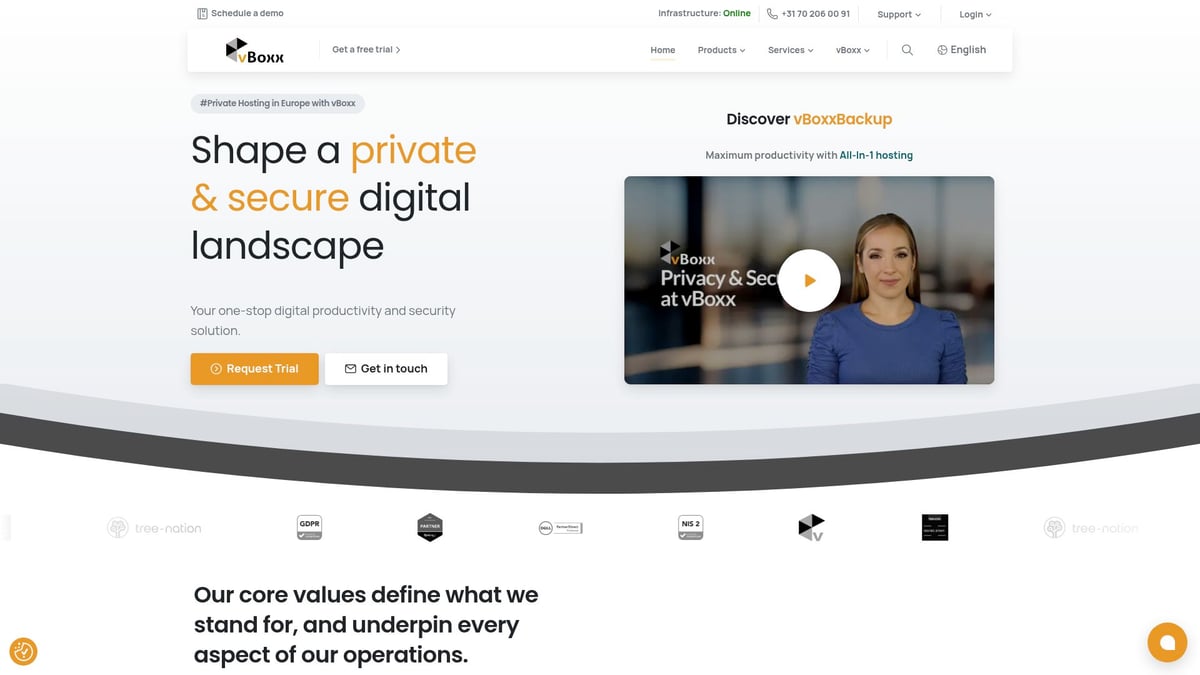
vBoxx offers a robust portfolio: cloud storage, backup, virtual servers, email, and migration support. Both SMEs and enterprises benefit from their commitment to compliance, sustainability, and tailored solutions for evolving digital demands.
Step-by-Step: Migrating to Cloud Based Hosting
Migrating to cloud based hosting is a transformative journey for any business. A systematic approach ensures a smooth transition while minimising risk and maximising value. Let us explore each step in detail, so your migration is secure, efficient, and future-ready.

Step 1: Planning Your Migration
Every successful migration to cloud based hosting begins with clear planning. Define your migration objectives. Are you seeking improved scalability, better security, or cost savings? Establish measurable goals and outcomes.
Bring together stakeholders from IT, compliance, finance, and business units. Assign roles and responsibilities for the project team.
Conduct a thorough inventory of your current infrastructure. Document servers, applications, databases, and dependencies. Identify critical systems and legacy components that may need special attention.
Create a project timeline with milestones. Account for regulatory deadlines, business cycles, and resource availability. This planning phase lays the groundwork for a seamless move to cloud based hosting.
Step 2: Choosing What to Move
Not every workload is suitable for immediate migration to cloud based hosting. Start by classifying your applications and data. Determine which are mission-critical and which can be migrated later.
Assess application compatibility with cloud environments. Some legacy systems may require refactoring or replacement. Evaluate data sensitivity and compliance requirements, especially if operating in regulated sectors.
Consider dependencies between systems. Moving interconnected applications together can reduce performance issues. This careful selection process helps reduce risk and ensures your transition to cloud based hosting is efficient.
Step 3: Selecting Migration Tools and Partners
Choosing the right tools and partners is vital for a successful migration to cloud based hosting. Popular options include Azure Migrate, AWS Migration Hub, and Google Cloud’s Transfer Service.
When evaluating migration tools, focus on automation capabilities, reporting features, and ongoing support. Automation can significantly reduce manual effort and errors.
Engage third-party consultants or managed service providers for complex migrations. Look for partners with proven expertise in your industry and with cloud based hosting environments.
Compile a shortlist of tools and partners. Compare their offerings, pricing, and references. This step helps you build a robust migration toolkit tailored to your needs.
Step 4: Preparing Your Data and Apps
Preparation is key before moving any data or applications to cloud based hosting. Begin with data cleansing, removing redundant or obsolete files. This reduces transfer times and storage costs.
Decide whether each application will be refactored, rehosted, or replaced. Refactoring can unlock cloud-native benefits, while rehosting offers a faster transition.
Test applications for compatibility and performance in the target cloud environment. Consider using sandboxes or pilot migrations.
Understanding how cloud storage works is essential at this stage, as it affects data structure and access. For a deeper look at the fundamentals, see How Cloud Storage Works.
Step 5: Executing the Migration
With planning and preparation complete, you are ready to execute your migration to cloud based hosting. Decide between a phased approach, migrating in stages, or a “big bang” migration, moving everything at once.
Phased migrations minimise business disruption and allow for incremental testing. Develop a detailed communication plan to inform stakeholders of any expected downtime or changes.
Monitor the migration process in real time. Address issues quickly to avoid delays. A real-world example: many organisations use phased migrations to keep customer-facing systems online throughout the transition to cloud based hosting.
Step 6: Post-Migration Optimisation
After moving to cloud based hosting, focus on optimisation. Monitor system performance using built-in analytics tools. Track key metrics such as uptime, latency, and resource usage.
Optimise costs by right-sizing resources and eliminating unused services. Implement auto-scaling to handle variable demand efficiently.
Train users on new systems and workflows. Provide ongoing support to resolve issues quickly. This post-migration focus ensures your cloud based hosting investment delivers lasting value.
Step 7: Ensuring Business Continuity
The final step in migrating to cloud based hosting is building resilience. Set up automated backups and disaster recovery plans. Test failover procedures regularly to confirm they work as expected.
Perform ongoing compliance monitoring, especially if your business operates in regulated industries. Schedule regular security audits and vulnerability assessments.
Document lessons learned during the migration. Use this knowledge to refine your cloud based hosting strategy and support future growth.
Security and Compliance in the Cloud: What You Need to Know
Navigating the security and compliance landscape is essential for any organisation adopting cloud based hosting. As digital threats evolve, businesses must understand both their responsibilities and the protections offered by cloud providers. This section explores the fundamentals, regulatory requirements, threat mitigation, cultural best practices, and how to select providers that keep your data safe.

Cloud Security Fundamentals
Security in cloud based hosting is built on a shared responsibility model. This means that while the provider secures the underlying infrastructure, your business is responsible for data, access, and application security.
Encryption is central to protecting data both at rest and in transit. Leading providers offer robust encryption standards, ensuring your sensitive information remains confidential. Identity and access management (IAM) streamlines user permissions, reducing unauthorised access risks.
Choosing encrypted online storage solutions is a vital step. For example, Encrypted Online Storage Solutions help businesses meet stringent compliance standards while safeguarding critical data assets.
Cloud based hosting empowers you to implement these controls efficiently, making security a core business advantage.
Compliance Requirements for 2026
The regulatory landscape for cloud based hosting is constantly evolving. By 2026, frameworks like GDPR, NIS2, and ISO 27001 will remain pivotal. Each governs how personal and sensitive data is handled, particularly for European businesses.
Data residency and localisation laws mandate that data stays within specific jurisdictions. This is critical for industries handling health, finance, or government data. Cloud based hosting providers must offer data centres within your region to comply with these rules.
Legal obligations include regular audits, transparent reporting, and clear breach notification policies. Ensuring your cloud based hosting partner meets these standards reduces risk and builds customer trust.
Protecting Against Cyber Threats
Cloud based hosting environments face a range of cyber threats, including ransomware, DDoS attacks, and insider threats. Proactive defence strategies are essential for minimising risk.
Key tools include firewalls, anti-malware software, and Security Information and Event Management (SIEM) systems. These tools monitor, detect, and respond to suspicious activity in real time. According to the Verizon DBIR 2024, 45% of breaches now involve cloud environments, highlighting the importance of robust protection.
Effective use of cloud based hosting enables quick updates and deployment of new security measures, helping your business stay ahead of emerging threats.
Building a Security-First Cloud Culture
Adopting cloud based hosting is not just a technical shift, but a cultural one. Employee awareness and training are fundamental for preventing breaches caused by human error.
Establishing clear security policies, conducting regular audits, and providing incident response drills ensures everyone understands their role in safeguarding data. A security-first mindset must be embedded at every level of your organisation.
By prioritising security within your cloud based hosting strategy, you create a resilient foundation for growth and compliance.
Choosing Trusted Cloud Providers
Selecting a cloud based hosting provider requires careful evaluation. Look for providers with internationally recognised security certifications such as ISO 27001 and SOC 2. Transparency in data handling and regular independent security audits are essential.
Ask providers about their incident response processes and how they support compliance with industry-specific regulations. Trusted partners should offer detailed documentation, rapid support, and regular updates on security practices.
By choosing wisely, you ensure your cloud based hosting environment remains secure, compliant, and ready for the future.
Cost Optimisation and Performance Management
Balancing cost with performance is critical for businesses leveraging cloud based hosting. With the right strategies, you can unlock efficiency, maintain agility, and ensure that your investment drives measurable value.
Understanding Cloud Pricing Models
Cloud based hosting offers flexible pricing models designed to suit different business needs. The most common are pay as you go, reserved, and spot instances. Pay as you go provides on demand resources, ideal for fluctuating workloads. Reserved instances offer discounted rates for long term commitments, while spot instances allow you to bid on unused capacity for short term projects.
Hidden costs can arise from bandwidth, storage, and premium support. It’s vital to compare monthly costs across providers, as pricing structures can vary significantly. According to Cloud infrastructure spending reaches $102.6 billion in Q3 2025, the market is expanding rapidly, highlighting the importance of understanding these models for effective cloud based hosting decisions.
| Model | Ideal For | Cost Structure |
|---|---|---|
| Pay as you go | Variable workloads | Usage based |
| Reserved | Predictable demand | Upfront/discount |
| Spot instances | Flexible projects | Bidding |
Strategies for Cost Control
To optimise spend on cloud based hosting, proactive management is essential. Start by right sizing resources, ensuring that you only pay for what you use. Implement auto scaling to adjust capacity dynamically, reducing waste during low demand periods.
Set clear budgets and monitor usage regularly with tools like CloudHealth or AWS Cost Explorer. Establish alerts to avoid unexpected charges. Review your subscriptions and eliminate unused services. These strategies help maintain control and maximise the value of cloud based hosting investments.
Performance Monitoring and Tuning
Effective performance management is vital for cloud based hosting success. Monitor key metrics such as latency, throughput, and uptime to ensure applications run smoothly. Automated scaling and load balancing can help handle traffic spikes without manual intervention.
Use real time monitoring tools to track resource usage and identify bottlenecks quickly. Integrate performance dashboards for visibility and faster decision making. Consistent monitoring ensures your cloud based hosting environment delivers both reliability and speed.
Maximising ROI from Cloud Investments
To get the best return from cloud based hosting, align spending with business value. Leverage reserved instances and long term contracts for predictable workloads to secure cost savings. Regularly review cloud usage and adjust commitments as your needs evolve.
Encourage collaboration between IT and finance teams to track performance against objectives. Analyse cost data after migration to identify further optimisation opportunities. A well managed cloud based hosting strategy can deliver significant savings and support ongoing business growth.
The Future of Cloud Based Hosting: Trends and Innovations for 2026
The future of cloud based hosting is rapidly approaching, bringing new opportunities and challenges for businesses in every sector. As digital transformation accelerates, staying ahead of emerging trends is crucial. In this section, we explore the innovations shaping cloud based hosting through 2026, helping you prepare for what’s next.
Edge Computing and Decentralised Cloud
Edge computing is redefining cloud based hosting by moving data processing closer to where it is generated. This reduces latency, making it ideal for applications requiring real-time decisions, such as IoT sensors or autonomous vehicles. Decentralised cloud models distribute workloads across multiple edge locations, enhancing both speed and resilience.
Use cases for edge computing in cloud based hosting include smart manufacturing, healthcare monitoring, and real-time analytics. According to MarketsandMarkets, the edge computing market is set to reach $61.14B by 2026, underscoring its growing influence. For a comprehensive overview of the biggest trends shaping the industry, see the Top 10 cloud trends for 2026.
AI and Automation in Cloud Management
Artificial intelligence is transforming cloud based hosting by automating resource allocation, monitoring, and security. AI-driven platforms predict demand, optimise infrastructure, and resolve issues before they impact users. Automated compliance checks and self-healing systems are becoming standard, reducing human error and downtime.
With cloud based hosting, businesses can leverage machine learning to tailor services and improve efficiency. The resurgence of dedicated servers, driven by AI workloads and compliance requirements, is influencing infrastructure choices. Learn more about this trend in Dedicated servers resurgence driven by AI and compliance needs.
Sustainable and Green Cloud Hosting
Sustainability is a top priority in cloud based hosting as organisations strive to reduce their environmental impact. Providers are investing in renewable energy, efficient cooling technologies, and carbon-neutral data centres. Clients increasingly demand transparency around energy sources and emissions.
Green cloud based hosting not only supports corporate social responsibility but can also lower operational costs. Many leading providers have committed to net-zero emissions, setting ambitious targets for 2026 and beyond. This focus aligns with broader shifts towards eco-friendly business practices.
Quantum Computing and Cloud Integration
Quantum computing is beginning to intersect with cloud based hosting, offering the potential to solve complex problems far beyond the reach of traditional computers. Early-stage quantum cloud services are now available, allowing researchers and innovators to experiment with new algorithms.
The integration of quantum computing into cloud based hosting could revolutionise industries such as pharmaceuticals, finance, and logistics. While mainstream adoption is still a few years away, the outlook for 2026 is promising, with significant advancements expected in both hardware and software.
The Rise of Industry-Specific Cloud Solutions
Industry-specific platforms are becoming a cornerstone of cloud based hosting, especially in regulated sectors like healthcare, finance, and manufacturing. These solutions offer tailored compliance, enhanced data sovereignty, and specialised support for unique workflows.
For example, healthcare providers require platforms that adhere to strict privacy laws, while financial institutions need robust security and audit trails. Cloud based hosting vendors are responding by developing dedicated environments that meet sector-specific needs, driving adoption among regulated industries.
Evolving Security and Privacy Standards
Security and privacy standards in cloud based hosting are evolving to address emerging threats and regulatory changes. Anticipated updates to GDPR and the introduction of the EU AI Act will require new approaches to data protection and compliance.
Advanced encryption, privacy-preserving technologies, and proactive compliance monitoring are becoming essential. Businesses using cloud based hosting must stay informed about regulatory developments and invest in solutions that future-proof their data and operations.
As you look ahead to 2026, making the right choices for your business’s digital infrastructure is more important than ever. You now understand how secure, sustainable cloud hosting can boost efficiency, keep your data safe, and support future growth. If you’re ready to see how vBoxx can help your organisation achieve these goals whether you need robust cloud storage, expert migration support, or simply want peace of mind around compliance and privacy why not experience it for yourself? Let’s take the next step together and schedule a demo to see how cloud hosting can shape your success.