
The convergence of cloud computing and open-source software has fundamentally transformed how organisations build and manage their digital infrastructure. In particular, cloud open source represents more than just a cost-saving alternative to proprietary solutions. Instead, it offers businesses unprecedented control over their data, enhanced security through transparency, and the flexibility to customise infrastructure according to specific operational requirements. Moreover, for enterprises concerned with privacy, compliance, and sustainable hosting practices, understanding cloud open source technologies has become essential for strategic decision-making in 2026.
Understanding Cloud Open Source Technologies
Cloud open source refers to cloud computing platforms, tools, and services built on open-source software principles. In other words, these technologies allow organisations to deploy, manage, and scale cloud infrastructure while simultaneously maintaining full visibility into the underlying code.
The key advantage, therefore, lies in transparency. Specifically, when your infrastructure relies on open-source components, your technical teams can inspect every line of code, identify potential vulnerabilities, and implement customised security measures. As a result, this level of control proves invaluable for businesses handling sensitive data or operating within strictly regulated industries.
Key characteristics of cloud open source platforms include:
- Complete access to source code for audit and modification
- Community-driven development with global contributor networks
- Freedom from vendor lock-in and proprietary restrictions
- Cost structures based on infrastructure rather than licensing fees
- Rapid innovation cycles driven by collaborative development
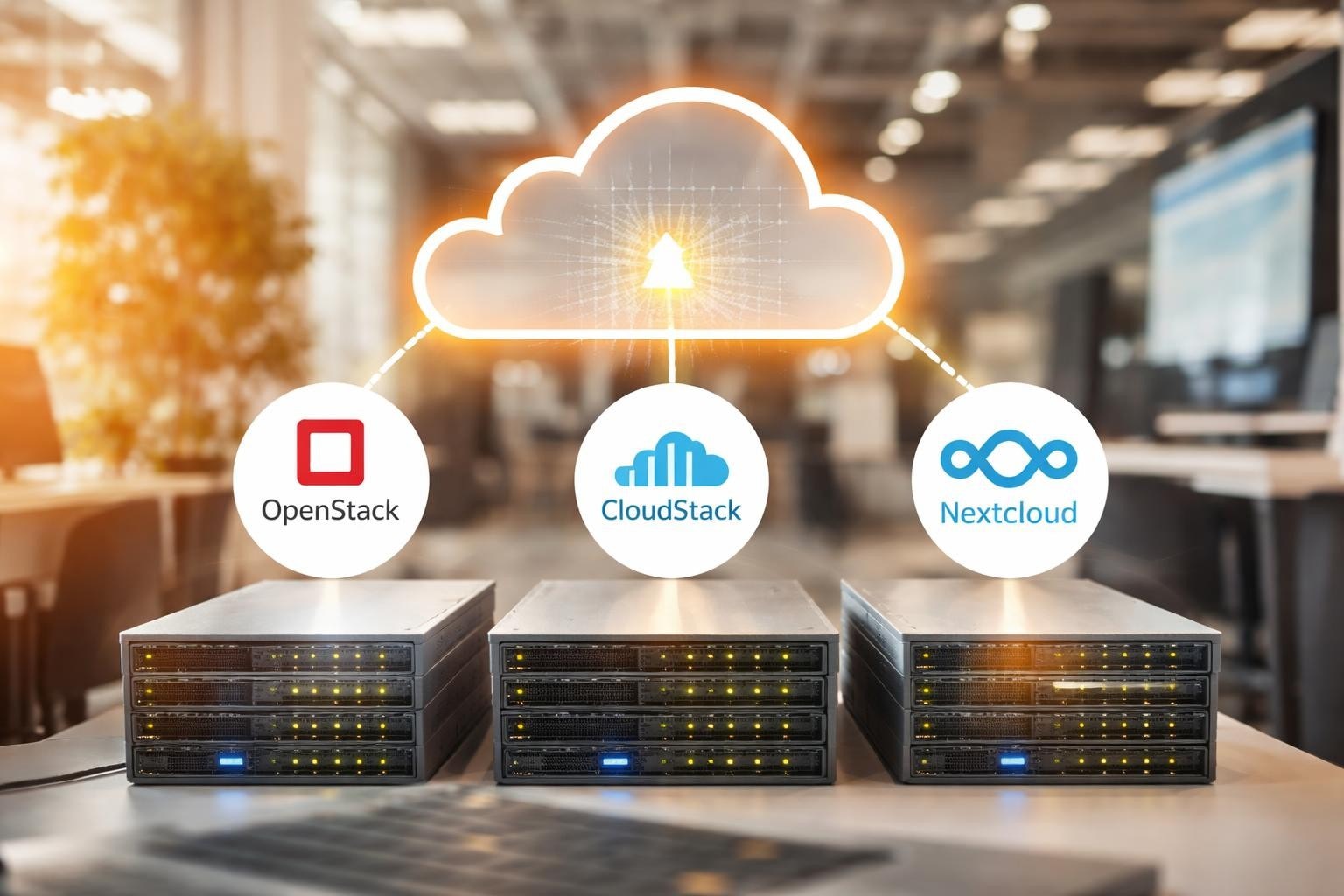
Major platforms like OpenStack have established themselves as enterprise-grade solutions, providing Infrastructure-as-a-Service capabilities that rival proprietary offerings. Similarly, Apache CloudStack enables organisations to deploy and manage extensive networks of virtual machines with sophisticated orchestration capabilities.

Security Advantages in Open Source Cloud Infrastructure
Security through obscurity has long been debunked as an effective protection strategy. In contrast, cloud open source takes the opposite approach, focusing on security through transparency and collective scrutiny.
For example, when thousands of developers worldwide examine code, vulnerabilities surface faster than in closed-source environments. Moreover, the collaborative nature of open-source development means patches and updates often arrive within hours of vulnerability disclosure, especially for widely adopted platforms. Consequently, organisations benefit from faster remediation and stronger overall security.
Audit Capabilities and Compliance
For businesses requiring stringent compliance with regulations such as GDPR, HIPAA, or ISO 27001, the ability to audit every component of your cloud infrastructure provides substantial advantages. You can verify exactly where data resides, how it’s processed, and what security measures protect it at rest and in transit.
Google’s Assured Open Source Software service exemplifies how enterprises can leverage trusted open-source packages whilst maintaining enhanced supply chain security. This approach combines the flexibility of open-source with the rigorous security standards demanded by regulated industries.
Platform security extends beyond the infrastructure layer. Collaboration tools like Nextcloud demonstrate how open-source principles can deliver secure file sharing and content collaboration whilst keeping data under organisational control. Unlike proprietary cloud storage services, Nextcloud allows businesses to host their own instances, ensuring complete data sovereignty.
| Security Aspect | Cloud Open Source | Proprietary Cloud |
|---|---|---|
| Code Transparency | Full access for security audits | Limited or no visibility |
| Vulnerability Response | Community-driven, rapid patches | Vendor-dependent timelines |
| Customisation | Complete security hardening possible | Restricted to vendor options |
| Data Location Control | Self-hosted or selected providers | Vendor-determined locations |
| Compliance Verification | Direct code and infrastructure audit | Trust-based on vendor claims |
The combination of transparency and control makes cloud open source particularly suitable for organisations prioritising privacy and security, much like the approach taken by providers offering encrypted cloud services.
Infrastructure Management and Orchestration Tools
Effective cloud infrastructure requires sophisticated orchestration tools that can manage complex deployments across multiple environments. In this context, cloud open source provides several mature platforms for this purpose.
For instance, OpenTofu, a community-driven infrastructure-as-code tool, represents the latest evolution in open-source cloud management. Specifically, as a drop-in replacement for Terraform, OpenTofu demonstrates how community governance can preserve and enhance essential tools when licensing changes threaten accessibility. Consequently, organisations can maintain reliable infrastructure management while benefiting from the transparency and flexibility of open-source solutions.
Platform-as-a-Service Solutions
Whilst Infrastructure-as-a-Service platforms provide foundational capabilities, Cloud Foundry operates at a higher abstraction level. This multi-cloud Platform-as-a-Service enables developers to deploy and scale applications without managing underlying infrastructure complexities.
Benefits of PaaS open-source platforms include:
- Accelerated application deployment cycles
- Automated scaling based on demand patterns
- Built-in service integration for databases, messaging, and monitoring
- Abstraction from infrastructure management overhead
- Consistent deployment processes across development, testing, and production environments
For organisations seeking granular control, specialised solutions like IncludeOS provide minimal unikernel operating systems designed specifically for cloud services. These lightweight systems reduce attack surfaces by eliminating unnecessary operating system components, improving both security and performance.
Cost Management and Resource Optimisation
Traditional cloud services often present unpredictable costs as organisations scale. Licensing fees, per-user charges, and proprietary tool requirements can escalate expenses rapidly. Cloud open source transforms this economic model by eliminating licensing costs and providing transparent resource utilisation metrics.
Resource optimisation begins with understanding actual infrastructure requirements. Open-source monitoring tools integrate seamlessly with cloud platforms, providing detailed insights into:
- Compute resource utilisation patterns
- Storage consumption and growth trends
- Network bandwidth usage and bottlenecks
- Application performance metrics
- Cost allocation across departments or projects
These insights enable precise capacity planning and resource allocation. Rather than over-provisioning to accommodate proprietary platform limitations, organisations can right-size infrastructure based on actual requirements.
Total Cost of Ownership Considerations
Evaluating cloud open source requires examining total cost of ownership beyond surface-level comparisons. Whilst eliminating licensing fees reduces direct costs, organisations must account for internal expertise requirements and potential support contracts.
| Cost Factor | Traditional Cloud | Cloud Open Source |
|---|---|---|
| Software Licensing | Ongoing per-user or capacity fees | Zero licensing costs |
| Infrastructure Hardware | Vendor-specified requirements | Flexible hardware choices |
| Technical Expertise | Vendor training and certifications | Community resources and documentation |
| Support Options | Mandatory vendor support contracts | Optional commercial support or community |
| Migration Costs | High (vendor lock-in) | Lower (standards-based) |
| Long-term Scaling | Predictable vendor pricing increases | Infrastructure costs only |
Many organisations find that combining cloud open source platforms with professional cloud hosting services optimises the cost-expertise balance. This approach provides open-source flexibility whilst leveraging specialist knowledge for deployment, security hardening, and ongoing maintenance.
Data Sovereignty and Privacy Compliance
Data sovereignty has emerged as a critical concern in 2026, especially for European organisations navigating increasingly complex privacy regulations. In this context, cloud open source provides architectural flexibility to address these requirements while still maintaining operational efficiency.
For example, by deploying open-source cloud platforms on infrastructure within specific geographic boundaries, organisations can ensure data never crosses jurisdictional lines. As a result, this approach proves essential for businesses handling personal information, financial records, or intellectual property subject to regional data protection laws. Consequently, companies can achieve compliance while retaining the benefits of cloud scalability and control.
Self-Hosted Collaboration Platforms
Solutions like ownCloud enable organisations to establish private file-sharing and collaboration environments without relying on external service providers. This self-hosted approach ensures complete control over data location, access policies, and retention practices.
Self-hosting doesn’t necessarily mean managing physical hardware. Many organisations deploy open-source platforms on virtual private servers within trusted data centres, maintaining data sovereignty whilst benefiting from professional infrastructure management.
Privacy advantages of self-hosted cloud open source:
- Complete audit trails for data access and modifications
- Customisable encryption policies for data at rest and in transit
- Integration with existing identity management systems
- Compliance-focused retention and deletion policies
- Protection from third-party data mining and analytics
The flexibility to choose deployment locations becomes particularly valuable when addressing privacy concerns similar to those highlighted in discussions about data privacy challenges affecting major technology platforms.

Enterprise Deployment and Management Platforms
Enterprise adoption of cloud open source requires platforms capable of managing complex, multi-tier services across diverse infrastructure environments. openQRM exemplifies comprehensive management platforms that orchestrate storage, networking, virtualisation, monitoring, and security implementations within unified interfaces.
These orchestration platforms address common enterprise challenges:
- Hybrid cloud management across on-premises and public cloud resources
- Resource provisioning automation reducing deployment times from days to minutes
- Service catalogue creation enabling self-service infrastructure requests
- Chargeback and showback for accurate cost allocation across business units
- Compliance automation ensuring configurations meet regulatory requirements
For organisations with specific regulatory requirements, private cloud solutions built on cloud open source frameworks offer dedicated infrastructure with public cloud conveniences. Services like Rackspace OpenStack Business demonstrate how managed private cloud offerings can address regulated workloads demanding high performance, security, and compliance.
Integration with Existing Systems
Successful cloud open source adoption rarely involves complete infrastructure replacement. Instead, most organisations pursue gradual migration strategies, thereby integrating open-source platforms with existing systems through well-defined interfaces and standards.
Moreover, modern cloud open source platforms support industry-standard APIs, which enable seamless integration with legacy applications, proprietary tools, and hybrid infrastructure configurations. As a result, this interoperability reduces migration risks and allows organisations to evolve infrastructure incrementally while still maintaining operational continuity.
Green Hosting and Sustainable Cloud Practices
Environmental sustainability has transitioned from an optional consideration to a strategic imperative. In this regard, cloud open source contributes to sustainable hosting practices through improved resource efficiency and reduced hardware requirements.
For example, open-source platforms typically consume fewer computational resources than proprietary alternatives, partly because of streamlined code and partly due to the absence of telemetry and licensing verification overhead. Consequently, this efficiency translates directly into reduced energy consumption across data centre operations, thereby supporting both environmental goals and operational cost savings.
Sustainability benefits of cloud open source include:
- Lower computational overhead reducing electricity consumption
- Longer hardware lifecycles through efficient resource utilisation
- Flexibility to deploy on energy-efficient infrastructure
- Reduced cooling requirements from optimised workload distribution
- Transparency enabling accurate carbon footprint measurement
Organisations committed to environmental responsibility can combine cloud open source platforms with green hosting providers operating renewable energy-powered data centres. This combination delivers both technological flexibility and environmental stewardship.
Community Support and Commercial Services
One common concern about cloud open source centres on support availability compared to proprietary vendors offering comprehensive service agreements. However, the reality proves more nuanced than simple comparisons suggest.
For instance, active open-source communities provide extensive documentation, troubleshooting guides, and peer support through forums and communication channels. As a result, for many common scenarios, community resources prove faster and more comprehensive than traditional vendor support tickets.
Moreover, when organisations require guaranteed response times and dedicated technical assistance, numerous commercial support options exist. Specifically, companies specialising in specific cloud open source platforms offer support contracts comparable to proprietary vendor agreements, while still maintaining the underlying flexibility and control that initially attracted organisations to open source. Consequently, businesses can benefit from both robust support and the advantages of open-source infrastructure.
| Support Option | Availability | Cost | Response Time |
|---|---|---|---|
| Community Forums | 24/7 | Free | Variable (often rapid) |
| Official Documentation | 24/7 | Free | Self-service |
| Commercial Support Contracts | Business hours or 24/7 | Subscription-based | Guaranteed SLAs |
| Managed Service Providers | 24/7 | Service-dependent | Contractual agreements |
| Internal Expertise | Business hours | Salary costs | Immediate |
Many organisations adopt tiered support approaches, relying on internal expertise and community resources for routine matters whilst maintaining commercial support contracts for critical systems requiring guaranteed assistance.
Migration Strategies and Risk Management
Transitioning from proprietary cloud platforms to cloud open source requires careful planning and, therefore, risk management. In particular, successful migrations follow structured approaches that not only minimise disruption but also establish robust new infrastructure. As a result, organisations can achieve a smooth transition while maintaining operational continuity and security.
Phased Migration Approach
Rather than attempting complete infrastructure replacement, effective migration strategies typically involve:
- Assessment and inventory of existing workloads and dependencies
- Pilot project selection choosing non-critical applications for initial migration
- Infrastructure preparation establishing cloud open source platforms in parallel
- Application migration moving workloads incrementally with thorough testing
- Optimisation and refinement tuning performance and security configurations
- Legacy decommissioning retiring proprietary systems after successful transition
This phased approach reduces risks by validating cloud open source capabilities before committing critical workloads. Organisations gain operational experience whilst maintaining fallback options should unexpected challenges emerge.
Professional consultation services prove valuable during migration planning and execution, particularly for organisations without extensive open-source expertise. Specialist providers offer migration services that transfer knowledge whilst establishing robust infrastructure, enabling internal teams to manage ongoing operations effectively.
Future Developments in Cloud Open Source
The cloud open source ecosystem continues evolving rapidly, and consequently, several trends are shaping future developments. For example, container orchestration platforms have matured significantly, thereby enabling sophisticated application deployment patterns across distributed infrastructure.
Additionally, edge computing integration represents another significant development area. As organisations deploy computing resources closer to data sources and end users, cloud open source platforms provide the flexibility to establish consistent management frameworks both across centralised data centres and distributed edge locations.
Furthermore, artificial intelligence and machine learning workloads increasingly drive infrastructure requirements. In response, cloud open source platforms are adapting to support GPU acceleration, distributed training frameworks, and inference optimisation, thereby democratising access to advanced computational capabilities.
At the same time, security enhancements continue receiving intensive development attention. Specifically, zero-trust architectures, confidential computing capabilities, and advanced encryption implementations are being integrated into cloud open source platforms, thus addressing evolving threat landscapes and compliance requirements.
Ultimately, the combination of community innovation and commercial investment ensures cloud open source platforms will continue advancing, thereby offering enterprises robust alternatives to proprietary cloud services while still maintaining the transparency, control, and flexibility that define open-source principles.
Cloud open source platforms provide businesses with transparent, flexible, and cost-effective alternatives to proprietary cloud services whilst maintaining enterprise-grade capabilities for security, compliance, and performance. Whether you’re seeking enhanced data sovereignty, reduced vendor lock-in, or sustainable hosting practices, open-source cloud technologies offer compelling advantages. vBoxx combines the benefits of cloud open source flexibility with professional hosting services, delivering secure, privacy-focused infrastructure backed by expert support and green hosting practices. Explore how vBoxx can help your organisation leverage cloud open source technologies whilst maintaining the reliability and security your business demands.