

Businesses across Europe are confronting a fundamental infrastructure decision in 2026: selecting the right cloud storage platform to underpin their digital operations. Furthermore, the choice extends far beyond simple capacity and pricing. Modern enterprises must balance regulatory compliance, data sovereignty, security architecture, and long-term scalability whilst navigating an increasingly complex vendor landscape. Therefore, understanding the strategic dimensions of cloud storage platforms has become essential for IT leaders, decision-makers, and anyone responsible for protecting and managing organizational data in a privacy-conscious environment.
Understanding Cloud Storage Platform Architecture
A cloud storage platform represents more than a repository for files. Moreover, it comprises a complete ecosystem of storage infrastructure, access controls, APIs, security layers, and management tools that collectively enable organizations to store, retrieve, and process data over the internet. Nevertheless, not all platforms are built alike, and the underlying architecture profoundly influences performance, cost, and compliance outcomes.
Storage Models and Their Trade-Offs
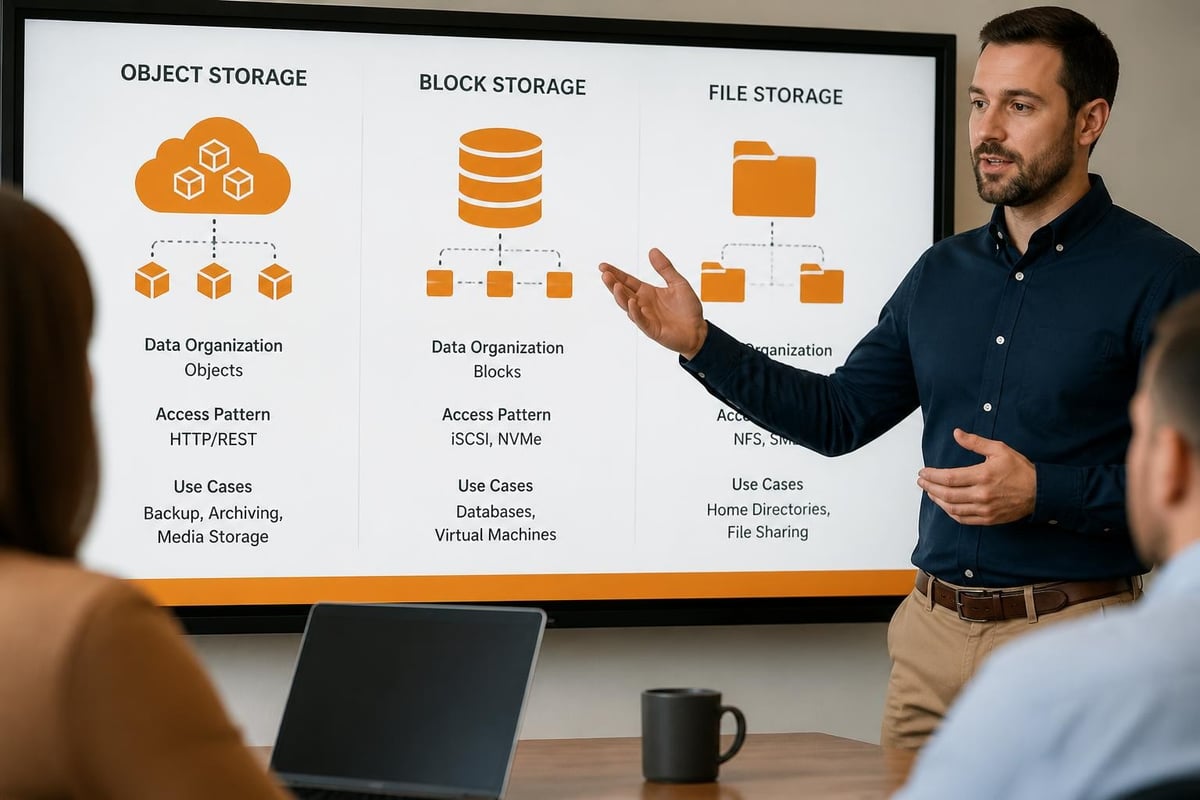
Three primary storage models underpin most cloud storage platforms, each suited to specific workloads and business requirements:
- Object storage for unstructured data, media files, backups, and archival content
- Block storage for databases, virtual machines, and transactional applications
- File storage for shared directories, collaboration tools, and legacy application compatibility
Furthermore, choosing the appropriate model requires understanding your data access patterns and application needs. Google's documentation on storage types provides a vendor-neutral comparison that helps clarify these distinctions. In addition, many platforms now offer hybrid approaches, allowing organisations to leverage multiple storage tiers within a single environment.
| Storage Model | Best Use Cases | Access Method | Typical Cost |
|---|---|---|---|
| Object | Backups, archives, media | HTTP/API | Low |
| Block | Databases, VMs | Direct attach | Medium-High |
| File | Collaboration, shared drives | NFS/SMB | Medium |
Infrastructure Placement and Sovereignty
The physical location of your cloud storage platform carries profound legal and operational implications. Therefore, businesses operating in the European Union must carefully evaluate data residency requirements under GDPR. In addition, the US CLOUD Act grants American authorities access to data held by US-based companies, regardless of where that data physically resides.
European organisations increasingly prioritize data sovereignty to ensure their information remains under predictable legal jurisdiction. Moreover, platforms operating their own infrastructure in European data centers, such as those certified to ISO 27001 standards, offer greater control over compliance and privacy outcomes. Nevertheless, sovereignty extends beyond geography to encompass operational independence, contractual protections, and technological safeguards against third-party access.
Evaluating Security and Compliance Requirements
Security constitutes the cornerstone of any enterprise cloud storage platform selection. Furthermore, the European regulatory landscape demands rigorous data protection measures, transparent processing activities, and robust technical safeguards.
Encryption Standards and Key Management
Modern cloud storage platforms must implement encryption both in transit and at rest. In addition, the architecture of key management determines whether the provider can access your data. Therefore, organisations handling sensitive information should prioritize platforms offering:
- 256-bit AES encryption as the baseline standard
- Zero-knowledge architecture where encryption keys remain exclusively with the customer
- Hardware security module (HSM) protection for key storage
- Client-side encryption options for maximum control
Moreover, the OWASP cloud storage testing guidance outlines common vulnerabilities and security testing methodologies that organisations should consider when evaluating platform security. Nevertheless, encryption alone proves insufficient without proper access controls, audit logging, and incident response capabilities.
Regulatory Alignment and Certifications
Compliance requirements vary significantly by industry and jurisdiction. Therefore, businesses must verify that their chosen cloud storage platform maintains relevant certifications and undergoes regular independent audits. Furthermore, guidance from the Irish Data Protection Commission provides practical frameworks for assessing cloud service providers' GDPR compliance.
Key certifications to evaluate include:
- ISO 27001 for information security management
- SOC 2 Type II for operational controls
- GDPR compliance documentation and data processing agreements
- Industry-specific certifications (HIPAA, PCI-DSS) where applicable
In addition, European organisations should review the European Commission's Cloud Sovereignty Framework to understand sovereignty criteria, data confinement principles, and vendor lock-in considerations that influence long-term platform viability.
Cost Optimization and Financial Planning
Cloud storage platform expenses extend well beyond the published per-gigabyte rates. Moreover, hidden costs in egress fees, API calls, and operational overhead can dramatically inflate actual expenditure. Therefore, comprehensive financial planning requires understanding the complete cost structure.
Understanding Total Cost of Ownership
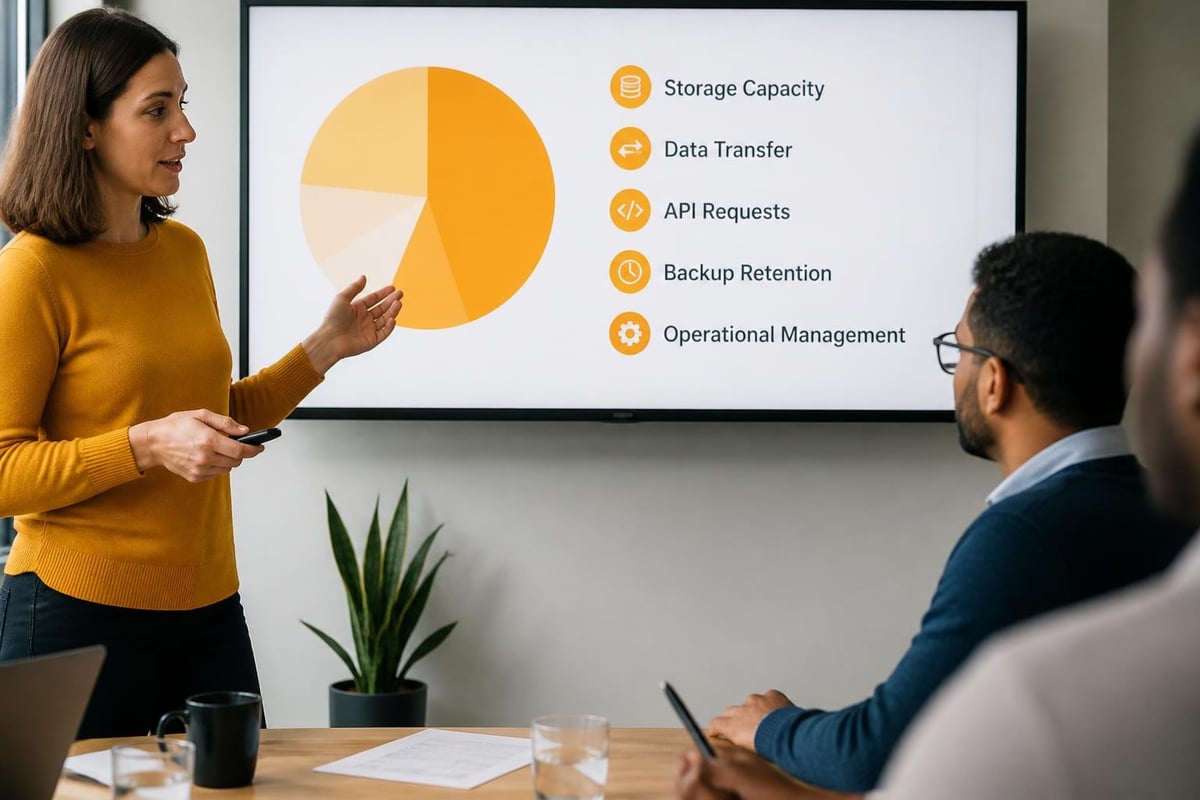
A recent academic survey on cloud storage cost optimization identifies multiple cost dimensions that organisations must consider:
- Storage capacity charges based on volume consumed
- Data transfer fees for uploads, downloads, and inter-region movement
- Request and transaction costs for API operations
- Management overhead including monitoring, backup, and administration
- Compliance and audit expenses for maintaining regulatory alignment
Furthermore, AWS provides detailed guidance on cost optimization within cloud foundations, offering practical strategies applicable across multiple platforms. Nevertheless, European businesses should factor in currency exchange risk and the potential for pricing changes tied to foreign economic conditions.
Strategies for Cost Control
Effective cost management for your cloud storage platform requires continuous monitoring and optimization. In addition, several strategies consistently deliver measurable savings:
- Implement lifecycle policies to automatically move aging data to cheaper storage tiers
- Review access patterns and eliminate redundant or obsolete data
- Negotiate volume commitments for predictable, long-term workloads
- Monitor egress patterns and optimize data retrieval workflows
- Consolidate storage silos to reduce management overhead and improve utilization
Moreover, the AWS Well-Architected Framework's cost optimization pillar provides detailed architectural patterns for controlling expenses whilst maintaining performance and reliability. Therefore, organizations should establish regular cost review cycles and assign clear accountability for storage spending.
Operational Considerations and Integration
A cloud storage platform functions as part of a broader technology ecosystem. Furthermore, its ability to integrate seamlessly with existing applications, workflows, and security tools directly impacts organizational productivity and user adoption.
API Design and Developer Experience
Modern platforms expose comprehensive APIs that enable custom integrations, automated workflows, and programmatic management. Nevertheless, API design quality varies significantly, affecting development velocity and maintenance burden. Therefore, evaluation criteria should include:
| API Feature | Business Impact | Evaluation Questions |
|---|---|---|
| RESTful design | Easier integration | Does it follow standard conventions? |
| Documentation quality | Faster implementation | Are examples clear and comprehensive? |
| SDK availability | Reduced development time | Are preferred languages supported? |
| Versioning strategy | Future compatibility | How are breaking changes managed? |
| Rate limits | Application scalability | Are limits appropriate for your workload? |
In addition, Microsoft's architecture patterns catalog demonstrates how storage patterns integrate into larger hybrid and multicloud architectures, providing useful references for platform evaluation.
Backup, Recovery, and Business Continuity
Your cloud storage platform itself requires backup protection. Moreover, relying solely on vendor replication proves insufficient for complete data protection. Therefore, organisations should implement the 3-2-1 backup rule even for cloud-resident data:
- Three copies of data
- Two different storage media types
- One copy stored off-site
Furthermore, European backup solutions that keep data within predictable jurisdictions provide an additional layer of sovereignty and compliance assurance. Nevertheless, backup architecture must balance recovery time objectives (RTO) and recovery point objectives (RPO) against cost and complexity.

Platform Selection Framework
Choosing the optimal cloud storage platform requires a structured evaluation process. Furthermore, decision criteria must align with your organization's risk tolerance, regulatory obligations, and operational requirements.
Critical Evaluation Dimensions
When assessing potential cloud storage platforms, consider these fundamental dimensions:
Technical requirements:
- Storage capacity projections for 12, 24, and 36 months
- Performance requirements (throughput, latency, IOPS)
- Integration needs with existing applications
- Supported protocols and access methods
Compliance and legal:
- Data residency and sovereignty requirements
- Industry-specific regulatory obligations
- Contractual data protection guarantees
- Audit and certification maintenance
Operational factors:
- Management interface usability and automation capabilities
- Support quality, response times, and language availability
- Migration assistance and professional services
- Vendor financial stability and roadmap transparency
Moreover, organisations should conduct proof-of-concept testing with realistic workloads before committing to long-term contracts. In addition, evaluating platforms that offer comprehensive demonstrations helps teams understand practical capabilities beyond marketing materials.
Avoiding Vendor Lock-In
Platform independence preserves strategic flexibility and negotiating leverage. Therefore, organisations should prioritize cloud storage platforms that support:
- Standard protocols (S3-compatible APIs, WebDAV, CalDAV, CardDAV)
- Data portability with straightforward export mechanisms
- Open-source foundations that reduce proprietary dependencies
- Multi-cloud strategies enabling workload distribution
Nevertheless, complete vendor independence often conflicts with platform-specific features that deliver competitive advantages. Therefore, organizations must thoughtfully balance standardization with differentiation based on their specific risk profile and business strategy.
Security Architecture Best Practices
Implementing a cloud storage platform securely requires comprehensive controls spanning network, application, and data layers. Furthermore, ENISA's technical guidance on cybersecurity risk management provides authoritative European frameworks for cloud security and resilience.
Access Control and Identity Management
Robust access controls form the foundation of cloud storage platform security:
- Multi-factor authentication (MFA) enforced for all user accounts
- Role-based access control (RBAC) aligning permissions with job functions
- Single sign-on (SSO) integration for centralized identity management
- Least privilege principles limiting access to only required resources
- Regular access reviews to identify and remove orphaned permissions
In addition, organisations should implement comprehensive audit logging that captures all access events, configuration changes, and administrative actions. Moreover, security monitoring tools should automatically alert on suspicious patterns or policy violations.
Data Classification and Protection
Not all organizational data requires identical protection levels. Therefore, implementing a tiered classification scheme allows proportionate security controls whilst optimizing costs:
- Public - No confidentiality requirements, minimal controls
- Internal - Limited distribution, basic access controls
- Confidential - Restricted access, encryption required
- Restricted - Highly sensitive, maximum protection measures
Furthermore, classification drives decisions about storage location, encryption methods, retention periods, and access restrictions. Nevertheless, classification programmes require ongoing governance, user training, and automated enforcement tools to remain effective.
Advanced Features and Differentiation
Leading cloud storage platforms increasingly differentiate through value-added capabilities beyond basic file storage. Moreover, these features can deliver significant productivity gains and competitive advantages.
Intelligent Search and Document Processing
Modern platforms integrate artificial intelligence to enhance information retrieval and knowledge management. In addition, capabilities such as:
- Full-text search across all stored documents
- Semantic search understanding intent rather than exact keywords
- Automatic tagging based on content analysis
- Metadata extraction from documents and media files
Furthermore, platforms that combine storage with AI-assisted document capabilities, such as automated summarization and drafting assistance, enable teams to extract greater value from their information assets. Nevertheless, organisations must verify that AI processing respects data privacy requirements and occurs within appropriate jurisdictions.
Collaboration and Workflow Integration
Cloud storage platforms increasingly function as collaboration hubs. Therefore, integrated features such as:
- Real-time co-editing of documents
- Version control and conflict resolution
- Comment threads and review workflows
- eIDAS-compliant electronic signatures
- Mobile access with offline synchronization
Moreover, platforms that unify storage, communication, and collaboration reduce tool sprawl and simplify user experience. Nevertheless, integration depth must balance against vendor lock-in concerns discussed earlier.
Implementation and Migration Planning
Successfully deploying a cloud storage platform requires careful planning, testing, and change management. Furthermore, migration from legacy systems or competing platforms presents technical and organizational challenges.
Migration Methodology
Structured migration approaches minimize disruption and data loss risk:
- Discovery and assessment - Inventory existing data, applications, and dependencies
- Architecture design - Define target state, folder structures, and permissions
- Pilot migration - Test with non-critical data to validate processes
- Phased rollout - Migrate user groups incrementally with support readiness
- Validation and cutover - Verify data integrity and decommission legacy systems
In addition, many European providers offer free migration services that handle technical complexity whilst ensuring data remains within compliant jurisdictions throughout the transition. Moreover, planning should include rollback procedures in case unforeseen issues emerge during migration.
Change Management and User Adoption
Technology deployment succeeds only when users embrace new tools. Therefore, comprehensive change management should include:
- Executive sponsorship communicating strategic importance
- User training tailored to different roles and technical proficiency levels
- Champion networks of early adopters providing peer support
- Clear communication about benefits, timelines, and support resources
- Feedback mechanisms to identify and resolve adoption barriers
Nevertheless, even excellent platforms face resistance without addressing the human dimension of technology change. Therefore, organisations should allocate sufficient resources to training, communication, and support activities.
Selecting and implementing the right cloud storage platform requires balancing technical capabilities, compliance requirements, cost considerations, and operational fit. Organizations that prioritize data sovereignty, security architecture, and transparent vendor relationships position themselves for sustainable success in an increasingly privacy-conscious environment. vBoxx delivers precisely this combination through European infrastructure, ISO 27001-certified data centers in the Netherlands, and a comprehensive suite including secure cloud storage, communication tools, and password management, all built on GDPR-compliant foundations outside US CLOUD Act jurisdiction. Explore how vBoxx can modernize your digital infrastructure whilst keeping your data under European legal protection.