
Small and medium-sized enterprises face an increasingly complex threat landscape in 2026, as cybercriminals target businesses of all sizes with sophisticated attacks. However, many SME owners mistakenly believe their organisations are too small to attract attention from hackers; in reality, statistics consistently show that smaller businesses are disproportionately affected by data breaches, ransomware attacks, and phishing campaigns. Therefore, implementing robust cybersecurity for SMEs is no longer optional but instead a fundamental requirement for business continuity, customer trust, and regulatory compliance. In this context, this comprehensive guide explores essential security measures, practical strategies, and cost-effective solutions that enable smaller organisations to protect their digital assets without requiring enterprise-level budgets.
Understanding the Cybersecurity Threat Landscape
Cyber threats have evolved dramatically over recent years, as attackers develop increasingly sophisticated methods to exploit vulnerabilities in business systems. In particular, SMEs represent attractive targets because they often lack dedicated security teams, while still maintaining valuable customer data, intellectual property, and financial information. As a result, these vulnerabilities make smaller organisations more susceptible to cyberattacks and potential data breaches.
Common Threats Facing Small Businesses
Ransomware attacks continue to dominate the threat landscape, with criminals encrypting business-critical data and demanding payment for its release. These attacks can paralyse operations for days or weeks, resulting in significant financial losses and reputational damage.
Phishing campaigns remain the most common attack vector, with employees receiving fraudulent emails designed to steal credentials or install malware. Modern phishing attempts are remarkably convincing, often impersonating trusted suppliers, clients, or internal executives.
Supply chain vulnerabilities emerge when attackers compromise third-party vendors or service providers to gain access to your systems. The SMESEC project provides valuable frameworks for identifying and mitigating these interconnected risks.
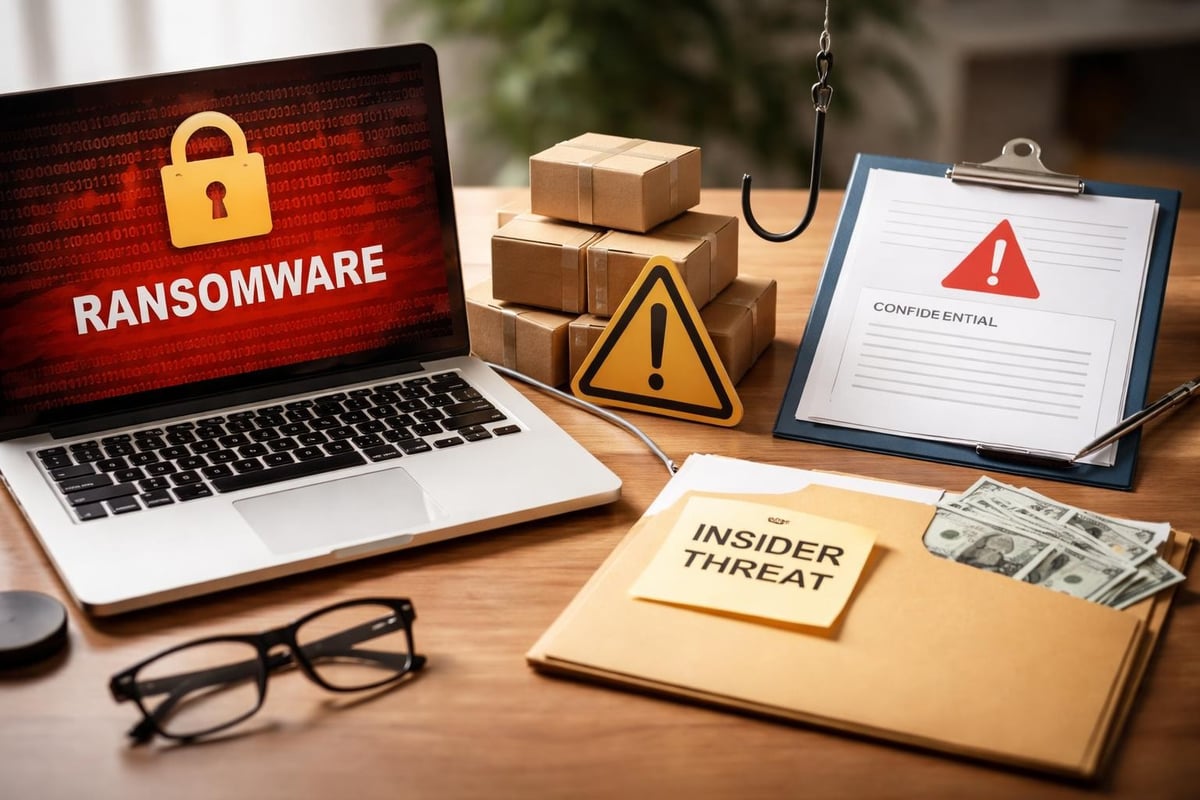
Business email compromise (BEC) attacks involve criminals gaining access to email accounts to authorize fraudulent payments or redirect transactions. These sophisticated scams have cost businesses billions globally and continue to increase in frequency.
| Threat Type | Average Cost | Recovery Time | Prevention Difficulty |
|---|---|---|---|
| Ransomware | £35,000-£120,000 | 2-4 weeks | Moderate |
| Phishing | £8,000-£45,000 | 1-2 weeks | Low-Moderate |
| BEC | £60,000-£200,000 | 3-6 weeks | Moderate-High |
| Data Breach | £25,000-£85,000 | 2-5 weeks | Moderate |
Building Your Security Foundation
Establishing effective cybersecurity for SMEs begins with implementing fundamental security controls that address the most common vulnerabilities. In particular, these foundational measures provide significant protection while requiring minimal technical expertise. As a result, organisations can strengthen their security posture without the need for complex or costly implementations.
Essential Security Controls
Multi-factor authentication (MFA) represents one of the most effective security measures available, preventing unauthorised access even when passwords are compromised. Implementing MFA across all business applications and systems should be a top priority.
Regular software updates and patch management close known security vulnerabilities that attackers routinely exploit. Establishing a systematic approach to updates ensures your systems remain protected against emerging threats.
Strong password policies require employees to create complex, unique passwords for each system. Password managers simplify this process whilst maintaining security standards.
Network segmentation isolates critical systems and sensitive data from general business networks, limiting the potential damage from successful attacks. Even simple network separation between guest Wi-Fi and business systems provides meaningful protection.
- Implement firewall protection at network boundaries
- Deploy antivirus and anti-malware solutions on all devices
- Enable automatic security updates where possible
- Restrict administrative privileges to essential personnel only
- Maintain offline backups of critical data
Data Protection and Encryption
Protecting sensitive information requires implementing encryption both in transit and at rest. In particular, modern encrypted cloud services ensure that data remains secure even if storage systems are compromised. As a result, organisations significantly reduce the risk of unauthorised access to sensitive information.
Moreover, developing a comprehensive data classification system helps identify which information requires the highest level of protection. For example, not all data demands the same security measures, and understanding these distinctions enables more efficient resource allocation.
In addition, regular backup procedures ensure business continuity following security incidents. Specifically, the 3-2-1 backup rule recommends maintaining three copies of data on two different media types, with one copy stored off-site.
Developing Security Awareness and Culture
Technical controls alone cannot provide complete protection against cyber threats. In fact, human factors remain the weakest link in most security frameworks, therefore making employee education and awareness essential components of effective cybersecurity for SMEs. Consequently, organisations must invest in training programmes to ensure staff can recognise and respond to potential threats.
Staff Training and Education
Comprehensive security awareness training equips employees to recognize and respond appropriately to potential threats. In particular, training programmes should cover phishing identification, safe browsing practices, password hygiene, and incident reporting procedures.
Moreover, simulated phishing exercises test employee vigilance whilst providing valuable learning opportunities. For example, these controlled tests identify vulnerable individuals who require additional training whilst reinforcing best practices across the organisation.
In addition, creating a security-conscious culture encourages employees to report suspicious activities without fear of reprimand. As a result, many successful attacks that could have been prevented are stopped earlier when staff feel comfortable raising alarms.
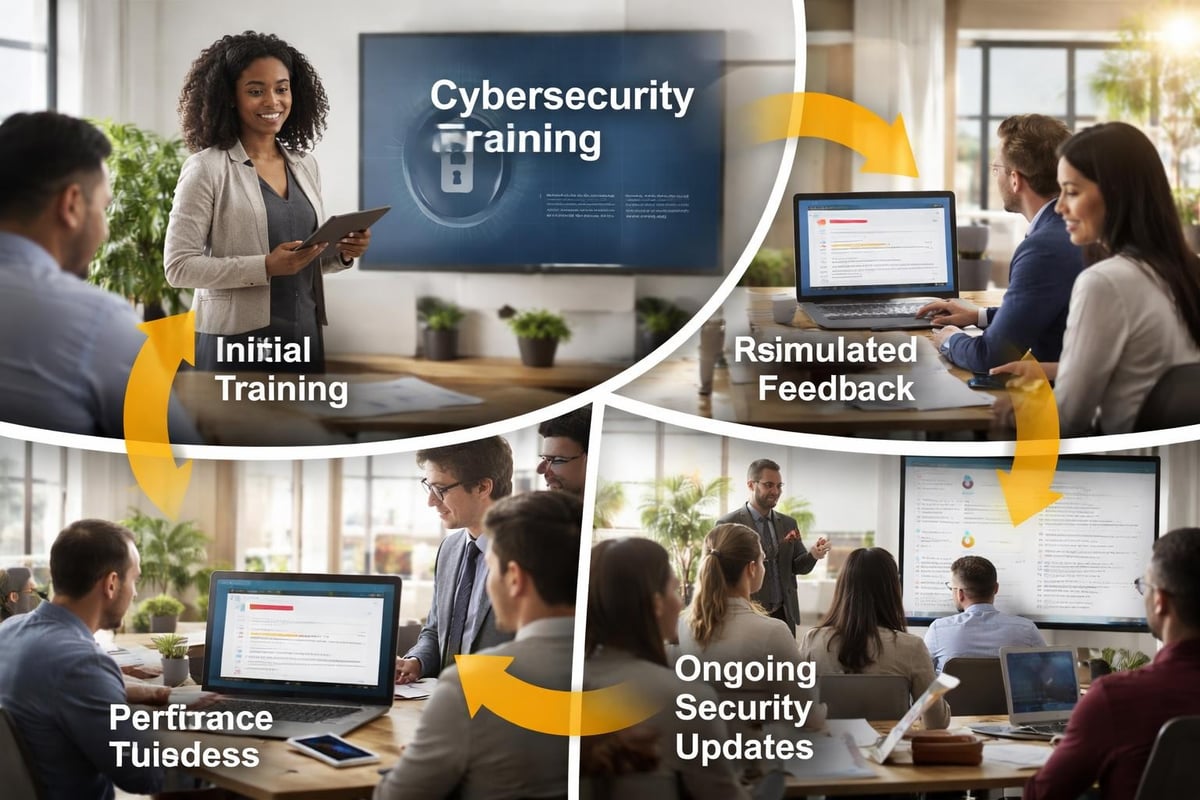
- Conduct security awareness training during employee onboarding
- Provide quarterly refresher sessions on emerging threats
- Share security tips through regular internal communications
- Recognize and reward security-conscious behaviour
- Test knowledge through simulated attacks and scenarios
The Cybersecurity Hub for SMEs offers practical training materials specifically designed for smaller organisations with limited security budgets.
Cloud Security Considerations
Cloud services have become integral to modern business operations, as they offer flexibility, scalability, and cost-effectiveness. However, migrating to cloud infrastructure introduces specific security considerations that SMEs must address. Therefore, organisations need to carefully evaluate cloud security measures and implement appropriate safeguards to ensure data protection and compliance.
Securing Cloud Infrastructure
Shared responsibility models define which security aspects are managed by cloud providers versus customers. Understanding these divisions prevents dangerous gaps in security coverage. Providers typically secure the underlying infrastructure whilst customers remain responsible for data, access controls, and application security.
Configuration management ensures cloud resources are deployed with appropriate security settings. Default configurations often prioritize accessibility over security, requiring deliberate hardening to prevent unauthorized access.
Access controls and identity management become even more critical in cloud environments where resources are accessible from anywhere. Implementing strong authentication and least-privilege access principles limits exposure to credential theft.
| Security Aspect | Provider Responsibility | Customer Responsibility |
|---|---|---|
| Physical security | ✓ | |
| Infrastructure | ✓ | |
| Platform security | ✓ | ✓ |
| Application security | ✓ | |
| Data encryption | ✓ | |
| Access management | ✓ |
For businesses seeking comprehensive cloud security, exploring solutions through a demonstration of all-in-one platforms can provide clarity on how different security features work together to protect business assets.
Incident Response Planning
Despite best efforts, security incidents may still occur. Therefore, developing comprehensive incident response plans helps minimize damage and accelerates recovery when breaches happen. Furthermore, having a well-defined response strategy ensures that organisations can act quickly, thereby reducing downtime and mitigating long-term impacts.
Creating Your Response Framework
Detection and identification procedures enable rapid recognition of security incidents. Monitoring systems, logging, and alerting mechanisms provide early warning of potential compromises.
Containment strategies limit the spread of attacks once detected. Pre-planned isolation procedures for compromised systems prevent lateral movement across networks.
- Establish clear incident reporting channels
- Define roles and responsibilities for response teams
- Document step-by-step response procedures
- Maintain updated contact lists for key personnel
- Schedule regular incident response drills
Recovery procedures restore normal operations following incidents. These plans should prioritize business-critical systems whilst ensuring compromised systems are thoroughly cleaned before reconnection.
Post-incident analysis identifies lessons learned and improvements needed. Each incident provides valuable insights that strengthen future security posture.
The World Economic Forum emphasizes the importance of collective defense strategies that enable SMEs to learn from shared experiences.
Compliance and Regulatory Requirements
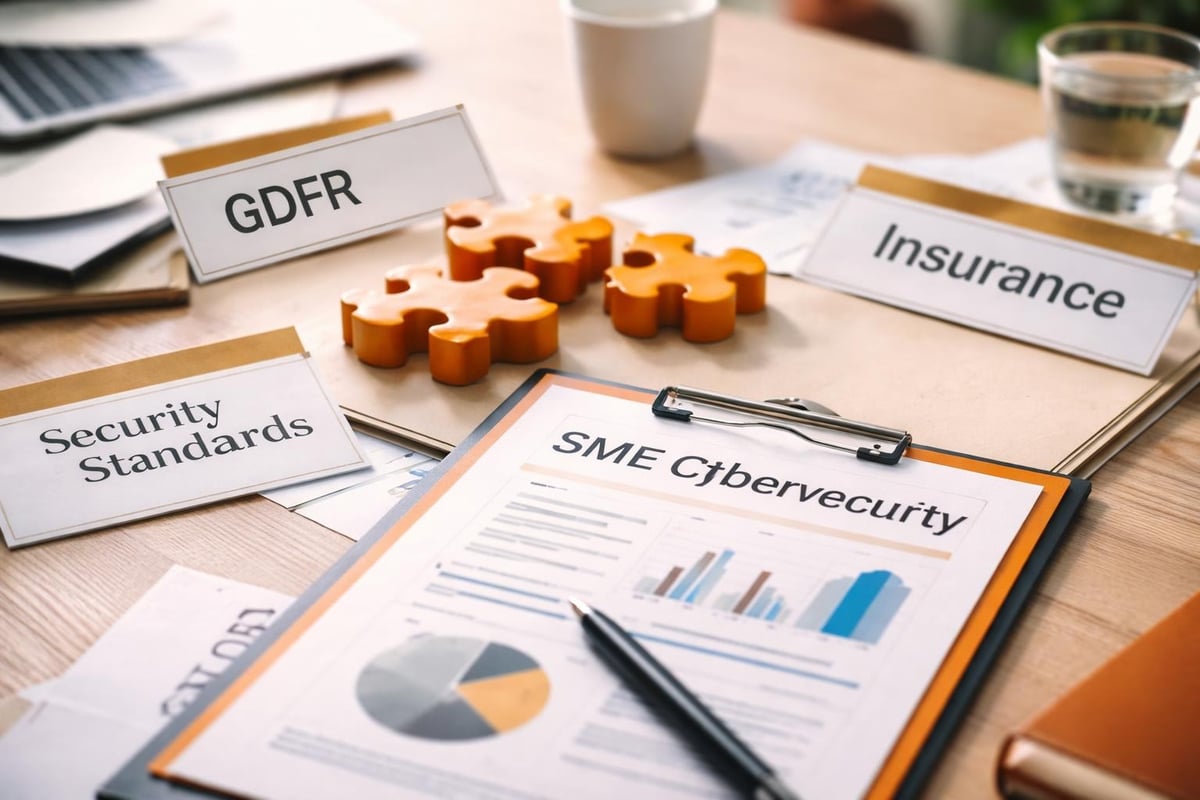
Cybersecurity for SMEs increasingly involves navigating complex regulatory requirements. For example, GDPR, industry-specific standards, and contractual obligations all impose security requirements on businesses. Consequently, organisations must understand these regulations and implement appropriate measures to ensure compliance while also protecting sensitive data.
Meeting Legal Obligations
Data protection regulations require organisations to implement appropriate technical and organisational measures to protect personal information. As a result, non-compliance can lead to substantial fines and legal consequences.
In addition, industry standards such as PCI DSS for payment processing or HIPAA for healthcare information establish specific security requirements. Therefore, understanding which standards apply to your business ensures appropriate controls are implemented.
Moreover, documentation and record-keeping demonstrate compliance efforts and support accountability. For example, maintaining evidence of security measures, training activities, and incident responses proves due diligence.
Cyber Insurance Considerations
Cyber insurance policies provide financial protection against security incidents but require demonstrating adequate security controls. Lockton’s guidance on best practices highlights how implementing robust security measures can reduce insurance premiums whilst improving coverage.
Policy requirements often specify minimum security standards such as MFA implementation, regular backups, and employee training. Aligning security programmes with insurance requirements ensures coverage remains valid when needed.
Budget-Friendly Security Strategies
Resource constraints need not prevent effective security implementation. In fact, numerous cost-effective approaches can enable SMEs to achieve robust protection without requiring enterprise-level expenditure. As a result, smaller organisations can maintain strong cybersecurity while managing budgets efficiently.
Prioritizing Security Investments
Risk-based prioritization focuses resources on the most significant threats and valuable assets. Not every system requires maximum security, allowing strategic allocation of limited budgets.
Open-source security tools provide enterprise-grade capabilities without licensing costs. Many commercial solutions also offer free tiers suitable for smaller organisations.
- Identify and prioritize critical business assets
- Assess realistic threat levels for your industry
- Implement free or low-cost security controls first
- Gradually enhance protection as resources permit
- Leverage cloud provider security features
Managed security services offer professional expertise without requiring full-time security staff. These services provide monitoring, incident response, and expert guidance at predictable monthly costs.
Collaborative approaches such as information sharing groups enable SMEs to learn from peer experiences. Knowledge Exchange resources demonstrate how collective knowledge strengthens individual security postures.
Vendor and Third-Party Risk Management
Modern businesses rely on numerous vendors, suppliers, and service providers, each of which potentially introduces security vulnerabilities. Therefore, managing these third-party risks is essential for comprehensive cybersecurity for SMEs. Furthermore, implementing vendor assessments, security audits, and contractual safeguards helps organisations mitigate risks while maintaining strong security across their extended business ecosystem.
Evaluating Supplier Security
Due diligence processes assess supplier security practices before establishing relationships. Questionnaires, certifications, and audit reports provide insight into vendor security maturity.
Contractual security requirements establish minimum standards and clarify responsibilities. These agreements should specify data handling practices, breach notification timelines, and security audit rights.
- Request security documentation from potential vendors
- Verify relevant certifications and compliance standards
- Review data processing and storage practices
- Establish clear breach notification requirements
- Conduct periodic security reassessments
Ongoing monitoring ensures suppliers maintain agreed security standards throughout the relationship. Regular reviews and periodic audits identify emerging risks before they result in incidents.
Access limitations restrict vendor systems to only necessary data and functions. Applying least-privilege principles to third-party access minimizes potential damage from supplier compromises.
Mobile and Remote Work Security
The widespread adoption of remote and hybrid work models expands attack surfaces and introduces new security challenges. Consequently, protecting distributed workforces requires adapting traditional security approaches. In particular, organisations must implement remote access controls, endpoint protection, and secure collaboration tools to ensure consistent cybersecurity across all work environments.
Securing Remote Access
Virtual private networks (VPNs) encrypt communications between remote workers and business systems, preventing interception of sensitive data. Zero-trust network architectures provide enhanced security by verifying every access attempt regardless of location.
Device management policies ensure remote devices maintain appropriate security standards. Mobile device management (MDM) solutions enforce encryption, screen locks, and remote wipe capabilities.
| Remote Work Risk | Mitigation Strategy | Implementation Cost |
|---|---|---|
| Unsecured Wi-Fi | VPN requirement | Low |
| Lost devices | Remote wipe capability | Low-Medium |
| Personal device use | BYOD policy + MDM | Medium |
| Home network security | Security guidelines | Low |
Endpoint security protects individual devices regardless of location. Antivirus software, firewalls, and endpoint detection solutions defend against malware and unauthorized access attempts.
Clear policies defining acceptable use and security expectations for remote workers prevent ambiguity. These guidelines should address home network security, device usage, and data handling practices.
Savaco’s insights emphasize the importance of well-thought-out approaches to protecting distributed work environments.
Emerging Technologies and Future Considerations
The cybersecurity landscape continues to evolve rapidly, with new technologies introducing both opportunities and challenges. In particular, staying informed about emerging trends helps SMEs prepare for future security requirements. Moreover, this awareness enables organisations to anticipate risks before they fully materialise. As a result, businesses can adapt their security strategies more proactively and maintain stronger long-term resilience.
Artificial Intelligence in Security
AI-powered security tools enhance threat detection and response capabilities, identifying patterns that human analysts might miss. In particular, these technologies are becoming increasingly accessible to smaller organisations through cloud-based services.
Conversely, attackers are also leveraging AI to develop more sophisticated attacks. For example, deepfake technology, automated vulnerability scanning, and intelligent phishing campaigns represent evolving threats.
Moreover, zero-trust security models assume no user or system should be inherently trusted, requiring continuous verification. As a result, this approach provides robust protection in increasingly complex technology environments.
In addition, quantum computing poses future challenges to current encryption standards. While practical quantum computers remain years away, forward-thinking organisations are beginning to consider post-quantum cryptography.
Finally, blockchain technologies offer potential applications in identity management, supply chain verification, and secure transactions. Therefore, understanding these emerging tools enables strategic planning for future security architectures.
Implementing effective cybersecurity for SMEs requires a balanced approach combining technical controls, employee awareness, and strategic planning. By prioritizing fundamental security measures, developing security-conscious cultures, and leveraging cost-effective solutions, smaller organisations can achieve robust protection against evolving cyber threats. vBoxx provides secure cloud solutions specifically designed to support SME security requirements, offering encrypted storage, reliable backup systems, and privacy-focused infrastructure that enables businesses to protect their digital assets whilst maintaining operational efficiency and sustainable hosting practices.