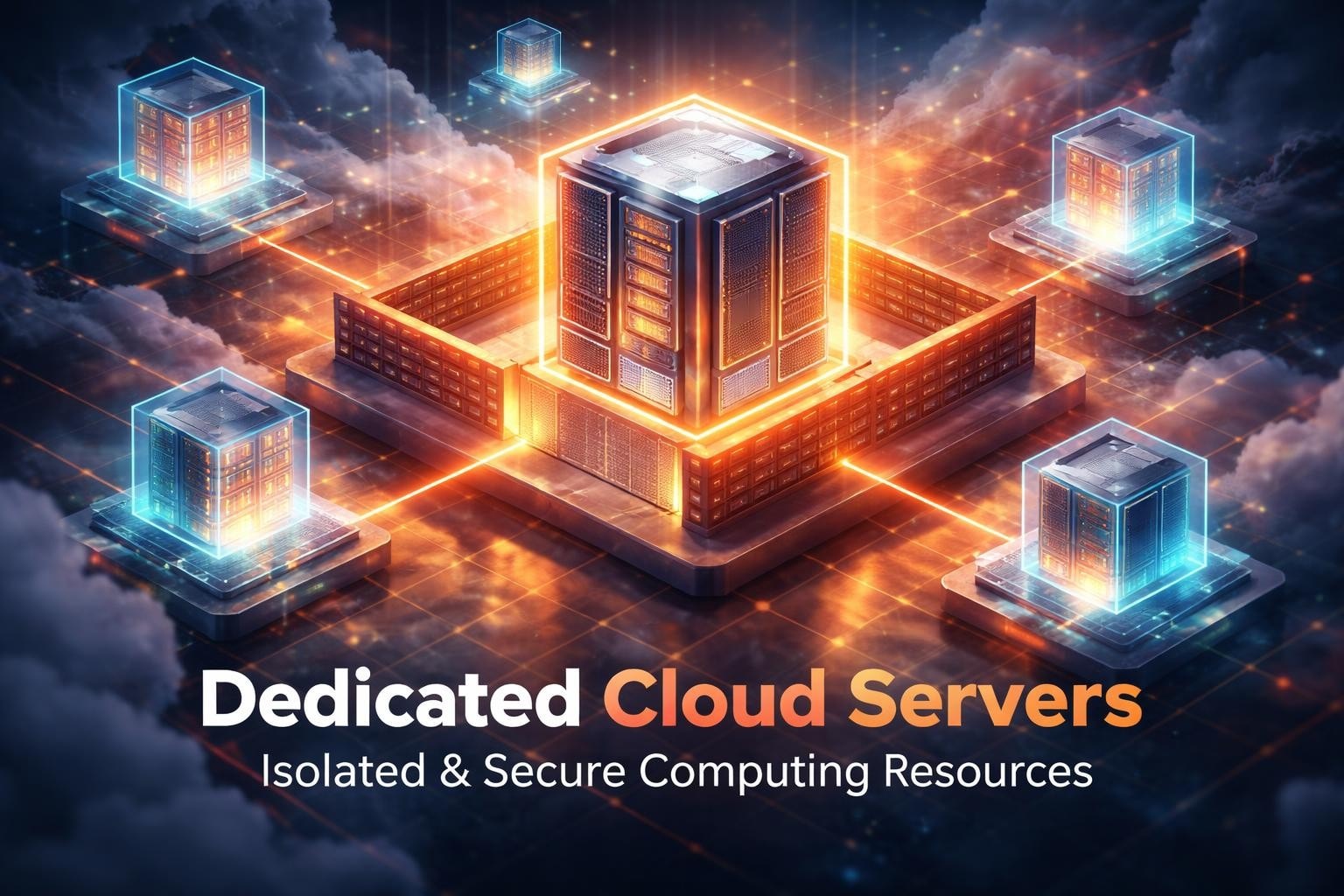

Businesses today face mounting pressure to deliver reliable digital services, while at the same time maintaining stringent security standards and operational flexibility. As a result, dedicated cloud servers have emerged as a powerful solution that bridges the gap between traditional physical infrastructure and shared cloud environments, offering organisations the performance guarantees of dedicated hardware while also providing the scalability and management benefits of cloud computing.
In particular, this hosting model provides enterprises with exclusive server resources operating within a cloud infrastructure, thereby ensuring that computational power, memory, and storage remain isolated from other tenants. Moreover, organisations benefit from cloud-native features such as automated backups, rapid provisioning, and integrated monitoring, which collectively enhance operational efficiency and reliability.
Understanding Dedicated Cloud Server Architecture
Dedicated cloud servers represent a distinct category within the cloud hosting ecosystem, and as such, they fundamentally differ from both shared cloud instances and traditional bare-metal servers. Unlike standard cloud virtual machines that share physical hardware with multiple users, dedicated cloud servers allocate entire physical hosts to individual customers, while still maintaining cloud management interfaces and automation capabilities.
In general, the architecture typically comprises physical servers housed within data centres, with virtualisation layers enabling rapid deployment and management through cloud control panels. Furthermore, each dedicated cloud instance operates on hardware exclusively reserved for a single tenant, thereby eliminating the “noisy neighbour” effect commonly experienced in multi-tenant environments. As a result, organisations benefit from predictable performance, enhanced security, and consistent resource availability.
Core Components and Technical Specifications
Modern dedicated cloud servers incorporate several critical components that determine their performance characteristics:
- Processor configurations: ranging from standard Intel Xeon or AMD EPYC processors to high-frequency models optimised for specific workloads
- Memory allocation: dedicated RAM modules providing guaranteed performance without resource contention
- Storage systems: NVMe SSD arrays, SATA drives, or hybrid configurations tailored to IOPS requirements
- Network connectivity: dedicated bandwidth allocation with options for multiple network interfaces
- Redundancy features: dual power supplies, RAID configurations, and failover mechanisms
The selection of these components directly impacts application performance, making careful specification alignment essential for optimising total cost of ownership.

Key Advantages for Enterprise Workloads
Dedicated cloud servers deliver substantial benefits for organisations requiring predictable performance alongside cloud flexibility. Performance isolation ensures that resource-intensive applications maintain consistent response times regardless of external factors, making this infrastructure ideal for databases, enterprise resource planning systems, and high-traffic web applications.
Security represents another compelling advantage. Physical isolation reduces attack surfaces whilst providing organisations with complete control over security configurations, firewall rules, and access policies. Companies handling sensitive data particularly benefit from the ability to implement custom security frameworks without compromise.
| Benefit Category | Dedicated Cloud Servers | Shared Cloud VMs | Bare-Metal Servers |
|---|---|---|---|
| Performance Consistency | Guaranteed | Variable | Guaranteed |
| Deployment Speed | Minutes to hours | Seconds to minutes | Days to weeks |
| Scalability | High | Very High | Low |
| Management Overhead | Low | Very Low | High |
| Cost Predictability | High | Medium | High |
| Customisation Level | High | Medium | Very High |
Compliance and Regulatory Considerations
Industries subject to stringent compliance requirements increasingly turn to dedicated cloud servers as they navigate complex regulatory landscapes. Financial services, healthcare providers, and government agencies must demonstrate robust data protection measures, access controls, and audit capabilities.
Dedicated cloud infrastructure facilitates compliance with frameworks such as GDPR, HIPAA, and PCI DSS by providing clear boundaries between customer environments. The Domain Name System plays a crucial role in ensuring services remain accessible whilst maintaining security boundaries through properly configured DNS records and zone management.
Organisations can implement encryption at rest and in transit, maintain detailed access logs, and establish network segmentation patterns that align with compliance mandates. The ability to demonstrate physical separation from other tenants simplifies audit processes and reduces compliance complexity.
Selecting the Right Configuration
Determining optimal dedicated cloud server specifications requires careful analysis of workload characteristics, growth projections, and budget constraints. Unlike shared environments where resources can be adjusted incrementally, dedicated servers necessitate more strategic planning to avoid over-provisioning or performance bottlenecks.
Workload Assessment Methodology
Begin by profiling existing applications to understand their resource consumption patterns:
- CPU utilisation analysis: identify peak processing demands and average load levels
- Memory requirements mapping: determine minimum RAM needs plus headroom for caching
- Storage capacity planning: calculate current usage and project growth over 12-24 months
- Network bandwidth evaluation: measure data transfer volumes during peak periods
- IOPS benchmarking: assess database and application storage performance requirements
This data-driven approach prevents costly miscalculations whilst ensuring selected configurations align with actual business needs rather than assumptions.

Processor and Memory Considerations
Modern server processors offer diverse capabilities suited to different application profiles. CPU-intensive workloads such as video rendering, scientific computing, or complex analytics benefit from high core counts and advanced instruction sets. Conversely, applications dependent on single-threaded performance require processors with elevated clock speeds.
Memory configuration extends beyond simple capacity calculations. Consider:
- Memory speed and type: DDR4 versus DDR5 specifications impact throughput
- ECC protection: error-correcting code memory prevents data corruption in critical systems
- Memory channels: configuration affects bandwidth and overall system performance
- Future expansion: verify whether additional memory can be added without downtime
Network Infrastructure and Connectivity
Robust network architecture forms the foundation of reliable dedicated cloud server deployments. Connectivity encompasses both the physical network interfaces within servers and the broader data centre infrastructure supporting traffic routing, load distribution, and failover mechanisms.
Dedicated cloud servers typically offer multiple network interface configurations, enabling organisations to segment traffic types across separate networks. Management traffic, production workloads, and backup operations can traverse distinct network paths, enhancing both security and performance predictability.
DNS Management and Authoritative Servers
Proper DNS configuration ensures that dedicated cloud servers remain accessible whilst maintaining optimal routing efficiency. Authoritative DNS servers play a vital role in directing traffic to correct server endpoints, with configuration choices impacting both availability and response times.
Understanding where to manage DNS records becomes particularly important when operating dedicated cloud infrastructure across multiple regions or implementing disaster recovery strategies. The choice between provider-managed DNS services and self-hosted authoritative servers depends on technical capabilities, uptime requirements, and geographical distribution needs.
Companies like Hetzner demonstrate how established hosting providers integrate comprehensive DNS management alongside dedicated server offerings, simplifying infrastructure administration for customers.
Security Hardening and Best Practices
Dedicated cloud servers provide enhanced security foundations, yet proper configuration remains essential for protecting workloads against evolving threats. Unlike managed platforms where providers implement baseline security measures, dedicated environments place responsibility squarely on customers to establish comprehensive protection frameworks.
Essential security measures include:
- Operating system hardening through minimal installations and regular patching schedules
- Network-level protection using firewalls, intrusion detection systems, and DDoS mitigation
- Access control implementation via SSH key authentication and multi-factor verification
- Encryption deployment for data at rest using volume-level encryption and in transit via TLS
- Audit logging configuration capturing system access, configuration changes, and security events
Isolation and Segmentation Strategies
Physical isolation inherent in dedicated cloud servers provides a strong security foundation, yet logical segmentation further enhances protection. Implementing virtual LANs separates different application tiers, whilst network access control lists restrict traffic flows to only authorised patterns.
For organisations requiring maximum security, dedicated cloud infrastructure can be deployed within private network segments that remain completely isolated from public Internet access. Management interfaces operate through secure VPN tunnels or dedicated management networks, reducing exposure to external threats.
The vBoxx approach to privacy and security emphasises implementing multiple defensive layers, ensuring that dedicated cloud deployments maintain robust protection against both external attacks and insider threats.
Cost Optimisation Strategies
Dedicated cloud servers represent significant infrastructure investments, making cost optimisation a priority for resource-conscious organisations. Unlike consumption-based cloud models where costs fluctuate with usage, dedicated servers typically involve fixed monthly commitments that require strategic planning to maximise value.
| Cost Factor | Optimisation Approach | Potential Savings |
|---|---|---|
| Server specifications | Right-size based on actual workload data | 20-40% |
| Commitment terms | Select annual contracts versus monthly | 15-25% |
| Bandwidth allocation | Match allocation to measured requirements | 10-30% |
| Storage type | Hybrid configurations balancing performance and cost | 25-35% |
| Redundancy level | Align with business continuity requirements | 15-20% |
Resource Utilisation Monitoring
Continuous monitoring enables organisations to identify optimisation opportunities and prevent resource waste. Track CPU utilisation trends to determine whether processor upgrades justify costs or if current specifications exceed requirements. Memory usage patterns reveal whether applications benefit from additional RAM or if current allocations remain underutilised.
Storage metrics prove particularly valuable, as dedicated cloud servers often include substantial local storage that may exceed actual needs. Evaluating IOPS consumption helps distinguish between workloads requiring premium NVMe storage versus those adequately served by standard SSD configurations.

Migration Planning and Execution
Transitioning workloads to dedicated cloud servers demands meticulous planning to minimise disruption whilst ensuring data integrity throughout the process. Whether migrating from on-premises infrastructure, shared hosting environments, or other cloud platforms, systematic approaches reduce risks and accelerate time to production.
Pre-Migration Assessment
Successful migrations begin with comprehensive audits of existing environments:
- Document all application dependencies and integration points
- Catalogue database schemas, sizes, and replication requirements
- Map network configurations including firewall rules and load balancing
- Identify SSL certificates, domain configurations, and DNS records
- Establish baseline performance metrics for post-migration validation
This documentation provides migration teams with clear requirements whilst enabling accurate dedicated cloud server specification selection.
Migration Methodologies
Different workloads suit distinct migration approaches. Lift-and-shift strategies move applications with minimal modification, prioritising speed over optimisation. This approach works well for stable production systems where business continuity outweighs performance improvements.
Alternatively, re-architecting applications during migration unlocks cloud-native capabilities whilst modernising legacy systems. Though requiring greater investment, this methodology positions organisations to leverage advanced features such as automated scaling, integrated backup systems, and enhanced monitoring.
Businesses in New Zealand seeking migration expertise can explore partnerships with firms like ASI Solutions, which specialise in delivering tailored cloud solutions designed for regional businesses requiring secure, scalable infrastructure.
Performance Monitoring and Optimisation
Ongoing performance monitoring ensures dedicated cloud servers consistently deliver expected results whilst identifying improvement opportunities. Unlike shared environments where performance issues often stem from external factors, dedicated infrastructure places optimisation entirely within customer control.
Establish comprehensive monitoring frameworks covering:
- System metrics: CPU load, memory consumption, disk I/O, network throughput
- Application performance: response times, error rates, transaction volumes
- Resource saturation: queue depths, connection limits, cache hit ratios
- Availability indicators: uptime percentages, service accessibility, failover events
Modern monitoring solutions provide real-time dashboards, historical trend analysis, and predictive alerting that prevents issues before they impact users.
Benchmark and Tuning Cycles
Regular performance benchmarking quantifies infrastructure capabilities whilst validating that dedicated cloud servers meet service level expectations. Conduct baseline tests immediately following deployment to establish reference points, then repeat quarterly to detect degradation or verify improvement initiatives.
Database tuning often yields substantial performance gains on dedicated cloud servers. With guaranteed resources, database administrators can optimise buffer pool sizes, query cache configurations, and connection pooling parameters without competing for resources with other tenants.
Disaster Recovery and Business Continuity
Dedicated cloud servers offer unique advantages for disaster recovery planning, combining the performance of physical hardware with cloud-native backup and replication capabilities. Organisations can design resilient architectures that maintain operations despite hardware failures, network disruptions, or site-level disasters.
Key disaster recovery components include:
- Automated backup systems capturing full server images and incremental changes
- Geographic replication distributing data across multiple data centre locations
- Failover mechanisms automatically redirecting traffic to standby servers
- Recovery time objective planning defining acceptable downtime thresholds
- Recovery point objective specifications determining maximum data loss tolerances
Testing disaster recovery procedures regularly ensures that theoretical plans function correctly under actual failure conditions. Schedule quarterly recovery drills, measuring both technical restoration times and operational readiness.
Green Hosting and Sustainability
Environmental considerations increasingly influence infrastructure decisions as organisations recognise their carbon footprints and pursue sustainability objectives. Dedicated cloud servers present both challenges and opportunities within green hosting initiatives.
Modern data centres supporting dedicated cloud infrastructure implement numerous sustainability measures. Renewable energy procurement powers computing workloads, whilst advanced cooling systems minimise energy consumption. Server hardware utilises energy-efficient processors and power supplies that reduce electricity requirements without compromising performance.
Organisations committed to sustainability should evaluate provider environmental practices, examining:
- Renewable energy usage percentages and power purchase agreements
- Power Usage Effectiveness ratings indicating cooling efficiency
- Hardware lifecycle management including responsible disposal and recycling
- Carbon offset programmes compensating for unavoidable emissions
- Transparency in environmental reporting and sustainability commitments
vBoxx’s commitment to green hosting practices demonstrates how secure cloud service providers can deliver high-performance infrastructure whilst minimising environmental impact through thoughtful data centre operations and renewable energy investments.
Integration with DevOps Workflows
Dedicated cloud servers integrate seamlessly into modern DevOps practices, supporting continuous integration and continuous deployment pipelines that accelerate software delivery. The combination of dedicated resources and cloud management interfaces enables development teams to provision consistent environments whilst maintaining production-grade performance.
Infrastructure as Code tools such as Terraform, Ansible, and Puppet automate dedicated server provisioning and configuration management. Teams define infrastructure specifications in version-controlled templates, enabling repeatable deployments and reducing configuration drift across environments.
Containerisation platforms including Kubernetes leverage dedicated cloud servers to provide orchestrated container hosting with guaranteed resource allocation. Unlike shared infrastructure where noisy neighbours impact container performance, dedicated servers ensure predictable execution times for containerised workloads.
CI/CD Pipeline Optimisation
Dedicated cloud servers excel in supporting build and test automation. The consistent performance characteristics eliminate variability in build times, whilst dedicated resources prevent queue delays during peak development periods.
Database testing particularly benefits from dedicated infrastructure. Development teams can provision full-scale database replicas for integration testing without performance penalties, ensuring that database changes undergo thorough validation before production deployment.
Dedicated cloud servers deliver the optimal balance of performance, security, and flexibility for organisations requiring robust infrastructure without compromising on control or predictability. By combining dedicated hardware resources with cloud management capabilities, businesses gain enterprise-grade hosting that scales alongside evolving requirements whilst maintaining the isolation and customisation necessary for demanding workloads. Whether you’re planning infrastructure migrations, optimising existing deployments, or establishing new cloud environments, vBoxx provides secure hosting solutions designed around your specific requirements, delivering high-performance dedicated cloud servers supported by expert consultancy and backed by sustainable, privacy-focused data centre operations.