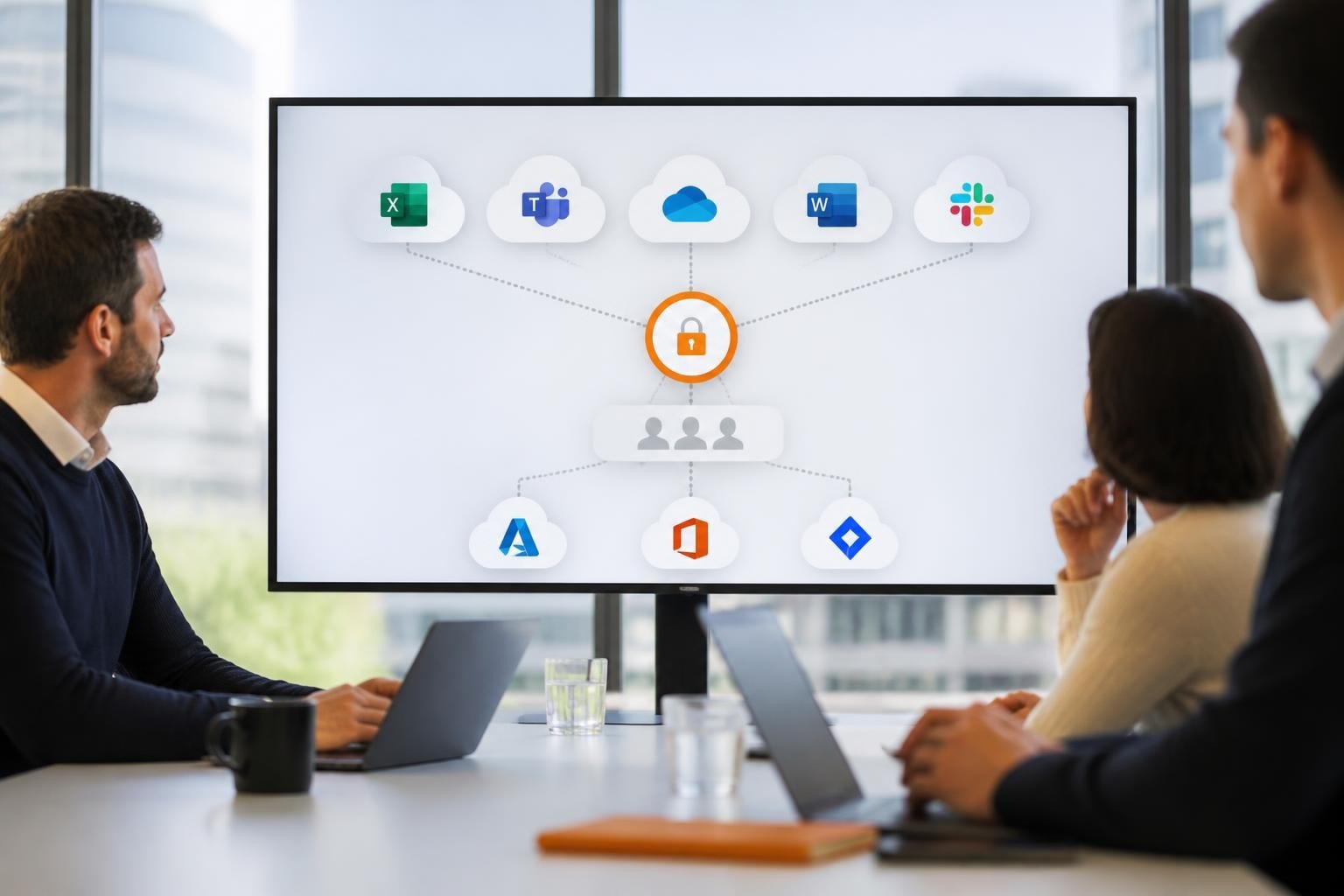

Germany has cemented its position as one of Europe's premier destinations for business hosting and cloud infrastructure. With stringent data protection laws, world-class connectivity, and a commitment to renewable energy, hosting in Germany offers compelling advantages for organisations seeking security, compliance, and performance. Furthermore, the country's strategic location at the heart of Europe provides low-latency access to major markets whilst maintaining strict adherence to GDPR and EU cybersecurity regulations. As businesses increasingly prioritise data sovereignty and privacy, understanding the nuances of hosting in Germany becomes essential for informed decision-making.
The Regulatory Landscape for Hosting in Germany
Germany operates within a robust regulatory framework that prioritises data protection and cybersecurity. The General Data Protection Regulation (GDPR) forms the cornerstone of data handling requirements, whilst Germany's Federal Data Protection Act (BDSG) adds supplementary national provisions. Moreover, the NIS2 Directive, which came into full effect across the EU in 2024, imposes stringent security obligations on essential and important entities, including many cloud service providers.
GDPR Compliance and Data Protection
When evaluating hosting in Germany, GDPR compliance stands as a fundamental consideration. German supervisory authorities are among the most active in Europe, regularly issuing guidance and enforcing penalties for non-compliance. Therefore, selecting a hosting provider with demonstrable GDPR processes is not merely advisable but essential.
The European Data Protection Board provides comprehensive guidance on cross-border processing and transfers, which directly impacts how businesses structure their hosting arrangements. In addition, German courts have established precedents that reinforce strict interpretation of data transfer rules, particularly regarding third-country access.

Key compliance considerations include:
- Data processing agreements that clearly define controller and processor roles
- Technical and organisational measures documented and regularly audited
- Data transfer mechanisms compliant with Schrems II requirements
- Breach notification procedures aligned with the 72-hour GDPR deadline
- Data subject rights processes enabling access, rectification, and erasure
NIS2 and Cybersecurity Requirements
The NIS2 Directive represents a significant evolution in EU cybersecurity legislation. ENISA's technical implementation guidance outlines specific measures for cloud and data centre operators, including risk management, incident handling, business continuity, and supply chain security.
Nevertheless, businesses using hosting in Germany must understand that NIS2 obligations may apply to them directly, depending on their sector and size. Therefore, partnering with a hosting provider that already meets NIS2 standards can significantly reduce your compliance burden.
| Requirement Area | NIS2 Obligation | Hosting Provider Role |
|---|---|---|
| Risk management | Documented risk assessments | Should provide infrastructure security documentation |
| Incident response | 24-hour early warning, 72-hour detailed report | Must have incident detection and notification systems |
| Supply chain security | Assessment of supplier security | Transparent about their own supply chain |
| Business continuity | Tested backup and recovery | Guaranteed uptime SLAs and redundancy |
Germany's Data Centre Infrastructure
Germany boasts Europe's largest data centre market by capacity. According to the Federal Ministry's comprehensive report on data centre development, Germany hosts over 3,000 data centres with combined capacity exceeding 1,800 megawatts as of 2025. Furthermore, Frankfurt has established itself as Europe's primary internet exchange point, providing unparalleled connectivity.
Major Hosting Hubs and Connectivity
Frankfurt remains the epicentre of hosting in Germany, housing the world's largest internet exchange (DE-CIX) and concentrating the majority of tier-three and tier-four data centres. Moreover, Berlin, Munich, Hamburg, and Düsseldorf have emerged as secondary hubs, offering geographic diversity and competitive pricing.
The Data Center Impact Report Germany 2024 highlights that German data centres contribute approximately €13 billion annually to the national economy. In addition, the industry supports over 180,000 jobs directly and indirectly, underscoring its strategic importance.
Connectivity advantages include:
- Direct access to DE-CIX with over 1,100 connected networks
- Low latency to major European capitals (typically under 15ms)
- Extensive fibre infrastructure with multiple redundant paths
- Carrier-neutral facilities enabling competitive bandwidth pricing
- IPv6 adoption rates exceeding 70% among German providers
Energy Efficiency and Sustainability
Environmental considerations increasingly influence hosting decisions. Germany's commitment to renewable energy, with over 50% of electricity generation from renewable sources in 2026, makes hosting in Germany attractive for organisations with sustainability targets. Furthermore, many German data centres have implemented advanced cooling technologies achieving Power Usage Effectiveness (PUE) ratios below 1.3.

Nevertheless, the energy-intensive nature of data centres has prompted regulatory attention. The German government's data centre efficiency programme requires new facilities to meet strict PUE targets and implement waste heat recovery where feasible. Therefore, businesses concerned with green hosting practices should verify their provider's environmental credentials.
Data Sovereignty and Legal Considerations
One of the most significant advantages of hosting in Germany lies in data sovereignty guarantees. Unlike providers subject to extraterritorial legislation such as the US CLOUD Act, German hosting ensures that data access requests must comply with EU legal frameworks and mutual legal assistance treaties. Moreover, German providers cannot be compelled to provide access to foreign law enforcement agencies without proper judicial oversight.
Protection from Extraterritorial Access
The conflict between European privacy rights and US surveillance legislation remains unresolved despite the EU-US Data Privacy Framework. A 2025 academic study measuring data localisation found that significant volumes of EU user traffic still reach US-based servers, often without users' knowledge. Therefore, hosting in Germany with a European provider eliminates this concern entirely.
Furthermore, businesses handling sensitive categories of personal data or operating in regulated sectors should carefully assess where their hosting provider's parent company is incorporated and whether any group entities could face extraterritorial demands. Organisations seeking data protection compliance must scrutinise provider ownership structures and legal jurisdictions.
Non-Personal Data Considerations
Whilst GDPR governs personal data, the EU's free flow of non-personal data regulation establishes that businesses should not face unjustified data localisation requirements for commercial information. Nevertheless, certain sectors face specific restrictions:
- Financial services institutions must ensure operational resilience and supervisory access
- Healthcare providers must comply with sector-specific confidentiality requirements
- Government contractors often face explicit national hosting mandates
- Critical infrastructure operators must meet NIS2 localisation expectations
In addition, businesses should evaluate whether contractual obligations, insurance requirements, or industry standards impose hosting location constraints. The Chambers cybersecurity practice guide for Germany provides detailed analysis of sectoral requirements.
Technical Capabilities and Service Models
Hosting in Germany encompasses diverse service models from traditional dedicated servers to sophisticated cloud infrastructure. Moreover, the German market offers particular strength in hybrid solutions that combine on-premises infrastructure with cloud extensions, reflecting German businesses' preference for controlled migration paths.
Infrastructure as a Service (IaaS)
German IaaS providers deliver virtual and dedicated server infrastructure with predictable pricing and transparent service-level agreements. Furthermore, many offer customisable configurations enabling businesses to balance performance requirements against budget constraints.
Typical IaaS features include:
- Flexible compute resources scalable on demand
- Block and object storage with geographic redundancy options
- Private networking with VLAN isolation and VPN connectivity
- Backup and snapshot services with point-in-time recovery
- DDoS protection and web application firewalls
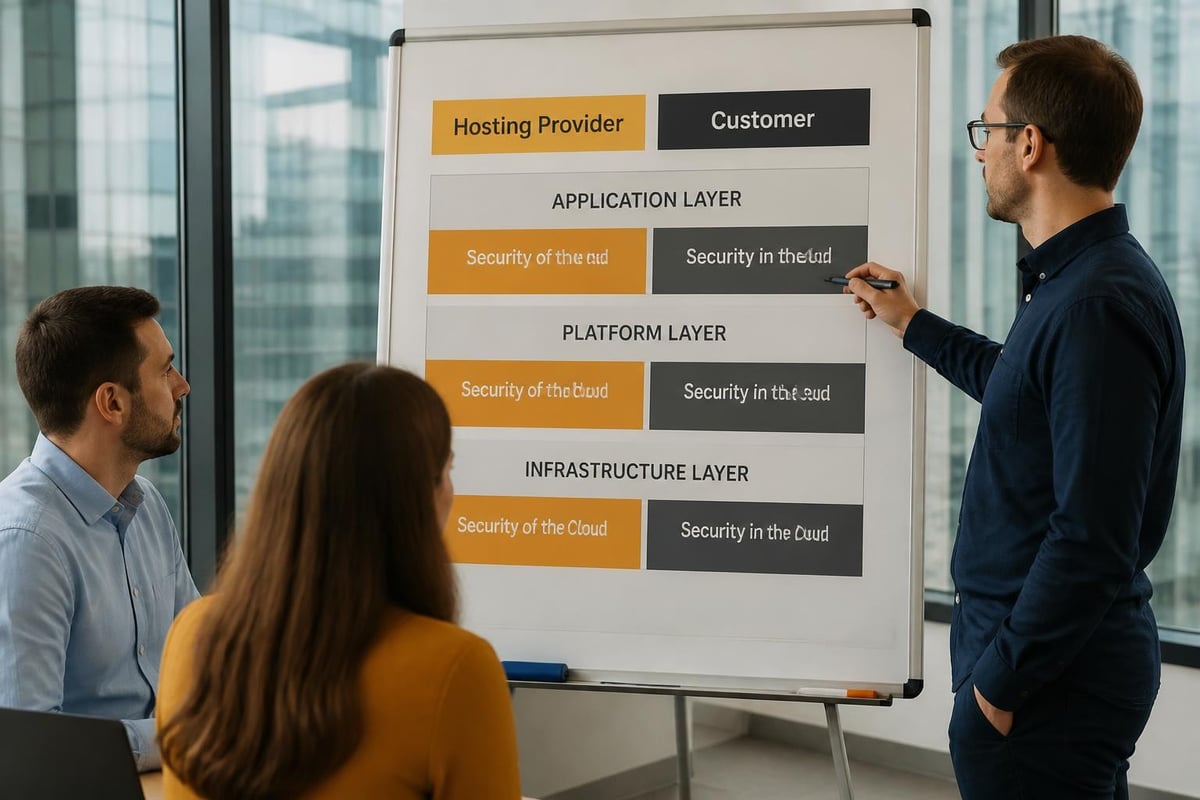
Nevertheless, businesses must ensure they understand the shared responsibility model inherent in IaaS arrangements. Whilst the provider secures the underlying infrastructure, customers retain responsibility for operating system security, application patching, and data protection.
Platform and Software Services
Beyond infrastructure, hosting in Germany increasingly encompasses platform services (PaaS) and software solutions (SaaS). German providers have developed strong capabilities in email hosting, collaboration platforms, and specialised business applications. For instance, organisations requiring GDPR-compliant communication tools can benefit from vBoxxConnect, which provides email, calendar, tasks, and video conferencing hosted entirely on European infrastructure in the Netherlands, offering similar sovereignty benefits to German hosting whilst maintaining seamless integration.
Moreover, German hosting providers often specialise in open-source platforms, offering managed services for solutions such as Nextcloud, GitLab, and various content management systems. This approach combines the flexibility of open-source software with the reliability of professional hosting infrastructure.
| Service Model | Provider Responsibility | Customer Responsibility | Best For |
|---|---|---|---|
| Dedicated Server | Hardware, network, physical security | OS, applications, data, security | Full control requirements |
| VPS/Cloud | Hardware, virtualisation, network | OS, applications, data | Scalability with control |
| Managed Platform | Infrastructure, OS, platform software | Applications, data, configuration | Focus on application development |
| SaaS | Full stack management | Data, user management, configuration | Immediate deployment, minimal IT overhead |
Cost Considerations and Total Ownership
Pricing for hosting in Germany varies significantly based on service model, performance tier, and support level. Nevertheless, German providers typically offer transparent pricing without hidden charges, reflecting broader German business culture emphasising clarity and reliability. Furthermore, businesses should evaluate total cost of ownership rather than merely comparing monthly hosting fees.
Direct and Indirect Costs
Direct hosting costs include server rental or cloud consumption charges, bandwidth fees, backup storage, and support services. In addition, businesses must account for:
- Migration expenses including planning, execution, and validation
- Integration costs connecting hosting infrastructure to existing systems
- Licensing fees for operating systems, control panels, and applications
- Compliance activities such as audits, documentation, and certifications
- Staff training on new platforms and management interfaces
Moreover, organisations should assess the opportunity cost of staff time spent managing infrastructure. Whilst self-managed dedicated servers offer lower monthly fees, they require ongoing administration. Therefore, managed services or platform solutions may deliver better total value despite higher direct costs.
Regional Price Variations
Hosting costs in Frankfurt typically command a premium compared to secondary German cities, reflecting the concentration of connectivity and carrier-neutral facilities. Nevertheless, the price differential has narrowed as providers have expanded capacity in Berlin, Munich, and other locations. Furthermore, businesses without specific low-latency requirements to Frankfurt's financial services sector may achieve significant savings through alternative locations whilst maintaining excellent European connectivity.
Selecting a Hosting Provider in Germany
Choosing the appropriate hosting partner requires systematic evaluation across technical, commercial, and organisational dimensions. Moreover, businesses should prioritise providers demonstrating long-term stability and investment in infrastructure rather than merely seeking the lowest price. Furthermore, the provider's approach to customer support, transparency, and partnership significantly impacts the long-term success of hosting arrangements.
Essential Evaluation Criteria
When assessing providers for hosting in Germany, consider these fundamental criteria:
- Certifications and standards: ISO 27001, ISO 50001, PCI DSS where relevant
- Infrastructure ownership: Own facilities versus reselling third-party capacity
- Network architecture: Redundant connectivity, DDoS protection, traffic engineering
- Service-level agreements: Uptime guarantees, response times, remedies for failures
- Data protection practices: GDPR compliance, privacy certifications, processing agreements
- Financial stability: Company history, ownership structure, published accounts
- Customer references: Testimonials from similar organisations and industries
- Migration support: Assistance transitioning from existing infrastructure
- Scalability path: Growth options as requirements evolve
In addition, businesses should engage potential providers in detailed technical discussions to assess expertise and responsiveness. Therefore, requesting detailed architecture documentation and meeting operational teams provides valuable insight beyond marketing materials.
European Alternatives to German Hosting
Whilst hosting in Germany offers numerous advantages, organisations should also consider other European locations. The Netherlands, for instance, combines excellent connectivity, robust data protection, and competitive pricing. Moreover, Dutch hosting benefits from similar GDPR enforcement and European jurisdiction whilst offering geographic diversity from German infrastructure.
Providers operating ISO 27001-certified data centres in the Netherlands deliver comparable sovereignty guarantees to German hosting with the added advantage of being outside German legal jurisdiction, providing an additional layer of separation from potential German government access whilst remaining firmly within EU frameworks. Furthermore, Netherlands-based hosting maintains the critical advantage of being beyond US CLOUD Act reach, ensuring European legal processes govern any data access requests.
Migration Strategies and Implementation
Transitioning to hosting in Germany requires careful planning to minimise disruption and ensure data integrity. Moreover, businesses must coordinate technical migration activities with contractual, compliance, and operational considerations. Furthermore, successful migrations typically involve phased approaches rather than single cutover events, enabling validation at each stage.
Migration Planning Steps
- Assessment and inventory: Document current infrastructure, applications, and dependencies
- Requirements definition: Specify performance, capacity, connectivity, and compliance needs
- Provider selection: Evaluate options and negotiate service agreements
- Architecture design: Plan network topology, security controls, and integration points
- Testing environment: Establish pilot systems to validate functionality
- Data migration: Transfer data using secure, verified methods with integrity checks
- Application deployment: Install and configure applications in new environment
- Integration validation: Confirm connections to dependent systems function correctly
- Performance verification: Validate that systems meet requirements under realistic load
- Cutover execution: Switch production traffic to new infrastructure
- Post-migration monitoring: Intensive observation to identify and resolve issues quickly
- Decommissioning: Securely erase data from old infrastructure after retention period
Nevertheless, businesses should maintain contingency plans enabling rapid rollback if critical issues emerge. Therefore, keeping legacy systems operational during initial production periods provides essential insurance.
Common Migration Challenges
Organisations frequently encounter specific obstacles when implementing hosting in Germany. Bandwidth limitations can constrain data transfer speeds, particularly for large datasets. Moreover, application compatibility issues may emerge when moving between different infrastructure types or operating system versions. Furthermore, organisations often underestimate the complexity of reconfiguring network security rules, firewall policies, and access controls.
In addition, businesses must carefully manage DNS changes to minimise downtime during cutover. Therefore, reducing DNS time-to-live values well in advance of migration enables faster propagation of updated records. Professional migration assistance can significantly reduce risks and accelerate deployment timelines for organisations lacking internal expertise.
Security and Compliance in Practice
Implementing robust security controls represents a shared responsibility between hosting providers and customers. Whilst hosting in Germany offers inherent advantages through European jurisdiction and strict regulatory oversight, businesses must still implement appropriate technical and organisational measures. Moreover, compliance requires ongoing attention rather than one-time configuration.
Technical Security Measures
Essential security controls for hosted infrastructure include:
- Network segmentation isolating systems according to trust levels and data sensitivity
- Encryption in transit using TLS 1.3 for all network communications
- Encryption at rest for storage volumes containing sensitive data
- Multi-factor authentication for all administrative access
- Logging and monitoring with centralised collection and automated alerting
- Patch management with documented procedures and testing protocols
- Backup and recovery with regular restoration testing
- Access control following least-privilege principles with regular review
Furthermore, businesses should implement security information and event management (SIEM) systems to correlate logs across infrastructure components. Therefore, detecting sophisticated attacks requires visibility spanning network traffic, system events, and application behaviour.
Organisational Measures and Governance
Technical controls must be complemented by organisational processes and governance structures. Nevertheless, many businesses focus excessively on technology whilst neglecting essential administrative safeguards. Therefore, comprehensive security programmes address people and processes alongside technical infrastructure.
Key organisational measures include:
- Information security policies defining acceptable use and security requirements
- Staff training and awareness ensuring personnel understand their obligations
- Vendor management assessing and monitoring third-party security
- Incident response plans with defined roles, procedures, and communication protocols
- Business continuity arrangements ensuring operational resilience
- Regular audits validating compliance with policies and regulations
- Documentation maintaining current records of systems, data flows, and controls
Moreover, businesses subject to specific regulatory requirements must ensure their governance framework addresses sector-specific obligations. Organisations interested in comprehensive infrastructure security should evaluate how providers support customer compliance programmes.
Future Trends and Strategic Considerations
The landscape of hosting in Germany continues evolving in response to technological advancement, regulatory development, and market dynamics. Moreover, businesses making infrastructure decisions in 2026 must consider how their choices position them for anticipated changes over the coming years. Furthermore, the intersection of sustainability requirements, sovereignty concerns, and technological capability will increasingly influence hosting strategies.
Regulatory Evolution
European data protection and cybersecurity regulation will continue developing. The European Commission's proposals for data governance, artificial intelligence, and cyber resilience will create additional compliance obligations for hosted infrastructure. Therefore, partnering with providers that actively track regulatory developments and adapt their offerings accordingly reduces future compliance risk.
In addition, German national legislation may introduce requirements beyond EU minimum standards, particularly regarding critical infrastructure and government data. Nevertheless, Germany's traditional commitment to privacy and data protection suggests that hosting in Germany will continue offering robust safeguards regardless of regulatory evolution.
Technological Developments
Emerging technologies will create new hosting requirements and opportunities. Edge computing deployments will complement centralised data centres, bringing processing closer to users and devices. Moreover, quantum-resistant cryptography will become essential as quantum computing capabilities advance. Furthermore, artificial intelligence workloads will demand specialised infrastructure optimised for machine learning operations.
Nevertheless, the fundamental advantages of hosting in Germany, including robust connectivity, reliable power infrastructure, and strict data protection, will remain relevant across technological shifts. Therefore, businesses should select providers demonstrating investment in innovation alongside operational stability.
Hosting in Germany delivers compelling benefits for businesses prioritising data sovereignty, regulatory compliance, and infrastructure reliability within the European market. Nevertheless, organisations should carefully evaluate their specific requirements against available options to ensure optimal alignment. vBoxx operates ISO 27001-certified infrastructure in the Netherlands, offering similar sovereignty advantages to German hosting whilst providing comprehensive cloud storage, communication, and security solutions designed for European businesses outside the reach of extraterritorial legislation. Explore how vBoxx's European hosting infrastructure can support your organisation's digital transformation whilst maintaining the highest standards of privacy and compliance.