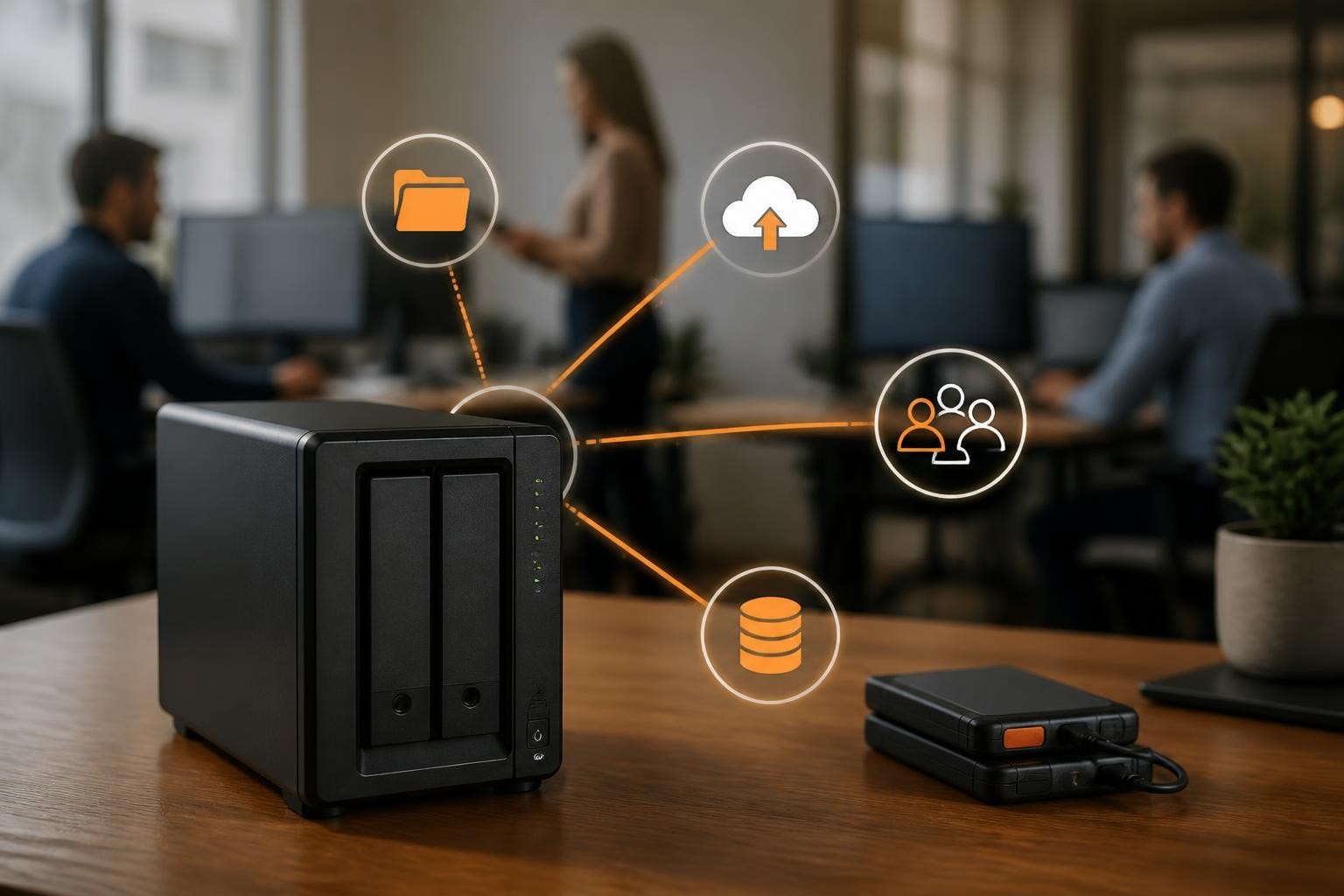

The digital transformation landscape of 2026 has fundamentally changed how organisations approach their IT infrastructure. As a result, as businesses demand greater flexibility, enhanced security, and cost optimisation, hybrid cloud solutions have emerged as the preferred architectural approach for enterprises seeking to balance control with scalability. In particular, this convergence of private and public cloud environments enables organisations to maintain sensitive workloads on-premises while leveraging the elasticity of public cloud platforms for less critical operations. Therefore, understanding how to effectively implement and manage these integrated environments has become essential for businesses aiming to remain competitive in an increasingly cloud-centric marketplace.
Understanding Hybrid Cloud Architecture
Hybrid cloud solutions represent a computing environment that combines private infrastructure with public cloud services, creating a unified, flexible architecture. This approach allows data and applications to move between private and public clouds, giving businesses greater deployment options and optimisation opportunities.
The fundamental components of a hybrid cloud environment include on-premises data centres, private cloud infrastructure, and connections to one or more public cloud platforms. These elements work together through orchestration layers that manage workloads across different environments. Hybrid cloud architecture requires careful planning to ensure seamless integration between disparate systems.
Key Components and Infrastructure
Building an effective hybrid cloud requires several critical infrastructure elements:
- Private cloud resources: Dedicated servers, storage systems, and networking equipment hosted on-premises or in colocation facilities
- Public cloud platforms: Services from providers like Microsoft Azure, Amazon Web Services, or Google Cloud Platform
- Connectivity layer: Secure networks, VPNs, and dedicated connections linking private and public environments
- Orchestration tools: Management platforms coordinating workloads, data transfer, and resource allocation
- Security framework: Identity management, encryption, and compliance controls spanning both environments
The orchestration layer serves as the brain of hybrid cloud solutions, determining where workloads should run based on performance requirements, cost considerations, and security policies. Modern orchestration platforms provide automated workload placement, ensuring applications operate in the most appropriate environment without manual intervention.

Network Integration and Connectivity
Network architecture forms the backbone of successful hybrid cloud implementations. In particular, organisations must establish reliable, high-performance connections between their private infrastructure and public cloud providers. Typically, this connectivity involves multiple approaches, including site-to-site VPNs, dedicated private connections, and software-defined wide area networks (SD-WAN).
Furthermore, bandwidth requirements vary significantly based on data transfer patterns, application dependencies, and backup operations. For example, businesses running data-intensive applications or frequently moving large datasets between environments need robust connectivity solutions to avoid performance bottlenecks. As a result, careful network planning is essential to ensure consistent performance and reliability.
| Connection Type | Typical Bandwidth | Best Use Case | Latency |
|---|---|---|---|
| Site-to-Site VPN | 100 Mbps – 1 Gbps | General connectivity | Medium |
| Dedicated Connection | 1 Gbps – 10 Gbps+ | High-volume transfers | Low |
| SD-WAN | Variable | Multi-site deployments | Low to Medium |
| Direct Connect | 50 Mbps – 100 Gbps | Mission-critical workloads | Very Low |
Strategic Benefits for Business Operations
Hybrid cloud solutions deliver tangible advantages that directly impact operational efficiency and business outcomes. In particular, the flexibility to choose where workloads run enables organisations to optimise for performance, cost, and compliance simultaneously.
Moreover, cost optimisation represents one of the most compelling benefits. Businesses can maintain existing infrastructure investments whilst selectively leveraging public cloud for variable workloads, thereby avoiding the capital expenditure of expanding on-premises capacity for peak demand periods. As a result, this approach enables consumption-based pricing on public cloud resources while retaining fixed-cost infrastructure for predictable workloads.
In addition, security and compliance considerations make hybrid approaches particularly attractive for regulated industries. Sensitive data can remain within private infrastructure meeting specific compliance requirements, whilst less critical workloads benefit from public cloud scalability. Consequently, this separation allows organisations to maintain hybrid cloud consistency across their entire IT estate while still addressing diverse regulatory obligations.
Performance and Latency Optimisation
Application performance often dictates deployment decisions in hybrid environments. In particular, latency-sensitive applications, such as real-time analytics or financial trading systems, typically perform better on private infrastructure close to data sources and end users. By contrast, batch processing, development environments, and disaster recovery systems can leverage public cloud resources without performance degradation.
Furthermore, the geographic distribution of hybrid cloud solutions enables edge computing scenarios where data processing occurs closer to where information is generated. As a result, this proximity reduces network latency and bandwidth consumption whilst improving application responsiveness.
In addition, organisations implementing hybrid cloud strategies report significant performance improvements by matching workload characteristics with appropriate infrastructure. For example, database servers handling frequent queries benefit from high-performance on-premises storage, whilst analytics platforms processing historical data can utilise cost-effective public cloud compute resources.
Implementation Strategies and Best Practices
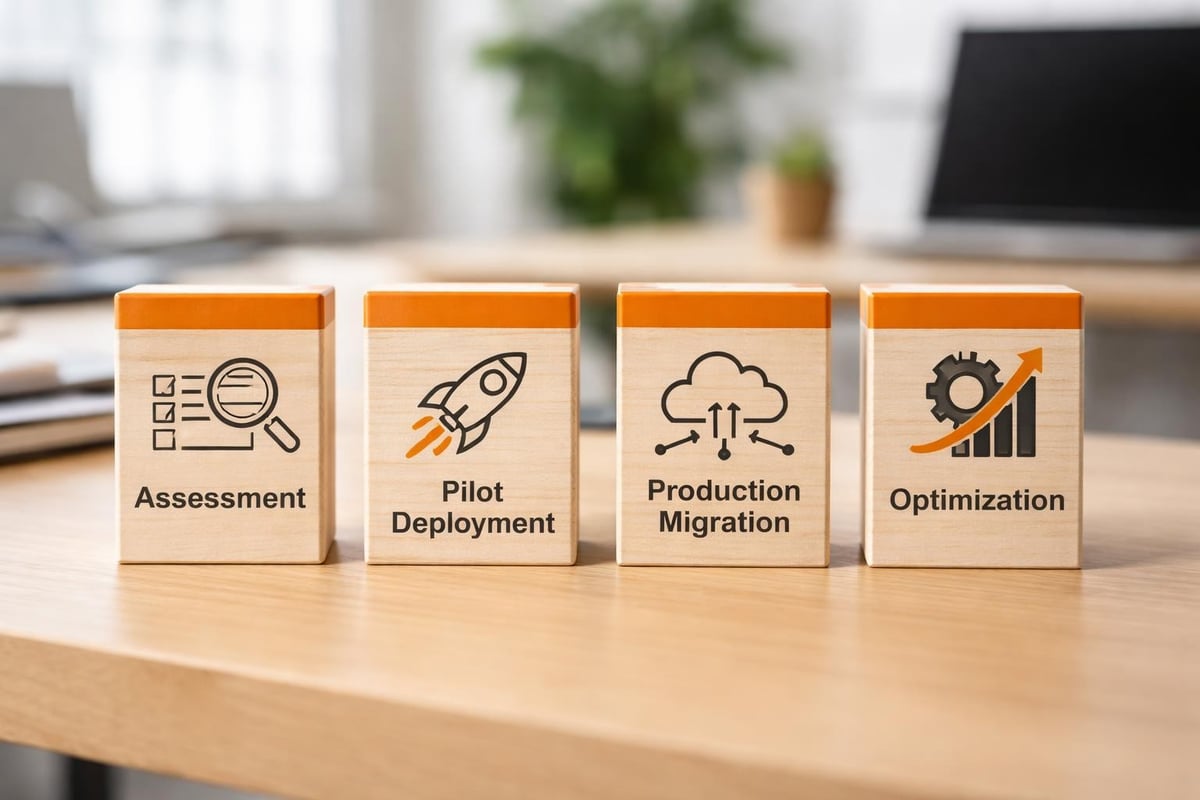
Successful deployment of hybrid cloud solutions requires methodical planning and phased execution. In particular, organisations should begin with a comprehensive assessment of existing workloads, identifying applications suitable for migration, those requiring modernisation, and systems that must remain on-premises. Moreover, this structured evaluation helps prioritise efforts and reduce implementation risk. As a result, organisations can build a more predictable and controlled migration pathway.
Workload Classification Framework
Categorising applications helps determine optimal placement across hybrid infrastructure:
- Mission-critical legacy systems: Typically remain on private infrastructure due to dependencies, compliance, or performance requirements
- Cloud-native applications: Built for public cloud, leveraging managed services and auto-scaling capabilities
- Development and testing environments: Ideal candidates for public cloud due to variable resource needs
- Data analytics and AI workloads: Often deployed in public cloud to access specialised computing resources
- Backup and disaster recovery: Hybrid approach combining local rapid recovery with cloud-based long-term retention
A phased migration approach minimises risk and allows teams to develop expertise with new technologies. In particular, starting with non-critical workloads provides valuable learning opportunities before tackling complex, business-critical systems. Moreover, many organisations begin with backup and disaster recovery as initial hybrid cloud projects, thereby establishing connectivity and operational procedures before expanding to production workloads. As a result, teams build confidence and reduce the likelihood of disruption during later migration stages.
Security and Governance Frameworks
Security in hybrid cloud solutions requires a unified approach spanning all environments. In particular, identity and access management must work consistently whether users access resources in private data centres or public cloud platforms. Moreover, single sign-on, multi-factor authentication, and role-based access controls should extend across the entire hybrid infrastructure.
In addition, data governance policies must address data sovereignty, retention, and classification requirements. For example, organisations need clear frameworks determining where different data types can reside, how they are protected, and who can access them. As a result, encryption for data at rest and in transit becomes standard practice, with key management systems controlling cryptographic operations across both private and public environments.
Furthermore, compliance monitoring tools should provide unified visibility into security posture, configuration drift, and policy violations regardless of where resources operate. Consequently, this holistic view enables security teams to maintain consistent standards and respond quickly to potential threats.
Operational Management and Monitoring
Managing hybrid cloud solutions effectively requires tools and processes that provide comprehensive visibility across all environments. In particular, traditional monitoring approaches designed for on-premises infrastructure often struggle with dynamic cloud resources, whilst cloud-native tools may lack visibility into private infrastructure. As a result, organisations face gaps in observability that can hinder effective operations. Moreover, adopting unified monitoring strategies helps bridge these gaps and ensures consistent oversight across the entire hybrid environment.
Unified Management Platforms
Modern management platforms aggregate data from multiple sources, presenting a single view of hybrid infrastructure. These systems track resource utilisation, performance metrics, cost allocation, and security events across both private and public environments.
Key capabilities organisations should prioritise include:
- Centralised dashboards: Real-time visibility into workload distribution, performance, and resource consumption
- Automated provisioning: Self-service resource deployment with approval workflows and policy enforcement
- Cost management: Tracking and optimisation of expenditure across on-premises and cloud resources
- Capacity planning: Predictive analytics identifying future resource requirements
- Incident management: Integrated alerting and response coordination across hybrid infrastructure
For businesses evaluating secure cloud solutions, understanding hybrid and multicloud concepts helps inform management platform selection. Integration capabilities with existing tools and support for standard APIs ensure management systems can adapt as hybrid environments evolve.
| Management Capability | Private Cloud | Public Cloud | Hybrid Benefit |
|---|---|---|---|
| Resource Provisioning | Manual/Semi-automated | Fully automated | Unified self-service |
| Performance Monitoring | Traditional tools | Cloud-native metrics | Comprehensive view |
| Cost Tracking | Capital expenditure | Operational expenditure | Total cost visibility |
| Security Compliance | On-premises controls | Cloud provider tools | Consistent policies |
Automation and Orchestration
Automation reduces operational overhead and ensures consistency across hybrid cloud solutions. Infrastructure as code practices enable teams to define resources, configurations, and policies in version-controlled templates that deploy identically across different environments.
Orchestration platforms coordinate complex workflows spanning multiple systems. A deployment pipeline might build container images in public cloud, test them in private infrastructure, and deploy to production environments based on workload requirements. This automation accelerates delivery whilst reducing human error.
Configuration management tools maintain desired state across hybrid infrastructure, automatically remediating drift when systems deviate from approved configurations. This continuous compliance monitoring ensures security standards remain enforced regardless of where resources operate.
Cost Optimisation Strategies
Financial management in hybrid cloud solutions requires different approaches than traditional IT budgeting. The combination of capital expenditure for private infrastructure and operational expenditure for public cloud services demands sophisticated cost tracking and optimisation strategies.
Resource Right-Sizing and Utilisation
Many organisations overprovision resources to ensure adequate performance during peak periods. Hybrid cloud platforms enable more efficient resource allocation by allowing dynamic capacity expansion to public cloud during demand spikes whilst maintaining baseline capacity on-premises.
Regular assessment of resource utilisation identifies opportunities for right-sizing. Virtual machines running at consistently low utilisation can be downsized, whilst workloads with predictable patterns might benefit from reserved capacity pricing in public cloud. Storage tiering moves infrequently accessed data to lower-cost storage classes, reducing overall storage expenditure.
Reserved capacity commitments in public cloud can deliver significant discounts compared to on-demand pricing for predictable workloads. Organisations can commit to specific resource levels for one or three-year terms, receiving substantial price reductions in exchange for usage guarantees. This approach works particularly well for stable production workloads with known resource requirements.
Spot instances and preemptible virtual machines offer additional cost savings for fault-tolerant workloads that can withstand interruptions. Batch processing, rendering, and data analysis tasks often qualify for these deeply discounted compute resources, reducing operational costs by 60-90% compared to on-demand pricing.

Data Management and Storage Strategies
Data represents the most critical asset in hybrid cloud solutions, requiring careful consideration of storage placement, protection, and lifecycle management. Different data types have varying requirements for performance, availability, and cost, making hybrid approaches particularly valuable for optimising storage infrastructure.
Tiered Storage Architecture
Implementing storage tiers across hybrid infrastructure enables cost-effective data management whilst meeting performance requirements. Hot data requiring frequent access remains on high-performance storage, warm data moves to balanced storage solutions, and cold data archives to low-cost long-term retention platforms.
Private infrastructure typically hosts primary production data and active databases requiring low latency and high IOPS. Public cloud object storage provides economical solutions for backups, archives, and disaster recovery copies. This separation optimises costs whilst ensuring appropriate performance for different data access patterns.
Data synchronisation between environments maintains consistency across hybrid infrastructure. Replication strategies vary based on recovery point objectives and recovery time objectives. Near-real-time replication provides minimal data loss but consumes significant bandwidth, whilst scheduled synchronisation reduces network costs at the expense of potential data loss during outages.
For organisations considering their storage options, understanding approaches to cloud storage and self-hosted solutions provides valuable context for hybrid deployment decisions. The balance between control, cost, and convenience differs significantly across industries and use cases.
Backup and Disaster Recovery
Hybrid cloud solutions excel at providing robust backup and disaster recovery capabilities. The 3-2-1 backup strategy recommends maintaining three copies of data, on two different media types, with one copy off-site. Hybrid architecture naturally supports this approach with on-premises primary storage, local backup copies, and cloud-based disaster recovery repositories.
Recovery time objectives determine appropriate disaster recovery strategies. Critical systems requiring minimal downtime might maintain hot standby environments in public cloud, ready to activate within minutes of an outage. Less critical systems can use cold standby approaches with longer recovery times but lower ongoing costs.
Security Considerations for Hybrid Environments
Security in hybrid cloud solutions demands comprehensive approaches addressing threats across multiple attack surfaces. The expanded perimeter created by hybrid deployments requires robust controls at network boundaries, within applications, and around data assets.
Identity and Access Management
Centralised identity management forms the foundation of hybrid cloud security. Single sign-on solutions enable users to authenticate once and access resources across all environments without repeated credential entry. This approach improves user experience whilst reducing password fatigue and associated security risks.
Multi-factor authentication should protect all administrative access and extend to end-user authentication for sensitive applications. Hardware tokens, authenticator applications, and biometric verification provide additional security layers beyond passwords alone.
Role-based access control ensures users receive minimum necessary permissions for their job functions. These access policies should apply consistently whether resources reside in private data centres or public cloud platforms, preventing privilege escalation through inconsistent policy enforcement.
Encryption and Data Protection
Encryption protects data confidentiality both at rest and in transit across hybrid cloud solutions. Storage encryption prevents unauthorised access to data on physical media, whilst transport encryption secures data moving between environments. Key management systems control encryption operations, ensuring only authorised systems can decrypt protected information.
Understanding hybrid cloud implementations helps organisations appreciate the complexity of maintaining security across diverse environments. Consistent policy enforcement, comprehensive monitoring, and regular security assessments ensure protective controls remain effective as threats evolve.
Data loss prevention tools monitor information flows, preventing sensitive data from moving to inappropriate locations or being shared with unauthorised parties. These controls become particularly important in hybrid environments where data mobility between private and public infrastructure creates additional risk vectors.
Future Trends and Emerging Technologies
Hybrid cloud solutions continue evolving with emerging technologies reshaping how organisations approach infrastructure. Edge computing, artificial intelligence, and containerisation are driving new hybrid deployment patterns and use cases.
Edge Computing Integration
In modern hybrid cloud environments, edge computing extends architectures beyond traditional data centre boundaries, placing compute resources closer to where data is generated. Manufacturing facilities, retail locations, and remote offices benefit from local processing capabilities whilst maintaining connectivity to central hybrid infrastructure.
This distributed approach reduces latency for time-sensitive applications, decreases bandwidth consumption by processing data locally, and enables operations during network disruptions. Edge locations typically run lightweight workloads whilst leveraging central infrastructure for resource-intensive processing, data aggregation, and long-term storage.
Containerisation and Kubernetes
Container technologies have become fundamental to hybrid cloud solutions, providing consistent application packaging across different infrastructure types. Applications deployed in containers run identically whether hosted on-premises or in public cloud, simplifying hybrid deployment and migration.
Kubernetes orchestration platforms manage containerised workloads across hybrid infrastructure, automatically scheduling containers based on resource availability, performance requirements, and policy constraints. This abstraction layer enables developers to focus on application logic rather than underlying infrastructure details.
For businesses seeking to demonstrate these capabilities, exploring solutions like a guided demonstration of cloud platforms helps teams understand practical implementation approaches and evaluate whether specific technologies meet their requirements.
| Technology Trend | Impact on Hybrid Cloud | Adoption Timeline |
|---|---|---|
| Edge Computing | Distributed processing locations | Expanding rapidly |
| AI/ML Workloads | Specialised compute requirements | Growing steadily |
| Serverless Computing | Event-driven hybrid architectures | Maturing deployment |
| Quantum-Ready Encryption | Enhanced security for sensitive data | Early adoption phase |
Vendor Selection and Partnership Strategies
Choosing appropriate technology partners significantly impacts hybrid cloud success. Organisations must evaluate potential vendors across multiple dimensions including technical capabilities, support quality, financial stability, and strategic alignment.
Evaluation Criteria
Technical compatibility ensures new solutions integrate effectively with existing infrastructure. Organisations should prioritise vendors supporting open standards, providing robust APIs, and demonstrating interoperability with common platforms. Proprietary lock-in creates long-term risks, whilst open architectures preserve flexibility.
Support capabilities matter tremendously when implementing complex hybrid cloud solutions. Vendors offering comprehensive documentation, responsive technical support, and active user communities enable faster issue resolution and knowledge building. Service level agreements should clearly define response times, escalation procedures, and performance guarantees.
Financial considerations extend beyond initial licensing costs to include ongoing maintenance, support fees, and upgrade expenses. Total cost of ownership calculations should account for implementation services, training requirements, and opportunity costs of staff time during deployment.
Partnership depth influences long-term success with hybrid cloud solutions. Vendors invested in customer success provide strategic guidance, share best practices, and collaborate on roadmap development. These relationships deliver greater value than transactional vendor interactions focused solely on product sales.
Hybrid cloud solutions offer businesses the strategic flexibility to balance security, performance, and cost across diverse infrastructure environments, enabling organisations to optimise workload placement whilst maintaining control over sensitive data and critical systems. As digital transformation accelerates, understanding how to effectively implement and manage these integrated environments becomes essential for sustained competitive advantage. vBoxx delivers secure hosting and cloud solutions designed to support hybrid deployments with robust privacy protections, sustainable infrastructure, and comprehensive service offerings spanning cloud storage, virtual servers, and migration support, ensuring your organisation can confidently navigate the complexities of modern IT infrastructure.