
In today’s digital business landscape, protecting confidential information during critical transactions has become paramount. In particular, a virtual dataroom serves as a secure online repository where organisations can store, share, and manage sensitive documents with controlled access. Furthermore, whether facilitating mergers and acquisitions, conducting due diligence, or managing intellectual property, these platforms have transformed how businesses handle their most valuable information. Moreover, they improve collaboration between authorised stakeholders whilst maintaining strict access controls. As a result, understanding the functionality, security requirements, and implementation strategies for virtual datarooms enables organisations to streamline operations whilst maintaining the highest standards of data protection.
Understanding the Virtual Dataroom Landscape
The evolution from physical to virtual data rooms represents a significant milestone in business infrastructure. In particular, traditional physical data rooms required stakeholders to travel to specific locations, review paper documents under supervision, and manage complex logistics. Furthermore, this approach proved time-consuming, expensive, and limited accessibility for global transactions. As a result, organisations faced slower deal processes and higher operational costs.
Modern virtual datarooms eliminate these constraints by providing 24/7 access from anywhere in the world. In particular, authorised users can review documents simultaneously, accelerating transaction timelines and reducing costs associated with travel and physical storage. Moreover, the transition to digital platforms has democratised access to critical business information whilst enhancing security measures beyond what physical spaces could achieve. Consequently, businesses benefit from faster collaboration, improved efficiency, and stronger data protection standards.
Core Functionality and Business Applications
Virtual datarooms serve multiple business functions across various industries. In particular, financial institutions utilise them for investment banking transactions, private equity firms manage portfolio company documentation, and legal teams coordinate complex litigation processes. Furthermore, each application requires specific features tailored to industry requirements and regulatory compliance standards. Moreover, these platforms support secure collaboration between multiple stakeholders. As a result, organisations can manage sensitive information more efficiently while maintaining compliance and operational control.
The versatility of these platforms extends beyond traditional M&A activities:
- Due diligence processes for acquisitions and investments
- Board communications and governance documentation
- Intellectual property management and licensing agreements
- Clinical trial data storage for pharmaceutical companies
- Real estate transactions involving multiple stakeholders
- Fundraising activities requiring investor documentation
These diverse applications demonstrate why organisations across sectors increasingly rely on virtual datarooms as essential business infrastructure. In particular, the ability to customise access permissions, track document activity, and maintain comprehensive audit trails makes them indispensable for sensitive information management. Furthermore, these capabilities strengthen transparency and accountability across transactions. Moreover, they help organisations maintain compliance with industry regulations and security standards. As a result, virtual datarooms have become critical tools for secure and efficient business operations.

Security Architecture and Protection Protocols
Security remains the cornerstone of any effective virtual dataroom implementation. Robust platforms employ multiple layers of protection to safeguard sensitive information against unauthorised access, data breaches, and cyber threats. Understanding these security mechanisms helps organisations evaluate potential providers and configure appropriate protection levels.
Encryption and Access Controls
Data encryption forms the foundation of virtual dataroom security. In particular, end-to-end encryption ensures that documents remain protected both in transit and at rest, rendering intercepted data useless to unauthorised parties. Furthermore, advanced platforms implement AES 256-bit encryption, matching standards used by financial institutions and government agencies. As a result, organisations can maintain stronger protection for highly sensitive information.
Access control mechanisms provide granular permission settings that determine who can view, download, print, or edit specific documents. In particular, administrators can configure permissions at individual file, folder, or user group levels. Moreover, two-factor authentication adds an additional verification layer, requiring users to confirm their identity through multiple methods before accessing sensitive information. Consequently, these controls significantly reduce the risk of unauthorised access.
Dynamic watermarking further protects confidential documents by embedding user-specific identifiers onto each page. In particular, this feature deters unauthorised distribution and enables tracking if documents are leaked. Furthermore, some platforms also offer document lockdown capabilities that prevent printing, downloading, or screenshots of particularly sensitive materials. As a result, businesses gain greater control over document security and information distribution.
| Security Feature | Protection Level | Primary Function |
|---|---|---|
| AES 256-bit Encryption | Military-grade | Data protection in transit and storage |
| Two-Factor Authentication | Enhanced | Identity verification |
| Dynamic Watermarking | Deterrent | Leak prevention and tracking |
| Granular Permissions | Customisable | Access control management |
| Document Lockdown | Maximum | Prevent unauthorised distribution |
Compliance and Certification Standards
Meeting regulatory requirements proves crucial for organisations handling sensitive data across jurisdictions. In particular, leading virtual dataroom providers maintain compliance with international standards including ISO 27001, SOC 2, and GDPR. Furthermore, these certifications demonstrate commitment to rigorous security practices and regular independent audits. As a result, organisations can operate with greater confidence in their compliance and data protection strategies.
Industry-specific certifications such as HIPAA for healthcare organisations or FCA regulations for financial services ensure platforms meet specialised requirements. In particular, organisations must verify that their chosen virtual dataroom provider maintains relevant certifications for their industry and operating regions. Moreover, this helps reduce regulatory and operational risks. Consequently, businesses can ensure secure and compliant management of sensitive information across multiple jurisdictions.
Implementation Strategy and Setup Process
Successfully deploying a virtual dataroom requires careful planning and systematic execution. Best practices for setup involve multiple stages, from initial provider selection through ongoing management and optimisation. Organisations that invest time in proper implementation realise greater returns through improved efficiency and reduced security risks.
Provider Selection Criteria
Choosing the right virtual dataroom provider demands thorough evaluation across several dimensions. In particular, technical capabilities, security features, user interface design, customer support quality, and pricing structures all influence long-term success. Furthermore, organisations should request demonstrations and trial periods to assess platform usability before committing to long-term contracts. Moreover, hands-on evaluation helps identify potential limitations or compatibility concerns early in the selection process. As a result, businesses can make more informed decisions that align with their operational, security, and compliance requirements.
Consider these essential evaluation criteria:
- Security certifications relevant to your industry and operating regions
- Scalability to accommodate growing document volumes and user numbers
- Integration capabilities with existing business systems and workflows
- Mobile accessibility for stakeholders requiring on-the-go access
- Customer support availability and response times across time zones
- Pricing transparency with clear cost structures for storage and users
For organisations seeking comprehensive secure cloud infrastructure, exploring solutions that integrate cloud storage, secure email, and password management can provide synergistic benefits beyond standalone virtual dataroom capabilities.
Document Organisation and Indexing
Effective document organisation directly impacts virtual dataroom usability and transaction success rates. Investors and stakeholders expect intuitive navigation and logical document structures that enable efficient information discovery. Poor organisation creates frustration, delays transactions, and potentially undermines stakeholder confidence.
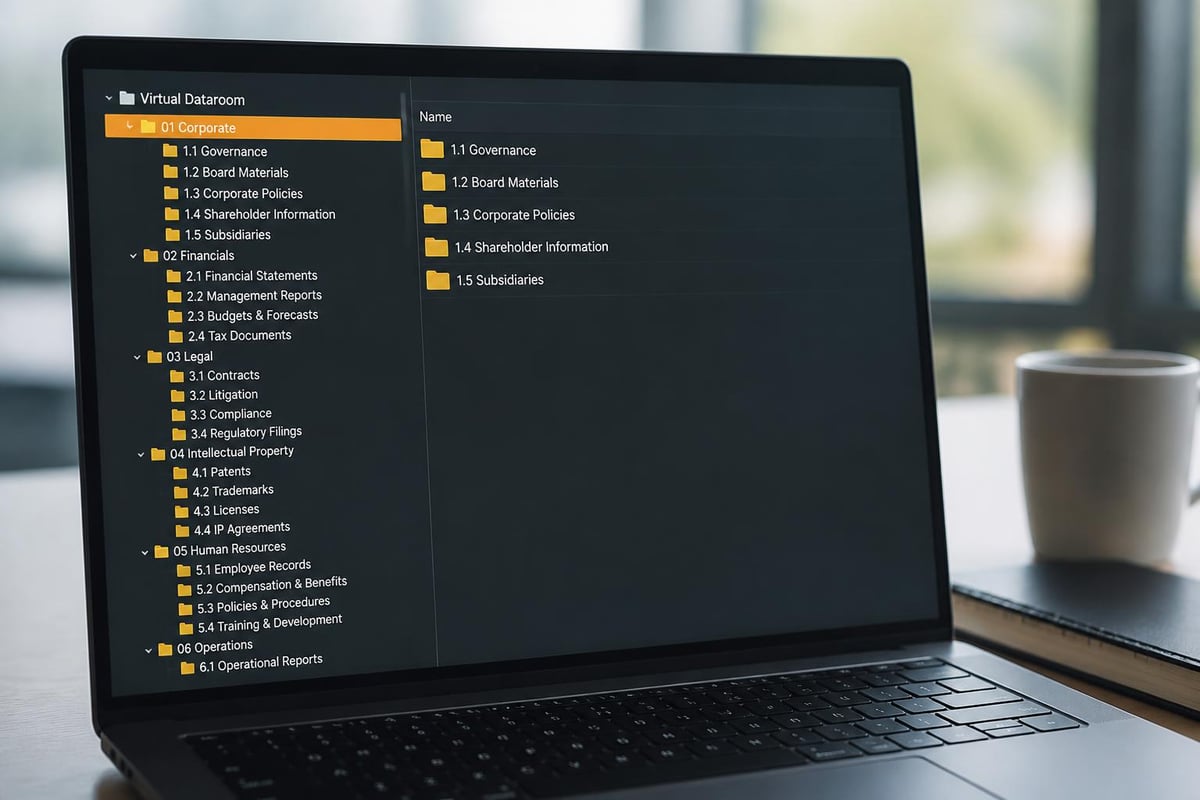
Establish a clear folder hierarchy before uploading documents. Standard M&A transactions typically organise information into categories such as corporate structure, financial information, legal matters, intellectual property, human resources, and operational data. Within each category, create subcategories that reflect natural information groupings and chronological organisation where appropriate.
Consistent naming conventions eliminate confusion and enhance searchability. Include dates in standardised formats, use descriptive file names that communicate content without requiring users to open documents, and avoid special characters that might cause technical issues. Version control systems prevent confusion when documents undergo multiple revisions during transaction processes.
User Management and Permission Configuration
Sophisticated user management capabilities distinguish professional virtual datarooms from basic file-sharing services. Administrators must balance accessibility with security, ensuring authorised users can access necessary information whilst preventing unauthorised viewing or distribution of sensitive materials.
Role-Based Access Models
Implementing role-based access control streamlines permission management across large user groups. Define standard roles such as full administrators, limited administrators, contributors, and viewers, each with predetermined permission sets. This approach reduces configuration time and minimises errors that could result from individual permission assignments.
Custom roles accommodate unique requirements for specific stakeholders or transaction phases. External advisors might require view-only access to specific document categories, whilst internal team members need broader permissions for uploading and organising materials. The flexibility to create tailored permission profiles ensures appropriate access levels without compromising security.
Time-limited access proves particularly valuable for virtual datarooms. Administrators can grant temporary permissions that automatically expire after specified periods, eliminating the need for manual revocation and reducing the risk of outdated access credentials remaining active. This feature proves especially useful for consultants, auditors, or potential buyers who require temporary document access during due diligence windows.
Activity Monitoring and Audit Trails
Comprehensive activity tracking provides transparency and accountability throughout virtual dataroom usage. Detailed audit trails record every user action, including login times, documents viewed, downloads performed, and permission changes made. This information proves invaluable for understanding stakeholder interests, identifying potential security concerns, and maintaining regulatory compliance.
Analytics dashboards transform raw activity data into actionable insights. Administrators can identify which documents attract the most attention, which users demonstrate highest engagement levels, and where potential bottlenecks occur in information review processes. These insights enable proactive communication with stakeholders and help anticipate questions or concerns before they become obstacles to transaction completion.
| Tracked Activity | Business Value | Compliance Benefit |
|---|---|---|
| Document Views | Stakeholder interest indication | Access verification |
| Download Events | Information distribution tracking | Data leakage prevention |
| Login Patterns | User engagement monitoring | Unauthorised access detection |
| Permission Changes | Access control oversight | Security audit trail |
| Search Queries | Information needs identification | Due diligence documentation |
Advanced Features and Optimisation Techniques
Beyond fundamental security and organisation capabilities, advanced virtual dataroom features enhance efficiency and user experience. Understanding these sophisticated functions enables organisations to maximise their platform investment and differentiate their data room implementation from competitors.
Q&A Management Systems
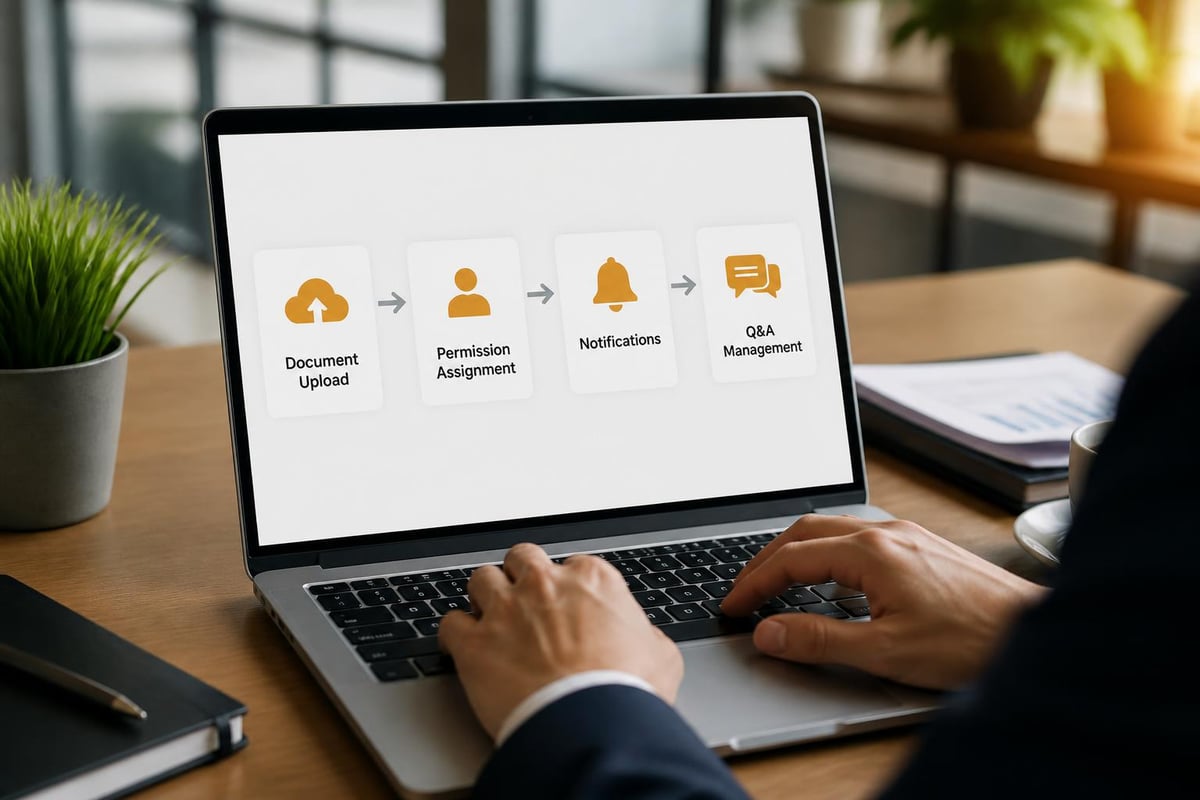
Integrated question and answer modules streamline communication during due diligence processes. Rather than managing queries through separate email threads or messaging platforms, stakeholders can submit questions directly within the virtual dataroom interface. This centralisation ensures questions and responses remain connected to relevant documents and maintains a complete transaction record.
Administrators can assign questions to appropriate team members, track response status, and monitor resolution timelines. The transparency provided by centralised Q&A systems reduces duplicate questions, accelerates response times, and creates a searchable knowledge base for future reference. Some platforms offer AI-powered features that suggest relevant documents or previous answers when users submit new questions.
Automated Workflows and Notifications
Workflow automation reduces administrative burden and ensures consistent processes across multiple transactions. Automated notification systems alert relevant stakeholders when new documents are uploaded, permissions change, or questions require attention. These notifications keep all parties informed without requiring constant manual communication.
Template-based setup accelerates virtual dataroom creation for organisations managing multiple similar transactions. Pre-configured folder structures, permission schemes, and notification rules can be deployed instantly for new deals, reducing setup time from days to hours. This efficiency proves particularly valuable for private equity firms, investment banks, or legal practices managing multiple concurrent transactions.
Custom branding options allow organisations to maintain professional presentation standards throughout virtual dataroom interfaces. Logo integration, colour scheme customisation, and personalised welcome messages reinforce brand identity and create cohesive experiences for external stakeholders. This attention to presentation details communicates professionalism and organisational sophistication.
Ongoing Management and Optimisation
Successful virtual dataroom deployment extends beyond initial setup to encompass continuous management and refinement. Regular reviews ensure security measures remain current, document organisation reflects evolving transaction needs, and user experiences meet stakeholder expectations.
Performance Monitoring and User Feedback
Soliciting feedback from virtual dataroom users provides valuable insights for optimisation. Simple surveys or informal check-ins reveal navigation challenges, document discovery issues, or feature requests that might not surface through activity analytics alone. Responsive adjustments based on user feedback improve satisfaction and transaction efficiency.
Performance metrics such as document upload speeds, search functionality response times, and mobile application stability require ongoing monitoring. Technical issues that degrade user experience can undermine stakeholder confidence and delay critical transactions. Proactive monitoring identifies potential problems before they impact users, allowing technical teams to address issues during low-activity periods.
Security Audits and Compliance Reviews
Regular security audits verify that virtual dataroom configurations maintain appropriate protection levels as business needs evolve. Quarterly reviews of user permissions identify accounts requiring deactivation, outdated access levels needing adjustment, and potential security vulnerabilities introduced through configuration changes. These systematic checks prevent permission creep and ensure compliance with internal security policies.
External penetration testing provides independent validation of security measures. Engaging cybersecurity specialists to attempt unauthorised access identifies weaknesses that internal teams might overlook. The insights gained from these exercises inform security enhancements and demonstrate due diligence to stakeholders, regulators, and insurers concerned about data protection practices.
Documentation of security procedures and incident response protocols proves essential for compliance verification and organisational knowledge retention. Maintain current records of encryption standards, authentication requirements, backup procedures, and disaster recovery plans. This documentation supports regulatory audits, facilitates staff training, and ensures continuity when personnel changes occur.
Industry-Specific Considerations
Different sectors face unique challenges and requirements when implementing virtual datarooms. Understanding industry-specific needs enables organisations to configure platforms appropriately and select providers with relevant expertise and compliance certifications.
Financial Services Requirements
Financial institutions managing M&A transactions, capital raises, or regulatory disclosures face stringent compliance obligations and elevated security threats. Virtual datarooms serving this sector must support multi-jurisdictional regulations including MiFID II, SOX, and various securities laws. Transaction values often reach billions, making security breaches potentially catastrophic for all parties involved.
Financial services virtual datarooms typically implement the strictest access controls, most comprehensive audit trails, and shortest data retention policies following transaction completion. The ability to permanently delete information after specified periods addresses regulatory requirements and reduces long-term liability exposure.
Healthcare and Life Sciences Applications
Healthcare organisations and pharmaceutical companies utilise virtual datarooms for clinical trial data management, research collaborations, and licensing negotiations. HIPAA compliance proves mandatory for platforms handling patient information, requiring specific technical safeguards and business associate agreements with virtual dataroom providers.
The collaborative nature of medical research demands sophisticated permission schemes that enable selective information sharing across multiple organisations whilst maintaining strict patient privacy protections. Version control and document annotation features support iterative research processes and regulatory submission requirements.
Legal proceedings involving extensive discovery processes benefit from virtual dataroom capabilities for managing large document volumes. Litigation support features such as redaction tools, privilege logging, and production numbering streamline legal workflows and ensure compliance with court-ordered disclosure requirements.
Implementing a robust virtual dataroom strategy strengthens your organisation’s ability to manage sensitive information securely whilst maintaining operational efficiency across critical business transactions. The combination of advanced security features, intuitive organisation systems, and comprehensive access controls provides the foundation for successful due diligence processes and stakeholder collaboration. vBoxx delivers enterprise-grade secure cloud solutions that prioritise privacy, security, and reliability through sustainable infrastructure designed to protect your most valuable digital assets. Whether you require secure document management, encrypted communications, or comprehensive backup solutions, our expert team provides the consultancy and technical support needed to implement data protection strategies aligned with your business objectives.