
Cloud-first strategies are transforming how organisations operate, and consequently, in 2026, private clouds stand at the heart of secure, agile digital transformation. As businesses continue to face mounting pressures around data privacy, regulatory compliance, and the need for customisability, private clouds offer a trusted and strategic solution.
Moreover, growing concerns over data control and evolving regulations are pushing more enterprises to re-evaluate their cloud choices. In response, private clouds empower organisations to tailor environments to their specific operational and compliance needs, while simultaneously safeguarding sensitive information.
Against this backdrop, this handbook serves as your definitive guide to understanding, deploying, and optimising private clouds for long-term success. In addition, you will discover what private clouds are, explore their core business benefits, and follow step-by-step deployment strategies. Furthermore, we examine essential security considerations, emerging future trends, and practical guidance on selecting the ideal solution for your organisation. Ultimately, this comprehensive approach ensures you are well prepared for sustainable digital growth.
Understanding Private Clouds: Definitions, Types, and Key Concepts
Private clouds are purpose-built computing environments engineered exclusively for a single organisation. Unlike public clouds, where resources are shared among multiple tenants, private clouds deliver a dedicated, single-tenant infrastructure. This distinction is vital for businesses that require enhanced control, security, and regulatory compliance. Private clouds can be deployed on-premises, where hardware is located within an organisation’s own data centre, or hosted by a trusted third party. Both approaches provide full customisation, making private clouds the preferred choice for enterprises with strict data governance needs.

What is a Private Cloud?
A private cloud is a computing model where IT resources are provisioned for exclusive use by one organisation, either on-premises or through a dedicated hosting provider. In essence, it is designed to deliver enhanced control and exclusivity. In contrast to public or hybrid cloud models, private clouds offer single-tenant environments, thereby ensuring that data and workloads are fully isolated from other users.
As a result, this architecture provides greater control, allowing businesses to tailor security, compliance, and performance settings to their precise requirements. For instance, an on-premises private cloud resides within a company’s own facilities, whereas a hosted private cloud leverages a provider’s infrastructure while still maintaining dedicated resources. Ultimately, both approaches prioritise control, customisation, and security.
Types of Private Cloud Deployments
Private clouds come in several deployment models to address diverse organisational requirements. The main types include:
- Virtual private clouds: Segregated environments within a shared infrastructure, offering logical isolation.
- Managed private clouds: Providers handle management, maintenance, and support, reducing internal IT overhead.
- Hosted private clouds: Infrastructure is dedicated to one client but physically located in a provider’s data centre.
- Community clouds: Designed for organisations in the same sector, these environments meet shared compliance or regulatory needs.
Each model enables private clouds to deliver varying degrees of control and flexibility, catering to both SMEs and large enterprises.
Core Components and Architecture
The architecture of private clouds is built on advanced virtualisation technologies like VMware, Hyper-V, or KVM. These platforms separate physical hardware into multiple virtual machines, optimising resource usage. Core components include storage systems, compute resources, and robust networking layers. Management platforms automate provisioning and monitoring, while interoperability ensures integration with existing systems. Scalability is central, allowing private clouds to expand resources horizontally or vertically as business needs evolve.
Private Cloud Use Cases and Industry Adoption Private clouds are rapidly gaining traction across sectors such as finance, healthcare, and government, where data control and compliance are paramount. Key business drivers include regulatory requirements, heightened security, and the need for consistent performance. According to Private cloud adoption statistics 2025, investment in private clouds has risen significantly, with adoption rates climbing as organisations prioritise sovereignty and resilience. This trend is expected to accelerate as new regulations and digital transformation initiatives take hold. Private Cloud vs. Public and Hybrid Clouds
When comparing private clouds with public and hybrid alternatives, several factors stand out. Private clouds excel in security and compliance, offering isolated resources and custom policies. Public clouds provide cost-effective scalability but involve shared infrastructure, potentially raising data privacy concerns. Hybrid clouds blend both models, enabling flexible workload placement.
| Feature | >Private Clouds | Public Clouds | Hybrid Clouds |
|---|---|---|---|
| Security | High | Moderate | Varies |
| Cost | Predictable | Variable | Mixed |
| Performance | Guaranteed | Shared | Flexible |
| Regulatory Fit | Strong | Limited | Adaptive |
Selecting the right model depends on workload sensitivity, compliance needs, and growth strategy.
Business Benefits of Private Clouds in 2026
Private clouds have become essential for organisations seeking advanced data protection, regulatory alignment, and bespoke IT environments. In 2026, the advantages of private clouds are more pronounced than ever, spanning security, flexibility, performance, cost management, seamless integration, and sustainability. Explore these core benefits to understand why private clouds are the strategic choice for forward-thinking businesses.

Enhanced Security and Data Sovereignty
Security remains a primary motivator for private clouds in 2026. Organisations gain peace of mind with robust encryption, granular access controls, and continuous monitoring. These environments are designed to meet strict data residency and compliance requirements, such as GDPR and NIS2.
Private clo
uds offer advanced features that reduce real-world security incidents. For example, financial institutions have reported a significant drop in breaches by adopting dedicated infrastructure. To further understand how encryption strengthens cloud security, see Encrypted cloud service benefits.
Customisability and Control
Private clo
uds empower organisations to tailor their IT infrastructure to precise business needs. This customisability is vital for sectors with strict compliance and operational requirements.
With private clouds, businesses can:
- Allocate dedicated resources
- Define bespoke compliance policies
- Optimise configurations for unique workflows
For instance, healthcare providers can implement specific access protocols and integrate specialised applications, ensuring both compliance and operational efficiency.
Performance and Reliability
Performance is a defining advantage of private clouds. Organisations benefit from guaranteed resource availability and high service-level agreements for uptime, often reaching 99.99 percent.
Private clouds deliver consistent low-latency environments, essential for industries like finance that demand real-time processing. Built-in disaster recovery options further enhance reliability, ensuring business continuity even during unexpected events.
Cost Efficiency and Predictable Pricing
Cost management is a critical consideration for modern IT leaders. Private clouds provide predictable pricing models, whether fixed or usage-based, allowing for accurate budgeting.
Compared to public cloud alternatives, private clouds often deliver a lower total cost of ownership over time. Resource optimisation, reduced data egress fees, and the elimination of noisy neighbour issues contribute to long-term savings and financial transparency.
Integration with Existing IT Infrastructure
Many organisations must bridge legacy systems with modern cloud services. Private clouds make this integration seamless, supporting hybrid strategies and incremental migrations.
Businesses can:
- Migrate legacy applications without disruption
- Leverage hybrid setups to maintain critical on-premises workloads
- Simplify management with unified dashboards
This approach enables organisations to modernise at their own pace, reducing risk and ensuring operational continuity.
Sustainability and Green IT Practices
Sustainability is a growing priority for enterprises. Private clouds hosted in energy-efficient data centres help reduce overall carbon footprints.
Leading providers implement resource pooling and advanced cooling technologies, aligning private clouds with corporate ESG goals. Recent studies show that private cloud adoption can lead to measurable reductions in energy consumption, supporting both environmental responsibility and cost savings.
Step-by-Step Guide: Deploying a Private Cloud in 2026
Deploying private clouds in 2026 requires a structured, strategic approach. Follow this detailed guide to ensure your organisation’s journey is efficient, secure, and future-proof.

Assessing Organisational Needs and Readiness
The first step in deploying private clouds is to assess your organisation’s current state and objectives. Begin by identifying the primary business drivers, such as compliance, performance, or data sovereignty.
Evaluate your existing IT landscape, including workloads, legacy systems, and integration points. Engage stakeholders from across departments to align expectations and set realistic budgets.
Ask critical questions: What are your must-have features? What regulatory standards must you meet? This careful analysis lays the foundation for a successful private clouds deployment.
Choosing the Right Private Cloud Model
Selecting the appropriate deployment model is crucial for maximising the value of private clouds. To begin with, organisations can choose from on-premises, hosted, and managed solutions, each offering unique benefits and considerations.
For example, on-premises models provide maximum control and data residency, making them particularly suitable for organisations with strict compliance requirements. In contrast, hosted and managed models deliver greater scalability and reduced operational overhead. As a result, they are well suited to businesses seeking flexibility and operational agility.
Furthermore, for SMEs, managed private clouds often represent a cost-effective entry point. Meanwhile, large enterprises may prefer on-premises deployments for deeper customisation and control. Therefore, it is essential to assess your internal resources, security requirements, and long-term growth plans before making a final decision.
Selecting Technology Stack and Partners
Choosing the right technology stack and partners is vital for secure and efficient private clouds. Evaluate virtualisation platforms like VMware or Hyper-V, storage solutions, and networking technologies.
When selecting vendors or managed service providers, prioritise those with proven track records and robust support. Certifications like ISO 27001 are essential for demonstrating security commitment. For a deeper understanding, refer to the ISO 27001 business security guide.
Ensure your partners align with your compliance, support, and scalability needs. This step reduces risk and accelerates your private clouds deployment.
Designing Secure and Scalable Architecture
A resilient architecture is the backbone of successful private clouds. Focus on network segmentation, firewalls, and zero-trust security principles to minimise vulnerabilities.
Plan for scalability by designing both horizontal and vertical scaling options. For organisations with multiple locations, consider multi-site deployments to enhance resilience and disaster recovery.
Use automation tools for provisioning and management, ensuring interoperability across platforms. This approach guarantees your private clouds are both secure and future-ready.
Implementation and Migration Best Practices
Smooth implementation depends on meticulous planning. Begin with a detailed migration strategy, mapping out each stage and identifying potential risks.
Leverage migration tools that minimise downtime and automate data transfer. Train staff early, providing clear documentation and change management support.
Conduct pilot migrations to validate processes before moving mission-critical workloads. By following these best practices, your transition will be seamless and low-risk.
Ongoing Management, Monitoring, and Optimisation
Effective management is key to sustaining performance and security. Implement automated monitoring and alerting to track system health and detect anomalies.
Regularly review performance metrics and adjust resources for optimal efficiency. Schedule routine security audits and compliance checks to address emerging threats and regulatory changes.
Adopt a continuous improvement cycle, learning from incidents and user feedback. This proactive approach ensures your private clouds remain robust, compliant, and cost-effective.
Security, Compliance, and Risk Management in Private Clouds
Security, compliance, and risk management form the backbone of successful private clouds in 2026. With rising threats and stricter regulations, organisations must adopt holistic strategies that protect data, ensure compliance, and mitigate risks at every layer.
Security Frameworks and Best Practices
Effective security in private clouds relies on a multi-layered approach. Organisations should implement:
- Identity and Access Management (IAM) with strict role-based controls
- Encryption for data at rest and in transit
- Regular vulnerability assessments and patch management
- Network segmentation and robust firewalls
Emphasising encryption, enable businesses to maintain control over sensitive assets. Automated monitoring and real-time alerts further reduce incident response times. By integrating these best practices, private clouds can provide a secure environment that meets both operational and regulatory demands.
Compliance with Evolving Regulations
Regulatory compliance is a key driver for the adoption of private clouds, especially in Europe. Meeting GDPR, NIS2, and sector-specific standards is essential for avoiding penalties and maintaining customer trust. Tools for compliance automation and detailed reporting are now standard in private cloud environments.
Recent cases highlight the cost of non-compliance, with fines reaching millions. For a deeper understanding of NIS2 requirements and practical steps for private clouds, consult the NIS2 guide to data compliance. Staying ahead of evolving regulations is critical for long-term resilience.
Threat Landscape and Mitigation Strategies
The threat landscape is dynamic, with attackers targeting valuable data. Common risks include:
- Insider threats exploiting privileged access
- Ransomware disrupting critical operations
- Data breaches exposing sensitive information
Organisations must develop incident response plans and ensure business continuity. Regular training, network monitoring, and backup strategies are vital. In healthcare, for example, breach statistics underscore the importance of proactive security for private clouds, as patient data is a frequent target.
Privacy by Design and Data Residency
Embedding privacy into the architecture of private clouds is now a legal and operational necessity. Data localisation laws require that information remains within specific jurisdictions, impacting multinational organisations.
Designing private clouds with privacy by design ensures compliance from the outset. For example, European data residency mandates have prompted organisations to select providers with local data centres. This approach not only meets legal obligations but also enhances customer trust and transparency.
Auditing, Reporting, and Continuous Improvement
Continuous improvement is essential for the security posture of private clouds. Regular third-party audits and industry certifications validate compliance efforts.
- Schedule annual security audits
- Implement real-time compliance dashboards
- Review policies as regulations evolve
These steps enable organisations to identify gaps and adapt quickly. By fostering a culture of continuous improvement, private clouds remain resilient against emerging threats and shifting regulatory landscapes.
vBoxx: Secure Private Cloud Solutions for European Businesses
vBoxx delivers private clouds tailored for compliance-focused organisations across Europe. Their solutions emphasise European data residency, robust privacy controls, and ISO 27001 certification.
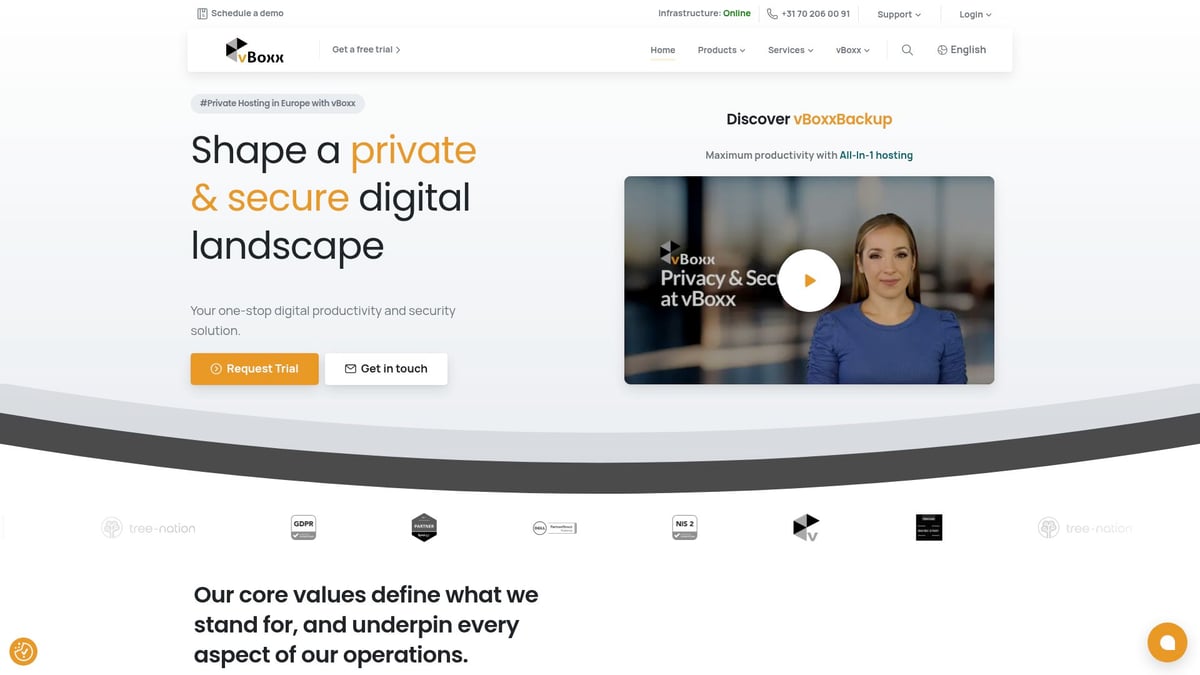
Both SMEs and large enterprises benefit from vBoxx’s green hosting and customisable infrastructure. With transparent policies and dedicated support, vBoxx helps businesses meet strict regulatory demands while optimising performance and sustainability in private clouds.
Future Trends and Innovations in Private Clouds
The landscape of private clouds is evolving rapidly, with several key trends shaping the future of enterprise IT. From AI-driven automation to sustainability, organisations must stay ahead to maximise value and security. Let us explore the innovations redefining private clouds in 2026.
AI and Automation in Private Cloud Management
Artificial intelligence is transforming private clouds by enabling predictive analytics, automated scaling, and self-healing environments. Intelligent monitoring tools now detect anomalies and optimise resource allocation in real time, reducing manual intervention. AI-driven security enhances threat detection and response, offering robust protection for sensitive workloads.
According to the Private cloud market analysis 2024-2025, integration of AI and managed services is a major growth driver for private clouds. As AI adoption accelerates, expect even greater automation, cost savings, and efficiency across private cloud operations.
Edge Computing and Private Cloud Integration
Edge computing is reshaping private clouds for organisations that require real-time data processing. By deploying compute resources closer to where data is generated, businesses reduce latency and support IoT initiatives more effectively. Distributed private cloud architectures are becoming standard in sectors like manufacturing and logistics.
Industry statistics show that edge-cloud convergence is accelerating, driven by the need for speed and regulatory compliance. Private clouds now offer seamless integration with edge devices, ensuring secure, scalable, and high-performance solutions for mission-critical applications.
Zero Trust and Advanced Security Paradigms
Zero trust security models are now essential in private clouds. Instead of relying on traditional perimeter defences, zero trust requires continuous verification of users and devices. Technologies such as micro-segmentation and adaptive authentication limit lateral movement and reduce the attack surface.
Financial and healthcare organisations are leading the adoption of zero trust network access (ZTNA) in private clouds, responding to rising threats such as ransomware and insider attacks. This shift strengthens data protection, especially for highly regulated industries.
Sustainable and Green Private Cloud Innovations
Sustainability is at the forefront of private cloud innovation. Providers are investing in carbon-neutral data centres and using renewable energy to power infrastructure. Efficient resource pooling and advanced cooling systems help reduce energy consumption significantly.
European regulations are encouraging green IT practices, and many private clouds now align with corporate ESG goals. One leading provider reported a 30% reduction in carbon footprint after upgrading to energy-efficient technologies, setting new benchmarks for responsible cloud operations.
Evolving Compliance and Data Sovereignty Challenges
Compliance requirements are becoming more complex for private clouds, especially with stricter data residency laws on the horizon. Organisations must prepare for changes in GDPR, NIS2, and sector-specific rules, which impact cross-border data flows and storage practices.
For European businesses, European cloud independence is a growing priority. Private clouds must adapt to these evolving regulations by providing transparent data localisation, robust auditing, and flexible compliance tools to future-proof operations.
The Role of Open Source and Interoperability
Open source platforms are driving interoperability and innovation in private clouds. Technologies like OpenStack and Kubernetes empower organisations to avoid vendor lock-in and enable multi-cloud orchestration. Cloud-native solutions are now standard in large enterprises, supporting rapid deployment and scaling.
Interoperability ensures that private clouds can integrate smoothly with existing IT systems and public cloud services. This flexibility enables organisations to tailor their cloud strategy, maximising agility and competitiveness in a fast-changing digital world.
How to Choose the Right Private Cloud Solution for Your Organisation
Selecting the most suitable private clouds solution for your organisation in 2026 requires a structured approach. With evolving requirements, regulations, and technology, your decision must address both short-term objectives and long-term growth. Let’s break down the essential steps.
Assessing Business Requirements and Constraints
Start by engaging stakeholders to identify core business drivers for adopting private clouds. Map out your workloads, data sensitivity, and compliance obligations. Are you prioritising security, performance, or regulatory alignment? For instance, retail and healthcare organisations will have distinct needs. Reviewing current adoption rates and industry trends, such as those in the Cloud computing statistics 2025, can help benchmark your strategy.
Evaluating Providers and Technology Partners
A rigorous provider evaluation is vital. Use a detailed RFP process, focusing on certifications, support levels, and service level agreements. Check for evidence of experience with private clouds in your sector and request customer testimonials. Reliable partners should demonstrate robust support, transparent pricing, and proven compliance credentials, ensuring your organisation’s requirements are met.
Cost, Performance, and Scalability Considerations
Assess the total cost of ownership alongside return on investment projections for private clouds. Compare providers using performance benchmarks and scalability options. Consider this summary:
SecurityHighModerate
| Factor | Private Clouds | Public Clouds |
|---|---|---|
| Se | ||
| Cost Control | Predictable | Variable |
| Scalability | Flexible | Highly Flexible |
Plan for future growth with scalable architecture, ensuring the solution will adapt as your business evolves.
Migration, Support, and Long-Term Strategy
A successful transition to private clouds requires a clear migration roadmap. Evaluate each provider’s migration support, training, and long-term partnership approach. Ongoing collaboration is crucial for continuous improvement, especially as your organisation’s needs shift over time. Choose partners committed to proactive support and innovation.
Checklist for Decision Makers
Use this step-by-step checklist to guide your selection:
- Define business objectives and compliance needs
- Evaluate providers’ credentials and references
- Compare costs, performance, and scalability
- Develop a migration and support plan
- Gain stakeholder buy-in and set measurable goals
By following these steps, you can ensure your organisation harnesses the full potential of private clouds.
As you consider your organisation’s next steps in securing data, achieving compliance, and building a futureproof private cloud, it’s important to see how these strategies apply to your own unique environment. We’ve explored what’s essential for 2026, from security and performance to sustainability and integration. If you’d like a hands on look at how a tailored private cloud could work for you, why not schedule a demo with vBoxx? Together, we can explore practical solutions that match your business’s needs and set you up for long term success.