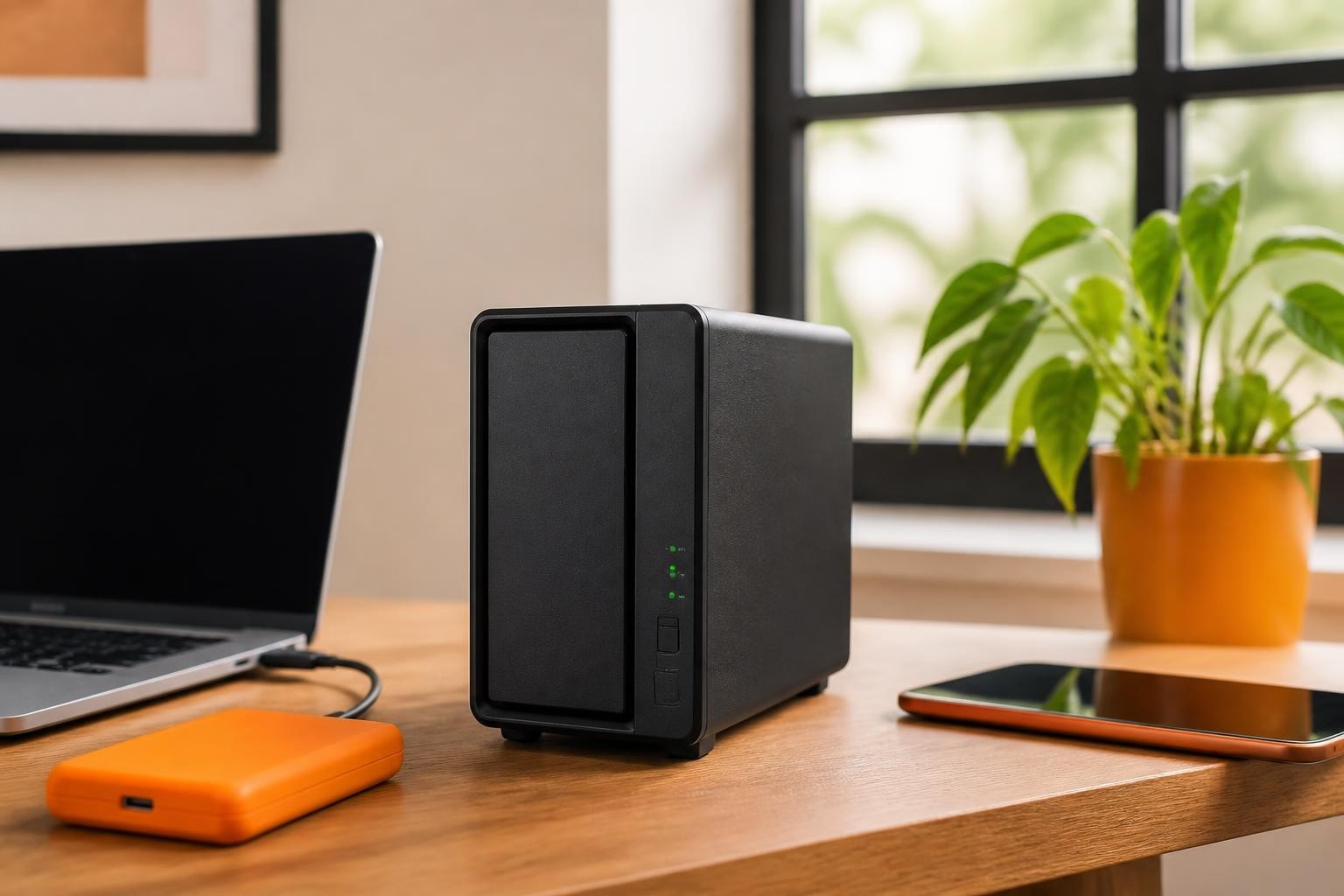

The demand for reliable, scalable network-attached storage continues to grow as businesses generate increasing volumes of critical data. In particular, the RS1221RP represents a purpose-built solution designed to address enterprise storage challenges whilst maintaining the security and performance standards modern organisations require. Furthermore, this rackmount NAS system combines a compact design with robust capabilities. As a result, it provides businesses with a solid foundation for data management, backup strategies, and collaborative workflows without compromising reliability or accessibility.
Understanding the RS1221RP Architecture
The RS1221RP delivers enterprise-grade storage through carefully engineered hardware specifications that balance performance with operational efficiency. In particular, this system features an AMD Ryzen V1500B quad-core processor, providing the computational power necessary for handling multiple concurrent operations, from file transfers to virtualised applications. Furthermore, this ensures stable performance under sustained workloads. As a result, organisations can support demanding storage tasks with greater efficiency and responsiveness.
Hardware Foundation and Specifications
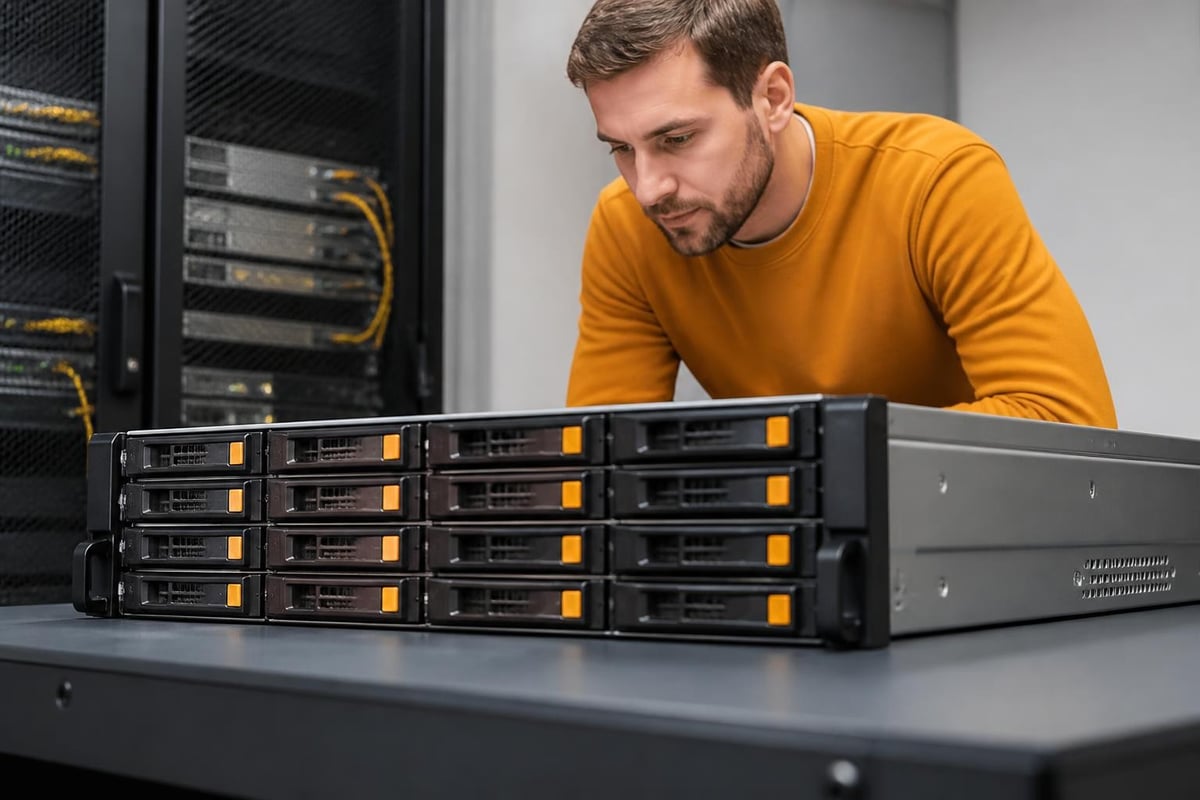
The technical specifications of the RS1221RP reveal a system designed for sustained workloads. The base configuration includes 4GB DDR4 ECC memory, expandable to 32GB, ensuring data integrity during memory operations whilst providing headroom for future growth.
Key hardware components include:
- Eight hot-swappable drive bays supporting 3.5-inch and 2.5-inch SATA drives
- Four 1GbE RJ-45 network ports with failover and link aggregation support
- Two USB 3.2 Gen 1 ports for external storage expansion
- Dual power supply units for redundancy and uninterrupted operation
- 2U rackmount form factor optimized for standard server racks
The inclusion of ECC memory distinguishes the RS1221RP from consumer-grade solutions, providing automatic error detection and correction that prevents data corruption during intensive operations. In particular, this feature proves especially valuable for businesses running databases, virtualisation environments, or mission-critical applications. Furthermore, it helps ensure consistent data integrity even under heavy system load. As a result, organisations can maintain higher reliability and reduce the risk of data-related failures in critical workloads.
Storage Capacity and Expansion Options
Storage scalability represents a fundamental consideration for growing businesses. The rs1221rp accommodates up to eight drives internally, supporting individual drives up to 18TB each, yielding a maximum raw capacity exceeding 140TB before RAID overhead calculations.
Beyond internal capacity, the system supports expansion through dedicated units, potentially scaling to accommodate substantially larger data volumes. The performance metrics and hardware capabilities demonstrate throughput sufficient for demanding workloads across multiple departments simultaneously.
| Configuration | Drive Count | Raw Capacity (18TB drives) | Usable Capacity (RAID 6) |
|---|---|---|---|
| Base Unit | 8 | 144TB | ~108TB |
| With 1 Expansion | 13 | 234TB | ~180TB |
| With 2 Expansions | 18 | 324TB | ~252TB |
RAID Configurations and Data Protection
Selecting appropriate RAID levels balances storage efficiency, performance, and redundancy according to specific business requirements. The rs1221rp supports multiple RAID types, each offering distinct advantages for different deployment scenarios.
RAID Level Comparison
RAID 0 delivers maximum performance and capacity by striping data across drives without redundancy. Whilst this configuration offers the fastest read and write speeds, the failure of any single drive results in complete data loss, making it suitable only for non-critical temporary data or cache purposes.
RAID 1 mirrors data across drive pairs, providing complete redundancy at the cost of 50% storage efficiency. Organizations prioritizing data protection over capacity often deploy RAID 1 for critical databases or configuration files where recovery speed and certainty outweigh storage economy.
RAID 5 stripes data across multiple drives whilst storing parity information, allowing the system to survive a single drive failure. This configuration offers a practical balance between capacity utilization (approximately 75-87% depending on drive count) and fault tolerance for general-purpose business storage.
RAID 6 extends RAID 5 principles by calculating dual parity, enabling the array to withstand two simultaneous drive failures. The RAID configurations supported make this level particularly appropriate for large-capacity deployments where drive rebuild times could otherwise create vulnerability windows.
Hybrid RAID and SSD Cache
The RS1221RP supports Synology Hybrid RAID (SHR), which automatically optimises storage efficiency when combining drives of different capacities. In particular, this flexibility proves valuable during phased storage upgrades or when budget constraints necessitate incremental expansion rather than wholesale replacement. Furthermore, it allows organisations to scale storage more efficiently over time. As a result, businesses can balance cost control with growing capacity needs.
SSD caching functionality allows organisations to accelerate frequently accessed data without converting entirely to solid-state storage. Moreover, by installing SSDs in designated bays, the system intelligently caches hot data, dramatically improving response times for applications. Consequently, organisations can achieve faster performance while still maintaining cost-effective spinning disk storage for archival content.
Network Performance and Connectivity
Network infrastructure determines how effectively users can access stored data across the organisation. In particular, the RS1221RP implements four Gigabit Ethernet ports, enabling administrators to configure connections according to bandwidth requirements and redundancy needs. Furthermore, this provides flexibility in designing resilient and high-performance network setups. As a result, organisations can optimise both availability and data transfer efficiency across their infrastructure.
Link Aggregation and Failover
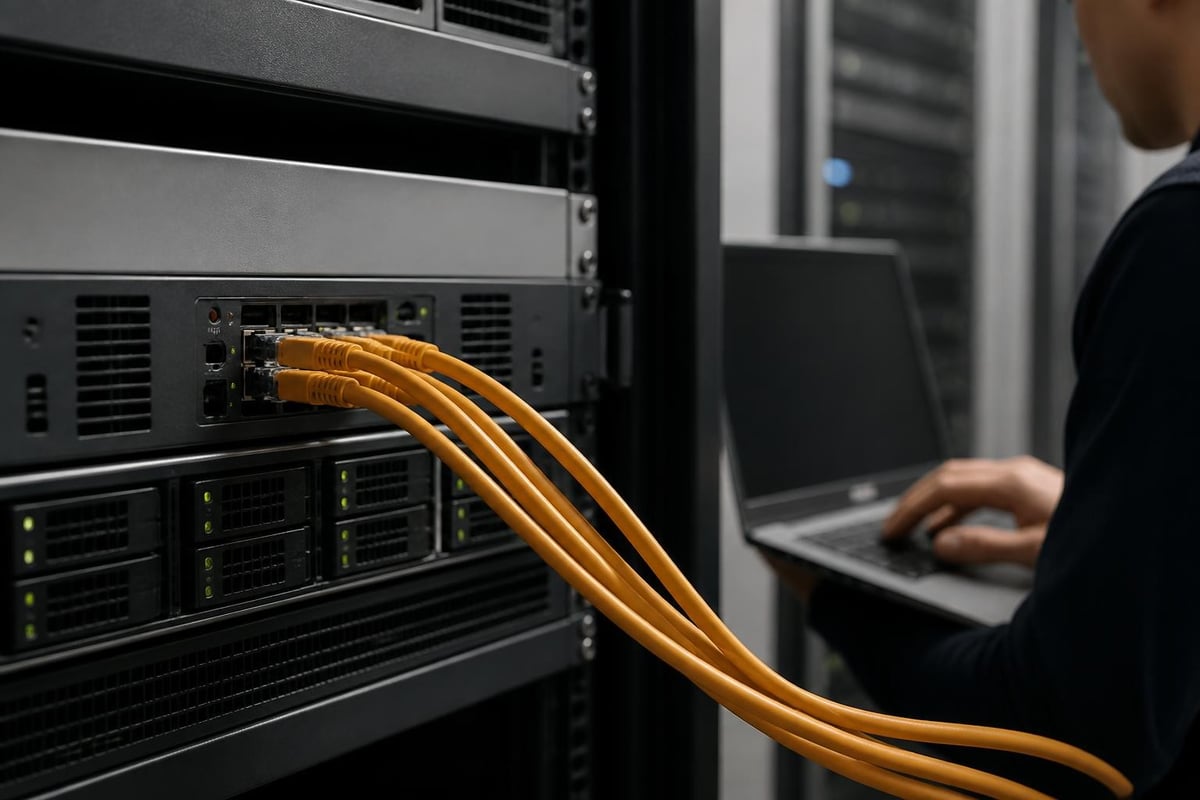
Link aggregation combines multiple physical network connections into a single logical interface, multiplying available bandwidth up to the theoretical maximum of 4 Gbps. In particular, this configuration proves especially beneficial when multiple users simultaneously access large files, stream video content, or run virtualised applications from the NAS. Furthermore, it helps distribute network traffic more efficiently across available interfaces. As a result, organisations can achieve improved performance, reduced congestion, and a more responsive user experience.
Deployment strategies include:
- Active-active aggregation distributing traffic across all interfaces for maximum throughput
- Active-passive failover maintaining standby connections that activate automatically upon primary link failure
- Hybrid configurations balancing performance optimization with redundancy requirements
- VLAN segmentation isolating traffic types across separate physical interfaces for security and quality of service
Businesses operating multiple network segments often assign individual interfaces to distinct VLANs, separating production traffic from backup operations or isolating departmental access for compliance purposes.
Deployment Scenarios for Business Environments
The versatility of the rs1221rp accommodates diverse organizational requirements, from centralized file serving to complex virtualization hosting. Understanding common deployment patterns helps businesses architect solutions aligned with operational objectives.
Centralized File Storage and Collaboration
Many organizations deploy the rs1221rp as a primary repository for shared documents, project files, and collaborative content. The system integrates with Windows Active Directory, enabling centralized user authentication and permission management that mirrors existing IT infrastructure.
Businesses seeking secure cloud storage alternatives often combine local NAS systems with cloud replication strategies, maintaining on-premises performance whilst achieving off-site backup protection. The rs1221rp supports scheduled synchronization to remote locations, ensuring business continuity even in disaster scenarios.
Backup Target and Data Protection
Deploying the rs1221rp as a backup destination consolidates protection across workstations, servers, and applications. The system accommodates various backup methodologies, from simple file copies to application-aware snapshots that capture consistent point-in-time states of databases and virtual machines.
The snapshot functionality enables rapid recovery without consuming significant additional storage through block-level change tracking. Organizations can maintain dozens of recovery points spanning days or weeks, providing granular restoration options when files become corrupted or accidentally deleted.
| Backup Method | Recovery Speed | Storage Efficiency | Use Case |
|---|---|---|---|
| Full Backup | Fast | Low | Weekly baseline |
| Incremental | Medium | High | Daily changes |
| Snapshot | Very Fast | Very High | Hourly recovery points |
| Replication | Immediate | Medium | Disaster recovery |
Virtualization and Application Hosting
The processing capabilities of the RS1221RP extend beyond simple file storage into application hosting territory. In particular, organisations can operate virtual machines directly on the NAS, running Windows or Linux instances for specialised services, development environments, or departmental applications. Furthermore, this enables greater flexibility in how infrastructure resources are utilised. As a result, businesses can consolidate workloads and improve operational efficiency.
This consolidation reduces hardware footprint and power consumption whilst simplifying management through centralised administration. Moreover, the system handles moderate virtualisation workloads effectively. However, organisations planning extensive VM deployments should evaluate memory expansion to accommodate multiple concurrent operating systems. Consequently, proper capacity planning ensures stable performance and scalability over time.
Security Considerations and Access Control
Data security encompasses multiple layers, from physical device protection through network transmission security to user authentication and authorisation. In particular, the RS1221RP implements comprehensive security features addressing each vulnerability vector. Furthermore, this layered approach helps reduce exposure to both internal and external threats. As a result, organisations can strengthen overall data protection across their infrastructure.
User Authentication and Permissions
Granular permission systems allow administrators to define exactly which users or groups can access specific folders, ensuring confidential information remains restricted to authorised personnel. In particular, integration with LDAP directories and domain controllers enables single sign-on experiences whilst maintaining centralised credential management. Furthermore, this improves both security consistency and administrative efficiency. As a result, organisations can better control access while simplifying user management across systems.
Two-factor authentication adds an additional verification layer, requiring users to present both password credentials and time-based codes from mobile authenticators. Moreover, this protection proves particularly valuable for remote access scenarios where password compromise represents elevated risk. Consequently, organisations can significantly reduce the likelihood of unauthorised access.
Understanding encrypted online storage principles helps organisations implement defence-in-depth strategies combining multiple protective measures. In addition, layering authentication, encryption, and access controls strengthens overall system resilience. As a result, businesses can achieve a more robust and secure storage environment.
Authentication options include:
- Local user accounts managed directly on the NAS
- Windows Active Directory integration for domain-joined environments
- LDAP directory services for cross-platform authentication
- Two-factor authentication via mobile applications or hardware tokens
- Auto-blocking mechanisms that disable accounts after failed login attempts
Encryption and Data Protection
The RS1221RP supports encrypted shared folders, protecting data at rest through AES-256 encryption algorithms. In particular, while encryption introduces minor performance overhead, the protection against physical theft or unauthorised access justifies the trade-off for sensitive information. Furthermore, this ensures that stored data remains secure even if physical devices are compromised. As a result, organisations can maintain stronger protection for sensitive workloads.
Network transmission security through SMB3 encryption ensures data remains protected whilst traversing corporate networks or internet connections. Moreover, organisations handling regulated information or operating in compliance-driven industries often mandate end-to-end encryption covering both storage and transmission phases. Consequently, this provides comprehensive data protection across both rest and transit states, strengthening overall security posture and regulatory compliance.
Performance Optimization Strategies
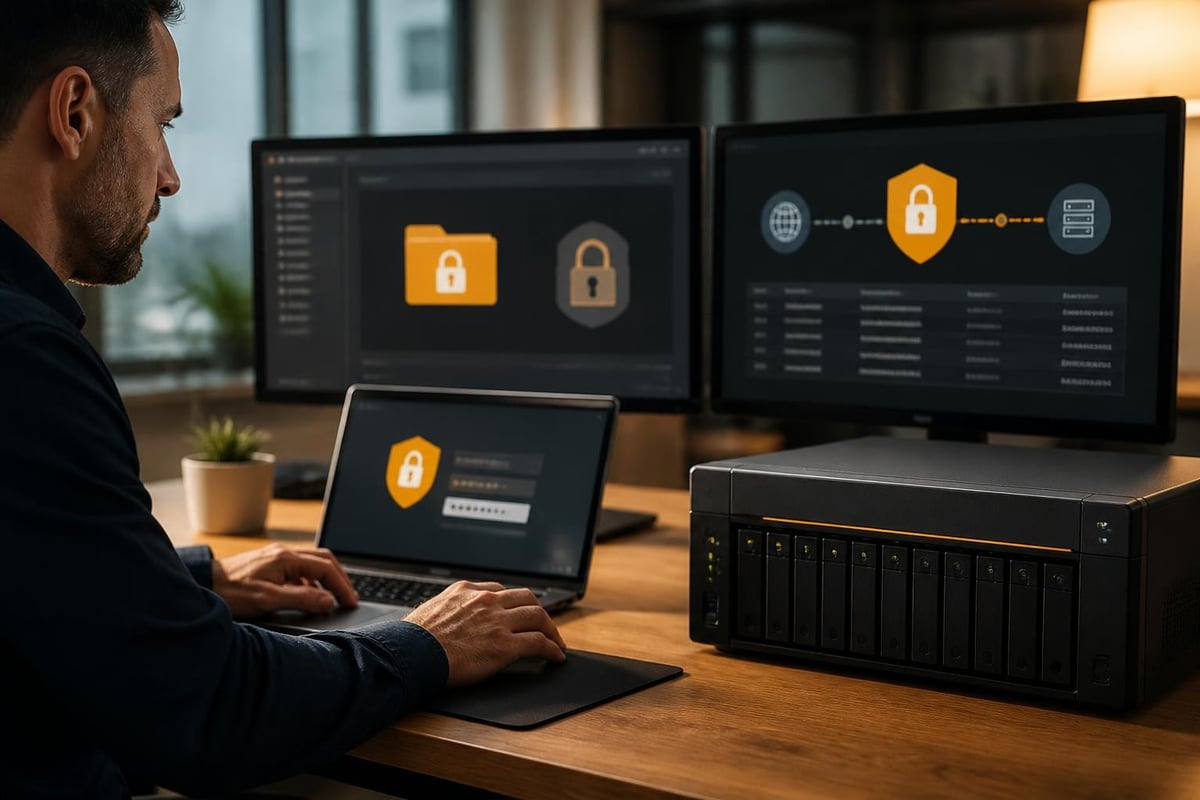
Achieving optimal performance requires understanding both system capabilities and organisational usage patterns. In particular, several configuration choices significantly impact real-world responsiveness and throughput. Furthermore, aligning system settings with workload demands helps ensure consistent performance. As a result, organisations can maximise efficiency and avoid unnecessary bottlenecks.
Memory Expansion Benefits
Increasing system memory beyond the base 4GB configuration delivers measurable performance improvements, particularly for environments with numerous concurrent users or applications. In particular, the RS1221RP supports up to 32GB DDR4 ECC memory, providing substantial headroom for file caching and application hosting. Furthermore, this expanded capacity enables more efficient handling of demanding workloads. As a result, organisations can achieve improved responsiveness and system stability under load.
The operating system intelligently utilises available memory for caching frequently accessed files, dramatically reducing latency for repeated requests. Moreover, organisations experiencing sluggish performance during peak usage periods often find memory expansion provides the most cost-effective improvement path. Consequently, businesses can enhance performance without major infrastructure changes or high capital expenditure.
Network Infrastructure Considerations
NAS performance often bottlenecks at network infrastructure rather than storage subsystem limitations. Ensuring adequate switch capacity, properly configured link aggregation, and quality cabling infrastructure prevents artificial constraints on data transfer rates.
Businesses deploying the rs1221rp should verify that network switches support sufficient backplane bandwidth to accommodate aggregated connections without oversubscription. A 4 Gbps aggregated link proves ineffective when connected to a switch with inadequate internal capacity to support simultaneous full-speed transfers.
Maintenance and Monitoring Best Practices
Proactive system monitoring and preventative maintenance extend operational lifespan whilst minimizing unexpected failures. The rs1221rp includes comprehensive monitoring tools that track system health metrics and alert administrators to developing issues before they impact availability.
Drive Health Monitoring
Regular SMART (Self-Monitoring, Analysis, and Reporting Technology) data review identifies drives exhibiting early failure indicators such as increased error rates, bad sector counts, or elevated temperatures. Replacing drives showing warning signs prevents unexpected failures that could compromise data availability or trigger stressful recovery scenarios.
- Schedule monthly SMART reports to track drive health trends over time
- Configure automatic notifications for SMART threshold violations or system warnings
- Maintain spare drives matching existing specifications for rapid replacement
- Document drive serial numbers and installation dates for warranty tracking
- Test backup restoration quarterly to verify recovery procedures function correctly
Firmware and Software Updates
Maintaining current firmware versions ensures the system benefits from performance improvements, security patches, and feature enhancements. The rs1221rp provides automated update notifications and streamlined installation processes that minimize administrative burden whilst maximizing system security posture.
Organizations should establish maintenance windows for applying updates, balancing the need for current software against operational continuity requirements. Testing updates in non-production environments before deploying to critical systems reduces the risk of unexpected compatibility issues.
Comparing Cloud and On-Premises Storage
The decision between cloud services and on-premises infrastructure like the rs1221rp involves evaluating multiple factors including cost structures, performance requirements, regulatory compliance, and organizational preferences. Neither approach universally supersedes the other; instead, specific circumstances dictate optimal choices.
On-premises advantages:
- Predictable long-term costs without recurring subscription fees
- Lower latency for local access patterns
- Complete organizational control over security policies
- No dependency on internet connectivity for access
- Simplified compliance with data residency requirements
Cloud service advantages:
- Minimal upfront capital expenditure
- Automatic geographic redundancy and disaster recovery
- Scalability without hardware procurement cycles
- Reduced administrative burden through managed services
- Accessible from any location with internet connectivity
Many organizations adopt hybrid approaches, maintaining on-premises systems for primary operations whilst leveraging cloud server hosting for backup replication or disaster recovery purposes. This strategy combines local performance with cloud resilience, creating comprehensive protection without complete dependency on either model.
Those interested in exploring how secure cloud infrastructure complements on-premises storage might benefit from a demonstration all-in-one session, providing hands-on experience with integrated storage and security solutions.
Environmental and Operational Efficiency
Power consumption and cooling requirements contribute substantially to total cost of ownership for storage infrastructure. The rs1221rp implements efficient component selection and intelligent power management features that reduce environmental impact whilst lowering operational expenses.
The system supports scheduled power on/off cycles, allowing organizations to reduce consumption during non-business hours when access requirements diminish. Hard drive hibernation automatically spins down idle drives, further reducing power draw without impacting availability for active data.
| Operating Mode | Typical Power Draw | Use Case |
|---|---|---|
| Full Operation (HDD) | ~90W | Business hours with active access |
| Disk Hibernation | ~45W | After-hours with minimal access |
| Link Aggregation Active | ~95W | High-throughput operations |
Organizations committed to sustainable IT practices appreciate the efficiency improvements that reduce carbon footprint whilst simultaneously lowering electricity costs. The compact size and efficient operation make the system particularly suitable for organizations with space constraints or those seeking to minimize rack density in data centre environments.
Integration with Existing IT Infrastructure
Successful NAS deployment requires seamless integration with established systems, applications, and workflows. The rs1221rp supports industry-standard protocols ensuring compatibility across diverse technology ecosystems.
Protocol Support and Compatibility
The system natively handles SMB/CIFS for Windows environments, AFP for macOS clients, and NFS for Unix-based systems. This multi-protocol support enables heterogeneous networks to access storage without requiring protocol translation or compatibility layers that introduce complexity and potential failure points.
iSCSI target functionality transforms the rs1221rp into block-level storage, presenting volumes to servers as though they were locally attached drives. This capability proves valuable for virtualization hosts, database servers, or applications requiring raw disk access rather than file-level protocols.
Integration capabilities include:
- Windows domain joining with full ACL support
- Time Machine backup target for macOS environments
- Docker container hosting for microservices
- Surveillance station recording for IP cameras
- Email server with spam filtering and antivirus scanning
The announcement of the RS1221RP+ features emphasized expandability characteristics that enable businesses to adapt the platform as requirements evolve, protecting initial investment through flexible growth paths.
Sizing and Capacity Planning
Accurate capacity planning prevents both over-provisioning that wastes resources and under-provisioning that necessitates premature expansion. Understanding current storage consumption patterns and growth trajectories enables informed purchasing decisions aligned with actual requirements.
Organizations should audit existing storage utilization across file servers, shared drives, and departmental repositories to establish baselines. Historical growth rates, adjusted for anticipated business expansion or new initiatives, provide reasonable projections for future needs.
A prudent approach provisions for 24-36 months of anticipated growth, balancing upfront investment against the inefficiency of multiple incremental expansions. The rs1221rp’s expansion capabilities provide flexibility to adjust capacity as actual consumption patterns emerge, reducing pressure to predict requirements with unrealistic precision.
Drive Selection Considerations
Drive selection impacts both performance and reliability characteristics. Enterprise-grade drives rated for continuous operation and higher workload volumes cost more initially but deliver superior longevity and warranty coverage compared to consumer desktop drives.
The choice between traditional spinning disks and solid-state drives depends on performance requirements and budget constraints. Hybrid deployments using SSDs for active data and HDDs for archival content optimize cost-effectiveness whilst maintaining responsive user experiences for frequently accessed information.
The rs1221rp delivers enterprise-grade storage capabilities in a compact, efficient platform suitable for businesses requiring reliable data management without complexity. Organizations seeking to complement on-premises infrastructure with secure, privacy-focused cloud services can explore how vBoxx provides comprehensive hosting solutions that prioritize data protection, sustainable practices, and performance for modern business requirements.