

Organisations worldwide are increasingly reassessing their data storage strategies as security breaches, compliance requirements, and data sovereignty concerns intensify. In this context, private cloud storage has emerged as a compelling solution for businesses that demand complete control over their digital assets, while still maintaining the flexibility and scalability associated with cloud computing. Unlike public cloud alternatives, where infrastructure is shared amongst multiple tenants, private cloud storage provides dedicated resources exclusively for a single organisation, thereby offering enhanced security, customisation, and performance tailored to specific business requirements. Consequently, organisations can achieve both operational efficiency and robust data protection.
Understanding Private Cloud Storage Architecture
Private cloud storage operates on infrastructure dedicated entirely to one organisation, whether hosted on-premises, in a data centre, or managed by a third-party provider. In contrast, this model fundamentally differs from public cloud services by eliminating the multi-tenant architecture that characterises platforms like Amazon S3 or Google Cloud Storage.
Moreover, the architecture typically comprises dedicated storage arrays, virtualisation layers, and management software that work together to create a self-service environment. As a result, organisations can provision storage resources on demand, implement custom security policies, and integrate with existing IT infrastructure without the constraints imposed by public cloud providers. Consequently, private cloud storage enables greater control, flexibility, and security for enterprise data management.
Deployment Models for Business Needs
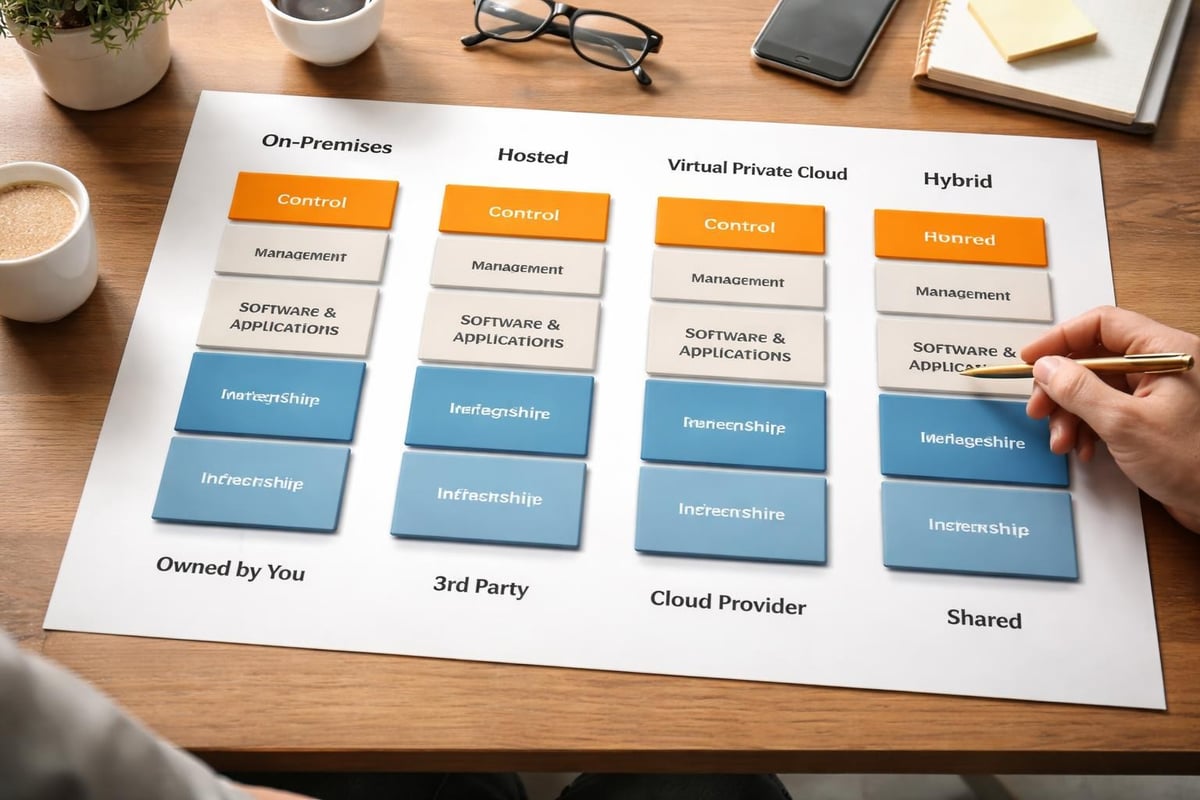
Private cloud storage can be deployed across several distinct models:
- On-premises private cloud: Infrastructure resides within the organisation’s own data centre, providing maximum control and data sovereignty
- Hosted private cloud: Third-party providers manage dedicated infrastructure in their facilities, reducing capital expenditure whilst maintaining isolation
- Virtual private cloud: Logically isolated sections within a public cloud environment, offering a middle ground between private and public models
- Hybrid configurations: Combinations of private and public cloud resources that enable flexible workload placement
Each deployment model presents unique advantages depending on organisational priorities, budget constraints, and technical capabilities. The choice significantly impacts ongoing operational costs, security responsibilities, and scalability potential.
Security Advantages and Considerations
Security represents the primary driver for organisations migrating to private cloud storage solutions. In particular, the dedicated infrastructure model eliminates many risks inherent in multi-tenant environments, however, it also introduces distinct security responsibilities that require careful attention. Therefore, organisations must implement comprehensive policies, monitoring, and access controls to ensure that their private cloud environments remain secure and compliant.
Physical Security Control: Organisations maintaining on-premises private cloud storage exercise complete control over physical access, environmental conditions, and hardware security. This level of control proves essential for industries with stringent regulatory requirements or those handling highly sensitive data. Understanding the unseen risks of cloud storage helps businesses make informed decisions about their infrastructure.
Network Isolation and Segmentation: Private cloud storage enables sophisticated network segmentation strategies that prevent unauthorised access and contain potential breaches. Organisations can implement zero-trust architectures, microsegmentation, and custom firewall rules tailored to their security policies without negotiating with external providers.
| Security Feature | Private Cloud | Public Cloud | Hybrid Cloud |
|---|---|---|---|
| Physical Access Control | Full | None | Partial |
| Custom Encryption Keys | Yes | Limited | Varies |
| Network Isolation | Complete | Logical | Mixed |
| Compliance Auditing | Direct | Dependent | Complex |
| Insider Threat Management | Internal | Shared | Both |
The private cloud security risks require proactive management strategies. Organisations must address vulnerabilities such as outdated virtual machine images, misconfigured access controls, and insider threats through comprehensive security programmes.
Data Encryption and Access Management
Encryption serves as a fundamental security layer for private cloud storage implementations. Organisations should implement encryption both at rest and in transit, utilising hardware security modules (HSMs) or key management services to maintain cryptographic key security.
Access management requires a multi-layered approach incorporating:
- Identity and access management (IAM) systems with role-based access control
- Multi-factor authentication for administrative and privileged accounts
- Regular access reviews to eliminate unnecessary permissions
- Audit logging to track all data access and modifications
- Automated compliance reporting to demonstrate adherence to regulatory requirements
Implementing robust encrypted cloud service solutions ensures that data remains protected even if unauthorised parties gain access to storage systems.
Performance and Customisation Benefits
Private cloud storage delivers performance advantages that are often difficult to achieve in shared public cloud environments. For example, dedicated resources eliminate the “noisy neighbour” problem, whereas other tenants’ workloads in public clouds can impact storage performance unpredictably.
Furthermore, organisations can optimise storage systems for specific workload requirements, by selecting hardware components, storage media types, and network configurations that align with application demands. In addition, this level of customisation extends to data layout strategies, caching policies, and quality-of-service settings, thereby ensuring optimal performance for critical business applications.
Predictable Latency: Applications requiring consistent low-latency storage access benefit significantly from private cloud storage. Database systems, real-time analytics platforms, and media processing workflows achieve superior performance when storage latency remains stable and predictable.
Bandwidth Control: Private cloud storage enables organisations to provision network bandwidth according to actual requirements rather than accepting the limitations imposed by public cloud service tiers. This proves particularly valuable for data-intensive operations such as backup, replication, and batch processing.

Scalability Within Controlled Environments
Whilst public clouds offer theoretically unlimited scalability, private cloud storage provides controlled scalability aligned with business growth patterns. Organisations can plan capacity expansions based on actual usage trends rather than accepting the pricing volatility associated with consumption-based public cloud models.
The benefits and use cases of private cloud storage demonstrate how organisations achieve superior performance whilst maintaining complete control over their infrastructure investments.
Compliance and Data Sovereignty
Regulatory compliance drives many organisations towards private cloud storage solutions. Industries such as healthcare, finance, and government face stringent requirements regarding data handling, storage locations, and access controls that prove challenging to satisfy using public cloud services.
Geographic Data Control: Private cloud storage enables organisations to guarantee that data never leaves specific geographic boundaries, addressing data sovereignty requirements imposed by regulations like GDPR, HIPAA, and sector-specific mandates. This level of control proves impossible when relying on global public cloud providers with distributed infrastructure.
Audit and Compliance Reporting: Private cloud environments simplify compliance auditing by providing complete visibility into infrastructure configuration, access patterns, and data handling procedures. Organisations can produce detailed audit trails demonstrating regulatory compliance without depending on third-party attestations.
Exploring secure cloud data storage options helps businesses understand how to meet compliance requirements whilst leveraging cloud computing benefits.
Industry-Specific Requirements
Different industries face unique compliance challenges that private cloud storage addresses effectively:
- Healthcare: HIPAA compliance requires strict controls over protected health information (PHI), making private cloud storage ideal for electronic health records systems
- Finance: PCI-DSS and financial services regulations demand segregated infrastructure and detailed audit capabilities
- Government: Public sector organisations often require on-premises infrastructure to satisfy national security requirements
- Legal: Attorney-client privilege considerations necessitate complete control over document storage and access
Implementation Best Practices
Successfully deploying private cloud storage requires careful planning, appropriate technology selection, and, importantly, ongoing management commitment. In particular, organisations should follow established best practices so as to maximise return on investment, while also avoiding common implementation pitfalls. Moreover, continuous monitoring and periodic reviews help ensure that the deployment remains aligned with evolving business needs and security requirements.
Planning and Assessment
Begin with a comprehensive assessment of storage requirements, including:
- Current capacity utilisation and growth projections
- Performance requirements for different workload types
- Compliance obligations and data residency requirements
- Integration needs with existing applications and infrastructure
- Budget constraints for both capital and operational expenditure
This assessment informs technology selection and deployment model decisions. Organisations should engage stakeholders across IT, legal, finance, and business units to ensure the solution addresses all requirements.
Technology Selection Criteria: Evaluate storage platforms based on scalability, performance characteristics, management capabilities, and vendor support. Consider open-source alternatives alongside commercial solutions to optimise costs whilst maintaining required functionality.
Following cloud storage best practices ensures implementations align with industry standards and avoid common configuration errors.
Security Hardening and Monitoring
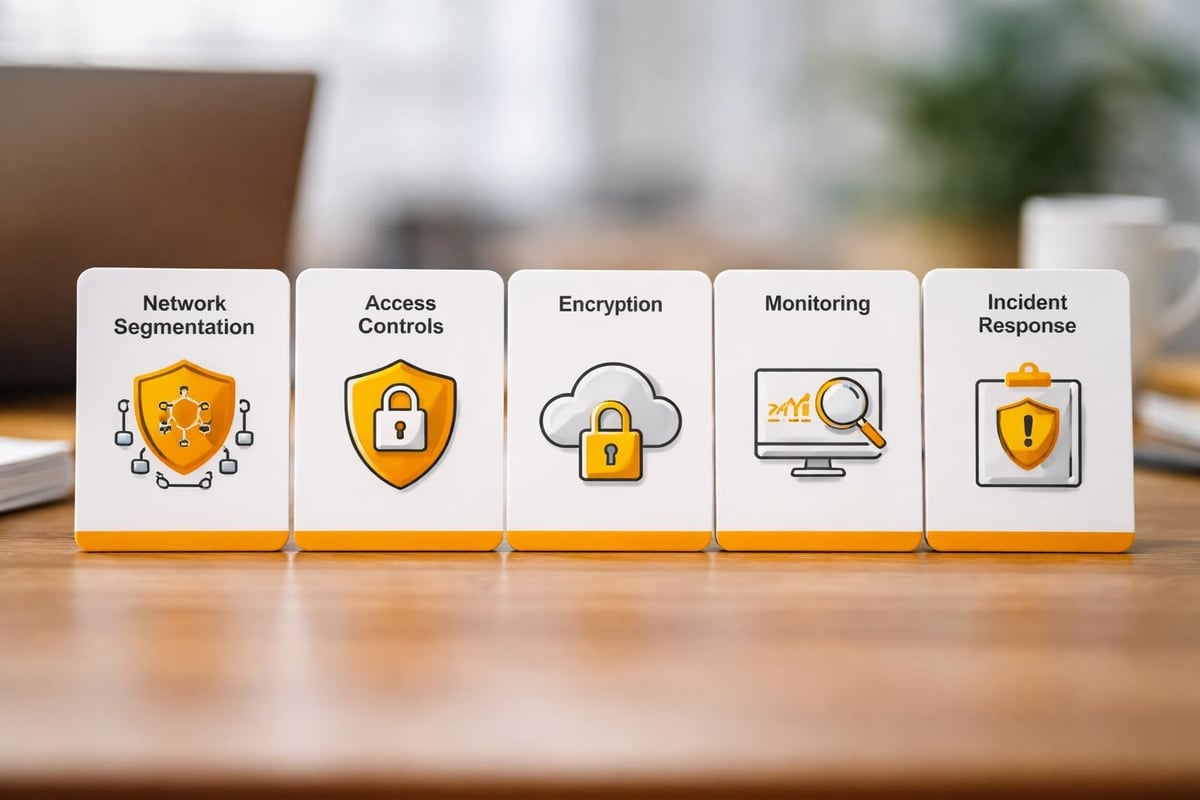
Implement comprehensive security measures from the initial deployment:
- Configure network segmentation to isolate storage infrastructure
- Deploy intrusion detection and prevention systems
- Implement security information and event management (SIEM) solutions
- Establish vulnerability scanning and patch management processes
- Create incident response procedures specific to storage security events
The core principles of private cloud security provide valuable guidance for organisations establishing robust security frameworks. Regular security assessments identify emerging vulnerabilities before they can be exploited.
Operational Management and Automation
Effective private cloud storage management requires investment in operational processes and automation tools. Manual management approaches quickly become unsustainable as storage environments grow in complexity.
| Management Area | Manual Approach Risk | Automation Benefit |
|---|---|---|
| Capacity Planning | Reactive provisioning | Predictive scaling |
| Backup Verification | Inconsistent testing | Automated validation |
| Access Reviews | Quarterly audits | Continuous monitoring |
| Patch Management | Security gaps | Timely updates |
| Performance Tuning | Suboptimal configuration | Data-driven optimization |
Implement infrastructure-as-code practices to manage storage configurations, enabling version control, automated testing, and rapid disaster recovery. This approach reduces human error whilst improving deployment consistency across environments.
Cost Considerations and Total Ownership
Private cloud storage presents a different cost structure compared to public cloud alternatives. Rather than consumption-based pricing, organisations face capital expenditure for infrastructure acquisition and ongoing operational costs for management, maintenance, and facilities.
Capital vs Operational Expenditure: On-premises private cloud storage requires significant upfront investment in hardware, software licences, and data centre infrastructure. Hosted private cloud models convert capital expenditure to predictable operational costs whilst maintaining the benefits of dedicated infrastructure.
Long-term Cost Analysis: Organisations with stable, predictable storage requirements often find private cloud storage more cost-effective over multi-year periods compared to public cloud alternatives. The break-even point typically occurs between 18 and 36 months, depending on utilisation patterns and public cloud pricing.
Hidden Costs and Budget Planning
Account for often-overlooked expenses when budgeting for private cloud storage:
- Personnel costs for specialised storage administrators and security experts
- Training and certification to maintain technical competency
- Facilities costs including power, cooling, and physical security
- Disaster recovery infrastructure for business continuity
- Technology refresh cycles to prevent obsolescence
Comprehensive file storage services comparison helps organisations understand the total cost implications of different storage approaches.
Migration Strategies and Challenges
Migrating existing data and applications to private cloud storage requires careful planning in order to minimise disruption, while simultaneously ensuring data integrity throughout the transition. Therefore, organisations should develop comprehensive migration strategies that thoroughly address technical, operational, and business continuity requirements. Moreover, incorporating testing, validation, and rollback procedures further ensures a smooth and reliable migration process.
Data Migration Approaches
Phased Migration: Incrementally move data in stages, beginning with non-critical workloads to validate processes before migrating business-critical systems. This approach reduces risk whilst allowing teams to refine procedures based on early experience.
Parallel Operation: Maintain existing and new storage systems simultaneously during transition periods, enabling validation and rollback if issues emerge. Whilst resource-intensive, this approach minimises downtime and business impact.
Application-Led Migration: Prioritise applications rather than raw data, ensuring that business services remain functional throughout the migration. This strategy aligns technical activities with business priorities.
Microsoft’s guidance on securing data in cloud services provides valuable insights for organisations planning cloud migrations.
Overcoming Common Migration Challenges
Migration projects frequently encounter predictable obstacles that proper planning can mitigate:
- Bandwidth constraints limiting data transfer speeds
- Application compatibility issues with new storage platforms
- Data validation ensuring completeness and integrity
- Downtime windows insufficient for large-scale transfers
- Skills gaps within teams managing new infrastructure
Address these challenges through thorough testing, pilot migrations, and engagement with experienced migration specialists who understand private cloud storage requirements.
Integration with Existing Infrastructure
Private cloud storage must integrate seamlessly with existing IT infrastructure to deliver value without creating operational silos. Compatibility with identity management systems, backup solutions, and application frameworks determines implementation success.
Identity Federation: Integrate private cloud storage with existing identity providers to maintain consistent access policies across the organisation. Support for LDAP, Active Directory, and SAML enables single sign-on and centralised user management.
Backup and Disaster Recovery: Ensure private cloud storage integrates with established backup procedures and disaster recovery plans. Test recovery procedures regularly to validate that recovery time objectives (RTO) and recovery point objectives (RPO) remain achievable.
Understanding private cloud environment security and integration considerations helps organisations design cohesive infrastructure architectures.
Future-Proofing Storage Infrastructure
Technology evolution continues accelerating, and as a result, organisations must plan for future requirements while still addressing current needs. In this context, private cloud storage implementations should incorporate flexibility so that they can accommodate emerging technologies as well as changing business requirements. Moreover, building adaptable architectures ensures long-term scalability, resilience, and alignment with evolving operational goals.
Containerisation and Kubernetes: Modern applications increasingly rely on containerised architectures that demand dynamic, programmable storage. Private cloud storage platforms should support container storage interfaces (CSI) and integrate with Kubernetes orchestration.
Artificial Intelligence and Machine Learning: AI and ML workloads generate massive datasets requiring high-performance storage with sophisticated data management capabilities. Future-proof implementations by selecting platforms capable of supporting these demanding workloads.
Edge Computing Integration: As edge computing gains prominence, organisations need storage architectures that seamlessly bridge centralised private cloud storage with distributed edge resources. Plan for data synchronisation, caching, and intelligent tiering across location hierarchies.
Private cloud storage delivers unparalleled control, security, and performance for organisations with stringent compliance requirements or demanding workload characteristics. By carefully planning implementations, following security best practices, and maintaining operational discipline, businesses can leverage private cloud storage to achieve their digital transformation objectives whilst protecting critical assets. vBoxx specialises in secure hosting and cloud solutions designed specifically for organisations requiring privacy-focused, sustainable infrastructure with expert consultancy and migration support to ensure successful private cloud storage deployments that align with your business requirements.