

Businesses across every sector now rely on cloud infrastructure to store, process, and manage their most sensitive information. Consequently, as organisations migrate critical workloads to remote servers, the question of how to maintain robust data protection in the cloud has become paramount. For instance, from financial records to customer databases, the security of cloud-stored information directly impacts regulatory compliance, customer trust, and operational continuity. Therefore, understanding the multifaceted approach required to safeguard data in cloud environments is no longer optional but rather essential for sustainable business operations.
Understanding the Shared Responsibility Model
Cloud security operates on a fundamental principle that divides accountability between providers and customers. Specifically, the shared responsibility model delineates clear boundaries for determining who manages what aspects of data protection in the cloud. As a result, both providers and customers understand their roles, thereby reducing security gaps and enhancing overall protection.
Provider responsibilities typically include:
- Physical infrastructure security and maintenance
- Network architecture and protection
- Hypervisor and virtualisation layer security
- Basic platform security controls
Customer responsibilities encompass:
- Data classification and encryption
- Access management and authentication
- Application-level security configurations
- Compliance with regulatory requirements
This division means that while cloud providers ensure the security of the cloud, businesses remain accountable for security in the cloud. Therefore, organisations must recognise that uploading data to cloud storage does not transfer security responsibility entirely to the provider. In other words, companies must actively implement access controls, encryption, and monitoring to protect their cloud-stored information.
Defining Clear Security Boundaries
Many security incidents occur precisely where these responsibility boundaries blur. The unseen risks of cloud storage for businesses often stem from misconfigured access controls and unclear ownership of security measures. Establishing documented policies helps prevent gaps where critical security measures fall through the cracks.

Implementing Robust Encryption Strategies
Encryption forms the cornerstone of effective data protection in the cloud. In particular, different encryption approaches serve distinct security objectives, and therefore, businesses must implement multiple layers in order to achieve comprehensive protection. Moreover, combining encryption at rest, in transit, and for backups ensures that data remains secure throughout its lifecycle.
| Encryption Type | When Applied | Protection Level | Use Cases |
|---|---|---|---|
| In-transit | During transmission | Medium-High | API calls, file uploads, user access |
| At-rest | While stored | High | Archived data, databases, backups |
| In-use | During processing | Very High | Sensitive computations, analysis |
| Client-side | Before upload | Maximum | Highly confidential data |
Client-side encryption offers the highest level of control by ensuring data becomes encrypted before leaving the organisation’s premises. This approach guarantees that even cloud providers cannot access the unencrypted information, placing total control in the hands of the data owner.
Advanced Encryption Technologies
Modern encryption extends beyond traditional methods. Confidential computing represents an emerging technology that protects data whilst actively in use, performing computations within hardware-based trusted execution environments. This addresses one of the historically most vulnerable stages of data handling.
Businesses should prioritise:
- AES-256 encryption for data at rest across all storage systems
- TLS 1.3 for securing all data transmissions
- Key management systems that separate encryption keys from encrypted data
- Regular key rotation to minimise exposure from potential compromises
Effective key management proves as crucial as encryption itself. Storing encryption keys alongside encrypted data negates the security benefits entirely.
Establishing Access Control Frameworks
Controlling who can access cloud-stored information represents a critical pillar of data protection in the cloud. For example, sophisticated access management systems prevent unauthorised users from reaching sensitive data, while at the same time enabling legitimate users to work efficiently. Furthermore, implementing role-based access controls and regular permission reviews helps maintain security as well as operational productivity.
Implementing Zero Trust Architecture
Zero trust principles assume no user or system should be automatically trusted, regardless of network location. Every access request requires verification through multiple factors before granting permissions.
Essential zero trust components include:
- Multi-factor authentication for all user accounts
- Role-based access control limiting permissions to job requirements
- Continuous monitoring of user behaviour patterns
- Automated alerts for unusual access attempts
- Time-limited access tokens requiring regular re-authentication
- Network segmentation isolating sensitive data repositories
Granular permission structures enable businesses to apply the principle of least privilege. Users receive only the minimum access necessary to perform their specific functions, reducing the potential damage from compromised credentials.
Monitoring and Auditing Access Patterns
Comprehensive logging systems track every interaction with cloud-stored data. In addition, regular audit reviews identify anomalous patterns that may indicate security breaches or policy violations. Moreover, automated systems can flag suspicious activities, such as unusual download volumes, access from unexpected geographic locations, or attempts to modify security settings. As a result, organisations can detect and respond to potential threats more quickly, thereby strengthening overall cloud security.

Ensuring Regulatory Compliance
Data protection regulations impose strict requirements on how organisations handle personal and sensitive information. Cloud deployments must align with applicable legal frameworks whilst maintaining operational flexibility.
| Framework | Geographic Scope | Key Requirements | Cloud Implications |
|---|---|---|---|
| GDPR | European Union | Data minimisation, consent, breach notification | Data residency controls, processor agreements |
| ISO/IEC 27018 | International | PII protection guidelines | Transparency in data handling |
| ISO 27001 | International | Information security management | Systematic security controls |
| SOC 2 | Global (US-origin) | Security, availability, confidentiality | Independent audits, control frameworks |
ISO/IEC 27018 provides specific guidance for protecting personally identifiable information in public cloud environments. This standard helps cloud service providers demonstrate their commitment to privacy and enables customers to verify security practices through independent certification.
Navigating GDPR Requirements
The General Data Protection Regulation imposes particular challenges for cloud deployments. The EU Cloud Code of Conduct offers a framework helping providers demonstrate compliance with GDPR requirements by establishing clear expectations around data processing, storage locations, and security measures.
Businesses must ensure:
- Data processing agreements clearly define responsibilities between controllers and processors
- Geographic controls keep data within approved jurisdictions when required
- Breach notification procedures enable rapid response to security incidents
- Data subject rights remain enforceable even when data resides in cloud systems
- Regular assessments verify ongoing compliance as cloud environments evolve
The Data Protection Commission’s guidance on securing cloud-based environments emphasises the importance of documented policies and layered security measures. Organisations cannot simply rely on provider certifications but must actively verify that implemented controls meet regulatory standards.
Developing Comprehensive Backup Strategies
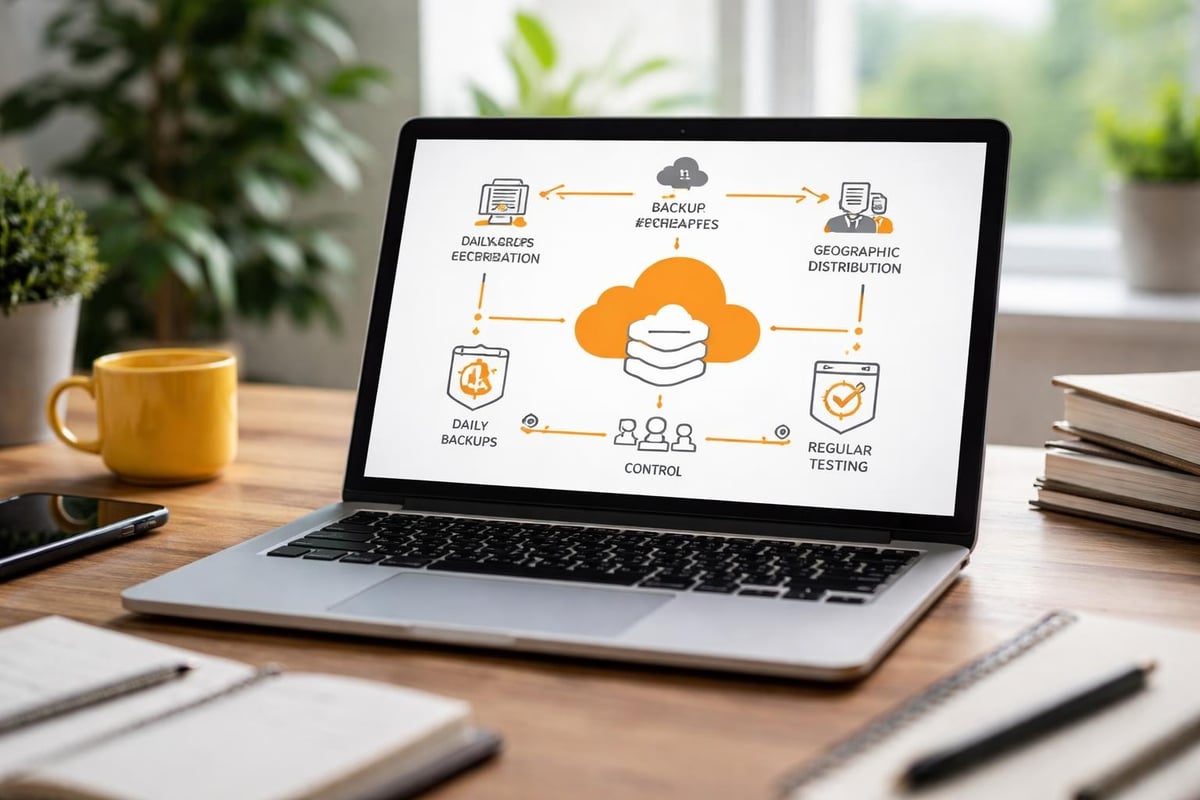
Data protection in the cloud requires robust backup systems that ensure business continuity, even when primary systems fail. Although cloud storage itself offers redundancy, furthermore, comprehensive protection demands additional layers. For example, organisations should implement versioned backups, offsite replication, and periodic recovery testing to guarantee data availability and integrity. Consequently, these measures help minimise downtime and mitigate the impact of potential data loss.
The 3-2-1 Backup Rule
This time-tested principle remains relevant for cloud environments:
- 3 copies of critical data maintained at all times
- 2 different media types to protect against format-specific failures
- 1 off-site copy stored separately from primary infrastructure
Cloud implementations might translate this to multiple cloud regions, different storage classes, and periodic downloads to local systems. Automated backup verification ensures recovery processes actually work before emergencies occur.
Backup best practices include:
- Automated daily backups of all critical systems
- Immutable backup storage preventing ransomware encryption
- Regular restoration testing validating recovery procedures
- Retention policies balancing compliance with storage costs
- Incremental backups reducing bandwidth and storage requirements
- Geographic distribution protecting against regional outages
Version control within backup systems allows recovery from data corruption that might not be immediately detected. Maintaining multiple historical versions enables restoration to specific points before issues occurred.
Securing Data During Migration
Moving data to cloud environments creates temporary vulnerabilities that attackers might exploit. Therefore, careful planning and execution of migration processes are essential to minimise these risks, while simultaneously ensuring data integrity. For instance, organisations should implement encryption during transfer, validate data consistency, and conduct thorough testing before completing the migration. As a result, potential security gaps are reduced, thereby protecting sensitive information throughout the transition.
Planning Secure Migrations
- Inventory all data to be migrated, classifying by sensitivity level
- Encrypt data before transmission using strong algorithms
- Verify data integrity after transfer using checksums
- Maintain backup copies of original data until verification completes
- Use secure transfer protocols such as SFTP or dedicated VPN connections
- Schedule transfers during low-traffic periods to reduce exposure
- Monitor transfers continuously for anomalies or interruptions
Phased migrations reduce risk by moving non-critical data first, allowing teams to refine processes before handling the most sensitive information. Parallel operation periods enable thorough testing before decommissioning legacy systems.
Addressing Emerging Security Threats
The threat landscape evolves continuously, with attackers developing new techniques to compromise cloud-stored data. Staying ahead requires awareness of emerging risks and proactive defensive measures.
Ransomware Protection
Ransomware attacks increasingly target cloud storage, encrypting files and demanding payment for decryption keys. Protection strategies include:
- Immutable storage preventing modification of archived data
- Snapshot technologies enabling rapid rollback to pre-attack states
- Behaviour monitoring detecting unusual encryption activities
- Network segmentation limiting ransomware spread across systems
- Offline backups maintaining recovery options even if cloud systems are compromised
Advanced Persistent Threats
Sophisticated attackers may establish long-term presence within cloud environments, slowly exfiltrating data over extended periods. Detection requires:
- Continuous monitoring of data access patterns
- Anomaly detection identifying unusual user behaviours
- Regular security audits uncovering hidden access points
- Threat intelligence integration recognising known attack signatures
- Incident response procedures enabling rapid containment
Implementing Data Loss Prevention
Data loss prevention (DLP) systems monitor data movements, preventing sensitive information from leaving authorised environments. Cloud-focused DLP tools address unique challenges of distributed storage and access.
DLP capabilities essential for cloud environments:
- Content inspection scanning data for sensitive patterns like credit card numbers
- Policy enforcement blocking uploads of confidential information to unauthorised locations
- User education alerting employees when actions violate data handling policies
- Audit trails documenting all data movement for compliance verification
- Integration with cloud storage APIs for comprehensive coverage
These systems prove particularly valuable when employees access cloud storage from various devices and locations. Consistent policy enforcement regardless of access method prevents accidental data exposure.
Evaluating Cloud Provider Security
Selecting appropriate cloud providers represents a critical decision impacting long-term data protection in the cloud. Thorough evaluation processes assess provider capabilities against organisational requirements.
| Evaluation Criteria | Questions to Ask | Validation Methods |
|---|---|---|
| Certifications | What independent audits has the provider completed? | Review SOC 2, ISO 27001, ISO 27018 reports |
| Data residency | Where is data physically stored? Can you specify locations? | Examine service agreements, test location controls |
| Encryption | What encryption methods are standard? Can customers manage keys? | Review technical documentation, test key management |
| Incident response | How quickly does the provider detect and respond to breaches? | Examine incident history, test notification procedures |
| SLA guarantees | What uptime and recovery commitments does the provider make? | Analyse historical performance, review penalty clauses |
Provider transparency about security practices enables informed decision-making. Vague responses or reluctance to share security details should raise concerns about overall security posture.
Maintaining Security Through Ongoing Monitoring
Data protection in the cloud is not a one-time implementation but requires continuous vigilance. Regular monitoring, testing, and improvement ensure security measures remain effective as threats and business requirements evolve.
Security Assessment Schedule
Monthly activities:
- Review access logs for anomalous patterns
- Test backup restoration procedures
- Update security patches and configurations
- Analyse security incident reports
Quarterly activities:
- Conduct vulnerability assessments
- Review and update access permissions
- Test disaster recovery procedures
- Evaluate new security technologies
Annual activities:
- Comprehensive security audits
- Penetration testing exercises
- Policy review and updates
- Staff security training refreshers
Automated monitoring tools provide real-time alerting whilst scheduled assessments catch issues that gradual changes might introduce. Combining automated and manual review processes creates comprehensive security oversight.
Building a Security-Conscious Culture
Technical controls prove most effective when supported by organisational culture that prioritises data protection. Regular training ensures employees understand their roles in maintaining cloud security. Clear policies establish expectations whilst streamlined processes make secure practices the default option.
Protecting data in cloud environments requires a comprehensive approach combining technical controls, procedural safeguards, and continuous vigilance. From encryption and access management to regulatory compliance and backup strategies, each element contributes to a resilient security posture that adapts to evolving threats. Organisations seeking reliable cloud infrastructure with built-in security can benefit from partnering with providers who prioritise data protection. vBoxx delivers secure cloud solutions with robust encryption, comprehensive backup systems, and privacy-focused practices, enabling businesses to leverage cloud benefits whilst maintaining stringent data protection standards.