
Selecting the right cloud storage platform for your organisation requires careful consideration of security, functionality, and control over your data. While Nextcloud has established itself as a prominent self-hosted solution, many businesses are exploring alternatives that better align with their specific requirements for privacy, performance, or feature sets. Whether you’re concerned about resource consumption, seeking more streamlined interfaces, or requiring specialized collaboration capabilities, understanding the landscape of available options helps you make informed decisions about your digital infrastructure.
Why Businesses Seek a Nextcloud Alternative
Nextcloud offers comprehensive functionality, but its extensive feature set can present challenges for certain organisations. The platform’s resource requirements often exceed what smaller teams need, leading to unnecessary complexity and higher infrastructure costs.
Performance considerations drive many businesses to evaluate alternatives. Nextcloud’s PHP-based architecture, while flexible, may not deliver optimal speed for organisations handling large file volumes or supporting numerous concurrent users. Additionally, the learning curve associated with Nextcloud’s administrative interface can strain IT teams already managing multiple systems.
Key reasons organisations explore alternatives include:
- Reduced server resource consumption for cost efficiency
- Simpler deployment and maintenance processes
- More intuitive user interfaces for non-technical staff
- Specialized features for specific industries or use cases
- Better integration with existing technology stacks
Some businesses also find Nextcloud’s update cycle challenging, particularly when maintaining custom applications or extensive plugin ecosystems. Compatibility issues between versions can create maintenance overhead that diverts resources from strategic initiatives.

Seafile: Performance-Focused File Synchronisation
Seafile distinguishes itself as an alternative to Nextcloud through its emphasis on synchronisation speed and efficient file handling. Built with Python and C, the platform divides files into blocks, enabling faster transfers and reduced bandwidth consumption during updates.
The architecture proves particularly advantageous for organisations managing large datasets. When users modify documents, Seafile transfers only changed blocks rather than entire files, significantly improving performance over slower connections. This approach also facilitates more efficient server-side de-duplication.
Technical Architecture and Benefits
Seafile separates its data storage layer from its application layer, providing flexibility in deployment configurations. This separation allows organisations to distribute load across multiple servers or integrate with existing storage infrastructure more seamlessly than monolithic alternatives.
| Feature | Seafile | Typical Benefits |
|---|---|---|
| File Synchronisation | Block-level | 3-5x faster updates |
| Storage Architecture | Separated layers | Flexible scaling |
| Mobile Support | Native apps | Offline access |
| Collaboration | Libraries | Permission granularity |
The library concept in Seafile enables administrators to create distinct storage spaces with independent encryption keys and access controls. This structure supports compliance requirements where different data classifications demand varying security protocols, as highlighted by IONOS’s comparison of alternatives.
Professional editions include advanced features like file locking, detailed audit logs, and integration with enterprise authentication systems. The platform’s lighter resource footprint makes it suitable for organisations operating leaner infrastructure whilst maintaining robust security standards.
Owncloud: The Established Predecessor
Owncloud shares historical roots with Nextcloud, as the latter emerged from a fork of Owncloud’s codebase in 2016. Despite this common heritage, Owncloud has evolved along a different trajectory, maintaining focus on enterprise stability and support structures.
The platform offers a more conservative feature release cycle compared to its derivative. This approach appeals to organisations prioritising predictability and long-term support commitments over cutting-edge functionality. Owncloud’s development team emphasizes backward compatibility and extensive testing before releases.
Enterprise-Grade Features
Owncloud provides comprehensive integration with enterprise directory services, including Active Directory and LDAP. The platform’s workflow engine enables administrators to automate common processes such as file retention, version management, and compliance reporting.
Distinguishing characteristics include:
- Extended support contracts with guaranteed response times
- Formal certification programmes for hosting partners
- Comprehensive migration tools from legacy systems
- Detailed compliance documentation for regulated industries
- Professional consulting services for complex deployments
The platform’s file lifecycle management capabilities support organisations with stringent data governance requirements. Administrators can define policies that automatically archive, delete, or migrate files based on age, classification, or access patterns.
According to SSD Nodes’ analysis, Owncloud’s enterprise editions provide advanced features that justify consideration for organisations requiring formal vendor relationships and comprehensive support agreements.
Pydio Cells: Modern Microservices Architecture
Pydio Cells represents a complete architectural reimagining of cloud storage platforms, built entirely in Go using a microservices approach. This design philosophy delivers improved performance, easier horizontal scaling, and enhanced security isolation compared to traditional monolithic applications.
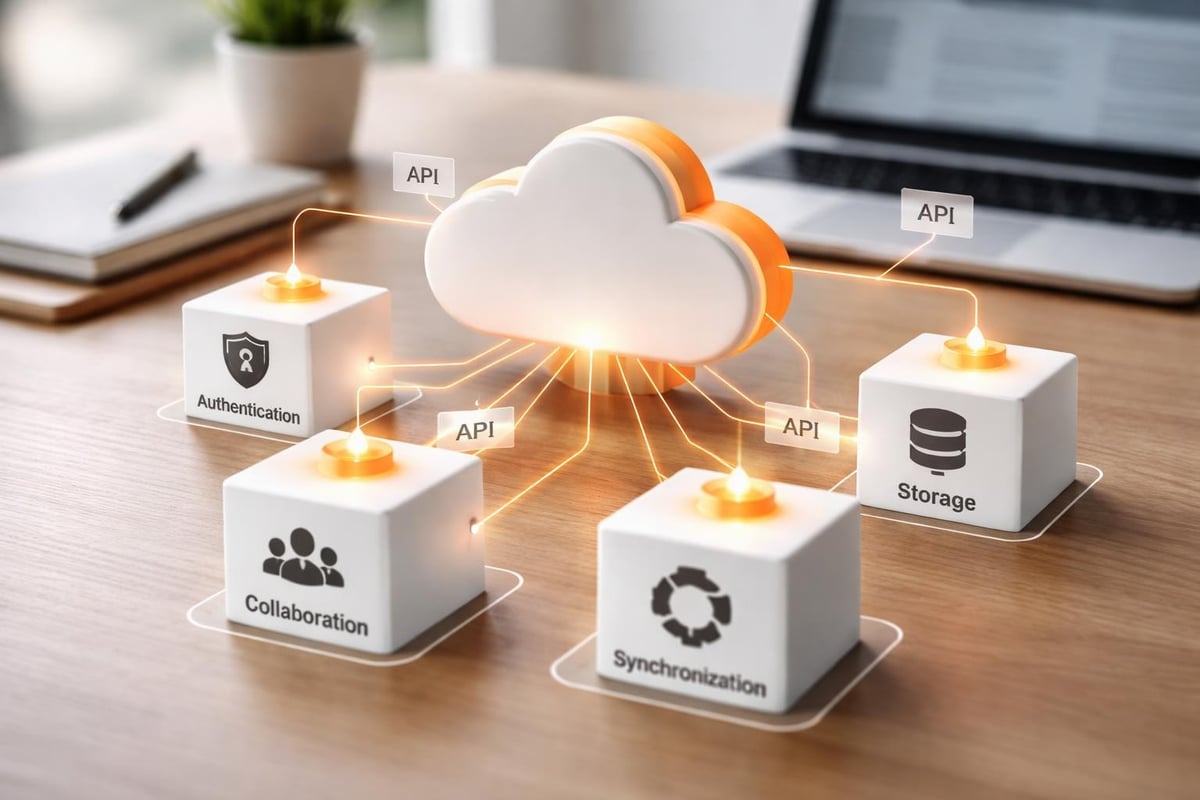
The platform’s containerized architecture simplifies deployment across diverse environments, from on-premises data centres to hybrid cloud configurations. Each service operates independently, allowing organisations to scale specific components based on actual usage patterns rather than provisioning entire application stacks.
Security Through Isolation
Pydio’s microservices architecture provides inherent security advantages. Compromising one service doesn’t automatically grant access to others, creating natural boundaries that contain potential breaches. This isolation aligns with zero-trust security models increasingly adopted by privacy-conscious organisations.
The platform includes granular activity monitoring across all services. Administrators gain visibility into file access patterns, sharing behaviours, and synchronisation activities through centralized logging that aggregates data from distributed components.
Policy engines in Pydio Cells enable sophisticated access controls based on multiple factors including user attributes, device trust levels, network location, and time-based restrictions. These capabilities support organisations implementing conditional access frameworks.
Syncthing: Decentralised Peer-to-Peer Synchronisation
Syncthing challenges traditional client-server models by implementing peer-to-peer synchronisation without central authority. This decentralised approach eliminates single points of failure and reduces infrastructure requirements for organisations comfortable with distributed architectures.
The platform excels in scenarios where users need to synchronise files across multiple personal devices without routing data through intermediary servers. Each device maintains a complete copy of shared folders, communicating directly with peers when both are online.
Privacy and Control
Syncthing’s architecture ensures files never traverse third-party infrastructure unless users explicitly configure relay servers. All communications occur over encrypted channels using TLS, with additional layer encryption protecting file contents. As noted by Softstribe’s overview, this approach appeals to organisations with strict data residency requirements.
| Aspect | Syncthing Approach | Traditional Server Model |
|---|---|---|
| Data Path | Direct peer-to-peer | Through central server |
| Infrastructure | Minimal/none required | Dedicated hosting needed |
| Failure Points | Distributed resilience | Central server dependency |
| Scaling Cost | Negligible | Linear with users/data |
The platform’s resource efficiency makes it particularly suitable for edge computing scenarios or organisations operating in bandwidth-constrained environments. However, the lack of centralized management can complicate compliance requirements in regulated industries.
Configuration occurs through web interfaces on each device, with administrators distributing connection credentials securely. Version control capabilities enable recovery from accidental deletions or malicious encryption, maintaining file histories based on configurable retention policies.
FileCloud: Hybrid Deployment Flexibility
FileCloud positions itself as an alternative to Nextcloud by offering extreme deployment flexibility, supporting on-premises, cloud-hosted, or hybrid configurations through a unified management interface. This versatility appeals to organisations navigating complex regulatory landscapes or transitioning between infrastructure models.
The platform provides native integration with major cloud storage providers, enabling organisations to leverage existing investments whilst maintaining centralized access controls and user experiences. Users access files seamlessly regardless of underlying storage location.
Compliance and Governance Tools
FileCloud includes sophisticated data loss prevention (DLP) capabilities that scan files for sensitive content patterns. In particular, administrators define policies that automatically restrict sharing, apply encryption, or trigger alerts when protected information is detected. As a result, organisations gain stronger control over sensitive data handling. Moreover, this helps reduce the risk of accidental exposure and improves overall compliance with data protection requirements.
Advanced governance features include:
- Automated classification based on content analysis
- Geographic restrictions on data storage and access
- Integration with enterprise rights management systems
- Detailed audit trails meeting regulatory standards
- Customizable retention schedules by folder or metadata
The platform’s ransomware detection monitors file modification patterns, identifying suspicious encryption activities and automatically creating recovery snapshots. This proactive approach protects against both external threats and insider risks.
Mobile device management integration enables organisations to enforce security policies on smartphones and tablets accessing corporate data. Administrators can require device encryption, screen lock timeouts, and remote wipe capabilities before granting access, as discussed in Appvizer’s comparison.

Considerations When Selecting Your Alternative
Evaluating any alternative to Nextcloud requires systematic assessment of technical requirements, organisational constraints, and long-term strategic objectives. In particular, different platforms optimize for varying priorities, making universal recommendations impractical without context. Therefore, organisations must carefully define their own requirements before comparing solutions. Moreover, this structured approach ensures that the chosen platform aligns with both immediate needs and future growth plans.
Technical Evaluation Framework
Begin by documenting current and projected storage requirements, user counts, and performance expectations. In particular, understanding baseline metrics enables meaningful comparisons between platforms. Moreover, this helps prevent over-provisioning infrastructure, which can lead to unnecessary costs. As a result, organisations can make more accurate and efficient capacity planning decisions.
Assessment criteria should include:
- Resource requirements: CPU, memory, and storage overhead
- Integration capabilities: APIs, authentication systems, existing tools
- Scalability model: Vertical versus horizontal scaling options
- Maintenance burden: Update frequency, breaking changes, documentation quality
- Security architecture: Encryption methods, access controls, audit capabilities
Testing alternative platforms in realistic environments before committing to migrations reduces implementation risks. In particular, most solutions offer trial periods or community editions suitable for proof-of-concept deployments. As a result, organisations can validate performance, compatibility, and usability before making long-term commitments. Moreover, this approach significantly reduces the likelihood of costly post-deployment issues.
Furthermore, consider total cost of ownership beyond initial licensing. For example, factor in infrastructure expenses, administrative time, training requirements, and potential consulting fees. In contrast, open-source alternatives may require more internal expertise compared to commercial solutions offering comprehensive support. Therefore, organisations must evaluate both direct and indirect costs to make fully informed decisions.
Migration Planning Strategies
Successful transitions from existing platforms demand careful planning and staged execution. In particular, attempting wholesale migrations often introduces unnecessary risks and user disruption.
Firstly, develop detailed inventories of current data volumes, sharing relationships, and integration dependencies. Moreover, identify critical workflows relying on specific features and verify alternatives provide equivalent functionality. In some cases, organisations maintain parallel systems during transition periods, gradually shifting user populations as confidence grows.
Additionally, data migration tools vary significantly in sophistication across platforms. For example, some alternatives provide automated import utilities that preserve permissions and sharing links, whilst others require manual reconstruction of organisational structures. Therefore, evaluating migration tooling early helps organisations understand implementation timelines more accurately.
Furthermore, user communication throughout transitions prevents productivity losses and support ticket surges. In particular, providing training resources, highlighting benefit improvements, and establishing clear timelines for old system decommissioning is essential. As a result, maintaining change logs helps users understand feature mapping between platforms and reduces confusion during the transition period.
For organisations seeking expert guidance through these decisions, a guided demonstration of comprehensive cloud solutions can clarify how different approaches address specific business requirements whilst maintaining security and privacy standards.
Performance Optimization Across Platforms
Regardless of which alternative to Nextcloud you select, proper configuration significantly impacts user experience and resource efficiency. Default installations rarely represent optimal performance without environment-specific tuning.
Database selection and configuration profoundly affect platform responsiveness. Most solutions support multiple database backends, with PostgreSQL generally delivering better performance than MariaDB or MySQL for concurrent access patterns. Properly indexed databases with adequate connection pools prevent bottlenecks as user counts increase.
Caching strategies reduce server load and improve response times. Implementing Redis or Memcached for session management and frequently accessed data decreases database queries. Many platforms also support browser-side caching and CDN integration for static assets.
Storage Backend Considerations
File storage configuration choices influence both performance and cost structures. Object storage backends like S3-compatible solutions offer excellent scalability but may introduce latency compared to local filesystems. Evaluating typical file sizes and access patterns guides appropriate backend selection.
| Storage Type | Best For | Considerations |
|---|---|---|
| Local SSD | Frequent access, small files | Limited capacity, higher cost |
| Network storage | Balanced performance/capacity | Network dependency |
| Object storage | Large datasets, archival | API latency, egress costs |
| Hybrid tiering | Mixed workloads | Complexity, policy management |
Compression reduces storage requirements and transfer times, particularly for text-based files. Most platforms support transparent compression, though CPU overhead requires consideration on resource-constrained systems.
Regular performance monitoring identifies degradation before users experience problems. Track metrics including response times, database query performance, storage I/O, and network throughput. Establishing baselines enables trend analysis and capacity planning, according to OMR’s comprehensive review.
Security Hardening Best Practices
Implementing robust security measures protects organisational data regardless of platform selection. While different alternatives offer varying native security features, fundamental hardening principles apply universally.
Encryption should protect data both in transit and at rest. TLS certificates from recognized authorities prevent man-in-the-middle attacks, whilst filesystem or database encryption safeguards against physical media theft. Some platforms support client-side encryption where files are encrypted before leaving user devices, ensuring even administrators cannot access contents.
Access Control Implementation
Principle of least privilege guides effective permission structures. Users receive only access necessary for their roles, reducing blast radius from compromised accounts. Regular access reviews identify and remove unnecessary permissions that accumulate over time.
Multi-factor authentication dramatically reduces unauthorized access risks. Supporting multiple authentication methods, including hardware tokens, mobile authenticators, and biometrics, accommodates diverse user preferences whilst maintaining security standards.
Essential security controls include:
- Automated session timeouts for inactive users
- Geographic restriction of access by IP range or country
- Device authorization requirements before data synchronisation
- Failed login attempt monitoring and automatic account lockouts
- Separation of administrative and user access privileges
Vulnerability management processes ensure timely patching of security issues. Subscribe to security mailing lists for your chosen platform, establish testing procedures for updates, and maintain rollback capabilities should patches introduce problems. For organisations requiring maximum security assurance, vBoxx provides infrastructure designed with privacy and security as foundational principles rather than afterthoughts.
Integration With Business Workflows
Cloud storage platforms function as components within broader technology ecosystems. Effective alternatives must integrate seamlessly with existing tools, authentication systems, and business processes to justify migration investments.
API quality determines integration possibilities. Well-documented, RESTful APIs with comprehensive authentication options enable custom development and third-party tool connections. Webhook support allows platforms to trigger actions in external systems based on file events.
Single sign-on integration reduces password fatigue and improves security posture. Support for SAML, OAuth, or OpenID Connect enables users to access cloud storage using existing corporate credentials, centralizing identity management and simplifying access revocation during employee departures.
Collaboration tool integration extends platform utility beyond simple file storage. Native connections with document editors, project management systems, and communication platforms create unified workflows that enhance productivity whilst maintaining data sovereignty.
Selecting an alternative to Nextcloud demands careful evaluation of your organisation’s specific requirements, technical capabilities, and long-term strategic objectives. Each platform discussed offers distinct advantages that may align better with particular use cases than others, making informed assessment essential. If you’re seeking secure, privacy-focused cloud infrastructure backed by expert support and sustainable hosting practices, vBoxx delivers comprehensive solutions designed specifically for businesses prioritising data sovereignty and environmental responsibility.