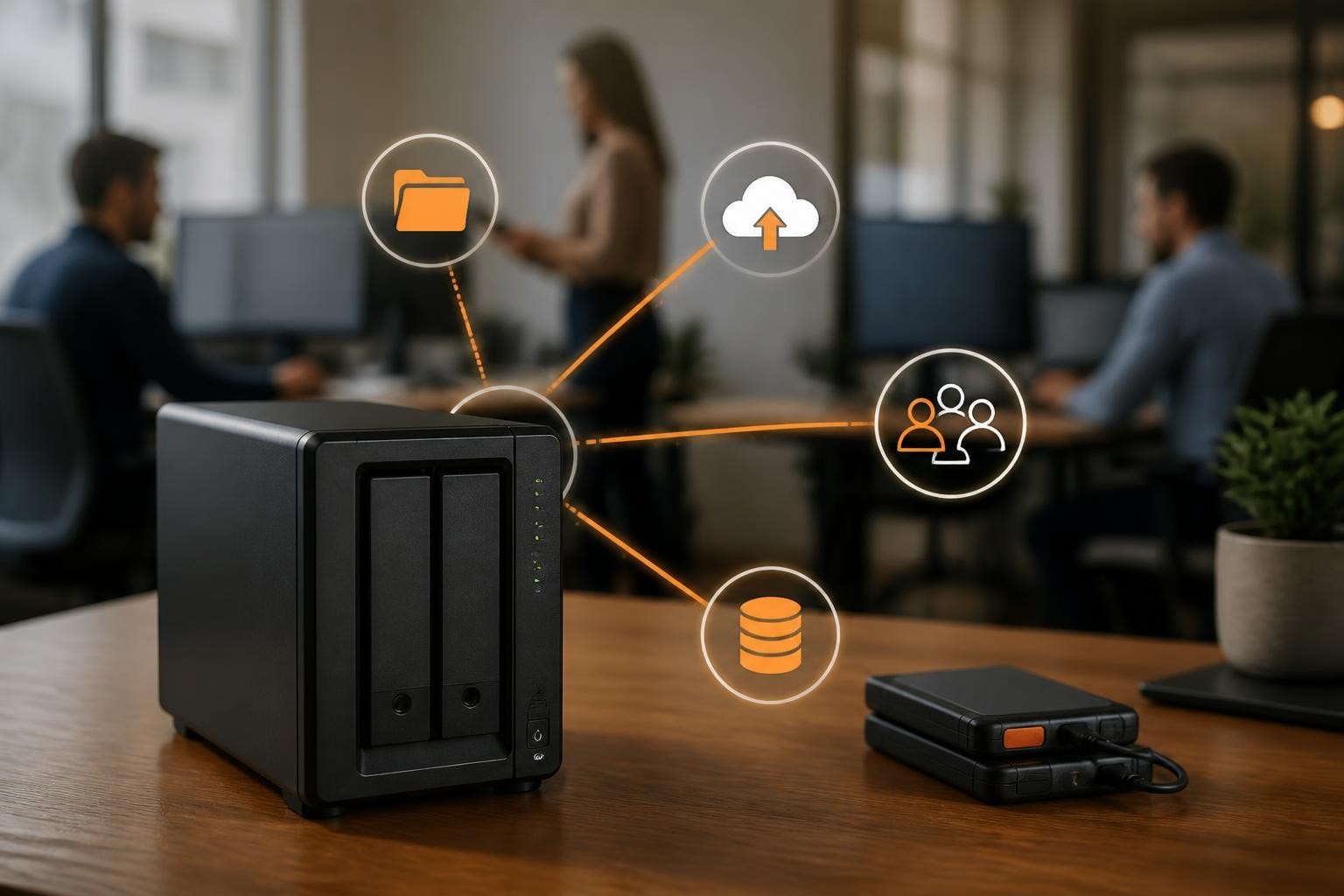

Businesses today face an unprecedented challenge: protecting sensitive data whilst maintaining seamless access across distributed teams. As organisations increasingly migrate critical information to the cloud, the security of that data becomes paramount. Secure business cloud storage has evolved from a luxury to a necessity, particularly as cyber threats grow more sophisticated and regulatory requirements tighten. Understanding how to implement robust security measures whilst preserving operational efficiency determines whether your business data remains protected or becomes vulnerable to breaches, compliance failures, and operational disruptions.
Understanding the Security Landscape
The modern threat environment requires businesses to adopt a comprehensive approach to data protection. In particular, cybercriminals continuously develop new methods to exploit vulnerabilities, making it essential for organisations to stay ahead of emerging risks. As a result, security strategies must evolve continuously rather than remain static. Moreover, this proactive approach helps organisations reduce exposure and strengthen overall resilience against cyber threats.
Current Threat Vectors
Data breaches cost businesses millions annually, with ransomware attacks targeting cloud storage systems becoming increasingly common. In particular, attackers exploit weak authentication mechanisms, misconfigured permissions, and unencrypted data transfers to gain unauthorised access. As a result, organisations face significant financial, operational, and reputational damage. Moreover, this highlights the critical importance of implementing strong security controls and continuous monitoring.
Common vulnerabilities include:
- Insufficient password policies allowing brute force attacks
- Lack of multi-factor authentication on administrator accounts
- Publicly accessible storage buckets due to configuration errors
- Unencrypted data both at rest and in transit
- Inadequate monitoring of user access patterns
The unseen risks of cloud storage often stem from human error rather than technical failures. Employees accidentally sharing confidential files, granting excessive permissions, or storing sensitive information in unsecured locations create significant exposure points.

Regulatory Compliance Requirements
Organisations must navigate complex regulatory frameworks that govern data storage and protection. In particular, GDPR, HIPAA, SOC 2, and industry-specific regulations impose strict requirements on how businesses handle customer information.
Moreover, ensuring regulatory compliance in cloud storage requires understanding which regulations apply to your business and implementing appropriate controls. As a result, organisations can better align their data practices with legal obligations and industry standards. However, non-compliance can result in substantial fines, legal action, and reputational damage that extends far beyond immediate financial penalties.
Core Security Features for Business Cloud Storage
Implementing secure business cloud storage demands attention to specific technical capabilities that form the foundation of data protection. In particular, these features work in concert to create multiple defensive layers. Moreover, this layered approach strengthens overall resilience against potential threats. As a result, organisations achieve a more robust and comprehensive security posture.
Encryption Standards
Encryption transforms readable data into coded information that remains useless without proper decryption keys. In particular, modern secure business cloud storage solutions employ AES-256 encryption, the same standard used by governments and financial institutions worldwide. As a result, this ensures a high level of protection for sensitive data both at rest and in transit. Moreover, it significantly reduces the risk of unauthorised access even in the event of a breach.
Two critical encryption types:
- Encryption at rest protects stored files on servers and backup systems
- Encryption in transit secures data moving between devices and cloud infrastructure
Zero-knowledge encryption represents the highest security level, where providers cannot access your data even if compelled by legal orders. The encryption keys remain exclusively with you, ensuring complete privacy.
Access Control Mechanisms
Granular permission systems determine who can view, edit, share, or delete specific files and folders. In particular, role-based access control (RBAC) assigns permissions based on job functions rather than individual users, thereby simplifying management whilst maintaining security. As a result, organisations can enforce consistent access policies across large teams. Moreover, this reduces administrative overhead and minimises the risk of permission misconfiguration.
| Access Level | Typical Permissions | Best Use Cases |
|---|---|---|
| Viewer | Read-only access | External stakeholders, clients |
| Editor | Modify existing files | Team collaborators |
| Manager | Create, delete, share | Department heads |
| Administrator | Full system control | IT security team |
Multi-factor authentication (MFA) adds another security layer by requiring users to verify their identity through multiple methods. In particular, even if passwords become compromised, unauthorised access remains prevented without the second authentication factor. As a result, this significantly reduces the risk of account takeovers. Moreover, it strengthens overall authentication security across business systems.
Selecting the Right Cloud Storage Provider
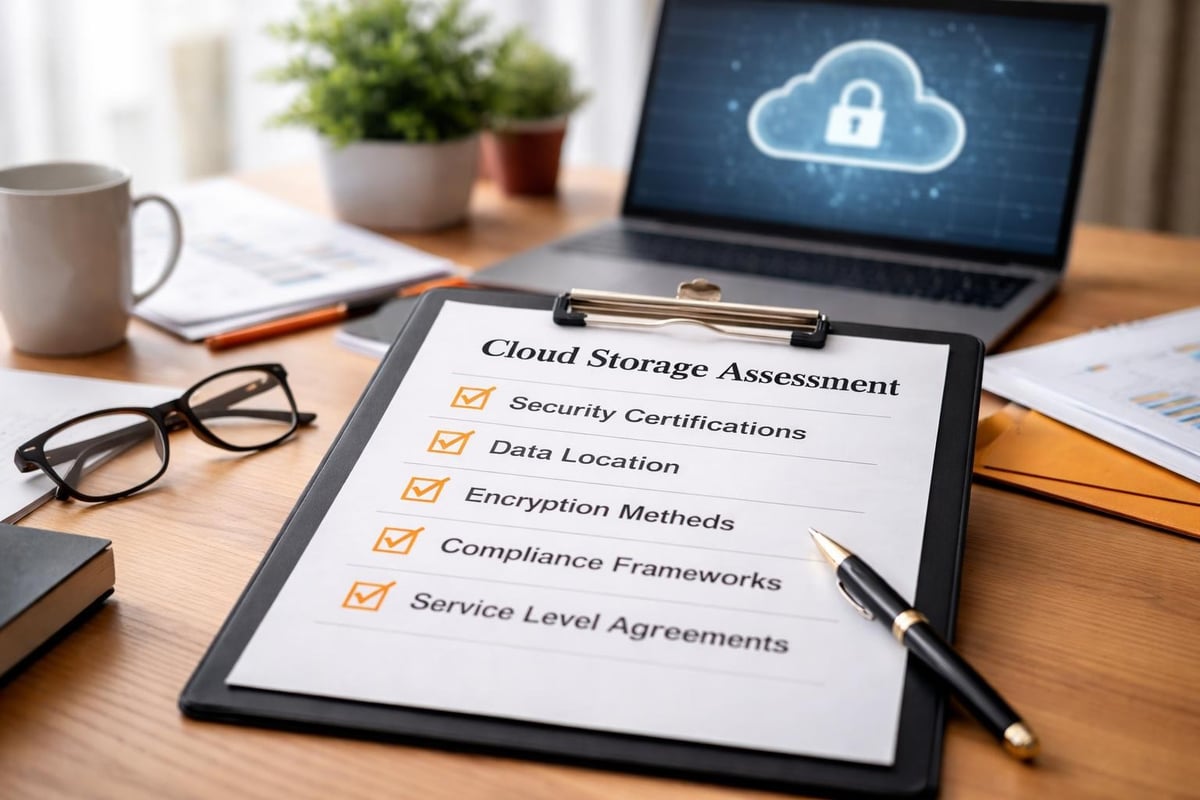
Choosing a secure business cloud storage provider involves evaluating technical capabilities, security certifications, and operational practices. In particular, not all providers offer equivalent protection levels. Therefore, organisations must carefully assess each provider’s security posture before making a decision. Moreover, this ensures alignment with both compliance requirements and internal risk management standards.
Security Certifications and Audits
Reputable providers undergo regular third-party security audits and maintain industry-recognised certifications. In particular, ISO 27001, SOC 2 Type II, and regional compliance certifications demonstrate commitment to security best practices. As a result, these certifications provide independent validation of a provider’s security controls. Moreover, they help organisations assess trustworthiness and regulatory alignment more effectively.
Key evaluation criteria:
- Independent security audit frequency and recency
- Transparency in sharing audit results and security reports
- Compliance with relevant industry regulations
- Data centre physical security measures
- Incident response procedures and breach notification policies
Understanding cloud compliance helps businesses assess whether providers meet their specific regulatory requirements. Providers should clearly articulate their security responsibilities versus those remaining with customers.
Data Sovereignty and Location
Where your data physically resides carries significant legal and security implications. In particular, different jurisdictions impose varying privacy laws, government access requirements, and data protection standards.
Moreover, businesses operating in the European Union must ensure GDPR compliance, which includes requirements for data localisation and transfer restrictions. As a result, achieving GDPR compliance in cloud storage requires selecting providers with European data centres and appropriate data protection agreements. Therefore, organisations must carefully evaluate data residency and contractual safeguards to ensure full regulatory alignment.
Implementing Security Best Practices
Technical capabilities mean little without proper implementation and ongoing management. In particular, organisations must establish comprehensive security policies and train employees on secure usage. Moreover, this ensures that security controls are consistently applied across the organisation. As a result, the effectiveness of technical solutions is significantly enhanced through proper human and procedural alignment.
Data Classification and Organisation
Not all business data requires identical security measures. Classification systems categorise information based on sensitivity, determining appropriate protection levels.
- Public information requires minimal protection
- Internal data needs basic access controls
- Confidential information demands encryption and restricted access
- Highly sensitive data requires maximum security measures including zero-knowledge encryption
Implementing best practices for securing data in cloud services begins with understanding what data you store and applying proportionate security measures. Automated classification tools can scan documents and apply appropriate labels based on content analysis.
User Education and Policy Enforcement
Human error remains the leading cause of security incidents. In particular, comprehensive training programmes ensure employees understand security policies and recognise potential threats. As a result, organisations can significantly reduce the likelihood of accidental breaches. Moreover, this strengthens overall security posture by addressing the human factor in cybersecurity.
Essential training topics include:
- Creating strong, unique passwords for cloud accounts
- Recognising phishing attempts targeting cloud credentials
- Proper file sharing procedures and permission settings
- Identifying and reporting suspicious activity
- Understanding data classification requirements
Regular security awareness sessions reinforce these concepts and update employees on emerging threats. Simulated phishing exercises help identify users requiring additional training whilst measuring overall security awareness levels.
Advanced Security Features
Beyond fundamental protections, sophisticated secure business cloud storage solutions offer advanced capabilities that address complex security scenarios and compliance requirements. In particular, these features extend protection beyond basic storage security controls. Moreover, they help organisations meet stricter regulatory and operational demands. As a result, businesses gain a more comprehensive and adaptable security framework.
Versioning and Backup Protection
Version control maintains historical copies of files, allowing recovery from accidental changes, deletions, or ransomware encryption. In particular, immutable backups prevent even administrators from modifying or deleting archived data during defined retention periods.
As a result, this protection proves invaluable during ransomware attacks, where attackers often delete backups before encrypting production data. Moreover, immutable storage ensures recovery options remain available regardless of attacker actions. Therefore, organisations gain stronger resilience and improved business continuity in the face of advanced cyber threats.
Activity Monitoring and Audit Trails
Comprehensive logging records every action taken within your storage environment. Who accessed which files, when, from what location, and what changes they made all become visible through detailed audit trails.
| Monitored Activity | Security Value | Response Triggers |
|---|---|---|
| Failed login attempts | Detect credential attacks | Account lockout after threshold |
| Unusual download volumes | Identify data exfiltration | Administrator alert |
| Permission changes | Track access modifications | Approval workflow requirement |
| External sharing | Monitor data distribution | Automatic expiry dates |
Real-time alerts notify security teams of suspicious patterns, enabling rapid response before significant damage occurs. In particular, automated responses can temporarily block accounts showing attack indicators whilst security personnel investigate. As a result, organisations can contain threats more quickly and reduce potential impact. Moreover, this proactive approach strengthens overall incident response and improves security resilience.
Integration and Operational Considerations
Secure business cloud storage must integrate seamlessly with existing workflows and business applications whilst maintaining robust security postures. Isolated security measures that hinder productivity often get circumvented, creating vulnerabilities.
Application Programming Interfaces (APIs)
Secure APIs enable custom integrations whilst maintaining security controls. Well-designed APIs support automation, synchronisation with other business tools, and custom workflow creation without compromising data protection.
Authentication tokens, rate limiting, and encryption protect API communications. Businesses should audit API usage regularly, revoking unused access tokens and monitoring for suspicious patterns.
Collaboration Without Compromise
Modern businesses require real-time collaboration on shared documents and projects. Secure sharing mechanisms allow external collaboration whilst preventing unauthorised distribution.
Secure collaboration features:
- Password-protected sharing links with expiry dates
- Watermarking on sensitive documents
- Download prevention for confidential files
- Guest access with limited permissions
- Automatic access revocation after project completion
Understanding how these features work together helps businesses maintain security without sacrificing operational efficiency. For organisations seeking guidance on implementing comprehensive secure solutions, vBoxx offers a demonstration all-in-one session providing detailed information about cloud storage, secure communication, and password management.

Migration and Transition Strategies
Moving existing data to secure business cloud storage requires careful planning to prevent data loss, maintain business continuity, and ensure security throughout the transition.
Pre-Migration Security Assessment
Before migrating, conduct comprehensive audits of existing data to identify sensitive information, eliminate redundant files, and establish baseline security requirements.
- Inventory all data sources and storage locations
- Classify information according to sensitivity levels
- Identify compliance requirements for different data types
- Remove obsolete or duplicate files reducing migration scope
- Document current access permissions and security controls
This assessment provides opportunities to improve security posture during migration rather than simply replicating existing vulnerabilities in a new environment.
Phased Implementation Approach
Gradual migration reduces risks compared to complete system changes. Starting with non-critical data allows teams to familiarise themselves with new systems whilst identifying potential issues before migrating sensitive information.
Recommended migration phases:
- Phase 1: Archive and backup data (lowest risk)
- Phase 2: Internal collaboration files (moderate sensitivity)
- Phase 3: Customer information (high sensitivity)
- Phase 4: Financial and strategic data (highest sensitivity)
Testing security controls at each phase ensures protection measures function correctly before proceeding to more critical data. Rollback procedures should exist for each phase, allowing return to previous systems if significant issues emerge.
Managing Costs While Maintaining Security
Budget constraints often tempt businesses to compromise on security features, yet breaches ultimately cost far more than proper protection. Understanding the true cost of secure business cloud storage helps organisations make informed decisions.
Direct and Indirect Security Costs
Storage subscription fees represent obvious costs, but comprehensive total cost of ownership calculations must include implementation, training, ongoing management, and potential breach expenses.
| Cost Category | Budget Considerations | Security Impact |
|---|---|---|
| Storage capacity | Per-GB pricing models | Adequate space prevents workarounds |
| User licences | Per-user or unlimited | Proper licensing prevents sharing credentials |
| Advanced features | Encryption, compliance tools | Enhanced protection justifies premium pricing |
| Integration costs | API access, custom development | Seamless workflows reduce shadow IT |
| Training expenses | Initial and ongoing education | Informed users prevent costly mistakes |
Implementing cloud security best practices requires investment, but preventing a single breach typically justifies years of security spending. Insurance companies increasingly require specific security measures, with premiums reflecting implemented protections.
Optimisation Strategies
Efficiency improvements reduce costs without compromising security. Automated lifecycle policies move infrequently accessed data to lower-cost storage tiers whilst maintaining availability and protection.
Deduplication eliminates redundant copies of identical files, reducing storage requirements by 50% or more in typical business environments. Compression further decreases storage needs whilst maintaining file integrity and accessibility.
Monitoring and Continuous Improvement
Security represents an ongoing process rather than a one-time implementation. Threat landscapes evolve constantly, requiring regular assessment and adjustment of protection measures.
Regular Security Reviews
Quarterly security audits examine access permissions, review user activities, assess new vulnerabilities, and verify compliance with current regulations. These reviews identify permission creep where users accumulate unnecessary access rights over time.
Audit checklist components:
- Review all administrator and privileged accounts
- Examine external sharing links for expired projects
- Verify encryption status on all sensitive data
- Test backup restoration procedures
- Update security policies reflecting business changes
Automated security scanning tools identify configuration issues, vulnerable applications, and suspicious activities that might escape manual review. Integration with security information and event management (SIEM) systems provides comprehensive visibility across entire IT environments.
Staying Current with Threats
Cybersecurity threats evolve rapidly, with attackers developing new techniques to bypass existing protections. Subscribing to threat intelligence services, participating in industry security groups, and maintaining awareness of emerging risks helps organisations adapt defences accordingly.
Cloud storage providers regularly update their platforms to address newly discovered vulnerabilities. Ensuring your organisation applies these updates promptly prevents exploitation of known weaknesses. Automated update mechanisms reduce administrative burden whilst maintaining current protection levels.
Building a Comprehensive Security Culture
Technology alone cannot secure business data. Organisational culture that prioritises security awareness, encourages reporting of suspicious activities, and rewards cautious behaviour creates human firewalls complementing technical protections.
Establishing Clear Policies
Written security policies provide employees with concrete guidance on acceptable usage, data handling procedures, and incident reporting protocols. These documents should be accessible, understandable, and regularly updated to reflect changing business needs.
Policies must balance security with usability. Overly restrictive rules that significantly hinder productivity often get ignored or circumvented, creating security gaps. Involving employees in policy development increases buy-in and identifies practical concerns before implementation.
Incident Response Planning
Despite best efforts, security incidents may occur. Preparation determines whether incidents become minor disruptions or catastrophic breaches. Documented response procedures outline detection, containment, eradication, recovery, and post-incident analysis steps.
Regular drills test response procedures, identify gaps, and ensure team members understand their roles during emergencies. These exercises build confidence and muscle memory that proves invaluable during actual incidents when stress levels run high.
Protecting business data remains paramount in today’s digital environment, and staying informed about evolving security threats helps organisations maintain robust defences. Resources like vBoxx’s insights on privacy concerns and avoiding digital scams demonstrate the importance of comprehensive security awareness across all digital activities.
Future-Proofing Your Storage Security
Technology continues advancing rapidly, with quantum computing, artificial intelligence, and new regulatory frameworks reshaping the security landscape. Organisations must anticipate these changes when selecting secure business cloud storage solutions.
Emerging Technologies
Quantum computing threatens current encryption standards, prompting development of quantum-resistant algorithms. Forward-thinking providers already implement post-quantum cryptography, ensuring long-term data protection even as computing capabilities advance.
Artificial intelligence enhances both security and threats. AI-powered security tools detect anomalies and predict attacks more effectively than traditional methods, whilst attackers use AI to craft sophisticated phishing attempts and identify vulnerabilities. Securing big data in cloud computing increasingly requires AI-driven security approaches capable of analysing vast information volumes in real-time.
Scalability and Flexibility
Business needs change over time, requiring storage solutions that accommodate growth without requiring complete system replacements. Scalable architectures support increasing data volumes, user counts, and integration requirements whilst maintaining consistent security postures.
Flexible platforms adapt to new business models, regulatory requirements, and technological innovations. Vendor lock-in creates risks when providers cannot evolve with changing needs, making portability and standards compliance important selection criteria.
Implementing secure business cloud storage requires balancing robust protection with operational efficiency, ensuring your organisation safeguards sensitive information whilst enabling productive collaboration. The strategies outlined here provide a comprehensive framework for selecting providers, implementing security measures, and maintaining ongoing protection as threats evolve. vBoxx delivers enterprise-grade cloud storage solutions emphasising privacy, security, and sustainability, helping businesses protect their critical data through encrypted infrastructure, comprehensive compliance frameworks, and expert consultancy services tailored to your specific requirements.