
Amazon Web Services operates one of the world's largest cloud infrastructures, with data centers distributed across multiple continents. The physical and operational security of these facilities forms the foundation upon which millions of businesses build their digital operations. Understanding aws data center security is essential for organisations evaluating cloud providers, assessing compliance requirements, and determining whether a hyperscale American infrastructure aligns with their regulatory obligations. Furthermore, European businesses face unique considerations around data sovereignty, jurisdictional reach, and regulatory frameworks that extend beyond technical controls. This examination explores the architecture, standards, and practical implications of AWS's approach to securing its physical infrastructure.
Physical Security Architecture and Controls
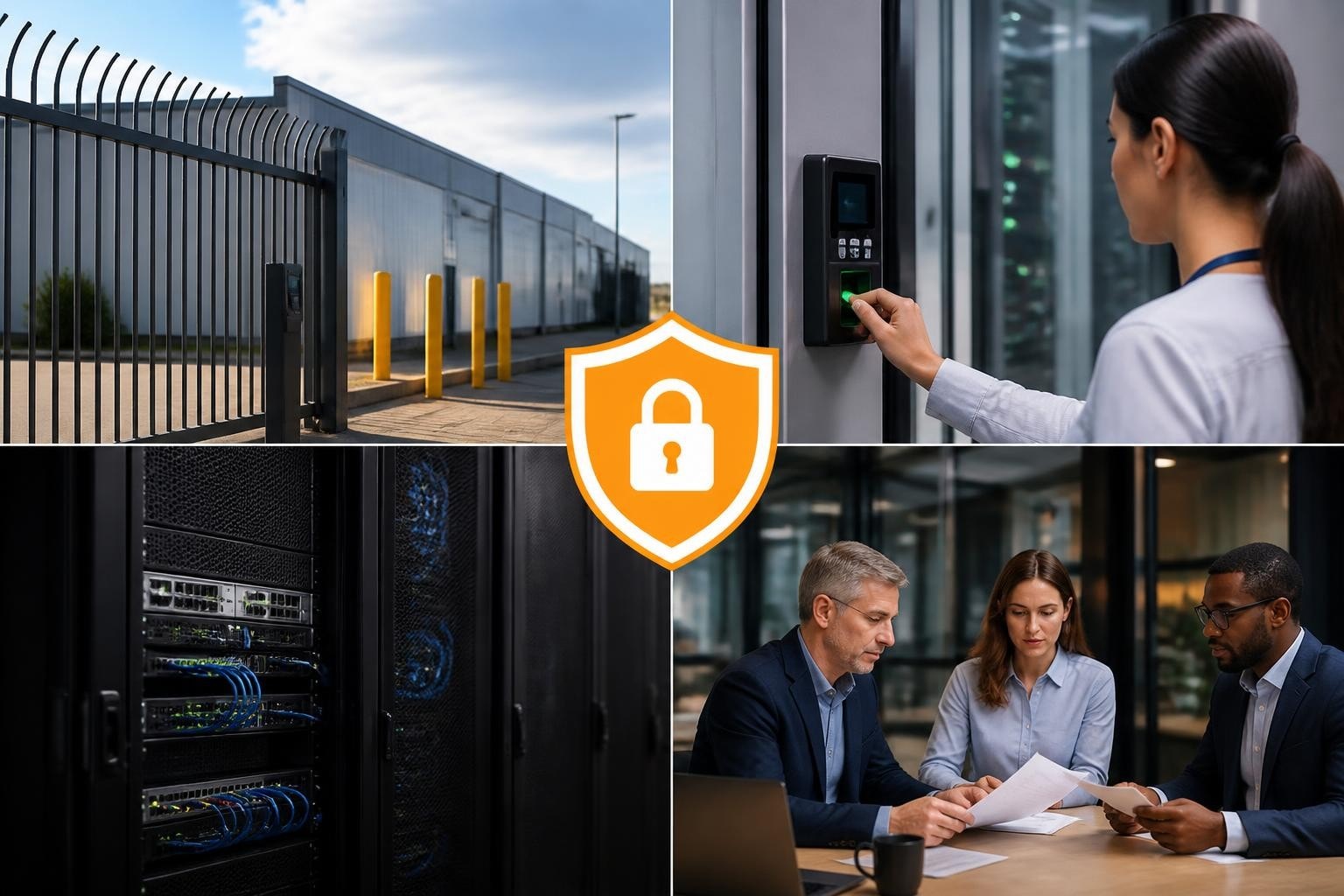
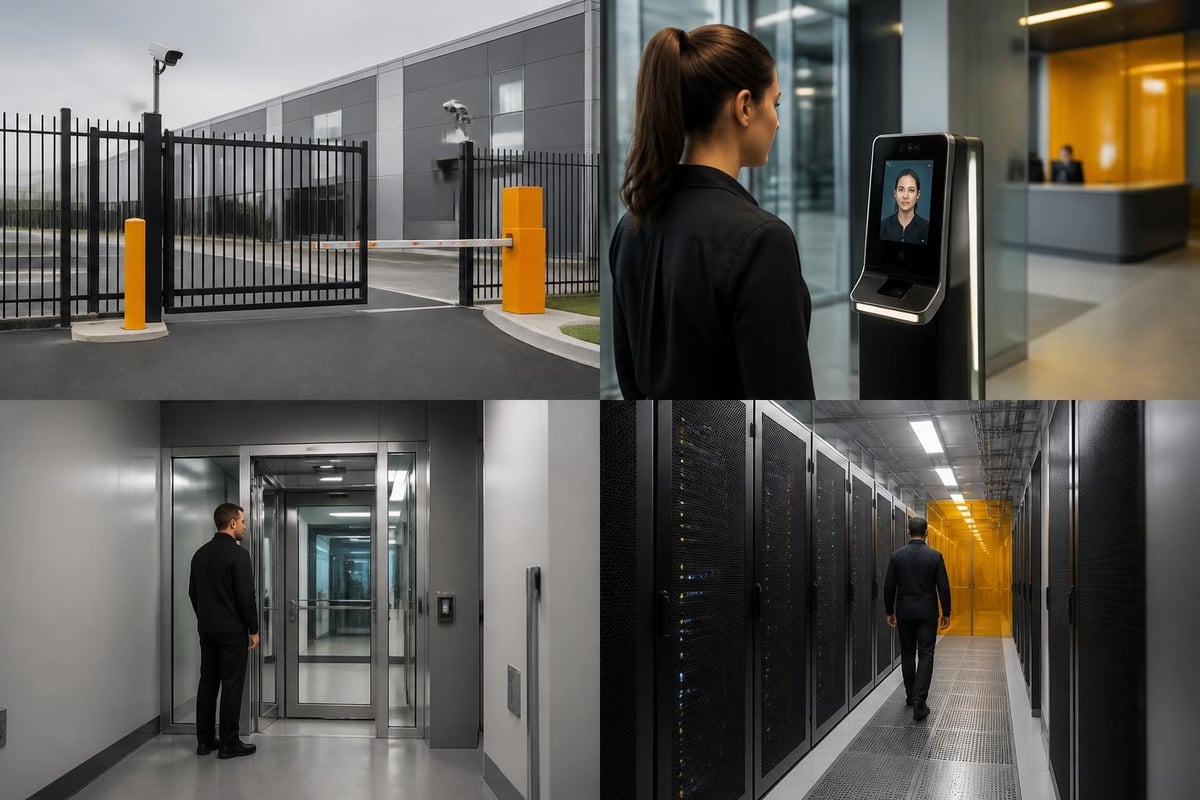
AWS data center security begins with multiple layers of physical protection designed to prevent unauthorized access. The perimeter of each facility incorporates fencing, security barriers, and monitored access points staffed by professional security personnel. Moreover, AWS employs sophisticated intrusion detection systems that combine motion sensors, cameras, and environmental monitoring to create a comprehensive security envelope around each building.
Access to data center floors follows a strict authentication protocol requiring multiple forms of verification. Therefore, personnel must present government-issued identification, undergo biometric scanning, and receive explicit authorization for specific zones within the facility. The company maintains detailed audit logs of every entry and exit, creating an immutable record of physical access events.
Environmental and Operational Safeguards
Beyond access controls, AWS implements extensive environmental monitoring and protection systems. These include:
- Fire suppression systems using pre-action sprinklers and clean-agent technologies that protect equipment whilst minimizing water damage
- Climate control infrastructure maintaining precise temperature and humidity ranges to ensure optimal hardware operation
- Redundant power systems including uninterruptible power supplies (UPS) and backup generators with automatic failover
- Seismic and structural protections in regions prone to earthquakes or extreme weather events
- Water detection and flood prevention mechanisms in critical infrastructure zones
Nevertheless, environmental controls extend beyond equipment protection. AWS conducts regular testing of all safety systems, including simulated power failures, generator load tests, and fire suppression activations. In addition, facilities undergo routine inspections by third-party auditors to verify compliance with industry standards.
Compliance Frameworks and Certification Standards
The AWS compliance programme encompasses numerous international standards that validate security controls across physical, operational, and digital domains. Furthermore, these certifications provide independent verification of the company's security claims and practices.
| Certification | Scope | Relevance to Data Centers |
|---|---|---|
| ISO 27001 | Information security management | Physical security controls, access management, incident response |
| SOC 1/2/3 | Service organization controls | Operational procedures, environmental safeguards, monitoring |
| PCI DSS | Payment card security | Physical access, network segmentation, logging |
| FedRAMP | US government cloud | Enhanced physical security, personnel vetting, continuous monitoring |
AWS maintains detailed documentation of its security architecture through publicly available whitepapers and audit reports. Therefore, organisations can review specific controls and verify alignment with their own compliance requirements. However, the sheer breadth of certifications does not automatically address every regulatory concern, particularly for businesses subject to European data protection regulations.
Industry Standards and Best Practices
Independent organisations provide frameworks against which cloud providers can be assessed. The Cloud Security Alliance publishes comprehensive auditing guidelines that establish baseline expectations for physical controls, personnel security, and operational resilience. Moreover, research from the Uptime Institute demonstrates that security threats to data centers continue to evolve, with insider risks and supply chain vulnerabilities representing growing concerns.
In addition, U.S. federal agencies provide guidance through publications such as NIST Special Publication 500-293, which outlines physical security and inspection requirements for cloud infrastructure serving government workloads. These standards often exceed commercial baseline expectations and provide useful benchmarks for organisations with stringent security requirements.
Shared Responsibility and Customer Obligations
AWS operates on a shared responsibility model that delineates security obligations between the provider and the customer. Whilst AWS manages security of the cloud, customers remain responsible for security in the cloud. This distinction has profound implications for how organisations approach their cloud deployments.
AWS data center security covers the physical infrastructure, including:
- Building security – perimeter controls, access management, surveillance
- Hardware lifecycle – secure procurement, installation, decommissioning, destruction
- Network infrastructure – physical network devices, cabling, redundancy
- Environmental systems – power, cooling, fire suppression, monitoring
Customers must separately address:
- Data encryption – both at rest and in transit, using appropriate key management
- Access policies – identity and access management (IAM) configurations
- Network segmentation – security groups, virtual private clouds, network ACLs
- Compliance mapping – ensuring workloads meet applicable regulatory requirements
Nevertheless, many organisations mistakenly assume that comprehensive physical security automatically satisfies all compliance obligations. Furthermore, the location and jurisdiction of data centers introduce legal considerations that technical controls alone cannot address.

Jurisdictional Considerations and the CLOUD Act
For European businesses, aws data center security extends beyond physical and technical controls to encompass legal and jurisdictional questions. The United States CLOUD Act grants American law enforcement agencies authority to compel U.S.-based service providers to produce data, regardless of where that information is physically stored. Therefore, organisations subject to GDPR and other European privacy regulations must carefully evaluate the implications of using American cloud infrastructure.
The European Court of Justice addressed these concerns in the Schrems II decision, which invalidated the Privacy Shield framework and placed additional obligations on data controllers using non-European processors. In addition, ENISA guidance supporting NIS2 implementation emphasizes the importance of supply chain security and jurisdictional considerations when selecting cloud infrastructure providers.
European Alternatives and Data Sovereignty
Businesses prioritizing data sovereignty have increasingly explored European cloud providers operating infrastructure within EU jurisdictions. These alternatives offer several advantages:
- GDPR-native operations designed around European privacy principles from inception
- Jurisdictional clarity with data centers exclusively located within the European Economic Area
- Immunity from CLOUD Act due to incorporation and operational control outside U.S. legal reach
- Local support and expertise with understanding of European regulatory landscape
Moreover, providers such as vBoxx operate ISO 27001-certified data centers in the Netherlands, offering comparable physical security standards whilst remaining outside the jurisdiction of American surveillance laws. Furthermore, European providers often implement additional privacy safeguards, such as zero-knowledge encryption architectures and enhanced access controls, that align more closely with continental privacy expectations.
Personnel Security and Insider Threat Mitigation
Physical barriers and technical controls provide only partial protection against security risks. Therefore, aws data center security incorporates comprehensive personnel screening and ongoing monitoring programmes designed to mitigate insider threats.
AWS conducts extensive background checks on employees with data center access, including:
- Criminal history verification
- Employment history confirmation
- Education credential validation
- Reference checks from previous employers
- Ongoing security awareness training
In addition, the principle of least privilege ensures that personnel receive access only to zones and systems necessary for their specific roles. Moreover, AWS enforces separation of duties, requiring multiple individuals to authorize sensitive operations and preventing any single person from compromising security controls.
Continuous Monitoring and Incident Response
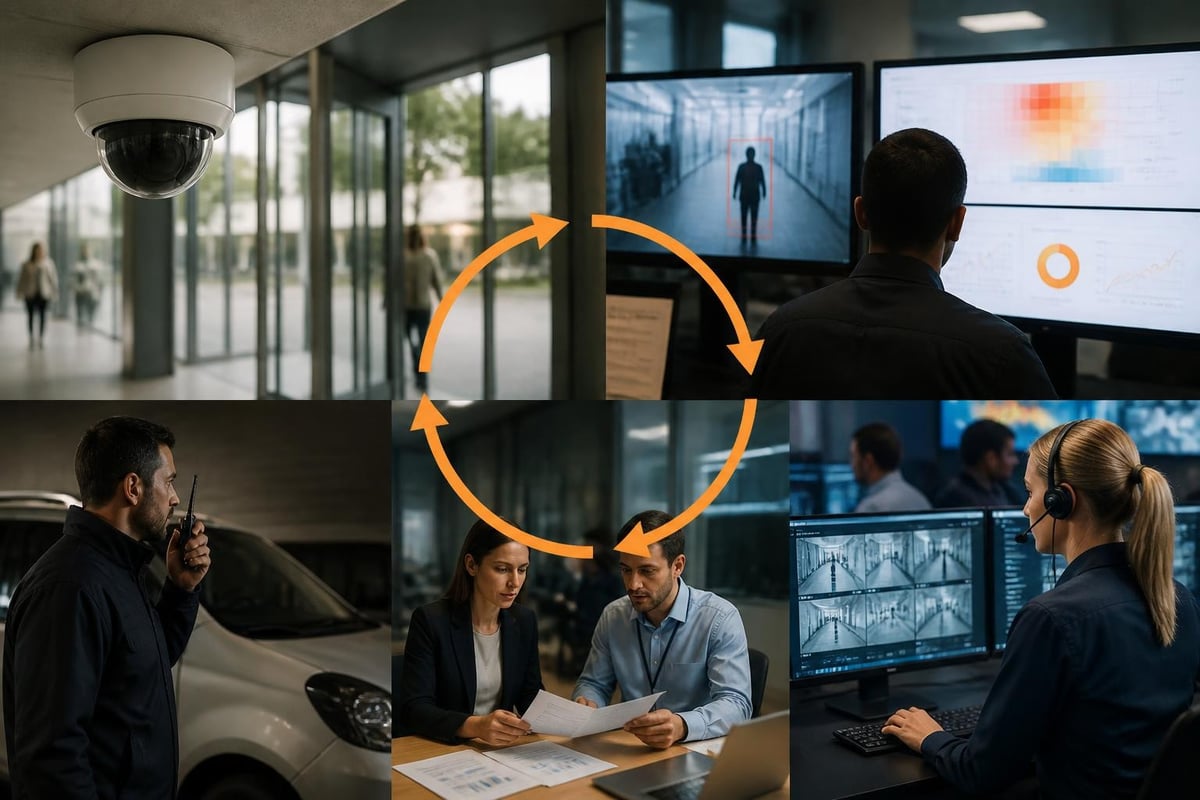
Security monitoring extends beyond detection to encompass rapid response and remediation. AWS maintains 24/7 security operations centers that monitor facilities for:
- Physical intrusions detected through sensors, cameras, and access control systems
- Environmental anomalies indicating potential equipment failures or safety hazards
- Operational deviations from established procedures or baseline behaviors
- Supply chain integrity during equipment delivery, installation, and maintenance
Nevertheless, even rigorous monitoring cannot eliminate all risks. Therefore, AWS maintains detailed incident response procedures tested through regular exercises and tabletop simulations. These plans address scenarios ranging from natural disasters to targeted attacks, ensuring coordinated responses that minimize impact on customer operations.
Hardware Lifecycle and Data Destruction
The physical security of aws data center infrastructure extends through the complete hardware lifecycle, from procurement through final destruction. Furthermore, AWS implements strict protocols to ensure that decommissioned equipment cannot leak sensitive information.
| Lifecycle Stage | Security Controls |
|---|---|
| Procurement | Vetted suppliers, tamper-evident packaging, chain of custody |
| Installation | Verified hardware, secure configuration, documentation |
| Operation | Continuous monitoring, patch management, access logging |
| Decommissioning | Data wiping, physical destruction, certificate of destruction |
| Disposal | Third-party audited destruction, recycling through certified vendors |
When storage devices reach end-of-life, AWS employs multi-stage destruction processes. Initially, drives undergo software-based data sanitization using DoD 5220.22-M standards or equivalent methods. Moreover, any devices that cannot be reliably wiped receive physical destruction through degaussing, shredding, or crushing. In addition, AWS maintains detailed records of destruction activities, providing customers with audit trails demonstrating proper handling of their data.
Network Security and Segmentation
Physical aws data center security integrates closely with logical network protections. The infrastructure incorporates multiple layers of network segmentation that isolate customer environments, control traffic flows, and prevent lateral movement during security incidents.
AWS employs dedicated network devices that enforce:
- Virtual private clouds (VPCs) providing isolated network environments for each customer
- Security groups functioning as virtual firewalls controlling inbound and outbound traffic
- Network access control lists offering subnet-level traffic filtering
- Private connectivity options such as Direct Connect for dedicated network links
- DDoS protection through AWS Shield and enhanced monitoring capabilities
Nevertheless, network security depends partially on customer configuration. Therefore, organisations must properly architect their VPC deployments, implement appropriate security group rules, and enable monitoring through services such as VPC Flow Logs. Furthermore, businesses should regularly audit their network configurations to identify misconfigurations that could create security gaps.
Resilience and Business Continuity
Effective aws data center security encompasses not only threat prevention but also resilience against disruptions. AWS designs its infrastructure for high availability through geographic distribution, redundant systems, and automated failover capabilities.
Each AWS Region comprises multiple Availability Zones, which are essentially separate data centers with independent power, cooling, and network connectivity. Moreover, these zones are positioned sufficient distances apart to provide protection against localized disasters whilst maintaining low-latency connectivity. Therefore, customers can deploy applications across multiple zones to achieve fault tolerance without managing multiple data center contracts.
In addition, AWS maintains spare capacity and equipment inventories that enable rapid restoration of service following component failures. The company conducts regular resilience testing, including simulated disasters and stress testing of failover mechanisms. Nevertheless, business continuity ultimately requires active participation from customers who must architect their applications for resilience and implement appropriate backup strategies.
For organisations managing sensitive data across hybrid cloud environments, complementary backup solutions provide additional protection. Services such as vBoxx Backup for Microsoft 365 and Google Workspace offer GDPR-compliant European backup infrastructure that can protect against accidental deletion, ransomware, and retention policy gaps, operating independently from primary cloud providers.
Transparency and Third-Party Verification
One challenge organizations face when evaluating aws data center security involves the limited visibility into physical facilities. Whilst AWS provides extensive documentation and audit reports, direct customer inspections of data centers are generally not permitted for security and operational reasons.
Therefore, businesses must rely on third-party certifications and attestations to verify security claims. AWS undergoes regular audits by independent assessors who evaluate controls against established frameworks. Moreover, the company publishes summary reports through its compliance programmes, allowing customers to review high-level findings without compromising operational security.
Guidance from organizations such as CISA emphasizes the importance of comprehensive cloud security strategies that extend beyond data center controls to encompass identity management, data protection, and continuous monitoring. Furthermore, businesses should implement their own security assessments, testing, and validation procedures rather than relying exclusively on provider attestations.
Advanced organisations employ cloud security posture management (CSPM) tools that continuously assess configuration compliance, identify misconfigurations, and provide visibility into security risks. In addition, regular penetration testing and vulnerability assessments help identify weaknesses before adversaries can exploit them. Nevertheless, these activities complement rather than replace the foundational security provided by properly secured data center infrastructure.
Understanding the comprehensive security architecture protecting cloud infrastructure enables informed decisions about where to host critical business systems. Whilst AWS implements rigorous physical and operational controls within its data centers, European organisations must carefully weigh jurisdictional considerations, regulatory requirements, and data sovereignty preferences. For businesses prioritizing GDPR compliance, operational control, and immunity from foreign surveillance laws, vBoxx offers ISO 27001-certified infrastructure hosted exclusively in the Netherlands, combining enterprise-grade security with the privacy protections and regulatory certainty that European data residency provides.